
Job Description for Senior Manager


Large Button TV Remote

Anti-Glare Reading Glasses

Adjustable Bed Frame
A senior manager plays a critical role in guiding teams and shaping organizational success. They oversee daily operations, mentor staff, and align business goals with company strategy. With strong leadership and decision-making skills, this position bridges mid-level management and executive leadership. The job demands expertise in project management, budgeting, and cross-functional collaboration. Understanding the full scope helps attract top talent and drive performance across departments.
Key Takeaways
- Leadership & Strategy: Senior managers set departmental goals, align them with company vision, and guide teams toward measurable outcomes.
- Team Development: They recruit, train, and mentor employees, fostering a culture of accountability and continuous improvement.
- Budget Oversight: Responsible for financial planning, cost control, and resource allocation within their operational domain.
- Cross-Functional Collaboration: Work closely with other senior leaders to ensure cohesive execution of organizational initiatives.
- Performance Management: Monitor team productivity, conduct evaluations, and implement performance improvement plans when necessary.
- Decision-Making Authority: Make high-impact decisions on processes, policies, and strategic direction under minimal supervision.
- Industry-Specific Expertise: Deep knowledge of their field—whether finance, HR, operations, or marketing—is essential for effective guidance.
📑 Table of Contents
- What Does a Senior Manager Do?
- Core Responsibilities of a Senior Manager
- Skills Required for Success
- Qualifications and Experience Needed
- Industries Where Senior Managers Excel
- How to Write an Effective Job Description
- Common Challenges Faced by Senior Managers
- Career Pathways and Advancement
- Conclusion: Why Senior Managers Shape Tomorrow’s Organizations
What Does a Senior Manager Do?
The role of a senior manager sits at the intersection of strategy and execution. These professionals are not just supervisors—they are visionaries who translate high-level corporate objectives into actionable plans that drive real results. Unlike junior managers who focus on day-to-day operations, senior managers operate with greater autonomy, often influencing company-wide decisions and long-term direction.
Imagine your organization as a ship sailing through stormy seas. The CEO sets the course; the senior managers are at the helm, adjusting sails and navigating rough waters while ensuring the crew stays focused and motivated. Their influence shapes everything from hiring practices to product launches, making their role indispensable.
The Evolution of the Senior Manager Role
Over the past decade, the senior manager position has transformed significantly. Gone are the days when it was purely about enforcing rules and tracking hours. Today’s senior managers must be agile, innovative, and deeply empathetic. With remote work becoming standard and digital tools reshaping workflows, these leaders need to master virtual team dynamics and data-driven decision-making.
In industries like technology, healthcare, and finance, senior managers also face increasing regulatory pressures and rapid innovation cycles. This means staying ahead of trends—not just internally but across the entire sector—becomes part of their core responsibility.
Why This Role Matters More Than Ever
Organizations today move faster than ever before. Market disruptions happen weekly. Customer expectations evolve monthly. In such an environment, having capable senior managers isn’t optional—it’s foundational. They act as stabilizers during change, coaches during transitions, and catalysts during growth phases.
Moreover, companies with strong senior management layers report higher employee retention rates and better financial performance. According to recent studies, businesses led by experienced senior managers are 30% more likely to outperform competitors in revenue growth.
—
Core Responsibilities of a Senior Manager
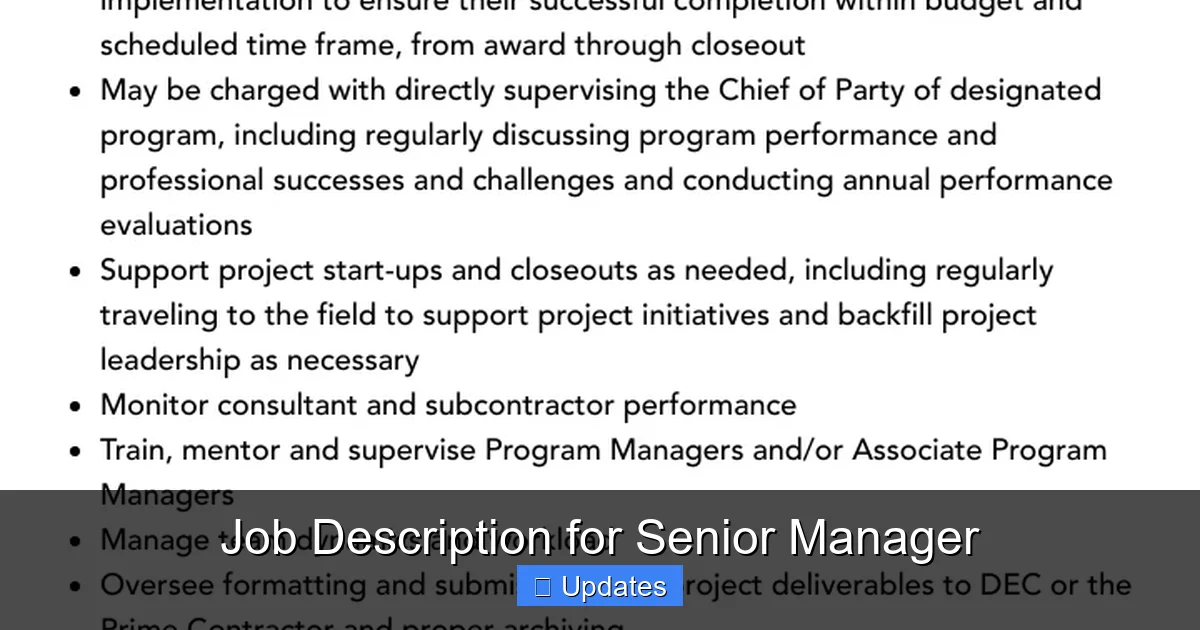
Visual guide about Job Description for Senior Manager
Image source: asset.velvetjobs.com
While specific duties vary by industry and organization size, most senior manager job descriptions share common themes. Let’s break down what typically falls under their purview.
Strategic Planning and Execution
One of the primary functions is developing and implementing strategies that support broader business goals. This includes analyzing market trends, forecasting demand, setting KPIs (key performance indicators), and adjusting tactics based on real-time data. For example, a senior manager in retail might analyze seasonal buying patterns to optimize inventory levels or adjust staffing schedules accordingly.
They also participate in cross-departmental planning sessions where they contribute insights from their area of expertise. Whether it’s launching a new service line or entering a new geographic market, their input ensures alignment between different teams.
Team Leadership and Talent Development
Leading a team effectively goes beyond assigning tasks. Senior managers build trust, empower individuals, and create environments where people thrive. They identify high-potential employees and invest in their development through coaching, stretch assignments, and targeted training programs.
Take Sarah, a senior marketing manager at a mid-sized tech firm. She noticed one of her analysts had strong creative instincts but lacked confidence in presenting ideas. Instead of sidelining her, Sarah paired her with a senior designer on a pilot campaign—giving her visibility and ownership. Six months later, that analyst became a go-to resource for client pitches.
This kind of mentorship is typical among successful senior managers. They recognize that investing in people pays dividends in loyalty, creativity, and innovation.
Financial Accountability
Budgeting is another critical aspect. Senior managers prepare annual operating budgets, monitor spending against targets, and justify variances with clear explanations. They may also approve vendor contracts or capital expenditures above certain thresholds.
For instance, a senior program coordinator might manage a $500K annual budget for community outreach events. Every dollar spent needs justification—whether it’s for venue rentals, promotional materials, or speaker fees—and any overspending must be flagged early with corrective actions proposed.
Performance Monitoring and Reporting
Regular check-ins with direct reports help track progress toward individual and team goals. Senior managers use dashboards, quarterly reviews, and informal conversations to assess performance holistically. When issues arise—like missed deadlines or declining quality—they intervene promptly with support rather than punitive measures.
They also compile reports for upper management summarizing team achievements, challenges, and recommendations. These insights inform strategic pivots and resource reallocations across the organization.
—
Skills Required for Success

Visual guide about Job Description for Senior Manager
Image source: asset.velvetjobs.com
Becoming an effective senior manager requires more than technical know-how. Here are the top competencies every candidate should cultivate:
Leadership and Emotional Intelligence
Strong leaders inspire others without relying on authority alone. Emotional intelligence—the ability to understand and manage your own emotions and those of others—is crucial. It enables senior managers to resolve conflicts calmly, provide constructive feedback, and adapt communication styles to diverse personalities.
Consider a scenario where two team members clash over project ownership. A senior manager with high EQ listens actively, acknowledges both perspectives, and guides them toward a compromise that leverages each person’s strengths. That’s emotional intelligence in action.
Communication Skills
Whether writing emails, delivering presentations, or facilitating meetings, clarity and conciseness matter. Senior managers must distill complex concepts into digestible information for stakeholders at all levels—from frontline staff to C-suite executives.
Active listening is equally important. By asking thoughtful questions and paraphrasing responses, they ensure understanding and build rapport.
Problem-Solving and Critical Thinking
When unexpected problems emerge—like supply chain delays or sudden budget cuts—senior managers must think fast and act decisively. They gather relevant data, evaluate alternatives, and choose solutions that balance short-term needs with long-term sustainability.
For example, if a key supplier suddenly raises prices, a savvy senior manager might explore alternative vendors, renegotiate terms, or redesign processes to reduce dependency on that component.
Project and Change Management
Managing multiple projects simultaneously requires excellent organizational skills. Senior managers prioritize tasks, delegate wisely, and keep timelines realistic. They also lead change initiatives—such as system upgrades or policy reforms—by preparing teams psychologically and providing ongoing support.
During a recent digital transformation at a healthcare provider, the senior IT manager held weekly town halls, created FAQ sheets, and assigned “change champions” on each unit. As a result, adoption rates increased by 40% compared to previous rollouts.
—
Qualifications and Experience Needed
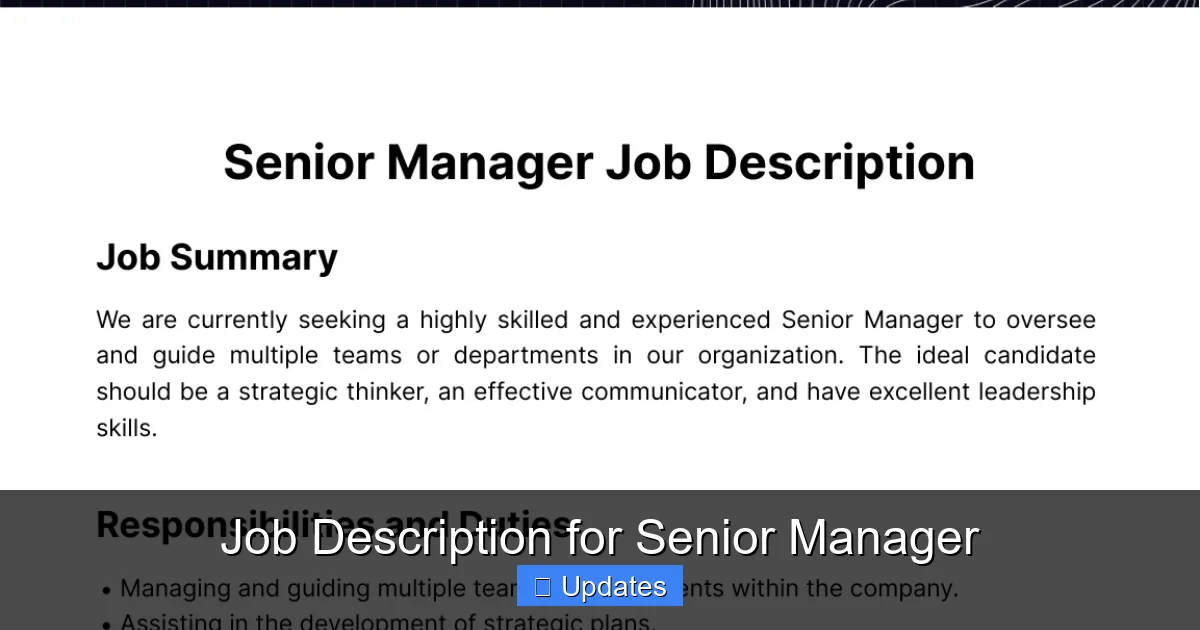
Visual guide about Job Description for Senior Manager
Image source: images.template.net
While requirements differ slightly by company and industry, here’s what most employers look for in a senior manager candidate:
Educational Background
Most organizations expect at least a bachelor’s degree in business administration, management, or a related field. Some prefer candidates with advanced degrees like an MBA, especially in competitive sectors such as consulting or finance.
However, experience often outweighs education. Many successful senior managers started as specialists—accountants, engineers, or marketers—who demonstrated leadership potential early on.
Professional Experience
Typically, candidates have 7–10 years of relevant work experience, including 3–5 years in managerial roles. Previous exposure to budget management, team leadership, and strategic planning is highly valued.
For example, someone transitioning into a senior HR generalist role might leverage five years as a team lead in talent acquisition, plus experience managing recruitment budgets and mentoring junior recruiters.
Certifications (Optional but Beneficial)
Certain certifications can give candidates an edge:
– PMP (Project Management Professional) for operations-focused roles
– SHRM-CP/SCP (Society for Human Resource Management Certified Professional) for HR leaders
– CPA (Certified Public Accountant) for finance-oriented senior managers
These credentials signal commitment to professional development and mastery of best practices.
—
Industries Where Senior Managers Excel
Senior managers play vital roles across virtually every sector. Here are some examples:
Technology and Software Development
In tech firms, senior managers oversee product lifecycles, coordinate engineering and design teams, and ensure timely delivery of features. They often collaborate with customer success teams to gather feedback and refine offerings.
Healthcare and Pharmaceuticals
Here, senior managers manage clinical trials, regulatory compliance, or hospital operations. Their decisions directly impact patient care and safety standards.
Retail and E-commerce
From brick-and-mortar stores to online platforms, senior retail managers optimize sales floors, manage inventories, and lead merchandising strategies.
Consulting and Professional Services
Firms like Deloitte or Accenture employ senior managers to lead client engagements, mentor consultants, and develop new service lines.
Each industry brings unique challenges—but the core skills remain consistent: leadership, accountability, and strategic thinking.
—
How to Write an Effective Job Description
Crafting a compelling senior manager job description attracts qualified candidates and sets clear expectations. Follow these guidelines:
Start with Purpose
Begin by explaining why the role exists. What problem will this person solve? How does their work contribute to company success?
Example opening: “We’re seeking a Senior Manager of Digital Marketing to spearhead our omnichannel campaigns and increase customer lifetime value by 25% within two years.”
Detail Key Responsibilities
List 6–8 core duties using action verbs. Be specific about outcomes rather than just activities.
Avoid vague statements like “manage projects.” Instead write: “Lead cross-functional teams to launch three new product lines annually with on-time, on-budget delivery.”
Mention Required Qualifications
Include educational background, years of experience, and essential skills. Use bullet points for readability.
Highlight Growth Opportunities
Top talent wants progression paths. Mention possibilities like moving into director roles or leading global initiatives.
By following this structure, you’ll create a job description that resonates with ambitious professionals ready to make an impact.
—
Common Challenges Faced by Senior Managers
Even the most skilled senior managers encounter obstacles. Being aware helps you prepare and respond effectively.
Balancing Micromanagement vs. Delegation
It’s tempting to control every detail—especially when stakes are high. But over-managing stifles initiative and slows progress. Learn to trust your team while maintaining oversight through regular touchpoints and milestone reviews.
Navigating Organizational Politics
Not everyone shares your vision. Senior managers must build coalitions, communicate transparently, and advocate for their team’s interests without burning bridges.
Maintaining Work-Life Balance
High-pressure roles can blur boundaries between personal and professional life. Set clear expectations around availability and encourage your team to do the same.
Remember: sustainable performance comes from self-care, not burnout.
—
Career Pathways and Advancement
Senior manager isn’t the end of the road—it’s often the springboard to even greater influence. Typical next steps include:
– Director-level positions overseeing multiple departments
– VP or C-suite roles shaping overall strategy
– Entrepreneurship leveraging accumulated expertise
Many senior managers also transition into advisory or board roles, sharing their wisdom with emerging leaders.
Continuous learning accelerates advancement. Consider attending leadership seminars, pursuing certifications, or seeking mentorship from industry veterans.
—
Conclusion: Why Senior Managers Shape Tomorrow’s Organizations
The senior manager role sits at the heart of modern business. They don’t just execute orders—they interpret signals, anticipate shifts, and mobilize teams toward shared victories. In a world where agility and empathy define success, these leaders are irreplaceable.
Whether you’re hiring for this position or aspiring to become one yourself, remember: great senior managers combine hard skills with soft skills, ambition with integrity, and results with relationships. When all these elements align, extraordinary things happen.
If you’re exploring similar leadership roles, check out our guide on Senior Account Manager Job Description or learn how to advance your career with insights from Salary For Senior Manager At Deloitte. And for those interested in adjacent fields, our article on Senior Program Coordinator Job Description offers valuable comparative perspectives.
Frequently Asked Questions
What qualifications are needed to become a senior manager?
Most organizations require a bachelor’s degree in business or a related field, plus 7–10 years of professional experience, including 3–5 years in management roles. Advanced degrees like MBAs and certifications (e.g., PMP, SHRM-CP) are often preferred. Relevant experience in budgeting, team leadership, and strategic planning is essential.
How does a senior manager differ from a director?
A senior manager typically oversees a single department or function (e.g., marketing, operations), focusing on tactical execution and team performance. Directors usually manage multiple departments or divisions and align their strategies with broader corporate goals. Directors often report to VPs or C-suite executives.
Can someone without an MBA become a senior manager?
Yes, many successful senior managers enter the role through hands-on experience rather than formal education. Demonstrated leadership, strong results, and industry expertise often outweigh degree requirements. Certifications and ongoing professional development can also compensate for lacking an MBA.
What industries hire senior managers?
Almost all industries need senior managers, including technology, healthcare, retail, finance, consulting, manufacturing, and education. Common titles include Senior Operations Manager, Senior Marketing Manager, Senior HR Generalist, and Senior Project Director. Specialized roles exist in sectors like pharmaceuticals, logistics, and nonprofit organizations.
Are senior managers involved in hiring decisions?
Absolutely. Senior managers typically lead hiring for their teams, participating in interviews, assessing cultural fit, and evaluating technical skills. They also mentor new hires during onboarding and integrate them into team workflows.
What soft skills are most important for senior managers?
Emotional intelligence, communication, conflict resolution, adaptability, and active listening are critical. These skills enable senior managers to motivate teams, navigate ambiguity, and build collaborative relationships across hierarchies.
