
Senior Account Manager Job Description


Anti-Slip Shower Stickers

Mattress Topper Memory Foam

Lap Desk for Reading
Looking to understand the senior account manager job description? This role blends client relationship management, strategic planning, and revenue growth. Senior account managers are pivotal in retaining key accounts and driving long-term business success through trust, communication, and results.
Key Takeaways
- Core Role: Senior account managers oversee high-value client relationships, ensuring satisfaction and identifying growth opportunities.
- Key Responsibilities: Includes managing accounts, developing strategies, leading client meetings, and collaborating with internal teams.
- Required Skills: Strong communication, negotiation, problem-solving, and leadership abilities are essential for success.
- Education & Experience: Typically requires a bachelor’s degree and 5+ years in account management or sales.
- Career Growth: This role often leads to positions like director of client services or VP of sales.
- Salary Range: Average salaries range from $80,000 to $120,000 annually, depending on industry and location.
- Industry Demand: High demand in tech, marketing, finance, and SaaS sectors due to focus on customer retention.
📑 Table of Contents
What Is a Senior Account Manager?
If you’ve ever wondered what it takes to keep big clients happy while growing a company’s revenue, the answer often lies with a senior account manager. This role sits at the heart of client relationships, acting as the main point of contact between a business and its most valuable customers. Unlike entry-level account managers who may handle smaller accounts, senior account managers are trusted with high-stakes relationships that directly impact the company’s bottom line.
Think of a senior account manager as a strategic partner to their clients. They don’t just respond to requests—they anticipate needs, offer solutions, and build long-term trust. Whether it’s a Fortune 500 company or a fast-growing startup, these professionals ensure that clients feel heard, supported, and confident in the partnership. Their work goes beyond sales; it’s about creating value, solving problems, and fostering loyalty.
In today’s competitive market, businesses can’t afford to lose their top clients. That’s why senior account managers are so valuable. They combine deep industry knowledge with emotional intelligence to navigate complex negotiations, resolve conflicts, and drive renewals. If you’re considering this career path, or simply want to understand what the job entails, you’re in the right place.
Key Responsibilities of a Senior Account Manager

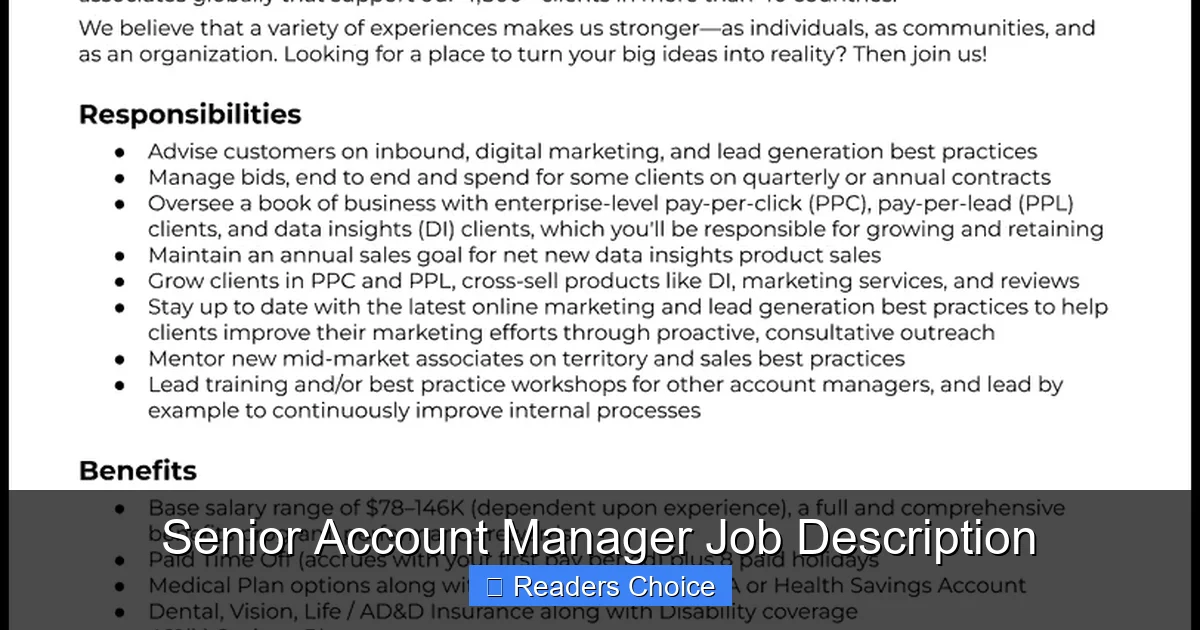
Visual guide about Senior Account Manager Job Description
Image source: d3kqdc25i4tl0t.cloudfront.net
The senior account manager job description is packed with responsibilities that span relationship management, strategy, and execution. While the exact duties can vary by industry, most roles share a common core. Let’s break down the most important responsibilities you’ll likely encounter.
Managing High-Value Client Accounts
At the top of the list is managing key accounts. These are typically the clients that bring in the most revenue or have the highest growth potential. A senior account manager is responsible for understanding each client’s business goals, pain points, and long-term vision. This means regular check-ins, quarterly business reviews, and staying updated on industry trends that might affect the client.
For example, if you’re managing a SaaS client in the healthcare sector, you’d need to know about regulatory changes, technology shifts, and competitive pressures. This knowledge allows you to position your company’s solutions as essential, not just convenient.
Developing and Executing Account Strategies
A senior account manager doesn’t just react—they plan. One of their biggest responsibilities is creating and implementing account growth strategies. This involves analyzing past performance, identifying upsell and cross-sell opportunities, and setting measurable goals.
Let’s say a client is using your software for basic reporting but hasn’t adopted the advanced analytics module. A good senior account manager would recognize this gap and work with the client to demonstrate the value of upgrading. They might arrange a demo, share case studies, or offer a pilot program. The goal is to expand the relationship in a way that benefits both parties.
Leading Client Meetings and Presentations
Communication is key, and senior account managers are often the face of the company during client interactions. They lead meetings, present quarterly reviews, and pitch new solutions. These aren’t just status updates—they’re strategic conversations designed to deepen trust and uncover new opportunities.
Imagine presenting a roadmap for the next year that includes new features, support enhancements, and cost-saving initiatives. A skilled senior account manager will tailor this presentation to the client’s priorities, using data and storytelling to make a compelling case.
Collaborating with Internal Teams
No senior account manager works in isolation. They rely heavily on collaboration with sales, marketing, product development, and customer support teams. For instance, if a client requests a custom feature, the account manager must work with the product team to assess feasibility and timeline.
They also act as the voice of the client within the organization. When a client raises a concern about service quality, the account manager ensures it’s escalated and resolved quickly. This internal advocacy is crucial for maintaining trust and improving overall service delivery.
Monitoring Account Health and Renewal Rates
One of the most critical metrics for a senior account manager is account health. This includes tracking usage patterns, support ticket volume, satisfaction scores, and renewal likelihood. By monitoring these indicators, they can spot risks early and take proactive steps to address them.
For example, if a client’s usage drops significantly, the account manager might reach out to understand why. Is it a technical issue? A change in their business? Or are they considering a competitor? Addressing the root cause quickly can prevent churn and even turn a struggling account into a growth opportunity.
Negotiating Contracts and Renewals
When it’s time to renew a contract, the senior account manager steps into a negotiation role. This involves reviewing terms, discussing pricing, and aligning on deliverables. Strong negotiation skills are essential—not to win at all costs, but to reach a fair agreement that strengthens the partnership.
A successful renewal isn’t just about keeping the client; it’s about improving the terms. Maybe the client agrees to a longer contract in exchange for added services, or they expand their license to include more users. These wins reflect the account manager’s ability to create mutual value.
Essential Skills and Qualifications
Visual guide about Senior Account Manager Job Description
Image source: d25zcttzf44i59.cloudfront.net
So, what does it take to excel as a senior account manager? While experience matters, certain skills and qualifications are non-negotiable. Let’s explore what employers look for when hiring for this role.
Communication and Interpersonal Skills
At the core of the senior account manager job description is the ability to communicate clearly and build rapport. You’ll be talking to C-level executives, project managers, and technical teams—each with different priorities and communication styles. Being able to adapt your message and listen actively is crucial.
For example, when explaining a technical solution to a non-technical client, you need to simplify complex ideas without losing their essence. Conversely, when speaking with engineers, you should be precise and data-driven. This flexibility builds credibility and trust.
Strategic Thinking and Problem-Solving
Senior account managers don’t just manage accounts—they think strategically. They analyze data, spot trends, and anticipate challenges before they arise. When a client faces a setback, they don’t panic; they assess the situation and propose solutions.
Imagine a client’s project is behind schedule due to internal delays. A strong account manager would work with them to adjust timelines, reallocate resources, or offer additional support. Their ability to think on their feet and stay calm under pressure is what sets them apart.
Negotiation and Influence
Negotiation is a daily part of the job, whether it’s renewing a contract, resolving a dispute, or securing budget for a new initiative. Senior account managers must be persuasive without being pushy. They understand the client’s needs and position their offerings as the best solution.
Influence also comes into play when working internally. You might need to convince the product team to prioritize a feature or get marketing to create a custom campaign. Building strong relationships across departments helps you get things done.
Leadership and Mentorship
Even if the title doesn’t include “manager,” senior account managers often lead by example. They may mentor junior account managers, share best practices, and help onboard new team members. Their experience and insights are invaluable for team development.
In some organizations, senior account managers also lead account teams, coordinating efforts across multiple stakeholders. This requires delegation, accountability, and the ability to inspire others.
Technical and Industry Knowledge
Depending on the industry, technical knowledge can be a major advantage. In tech or SaaS, understanding how the product works—and how it integrates with other systems—helps you speak the client’s language. In finance or healthcare, industry-specific regulations and trends are equally important.
For example, a senior account manager in the cybersecurity space should understand threats like ransomware, compliance standards like GDPR, and the importance of zero-trust architecture. This knowledge allows them to position their solutions effectively and build credibility.
Education and Experience Requirements
Most employers require a bachelor’s degree in business, marketing, communications, or a related field. However, experience often carries more weight. Typically, candidates need 5–7 years in account management, sales, or client services, with a proven track record of managing large accounts.
Certifications like the Certified Professional Services Manager (CPSM) or HubSpot Account Management Certification can also boost your resume. While not always required, they demonstrate commitment and expertise.
Typical Career Path and Advancement Opportunities

Visual guide about Senior Account Manager Job Description
Image source: asset.velvetjobs.com
The senior account manager role is often a stepping stone to higher leadership positions. With the right experience and performance, there are several paths for advancement.
From Senior Account Manager to Director of Client Services
One common career move is becoming a director of client services. In this role, you oversee multiple account managers and are responsible for the overall health of the client portfolio. You set strategy, manage budgets, and report to senior leadership.
This transition requires strong leadership skills and a deep understanding of the business. You’re no longer just managing one account—you’re shaping the client experience across the entire organization.
Moving into Sales Leadership
Because senior account managers are closely tied to revenue, many move into sales leadership roles like VP of Sales or Chief Revenue Officer (CRO). These positions focus on driving growth across all channels, including new business and renewals.
The skills you develop—negotiation, relationship building, and strategic planning—are directly transferable. Plus, your track record of retaining and growing accounts makes you a strong candidate for these roles.
Transitioning to Consulting or Entrepreneurship
Some senior account managers leverage their expertise to start consulting firms or launch their own businesses. Their deep client relationships and industry knowledge give them a unique advantage.
For example, a former senior account manager in the marketing tech space might start a consultancy helping SaaS companies improve their customer retention strategies. Their firsthand experience makes them highly credible and effective.
Staying in Account Management with Specialization
Not everyone wants to move into leadership. Some prefer to stay in account management but specialize in a niche—like enterprise accounts, global clients, or a specific industry. This path allows for deep expertise and high earning potential without the pressure of managing people.
Specialized senior account managers are often seen as subject matter experts and may earn top-tier salaries due to their unique value.
Salary Expectations and Industry Demand
Compensation for senior account managers varies based on location, industry, company size, and experience. However, the role is generally well-paid due to its impact on revenue.
Average Salary Range
According to data from Glassdoor, Payscale, and LinkedIn, the average salary for a senior account manager in the U.S. ranges from $80,000 to $120,000 per year. In high-cost cities like San Francisco or New York, salaries can exceed $130,000, especially in tech or finance.
Bonuses and commissions are common, often tied to renewal rates, upsell performance, and client satisfaction scores. Top performers can earn significantly more through incentive programs.
Factors That Influence Pay
Several factors affect how much you’ll earn:
– **Industry:** Tech, finance, and SaaS tend to pay more than non-profits or education.
– **Company Size:** Larger companies with bigger client contracts often offer higher salaries.
– **Location:** Urban areas with high living costs typically pay more.
– **Performance:** Consistent overachievement can lead to raises, promotions, and bonuses.
Job Market Outlook
The demand for senior account managers is strong and growing. As companies focus more on customer retention and lifetime value, the role becomes increasingly strategic. Industries like software, digital marketing, consulting, and telecommunications are particularly active in hiring.
According to the U.S. Bureau of Labor Statistics, employment in sales and related roles is expected to grow steadily over the next decade, with account management being a key area of expansion.
Tips for Success as a Senior Account Manager
Excelling in this role takes more than just checking boxes. Here are some practical tips to help you thrive.
Build Trust Through Consistency
Clients don’t just want solutions—they want reliability. Show up on time, follow through on promises, and communicate proactively. When issues arise, be transparent and take ownership. Trust is built over time, and it’s your most valuable asset.
Stay Curious and Keep Learning
The best senior account managers are lifelong learners. Attend industry conferences, read trade publications, and take online courses. The more you know, the better you can serve your clients and anticipate their needs.
Use Data to Drive Decisions
Don’t rely on gut feelings. Use CRM tools, analytics platforms, and customer feedback to guide your strategy. Data helps you spot trends, measure success, and justify recommendations.
Focus on Long-Term Value, Not Short-Term Wins
It’s tempting to push for quick sales, but the real win is building a lasting partnership. Ask yourself: “How can I help this client succeed over the next 3–5 years?” That mindset leads to deeper relationships and bigger opportunities.
Develop a Personal Brand
Be known for something—whether it’s exceptional communication, creative problem-solving, or deep industry knowledge. A strong personal brand makes you memorable and increases your value to both clients and employers.
Conclusion
The senior account manager job description is more than a list of tasks—it’s a dynamic, high-impact role that blends relationship management, strategy, and leadership. These professionals are the bridge between a company and its most important clients, ensuring satisfaction, driving growth, and building trust.
Whether you’re considering this career path or looking to hire for the role, understanding the responsibilities, skills, and opportunities is key. With strong communication, strategic thinking, and a client-first mindset, senior account managers play a vital role in long-term business success.
As industries continue to prioritize customer retention and lifetime value, the demand for skilled senior account managers will only grow. If you’re ready to take on a role that challenges you, rewards you, and makes a real difference, this could be the perfect fit.
Frequently Asked Questions
What does a senior account manager do on a daily basis?
A senior account manager spends their day managing client relationships, leading meetings, reviewing account performance, and collaborating with internal teams. They focus on ensuring client satisfaction, identifying growth opportunities, and driving renewals.
What’s the difference between an account manager and a senior account manager?
The main difference is experience and scope. Senior account managers handle larger, more complex accounts, lead strategic initiatives, and often mentor junior staff. They also have a greater impact on revenue and client retention.
Do senior account managers need a degree?
Most employers require a bachelor’s degree in business, marketing, or a related field. However, extensive experience in account management or sales can sometimes substitute for formal education.
Can a senior account manager work remotely?
Yes, many senior account manager roles offer remote or hybrid work options, especially in tech and SaaS. Success depends on strong communication skills and the ability to manage relationships virtually.
What tools do senior account managers use?
Common tools include CRM platforms like Salesforce or HubSpot, communication tools like Zoom and Slack, and analytics software like Google Analytics or Tableau. These help track client interactions and measure performance.
How can I become a senior account manager?
Start with a role in account management or sales, gain 5–7 years of experience, develop strong client relationships, and demonstrate consistent results. Pursuing certifications and leadership opportunities can also accelerate your path.
