
Is It Too Late to Start a New Hobby?


Spill-Proof Travel Mug

Long Handle Shoe Horn

Easy Grip Kitchen Utensils
Quick Answer
No, it is not too late to start a new hobby at any age. You can begin with something small, affordable, and suited to your current interests and abilities; the National Institute on Aging encourages enjoyable and meaningful activities as part of staying engaged as you age.
A simple way to get started
- Follow curiosity: Pick something you have wanted to try rather than something you think you should enjoy.
- Start cheaply: Borrow, rent, or buy beginner supplies before making a large investment.
- Keep sessions short: Try 15 to 30 minutes at first so learning stays enjoyable.
- Expect mistakes: Being a beginner is part of learning, regardless of your age.
- Give it time: Try several sessions before deciding whether a hobby suits you.
Remember
- You do not have to become an expert for a hobby to make your life more enjoyable.
I hear the question often: “Am I too old to start something new?” My answer is simple. Age may change how you approach a hobby, but it does not remove your ability to enjoy being a beginner.
As of 2026, there are more ways than ever to learn at your own pace. This guide will help you choose something realistic, start without pressure, and build a hobby that fits the life you have now.
In This Guide
- Is it ever too late to start a new hobby?
- Why can later life be a good time for a new hobby?
- How do you choose a hobby when you do not know where to start?
- How do you start a new hobby without getting overwhelmed?
- What are good hobbies to start later in life?
- What if money, mobility, or energy limits your choices?
- What if you feel too old or embarrassed to be a beginner?
- Frequently asked questions
- Final takeaway
Is It Ever Too Late to Start a New Hobby?
No. There is no expiration date for learning something because hobbies are not qualifications you must earn by a certain age.
A hobby is an activity you choose for enjoyment, curiosity, creativity, movement, learning, connection, or personal satisfaction. Success can simply mean looking forward to doing it again.
Definition: A new hobby is a leisure activity you intentionally begin learning or practicing, regardless of your age or previous experience.
The idea that hobbies must start in childhood usually comes from confusing enjoyment with mastery. Someone hoping to become a concert pianist has different goals from someone learning piano because playing favorite songs feels satisfying.
Your goal matters. So does your definition of progress.
Starting late changes the goal, not the opportunity
At 20, you might approach cycling as a competitive sport. At 70, you might enjoy gentle rides with friends and still consider cycling an important hobby.
The same principle works with almost anything:
- Painting: Create one small watercolor instead of worrying about exhibitions.
- Photography: Learn better phone photos before buying an advanced camera.
- Music: Practice one familiar song rather than chasing perfect technique.
- Gardening: Grow herbs in two containers instead of redesigning the yard.
- Writing: Begin with a one-page memory rather than planning a novel.
A smaller starting point is not a lesser hobby. It is often what makes a new interest sustainable.
Why Can Later Life Be a Good Time for a New Hobby?
Later life can give you something earlier decades often lacked: greater control over your time. Retirement, reduced work hours, or fewer family responsibilities can create room for interests that were postponed for years.
The National Institute on Aging notes that meaningful social and productive activities can support well-being in older adulthood. Hobbies are one practical way to build those activities into ordinary weeks.
You may know yourself better now
Older adults often have decades of experience noticing what energizes them and what does not. That can make choosing a hobby easier than it was when every new interest competed with work, children, and other commitments.
You may also care less about impressing other people. That freedom helps.
- More patience: You may be more comfortable learning gradually.
- Clearer preferences: You probably know whether you prefer groups or quiet time.
- Useful experience: Existing skills often transfer into a new hobby.
- Flexible goals: You can focus on enjoyment rather than achievement.
A hobby can give your week a useful rhythm
Retirement can remove routines that once happened automatically. A Tuesday painting class or Saturday gardening session can create something pleasant to anticipate.
That structure does not need to become another job. One or two regular activities can be enough.
If the hobby involves movement, the CDC’s guidance for adults 65 and older recommends combining aerobic, muscle-strengthening, and balance activities according to your abilities.
How Do You Choose a Hobby When You Do Not Know Where to Start?
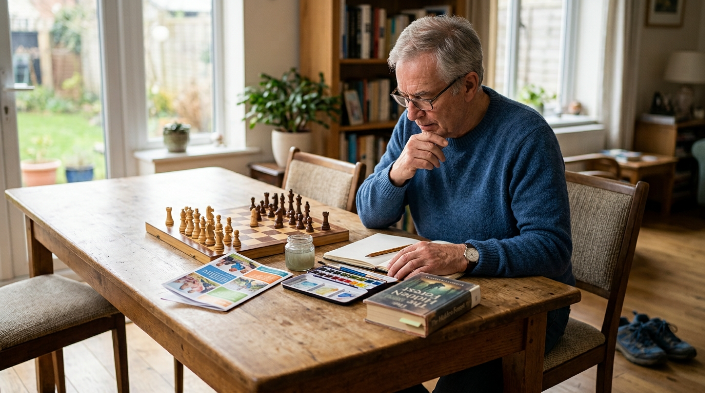
Start by deciding what you want the hobby to add to your life. Choosing by purpose is usually easier than scrolling through hundreds of hobby ideas.
I like to use five simple questions.
- Do I want more movement? Consider walking, gardening, swimming, dancing, or gentle cycling.
- Do I want more creativity? Try drawing, photography, music, crafts, cooking, or writing.
- Do I want more people around me? Look at clubs, volunteering, group games, choirs, or classes.
- Do I want mental challenge? Explore languages, chess, genealogy, technology, music, or history.
- Do I mainly want relaxation? Reading, birdwatching, puzzles, journaling, or container gardening may fit.
Look backward before looking outward
Think about interests you enjoyed when you were younger. Old curiosities often provide better clues than a random list of trendy activities.
Maybe you once enjoyed sketching, fixing radios, baking, fishing, singing, taking photographs, or working with dogs. You do not have to resume it at the same level.
Use this quick comparison
| Hobby | Basic Starter Need | Suggested First Session | Best Fit |
|---|---|---|---|
| Walking | Supportive shoes, safe route | 10–20 minutes | Movement and outdoors |
| Watercolor | Paper, brush, small paint set | 20–30 minutes | Creativity |
| Photography | Phone or camera | 15–30 minutes | Creativity and walking |
| Journaling | Notebook and pen | 5–10 minutes | Reflection |
| Book club | Book or audiobook | One meeting monthly | Reading and connection |
| Music | Instrument or singing resource | 10–15 minutes | Learning and creativity |
Do not treat these times as rules. They are simply low-pressure starting points you can adjust.
How Do You Start a New Hobby Without Getting Overwhelmed?
Make the first version of the hobby almost ridiculously easy. Your first goal should be showing up, not becoming good.
This approach keeps the learning curve from turning into a reason to quit.
Try the five-session experiment
- Choose one hobby: Avoid starting four new activities at once.
- Get basic supplies: Borrow or buy only what a beginner needs.
- Schedule 15 to 30 minutes: Put a small session on your calendar.
- Repeat five times: Give yourself enough exposure to get past the awkward first attempt.
- Review honestly: Ask whether you enjoyed the activity enough to continue.
Five sessions are not a scientific threshold. They simply give a hobby more than one chance to appeal to you.
Do not buy the expert version first
A common beginner mistake is buying expensive equipment before knowing whether the activity fits. Start with the simplest workable setup.
- Borrow books from a library before building a collection.
- Use your phone before buying photography equipment.
- Rent an instrument before purchasing an expensive model.
- Take one class before buying a long course package.
- Grow two plants before filling a garden with supplies.
Learning something new can be enjoyable precisely because you are not expected to know everything. Give yourself permission to be clumsy at first.
What Are Good Hobbies to Start Later in Life?
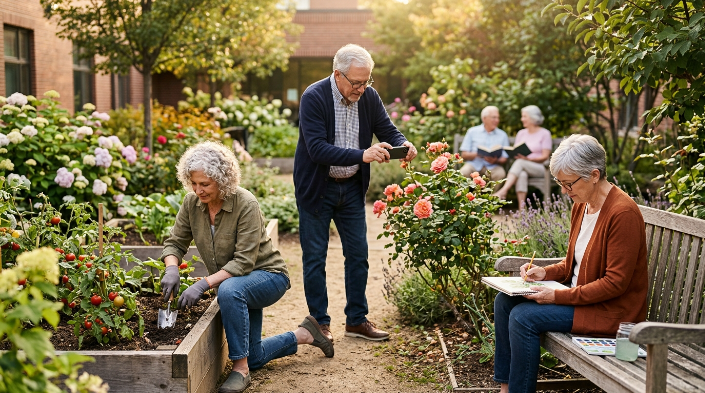
The best choice depends on what you want from your free time. There is no single hobby that suits every older adult.
The National Institute on Aging’s healthy-aging resources include learning, enjoyable activities, movement, and social engagement as useful parts of later life.
Creative hobbies
- Watercolor painting
- Drawing
- Knitting or crochet
- Woodworking
- Photography
- Creative writing
- Memoir writing
- Playing an instrument
Active hobbies
- Walking
- Gardening
- Swimming
- Dancing
- Tai chi
- Gentle cycling
- Nature walks
For active hobbies, choose a pace that fits your health and current ability. The NIA’s exercise and physical activity guidance also encourages older adults to choose movement they enjoy.
Health note: If you have a medical condition, new pain, dizziness, unusual shortness of breath, or concerns about exercise safety, ask your healthcare professional what activities are appropriate for you.
Social hobbies
- Book clubs
- Community choirs
- Volunteering
- Card groups
- Board games
- Community classes
- Walking groups
- Local history clubs
Quiet hobbies at home
- Reading
- Audiobooks
- Jigsaw puzzles
- Crosswords
- Genealogy
- Journaling
- Birdwatching
- Cooking new recipes
You can also combine categories. Photography adds creativity to walking, while a gardening club combines movement, learning, and social contact.
What If Money, Mobility, or Energy Limits Your Choices?
A limitation may change the form of a hobby without eliminating the hobby itself. Adaptation is often more useful than abandoning an interest.
Start with what feels comfortable today.
If your budget is tight
- Use library books, audiobooks, and free classes.
- Start drawing with a pencil and ordinary paper.
- Use a smartphone for photography.
- Join free community groups.
- Buy secondhand supplies after testing the hobby.
- Share tools with a friend or club.
If your mobility is limited
Look for hobbies that can be done seated, indoors, or in short sessions. Painting, genealogy, puzzles, music, photography from accessible locations, container gardening, and online classes can all be adapted.
You can also change the scale. Someone who once maintained a large garden may enjoy three accessible containers near a chair or raised surface.
If your energy changes from day to day
Choose hobbies with flexible stopping points. Reading ten pages or knitting for fifteen minutes still counts.
- High-energy day: Take a longer walk or attend a class.
- Average day: Practice the hobby for 20 minutes.
- Low-energy day: Watch a tutorial, organize supplies, or read about the hobby.
A sustainable hobby should fit around your life. Your life should not have to fit around the hobby.
What If You Feel Too Old or Embarrassed to Be a Beginner?
Feeling awkward is normal because beginners make visible mistakes. The solution is not waiting until you feel younger; it is changing what those mistakes mean.
A mistake means you are doing something you could not already do. That is evidence of learning.
Stop comparing your chapter one with someone else’s chapter twenty
Online videos can make hobbies look effortless because you usually see the finished performance. You do not see the hundreds of ordinary practice sessions behind it.
Compare yourself with your own first attempt instead.
- Can you play one more chord than last month?
- Can you identify three more birds?
- Did your latest photograph come out sharper?
- Can you swim one more comfortable lap?
- Did you finish a small project you once could not begin?
You are allowed to stay an amateur
The word “amateur” should not be an insult in a hobby. You are doing the activity because you enjoy it, not because someone is paying you.
You also do not have to monetize it. A scarf can simply be a scarf, and a photograph can simply make you smile.
I think this is one of the best freedoms of starting something later in life. You can let enjoyment be enough.
Frequently Asked Questions
Is 60 too old to start a new hobby?
No. At 60, you can begin creative, educational, social, relaxing, or physically active hobbies that match your interests and abilities. Start with a small commitment and adjust the activity to your comfort instead of assuming you must learn it the same way a younger person would.
Is 70 too old to learn something new?
No. A person in their 70s can still learn skills, take classes, practice music, use new technology, create art, garden, volunteer, or explore other interests. The best starting pace depends on the individual, not the number on a birthday cake.
What is the easiest hobby to start as a senior?
Reading, walking, journaling, birdwatching, puzzles, smartphone photography, and container gardening are easy starting points because they can require little equipment. The easiest hobby for you is usually one that matches your interests, mobility, energy, budget, and available space.
How many hobbies should I try at once?
Start with one or two. Trying too many new activities at the same time can turn free time into another demanding schedule. Once you know which activities you enjoy consistently, you can add another for variety.
How long should I give a hobby before quitting?
There is no required period, but several short sessions usually tell you more than one attempt. Try removing obvious obstacles first, such as confusing instructions or unsuitable equipment, then decide whether the activity itself interests you.
What if I keep changing hobbies?
That is fine. Hobbies are allowed to change as your curiosity, health, schedule, and circumstances change. Six enjoyable months of photography did not become wasted time simply because you later decided to learn gardening.
Do I need to be talented to enjoy a hobby?
No. Talent may affect how quickly you develop a skill, but it is not required for enjoyment. A hobby can provide creativity, relaxation, movement, learning, or friendship even when you remain an ordinary beginner.
Final Takeaway
It is not too late to start a new hobby. The better question is whether there is something you would enjoy trying now.
Choose one curiosity and make the first step small. Borrow the book, plant one herb, attend one class, walk one new route, pick up the brush, or practice one song.
You do not need to recover lost time. You only need to use a little of the time in front of you.