
How Old to Qualify as a Senior Citizen


Smart Health Watch for Seniors

Non-Slip Slippers

Indoor Security Camera
There’s no single age that defines a senior citizen—eligibility varies by program, location, and organization. While 65 is the most common benchmark, many benefits kick in as early as 55. Understanding these differences helps you access discounts, healthcare, and support when you need them most.
Key Takeaways
- Age 65 is the standard for Medicare and many federal programs: This is the most widely recognized age for senior status in the U.S., especially for Social Security and healthcare benefits.
- Some senior discounts start as early as 55: Retailers, restaurants, and travel companies often offer reduced prices or special perks beginning at 55 or 60.
- State and local benefits may have different thresholds: Property tax relief, transit passes, and utility discounts can begin at 60, 62, or 65 depending on your location.
- Private organizations set their own rules: Gyms, museums, and loyalty programs define “senior” based on marketing and customer demographics, not law.
- International standards vary widely: In some countries, senior status begins at 60; in others, it’s 67 or higher due to life expectancy and pension policies.
- Age doesn’t always equal eligibility—documentation matters: You’ll often need ID, proof of residency, or enrollment in a specific program to claim senior benefits.
- Planning ahead saves money and stress: Knowing when you qualify helps you budget for healthcare, travel, and daily expenses in retirement.
📑 Table of Contents
- How Old to Qualify as a Senior Citizen: The Complete Guide
- Why Is There No Single Age for Senior Citizens?
- Federal Programs and the Age 65 Standard
- State and Local Benefits: When Age 60 or 62 Opens Doors
- Private Sector Senior Discounts: Starting as Early as 55
- International Perspectives: When Does Senior Status Begin Around the World?
- How to Prepare for Senior Benefits: Tips and Best Practices
- Conclusion: Embracing Senior Status on Your Own Terms
How Old to Qualify as a Senior Citizen: The Complete Guide
So, when exactly do you become a “senior citizen”? It’s a question more people are asking—not just because of birthday candles, but because of real-life benefits. From cheaper movie tickets to free bus rides, the perks of being a senior can make a big difference in your wallet and lifestyle. But here’s the catch: there’s no universal age that automatically grants you senior status. The answer depends on where you live, what program you’re applying for, and even which store you’re shopping at.
You might assume that turning 65 is the magic number—and in many cases, you’d be right. That’s when Medicare kicks in, and it’s the standard retirement age for Social Security full benefits. But dig a little deeper, and you’ll find that senior discounts at your favorite coffee shop might start at 55. Your local library could offer free computer classes for anyone 60 or older. And if you’re traveling abroad, some countries consider you a senior at 60, while others wait until 67.
This patchwork of age requirements can be confusing. One day you’re paying full price for a senior meal, and the next, you’re denied a discount because you’re “too young.” The good news? Once you understand how these rules work, you can plan ahead, save money, and take full advantage of the benefits available to you. This guide will walk you through the most common age thresholds, explain why they vary, and help you navigate the world of senior eligibility with confidence.
Why Is There No Single Age for Senior Citizens?

Visual guide about How Old to Qualify as a Senior Citizen
Image source: img.etimg.com
If you’ve ever been told you’re “not quite there yet” when asking for a senior discount, you’re not alone. The lack of a universal age for senior citizenship stems from a mix of historical, economic, and organizational factors. Unlike legal adulthood (which is clearly defined at 18 in most places), senior status isn’t governed by a single law or international standard. Instead, it’s shaped by a combination of government policies, corporate marketing strategies, and cultural perceptions of aging.
One major reason for the variation is the purpose behind the age requirement. Government programs like Medicare and Social Security use age 65 because it aligns with historical retirement norms and life expectancy data from the mid-20th century. When Social Security was established in 1935, 65 was chosen as the full retirement age because it reflected the average life span at the time. Today, people live longer, healthier lives, but the system hasn’t fully caught up—though full Social Security benefits are now gradually increasing to age 67 for those born in 1960 or later.
On the other hand, private businesses set their own senior age thresholds based on customer behavior and profitability. A restaurant might offer senior discounts starting at 55 to attract older diners who tend to eat earlier and spend more consistently. A gym might offer reduced membership fees at 60 to encourage active aging. These decisions are driven by market research, not legislation.
Cultural attitudes also play a role. In some societies, older adults are respected and supported earlier in life. In Japan, for example, people are often considered seniors at 60, reflecting cultural values around elder care and community respect. In contrast, Western countries may delay the label until later, partly due to workplace norms and anti-aging trends.
Finally, life expectancy and demographic shifts influence policy. Countries with aging populations, like Italy or Germany, may raise the official senior age to manage pension costs. Meanwhile, organizations in the U.S. often keep lower thresholds to remain competitive and inclusive.
The bottom line? The age to qualify as a senior citizen isn’t about biology—it’s about context. Whether you’re 55, 60, or 65, your eligibility depends on who’s asking and why.
Federal Programs and the Age 65 Standard
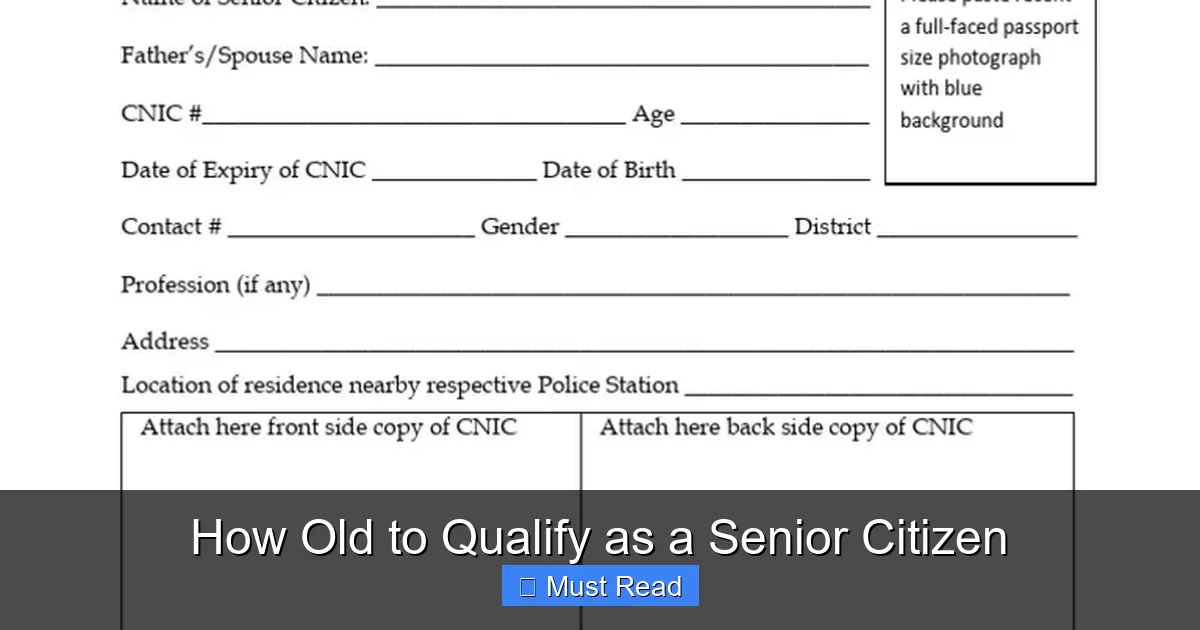
Visual guide about How Old to Qualify as a Senior Citizen
Image source: imgv2-2-f.scribdassets.com
When most people think of senior citizen benefits, they think of the big federal programs: Medicare, Social Security, and Veterans Affairs. And for good reason—these programs serve millions of Americans and often use age 65 as the benchmark for eligibility. But even within these systems, the rules aren’t always straightforward.
Medicare: The 65-Year Milestone
Medicare is perhaps the most well-known program tied to age 65. If you’re a U.S. citizen or permanent resident, you’re generally eligible for Medicare when you turn 65—even if you’re still working. Medicare helps cover hospital stays, doctor visits, prescription drugs, and preventive care. It’s a lifeline for many older adults, especially those on fixed incomes.
But here’s a common misconception: you don’t have to wait until your 65th birthday to sign up. You can enroll during a seven-month window that starts three months before your birthday month and ends three months after. Missing this window could result in late enrollment penalties, so it’s smart to plan ahead.
There are exceptions. If you’re under 65 and have certain disabilities or conditions like End-Stage Renal Disease (ESRD) or Amyotrophic Lateral Sclerosis (ALS), you may qualify for Medicare early. Similarly, if you’ve been receiving Social Security Disability Insurance (SSDI) for 24 months, you’ll automatically be enrolled in Medicare.
Social Security: Full Benefits at 65–67
Social Security is another cornerstone of senior benefits, but the age for full benefits has shifted over time. While 65 was once the standard, the full retirement age (FRA) now depends on your birth year. For example:
– If you were born in 1955, your FRA is 66 and 2 months.
– If you were born in 1960 or later, your FRA is 67.
You can start receiving reduced benefits as early as age 62, but waiting until your FRA (or even age 70) increases your monthly payment. This is a crucial financial decision—taking benefits early means smaller checks for life, while delaying boosts your income significantly.
Social Security also offers spousal and survivor benefits, which can be claimed at different ages. For instance, a surviving spouse can begin receiving reduced benefits at 60 (or 50 if disabled).
Veterans Benefits and Age Considerations
The Department of Veterans Affairs (VA) provides healthcare, disability compensation, and pension benefits to eligible veterans. While many VA benefits aren’t age-based, some programs do consider age. For example, the VA Pension program is available to wartime veterans who are 65 or older (or permanently disabled), with income and asset limits.
Additionally, veterans may qualify for Aid and Attendance benefits, which provide extra financial support for those who need help with daily activities. Age isn’t the only factor—health and financial need are also considered—but being 65 or older can strengthen your case.
Other Federal Programs
Beyond healthcare and income support, the federal government offers other age-related benefits. The Supplemental Security Income (SSI) program, for instance, provides financial aid to low-income individuals who are 65 or older, blind, or disabled. Similarly, the Senior Community Service Employment Program (SCSEP) helps low-income seniors aged 55 and older find part-time work and job training.
These programs highlight an important point: while 65 is a common threshold, some federal benefits start earlier, especially for those with financial or health challenges.
State and Local Benefits: When Age 60 or 62 Opens Doors

Visual guide about How Old to Qualify as a Senior Citizen
Image source: stat.joinditto.in
While federal programs often use 65 as the cutoff, many state and local governments offer senior benefits at younger ages. These can include property tax relief, utility discounts, public transportation passes, and access to recreational programs. The age requirements vary widely, so it’s worth checking with your city or county.
Property Tax Relief and Exemptions
Many states offer property tax breaks for seniors, but the eligibility age can be as low as 60 or 62. For example:
– In Florida, homeowners 65 and older may qualify for an additional homestead exemption.
– In Texas, seniors 65 and older can freeze their school district property taxes.
– In New York, some counties offer tax exemptions starting at 62.
These programs often require proof of residency, income limits, and application deadlines. In some cases, you must apply annually, so staying organized is key.
Public Transportation and Transit Discounts
Public transit systems across the U.S. frequently offer reduced fares or free rides for seniors. The qualifying age varies:
– In Los Angeles, Metro offers discounted fares to riders 62 and older.
– In Chicago, the CTA provides reduced fares for those 65 and older.
– In New York City, seniors 65 and older ride subways and buses for free with a reduced-fare MetroCard.
Some cities also offer specialized senior shuttle services or door-to-door transportation for medical appointments. These programs can be a game-changer for older adults who no longer drive.
Utility and Phone Bill Assistance
Several states and utility companies offer discounts or assistance programs for seniors. For example:
– The Low Income Home Energy Assistance Program (LIHEAP) helps low-income households—including seniors—pay heating and cooling bills. While not strictly age-based, many applicants are 60 or older.
– Some phone carriers offer discounted plans for seniors, often starting at 55 or 65.
Additionally, local governments may waive fees for trash collection, water, or sewer services for qualifying seniors.
Recreation and Community Programs
Libraries, parks, and community centers often provide free or low-cost programs for older adults. These might include fitness classes, computer training, book clubs, or art workshops. The age requirement is usually 60 or 65, but some programs welcome anyone 55 and older.
For example, the National Park Service offers a free lifetime pass to U.S. citizens 62 and older. This pass grants access to more than 2,000 federal recreation sites, including national parks, forests, and wildlife refuges.
Private Sector Senior Discounts: Starting as Early as 55
One of the most visible signs of senior status is the discount. From restaurants to retail stores, many businesses offer special pricing for older customers. But unlike government programs, these discounts are entirely voluntary—and the age to qualify can be surprisingly low.
Retail and Grocery Stores
Many national chains offer senior discounts on specific days of the week. For example:
– Kohl’s offers 15% off every Wednesday for shoppers 60 and older.
– Ross Dress for Less gives 10% off on Tuesdays for customers 55 and up.
– Some grocery stores, like Publix and Kroger, offer discounts or double coupons for seniors, often starting at 60.
These discounts usually require showing a valid ID, so it’s helpful to carry your driver’s license or state ID.
Restaurants and Food Services
Dining out can be more affordable with senior discounts. Popular chains like:
– Denny’s offers 10–20% off for guests 55 and older.
– IHOP provides discounted menus for seniors 55+.
– Applebee’s has a 10–15% senior discount at many locations.
Some local diners and cafes also offer senior menus with smaller portions at lower prices. Always ask—many places don’t advertise their discounts prominently.
Travel and Hospitality
If you love to travel, senior status can unlock significant savings. Airlines, hotels, and car rental companies often offer reduced rates for older travelers. For example:
– Amtrak provides 10% off for passengers 65 and older.
– Many hotel chains, including Marriott and Hilton, offer senior rates starting at 55 or 60.
– Car rental companies like Avis and Budget offer discounts for AARP members, who must be 50 or older.
Cruise lines and tour operators also frequently cater to seniors, with special packages and group rates.
Entertainment and Leisure
Movies, museums, and theme parks often have senior pricing. For instance:
– Regal Cinemas offers discounted tickets for guests 60 and older.
– Many museums provide free or reduced admission on certain days for seniors.
– Disneyland and other theme parks offer senior passes or discounts, usually starting at 60 or 65.
Even streaming services like YouTube TV and Sling TV offer senior plans with lower monthly fees.
International Perspectives: When Does Senior Status Begin Around the World?
If you’re planning to retire abroad or travel internationally, it’s important to know that the age to qualify as a senior citizen varies widely. Different countries have different standards based on life expectancy, pension systems, and cultural norms.
Europe: Aging Populations and Later Retirement
In many European countries, the official retirement age is rising due to longer life spans and economic pressures. For example:
– In Germany, the retirement age is gradually increasing to 67.
– In France, it’s 62, but full pension benefits require working longer.
– In the UK, the state pension age is 66 and will rise to 67 by 2028.
Despite these higher thresholds, many European businesses still offer senior discounts starting at 60 or 65. Public transportation, museums, and cultural sites often provide reduced fares for older adults.
Asia: Respect for Elders and Earlier Recognition
In countries like Japan and South Korea, older adults are often recognized as seniors at 60. This reflects cultural values that emphasize respect for elders and community support. For example:
– In Japan, people become eligible for senior citizen discounts and transit passes at 65, but some programs start at 60.
– In China, the retirement age is 60 for men and 50–55 for women, depending on the job.
Many Asian countries also have strong family support systems, reducing the reliance on government programs.
Latin America and Africa: Varied Approaches
In Latin America, retirement ages typically range from 55 to 65, depending on the country. For example:
– In Brazil, the retirement age is 65 for men and 62 for women.
– In Mexico, it’s 65 for both genders.
In Africa, many countries have lower life expectancies and less formal pension systems. Senior status may be more informal, based on community roles rather than age.
How to Prepare for Senior Benefits: Tips and Best Practices
Knowing when you qualify is only half the battle. To make the most of senior benefits, you need to plan ahead, stay organized, and be proactive. Here are some practical tips to help you navigate the process:
Create a Benefits Checklist
Make a list of all the programs and discounts you’re interested in, along with their age requirements and application deadlines. Include federal, state, local, and private options. Update it regularly as you approach eligibility.
Gather Required Documents
Most programs require proof of age, residency, and sometimes income. Keep copies of your birth certificate, driver’s license, Social Security card, and tax returns in a secure folder. For travel discounts, carry your ID with you.
Sign Up Early
Don’t wait until the last minute to enroll in Medicare or apply for benefits. Set reminders for key dates, like your Medicare enrollment window or property tax exemption deadline.
Ask Questions
If you’re unsure whether you qualify, ask. Call the program’s customer service line, visit a local office, or check their website. Many organizations are happy to help.
Join AARP
The AARP (formerly the American Association of Retired Persons) offers discounts, resources, and advocacy for people 50 and older. Membership costs around $16 per year and includes access to travel deals, insurance, and financial planning tools.
Stay Informed
Laws and policies change. Subscribe to newsletters, follow government websites, and talk to financial advisors to stay up to date on new benefits or changes to existing ones.
Conclusion: Embracing Senior Status on Your Own Terms
The age to qualify as a senior citizen isn’t a one-size-fits-all answer. It depends on the program, the organization, and even the country. While 65 remains the most common benchmark—especially for federal benefits—many perks start earlier, at 55 or 60. And in some places, you might not be considered a senior until 67.
What matters most is understanding your options and planning ahead. Whether you’re looking to save on groceries, travel the world, or secure your healthcare, knowing when you qualify can make a real difference in your quality of life. Senior status isn’t just about age—it’s about access, opportunity, and peace of mind.
So don’t wait for someone to hand you a discount card. Take charge of your benefits, ask questions, and make the most of this next chapter. After all, being a senior citizen isn’t just about getting older—it’s about living smarter, healthier, and more fully.
Frequently Asked Questions
What age do you qualify as a senior citizen for Medicare?
You qualify for Medicare at age 65 if you’re a U.S. citizen or permanent resident. You can enroll during a seven-month window around your birthday. Some people under 65 may qualify due to disability or certain medical conditions.
Can I get senior discounts before age 65?
Yes! Many private businesses offer senior discounts starting at 55 or 60. Retail stores, restaurants, and travel companies often set their own age thresholds, so it’s worth asking even if you’re not yet 65.
Do all states offer the same senior benefits?
No, state and local benefits vary widely. Some states offer property tax relief at 60, while others wait until 65. Check with your local government or senior center to learn what’s available in your area.
Is 65 the retirement age everywhere?
No, retirement ages differ by country. In the U.S., full Social Security benefits are now 67 for those born in 1960 or later. In Europe, many countries are raising retirement ages to 67 or higher due to longer life expectancies.
Do I need to apply for senior benefits, or do they start automatically?
Most benefits require an application. Medicare and Social Security may enroll you automatically in some cases, but you’ll need to apply for discounts, tax relief, and local programs. Always check the requirements.
Can non-citizens qualify for senior benefits in the U.S.?
Some benefits, like Medicare, are available to permanent residents (green card holders) who meet residency requirements. Other programs may have citizenship or legal residency rules. Check with the specific agency for eligibility details.