
What Hobbies Improve Memory in Older Adults?


Electric Recliner Lift Chair

Large Print Keyboard

Adjustable Walker with Wheels
Quick Answer
Hobbies that mix learning, movement, creativity, and social contact may help support memory in older adults. Good choices include learning an instrument, dancing, gardening, reading, crafts, photography, puzzles, games, and group activities. The National Institute on Aging also encourages older adults to stay involved in meaningful mental, physical, and social activities.
Memory-Friendly Hobbies to Try
- Learn music: Playing an instrument combines listening, movement, attention, and recall.
- Try dancing: Remembering steps while moving gives the brain and body a joint workout.
- Make something: Quilting, painting, woodworking, and photography require planning and new skills.
- Play games: Chess, cards, puzzles, and strategy games challenge attention and problem-solving.
- Stay social: Clubs, volunteering, and group classes add conversation and human connection.
- Get moving: Walking, gardening, swimming, and tai chi support overall brain health.
One Useful Rule
- Pick something enjoyable but slightly challenging. A hobby you keep doing is more useful than one that feels like homework.
What hobbies improve memory in older adults? I look first at hobbies that make you learn, move, remember, create, or connect with other people.
The good news is that you don’t need expensive brain-training software. Many ordinary hobbies give the mind a useful challenge while making daily life more enjoyable.
In This Guide
- What hobbies are best for memory in older adults?
- Why can hobbies support memory as we age?
- Which hobbies challenge the brain most?
- Which physical hobbies are good for brain health?
- Are social hobbies good for memory?
- How often should older adults do memory-friendly hobbies?
- How do you choose the right hobby?
- When should memory changes be checked by a doctor?
- Frequently asked questions
What Hobbies Are Best for Memory in Older Adults?
The best hobbies combine mental challenge, enjoyment, movement, or social contact. Activities that require you to learn something new may be especially useful.
As of 2026, research still doesn’t prove that one hobby can stop dementia. The goal is to give your brain regular, meaningful work while supporting your wider health.
| Hobby | Main Challenge | Social Potential | Movement | Easy Starting Session |
|---|---|---|---|---|
| Learning an instrument | Memory, attention, coordination | Medium | Light | 15–20 minutes |
| Dancing | Sequence recall, coordination | High | Moderate | 15–30 minutes |
| Photography | Learning, planning, visual attention | Medium | Light | 20–30 minutes |
| Cards or strategy games | Working memory, planning | High | Low | 20–30 minutes |
| Gardening | Planning, recall, problem-solving | Medium | Light to moderate | 20–30 minutes |
| Reading and book clubs | Attention, comprehension, recall | Medium to high | Low | 20 minutes |
Don’t worry about finding the “perfect” activity. Variety often makes more sense than doing the same puzzle every day.
A person might garden on Monday, play cards Wednesday, and attend a dance class Saturday. Each activity asks the brain to work in a different way.
Section Takeaway: Choose hobbies that feel enjoyable and give you a small challenge. Mixing mental, physical, creative, and social activities gives you more variety.
Why Can Hobbies Support Memory as We Age?
Memory works better when the brain has reasons to pay attention, learn, retrieve information, and solve problems. Many hobbies naturally require all four.
Definition: A memory-friendly hobby is an enjoyable activity that regularly asks you to learn, recall, plan, concentrate, move, create, or interact with other people.
The brain also doesn’t work alone. Sleep, heart health, mood, hearing, movement, and social contact can all affect how sharp someone feels.
That is why I prefer a whole-life approach rather than treating crossword puzzles as medicine. The NIA’s brain health resources also place cognitive health within the bigger picture of healthy aging.
- Novelty makes the brain learn something unfamiliar.
- Practice asks you to retrieve information again and again.
- Movement supports overall physical and brain health.
- Conversation requires listening, responding, and remembering context.
- Purpose gives you a reason to keep showing up.
Which Hobbies Challenge the Brain Most?

Hobbies with an active learning curve tend to demand more than passive entertainment. You have to make choices, notice mistakes, and improve with practice.
Learning a musical instrument
Piano, guitar, ukulele, and other instruments combine sound, hand movement, timing, and memory. Even relearning an instrument from younger years can provide fresh mental work.
- Start with one short song.
- Practice for 15 minutes.
- Add new notes or chords slowly.
Photography, quilting, and crafts
Creative hobbies can be surprisingly demanding. You may need to learn tools, plan a project, remember steps, and correct problems as you go.
NIA has highlighted research in which older adults learning digital photography or quilting showed memory improvement. The key point was active learning, not simply keeping busy.
Reading, writing, and book clubs
Reading requires attention and comprehension. Discussing the book later adds recall, language, and social interaction.
- Read one chapter at a time.
- Write three notes afterward.
- Explain the main idea to someone else.
Cards, chess, puzzles, and games
Games can exercise attention, planning, pattern recognition, and working memory. Social games add conversation and friendly competition.
Still, I wouldn’t spend hours on one “brain game” because an advertisement promises sharper memory. Broader, varied activities make more sense.
Which Physical Hobbies Are Good for Brain Health?
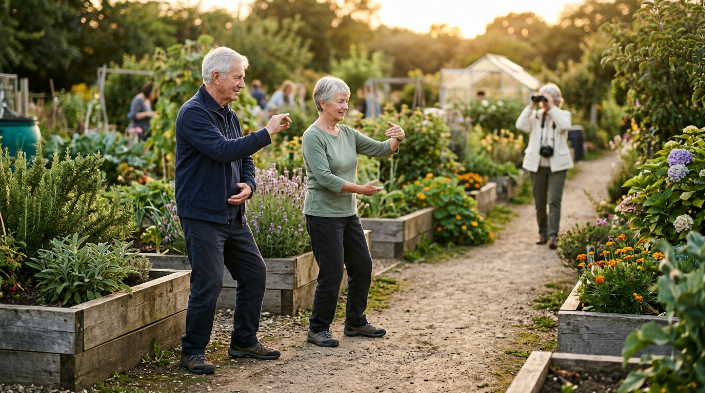
Movement deserves a place in any memory-friendly routine. Physical activity supports brain health while also helping strength, balance, sleep, and independence.
Current CDC guidance for adults age 65 and older recommends at least 150 minutes of moderate aerobic activity each week, plus muscle-strengthening and balance activities.
Dancing
Dance makes you remember patterns while coordinating your body with music. Partner or group dancing also adds conversation and social connection.
Gardening
Gardening involves more thinking than it first appears. You plan where things go, remember watering needs, notice changes, and solve small problems.
Container gardening can make the hobby easier for people who dislike kneeling or bending. Raised beds can also reduce how far you need to reach.
Walking and nature hobbies
Walking becomes more mentally engaging when you add birdwatching, photography, nature identification, or conversation with a friend. That turns simple exercise into a richer hobby.
Tai chi
Tai chi combines controlled movement, attention, balance, and remembered sequences. An NIA-funded study reported in 2024 found cognitive benefits from tai chi programs among older adults with mild cognitive impairment.
Vet note: For this seniors-health topic, the relevant advice is medical rather than veterinary. Ask your doctor or physical therapist about safe activity if you have balance problems, heart disease, severe arthritis, or another condition affecting exercise.
Are Social Hobbies Good for Memory?
Social hobbies can be useful because conversation itself is mentally demanding. You listen, follow a topic, remember names, read expressions, and decide what to say next.
They also help turn a hobby into a routine. It is harder to skip Tuesday’s card game when three friends expect you to arrive.
- Book clubs: combine reading, recall, opinions, and discussion.
- Choirs: mix music, memory, breathing, and group participation.
- Volunteer work: adds purpose, schedules, people, and practical tasks.
- Card groups: combine rules, strategy, conversation, and memory.
- Classes: add new knowledge and regular contact with others.
- Walking groups: pair movement with conversation.
You don’t need a large social circle. One reliable friend, neighbor, or family member can make an activity more engaging.
How Often Should Older Adults Do Memory-Friendly Hobbies?
Consistency matters more than an occasional marathon session. A hobby should fit normal life well enough that you want to return to it.
For mentally demanding hobbies, I like short sessions at first. Fifteen to 30 minutes is manageable for many people, especially when learning something unfamiliar.
| Day | Example Activity | Main Benefit |
|---|---|---|
| Monday | 20 minutes of music practice | Learning and recall |
| Tuesday | 30-minute walk with a friend | Movement and social contact |
| Wednesday | Card or strategy game | Planning and attention |
| Friday | Gardening or photography | Planning and creativity |
| Weekend | Dance, choir, club, or class | Learning and social engagement |
This schedule is only an example. Someone with limited energy may prefer shorter activities spread across the week.
How Do You Choose the Right Hobby?
The right hobby is one you can do safely and enjoy enough to repeat. Difficulty should feel interesting, not discouraging.
Start with an old interest
Think about activities you once enjoyed but stopped doing. Gardening, painting, playing piano, fishing, sewing, and photography can often be adapted.
Then add something new
Familiar hobbies are comforting, but new skills create a different challenge. Try changing one part of an old hobby instead of starting from zero.
- A gardener can learn container herbs.
- A reader can join a book club.
- A walker can learn bird identification.
- A phone user can learn photography editing.
- A card player can learn a new game.
Adapt the activity instead of quitting
Poor eyesight, arthritis, hearing loss, or reduced mobility may change how you enjoy a hobby. They don’t always mean you must give it up.
- Use large-print books or audiobooks.
- Try larger cards or puzzle pieces.
- Use raised garden beds.
- Choose seated art or music activities.
- Attend smaller groups if noisy rooms are tiring.
When Should Memory Changes Be Checked by a Doctor?
A hobby can support a healthy lifestyle, but it cannot diagnose or treat a serious memory problem. Some forgetfulness can occur with normal aging.
Memory changes deserve medical attention when they begin interfering with everyday life. The National Institute on Aging’s memory guidance explains the difference between occasional forgetfulness and more concerning problems.
- Getting lost in familiar places.
- Difficulty handling normal daily tasks.
- Frequently forgetting important recent events.
- Increasing trouble using familiar objects.
- Memory changes noticed by family or close friends.
Several treatable issues can also affect memory, including medication effects, sleep problems, depression, and some medical conditions. A clinician can help sort out the cause.
Vet note: This article concerns human health, so speak with your doctor or another qualified health professional about persistent or worsening memory changes.
Frequently Asked Questions
Can puzzles improve memory in older adults?
Puzzles can challenge attention, reasoning, vocabulary, and problem-solving. They can be a useful part of an active routine, but evidence does not show that doing puzzles alone prevents dementia or guarantees better memory.
Is reading a good hobby for senior brain health?
Yes. Reading requires focus, comprehension, and recall. You can make it more mentally active by taking notes, discussing books with friends, joining a book club, or switching between fiction and nonfiction.
What is the best hobby for someone over 70?
There is no single best hobby based on age alone. A good choice matches the person’s interests and abilities while adding some challenge through learning, movement, creativity, or social contact.
Does learning music help an older brain?
Learning music can combine memory, listening, timing, concentration, and hand coordination. It is a strong example of a hobby that asks the brain to manage several tasks at once.
How long should a senior spend on a hobby each day?
There is no required daily hobby time for memory. A practical starting point for a mentally demanding activity is about 15 to 30 minutes, then increase or shorten the session based on comfort and enjoyment.
What hobbies are suitable for someone with mild memory problems?
Familiar music, simple gardening, walking, crafts, cooking, sorting activities, and easy games may work well. Match the activity to the person’s current ability, reduce frustration, and provide help when needed.
Are brain-training apps better than normal hobbies?
Not necessarily. Research has not shown that commercial brain-training apps provide broad, lasting memory benefits for everyone. Learning real-world skills, staying active, and maintaining social connections may offer a more varied challenge.
The Bottom Line
The best hobbies for memory in older adults aren’t secret exercises. They’re enjoyable activities that keep the mind learning, the body moving, or the person connected with others.
Choose one activity that feels interesting and start small this week. Once it becomes comfortable, add a second hobby that challenges you in a different way.