
Compression Sleeves vs Support Sleeves for Seniors


Glucose Monitor Kit

Bed Exit Alarm Sensor

Large Display Clock with Date
Compression Sleeves vs Support Sleeves can sound like a simple product comparison, but the terms are not always used in the same way. A compression sleeve is usually designed to apply pressure, while a support sleeve may focus more on stability, warmth, or gentle support.
For seniors, the better choice depends on the body part, the reason for wearing the sleeve, and how much pressure or support is actually needed. Fit also matters. A sleeve that is too tight, painful, or hard to put on may be a poor choice even if its design looks useful.
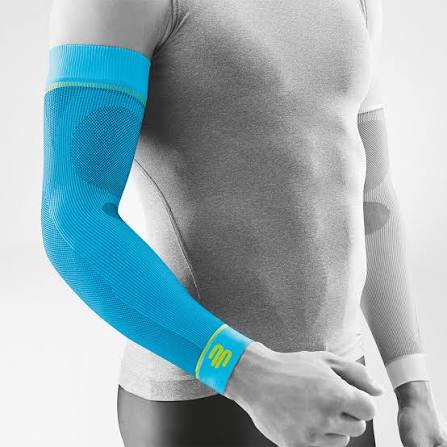
Quick Comparison
A compression sleeve is generally the better choice when controlled compression is the main goal. Compression garments can help manage swelling and support fluid movement when appropriately fitted.
A support sleeve may make more sense when the main goal is gentle support, warmth, or comfort around a joint. However, the name alone does not tell you exactly how much support or compression it provides.
The key point is simple:
Do not choose by the word “compression” or “support” alone. Check what the sleeve is designed to do.
Compression Sleeves vs Support Sleeves At a Glance
The biggest difference is usually the purpose of the garment rather than its appearance.
| Feature | Compression Sleeve | Support Sleeve |
|---|---|---|
| Main purpose | Controlled pressure | Support, comfort, or stability |
| Pressure | Often specified or graded | May vary widely |
| Swelling management | May be appropriate when properly fitted | Not automatically designed for this |
| Joint support | Depends on design | Often a key purpose |
| Ease of use | Can be harder to put on | Often depends on material and design |
| Fit | Very important | Important |
| Senior-friendly use | Depends on compression level and fit | Depends on support and construction |
| Best for | People needing compression for a specific purpose | People seeking support or comfort |
Compression Sleeves Review for Senior Use
Compression sleeves can be useful when pressure is the main reason for wearing a sleeve. Medical compression garments are used in situations such as swelling and lymphatic conditions, but the correct garment and pressure level can vary.
Ease of Use
Compression sleeves can take some effort to put on. This matters for anyone with reduced hand strength or limited finger movement.
A properly fitted sleeve should sit smoothly without uncomfortable folds or excessive tightness. NHS guidance for compression sleeves recommends putting them on gradually and smoothing wrinkles during application.
For some seniors, gloves or an application aid may make the process easier.
Key Strengths
- Designed to provide controlled compression when appropriate
- Can help manage certain types of swelling
- Available in different styles and compression levels
- Can be useful for daily wear when correctly fitted
- Some designs include a hand section for arm compression
Potential Drawbacks
- Can be difficult to put on
- Incorrect sizing can cause discomfort
- Stronger compression may require professional guidance
- Fabric can wear out over time
- Cleaning and regular care are required
Support Sleeves Review for Senior Use
“Support sleeve” is a less precise product term. Some sleeves are made mainly for joint support, while others may also provide compression or warmth. That makes the exact product design more important than the label.
For example, simple orthopedic sleeves can provide support and compression around a joint, while more rigid braces can provide greater stabilization.
Ease of Use
A soft support sleeve may be easier to handle than a firm compression garment. But this is not guaranteed.
The sleeve still needs to fit well. If it slides, bunches, digs into the skin, or makes movement uncomfortable, it may not be a good everyday choice.
Key Strengths
- May provide gentle joint support
- Some designs offer warmth and comfort
- Often useful during everyday activities
- May be simpler than a rigid brace
- Many designs are lightweight and portable
Potential Drawbacks
- “Support” does not describe one standard level of support
- Some sleeves may provide little stabilization
- A loose sleeve may move during activity
- A very tight sleeve may become uncomfortable
- It may not be appropriate for managing medical swelling
Which Is Easier for Seniors to Use?
For ease of use, there is no automatic winner.
Compression sleeves can require more effort because the fabric may need to be stretched and positioned carefully. This can be a challenge for someone with limited hand strength or dexterity. NHS guidance even notes that application aids can help people who struggle to apply compression garments.
A soft support sleeve may be simpler to put on, especially when it uses flexible fabric.
Still, simple does not always mean better.
If compression is needed for a specific medical reason, choosing an easier but unsuitable support sleeve may defeat the purpose.
For seniors with limited dexterity, look for:
- Easy-to-grip fabric
- A wide opening
- Clear sizing instructions
- Minimal fastening steps
- Smooth seams
- An application aid when appropriate
Performance Comparison
Performance depends heavily on what you want the sleeve to accomplish.
A compression sleeve is designed around pressure. Medical compression garments can help control swelling and encourage fluid movement when the correct garment is used.
A support sleeve is usually judged more by stability, comfort, warmth, or movement support.
| Performance Area | Compression Sleeve | Support Sleeve |
|---|---|---|
| Controlled compression | Stronger focus | Depends on product |
| Swelling management | More relevant | Not automatically suitable |
| Joint stability | Product dependent | Often more relevant |
| Warmth | May provide some | Often a benefit |
| Movement support | Depends on design | Depends on design |
| Medical use | May be prescribed or professionally selected | Depends on the specific product |
This is why comparing two sleeves by appearance alone can be misleading.
Comfort, Accessibility, and Senior-Friendly Design
Comfort should be part of the decision from the start.
A sleeve that is difficult to put on may become frustrating to use. A sleeve that is too tight may also cause problems. For compression garments, correct fitting is especially important. NHS guidance advises contacting a healthcare professional if a compression sleeve causes significant pain, numbness, tingling, or changes in finger color.
Look for:
- A correct size
- Smooth fabric
- Comfortable edges
- Easy application
- Secure positioning
- Simple care instructions
- A design suited to the affected body part
Do not assume every senior needs the loosest or softest sleeve. The right choice is the one that fits the intended purpose without creating unnecessary difficulty.
Features Comparison
The useful features are different because the products may serve different goals.
| Feature | Compression Sleeve | Support Sleeve |
|---|---|---|
| Pressure level | Often an important specification | May not be clearly standardized |
| Fit | Critical | Important |
| Hand section | Available on some arm sleeves | Less typical |
| Joint stabilization | Depends on design | Often a key feature |
| Application aid | May be useful | Usually less important |
| Adjustable support | Product dependent | Product dependent |
| Medical fitting | Sometimes needed | Depends on purpose |
For medical compression, do not assume that more pressure is automatically better. Compression level and garment type should match the person’s needs.
Price, Maintenance, and Long-Term Value
Price is difficult to compare without specific brands and models.
Instead, consider the full ownership cost. Check whether the sleeve needs special washing, replacement, or accessories.
Compression garments need regular care. One NHS hospital recommends daily washing for its compression sleeves and notes that garments may need replacement as their fit and compression change over time.
A good-value sleeve should be:
- Correctly sized
- Durable enough for regular use
- Easy to clean
- Easy to put on
- Appropriate for the intended purpose
The cheapest sleeve is not necessarily the best value if it is uncomfortable or difficult to use.
Who Should Choose a Compression Sleeve?
Choose a compression sleeve when:
- Controlled compression is the main goal.
- Swelling management is part of the reason for use.
- A healthcare professional has recommended compression.
- The sleeve can be fitted correctly.
- The user can apply it safely or has help available.
- The pressure level matches the intended use.
For lymphoedema or significant swelling, professional fitting can be important because different garments are used for different levels and shapes of swelling.
Who Should Choose a Support Sleeve?
A support sleeve may be a better fit when:
- Gentle support is the main goal.
- Warmth and comfort are useful.
- Joint support matters more than controlled compression.
- The user wants a simple sleeve for everyday activities.
- The particular sleeve provides the level of support needed.
But check the product description carefully. “Support sleeve” is not a precise technical category.
Compression Sleeves vs Support Sleeves — Final Verdict
Best for controlled compression: Compression sleeve
Best for gentle joint support: Support sleeve, depending on design
Best for swelling-related needs: Compression sleeve when appropriately selected and fitted
Best for simplicity: Often a soft support sleeve, but the exact design matters
Best overall: There is no universal winner.
The biggest mistake is treating these two terms as completely separate product categories. A support sleeve can also provide compression, and some compression garments can provide support. The actual construction, pressure level, fit, and intended purpose matter more than the product name.
Scoring Summary
A numerical score would be misleading here because “support sleeve” covers too many different products. Unlike a comparison between two clearly identified models, there is no single specification set that can fairly give every support sleeve one score.
That is an important limitation of this comparison.
How We Evaluate Products
For this comparison, the main factors are practical senior needs:
- Ease of use
- Fit
- Comfort
- Accessibility
- Physical effort
- Maintenance
- Intended function
- Safety
- Long-term practicality
No hands-on testing is assumed. Product claims should be checked against the specifications and instructions for the exact sleeve being considered.
Senior-Specific Buying Considerations
Before choosing either type, check these points.
Physical Effort
Can the user put the sleeve on without excessive pulling, bending, or twisting?
Fit
The sleeve should fit the intended body part correctly. A poor fit can reduce comfort and may create problems.
Controls and Adjustments
If the sleeve uses straps, fasteners, or other adjustments, make sure they are easy to manage.
Maintenance
Check washing and drying instructions before buying. Some compression garments need careful washing to maintain their shape and function.
Safety
If the sleeve is being considered for swelling, lymphoedema, circulation problems, or another medical issue, professional advice may be appropriate. Compression is not suitable for everyone, including some people with arterial problems.
Common Buying Mistakes
Avoid these common mistakes:
- Choosing based only on the word “compression”
- Assuming every support sleeve provides the same support
- Buying the wrong size
- Ignoring how difficult the sleeve is to put on
- Choosing a pressure level without understanding its purpose
- Assuming a sleeve can replace professional treatment
- Forgetting to check washing and care instructions
Safety
Compression garments should fit correctly. If a sleeve causes significant pain, numbness, tingling, or unusual color changes, it should not simply be ignored. Professional advice may be needed.
If swelling appears suddenly, becomes severe or painful, or occurs without an obvious cause, it may need medical assessment rather than self-treatment with a sleeve.
For a known medical condition, the safest approach is to ask a qualified healthcare professional which type and level of compression is appropriate.
Frequently Asked Questions
Are compression sleeves and support sleeves the same?
No. They can overlap, but compression sleeves focus on applying pressure, while support sleeves may focus on support, warmth, stability, or comfort. The exact product design matters.
Are compression sleeves good for seniors?
They can be useful for some seniors, but suitability depends on the person’s needs, the sleeve’s pressure level, and correct fitting.
Are support sleeves easier to put on?
Often, a soft support sleeve may be easier to apply than a firm compression garment. However, this varies by design.
Can a support sleeve help with swelling?
Do not assume so. Some support sleeves may provide compression, but a product labeled “support” is not automatically suitable for managing medical swelling.
Should seniors sleep in a compression sleeve?
Not unless the product instructions or a healthcare professional specifically recommend it. Some clinical guidance advises removing compression garments at night.
What is more important, compression or comfort?
Both matter. The correct choice depends on the reason for wearing the sleeve. A medically appropriate compression garment still needs to be comfortable and correctly fitted enough for safe, consistent use.
Conclusion
Compression Sleeves vs Support Sleeves is not really a battle between two completely separate products. Compression sleeves are usually chosen for controlled pressure, while support sleeves can focus more on stability, warmth, or comfort. But the terms can overlap.
For seniors, the best choice is the sleeve that matches the actual need, fits correctly, and can be put on and cared for without unnecessary difficulty. If compression is being considered for swelling or a medical condition, getting professional guidance is more important than simply choosing the sleeve with the strongest compression.
