
Clayton County Senior Transportation Services


Portable Wheelchair

Non-Slip Slippers

Smart Plug with Alexa
Clayton County Senior Transportation Services offers safe, affordable, and accessible transportation for older adults across the county. Whether you need help getting to medical appointments or grocery stores, these services are designed with seniors’ needs in mind. With flexible scheduling and trained drivers, staying connected has never been easier.
Clayton County Senior Transportation Services are designed to ensure that older adults remain independent, connected, and healthy within their communities. As people age, maintaining regular access to healthcare, grocery stores, pharmacies, senior centers, and social events becomes increasingly important—but also more challenging due to limited mobility, lack of personal vehicles, or transportation costs. That’s where dedicated senior transportation programs step in, offering reliable, dignified, and compassionate travel solutions tailored specifically for adults 55 and over.
Whether you’re a longtime resident of Morrow or Jonesboro, or newly moved into Clayton County from out of state, knowing how to access these services can make a world of difference in your daily life. This guide walks you through everything you need to know about Clayton County Senior Transportation Services, from eligibility requirements and application processes to real-life tips on making the most of available resources. We’ll also explore how neighboring counties like Fulton and DeKalb compare, and why Clayton’s model stands out among Georgia’s aging-support networks.
Key Takeaways
- Free and Low-Cost Rides: Many seniors qualify for subsidized or completely free rides based on income and age.
- Door-to-Door Service: Pickup and drop-off at home makes it easy for those with mobility challenges to get around.
- Accessible Vehicles: Vehicles are equipped with ramps, lifts, and secure seating to support seniors with physical limitations.
- Wide Coverage Area: Services extend across all neighborhoods in Clayton County, including Atlanta metro areas.
- Trained Volunteer Drivers: Many programs rely on compassionate community volunteers who undergo background checks and safety training.
- Easy Online Booking: Residents can schedule rides in advance through user-friendly websites or phone systems.
- Additional Support Services: Some programs offer meal delivery, social activities, and wellness check-ins alongside transportation.
📑 Table of Contents
- What Are Clayton County Senior Transportation Services?
- Types of Transportation Available
- How to Apply and Schedule a Ride
- Accessibility Features You Should Know About
- Costs and Funding Structures
- Success Stories from Clayton County Seniors
- Comparing Clayton County to Neighboring Areas
- Future Improvements and Expansion Plans
- Conclusion: More Than Just a Ride
What Are Clayton County Senior Transportation Services?
Clayton County Senior Transportation Services refers to a network of public and nonprofit programs funded by local government, federal grants, and community partnerships. These services prioritize the unique needs of older adults by providing safe, affordable, and accessible rides within and sometimes beyond county borders. Unlike standard paratransit or ride-sharing apps, these programs are built around the physical, cognitive, and emotional realities of aging.
In Clayton County, several organizations collaborate to deliver transportation solutions:
– The **Clayton County Department of Aging and Disability Resources (CCADR)** coordinates the primary countywide program.
– **Senior Connections**, a regional nonprofit, supports outreach and volunteer coordination.
– **Community Care Connect** helps connect seniors with additional support services like home-delivered meals or wellness checks.
– Local churches, civic groups, and volunteer networks often supplement official services during peak demand times.
Together, they form an ecosystem that ensures no senior is left stranded simply because they can’t drive anymore.
Who Can Use These Services?
Eligibility typically begins at age 55, though some programs may serve younger adults with qualifying disabilities. Income level often plays a role—those below 150% of the Federal Poverty Level usually qualify for reduced-cost or free rides. However, even middle-income seniors may find the base fare very reasonable compared to taxis or Uber/Lyft.
To apply, applicants generally need:
– Proof of residency in Clayton County
– Identification showing age (e.g., driver’s license or birth certificate)
– Completed application form (available online or at CCADR offices)
– Sometimes a brief assessment interview to determine specific needs
It’s worth noting that many services operate on a first-come, first-served basis, so applying early increases your chances of securing consistent service.
Types of Transportation Available
Visual guide about Clayton County Senior Transportation Services
Image source: cobot.co.jp
The variety of options ensures flexibility for different schedules and destinations. Most programs fall into one of three categories: scheduled fixed routes, on-demand door-to-door trips, and volunteer-based ride programs.
Scheduled Fixed Routes
These are like mini-shuttles that run along set routes on specific days and times. They’re ideal for routine errands such as weekly grocery shopping or visiting the library. While less flexible than private cars, fixed routes are highly cost-effective—often just $1–$3 per ride. Seniors board at designated stops, similar to city buses, but with added attention to accessibility and comfort.
For example, the “Clayton Senior Loop” runs every Tuesday and Thursday morning from Morrow to the Jonesboro Kroger and back, stopping near senior housing complexes and medical clinics. Real-time tracking via mobile app helps riders plan ahead.
On-Demand Door-to-Door Service
Need a ride to a specialist appointment downtown? This is where on-demand services shine. Riders call or book online up to 48 hours in advance, and a vehicle arrives directly to their doorstep. Trained drivers assist with boarding, carry groceries, and ensure passengers reach their destination safely.
This option is especially valuable for individuals with chronic conditions requiring frequent doctor visits or dialysis treatments. It eliminates the stress of navigating public transit with heavy bags or walking long distances.
Volunteer Driver Programs
One of the most heartwarming aspects of Clayton County Senior Transportation Services is its reliance on trained volunteers. Retired professionals, college students, and caring neighbors sign up to drive once a week or month, often forming long-term relationships with riders.
Programs like “Wheels of Compassion” match volunteers with seniors who live alone or have limited family support nearby. Background checks, defensive driving courses, and ongoing mentorship ensure safety and reliability. Best of all, rides are typically free—funded entirely by donations and municipal grants.
How to Apply and Schedule a Ride
Visual guide about Clayton County Senior Transportation Services
Image source: rubyholic.com
Getting started is simpler than you might think. Begin by visiting the official website of the Clayton County Department of Aging and Disability Resources: [www.claytoncountyga.gov/aging](https://www.claytoncountyga.gov/aging). There, you’ll find downloadable PDF applications, FAQs, and contact information for case managers.
Alternatively, call their main line at (770) 463-3900 during business hours (Monday–Friday, 8:30 AM–5 PM). Staff will walk you through eligibility, answer questions about coverage areas, and help schedule your first trip.
Once approved, you’ll receive a personalized ID card and instructions for booking. Most systems allow reservations up to two weeks ahead, which is crucial for medical appointments. Same-day rides are rarely possible due to scheduling constraints, so planning ahead is key.
Pro tip: Always confirm your ride 24 hours before departure. Automated reminders help prevent missed trips—and keep drivers prepared.
Tips for First-Time Users
If this is your first time using senior transportation, don’t feel rushed. Here are a few insider suggestions:
– Pack light but necessary items—many vehicles have limited storage space.
– Bring emergency contacts and insurance cards in case of unexpected delays.
– Introduce yourself to the driver; many become trusted companions over time.
– Provide feedback after each ride—programs improve based on rider input.
Also, consider pairing up with another senior who lives nearby. Riding together not only saves money (some programs offer discounts for shared trips) but also builds social connections.
Accessibility Features You Should Know About
Visual guide about Clayton County Senior Transportation Services
Image source: image.cdn2.seaart.ai
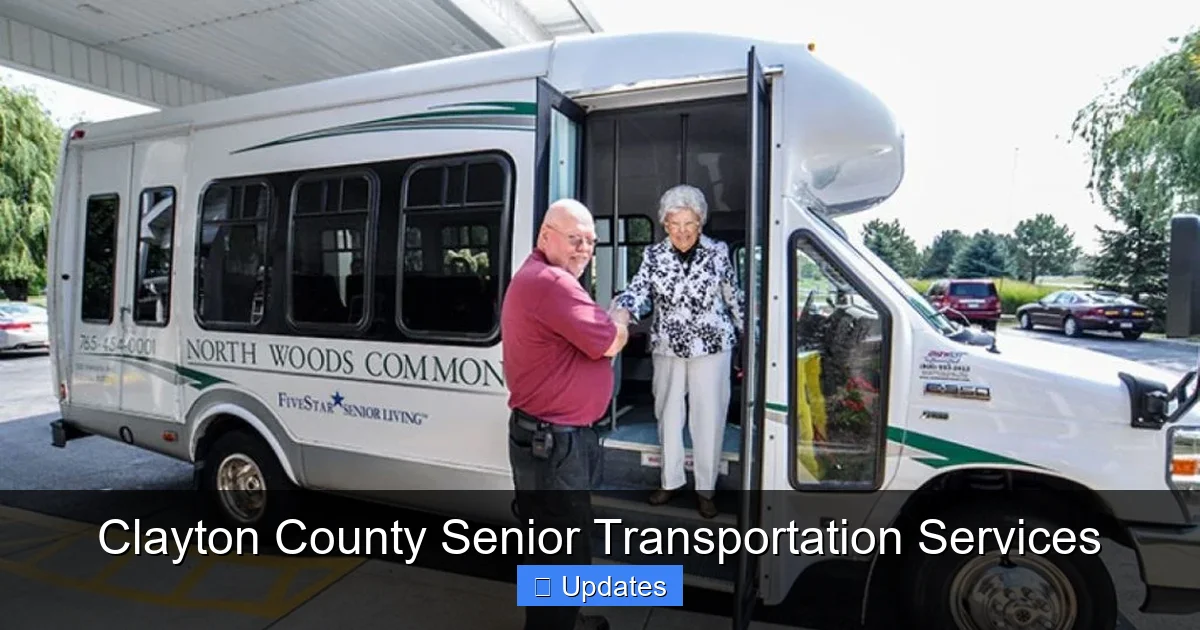
Safety and dignity go hand-in-hand when it comes to senior mobility. All official Clayton County Senior Transportation Services vehicles meet ADA (Americans with Disabilities Act) standards:
– Wheelchair-accessible vans with hydraulic lifts
– Seat belts and securement systems for mobility aids
– Spacious interiors allowing walkers and canes to move comfortably
– Non-slip flooring and grab bars
– Climate-controlled cabins for year-round comfort
Drivers receive specialized training in assisting passengers with dementia, arthritis, vision loss, or post-surgery recovery. They learn how to communicate patiently, avoid sudden movements, and respect personal boundaries.
If you use oxygen tanks, power wheelchairs, or other medical equipment, inform the dispatcher when booking. They’ll assign the right vehicle type and alert the driver accordingly.
What If You Have Special Needs?
Every senior’s situation is different. That’s why CCADR offers personalized care coordination. A case manager may recommend:
– Companion driving for cognitively impaired individuals
– Stretcher-equipped vehicles for post-hospitalization recovery
– Priority scheduling during emergencies or bad weather
– Escort assistance at destination (e.g., guiding someone into a clinic)
These extras aren’t always free, but subsidies exist for low-income clients. Don’t hesitate to ask about waivers or sliding-scale fees.
Costs and Funding Structures
Transparency about pricing helps seniors budget effectively. While costs vary slightly between providers, here’s a general breakdown:
| Service Type | Base Fare | Discounts Available |
|————–|———–|———————|
| Fixed Route | $1.50 | Age 65+: $0.75; Low-income: Free |
| On-Demand Door-to-Door | $5–$8 | Reduced rates for round-trips or bundled trips |
| Volunteer Program | Free | Fully donor-funded |
Funding comes from multiple sources:
– Federal Older Americans Act grants
– State allocations through Georgia Division of Aging Services
– Local property taxes (via Clayton County SPLOST funds)
– Private donations and corporate sponsorships
Importantly, no senior is turned away due to inability to pay. Financial counselors at CCADR help identify all possible aid options.
Budgeting Tips for Seniors
Many retirees worry about hidden fees, but most programs charge only the base fare—no surge pricing or booking charges. To stretch your dollars:
– Combine errands into one trip (e.g., pharmacy + bank + lunch)
– Use fixed routes for predictable weekly needs
– Carpool with neighbors to split costs
– Set up automatic payment via debit card to avoid cash handling
Remember: consistent access to food, medicine, and care far outweighs minor transportation expenses.
Success Stories from Clayton County Seniors
Real-life impact speaks louder than statistics. Take Mrs. Eleanor Thompson, 78, who lives alone in Forest Park. After retiring from teaching, she struggled to visit her cardiologist monthly until joining the volunteer driver network. “Now my driver, James, knows my routine,” she says. “He even picks up prescriptions for me sometimes. I don’t feel isolated anymore.”
Another example is Mr. Harold Jenkins, 82, who uses a walker. His on-demand ride takes him to physical therapy twice weekly. “Without this service, I’d probably be stuck at home,” he admits. “It’s not just about getting there—it’s about feeling respected and capable.”
These stories highlight how transportation isn’t merely logistical—it’s deeply personal.
Comparing Clayton County to Neighboring Areas
While Clayton County offers robust senior transportation, it’s helpful to understand how it stacks up against nearby jurisdictions:
– Fulton County: Larger but more complex system; requires longer wait times for new users.
– DeKalb County: Similar services, but fewer volunteer options outside urban cores.
– Gwinnett County: Faster booking process but higher base fares ($3–$5 per ride).
That said, Clayton’s emphasis on community engagement and affordability makes it particularly strong for suburban and rural residents. For deeper comparisons, check out our guides on Senior Transportation Services Cincinnati Oh or Senior Transportation Connection Cuyahoga County.
Future Improvements and Expansion Plans
Officials at CCADR recently announced plans to expand evening and weekend hours, recognizing growing demand among working-age caregivers and part-time workers. They’re also piloting an AI-powered scheduling assistant to reduce phone wait times.
Additionally, partnerships with ride-hailing companies aim to fill gaps during peak seasons (e.g., holiday shopping), while preserving the human touch that defines traditional programs.
Public feedback remains central to these efforts. Attend monthly town halls at the Jonesboro Senior Center or submit ideas via email at [email protected].
Conclusion: More Than Just a Ride
At its core, Clayton County Senior Transportation Services represents more than wheels on pavement—it’s a lifeline to independence, health, and community belonging. In a world where aging often means isolation, these programs reaffirm that dignity shouldn’t depend on having a car.
By combining technology, compassion, and strategic funding, Clayton County sets a gold standard for senior mobility. Whether you’re scheduling your first trip or helping a loved one navigate the system, remember: asking for help is not a weakness—it’s wisdom.
Take the next step today. Visit the CCADR website, call the hotline, or stop by the Jonesboro office. Your journey toward greater freedom starts with one simple decision.
Frequently Asked Questions
What age qualifies for Clayton County Senior Transportation Services?
Most programs require applicants to be at least 55 years old. Some services may include younger adults with documented disabilities, but age 55 is the standard threshold.
Are rides free for low-income seniors?
Yes, many seniors qualify for free or heavily discounted rides based on income level. Applicants below 150% of the Federal Poverty Level typically receive full subsidies.
Can I request same-day transportation?
Generally, no. Most services require reservations up to 48 hours in advance due to scheduling constraints. Emergency exceptions may be made through case managers.
Do drivers assist with boarding and luggage?
Absolutely. All official drivers are trained to help passengers enter/exit vehicles, carry groceries or medical supplies, and provide basic assistance with mobility aids.
Is there a waiting list for popular routes?
Yes, high-demand routes like the Jonesboro Kroger shuttle occasionally have short waits. Applying early increases your chances of consistent access.
What happens if my scheduled ride doesn’t show up?
Contact CCADR immediately at (770) 463-3900. Staff will investigate and reschedule at no extra cost. Reliability is a top priority, and missed rides are rare.