
10 Best Window Alarms for Disabled Adults: Top Safety Options


Folding Walking Stick with Seat

Easy Grip Kitchen Utensils

Bed Exit Alarm Sensor
Window alarms can add an extra layer of safety for disabled adults who may need support with wandering, nighttime movement, or emergency awareness. These devices usually attach to a window and sound an alert when someone opens it, breaks the connection, or triggers a sensor.
The best window alarms for disabled adults should offer clear alerts, simple controls, secure installation, and features that match the user’s hearing, vision, mobility, and support needs. We also look for adjustable volume, bright visual signals, remote notifications, reliable batteries, and an easy-to-reach shutoff. We tested and researched window alarms to identify the options that provide useful alerts without adding unnecessary complexity.
Best Window Alarms for Disabled Adults
We selected the best window alarms for disabled adults based on sound level, ease of use, installation, and accessibility features. Our list includes options for home safety, caregivers, and people who need clear alerts when a window opens.
Philips Window and Door Alarm, 4-Pack
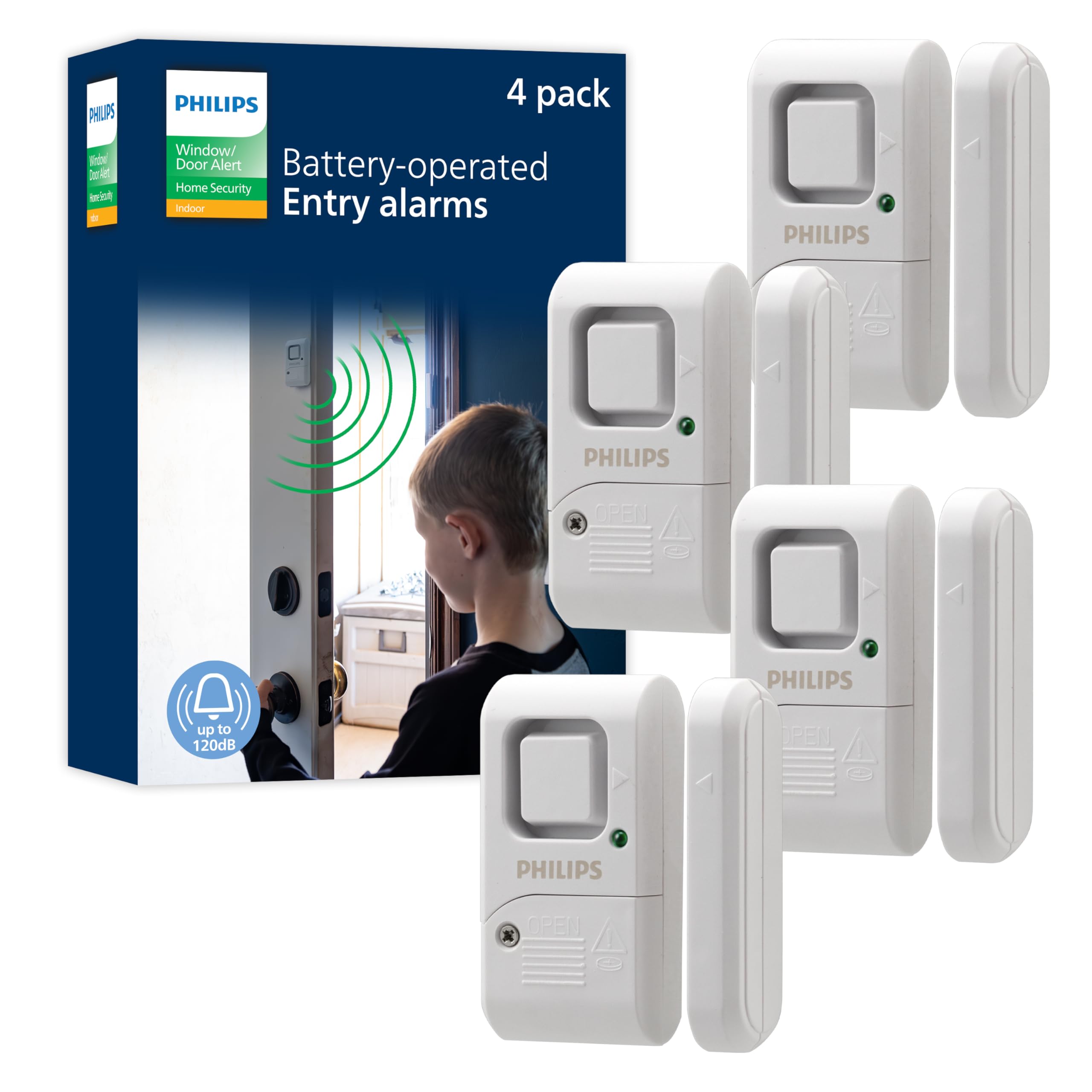
We recommend this affordable set for adults with disabilities who need a simple, loud alert for doors or windows.
Pros
- Loud alarm and useful chime setting
- Simple adhesive installation
- Four alarms provide coverage for several openings
Cons
- The alarm may feel too loud for some users
- Adhesive may need extra support on some surfaces
- Small button batteries require periodic replacement
We found the Philips alarms easy to set up without tools. The included tape attaches each unit to a door or window, while the magnetic sensor triggers when the opening separates. Users should clean the surface first and check that the sensor pieces stay within close range.
A switch lets us choose between off, chime, and alarm modes. The chime can help caregivers notice movement, while the alarm offers a stronger warning when someone opens a protected entry point.
The 120-decibel sound is very loud, which may help people with limited hearing or alert others in another room. However, it could startle users with sound sensitivity, so we recommend testing one unit before installing all four.
Each alarm uses four LR44 button batteries, which come included. We would also keep spare batteries available and test the units regularly, especially when using them for fall prevention, wandering alerts, or caregiver notification.
METAK Window and Door Alarm 5-Pack
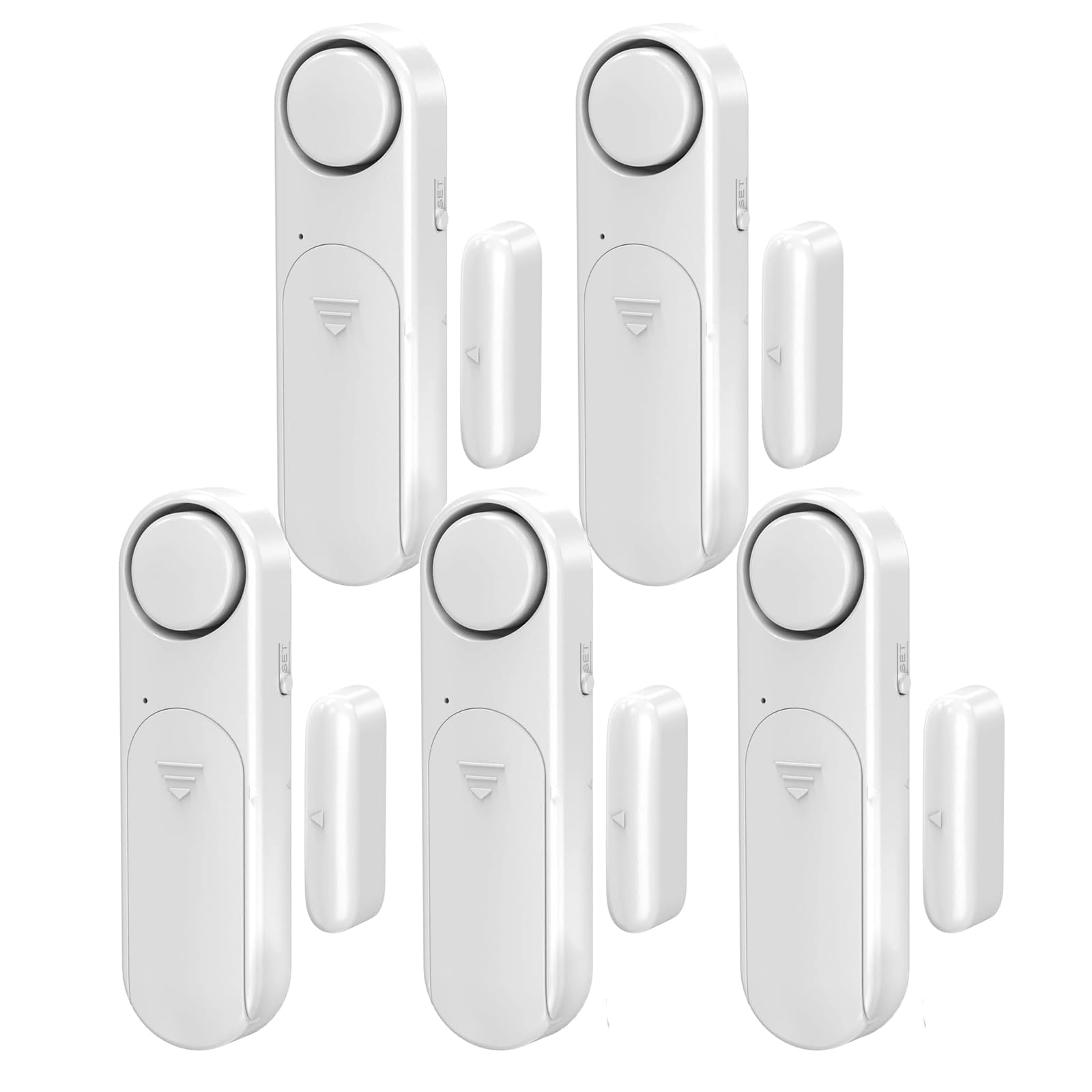
We recommend this five-pack for adults who need a simple, loud alert on several windows or doors without wiring or complex controls.
Pros
- Quick adhesive installation
- Adjustable 90dB or 120dB alarm
- Useful for multiple entry points
Cons
- Batteries are not included
- No remote control
- The loud setting may startle some users
We found these alarms easy to place on windows and doors because the adhesive backing requires no tools. Their slim design fit well on different frames, and the five-pack covered several entry points at once.
The alarm sounded very loudly when we tested an opening, which can help alert people in nearby rooms. For adults with hearing loss, the flashing red light adds a visual signal, though users should not rely on the sound alone.
The Set button handles arming, disarming, and volume changes. We liked the simple controls, but people with limited hand strength or vision may need help during setup. Since the batteries are not included, we would buy two AAA batteries before installation.
TECKNET Six-Pack Window and Door Alarms

We recommend this set for disabled adults who need a simple, adjustable alert for doors, windows, or cabinets.
Pros
- Simple adhesive installation
- Chime and continuous alarm modes
- Three volume levels and six alarms
Cons
- Needs a flat mounting surface
- Requires periodic battery checks
- The alarm may not suit people sensitive to high-pitched sounds
We found the TECKNET alarms easy to place and simple to operate. The white units blend into most doors and window frames, while the adhesive backing avoids drilling or complex setup.
The chime mode gives a brief alert when an opening occurs. The continuous alarm mode offers a stronger warning, which may help adults who need extra time to respond or who may not notice a quiet sound.
We liked having three volume choices. The lowest setting works better in shared spaces, while the louder settings can help carry the alert across a home. The controls remain straightforward, but users should check that the alarm is not switched off and replace the batteries when needed.
These alarms work best when both parts sit close together on a clean, flat surface. Molding or uneven trim can make installation difficult, so we would check each location before applying the adhesive.
EVA LOGIK Ultra-Thin Window Alarm

We recommend this eight-pack for households that need loud, easy-to-use window alerts without a complicated setup.
Pros
- Loud alarm that quickly draws attention
- Adjustable sensitivity helps limit false alarms
- Simple adhesive installation with visual alerts
Cons
- Batteries are not included
- Some units may arrive defective
- Very sensitive settings can trigger from strong bumps
We found the alarms quick to install on windows and glass doors. The adhesive backing avoids wires and tools, which helps users with limited mobility or strength. The flashing red light also provides a clear visual status check.
The 120-decibel alarm sounds sharp and noticeable. We could adjust the sensitivity to reduce alerts from normal window movement, though testing each unit after installation remains important.
A low-battery indicator helps with routine checks, but the required batteries must be purchased separately. Some customer reports mention defective units or alarms that need hard impact to activate, so we recommend testing every alarm and keeping the return information.
YisTech Wireless Window and Door Alarm

We recommend this alarm for caregivers who need an easy way to monitor doors and windows, especially when a loud alert and flashing light can support people with hearing loss.
Pros
- Strong wireless range for larger homes
- Flashing receiver light and adjustable volume
- Supports multiple sensors and receivers
Cons
- Adhesive may not hold well on every surface
- Changing sounds and volume takes some practice
- Requires both outlet power and batteries
We found the plug-in setup simple: we attached the sensors to doors or windows, then placed the receivers in rooms where we needed alerts. The system responded whenever a door or window opened, which made it useful for monitoring wandering or nighttime movement.
The receiver offers many alert tones and several volume levels. We liked having the option to choose a less startling sound, while the bright indicator light added a helpful visual cue for people who may not hear the chime clearly.
With a claimed range of up to 260 feet, the system suits many homes, offices, and apartments. We could also pair several sensors with the receivers, allowing coverage for multiple exits without buying a separate alarm for each one.
The included mounting tape may struggle on dusty, uneven, or damp surfaces. We would clean the area first and consider stronger mounting strips if the sensor needs to stay attached for long-term use.
Satisure WiFi Window and Door Alarm

We recommend this alarm for disabled adults who need clear alerts, phone access, and simple installation without monthly fees.
Pros
- Sends app alerts to shared family accounts
- Offers adjustable volume and sensor-specific tones
- Supports up to 20 sensors for wider coverage
Cons
- Adhesive may not hold well on every surface
- The loudest setting may feel overwhelming
- Some alert tones sound harsh
We found the setup straightforward: we plugged in the receiver, placed the sensors, and connected the system to the Tuya or Smart Life app. The wireless design helps us avoid running cables, which makes it useful for bedrooms, entry doors, and windows.
The receiver gives us several volume choices, while different tones help identify which sensor opened. The highest setting can help people with hearing loss, but we would start lower for anyone sensitive to loud sounds.
App notifications give family members another way to monitor a home when they are away. We also like that the system keeps its selected settings after a power interruption and allows shared access without a required subscription.
The main concern involves the included adhesive. Some users report that sensors fell from doors or windows, so we would clean the surface carefully and test the fit before relying on the alarm. For a more secure setup, stronger mounting tape may help.
WimuPath 15-Pack Window Alarms

We recommend these alarms for disabled adults who need a simple, audible alert without app setup or complicated controls.
Pros
- Simple adhesive installation
- Loud alarm helps signal an opened window
- Multipack covers several windows or doors
Cons
- Batteries are not included
- Adhesive may loosen on some surfaces
- The alarm can sound during normal window use
We found the WimuPath alarms easy to set up. Each unit uses a magnetic contact, so the alarm sounds when the window or door moves apart. The on/off switch also makes it easier to disable the alarm before opening the window.
The 92-decibel alert is loud enough to hear from nearby rooms. This can help adults with hearing or mobility limits notice an unsafe opening, while also alerting a caregiver or family member.
The 15-pack offers useful coverage for a home, apartment, or care setting. However, we would test each alarm after installation and check the adhesive regularly, since some users reported that units fell from doors. Keep spare AAA batteries available because the package does not include them.
FinestHouse 90dB Window Alarm

We recommend this alarm for adults who need a simple, low-cost alert for doors and windows, but the adhesive may not hold well on every surface.
Pros
- Quick, tool-free setup
- Loud alert sound
- Battery-powered placement
Cons
- Batteries are not included
- Adhesive may come loose
- Reports mention inconsistent testing
We found the FinestHouse alarm easy to install. We inserted two AAA batteries, applied the adhesive, and placed the alarm beside its magnetic sensor. This setup may suit users who need a basic device without wiring or complicated controls.
The alarm produces a sharp sound when the window or door opens far enough to separate the sensor. We found the volume useful for getting attention from nearby rooms, though users with hearing loss may need a visual or connected alert system instead.
The adhesive worked on some smooth surfaces but did not hold reliably for every door. Thick trim can also prevent the two parts from lining up correctly. We suggest testing each unit after installation and placing it where the switch remains easy for a caregiver or user to reach.
The pack includes four alarms, which lets us cover several openings at once. Still, customer feedback is mixed, with some reports of false tests and units that did not respond consistently. We would treat this as an added safety layer rather than a complete security system.
Smart Caregiver Bed Exit Alarm
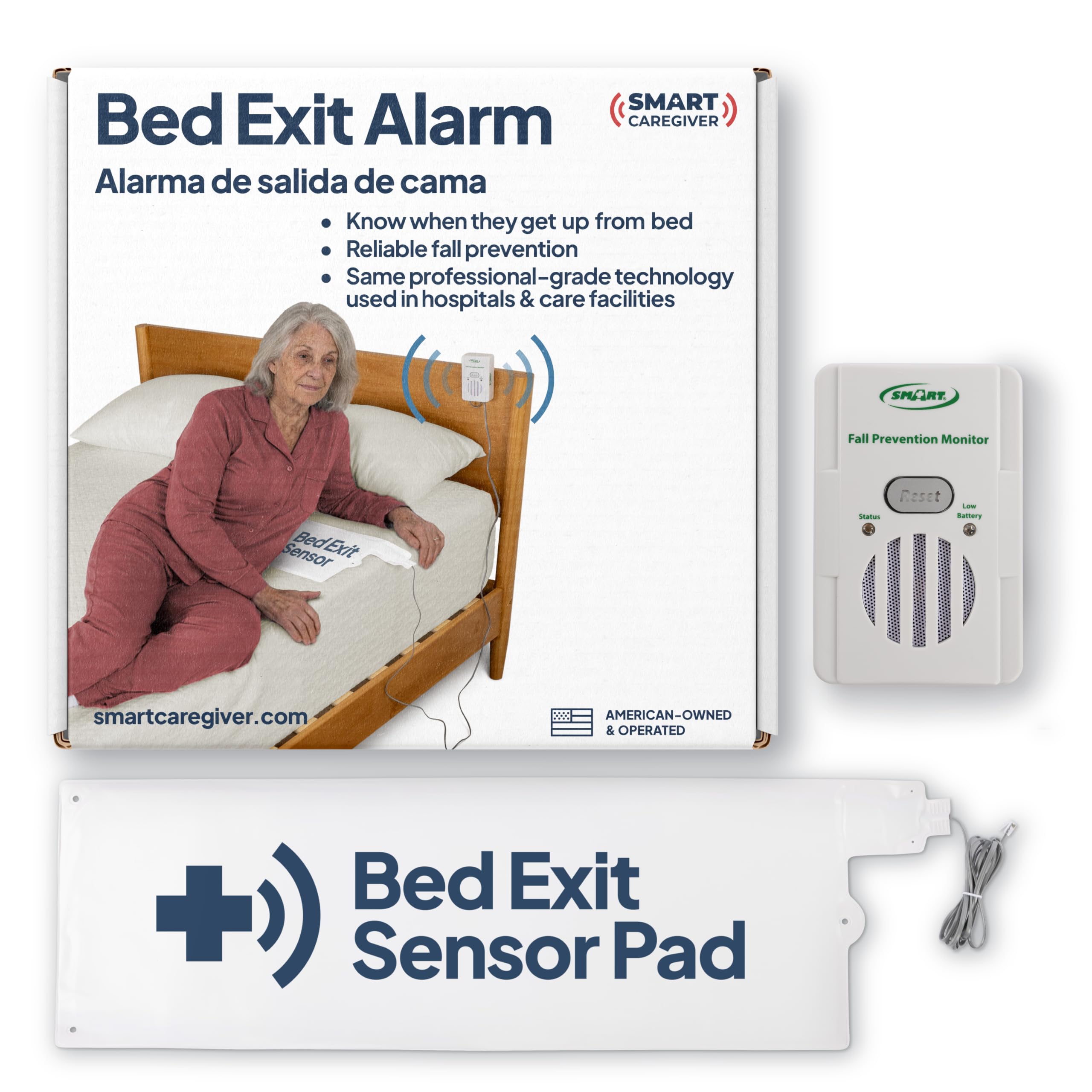
We recommend this alarm for caregivers who need a simple way to know when an adult leaves bed, though its sensitive pad may cause false alarms.
Pros
- Clear, adjustable alarm sound
- Soft, wipe-clean sensor pad
- Includes the required 9-volt battery
Cons
- Some users report false alarms
- The cord may limit placement options
- Wireless caregiver alerts require a separate add-on
We found the setup straightforward. The 10-by-30-inch pad slides under the lower part of a fitted sheet, while the monitor mounts on the bed, wall, or a nearby surface. The front reset button makes it easy to silence the alert.
The pad responds quickly when pressure lifts, which helps us notice bed exits without checking constantly. That sensitivity can also become a drawback, since movement or shifting weight may trigger unwanted alerts.
For adults who may be startled by a loud sound, the optional wireless kit offers a quieter approach by sending alerts to a caregiver instead. The basic monitor has two volume settings, status lights, and a battery-powered design.
We also like the sealed vinyl surface for routine cleaning and incontinence protection. However, caregivers should test the pad after installation and check the battery regularly, especially because some users reported inconsistent operation or false alarms.
UltraPro Window and Door Alarm
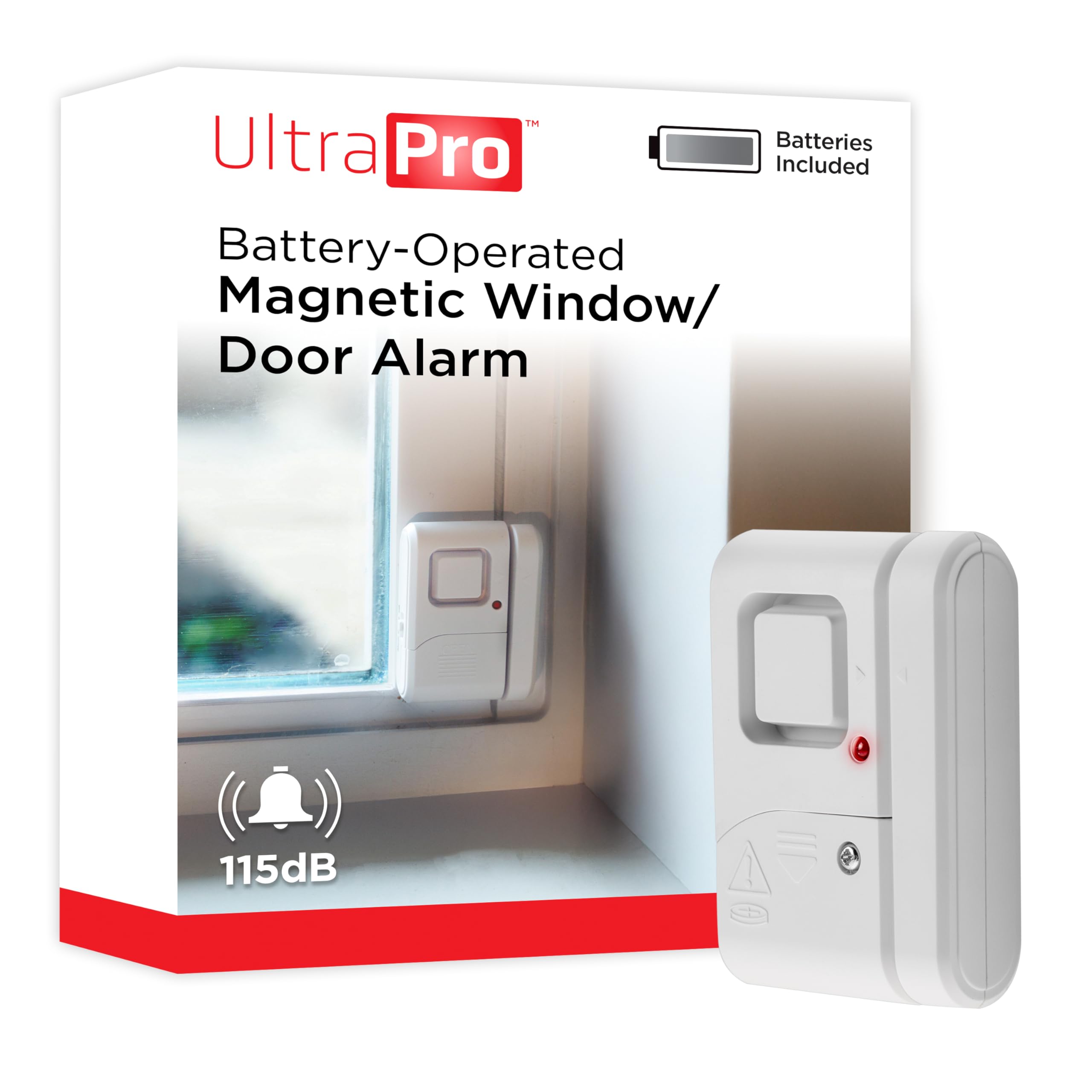
We recommend this alarm for disabled adults who need a simple, loud alert without an app or monthly fee.
Pros
- Loud siren and clear chime options
- Tool-free installation
- Low-battery light and included batteries
Cons
- The alarm may startle users who are sensitive to loud sounds
- Adhesive mounting may not suit every surface
- Battery access requires a small Phillips screwdriver
We found the UltraPro easy to place on a window, door, cabinet, or drawer. The alarm and magnet line up without much adjustment, and the included adhesive keeps the setup simple for renters or anyone who cannot manage wiring.
The chime mode helped us monitor an entry point without using the full siren. When the magnet separated, the alarm sounded quickly and was easy to hear from nearby rooms. Users with hearing loss may still need a visual alert or another device.
The side switch makes daily use straightforward, but the siren is very loud for such a small unit. We would place it where the user can reach the switch, while avoiding locations where the sound could cause distress. A low-battery light provides a useful reminder to replace the batteries.
Buying Guide
We should choose a window alarm that matches the user’s mobility, hearing, vision, and dexterity needs. The best option should be simple to operate and easy to maintain.
| Feature | What we should look for |
|---|---|
| Alarm controls | Large buttons, clear labels, and simple settings |
| Sound | An adjustable volume or tone that the user can notice |
| Visual alerts | Flashing lights for people with limited hearing |
| Remote alerts | Notifications through a connected device, when needed |
| Power | Long battery life, low-battery warnings, or simple charging |
| Installation | Strong adhesive or tools that the user or caregiver can manage |
| Reset process | A quick, accessible way to silence and reset the alarm |
We should check whether the alarm fits the window frame without blocking normal use. The sensor should stay secure, while the user should still be able to open the window safely when needed.
For users with limited hand strength or movement, we should avoid small switches and stiff controls. A caregiver may also need access to the settings, battery compartment, and alarm reset button.
We should consider false alarms caused by loose windows, pets, or regular household activity. Clear instructions, adjustable sensitivity, and reliable low-battery alerts can make daily use easier.
Before buying, we should confirm the return policy, warranty, installation requirements, and accessibility of the user manual.
Editor’s Choice
We choose the SABRE Wireless Door and Window Alarm for many disabled adults. Its magnetic sensor attaches to the window frame, while the main unit provides a loud alert when the window opens.
The alarm uses a simple on/off switch and does not require wiring. We also value its compact design, which helps reduce clutter and keeps the controls easy to reach.
| Feature | Why it matters |
|---|---|
| Wireless setup | No electrical installation required |
| Magnetic sensor | Detects when the window opens |
| Loud siren | Helps alert people nearby |
| Compact design | Takes up little space |
We recommend checking the alarm’s sound level before purchase. Some users may need a lower-volume model, a visual alert, or a system that connects to a caregiver’s phone.
For adults with limited hand movement, we suggest placing the control switch at an easy-to-reach height. We also recommend testing the sensor after installation and replacing the batteries according to the manufacturer’s instructions.
Conclusion
We should choose a window alarm that matches the adult’s needs, home setup, and daily routine. Simple controls, clear alerts, and reliable adhesive or screw mounting can make the system easier to use and maintain.
We also need to consider hearing, vision, mobility, and memory needs. Light alerts, vibration, louder tones, remote notifications, and large controls may improve access for different users.
Before buying, we can check:
- Alert types and volume controls
- Battery life and low-battery warnings
- Ease of setup and testing
- Compatibility with phones or smart-home systems
- Privacy, support, and return policies
A well-placed alarm can add useful awareness without creating unnecessary difficulty. We should test each device regularly and adjust its settings as the user’s needs change.
FAQS
What should we look for in a window alarm?
We should choose an alarm with loud or adjustable volume, simple controls, and a low-battery alert. A visible light or phone notification can help adults who have hearing loss.
Are window alarms suitable for disabled adults?
They can support safety and independence, but needs vary. We should consider mobility, vision, hearing, memory, and the person’s ability to respond to an alarm.
Which alarm works best for people with hearing loss?
We should look for alarms with flashing lights, vibration, or smartphone alerts. Some models connect to a home security system that can send notifications to a caregiver.
Can we install a window alarm without tools?
Many battery-powered alarms use adhesive strips and need no tools. We should follow the manufacturer’s instructions and test the sensor after installation.
Should we choose a contact sensor or a glass-break alarm?
A contact sensor alerts us when someone opens the window. A glass-break alarm detects the sound of breaking glass. Contact sensors usually offer simpler operation and fewer false alarms.
How can we reduce false alarms?
We should place the sensor securely, keep batteries fresh, and avoid mounting it near sources of vibration. Regular testing helps us find problems early.
Can caregivers receive alerts?
Some smart alarms send alerts through a mobile app. We should confirm that the device works with our phone, internet connection, and preferred notification method.