
10 Best Walkers for Apartments in 2026: Compact Picks


Weighted Blanket

Rollator Walker with Seat

Motion Sensor Night Lights
Apartment hallways rarely give a mobility aid much room to work with. Ninety-degree turns near the kitchen, elevator doors that close fast, and a coat closet that already doubles as storage all shape which walker actually earns its keep. A model that feels fine in a wide-open showroom can suddenly feel clumsy against a narrow bathroom doorway or a cluttered entryway.
Standard walkers, three-wheel rollators, and full-size seated rollators all solve mobility differently indoors. A basic two-button walker folds flat and tucks behind a door, while a rollator with a seat offers rest stops but takes up more floor space parked beside a chair. Wheel size and turning radius matter as much as overall footprint once you’re maneuvering around dining tables or looping back through a galley kitchen.
The best walker for apartment living balances a tight turning radius and slim folded profile with wheels that roll quietly and predictably across hardwood, tile, or low-pile carpet. Weight matters too, especially for anyone lifting the walker into a car trunk or up a single step at a building entrance. The picks below cover the range from ultra-compact folding frames to seated rollators, with notes on where each one shines and where it adds more bulk than a small space needs.
Best for narrow hallways: Drive Medical Two-Button Folding Walker
Best for resting during longer walks: Drive Medical Rollator Walker with Seat
Best for tight doorways: Vive Mobility 3 Wheel Walker
Best budget-friendly folding walker: Medline Lightweight Two Button Folding Walker
Best for standing support without wheels: Drive Medical 2-Button Standard Foldable Walker
Best space-saving seated rollator: Stander Space Saver Rollator
Best for occasional outdoor trips from an apartment: VOCIC Z21 All Terrain Rollator
Best seat comfort for larger frames: HOMLAND Rollator Walker with Enlarged Seat
Best ultra-compact fold for closets: Stander Space Saver Walker
Best for easiest lifting and carrying: byACRE Carbon Ultralight Rollator
Drive Medical Two-Button Folding Walker
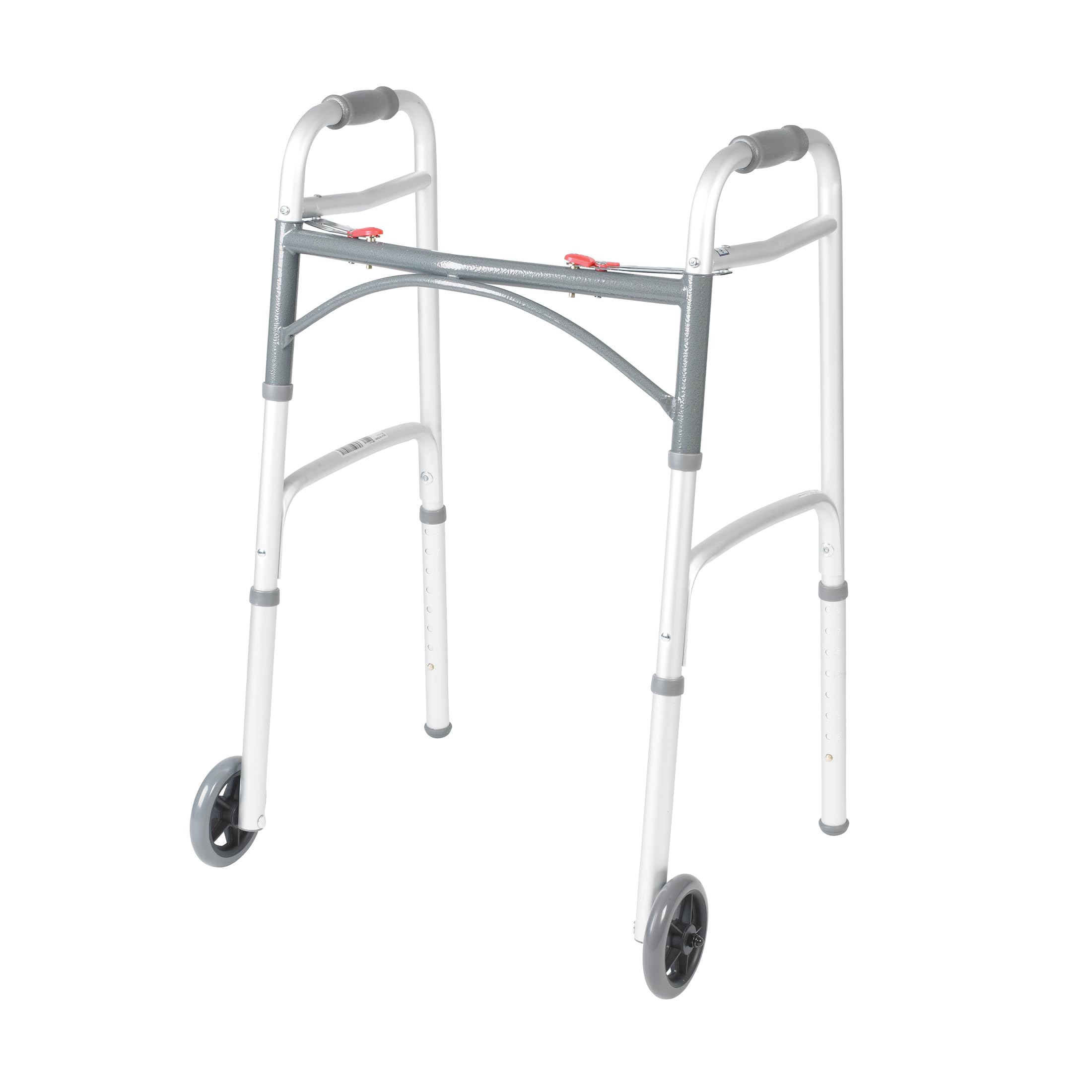
This is the walker to buy if you want a no-frills, apartment-ready standard model that folds flat against a wall in seconds.
Pros
- Folds compactly with a simple two-button push
- Front wheels roll smoothly on hardwood and tile
- Light enough to carry with one hand up a step
Cons
- Plastic wheels can be noisy on hard floors
- No seat for resting mid-walk
At 7.5 pounds, this walker tucks behind a bedroom door or beside a couch without eating into floor space. The dual push-buttons fold with minimal grip strength, which matters for anyone with arthritis in their hands. Front wheels glide over thresholds between rooms, though a few reviewers note the rear glide caps click on tile.
For apartment dwellers who mainly need support moving from room to room, this frame’s narrow width makes tight turns near kitchen counters easier than bulkier rollators allow.
Drive Medical Rollator Walker with Seat

Choose this rollator if daily walks around the building or down the block call for a place to sit and catch your breath.
Pros
- Padded seat offers a resting spot mid-walk
- Locking hand brakes hold steady for safe transfers
- Under-seat pouch stores keys, phone, or a water bottle
Cons
- Heavier and bulkier than a standard folding walker
- Takes up more storage footprint when parked indoors
The steel frame feels sturdy underfoot, and the 7.5-inch caster wheels roll over carpet transitions without catching. Assembly takes minutes, and the fold-down backrest lets it collapse for closet storage, though it’s still wider than a basic walker.
Apartment residents who spend a lot of time on their feet at home, or who make regular trips to the mailroom or lobby, benefit most from having a seat built in.
Vive Mobility 3 Wheel Walker

This three-wheel design is the pick for apartments with unusually narrow doorways or a small bathroom entry.
Pros
- Narrow profile clears tight doorframes
- Folds flat and light enough to lift into a car trunk
- Height-adjustable handles suit different users
Cons
- Less stable than a four-wheel rollator on uneven ground
- No seat included
At 11 pounds, this is one of the lighter rollators here, and the single front wheel pivots easily around corners in a way four-wheel models can’t match. The removable storage bag helps carry small items around the apartment.
Reviewers who switched from bulkier rollators mention the improved maneuverability in cramped bathrooms and manufactured-home hallways. Stability takes a slight hit compared to wider-based rollators, so it suits steadier walkers more than those needing heavy support.
Medline Lightweight Two Button Folding Walker

This walker suits anyone who wants a dependable folding frame without paying for extras they won’t use indoors.
Pros
- Each side folds independently for narrow spaces
- Weighs just 6 pounds, easy to lift over thresholds
- Height adjusts to fit users from 5’5″ to 6’4″
Cons
- Basic design with no seat or storage pouch
- 5-inch wheels are smaller than rollator wheels for rougher terrain
The independent folding sides let this walker squeeze through spaces a rigid frame can’t, useful in older apartment buildings with narrower hallways. It moves quietly across low-pile carpet and tile alike.
For recovery situations where a walker is needed for weeks rather than years, this model’s low weight and simple mechanics make daily setup and folding painless.
Drive Medical 2-Button Standard Foldable Walker

This no-wheel walker works best for users who need maximum stability standing up from a chair or bed in a small apartment.
Pros
- Rubber-tipped legs grip hard floors securely
- Cross-frame design lets users pull it in close
- Folds flat at just 6 pounds
Cons
- No wheels means lifting with each step
- Slower to maneuver than rolling models
Without wheels, this walker demands more upper body effort per step, but it delivers steadier support when rising from a low couch or toilet, a common apartment layout challenge. The U-shaped frame gives extra leg clearance.
It fits best as a secondary walker kept near a bed or bathroom rather than the main walker for daily indoor loops.
Stander Space Saver Rollator

This rollator earns its name by folding down to a footprint small enough to stand in a coat closet.
Pros
- Folds to roughly 10 by 11 inches, smaller than most rollators
- Comes pre-assembled, ready to use immediately
- Perch seat allows quick rests without full-size bulk
Cons
- Rear wheels can catch on chair and table legs
- Seat is smaller than full-size rollator seats
At 14.5 pounds, this is one of the easiest seated rollators to lift into a car or up a curb. The compact seat trades size for portability, so it works better for brief rests than long sitting.
Shorter users especially appreciate the lower handle range, and the fold is quick enough to manage one-handed while holding a door.
VOCIC Z21 All Terrain Rollator

This rollator fits apartment dwellers who split time between indoor hallways and uneven sidewalks or parks outside.
Pros
- 8-inch puncture-proof wheels handle cracks and thresholds smoothly
- Padded, contoured seat adds comfort for longer outings
- Three-mode braking system offers precise control
Cons
- Larger wheels add bulk compared to indoor-only rollators
- Heavier frame, less ideal for daily lifting
The bigger wheels here make a real difference on cobblestones, gravel, or uneven pavement outside an apartment building, a place where smaller-wheeled walkers can catch or jolt. Indoors, it still turns fine in open rooms but takes more space than compact folding walkers.
This model suits residents who regularly leave the building for walks, errands, or outings rather than those staying mostly indoors.
HOMLAND Rollator Walker with Enlarged Seat
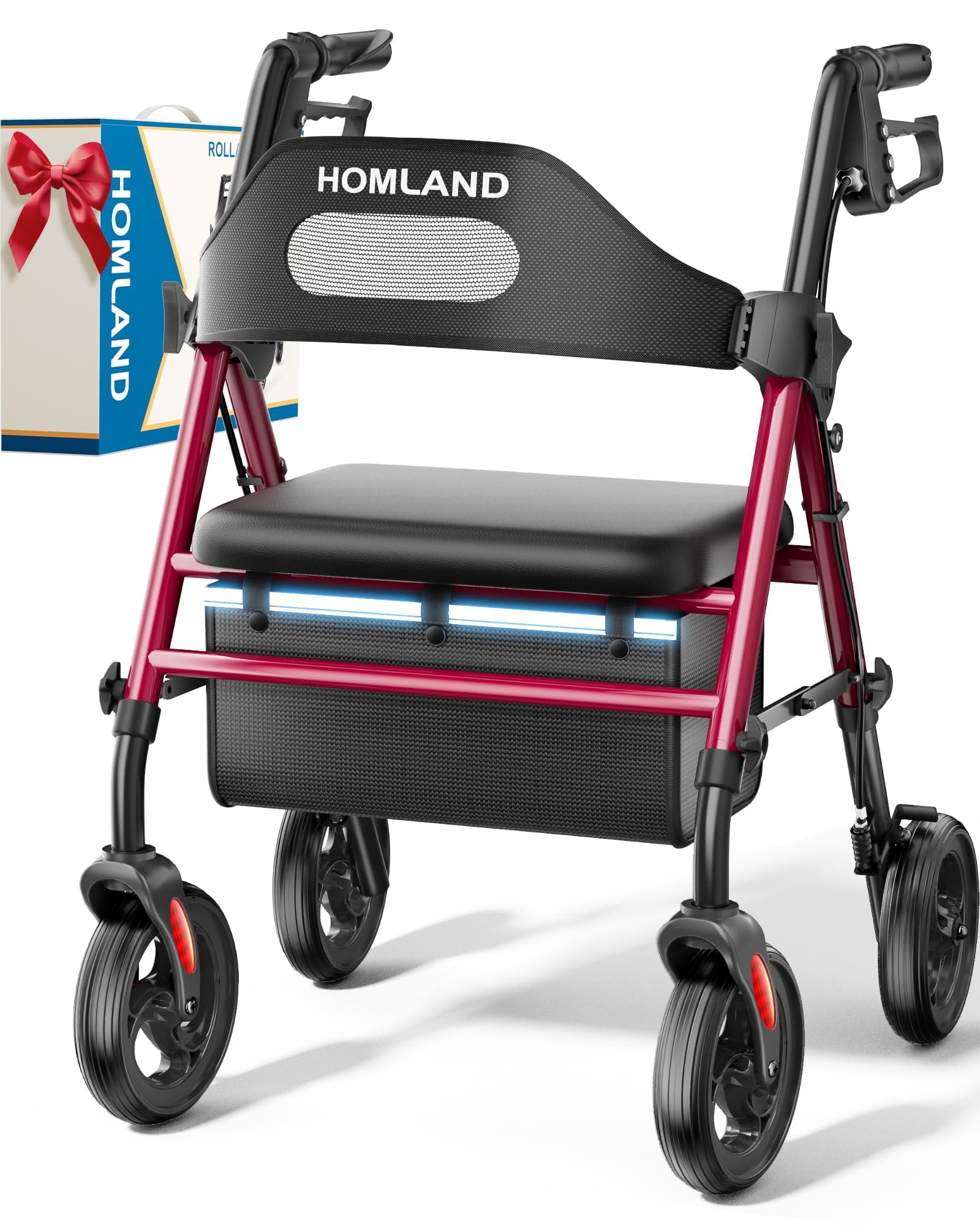
This rollator is worth considering for larger-framed users who find standard rollator seats too narrow for comfortable rest stops.
Pros
- Extra-large 16-by-12-inch seat with thick cushioning
- Adjustable seat and handle heights fit a wide range of users
- Pinch-proof folding design protects fingers
Cons
- Folded size is larger than compact space-saver models
- At over 20 pounds, less convenient for frequent lifting
The wider seat and backrest genuinely change the resting experience compared to narrower rollator seats, and the reinforced frame feels stable when leaning on it to stand. Fold time is quick, though the folded dimensions still need real closet space.
Apartment residents prioritizing comfort during rest stops over minimal storage footprint get more value here than from a slimmer rollator.
Stander Space Saver Walker
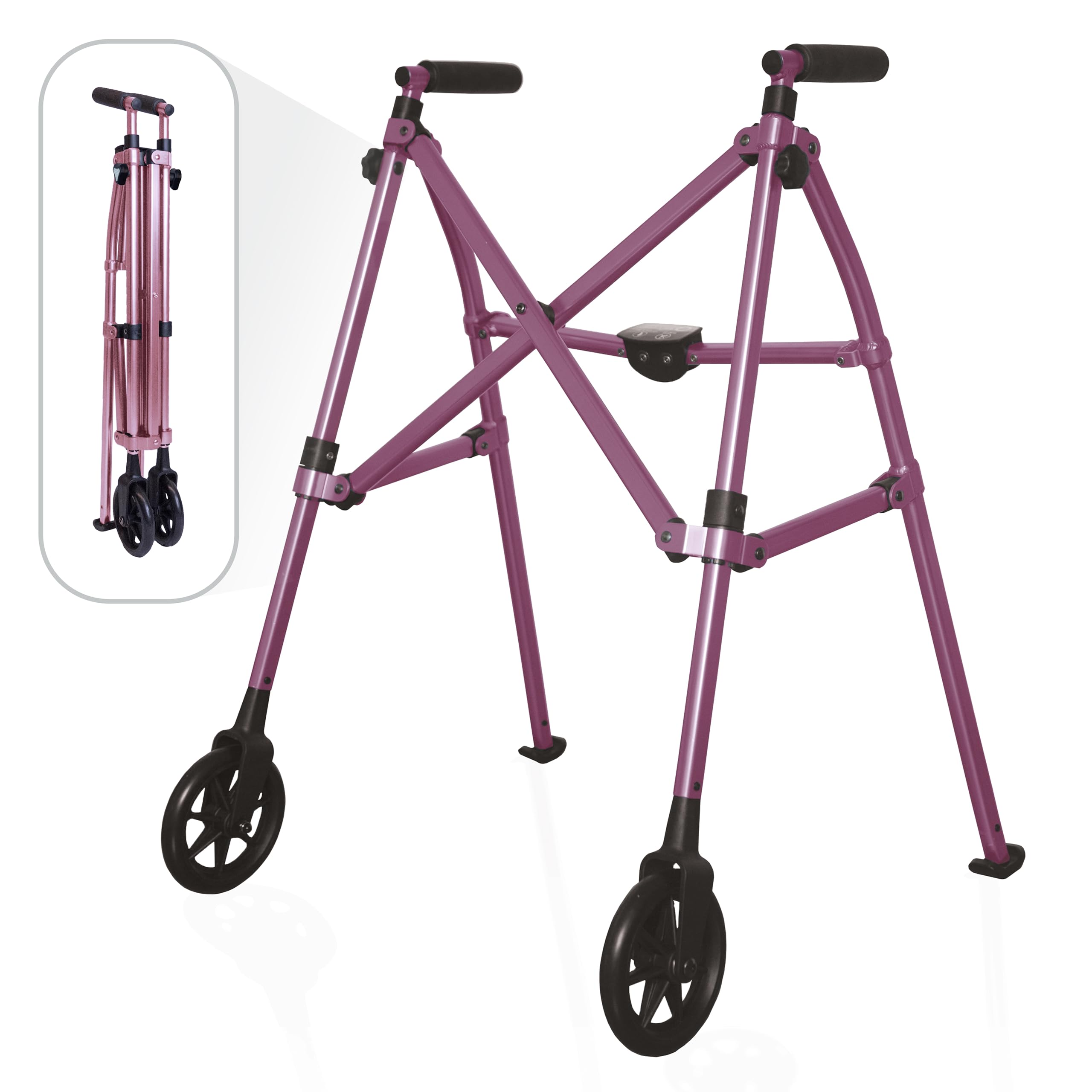
This is the walker for apartments where storage space is at a genuine premium, folding down to roughly 5 by 7 inches.
Pros
- Folds smaller than nearly any other walker in this lineup
- Stands upright on its own when folded
- Ski glides on rear legs move quietly on hard floors
Cons
- No seat for resting
- Narrower base offers less side-to-side stability than a rollator
Weighing 8 pounds, this walker slides behind a door or under a bed with ease, and its ability to stand upright unassisted is a genuine convenience in small entryways. The telescoping width helps it squeeze through narrow bathroom doors.
It works best as a lightweight everyday walker for steadier users, less so for anyone needing to lean heavily while standing still.
byACRE Carbon Ultralight Rollator

This carbon fiber rollator is the choice for anyone who lifts their walker frequently and wants the lightest option available.
Pros
- Weighs about 10.6 pounds, remarkably light for a seated rollator
- Arrives fully assembled, ready to use immediately
- Sleek design doesn’t look institutional
Cons
- Costs more than aluminum or steel rollators
- Wide rear leg stance may not clear very narrow doorways
The carbon frame makes lifting this rollator into a car trunk or up a step noticeably easier than steel models nearly twice the weight. Reviewers moving between apartment and car regularly note the difference immediately.
Some report the rear wheel spread doesn’t clear especially narrow bathroom doors, worth measuring before buying if hallway width is tight.
Buying Guide
Folded Size and Storage
Measure your closet, hallway corner, or the space beside your couch before buying. Folded dimensions vary widely between models, from under 12 inches wide to well over 25 inches.
| Storage Priority | Look For |
|---|---|
| Coat closet or tight corner | Folds under 12 inches wide, stands upright |
| Beside furniture | Folds flat, under 25 inches |
| Car trunk transport | Under 15 pounds, single-fold mechanism |
Turning Radius and Wheel Behavior
Smaller wheels turn tighter in hallways but catch more on thresholds and uneven flooring. Larger wheels roll smoother over transitions but need more clearance to pivot.
Hard floors amplify wheel noise, especially with harder plastic wheels. Rubber or textured wheels roll quieter on hardwood and tile.
Seat vs. No Seat
A seat adds rest stops during longer indoor walks or trips to shared building spaces. It also adds bulk, generally 10 to 15 pounds more than a basic folding walker, and a larger folded footprint.
Skip the seat if the walker mainly moves between rooms. Choose one if daily walks last more than a few minutes at a stretch.
Weight and Lifting
Anyone lifting a walker into a car, up a step, or over a raised threshold benefits from a lighter frame. Aluminum and carbon fiber models weigh notably less than steel rollators.
- Under 10 pounds: easiest to lift one-handed
- 10 to 15 pounds: manageable for most users
- Over 18 pounds: better suited to users who won’t need to lift it often
Braking and Stability
Seated rollators need locking hand brakes to stay put during transfers. Look for a braking system with a clear locked position and a grip that doesn’t require excessive hand strength.
Editor’s Choice
For most apartment layouts, the Vive Mobility 3 Wheel Walker strikes the best balance between a narrow profile and low weight, clearing tight doorways that stop bulkier rollators cold. It folds light enough to carry to a car and doesn’t sacrifice the height adjustment or storage bag many compact walkers skip.
Anyone who needs a seat without giving up much storage space should look at the Stander Space Saver Rollator, which folds down remarkably small for a seated model. For pure lifting ease, the byACRE Carbon Ultralight Rollator stands apart, though its price reflects that convenience.
Users who don’t need wheels at all, particularly for standing support near a bed or toilet, find the Drive Medical 2-Button Standard Foldable Walker does the job simply and affordably.
Conclusion
Matching a walker to an apartment means measuring doorways, checking closet depth, and being honest about how often it needs lifting into a car. A narrow three-wheel model clears tight bathroom doors that stop wider rollators, while a space-saver folding walker disappears into a coat closet between uses. Seats add comfort for longer walks but come with a size and weight trade-off worth weighing against how the apartment is laid out. Testing the fold, checking the turning radius near furniture, and confirming wheel behavior on your specific flooring will settle most of the remaining questions before you buy.
FAQS
What’s the best walker for a small apartment with narrow hallways? Three-wheel rollators like the Vive Mobility model generally clear tight doorways better than four-wheel rollators, thanks to a single pivoting front wheel and narrower base.
Do I need a rollator with a seat if I live in an apartment? Only if daily walks last several minutes at a time or involve trips to shared building spaces. Users moving mainly between rooms rarely need the extra bulk a seat adds.
Which walker is easiest to lift into a car? The byACRE Carbon Ultralight Rollator weighs about 10.6 pounds, among the lightest seated rollators available. For non-seated options, the Medline and Drive Medical folding walkers both weigh under 8 pounds.
Are smaller wheels better for indoor use? Smaller wheels turn tighter in confined spaces but catch more on thresholds and uneven flooring. Larger wheels roll smoother over transitions but need more room to maneuver.
How do I know if a walker will fit through my bathroom door? Measure the narrowest doorway in the apartment and compare it against the walker’s folded or standard width listed in the specifications. Three-wheel and standard folding walkers typically clear narrower openings than wide four-wheel rollators.