
10 Best Rollator Walkers for Seniors in 2026


Electric Recliner Lift Chair

Medication Reminder Alarm

Robot Vacuum Cleaner
A rollator walker gives someone with balance concerns, joint pain, or limited stamina a way to move around confidently without leaning on furniture or family members. Unlike a standard walker that has to be lifted with each step, a rollator rolls on wheels and includes a built-in seat, so a person can rest whenever fatigue sets in rather than pushing through discomfort. That seat also turns a walk to the mailbox or a shopping trip into something manageable instead of exhausting.
Rollators vary more than they might appear to at first glance. Wheel size affects how well a walker handles curbs, gravel, or uneven sidewalks. Frame material determines whether a caregiver can lift it into a trunk easily or whether it stays parked at home. Weight capacity, seat width, and handle adjustment range all matter for getting a proper fit, since a walker that’s too short or too narrow can cause someone to hunch or lean awkwardly.
The right rollator matches the user’s height, weight, typical terrain, and daily routine rather than just the lowest price or flashiest color. A petite person walking mostly indoors has different needs than a tall, active senior who wants to cover uneven trails, and a caregiver moving a walker in and out of a car trunk daily will value light weight more than someone who keeps theirs at home. The models below cover a range of these scenarios, from compact everyday designs to bariatric-rated frames and upright postures.
Best for everyday stability: Drive Medical Rollator Walker with Seat, 7.5 Inch Wheels, Blue
Best for lightweight portability: Drive Medical Aluminum Rollator Walker, Padded Seat, 6-Inch Wheels, Blue
Best value pick: Medline Steel Rollator Walker with Seat, Burgundy
Best for rough terrain and curbs: Drive Medical Nitro DLX Foldable Rollator Walker, 10 Inch Wheels
Best compact design for smaller spaces: Drive Medical Hugo Elite Rollator Walker with Seat and Basket
Best for all-terrain comfort: VOCIC Z21 Rollator Walker for Seniors with Seat
Best for extra seat room: HOMLAND Foldable Rollator Walker with Seat, 16″ Enlarged Seat
Best 2-in-1 walker and transport chair: Akoasm Foldable Walkers for Seniors with Seat, Rollator Wheelchair Combo
Best for upright posture support: Helavo Upright Walker with Seat
Best for higher weight capacity needs: Bariatric Rollator Walkers for Seniors with Seat, 500lb Capacity
Drive Medical Rollator Walker with Seat, 7.5 Inch Wheels
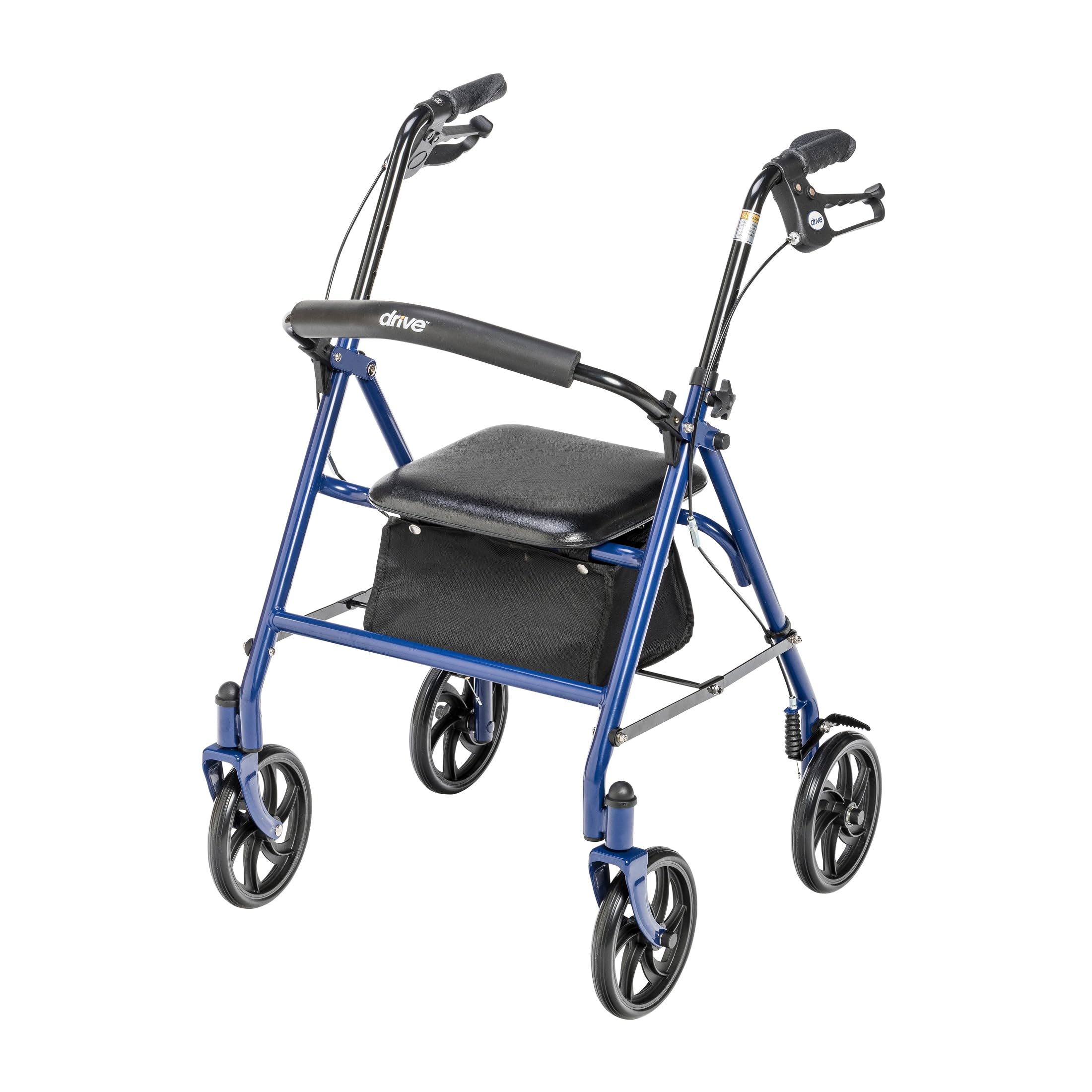
This is a solid choice for anyone wanting a dependable, no-frills rollator for daily indoor and outdoor use.
Pros
- Steel frame feels sturdy on carpet, wood floors, and sidewalks
- Padded seat with fold-down backrest for resting
- High weight capacity for a standard rollator
Cons
- Steel construction adds weight compared to aluminum models
- 7.5-inch wheels handle smooth surfaces better than rough terrain
The steel frame on this rollator holds up well over years of daily use, based on the consistency of long-term owner feedback. Hand brakes lock securely enough to use the seat safely for a rest stop.
At 20 pounds, it’s heavier to lift into a car trunk than aluminum alternatives, so caregivers managing frequent transport may want to consider that tradeoff. The height adjustment range suits most average-height adults comfortably.
Drive Medical Aluminum Rollator Walker, Padded Seat

This rollator suits users who need to lift it into a vehicle regularly and want something light enough to manage alone.
Pros
- Aluminum frame weighs noticeably less than steel models
- One-handed side-to-side folding stands upright for storage
- Adjustable handles with a simple lever mechanism
Cons
- Lower weight capacity than steel counterparts
- Some owners report inconsistent build quality on certain units
At just over 13 pounds, this walker is easy for a smaller caregiver or an older adult to lift into a car trunk without help. The seat height also makes standing up from it less strenuous on the knees.
The tradeoff for that light weight is a somewhat lower capacity, so larger users should check the limit before buying. Most reviewers describe it as stable for walking around a neighborhood or a store.
Medline Steel Rollator Walker with Seat
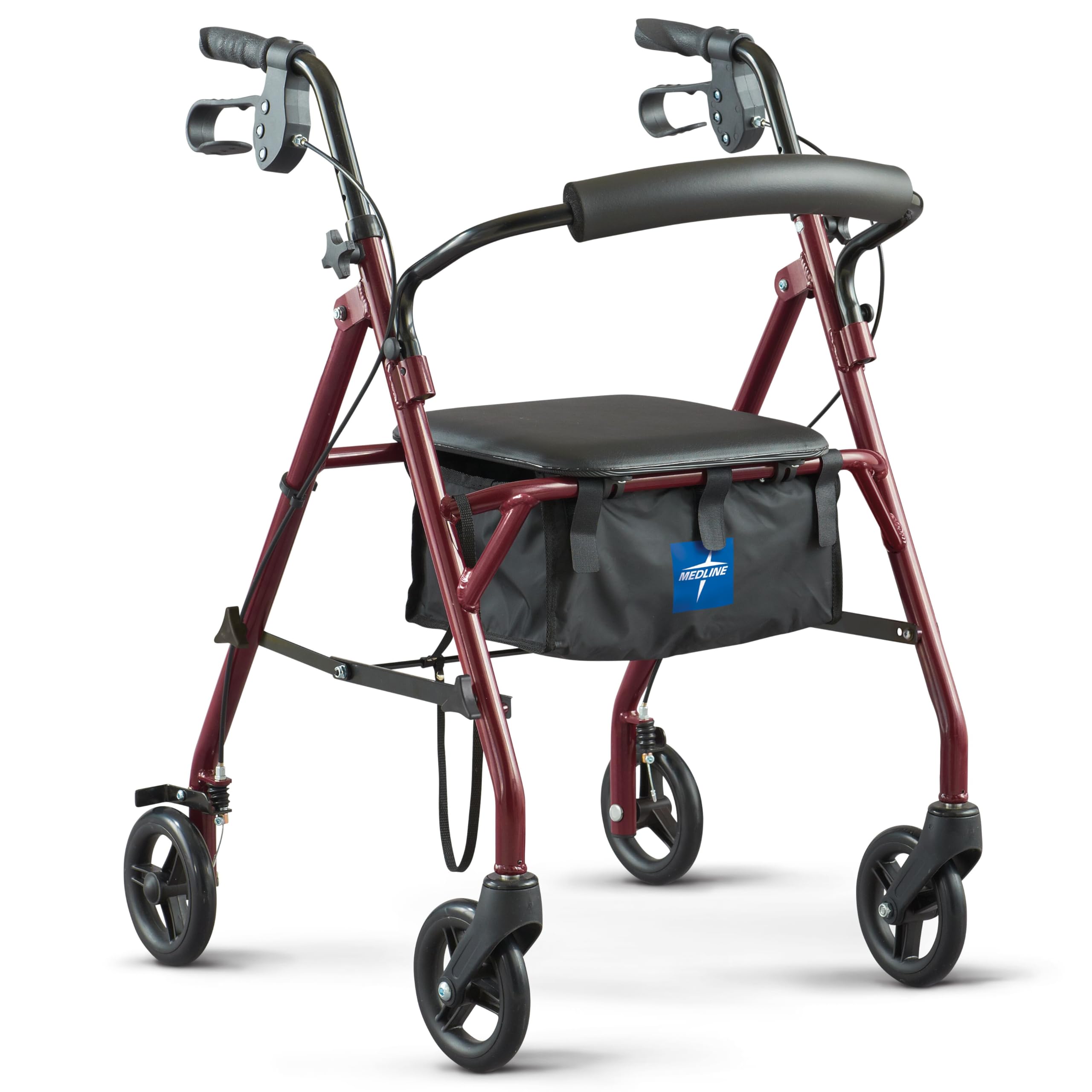
This model works well for anyone seeking a hospital-grade rollator without paying for extra features they won’t use.
Pros
- Straightforward brake design that’s easy to squeeze and lock
- Competitively priced for a steel-frame rollator
- Under-seat storage keeps belongings accessible
Cons
- Handle height range is narrower than some competitors
- A few owners noted hand grips installed backward out of the box
Medline built its reputation supplying hospitals and clinics, and this rollator reflects that practical, functional design. The padded seat and backrest offer a comfortable spot to rest during errands.
Assembly is generally quick, though double-checking the hand grip orientation after unboxing is worth the extra minute. The 6-inch wheels roll smoothly indoors and on paved surfaces, though they’re less suited to gravel or grass.
Drive Medical Nitro DLX Foldable Rollator Walker

This rollator is worth choosing for seniors who spend real time outdoors and need wheels that handle curbs and uneven pavement.
Pros
- Large 10-inch front casters roll smoothly over bumps and cracks
- Push-button handle and backrest adjustment for a custom fit
- Cross-brace folding design adds stability when unfolded
Cons
- No front kick plate, which makes tight turns near steps trickier
- Heavier than aluminum rollators at 22 pounds
The bigger wheels genuinely change how it feels to cross a parking lot or a gravel path compared to a 6-inch-wheel model. The euro-style frame also looks less clinical, which some owners mention as a real confidence boost.
One consistent complaint involves maneuvering it through narrow indoor spaces or over raised thresholds, since there’s no kick plate to help lift the front. Outdoor-focused users tend to rate it highly regardless.
Drive Medical Hugo Elite Rollator Walker with Seat and Basket

This compact rollator fits well for shorter users or anyone navigating tighter indoor layouts.
Pros
- Tool-free assembly, ready to use out of the box
- Height-adjustable seat and handlebars for a custom fit
- Folds compactly enough for most car trunks
Cons
- Shorter users need to remove spacer tubes for proper fit
- Basket is smaller than some rivals’ storage pouches
Reviewers who researched several rollators before buying this one often mention the seat height adjustment as the deciding factor. It suits people under 5-foot-3 once the spacer tubes are removed from the wheel shafts, a step worth doing before first use.
The 8-inch wheels handle typical sidewalks and indoor floors without trouble. It’s a comfortable option for daily errands rather than rugged outdoor trails.
VOCIC Z21 Rollator Walker for Seniors with Seat
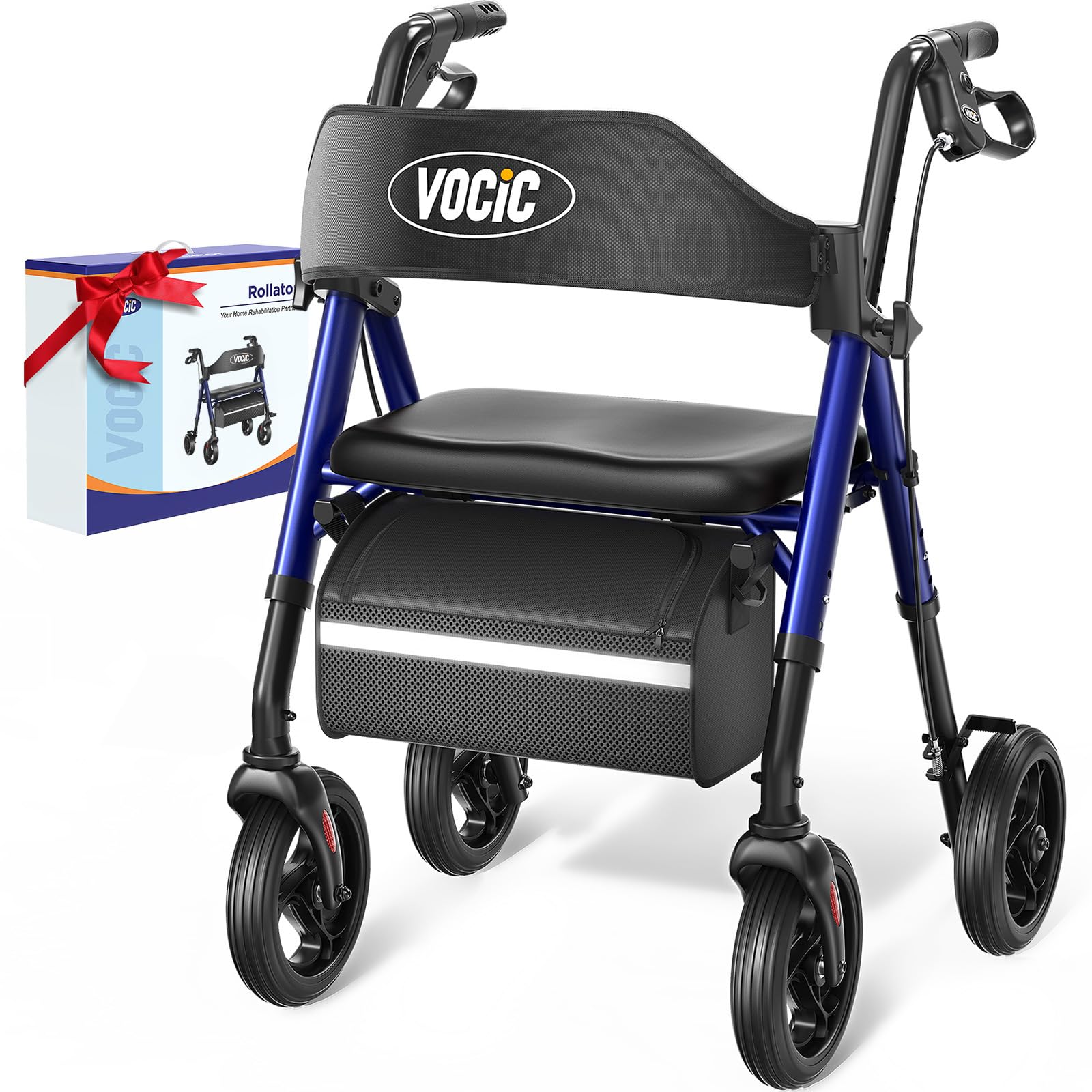
This rollator stands out for its cushioned, ergonomic seat and dual-adjustment design that fits a wide range of heights.
Pros
- Thick, contoured seat cushion for longer sitting comfort
- Three-mode braking system (free, deceleration, stop)
- 8-inch puncture-proof wheels with textured, slip-resistant tread
Cons
- At roughly 22-24 pounds, it’s on the heavier side to lift
- A few owners reported weld issues after extended use
The bionic-shaped seat noticeably reduces pressure points during rest stops, something owners recovering from surgery mention often. Reflective strips on the wheels and bag add a helpful visibility boost for evening walks.
Some users report frame issues appearing after roughly two years of regular use, which is worth factoring in for anyone planning heavy daily reliance. For most people, it holds up well through everyday walking and outings.
HOMLAND Foldable Rollator Walker with Seat
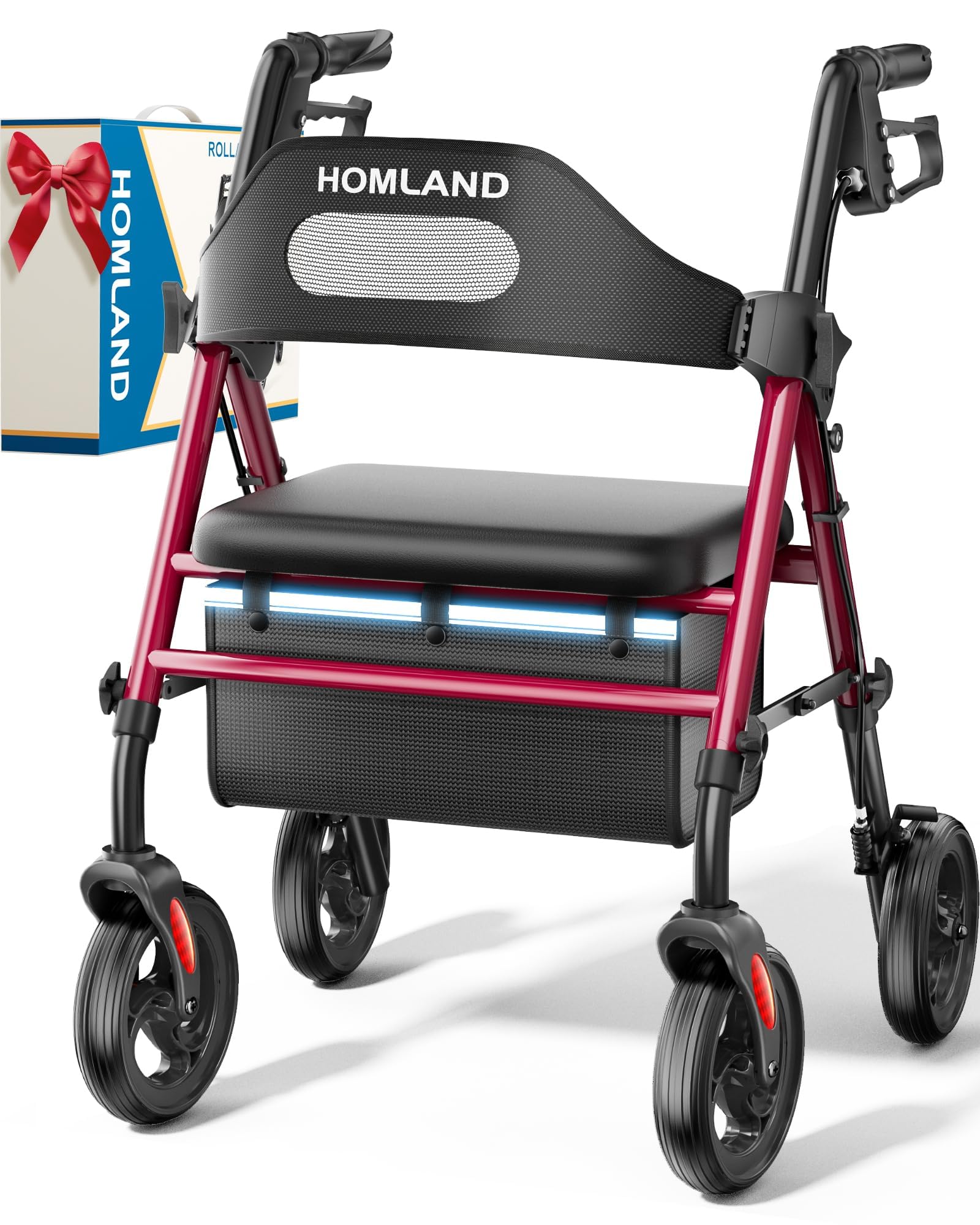
This model is a strong fit for larger users or anyone who finds standard 14×10-inch rollator seats too narrow for comfort.
Pros
- Extra-large 16×12-inch seat with thick cushioning
- Height-adjustable seat and handles fit a wide range of heights
- Pinch-proof folding mechanism protects fingers
Cons
- Folded size is larger than some compact competitors
- A couple of owners reported loose handlebar hardware on arrival
The wider seat and reinforced frame geometry make this rollator noticeably steadier than lighter compact designs, according to owners who compared it directly to previous walkers. The 8-inch wheels roll well over yard terrain and uneven pavement.
Checking that all handlebar hardware is tightened after assembly is a good habit with this one, since a small number of buyers found loose connections. Most describe setup as simple with clear photo instructions included.
Akoasm Foldable Walkers for Seniors with Seat
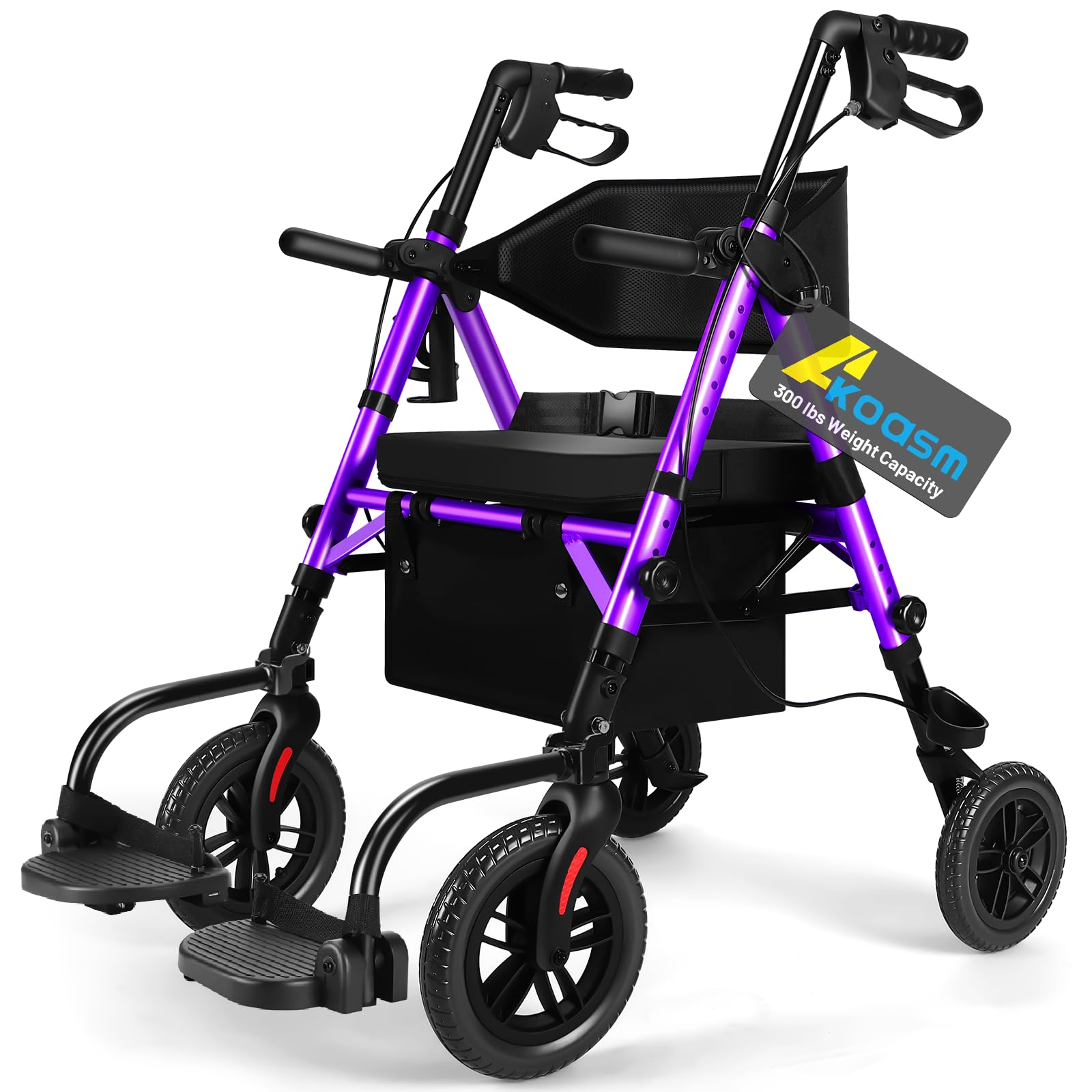
This 2-in-1 design suits families who need both a walking aid and an occasional transport chair without buying two separate devices.
Pros
- Converts between rollator and transport-chair function
- Waist and footrest safety straps for wheelchair mode
- Wide, breathable backrest reduces lower back strain
Cons
- Heavier than single-function rollators at 25 pounds
- Less stable as a wheelchair on soft surfaces like grass
Switching between walking support and a seated transport option in one frame is genuinely convenient for caregivers managing outings that involve both walking and longer stretches of sitting. The 10-inch front wheels absorb bumps reasonably well in walker mode.
As a wheelchair, it performs best on pavement and indoor flooring, since a few reviewers noted it tips more easily on grass. Anyone planning to use the wheelchair function regularly outdoors should weigh that limitation carefully.
Helavo Upright Walker with Seat

This upright design benefits users with back or shoulder pain who find standard rollators force an uncomfortable forward lean.
Pros
- Padded armrests support an upright walking posture
- 10-inch puncture-proof wheels for outdoor stability
- Tall handle range suits taller users well
Cons
- Larger folded footprint than standard rollators
- Not ideal for users who don’t need upright support, since it’s bulkier overall
Standing fully upright while walking, instead of leaning forward onto handlebars, is the main draw here, and reviewers recovering from hip or shoulder surgery describe real relief from that posture change. The armrest cushioning holds up well over extended use.
Taller users in particular benefit from the extended height range that many standard rollators don’t offer. It’s a bigger, heavier device overall, so it suits people who specifically need the upright feature rather than general everyday use.
Bariatric Rollator Walkers for Seniors with Seat
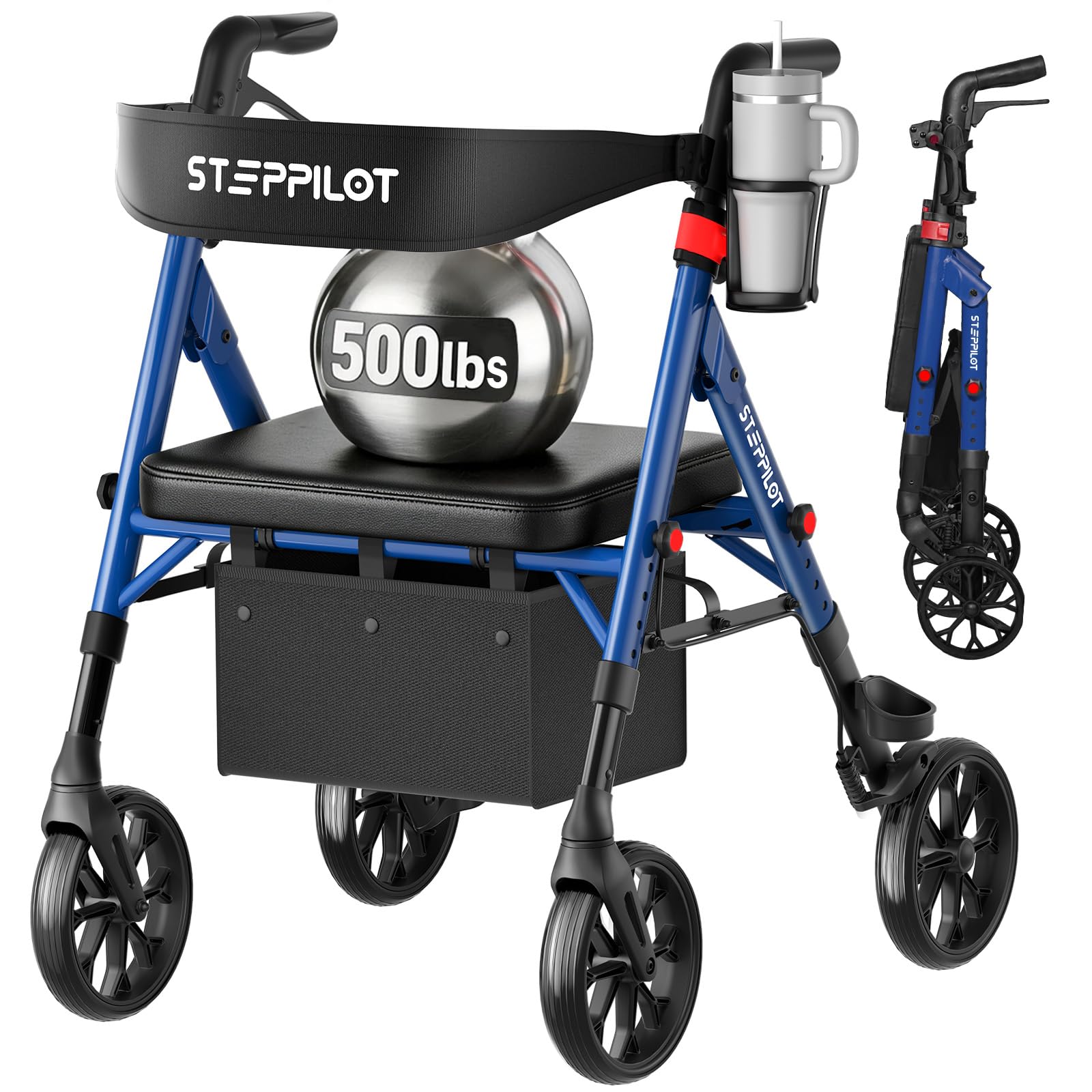
This rollator answers a specific need: a higher weight capacity without an overly bulky or heavy frame.
Pros
- Rated for up to 500 pounds on a reinforced aluminum frame
- Extra-wide 18×14-inch memory foam seat
- Weighs only about 16 pounds despite the higher capacity
Cons
- Overall footprint is larger than standard rollators when unfolded
- Newer to market, so fewer long-term durability reports exist
The combination of a high weight rating and a relatively light frame is unusual, since most bariatric-rated walkers weigh considerably more. The five-level seat and handle adjustment accommodates a wide height range, from just under 5 feet to nearly 7 feet.
Reviewers appreciate the stability on uneven ground thanks to the reinforced triangular frame. As a newer model, it has less of a track record than some longer-established brands, worth keeping in mind for buyers who prioritize proven longevity.
Buying Guide
Choosing a rollator walker comes down to matching the frame, wheels, and seat to how the person will actually use it day to day.
Frame Material and Weight
Steel frames tend to feel more solid underfoot and often support higher weight capacities, but they add bulk when lifting the walker into a car. Aluminum frames trade a bit of maximum capacity for a lighter, easier-to-transport design. Anyone who travels frequently with their rollator should weigh this tradeoff carefully.
| Frame Type | Typical Weight | Best For |
|---|---|---|
| Steel | 16-22 lbs | Home use, higher stability needs |
| Aluminum | 13-17 lbs | Frequent transport, active lifestyles |
| Reinforced aluminum (bariatric) | 16-25 lbs | Higher weight capacity without steel bulk |
Wheel Size and Terrain
Larger wheels roll over curbs, cracks, and gravel more smoothly than smaller ones. A 6-inch wheel suits mostly indoor or paved use, while 8- to 10-inch wheels handle parks, yards, and uneven sidewalks with less jolting.
Seat Size and Comfort
A wider, cushioned seat matters for anyone who plans to rest frequently during outings. Check both seat width and depth, not just cushioning thickness, since a narrow seat can feel cramped even with soft padding.
Height and Handle Adjustment
Handles should let the user stand fully upright with elbows slightly bent, not hunched forward or reaching up. Check the listed height range against the user’s actual height before buying, since ranges vary meaningfully between models.
Brakes and Safety Features
Loop brakes that squeeze easily suit users with weaker grip strength or arthritis. A locking mechanism for the seated position is essential for safe resting.
Weight Capacity
Match the stated capacity to the user’s weight with some buffer, rather than buying right at the limit. Bariatric-rated rollators offer wider seats and reinforced frames for users who need higher capacities.
Folding and Storage
Look for a folding mechanism that’s simple to operate one-handed and check the folded dimensions against the trunk space or closet where it will be stored.
Editor’s Choice
The Drive Medical Rollator Walker with Seat, 7.5 Inch Wheels earns our top recommendation for most seniors managing daily mobility needs. Its steel frame, dependable brakes, and comfortable padded seat cover the fundamentals well, and the higher weight capacity gives it broader appeal than lighter aluminum alternatives.
For anyone prioritizing portability over maximum sturdiness, the Drive Medical Aluminum Rollator Walker is worth the tradeoff, especially for caregivers lifting it in and out of a car several times a week. Seniors dealing with back or shoulder discomfort should look closely at the Helavo Upright Walker, since its posture-focused design addresses a genuine gap that standard rollators don’t fill.
Conclusion
A rollator walker works best when it’s chosen for the specific person using it, not just the highest-rated option on the page. Height, weight, typical terrain, and how often the walker needs to be folded and transported all shape which design makes sense. The models covered here range from dependable everyday steel frames to specialized upright and bariatric designs, giving most buyers a starting point that matches their situation.
Testing the seat height and handle adjustment against the user’s actual measurements before ordering helps avoid returns and discomfort later. Checking the weight capacity with a reasonable buffer, rather than cutting it close, adds a margin of safety worth having.
FAQS
How do I know what height rollator I need?
Stand upright with arms relaxed at the sides, then check that the handle height allows a slight bend at the elbow. Most manufacturers list a height range or a handle height in inches, so measuring the user’s height beforehand makes selection easier.
What’s the difference between a rollator and a standard walker?
A rollator has wheels on all four legs and typically includes a seat, so it can be pushed while walking and used to rest. A standard walker without wheels must be lifted with each step, which requires more strength and coordination.
Can a rollator be used on grass or gravel?
Rollators with 8-inch or larger wheels handle grass, gravel, and uneven sidewalks more comfortably than those with smaller 6-inch wheels. Puncture-proof or textured tires also help with traction on softer or slippery surfaces.
How much weight can a rollator hold?
Standard rollators typically support 300 to 350 pounds, while bariatric-rated models can support up to 500 pounds. Checking the specific capacity against the user’s weight, with some buffer, is worth doing before purchase.
Are aluminum or steel rollators better?
Aluminum rollators are lighter and easier to lift into a vehicle, while steel frames often feel sturdier and support higher weight capacities. The right choice depends on how often the walker needs to be transported versus how much stability the user needs.
Is an upright walker a good replacement for a standard rollator?
An upright walker suits users with back, shoulder, or arm strength issues that make leaning onto standard handlebars uncomfortable. For users without those specific concerns, a standard rollator is usually lighter and easier to store.