
10 Best Non-Slip Floor Tape for Home: Top Safety Picks


Sock Aid for Seniors

Adjustable Walker with Wheels

LED Clip Reading Light
Floors can become slippery when they are wet, dusty, or worn. Non-slip floor tape adds textured grip to steps, ramps, thresholds, and other areas where people may lose their footing. It can also mark edges and changes in floor height, which helps improve visibility in busy parts of a home.
The best non-slip floor tape offers strong traction, reliable adhesion, and a surface that suits the location without damaging the floor. When choosing one, we look at the tape’s grit, width, backing, water resistance, and ease of cutting and applying. Smooth or delicate floors may also need a gentler adhesive, while stairs and outdoor areas often need a tougher option.
We compared non-slip tapes for common home uses to find options that balance grip, durability, comfort, and value.
Best Non-Slip Floor Tape for Home
We reviewed non-slip floor tapes for grip, durability, ease of use, and suitability for common areas around the home. Our list includes reliable options for stairs, bathrooms, entryways, ramps, and other slippery surfaces.
Rabenda Rug Grippers

We recommend these grippers for keeping area rugs steady on hard floors, especially when curled corners cause trips.
Pros
- Strong hold on hardwood, tile, marble, and concrete
- Thin design stays hidden under rug corners
- Can be cleaned and reused in many cases
Cons
- May damage rugs with fluffy backing
- Does not work well with jute or rubber backing
- Strong adhesion can make removal difficult
We found the triangle shape easy to place under each rug corner. The grippers helped stop sliding and reduced curled edges on hard flooring. Their thin profile also kept the rug looking fairly flat.
The adhesive held well in high-traffic areas. We would use these for entryway rugs, runners, and small area rugs that shift during daily use.
Removal requires care because the adhesive is strong. We would avoid them on rugs with loose fibers, jute, or rubber backing, and we would not use them over carpet. Cleaning the grippers with water or soapy water may help restore their hold.
LifeGrip Stay on Track

We recommend this tape for smooth indoor or outdoor surfaces where strong, lasting traction matters.
Pros
- Strong grip for stairs, ramps, ladders, and walkways
- Handles rain, heat, and cold
- Cuts easily and applies to many smooth surfaces
Cons
- The rough surface may feel harsh under bare feet
- Removal could require careful, slow peeling
- A 38-foot roll may be more than needed for small projects
We found the tape easy to cut and position during use. Once pressed onto a clean, smooth surface, it formed a firm bond and stayed in place during regular foot traffic.
The gritty top layer added noticeable traction without making the tape unusually thick. We would use it on steps, ramps, metal ladder treads, and other areas where slipping is a concern.
This tape works best on dry, clean surfaces. We would avoid applying it to dusty, damp, or heavily textured floors because the adhesive may not seal evenly. Its wide roll also covers more area with fewer strips, which can make larger home projects faster.
COSIMIXO Heavy-Duty Anti-Slip Tape

We recommend this tape for home stairs, ramps, and other smooth surfaces because it provides strong traction and covers a large area.
Pros
- Strong grip for indoor and outdoor use
- Water- and oil-resistant surface
- Wide, 35-foot roll covers many steps
Cons
- The wide roll can be difficult to handle
- Abrasive grit may feel rough under bare feet
- Careful surface preparation takes time
We found the coarse surface gave stairs and a porch ramp a firm, steady feel. It also worked well on laminate, wood, and metal after we cleaned and dried them thoroughly.
The adhesive feels strong once set, but placement requires care. We could adjust it briefly during installation, yet the tape became difficult to move after pressing it down. A second person helped us manage the wide roll.
Its waterproof, oil-resistant design suits garages, entryways, decks, and outdoor steps. The rough grit may not be comfortable for barefoot areas, so we would place it where people usually wear shoes.
The 35-foot length offers good value for several stairs or larger floor sections. We would apply it above 50°F (10°C) and allow it to bond fully before use. It improves traction but does not remove every slipping risk in wet or icy conditions.
COSIMIXO Reflective Anti-Slip Tape

We recommend this tape for home stairs, ramps, and decks when we want strong traction plus a visible yellow strip.
Pros
- Pre-cut strips simplify installation.
- The abrasive surface provides firm shoe grip.
- The reflective strip improves step visibility.
Cons
- Some strips may wrinkle or loosen when exposed to rain.
- The adhesive needs a clean, dry surface.
- A few users reported tearing or early detachment.
We found the 4-inch width useful on most stair treads, and the 30-inch length covered a large section without measuring or cutting. Peeling off the backing and pressing each strip onto a clean surface made installation quick.
The rough surface grips shoes well on wood, painted ramps, and deck steps. We also liked the yellow reflective band because it makes each step easier to see in dim areas.
Outdoor use may require extra care. Rain can cause the tape to wrinkle, and some users found that wet strips eventually lifted or came off. Pressing the edges firmly during installation can help, but we should not treat the tape as a guarantee against slips in every condition.
LifeGrip Stay on Track Traction Treads

We recommend these pre-cut treads for smooth indoor or outdoor steps because they offer strong grip and simple installation.
Pros
- Strong traction for steps, ramps, and ladders
- Pre-cut strips save time during installation
- Suitable for wet areas and changing weather
Cons
- The backing can be difficult to peel off
- The rough surface may feel harsh against bare skin
- A roller helps press the edges down securely
We found the 2-by-12-inch strips easy to place on stair edges and small ramps. Their rounded corners gave the finished job a neat look, while the gritty surface added noticeable traction under shoes and socks.
The acrylic adhesive held firmly on clean, smooth surfaces such as wood, metal, tile, and concrete. We would clean and dry the area carefully before applying each strip, since dirt or moisture can reduce the bond.
The tape feels quite rough, so we would avoid placing it where people often walk barefoot. Removing the backing also takes patience, and a small roller helps prevent lifting along the edges.
For home use, this 12-pack works well on stairs, short ramps, and slippery entry areas. Its 4.4-star rating from more than 1,700 reviews also suggests that many buyers find it reliable.
GORILLA GRIP Rug Grippers

We recommend these grippers for keeping rug corners and edges flat on hard floors without adding much bulk.
Pros
- Strong two-sided grip helps limit sliding and curling
- Thin design stays comfortable underfoot
- Can be removed, cleaned, and reused
Cons
- Adhesive may loosen with heavy foot or pet traffic
- Placement must be precise during installation
- Best suited to hard floors, not every surface
We found the grippers easy to place beneath rug corners and straight edges. Once applied, they held the rug firmly against hardwood flooring and reduced the bunching that can create a tripping risk.
The low profile did not feel noticeable when we walked across the rug. We also liked that the pads could be repositioned during setup and wiped clean before reuse.
Heavy traffic, active pets, or frequent rug movement may reduce the adhesive’s hold over time. Removal was straightforward in our testing, with no noticeable residue left on the floor.
Home Techpro Vacuum Tech Rug Gripper
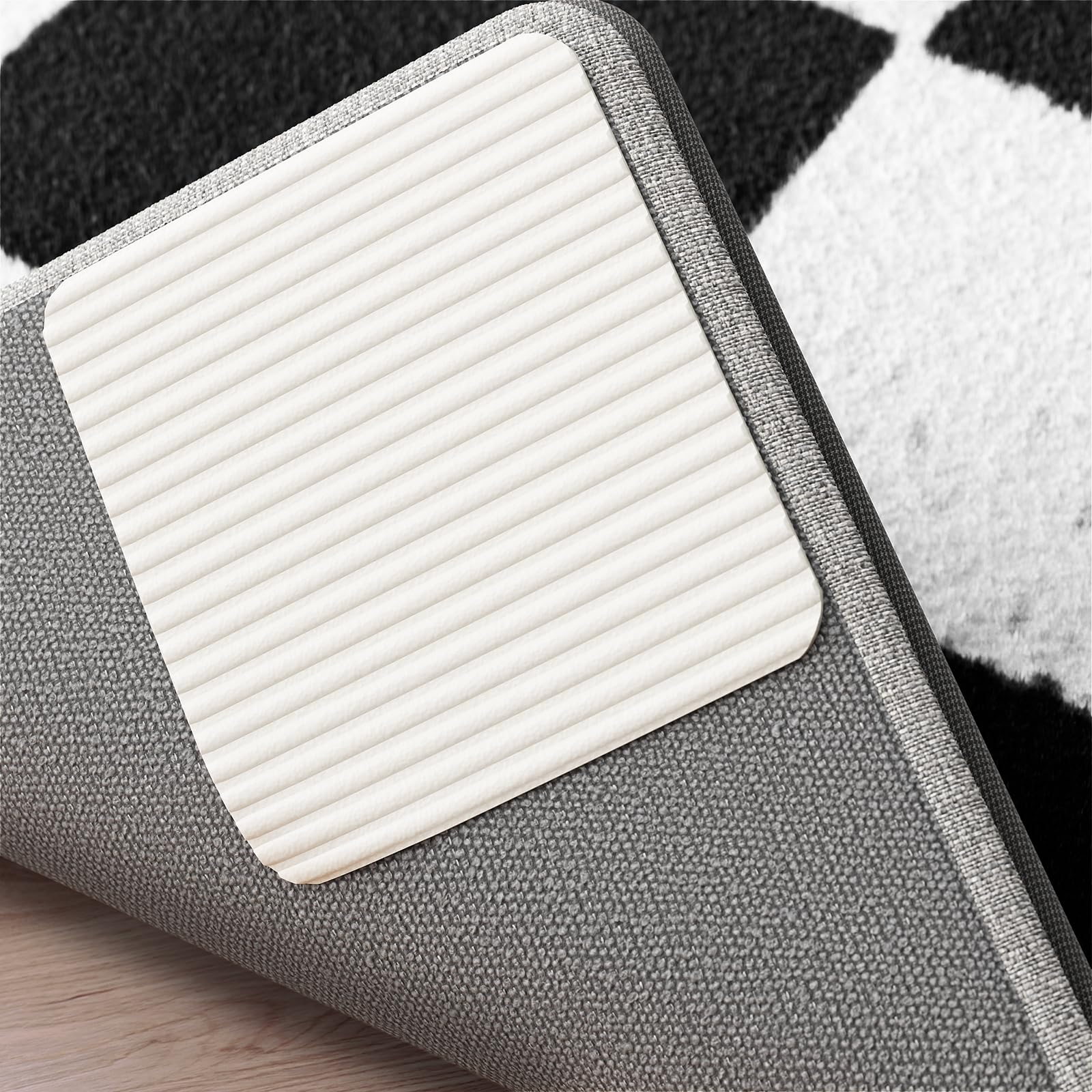
We recommend this gripper for hard, smooth floors because it holds many rugs in place without leaving glue behind.
Pros
- Leaves no sticky residue on most hard floors
- Sits nearly flat and helps smooth curled corners
- Washable and easy to remove
Cons
- Does not work with carpeted floors
- May not hold rubber-backed, jute, or fluffy rugs
- Needs clean, smooth surfaces for the best grip
We found the four 3.9-inch square pads easy to attach under a rug. The suction-style surface grips when we put weight on the rug, and the thin design stays mostly hidden underfoot.
After placing them on a clean hardwood floor, the rug shifted much less during normal walking and vacuuming. The pads also added a slight cushion, which made the rug feel more comfortable.
Removal was simple, and we did not see the sticky residue linked to many glue-based tapes. However, the grip can weaken when we lift and replace the rug often. We also would not choose this product for carpet, rubber-backed rugs, jute, or thick fabric backs.
ZONGOOL Rug Tape

We recommend this tape for securing smooth-backed rugs on clean, hard floors because it holds corners firmly and removes without much mess.
Pros
- Strong grip on tile, wood, and laminate
- Thin design stays mostly hidden under rugs
- Washable and reusable with proper care
Cons
- Needs a dry, dust-free surface
- May not work well on jute, rubber, or fluffy backings
- Washed strips may lose some stickiness
We found the A and B labels helpful during installation. After cleaning and drying the floor, we placed the matching sides on the rug and floor, then pressed the corners down firmly. The strips worked well on smooth-backed rugs in busy areas.
The tape stayed mostly out of sight because of its slim profile. We also liked that it reduced both rug movement and curled corners, which can create a tripping risk in halls, kitchens, and entryways.
Removal requires patience. We lifted the rug with the tape attached, dampened the strips, and peeled them back slowly. This helped protect the rug and left little to no residue on hard flooring.
Performance can vary after washing. Some users report that the strips remain useful, while others found weaker adhesion afterward. We would use this product on flat, smooth surfaces and avoid placing it over carpet or rugs with loose, rubber, or jute backing.
YYXLIFE Rug Tape

We recommend this tape for securing fabric-backed rugs on clean, smooth floors because it offers strong hold and can be removed with care.
Pros
- Holds rugs firmly in busy areas
- Works on wood, tile, vinyl, and concrete
- Can come off cleanly when removed slowly
Cons
- Does not work well with rubber, PVC, or silicone rug backing
- Needs careful cutting because the adhesive is very sticky
- Requires about 24 hours to fully bond
We found the tape easy to place under rug edges and corners. After pressing it onto a clean floor, the rug stayed in place instead of shifting during regular foot traffic.
The adhesive also worked well on concrete and hardwood in our testing. We would use extra strips for a large or heavy rug, especially in an entryway or near stairs.
Removal takes patience. We would lift one corner and roll the tape back slowly; gentle heat from a hair dryer can help if it resists. Before buying, we would check the rug backing, since this tape is intended for fabric-backed materials rather than rubber or silicone.
MTNZXZ Glow-in-the-Dark Traction Tape

We recommend this tape for stairs, decks, and other smooth surfaces where added grip and better edge visibility can help.
Pros
- Coarse surface provides firm traction
- Glow strip helps outline step edges
- Cuts easily for custom-size pieces
Cons
- Adhesion may vary by surface
- Glow effect may be limited in darkness
- Rough texture may feel harsh underfoot
We found the abrasive surface useful on wet deck areas and basement steps. It adds noticeable grip without needing special tools, and we could cut the 16-foot roll into strips with regular scissors.
The green strip made stair edges easier to see at night, although we would not depend on it as a strong light source. Its visibility works best after exposure to light.
Surface preparation matters. We cleaned and dried the area before applying the tape, but some users report weak adhesion, especially on difficult surfaces. Pressing the tape down firmly and avoiding damp or cold conditions should improve the hold.
The tape works indoors and outdoors on materials such as tile, concrete, metal, wood, plastic, and stone. Its rough finish can collect dirt, so we would use it where traction matters more than a smooth appearance.
Buying Guide
We should match the tape to the surface, location, and amount of foot traffic. A product for a dry indoor floor may not work well on a damp porch or in a bathroom.
| Feature | What we should check |
|---|---|
| Surface compatibility | Confirm that the tape suits wood, tile, vinyl, concrete, or another floor type. |
| Traction | Choose a textured surface that provides grip without feeling unsafe underfoot. |
| Moisture resistance | Look for water-resistant tape in bathrooms, entryways, and laundry areas. |
| Adhesive strength | Strong adhesion helps prevent lifting, but removable options may suit rented homes. |
| Size and shape | Select rolls, strips, or cut-to-fit pieces based on the area and floor pattern. |
| Cleaning needs | Check whether the surface can handle regular sweeping and mopping. |
Before applying the tape, we should clean and dry the floor completely. Dust, grease, wax, and moisture can weaken the bond. We should also check whether the manufacturer requires a smooth or sealed surface.
For stairs and narrow edges, we can choose strips that fit the tread without creating raised corners. For larger areas, wider tape may reduce the number of seams. We should avoid covering cracks, loose flooring, or damaged surfaces until we repair them.
Color and visibility also matter. A contrasting edge can help people see a step, while a low-profile design may suit rooms where appearance matters. We should follow the product’s instructions for installation, pressure, and replacement.
Editor’s Choice
We recommend 3M Safety-Walk 610 as our top pick for most homes. Its coarse mineral surface provides steady traction on stairs, ramps, entryways, and other smooth areas that often become slippery.
The tape uses a strong pressure-sensitive adhesive and comes in several widths and lengths. We suggest cleaning and drying the surface first, then pressing the tape firmly into place for better adhesion.
| Feature | 3M Safety-Walk 610 |
|---|---|
| Best for | Stairs, ramps, and walkways |
| Surface | Coarse mineral grit |
| Adhesive | Pressure-sensitive |
| Indoor use | Yes |
| Outdoor use | Yes, on suitable surfaces |
We like this tape because it balances grip, durability, and easy installation. It may feel too rough for bare feet, so we would choose a smoother indoor tape for bathrooms or areas where people commonly walk without shoes.
Before buying, we would check the surface material and measure each section carefully. Painted, dusty, damp, or uneven surfaces may reduce adhesion.
Conclusion
We should choose non-slip floor tape based on the surface, moisture level, and expected foot traffic. Indoor stairs and hallways often need a thinner tape with a clean finish, while garages, workshops, and outdoor steps may need a tougher, waterproof option.
Before applying the tape, we should clean and dry the floor fully. We should measure each strip, round the corners, and press the tape firmly to remove air pockets. Following the maker’s instructions helps the adhesive bond properly.
| Area | Key feature to seek |
|---|---|
| Indoor floors | Low-profile texture |
| Stairs | Strong grip and clear edges |
| Bathrooms | Water-resistant adhesive |
| Garages | Durable, heavy-duty surface |
| Outdoor steps | UV and weather resistance |
We should inspect the tape regularly for peeling, worn texture, or trapped dirt. Replacing damaged strips helps maintain steady traction without leaving loose edges that could create a trip hazard.
FAQs
What type of non-slip tape works best at home?
We recommend waterproof, textured tape for stairs, ramps, porches, and other areas exposed to moisture. Choose a smoother surface for bare feet, such as bathroom floors, to reduce discomfort.
Can we use floor tape in a bathroom or shower?
Yes, but we should choose tape labeled for wet areas. Clean and dry the surface first, and avoid applying it over loose grout, cracked flooring, or peeling coatings.
How do we apply non-slip floor tape?
We should measure and cut the tape before removing the backing. Press it firmly from one end to the other, then smooth the edges to prevent lifting.
How long does non-slip tape last?
Service life depends on foot traffic, moisture, cleaning products, and surface type. We can extend its life by cleaning gently and replacing it when the texture wears down or the edges peel.
Can we remove the tape without damaging the floor?
We should warm the tape with a hair dryer and peel it back slowly. Adhesive remover may help, but we need to test it first on an hidden area and follow the flooring manufacturer’s care instructions.
What size tape should we buy?
We can use narrow strips for stair treads and wider rolls for walkways or ramps. The tape should cover the main walking area without creating raised edges that could catch shoes.