
10 Best Handrails for Apartments in 2026


Smart Doorbell Camera

Quad Cane for Seniors

LED Magnifying Glass
A wobbly step or a bare stretch of wall by the door causes more falls than most people expect, especially in apartments where builders often skip railings on short flights. A handrail closes that gap without a full renovation. For renters, the right choice needs to work with drilling limits, shared hallways, and surfaces you don’t own.
Most apartment stairs and entries only need a few feet of support: two or three steps into a unit, a short run onto a balcony, or a single step down into a garage. That’s very different from a full staircase project, and it means many of the best handrails for apartments are compact, wall-mounted, or single-post kits rather than long multi-section railings. Some bolt into concrete or brick, others mount to wood framing or studs, and a few are short grab bars meant for one quick reach rather than a full walk down a flight.
Picking the right one comes down to matching the rail’s length and mounting style to your actual steps, not just choosing the best-looking option. A few extra minutes measuring your steps and wall material before ordering saves a return trip and an awkward hole pattern in a rental wall.
Best for multi-step porches and decks: CR Fence & Rail 2-3 Step Stair Handrail
Best for a single quick step: Purife 12 Inch Wall Mount Grab Bar
Best budget 2-step kit: Metty Metal 2 Step Stair Railing Kit
Best low-profile garage step rail: Sahans U-Shape Wall Mount Handrail
Best for indoor decor-matching stairs: SPTZQURY Wooden Stair Handrail
Best farmhouse-style wall rail: VZNEK Industrial Pipe Stair Handrail
Best for two entry points at once: Frossvt Wall Mount Handrail 2-Pack
Best adjustable-angle railing kit: VEVOR 2-3 Step Stair Hand Rail Kit
Best stainless steel grab bar pair: MAICOBI 12″ Stair Handrail 2-Pack
Best single-post design for narrow steps: SMQLJXC Single Post Wrought Iron Handrail
CR Fence & Rail 2-3 Step Stair Handrail
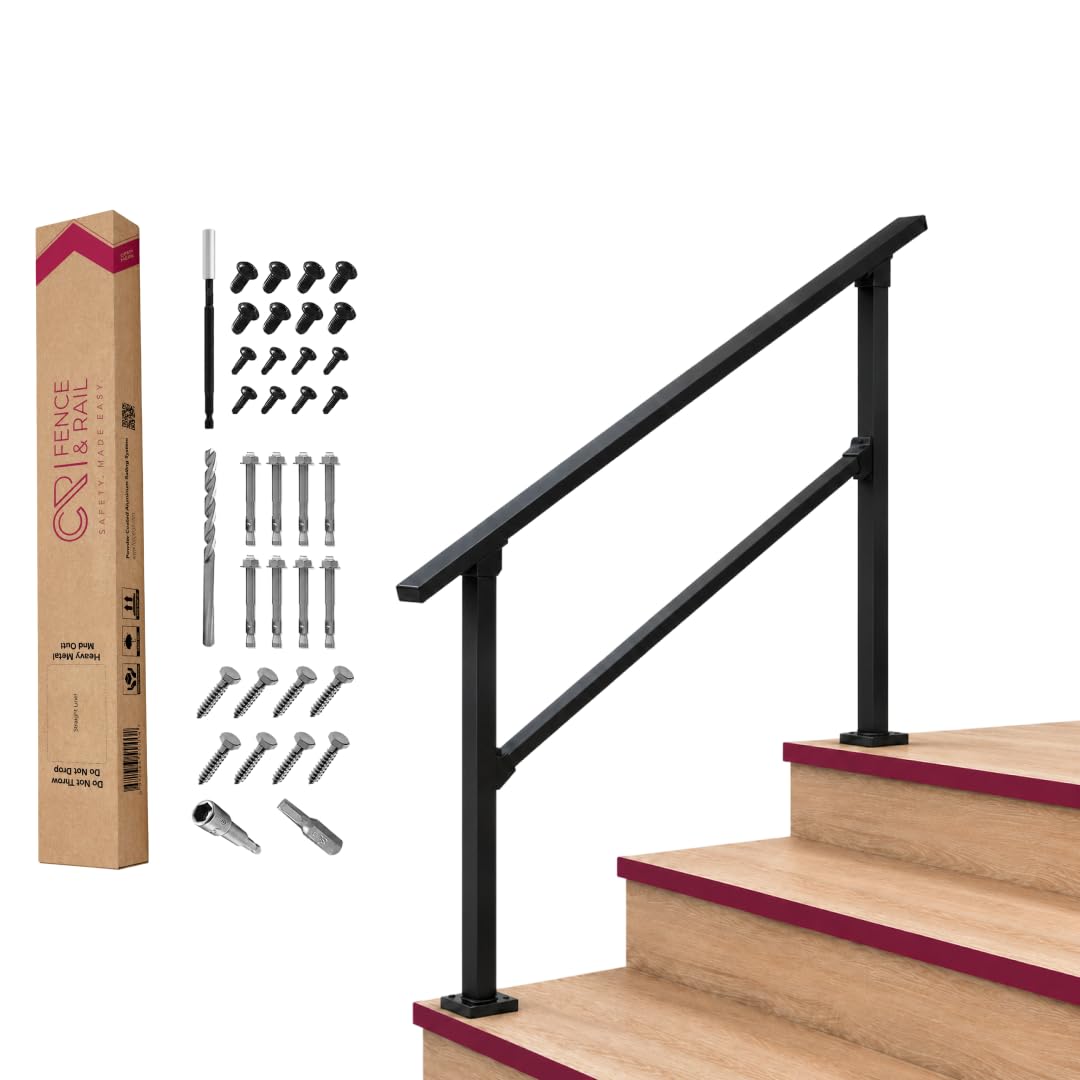
This is the pick for anyone with a real 2-3 step porch, deck, or entryway who wants a complete, self-supporting railing rather than a wall-mounted bar.
Pros
- Comes with everything needed, including concrete drill bits and self-tapping screws
- Four-side welded joints and enclosed brackets resist rust from the inside out
- 10-year warranty backed by a US-based company
Cons
- Requires anchoring two posts into the ground or step surface, which some landlords may restrict
- Not ideal for narrow walkways where post footprint matters
- Heavier and bulkier to ship and store than wall-mounted options
This kit stands on its own two posts rather than depending on a wall, which makes it a strong fit for freestanding porches, decks, and balconies where there’s no adjacent wall to mount to. The powder-coated finish holds up well against rain and temperature swings, and the fully enclosed brackets are a smart touch since exposed screw holes are usually where rust starts. Because it needs post anchoring into concrete or wood, renters should confirm with their landlord before drilling into a shared deck or stoop.
Purife 12 Inch Wall Mount Grab Bar

This compact grab bar suits apartment dwellers who only need something to hold onto for a single step or two, not a full railing run.
Pros
- Small footprint fits tight hallways and doorframes
- Simple direct-to-wall installation with no assembly
- Solid iron pipe construction feels sturdy in hand
Cons
- Only 12 inches long, so it won’t span multiple steps
- Needs a stud or masonry wall for full holding strength
- Matte black finish may show scuffs over time
At just over a foot long, this bar is built for one job: giving someone a firm grip at a doorway, single step, or narrow hallway. The 1.3-inch pipe diameter feels comfortable in the hand, and the galvanized coating underneath the matte black finish adds a layer of rust protection. Reviewers mention using it near garage entries and patio doors, which lines up with its best use case. It’s not a substitute for a full stair rail on anything longer than one or two steps.
Metty Metal 2 Step Stair Railing Kit

This is a practical, budget-friendly option for a short outdoor flight where the angle of the steps isn’t standard.
Pros
- Adjustable angle from 0 to 45 degrees fits uneven step pitches
- Comes with drill bits, hardware, and an installation guide
- Competitively priced compared to similar wrought iron kits
Cons
- Metal gauge is thinner than some pricier competitors
- A few buyers reported missing hardware in the box
- Paint coating can chip slightly during assembly
Wrought iron construction and a thick black powder coat give this rail a traditional look that suits both wood and concrete steps. The adjustable angle is the standout feature here, since it lets the rail match steps that don’t fit a fixed 30- or 40-degree design. Assembly takes about 30 minutes based on buyer feedback, and most call it sturdy for the price. It’s worth double-checking the hardware count against the included list before starting installation.
Sahans U-Shape Wall Mount Handrail
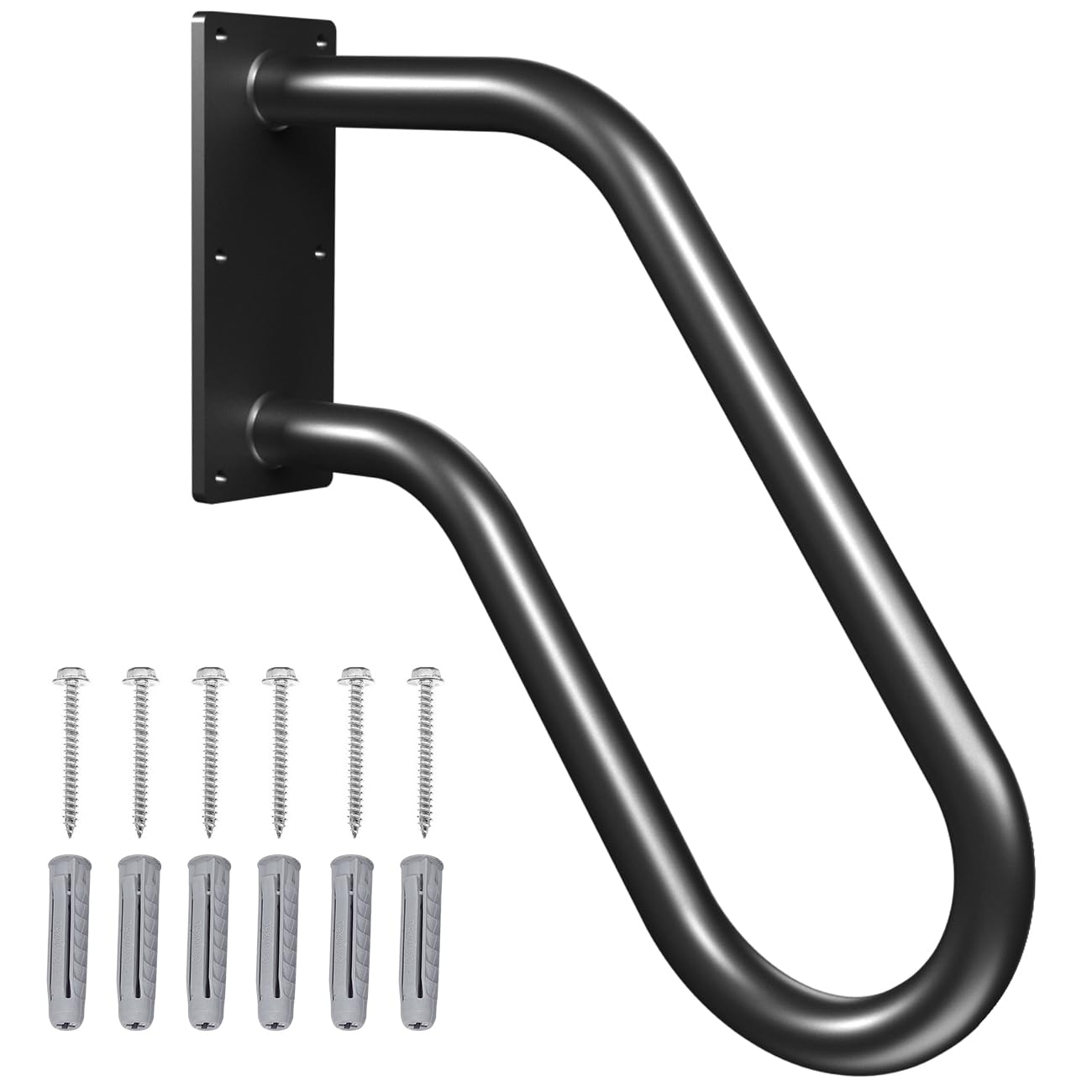
This low-profile U-shaped rail is built for tight garage steps and entryways where a bulky railing would get in the way.
Pros
- Compact 16-inch design fits small step transitions
- Comes with anchors for both wood and masonry walls
- Sleek, modern look that blends into most home styles
Cons
- Included plastic anchors may need upgrading for brick or concrete
- Best suited for 1-2 steps, not longer runs
- Solid black finish can be hard to spot for low-vision users
Buyers repeatedly mention using this rail on the step between a garage and the house, which fits its scale and shape well. The U-shaped design gives a natural spot to grip whether you’re heading up or down. One recurring note in reviews: the stock anchors can struggle on masonry, so swapping in heavier-duty concrete anchors is a smart upgrade for exterior brick or stucco walls.
SPTZQURY Wooden Stair Handrail
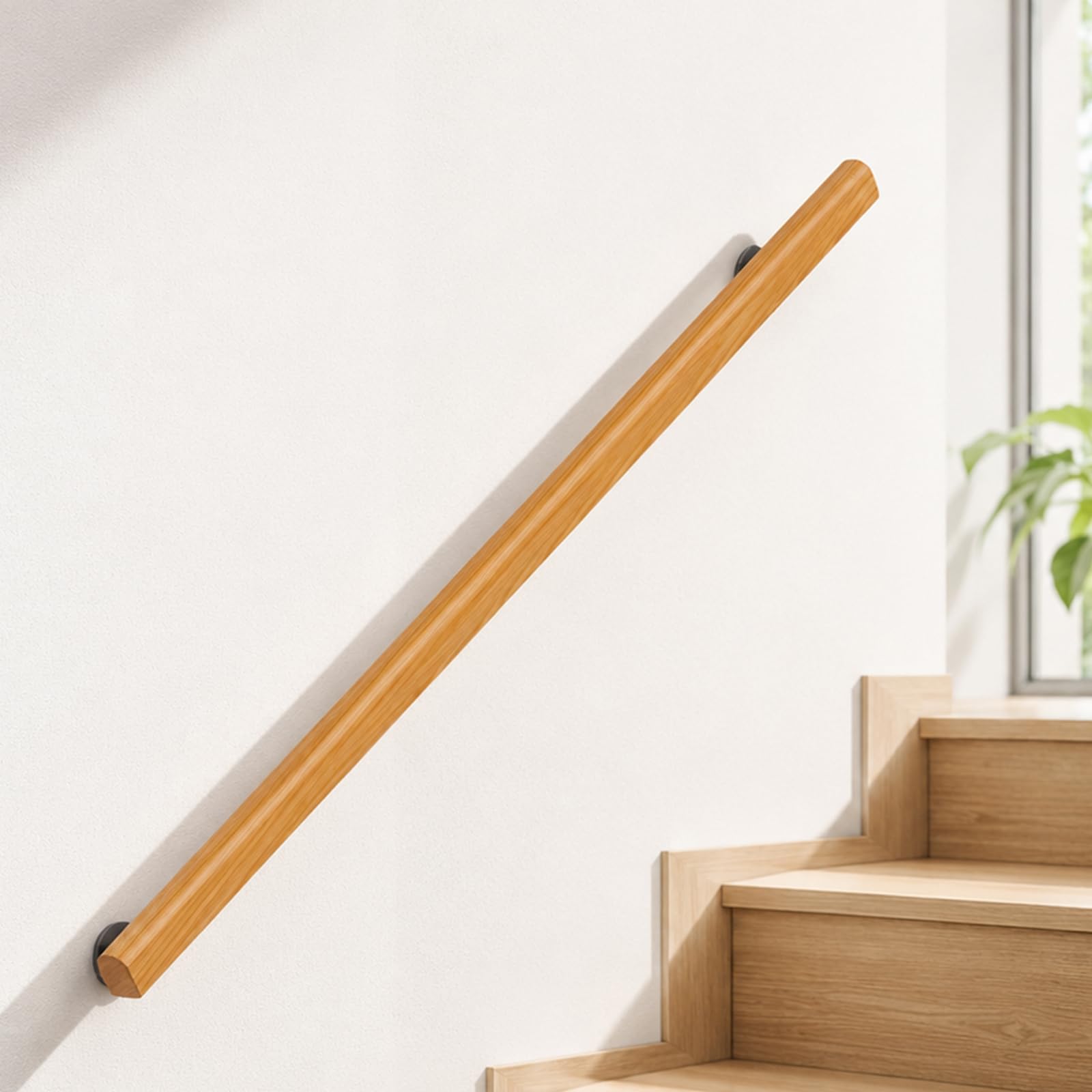
This solid pine handrail is the pick for indoor stairs where a metal industrial look would clash with the decor.
Pros
- Natural wood grain blends with traditional interior finishes
- Rated to support significant pull weight with proper bracket spacing
- Available in multiple lengths up to 20 feet
Cons
- Unfinished surface needs sealing or staining for durability
- Longer lengths ship in sections that need joining
- Not designed for outdoor or wet exposure
Indoor basement stairs, lofts, and interior corridors benefit from this rail’s rounded, comfortable grip and warm wood tone. It comes with metal wall brackets and mounting hardware, and two people make installation easier on longer runs. One return caveat worth noting: return shipping costs on longer lengths can run high, so measure the run carefully before ordering to avoid needing a swap.
VZNEK Industrial Pipe Stair Handrail
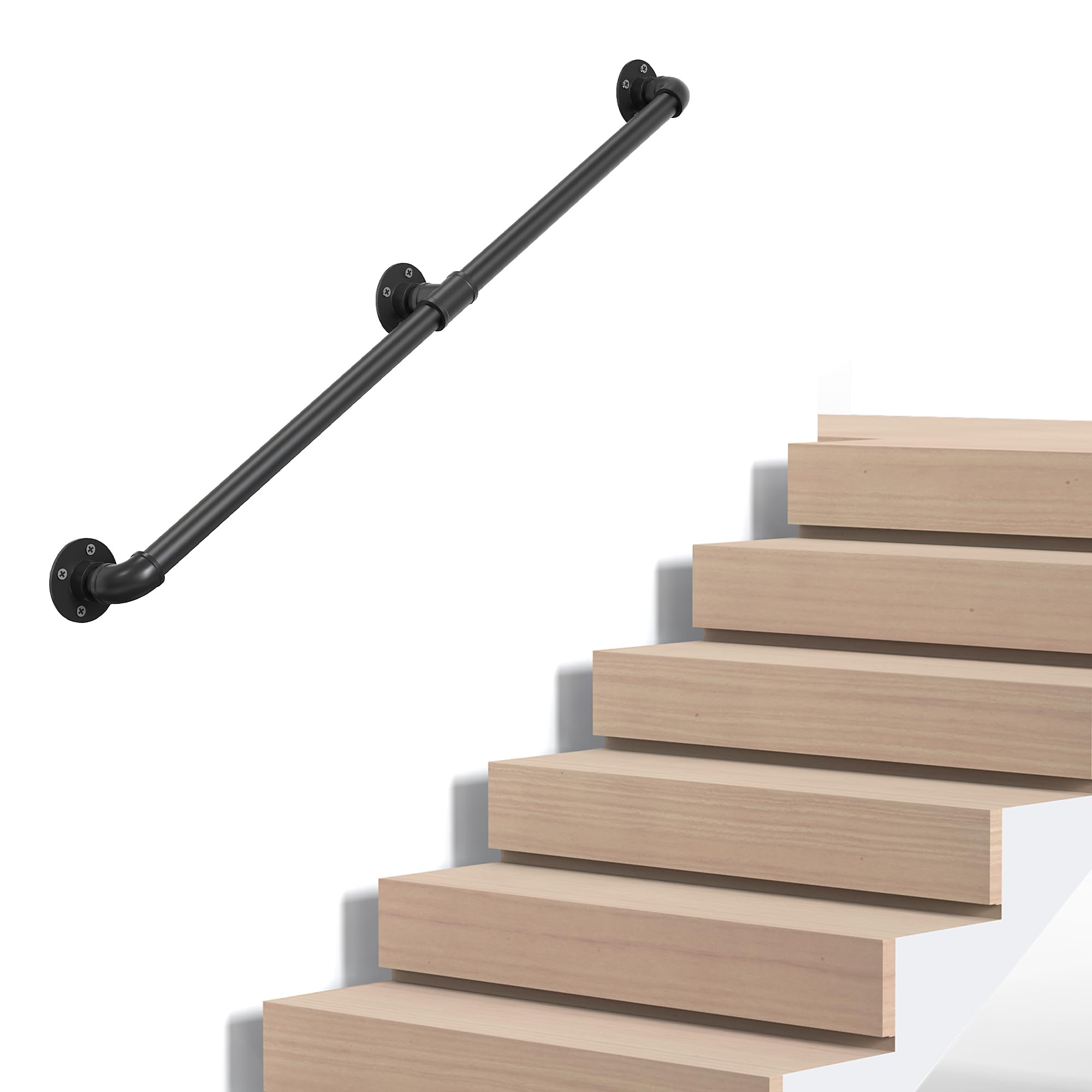
This 5-foot wall-mounted pipe rail suits basement stairwells, entryways, and porches where a farmhouse-style look is welcome.
Pros
- 5-foot length covers more ground than most wall-mount rails
- Galvanized iron construction resists corrosion well
- Flanges and connectors give a finished, intentional look
Cons
- Requires solid wall backing across its full length
- Industrial pipe style won’t suit every interior
- Two-flange mounting means precise measuring before drilling
The black galvanized finish and exposed pipe fittings give this rail a vintage, industrial character that pairs well with farmhouse or loft-style interiors. Reviewers used it for basement stairs, cellar doors, and outdoor ramps, praising the smooth finish and secure mounting. Because it spans a full 5 feet, it needs a wall long enough and structurally sound enough to support brackets at both ends.
Frossvt Wall Mount Handrail 2-Pack
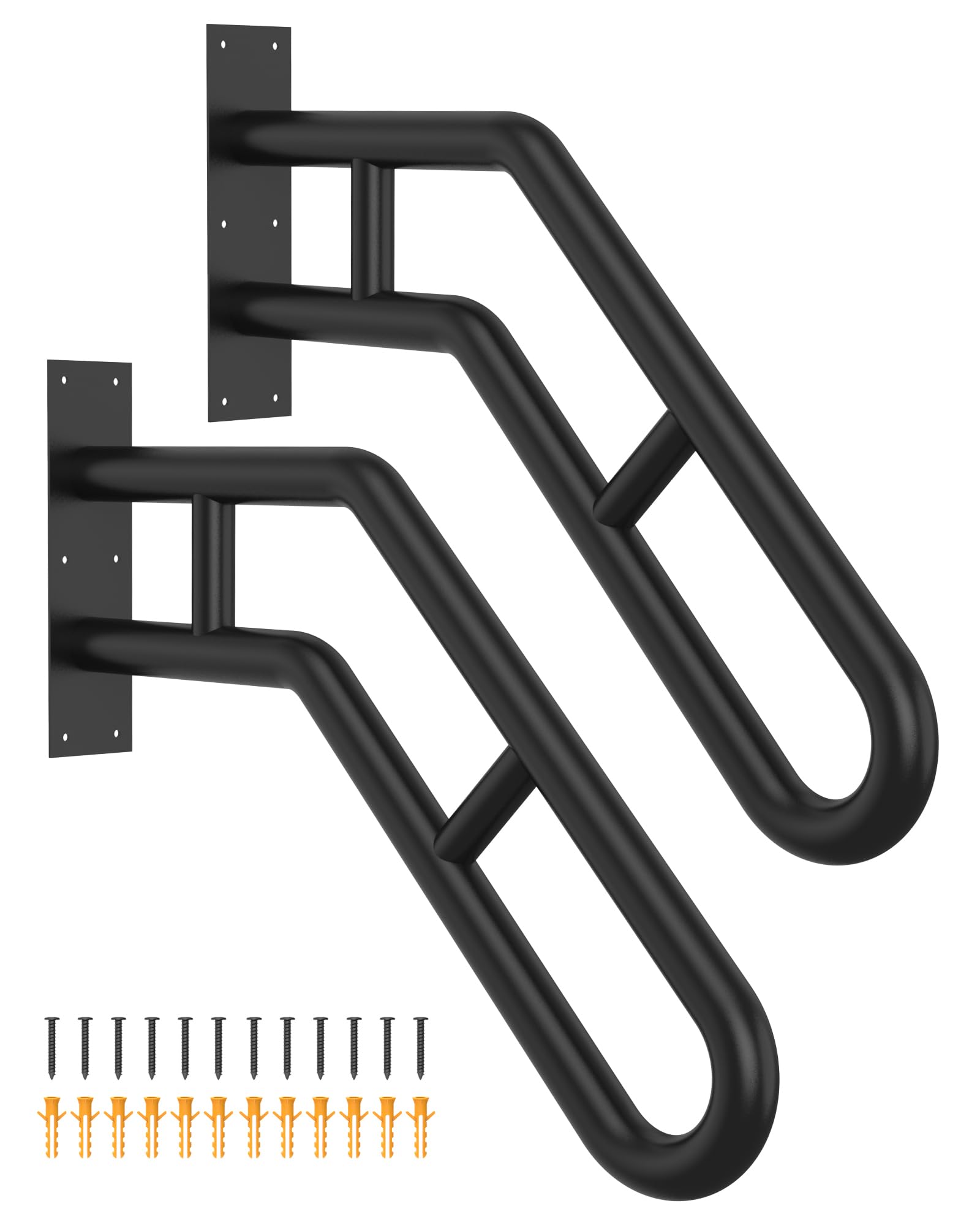
Buying two at once makes sense for households needing support at both a garage entry and a back porch, and this pack covers both for less than buying separately.
Pros
- Two rails included, useful for multiple entry points
- Angled 45-degree grip design reduces hand slippage
- Steel construction with a frosted, rust-resistant coating
Cons
- Included screws may be shorter than ideal for thick doors
- Best anchored into studs rather than drywall alone
- 300-pound rating is lower than some single-post competitors
The bent, downward-angled grip is a genuinely useful design choice, since it naturally matches how a hand reaches for support while stepping down. Buyers mounted these on door frames and wood trim with strong results, though a few opted for longer screws than what’s included. For apartment dwellers with two problem entry points, like a garage step and a patio door, this pack solves both without ordering twice.
VEVOR 2-3 Step Stair Hand Rail Kit

This adjustable railing kit fits a wide range of step angles, making it a flexible choice for uneven or nonstandard outdoor steps.
Pros
- Angle adjusts from 5 to 40 degrees for custom step pitches
- Works on concrete, wood, tile, and marble surfaces
- Complete hardware set with stainless expansion bolts included
Cons
- Instructions are described as difficult to follow by several buyers
- Assembly involves around 50 parts and takes real time
- Weight rating is lower than some competing kits
Measuring the center distance and height difference of the steps before ordering is essential here, since the manufacturer flags that mismatched dimensions can prevent installation altogether. Once assembled, the retro arch styling looks elegant on porches and entryways. Buyers with patience for a longer assembly process end up satisfied, but this isn’t the fastest kit to put together on the list.
MAICOBI 12″ Stair Handrail 2-Pack
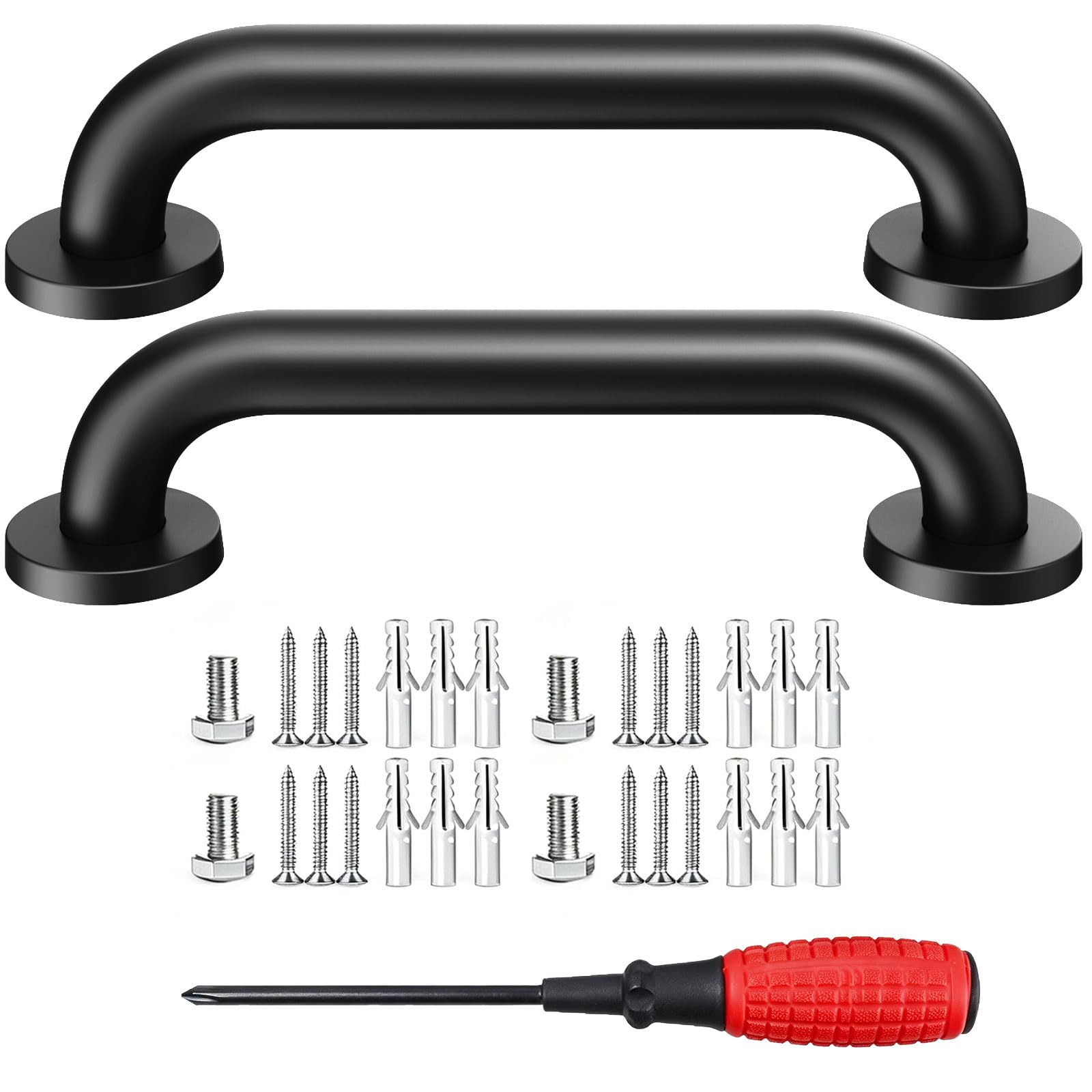
These stainless steel grab bars are a smart choice for anyone who wants two matching handholds, such as flanking a doorway or covering two separate short steps.
Pros
- Stainless steel resists rust better than painted carbon steel
- Non-slip matte finish works well even with wet hands
- Two bars included for symmetrical or dual-entry installs
Cons
- Short 12-inch length limits use to single steps
- Best performance requires mounting into wall studs
- Higher cost per bar than basic painted alternatives
Reviewers frequently mention installing these on garage steps and between connected homes, where a short, dependable grip point matters more than a full railing. The stainless steel resists corrosion better than the powder-coated carbon steel used in several other picks on this list, which helps in humid or coastal climates. For anyone with two matching steps or entry points, buying the pair solves both spots in one order.
SMQLJXC Single Post Wrought Iron Handrail

This single-post design suits narrow steps where a two-post railing would take up too much space.
Pros
- Single-post footprint fits narrow walkways and tight steps
- U-shaped tube design gives a comfortable, modern grip
- Multi-layer powder coating adds rust resistance
Cons
- Single post means less lateral stability than two-post kits
- Some buyers upgraded to heavier bolts than included
- Best for 1-3 steps, not longer staircases
Several buyers reinforced the base with sturdier anchor bolts than what ships in the box, which is worth doing on any single-post rail carrying real weight. The design looks clean on garages, patios, and small porches where a bulkier two-post railing would look out of place. It’s a good compromise for narrow spaces, though it won’t feel as rock-solid as a two-post system under heavy lateral pressure.
Buying Guide
Picking a handrail for an apartment starts with matching the rail type to the space, not just picking a finish you like. Renters face an extra layer of consideration that homeowners don’t: what’s reversible, what needs a landlord’s sign-off, and what won’t damage a wall you don’t own.
Installation Footprint and Wall Compatibility
Wall-mounted rails need a stud, masonry wall, or solid wood backing to hold real weight. Drywall alone will not support a handrail safely, no matter how good the hardware is.
Freestanding, post-based railings avoid drilling into walls entirely but need a stable step, deck, or concrete surface to anchor into. For rented units, ask whether patching a few small holes is acceptable before installing a wall rail, and keep the original screws in case the unit needs to be restored later.
| Mounting Type | Best For | Wall/Surface Needed |
|---|---|---|
| Wall-mounted bar or rail | Tight hallways, single steps | Stud, masonry, or solid wood |
| Multi-post railing kit | Freestanding porches, decks | Concrete, wood, or soil-anchored base |
| Single-post rail | Narrow steps, garages | Solid step or landing surface |
Rail Length and Step Coverage
Match the rail’s length to the number of steps, not the other way around. A 12-inch grab bar works for one step; a 25- to 40-inch rail covers two to three steps; anything longer needs a multi-section kit or a longer single rail.
Material and Finish Durability
Carbon steel with a powder-coated finish resists rust well for outdoor use but can chip if scratched during installation. Stainless steel costs more but holds up better in humid or coastal climates since it resists corrosion at the metal level, not just on the surface. Wood rails suit indoor stairs but need sealing if there’s any moisture exposure nearby.
Weight Support and Hardware
Check the tested weight rating, usually listed as either a maximum load or a minimum guaranteed capacity, and favor rails rated for at least 250 pounds of lateral force for real safety use. Confirm the box includes drill bits, anchors, and screws suited to the actual wall material at home, since generic hardware often underperforms on concrete or brick.
Building Codes and Landlord Rules
Many leases require written permission before drilling into exterior walls, railings, or shared stairwells. Some municipalities also have code requirements for handrail height and grip diameter on rentals with multiple units, so checking with a property manager before installation avoids conflicts later.
Editor’s Choice
The CR Fence & Rail 2-3 Step Stair Handrail earns the top spot for anyone with a freestanding porch, deck, or balcony step that needs real structural support. Its four-side welded joints, enclosed brackets, and 10-year warranty give it a level of long-term confidence that most wall-mounted bars can’t match.
For apartment dwellers who can’t or don’t want to anchor posts into a shared deck, the Purife 12 Inch Wall Mount Grab Bar is the more practical everyday pick. It solves the single most common apartment problem, a bare step with nothing to hold, without needing landlord approval for a full railing installation.
Conclusion
A good handrail is one of the simplest safety upgrades an apartment resident can make, and the right choice depends more on step count and wall type than on brand name. Multi-step porches call for a self-supporting kit like the CR Fence & Rail system, while single steps and narrow hallways do better with a compact wall-mounted bar. Before buying, measure the exact rise and run of the steps, confirm the wall or surface can hold real weight, and check with a property manager about any drilling restrictions. Getting those three details right matters more than any single spec on the box.
FAQs
Do I need a permit to install a handrail in a rented apartment? Most single-family installs don’t require a permit, but leases often require landlord approval before drilling into walls, railings, or shared structures. Check the lease terms first.
Can these handrails be installed without drilling into concrete? Some wall-mounted rails can attach to wood door frames or trim instead of concrete or brick, which avoids masonry drilling entirely. Freestanding post kits still need anchoring into a step or deck surface.
What weight rating should I look for? Aim for a rail rated to handle at least 250 pounds of lateral force, since that reflects real-world use like catching a stumble or leaning with full body weight, not just standing weight.
Are wall-mounted rails as sturdy as post-based railings? Wall-mounted rails can be just as sturdy when anchored into a stud or solid masonry wall, but they depend entirely on the wall’s condition. Post-based railings create their own support independent of any wall.
Can I use an outdoor handrail indoors? Yes, most powder-coated or stainless steel rails work indoors as well as outdoors. Wood rails are better suited to indoor use unless specifically treated for moisture exposure.