
10 Best Fall Detection Devices for Bathroom Safety and Peace of Mind


Mattress Topper Memory Foam

Portable Wheelchair

Long Handle Shoe Horn
Falls are common in bathrooms, where wet floors, hard surfaces, and tight spaces can increase the risk of injury. Fall detection devices use sensors, wearable buttons, cameras, or a mix of these tools to recognize a fall and connect the person with help. Some models work only at home, while others include cellular service for use throughout the home and yard.
For bathroom use, we look for devices that detect falls quickly, work near water, and let the user call for help if automatic detection fails. Water resistance, strong wireless range, simple controls, comfortable wear, and reliable emergency response plans also matter. Cameras may detect some activity well, but many people prefer a wearable device that protects privacy.
We compared fall detection devices based on detection features, response options, comfort, setup, and bathroom-friendly design to help you find the best fit.
Best Fall Detection Devices for Bathrooms
We evaluated fall detection devices based on accuracy, ease of use, water resistance, and emergency response features. Our list highlights reliable options that can help older adults get assistance quickly after a bathroom fall.
Nesthao Wireless Bed Sensor Alarm

We recommend this alarm for caregivers who need a simple way to know when someone gets out of bed or leaves a room.
Pros
- Detects movement near the bed or doorway
- Sends alerts from a long distance
- Offers adjustable volume and battery or USB power
Cons
- Needs testing to find the best sensor position
- Requires pairing again after some power cycles
- It does not replace direct supervision or medical help
We found setup straightforward. We placed the motion sensor under the bed near the person’s feet, then tested several angles before securing it. The sensor starts with a short self-test, so we waited for the indicator light to stop before checking its response.
The remote pager lets us keep the alert outside the bedroom. This helps avoid startling the person and may reduce the chance of a rushed movement after an alarm sounds. We could also place the sensor near a door to monitor someone leaving the room.
The LED and sound alerts make the system easy to notice. Five volume levels help us adjust it for different rooms and sleeping arrangements. The stated open-area range reaches up to 918 feet, though walls and other obstacles can reduce that distance.
We liked that the sensor does not rely on a bed pad, which avoids problems from shifting or moisture. Still, careful placement matters, and some users may need to pair the units again after turning them off and on. It works best as an added warning tool, not as a complete fall-prevention system.
Smart Caregiver Floor Mat Alarm
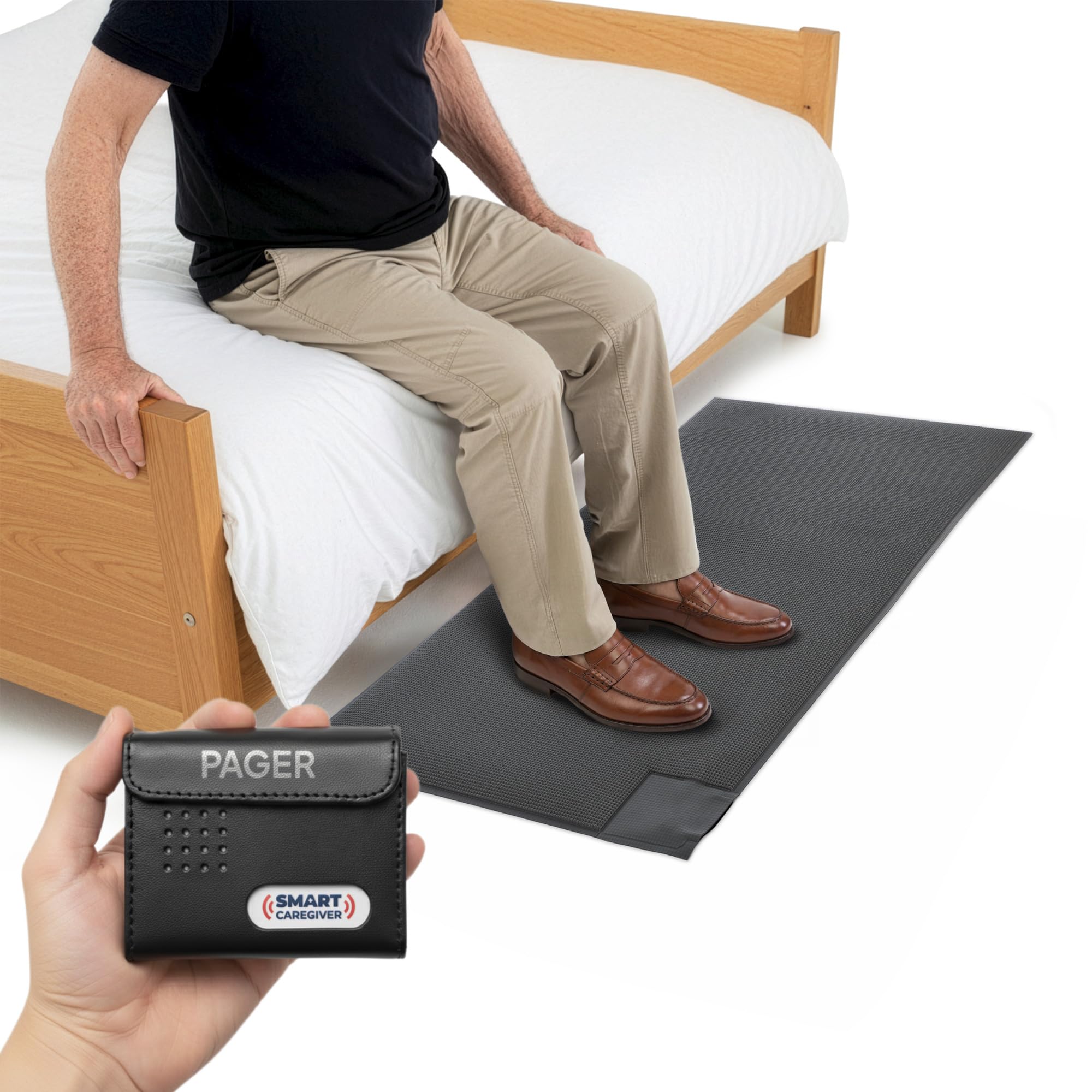
We recommend this system for caregivers who need a simple bedside or doorway alert without placing a loud alarm near the user.
Pros
- Sends alerts to a pager up to 300 feet away
- Offers sound or vibration alerts
- Covers a wide 24-by-48-inch area
Cons
- Requires two AA batteries for the pager
- Works best on a flat, stable surface
- Does not detect a fall after someone leaves the mat
We found the setup straightforward: unfold the mat, place it beside the bed or near a bathroom entrance, and connect the pager. When someone steps on the sensor, the pager responds with either an audible alert or vibration. The vibration setting works well when we needed to avoid disturbing the person being monitored.
The mat feels sturdy and gives useful coverage near a bed or exit. For bathroom use, we would place it just outside the door rather than in a wet area. Water, loose flooring, or heavy bathroom traffic could affect its placement and reliability.
The pager can stay with a caregiver while they handle other tasks nearby. Its range gives us flexibility in a home setting, but walls and other obstacles may reduce the stated distance. We also needed to remember that the pager uses two AA batteries, which are not included.
This device helps signal movement, not a completed fall. We would use it with good lighting, grab bars, non-slip flooring, and regular supervision. The one-year warranty and compatibility with other Smart Caregiver sensors add value for families building a broader safety system.
Smart Caregiver Wireless Motion Sensor Alarm

We recommend this system for caregivers who want a quiet alert when someone leaves bed or moves through a monitored area.
Pros
- Sends alerts to a portable pager instead of making noise near the user
- Covers distances of up to 300 feet in open areas
- Simple setup for bedroom or doorway monitoring
Cons
- Sensitive detection can cause false alerts
- Batteries are needed for both units
- The mounting bracket costs extra
We found the system useful for nighttime monitoring because the sensor alerts the caregiver without startling the person being watched. We could carry the pager to another room and still receive the signal within its stated range.
The sensor can sit near a bed or doorway, making it useful for tracking movement before someone reaches the bathroom. It does not detect a fall directly, so it works best as an early warning tool rather than a complete bathroom safety device.
During use, the wide detection area picked up unwanted movement, such as a curtain or a pet. Careful placement helped reduce false alerts, but we would not rely on it without regular checks.
The sensor and pager require separate batteries, which we would keep on hand. We also noted that this model works as a standalone system and cannot connect with other Smart Caregiver products.
Daytech Wi-Fi Caregiver Call Button
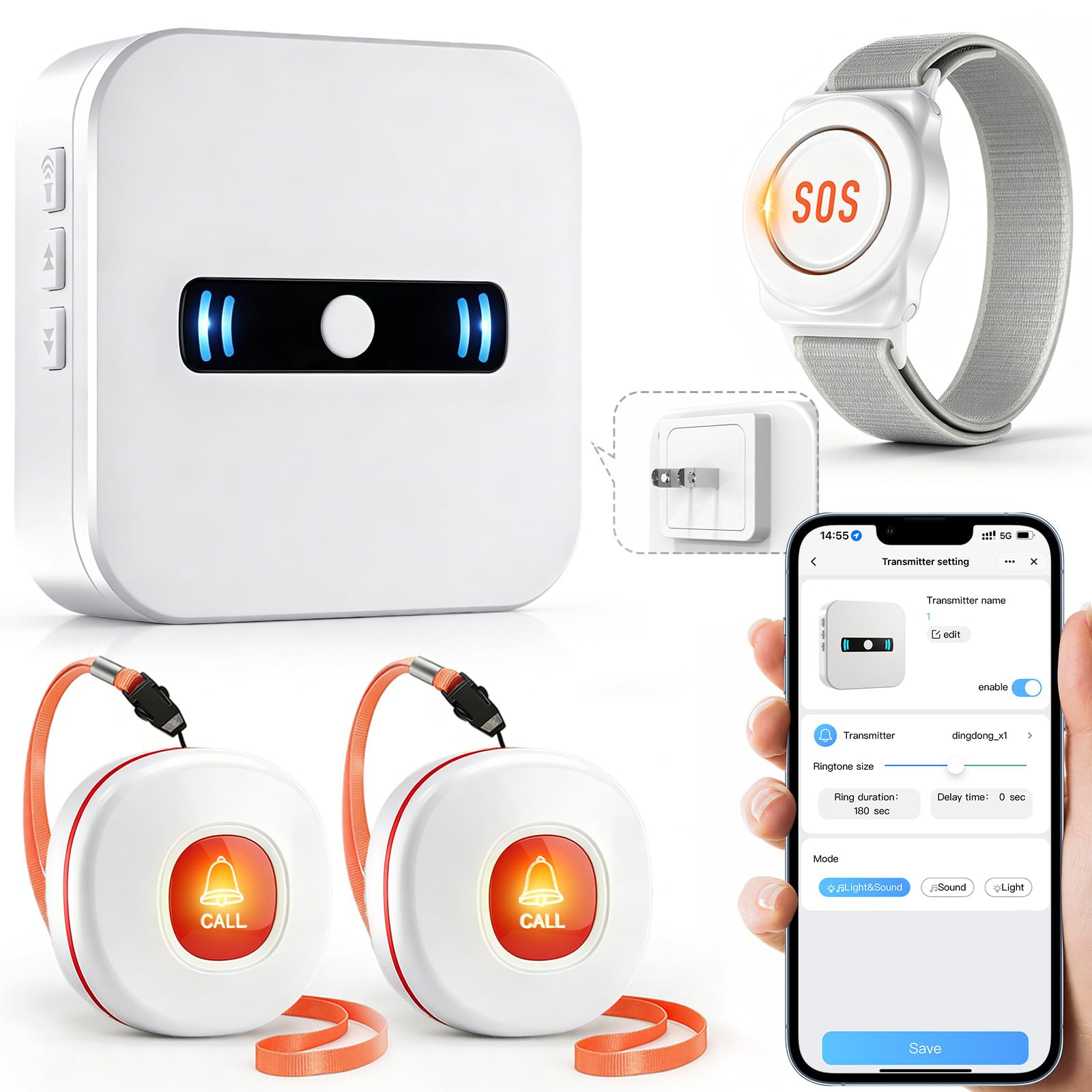
We recommend this system for households that need a bathroom call button with app alerts, a loud receiver, and multiple alert options.
Pros
- Sends alerts through the app and can share them with other caregivers
- Offers 20 ringtone choices and five volume levels
- Includes two buttons, a wrist button, and a plug-in receiver
Cons
- Requires 2.4GHz Wi-Fi and an outlet for the receiver
- Phone and text alerts may require an added service
- Some users reported problems after placing a button in the shower
We found the receiver easy to notice from nearby rooms, which helps when a caregiver may not hear a person calling for help. Each button can use a different sound, so we could tell which one had been pressed without checking the app.
The wrist button works well for quick access, while the other buttons suit a bedside table or bathroom wall. The app also lets us share alerts with family members, giving more than one person a way to respond.
For bathroom use, we would place the button near the shower or toilet but away from direct water exposure. Although some buyers described the buttons as waterproof, reports of shower-related problems suggest that extra care is needed.
The system works best when the home has reliable 2.4GHz Wi-Fi. We also found the plug-in receiver useful for people who are home, while app alerts help caregivers respond when they are elsewhere.
CallToU Bed Exit Alarm
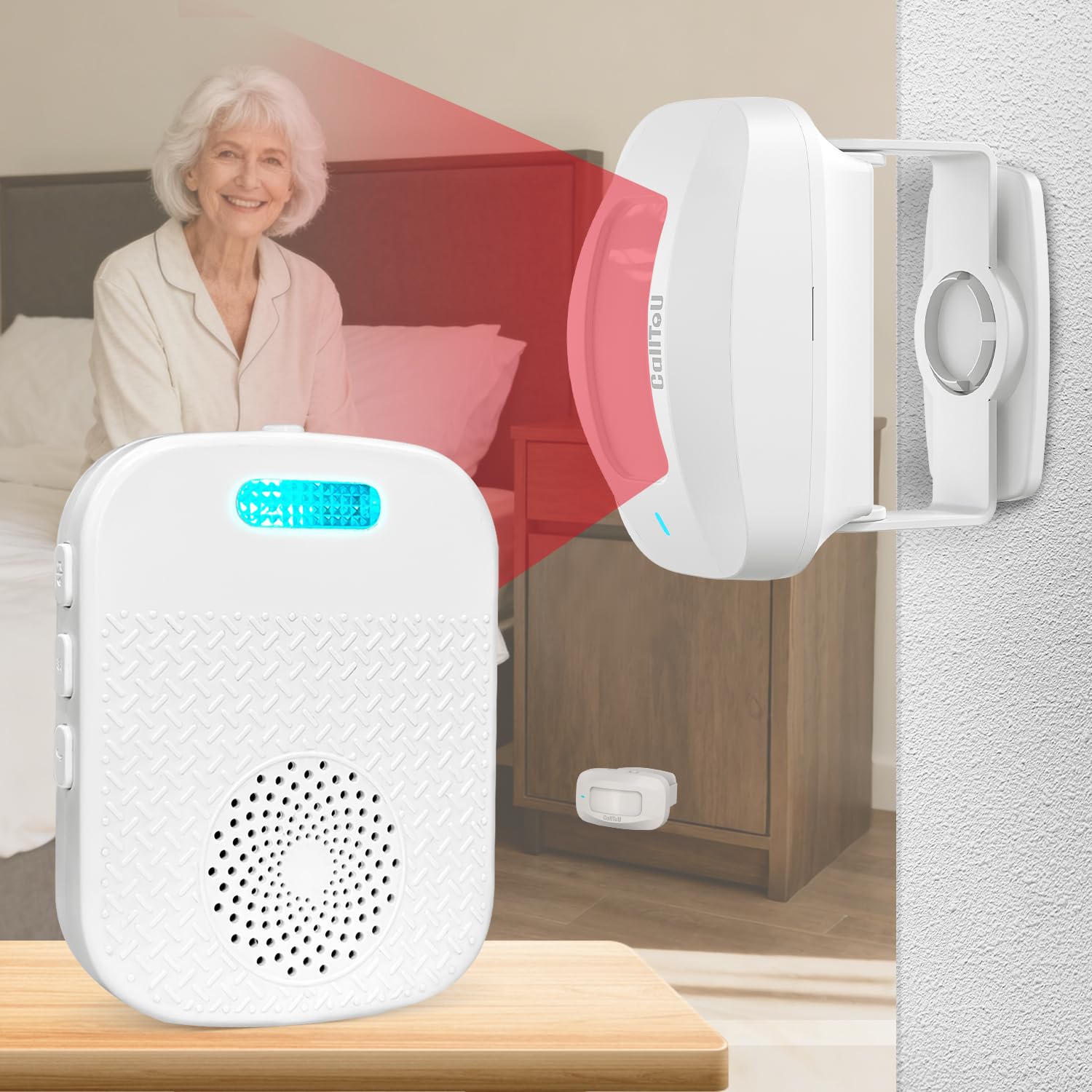
We recommend this portable alarm for caregivers who need an early alert when someone gets out of bed or moves near a bathroom.
Pros
- Detects movement without requiring contact
- Offers loud, silent, and vibration alerts
- Portable receiver works throughout the home
Cons
- The sensor uses replaceable AAA batteries
- A 10-foot range may not suit larger rooms
- Some users report reliability problems over time
We found the floor-level motion sensor useful for nighttime monitoring. Placing it beside the bed can alert us as someone starts to stand, giving us more time to respond before they walk toward the bathroom.
The receiver offers five volume levels, 18 ringtones, and vibration mode. We could lower the sound at night or carry the receiver while moving around the house. The flashing alert also helps when we need a quieter notification.
Setup feels simple, and the sensor’s adjustable position helps reduce alerts from small movements in bed. Still, we would test its placement carefully because user reports include both false alarms and units that stopped working after a short period.
The sensor uses three included AAA batteries, while the receiver charges through USB-C. This gives us flexibility during power outages, but we would keep spare batteries available and test the alarm often. It works best as a caregiver alert, not as a replacement for supervision or bathroom safety equipment.
Lunderg Wireless Early Alert Bed Alarm

We recommend this system for caregivers who want an early warning when someone may leave bed to use the bathroom.
Pros
- Wireless pager avoids a loud alarm beside the bed
- Hip-level pad can warn us before the person stands
- Simple setup with no Wi-Fi or app
Cons
- The pad needs replacement after extended use
- It monitors bed exits, not falls inside the bathroom
- Battery power requires regular checks
We found the pad easy to place under the mattress at hip level, and pairing it with the pager took little effort. The wireless design let us carry the alert to another room without running a cable across the floor.
The pager offers adjustable volume and vibration, which helped us choose a setting that would wake a caregiver without disturbing the whole home. Its stated range reaches up to 400 feet, though walls and building layout can affect performance.
This device works best as part of a bathroom safety plan. It can alert us when someone gets out of bed, giving us time to assist them before they walk alone. However, it does not detect a fall in the bathroom, so we would still pair it with grab bars, proper lighting, and other safety tools.
The pressure pad wipes clean and resists incontinence, making routine care easier. We would check the batteries and test the signal often, since a bed alarm cannot replace direct supervision or emergency response.
Nomo Smart Care Fall Detection System
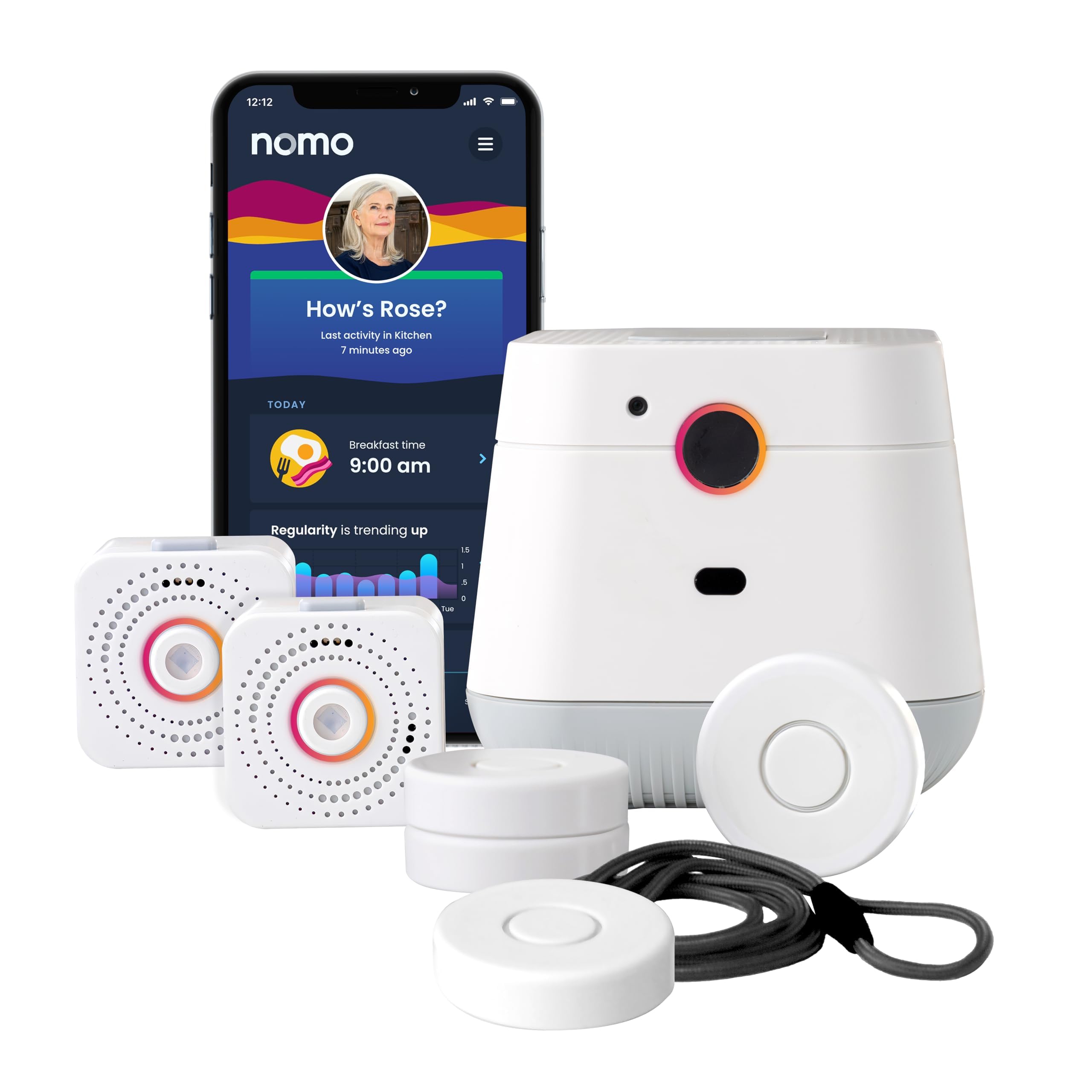
We recommend this system for households that want camera-free bathroom safety monitoring and caregiver alerts through home Wi-Fi.
Pros
- Camera-free monitoring helps protect privacy
- Two-way voice communication through the hub
- Easy wireless setup with a 60-day app trial
Cons
- Requires 2.4 GHz Wi-Fi
- Ongoing service costs $19.99 per month after the trial
- Fall detection may not catch every fall
We found the Nomo system simple to install. We plugged in the hub and motion-sensing satellites, connected them to Wi-Fi, and placed the Smart Tags where they could track key activity. The setup does not require wiring, a landline, or professional installation.
For bathroom use, the camera-free design offers a useful privacy benefit. The system can monitor movement and unusual activity without recording video. Caregivers receive alerts through the app, while the hub supports two-way voice communication during an emergency.
The system also tracks daily routines, which may help us notice changes before a fall occurs. However, we would not treat it as a complete replacement for a wearable alarm or direct supervision. One customer reported that automatic fall detection did not work as expected, so we would test the system carefully after installation.
The 60-day monitoring trial adds value, but the service becomes a paid subscription afterward. We should also confirm that the home has a stable 2.4 GHz Wi-Fi connection before buying.
Seculife Medical Alert Pendant
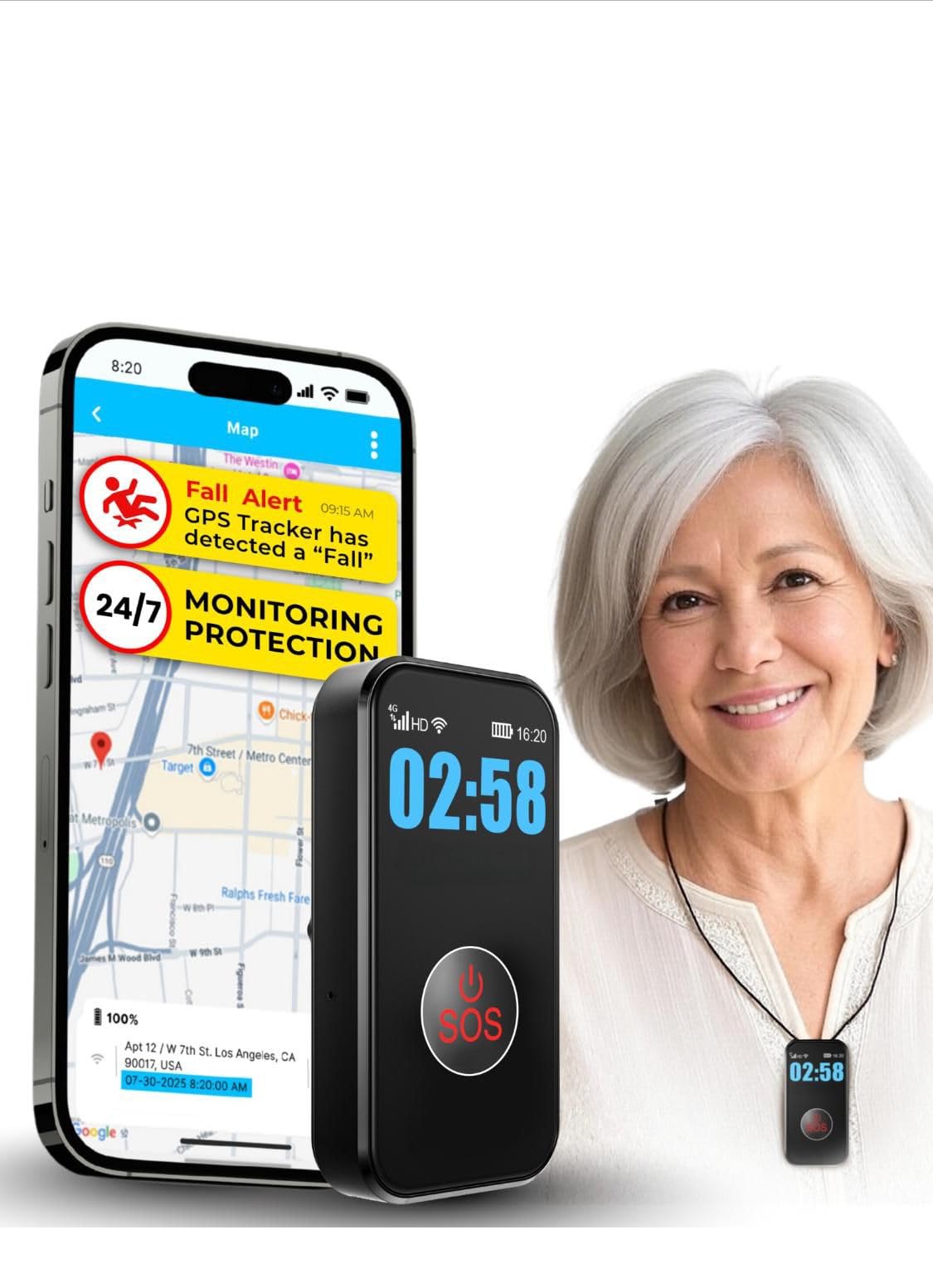
We recommend this pendant for households that want bathroom fall alerts, two-way calling, and GPS tracking in one device.
Pros
- Waterproof design suits showers and bathroom use
- Automatic fall alerts and one-touch SOS calling
- GPS tracking with geofence alerts
Cons
- Requires a $20 monthly subscription
- Fall detection may not recognize every fall
- Battery life depends on tracking settings
We found the pendant simple to activate and easy to wear. Its large SOS button feels practical for older adults, while the built-in speaker lets users speak with family members without reaching for a phone.
The waterproof build supports regular shower use, which matters because bathrooms create a higher fall risk. We also liked the GPS and geofence features for tracking someone outside the home, though they add value beyond bathroom monitoring.
The main drawback is the required monthly plan. The device also depends on cellular service, and automatic fall detection should not replace pressing the SOS button when the user can do so. Battery life can reach several days, but frequent location tracking may require more charging.
PILSAMAS Bathroom Motion Alarm
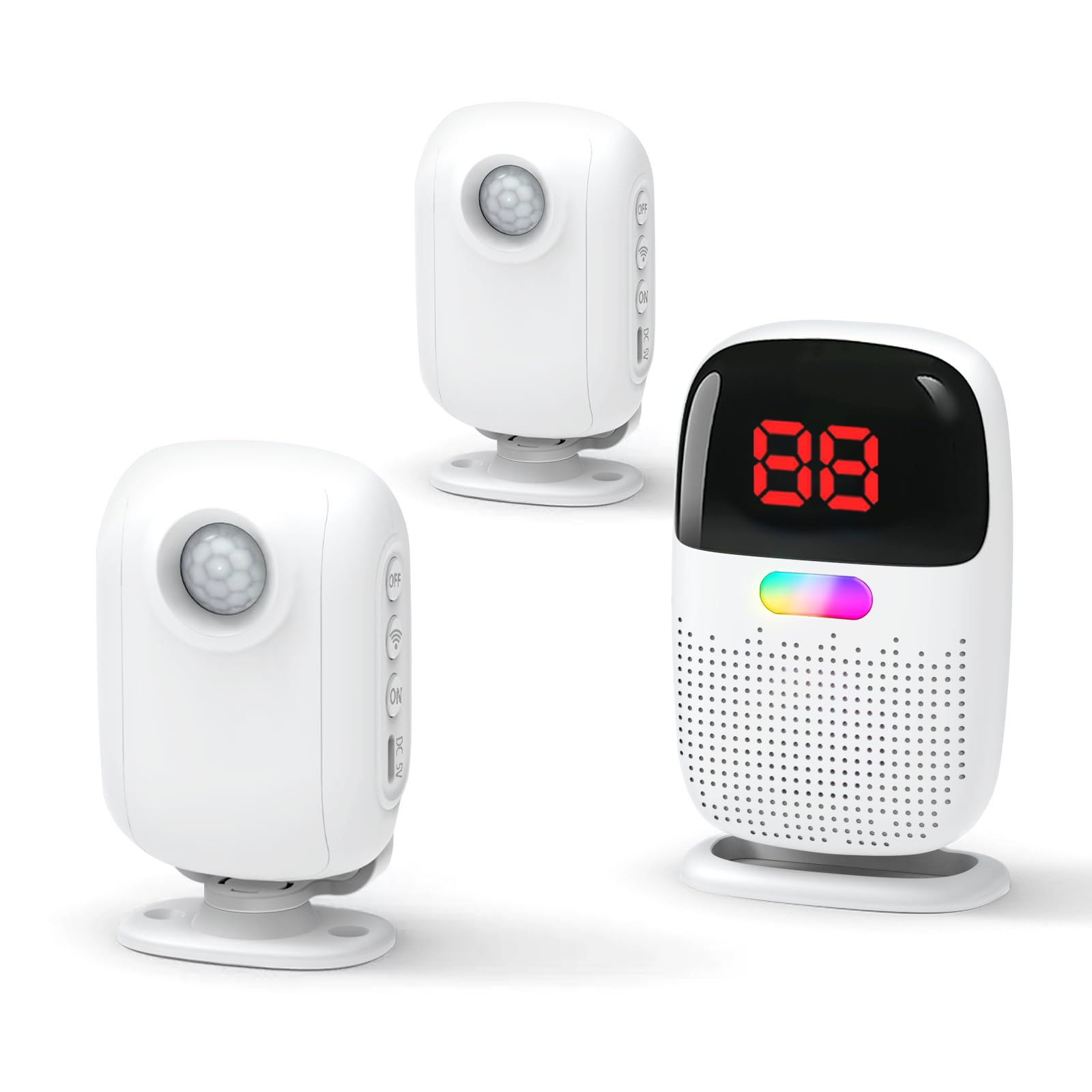
We recommend this set for caregivers who want a private, subscription-free alert when someone moves in or near the bathroom.
Pros
- Detects motion without using cameras or microphones
- Shows which sensor triggered the alert
- Offers adjustable sound, vibration, and light alerts
Cons
- Pets may trigger the sensor if it sits too low
- Sensors need batteries or USB-C power
- It may not detect a person who falls outside its sensing area
We found the setup simple: place the two sensors, add power, and pair them with the pager. The 360-degree mounts make it easier to aim a sensor toward a bathroom doorway or a spot where a person may need help.
The sensor responds to movement rather than pressure. That makes it more suitable for a bathroom, where a floor or bed pressure pad could be affected by moisture, shifting, or incontinence. We would place it about 15 to 20 inches high and test the range before relying on it.
When an alert comes through, the pager identifies the sensor. That helps us know whether movement came from the bathroom, bedroom, or another area. The pager also supports several chimes, four volume levels, vibration, and flashing lights, so we can choose an alert that fits the caregiver’s needs.
The listed range reaches up to 1,000 feet, but walls and building materials can reduce that distance. We would test the pager from the locations where we normally spend time. The system does not replace direct supervision or emergency help, and it cannot confirm that a fall occurred.
OUDAER Wireless Motion Sensor Bed Alarm
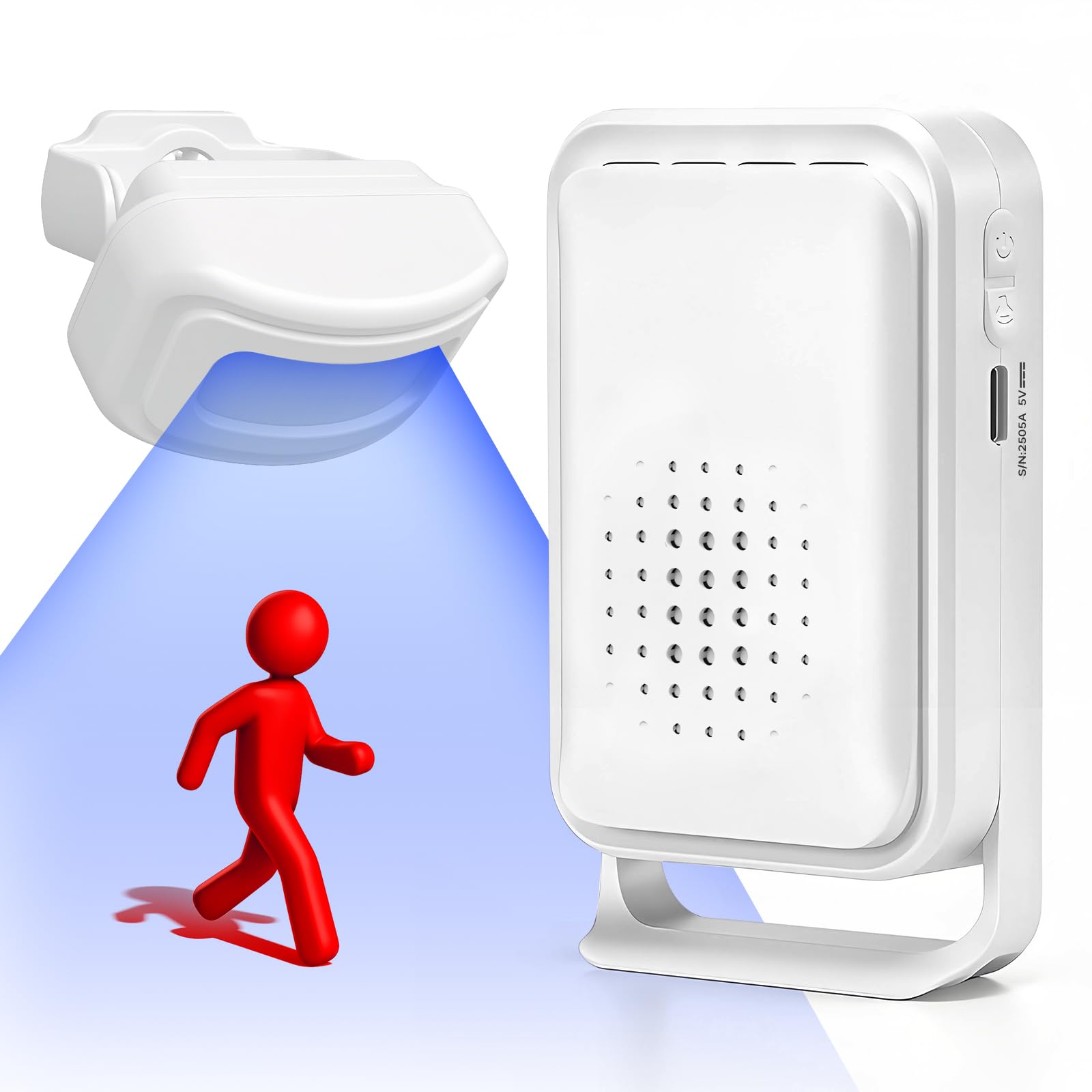
We recommend this system for caregivers who need a simple way to detect movement near a bed, doorway, or bathroom entrance.
Pros
- Responsive motion sensing without a pressure pad
- Adjustable volume, tones, and silent LED mode
- Receiver supports multiple sensors
Cons
- The sensor may need careful placement to avoid missed alerts
- The loudest setting may feel harsh in a quiet home
- It provides an alert but does not stop a fall
We found the sensor easy to place near a bed or bathroom entrance. It detects movement when someone enters its range, which makes it useful for people who may get up at night or walk without help.
The receiver offers 58 sounds and five volume levels. We could choose a quiet light-only alert for daytime use or a louder sound when we needed to hear it from another room. The receiver connects wirelessly, so we could carry it around the home.
The sensor uses three included AA batteries, while the receiver plugs into an outlet. We liked that the system can pair with up to 20 sensors, although the advertised wireless range works best in open areas and may drop through walls.
This device works as an alert system, not a complete bathroom safety solution. We would pair it with grab bars, nonslip flooring, good lighting, and direct supervision when needed.
Buying Guide
We should choose a bathroom fall detection device based on the user’s needs, bathroom layout, and available support. A reliable device should detect falls quickly without requiring the user to press a button.
| Feature | What we should check |
|---|---|
| Detection method | Look for sensors that can detect falls without confusing normal movement with an emergency. |
| Water resistance | Choose a device rated for damp areas, splashes, and bathroom humidity. |
| Alert options | Check whether alerts reach family members, caregivers, a monitoring center, or emergency services. |
| Power source | Review battery life, charging needs, and backup power options. |
| Installation | Select a device that fits the bathroom without blocking doors, showers, or walkways. |
| Privacy | Prefer systems that use motion or sensors rather than cameras when privacy matters. |
We should check whether the device works throughout the bathroom, including the shower, toilet, and floor areas. Wall-mounted buttons can provide backup, but users may not reach them after a fall.
We should also review setup costs, monthly fees, warranty terms, and customer support. Test the alert process regularly, and make sure caregivers know how to respond when an alert arrives.
A wearable device may suit users who move between rooms, while a fixed sensor may work better for someone who needs protection mainly in the bathroom. We should choose controls that the user can operate easily, even with wet hands or limited strength.
Editor’s Choice
We chose the Bay Alarm Medical SOS All-In-One as our editor’s pick for bathroom fall detection. It combines automatic fall detection, a wearable help button, and 24/7 professional monitoring in one system.
The wearable device can be worn as a pendant or wrist button. Its water-resistant design supports use in the bathroom, where falls often occur near wet floors and hard surfaces.
| Feature | Details |
|---|---|
| Fall detection | Available with the fall detection pendant |
| Bathroom use | Water-resistant wearable |
| Help access | Two-way communication through the base unit |
| Monitoring | 24/7 professional response |
| Best for | Older adults who need support at home |
We like that the system lets users call for help without reaching a phone. The pendant can also detect some falls automatically, but users should still press the help button whenever possible because automatic detection cannot identify every fall.
Before choosing this device, we recommend checking the pendant’s water-resistance rating and confirming whether the monitoring plan covers the features you need. Installation, monthly fees, and equipment costs may vary by plan.
Conclusion
We should choose a bathroom fall detection device based on the user’s needs, bathroom layout, and available support. Devices with automatic fall detection, two-way communication, and waterproof designs can support faster help during an emergency.
We also need to check battery life, cellular coverage, setup steps, and monthly fees before buying. A device that the user can wear or reach easily is more useful than one with features they cannot use.
For many homes, a waterproof wearable with automatic alerts offers a practical balance of safety and convenience. We should test the device in the bathroom and review its alerts regularly to make sure it works when needed.
FAQS
What features should we look for in a bathroom fall detection device?
We should prioritize automatic fall detection, a waterproof design, two-way voice communication, and a large help button. Devices with wall-mounted buttons or wearable options can provide extra coverage.
Are fall detection devices waterproof?
Some devices are water-resistant, while others are fully waterproof for use in showers or baths. We should check the product’s IP rating and follow the manufacturer’s instructions before placing it near water.
Can these devices detect every fall?
No device detects every fall. Slow falls, fainting, and falls that end in unusual positions may not trigger an alert, so we should treat automatic detection as a backup rather than a replacement for regular safety checks.
Do we need Wi-Fi or a landline?
Requirements vary. Some systems use cellular networks, while others need Wi-Fi, a landline, or a hub connected to the home network. We should confirm coverage and service requirements before buying.
Where should we install bathroom help buttons?
We should place one near the shower or tub and another close to the toilet. Buttons must remain easy to reach from the floor after a fall.
Do these devices include professional monitoring?
Some products connect to a 24/7 monitoring center, while others contact family members or emergency services through an app. We should review monthly fees, response procedures, and cancellation terms.
