
10 Best Door Alarms for Home: Top Security Options


Bedside Commode Chair

Slow Cooker Crock Pot

Anti-Slip Shower Stickers
Door alarms offer a simple way to monitor entry points in a home. Most models use a sensor and magnet that trigger a loud alarm when someone opens a door or window. Some also connect to a phone, security system, or other smart-home devices.
The best door alarm for your home should provide a loud alert, reliable sensors, simple installation, and controls that are easy to use. Battery life, alarm volume, connection range, and compatibility with your home security setup also matter. We should also consider whether you need a basic standalone alarm or a smart model with remote alerts.
We tested and researched door alarms to find options that provide dependable protection, useful features, and good value for different homes.
Best Door Alarms for Home
We reviewed door alarms for sound quality, setup, reliability, and useful features. Our list includes options for different homes, budgets, and security needs.
TECKNET Door Alarm 3-Pack

We recommend this compact alarm set for households that need a simple way to monitor doors, windows, cabinets, or drawers.
Pros
- Quick sticker-based installation
- Chime and alarm modes with three volume levels
- Small design with a long warranty for registered users
Cons
- Needs a flat mounting surface
- Requires regular battery checks
- The magnetic sensor must align closely with the alarm
We found the TECKNET alarms easy to place on a clean, flat surface. The white units blend well with most doors and window frames, while the included adhesive avoids drilling or other tools.
The chime mode works well when we want a simple alert, such as knowing when someone opens a door. For stronger warnings, the alarm mode continues until we turn it off. Three volume settings let us choose a level that fits a bedroom, garage, office, or apartment.
The compact size makes these alarms useful for travel, hotel rooms, sheds, and caravans. We would avoid uneven trim or molding, since the two pieces need close alignment to detect an opening.
The TECKNET set suits parents, people living alone, and anyone seeking basic entry alerts without a full security system. We should check the power switch and batteries if an alarm stops working.
UltraPro 6-Pack Door and Window Alarms
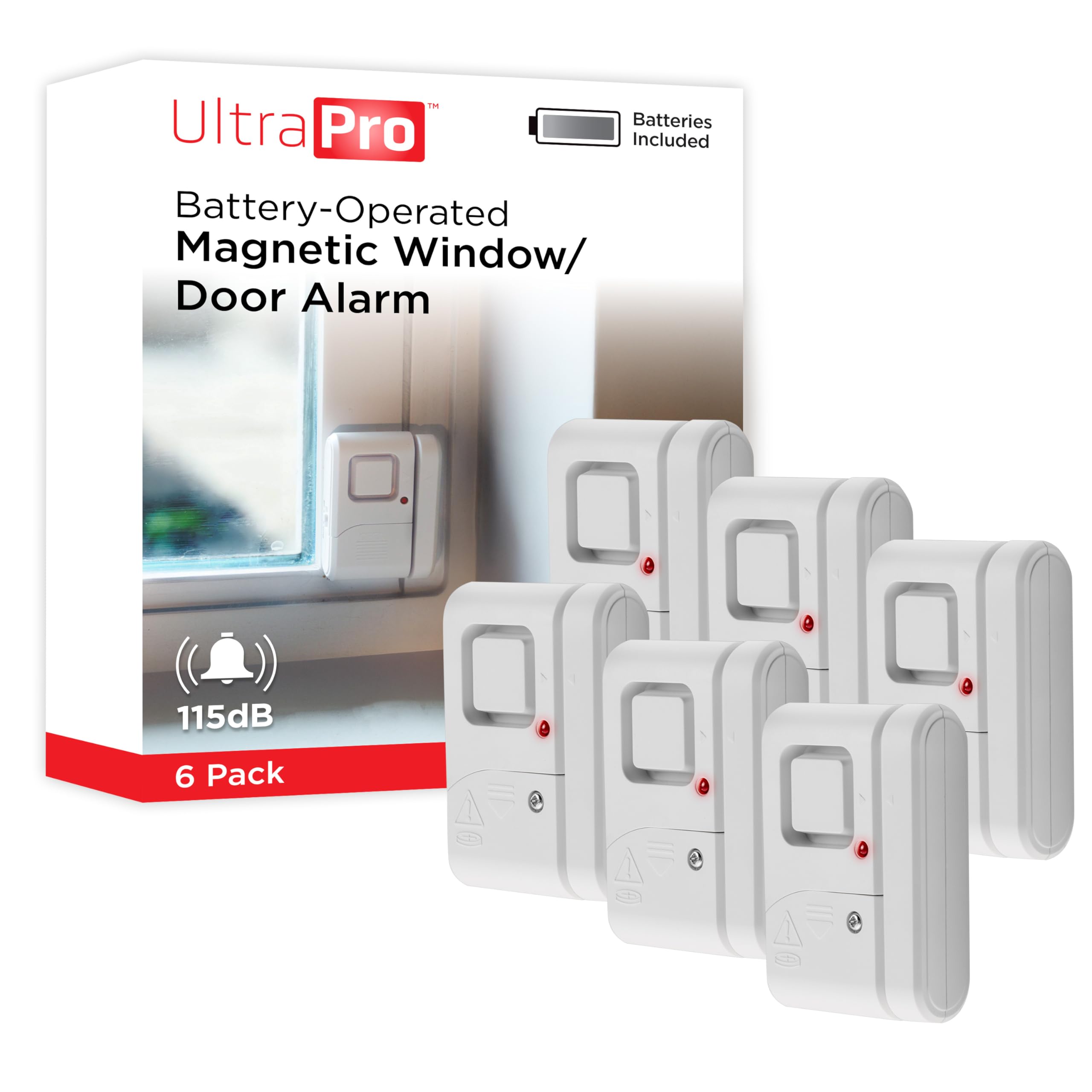
We recommend this pack for households that want simple, loud entry alerts without an app, wiring, or monthly fees.
Pros
- Strong alarm with a selectable chime mode
- Six units cover several doors, windows, or drawers
- Tape mounting makes setup quick
Cons
- Indoor use only
- Tape may not hold well on dusty or uneven surfaces
- Battery access requires a small Phillips screwdriver
We found the alarms easy to place on doors and windows. The included adhesive reduces setup time, while the compact design keeps them fairly unobtrusive after installation.
The chime mode worked well for everyday awareness, especially on doors we wanted to monitor without using the full siren. Switching to alarm mode gave us a much louder alert when we needed stronger protection.
The six-pack gave us enough units to cover several entry points, cabinets, or drawers. We would still check the adhesive from time to time and replace the batteries when the low-power light appears. These alarms add useful awareness, but they do not replace locks or a complete security system.
tolviviov WiFi Door Alarm Kit

We recommend this kit for households that want several door sensors, phone alerts, and voice control without a monthly subscription.
Pros
- Simple wireless setup
- Loud alarm and phone notifications
- Supports added sensors and remote controls
Cons
- Requires a 2.4GHz WiFi network
- Base station needs constant AC power
- Some users report false alarms
We found the sensors easy to place with the included adhesive backing. The kit covers several doors or windows at once, making it useful for apartments, garages, and smaller homes.
The alarm station sends alerts through the app and also works with Alexa and Google Assistant. We liked having several ways to arm or disarm the system, including the two included remotes.
The alarm sounds loud enough for nearby rooms, while the backup battery can keep the station running during a short power outage. It does not replace a full security service, but it adds useful basic protection without a contract or subscription.
Setup requires a 2.4GHz WiFi network, so homes using only 5GHz may need to change their router settings. We also noted reports of occasional false alarms and limited customer support, which may matter if we need help troubleshooting.
SanJie Door and Window Alarm Sensors

We recommend these alarms for households that want simple, loud alerts without a central security system.
Pros
- Quick, adhesive installation
- Adjustable alarm and chime modes
- Five sensors cover several entry points
Cons
- The alarm may be too loud for some homes
- Door trim can make alignment difficult
- Small button batteries need replacement
We installed these on doors and windows using the included adhesive strips. Setup took only a few minutes, and the magnetic contact worked well when the two pieces stayed properly aligned.
The 125-decibel setting produces a strong alert that carries through the house. We also liked having a quieter alarm and a chime mode for daily reminders, although the loudest setting may disturb everyone nearby.
These sensors suit doors, windows, cabinets, garages, and similar spots. The main drawback is placement: thick trim or uneven surfaces can prevent the magnets from lining up. We would check the fit before attaching them permanently.
The included batteries help you start quickly, and the flashing low-battery light provides a useful warning. Overall, this five-pack offers broad coverage and straightforward operation for basic home monitoring.
SanJie Wireless Door Chime

We recommend this door alarm for homes, small businesses, and caregivers who want a simple alert when someone opens a door.
Pros
- Quick setup with pre-paired sensors
- Multiple chimes and adjustable volume
- Supports extra sensors for wider coverage
Cons
- The loudest setting may not carry well between rooms
- Adhesive mounting may loosen over time
- It needs an available wall outlet
We found the SanJie easy to install. We plugged in the receiver, then placed the magnetic sensors on doors or windows with the included tape. The kit includes two sensors, which lets us monitor more than one entry point right away.
The receiver offers 26 sounds and several volume levels. We could choose a soft chime for regular use or a sharper alert for a business entrance. The memory feature also kept our chosen tone after unplugging the receiver.
Its wireless range gives us flexibility when placing the receiver away from the door. We also liked that we could add more sensors and assign different sounds to them. However, some users may find the alert too quiet from another room, even at the highest setting.
This model works best as an entry alert rather than a full security system. It can help us notice children, older adults, or visitors opening a door, but it does not replace a monitored alarm or door lock.
EMDMAK Door Stop Alarm

We recommend this two-pack for simple home or travel protection, especially if you want a portable alarm that also blocks a door.
Pros
- We found the alarm very loud and easy to notice.
- The rubber base helped hold doors in place on many floors.
- Adjustable sensitivity reduced unwanted alerts.
Cons
- We needed to position it carefully on smooth floors.
- The 9V battery is not included.
- High sensitivity may trigger too easily.
We placed the wedge behind an inward-opening door and used the middle sensitivity setting. It took no installation, and the compact design made it easy to pack for a hotel stay or keep near a bedroom door.
The siren is the main strength. When the door pressed against the device, the alarm produced a sharp sound that drew immediate attention. We preferred the medium setting because the high setting could react to minor movement.
Performance depended on the floor surface and the gap beneath the door. It stayed more secure on carpet and textured floors, while smooth surfaces sometimes required careful placement. The rubber wedge also worked as a basic doorstop when we turned off the alarm.
Each unit uses a 9V battery, which we had to purchase separately. With two alarms in the pack, we could cover separate rooms or keep one as a spare.
SABRE Door Handle Alarm

We recommend this compact alarm for renters, travelers, and anyone who wants a simple warning when someone touches a door handle.
Pros
- Loud alarm can wake people and alert nearby neighbors
- Hangs on a door handle without wiring or tools
- Chime and alarm modes suit different situations
Cons
- Requires three AAA batteries, which are not included
- Can trigger falsely on loose or sensitive door handles
- Battery compartment may be difficult to open
We hung the SABRE alarm on an interior door handle and found setup quick. The unit stayed out of the way, and its small size made it practical for a hotel room, dorm, apartment, or bedroom.
The alarm uses vibration from movement at the handle. We liked having a chime setting for regular activity and an alarm setting for security. A short delay after activation also gave us time to leave without setting it off immediately.
At 110 decibels, the alarm is difficult to ignore in a quiet home. However, we found that loose handles and slight door movement can cause false alarms, so testing the sensitivity and placement matters.
This device works best as a basic warning tool rather than a complete security system. We would choose it for portability and easy installation, but we would keep spare batteries nearby and test it regularly.
WimuPath 15-Pack Door and Window Alarms

We recommend this affordable pack for basic entry alerts, child safety, and coverage across several doors or windows.
Pros
- Quick adhesive installation
- Loud alarm for its size
- Useful for homes, offices, and care settings
Cons
- Batteries are not included
- Adhesive may not hold on every surface
- Some units can feel difficult to open or close
We found the magnetic sensors simple to set up. After placing the two pieces near each other, the alarm triggered when we opened the door or window. This design works well when we want coverage without wiring or a complicated app.
The alarm is loud enough to get our attention from nearby rooms. We also liked having multiple units for several windows, entry doors, or areas where children should not go.
The adhesive worked best on clean, smooth surfaces. Some users report that units fell from doors, so we would test the mounting surface before relying on them. The alarms also require AAA batteries, which we needed to purchase separately.
METAK 5-Pack Door and Window Alarms
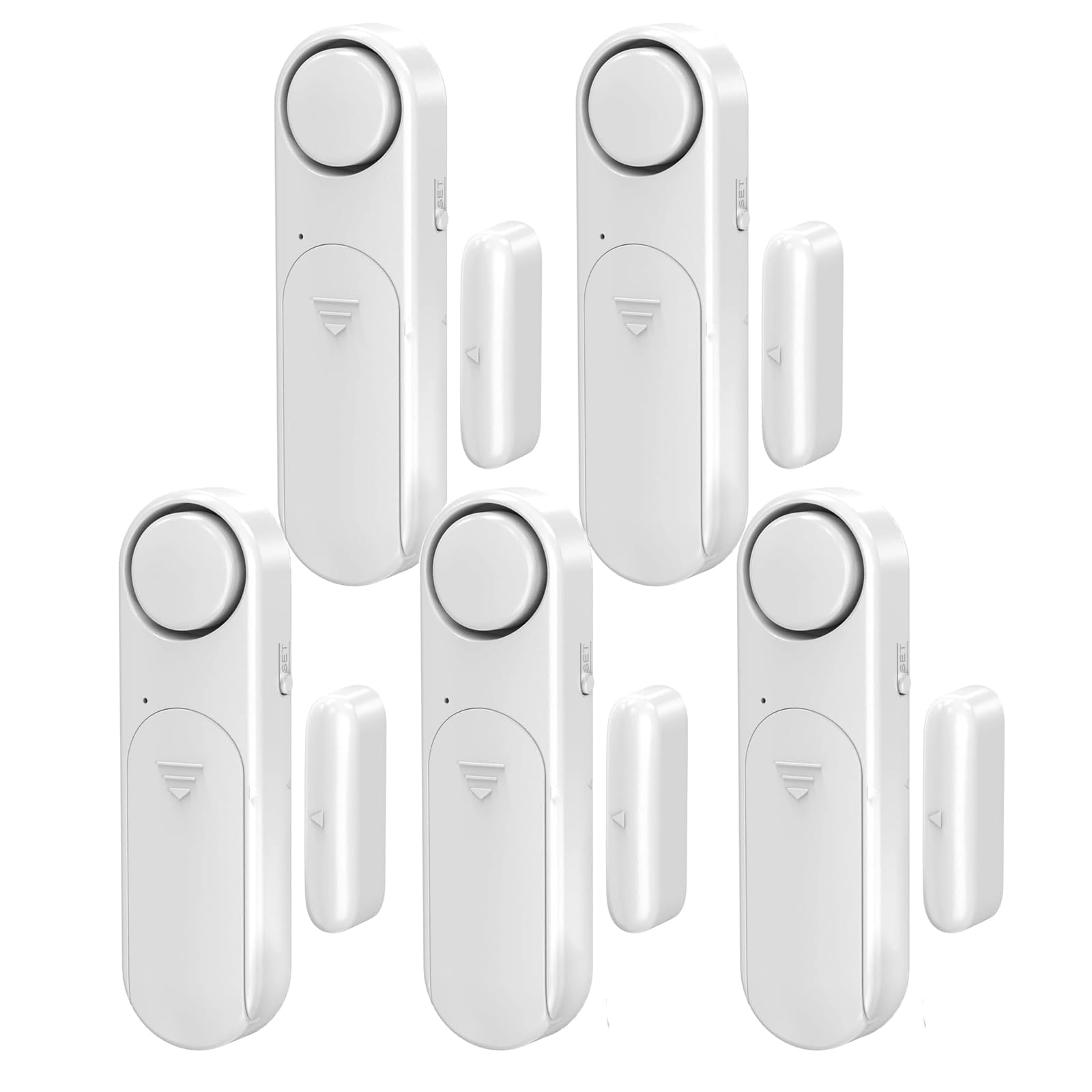
We recommend this five-pack for simple, low-cost alerts on doors, windows, cabinets, and other entry points.
Pros
- Loud 90 or 120dB alarm
- Quick adhesive installation
- Five compact sensors in one pack
Cons
- Requires two AAA batteries per alarm
- No remote control support
- Loud alerts may become irritating
We found these alarms easy to place on doors and windows without tools or wiring. The slim design fits well along most frames, while the adhesive backing keeps setup quick.
The alarm sounds forceful when the sensor separates, making it useful for entry alerts or child safety. We also like the option to lower the volume when 120dB feels excessive.
A flashing red light shows when the alarm activates or the batteries run low. Since the batteries are not included, we would keep spare AAA batteries nearby. The set button handles arming, disarming, and volume changes, but the lack of remote control may limit convenience for some users.
VOXON Door and Window Alarm

We recommend this two-pack for simple door and window alerts, especially when we need a loud alarm without a complicated setup.
Pros
- Strong 100-decibel alert
- Peel-and-stick installation
- Alarm, chime, and off modes
Cons
- Adhesive may not hold on every surface
- Loud alarm can disturb children
- Sensors must stay closely aligned
We found the VOXON alarms easy to mount on clean, dry surfaces. The two-piece sensor setup works on doors, windows, garages, and sliding doors, while the compact size keeps it fairly discreet.
The alarm sounds continuously when the sensor separates, which gives us a clear warning when a door or window opens. We also like the chime setting for a softer alert during normal household use.
Placement matters. The arrows must face each other, and the two pieces need to remain within about 0.78 inches when the door closes. If the adhesive does not bond well, the alarm may shift or trigger unexpectedly.
The included batteries make setup quick, and the portable design suits apartments, offices, garages, and travel. This product works best as a basic alert, not as a replacement for a monitored security system.
Buying Guide
We should start by identifying the door or entry point we want to protect. Choose a sensor that fits the door frame, works with the available power source, and suits the alarm volume we need.
Key features to compare include:
| Feature | What to check |
|---|---|
| Alarm volume | Look for a sound level that we can hear from nearby rooms. |
| Power source | Check battery life, charging needs, and low-battery alerts. |
| Installation | Choose adhesive mounting for easy setup or screws for a firmer fit. |
| Modes | Consider alarms with chimes, alarms, and silent alerts. |
| Range | For wireless models, verify that the signal reaches the intended area. |
| Controls | Look for simple buttons, remote controls, or app settings if needed. |
We should decide whether we need a stand-alone alarm or a system that connects to other security devices. A stand-alone model can suit one door, while a connected system may help us monitor several entry points.
We should also check the sensor gap allowed between the two parts. A door that shifts, has an uneven frame, or opens outward may need a model designed for that setup. Finally, we should review the warranty, return policy, and replacement battery cost before buying.
Editor’s Choice
We recommend the GE Personal Security Window and Door Alarm for most homes. It uses a loud 120-decibel siren and includes an on/off switch, so we can arm it when needed and silence it without removing the unit.
The alarm uses adhesive backing for quick installation. We can place it on a door or window without tools, wiring, or a monthly subscription. Its simple design also makes it suitable for renters and smaller homes.
| Feature | Details |
|---|---|
| Alarm volume | 120 dB |
| Installation | Adhesive mount |
| Controls | On/off switch |
| Ongoing fees | None |
| Best for | Basic entry alerts |
We should note that this alarm works as a local alert rather than a smart security device. It does not send phone notifications or connect to a monitoring service. For those features, we would need a Wi-Fi door sensor or a complete home security system.
Conclusion
We should choose a door alarm based on our home’s layout, security needs, and budget. A basic contact alarm can suit an apartment or single entry point, while a smart alarm may work better for homes that need phone alerts and system integration.
Before buying, we should check the alarm’s sound level, power source, setup process, and sensor range. We should also confirm that it fits the door or window where we plan to install it.
For stronger coverage, we can place alarms on front and back doors, garage doors, and other accessible entry points. Regular battery checks and sensor tests help keep our alarms ready to work when needed.
FAQs
What is the best type of door alarm for a home?
We recommend a contact sensor for most homes. It sounds an alert when someone opens a protected door. Choose a model with a loud siren, simple controls, and reliable battery life.
Do door alarms work without Wi-Fi?
Yes. Many basic alarms work without Wi-Fi and use a built-in siren. Wi-Fi models can send alerts to our phones, but they may stop remote notifications during an internet outage.
Where should we install door alarms?
We should place alarms on exterior doors, basement doors, and doors that lead to garages. Install each sensor on the door and its frame so the two parts separate when the door opens.
Can we use a door alarm on a sliding door?
Yes. We can use contact sensors made for sliding doors or install a bar-style alarm. Check that the device fits the door frame and does not block normal use.
How loud should a door alarm be?
A siren rated around 100 decibels or higher can provide a strong warning inside many homes. We should also consider adjustable volume if we have children, pets, or nearby neighbors.
Do door alarms prevent break-ins?
Door alarms cannot guarantee prevention. They can alert us to an opened door and may discourage intruders. We should use them with sturdy locks, secure frames, and good outdoor lighting.