
10 Best Door Alarms for Disabled Adults: Top Safety Options


Electric Jar Opener

Adaptive Eating Utensils

Book Holder Stand
Door alarms can help alert caregivers when a disabled adult opens an exterior door, moves through a restricted area, or needs assistance. These devices range from simple magnetic contact alarms to models with loud sirens, remote receivers, phone alerts, and wearable call buttons.
The best door alarm for a disabled adult should match their hearing, mobility, privacy, and daily support needs. When comparing models, we focus on alarm volume, alert range, ease of installation, battery life, remote controls, and whether the user can silence or reset the alarm independently. We also consider whether the alarm can support safe routines without creating unnecessary stress or limiting a person’s freedom.
We evaluated door alarms and related alert systems to find options that are practical, dependable, and easy for caregivers and users to manage.
Best Door Alarms for Disabled Adults
We reviewed door alarms for features that support safety, easy setup, clear alerts, and reliable daily use. Our list includes options for home entrances, bedrooms, and caregivers who need timely notifications.
YisTech Wireless Caregiver Door Alarm

We recommend this set for households that need several door alerts, visible notification lights, and adjustable sound in one system.
Pros
- Covers up to about 260 feet in open space
- Offers 58 tones and five volume levels
- Supports up to 20 sensors per receiver
Cons
- The included adhesive may not hold on every surface
- Changing tones and volume can take practice
- The loudest setting may feel harsh indoors
We found the plug-in receivers simple to set up. We placed the magnetic sensors on doors and windows with the included tape, then tested each entry point. The system responded quickly when we opened a monitored door.
The two receivers helped us hear alerts from different rooms. The flashing LED also added a useful visual signal for people with hearing loss, though it should not replace direct supervision or a medical safety plan.
With three sensors, we could monitor several exits at once. The system also supports expansion, which helps families add more sensors later. We would use stronger mounting tape if the supplied adhesive loosened.
The chime reached a high volume, and the lower settings worked better at night. We liked having many melodies, but the controls were not immediately clear. Overall, this set offers practical coverage for caregivers who want a basic alert when someone opens a door or window.
SECRUI Wireless Door Chime

We recommend this door alarm for disabled adults who need a simple alert when a door opens, especially in homes with caregivers.
Pros
- Easy setup with included tape or screws
- Adjustable sound, volume, and visual alerts
- Long wireless range with support for extra sensors
Cons
- Some chimes may sound more like music than a simple alert
- The receiver needs a wall outlet
- Long-term durability may vary
We set up the sensor quickly because it arrived paired with the receiver. The adhesive worked for a basic test, while the included screws offer a steadier option for a frequently used door.
The receiver offers 58 sounds and five volume levels, including a mute setting. The flashing light remains useful when sound is not suitable, which can help people with hearing loss or those who prefer quieter alerts.
Its wireless range gives us flexibility when placing the receiver in another room. We also like that additional sensors can cover more doors, though one sensor comes with this package.
This unit does not send alerts to a phone, and the receiver must stay plugged in. We also found that the available sounds may not suit users who want a short, plain beep.
SanJie WiFi Door Alarm
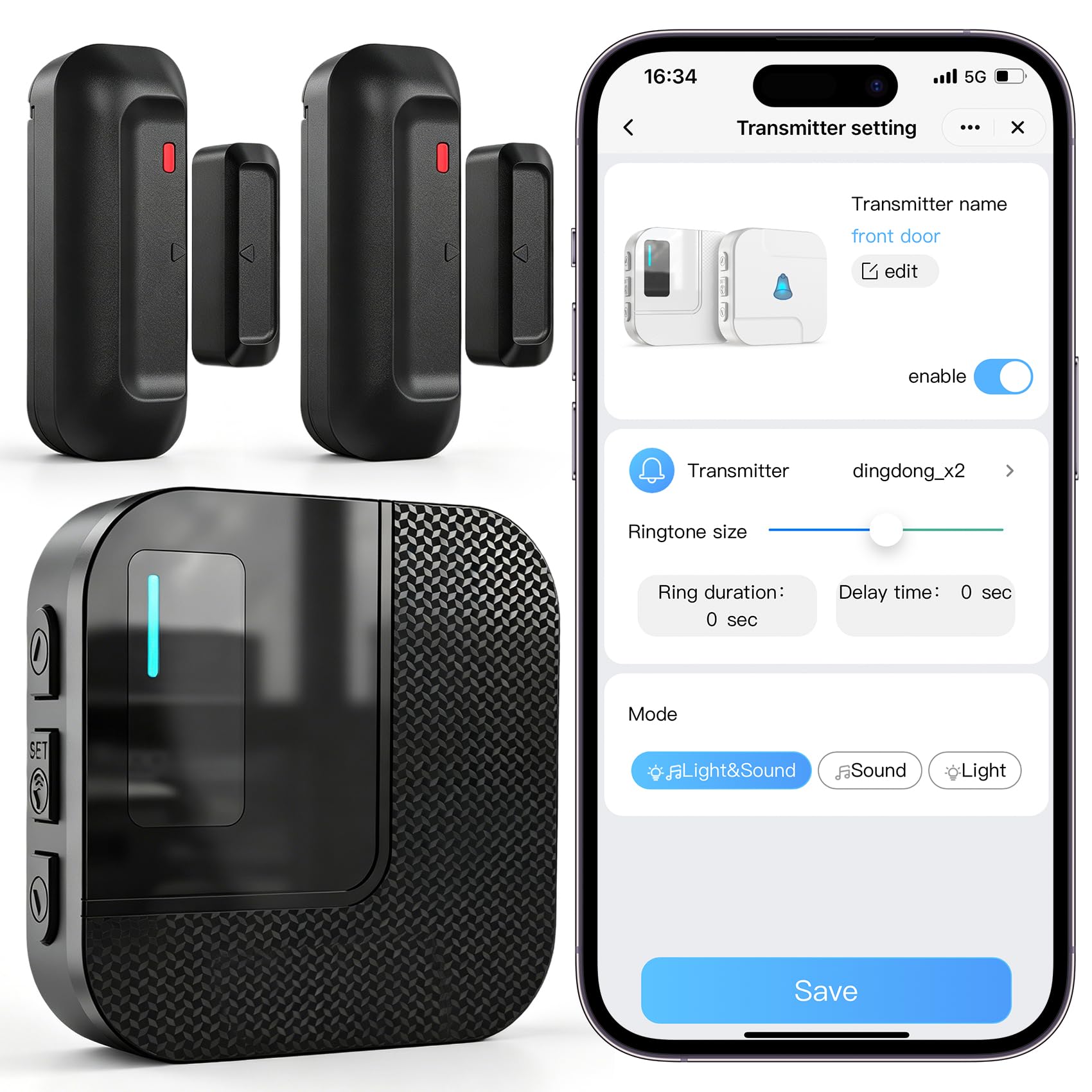
We recommend this alarm for caregivers who want loud local alerts and phone notifications when a door opens.
Pros
- Loud, adjustable alerts with 20 chime choices
- App notifications and shared access for caregivers
- Tool-free installation with included AAA battery
Cons
- Requires a 2.4GHz Wi-Fi network
- Metal doors may not work well
- SMS and phone alerts require a paid plan
We found the sensor simple to mount with the included adhesive. The receiver gave us a clear chime when the door opened, and the volume range made it easier to choose a sound that fit the room. The loudest setting reaches up to 110dB, but that level may feel too strong for some users.
The instant alert mode suits caregivers who need quick notice when someone opens a door. Delay mode works better for normal entry and exit because it waits before warning about a door left open.
Phone alerts and device sharing can help family members or caregivers monitor activity from different locations. Setup depends on the app and a 2.4GHz Wi-Fi connection, so users who prefer a fully offline alarm may want a simpler model.
This package includes two sensors and one receiver. We would choose it for dementia care, child safety, or home monitoring, provided the user can manage app setup and does not need metal-door compatibility.
Flyoukki Door and Window Alarm 3-Pack

We recommend this alarm for households that need a simple, very loud alert when a door or window opens.
Pros
- Strong sound that can wake people in nearby rooms
- Wireless setup with included adhesive and batteries
- Three alarms cover several doors, windows, or cabinets
Cons
- The alarm may feel painfully loud at close range
- Adhesive may not hold well on every surface
- Some units can be overly sensitive or faulty
We found the Flyoukki alarms easy to place because they do not need wiring. We mounted the two contact pieces close together on a door frame, and the adhesive made setup quick. The alarm works best when the pieces stay within the required gap.
The sound is the main benefit. It stands out clearly when someone opens a monitored door, which can help alert caregivers to nighttime wandering or unsafe exits. We would place it away from the user’s ears, since the high-volume tone can startle or distress some people.
The three-pack also lets us monitor more than one entry point. However, we would test each unit after installation and check the battery indicator from time to time. Customer feedback includes reports of excessive sensitivity, false alarms, and difficult-to-find replacement batteries, so this product works best as a basic alert rather than a complete safety system.
SanJie Wireless Door Chime
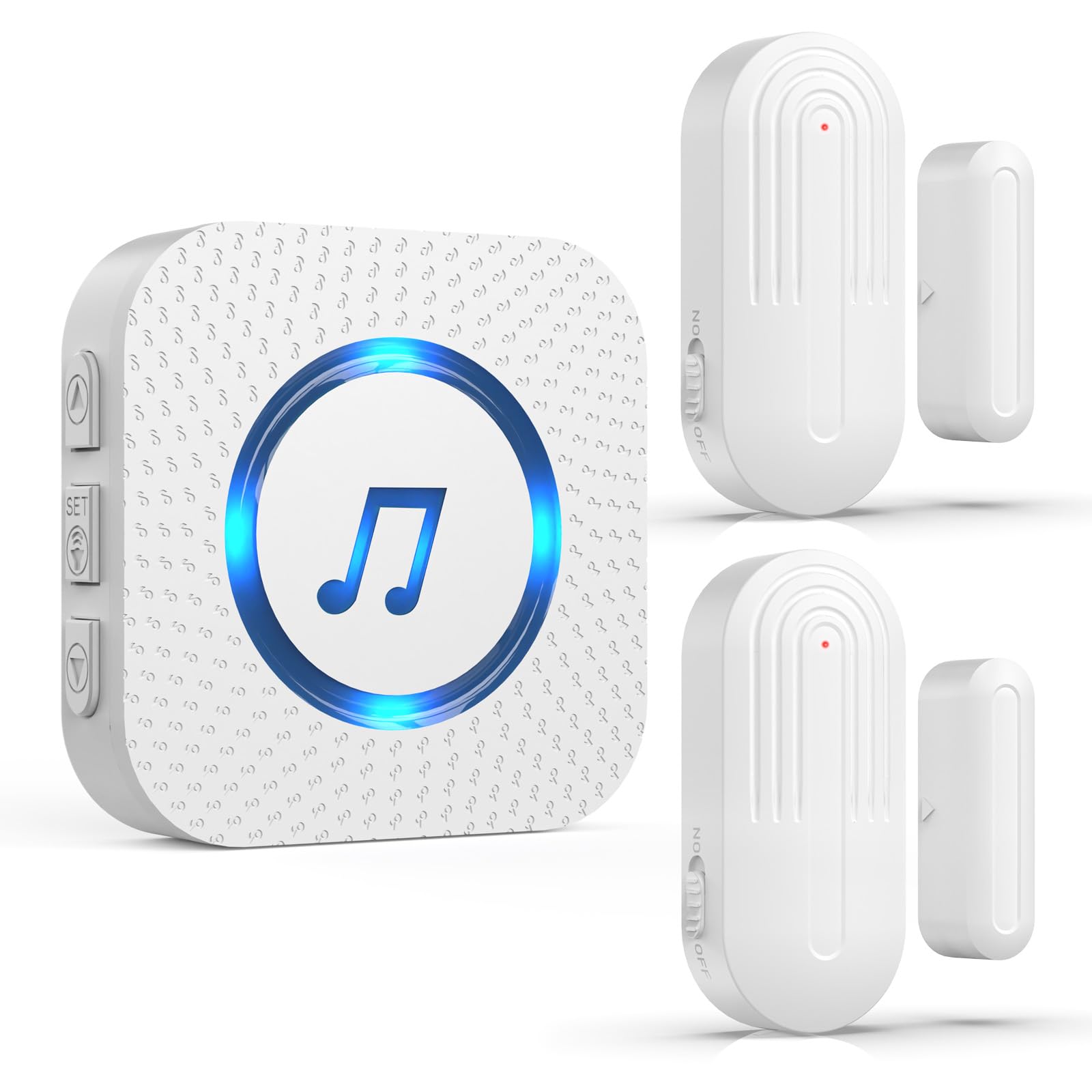
We recommend this door chime for households that need a simple alert when an adult opens a monitored door.
Pros
- Simple adhesive or screw installation
- Adjustable volume with 26 chime options
- Supports multiple sensors and reaches up to 500 feet
Cons
- Some users may find the loudest setting too quiet
- It requires a nearby outlet for the receiver
- The basic chime does not replace a monitored emergency system
We found the setup straightforward because the sensors and receiver arrived paired. We placed the sensors on a door and frame, plugged in the receiver, and received an alert when the door opened.
The receiver offers five volume levels and several alert sounds. This lets us choose a gentler chime for daily use or a stronger alert for a bedroom or hallway. The LED indicator also helps when we need a visual signal.
Two sensors come with the kit, and we can add more sensors if needed. The wireless range gives us flexibility across a typical home, though walls and other obstacles may reduce the actual distance.
This product works best as a notification tool for caregivers. It can alert us when someone leaves a room or exits through a door, but it does not contact help automatically or provide emergency response features.
Satisure Wireless Door Chime
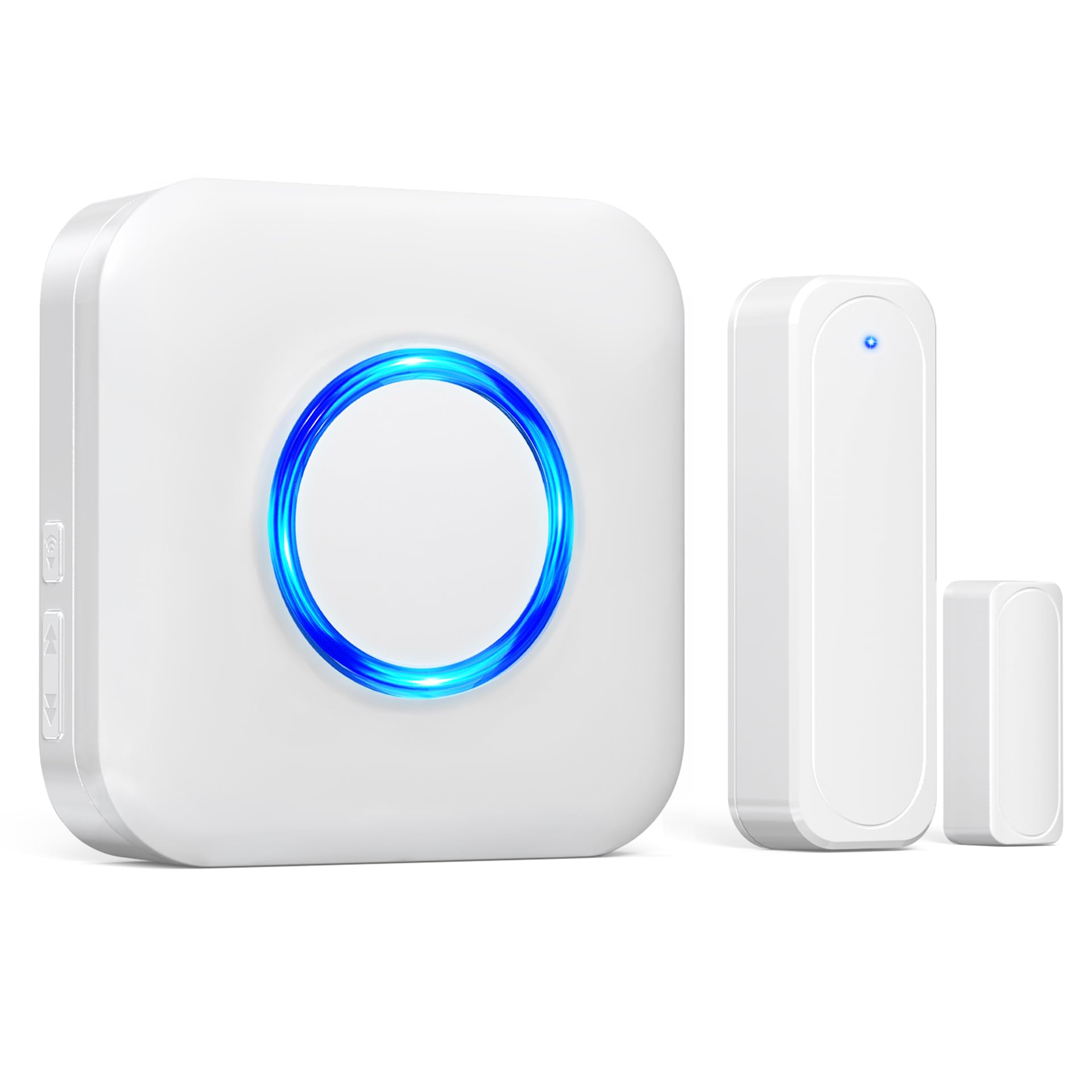
We recommend this door chime for disabled adults who need a clear alert when someone opens a door, especially when visual alerts or simple installation matter.
Pros
- Loud chime, adjustable volume, and flashing light mode
- Simple wireless setup with adhesive mounting
- Strong range for larger homes or separate rooms
Cons
- The single-sensor kit covers only one entry point
- Loud settings may feel uncomfortable for some users
- The plastic housing may not suit every installation area
We found the Satisure easy to set up. The sensor and receiver arrived paired, so we only needed to plug in the receiver and attach the sensor to the door. The adhesive backing worked for a quick setup, while screws offer a firmer hold for busy entrances.
The receiver offers 58 sounds and five volume levels. We could choose a louder setting for use across a home or select the flashing light mode for someone with hearing loss. The receiver also remembers the selected sound after unplugging, which saves time during power changes or cleaning.
Its advertised wireless range reaches up to 600 feet, though walls and building layout can affect the actual distance. The system can support more sensors, making it useful for several doors, but this package includes only one sensor.
We would use it as an entry alert rather than a full security alarm. It does not replace supervision or emergency equipment, but it can give caregivers a timely signal when a door opens. Amazon buyers rate it 4.3 out of 5 stars from more than 5,400 reviews.
TECKNET Door Alarm 3-Pack

We recommend this set for disabled adults who need a simple door alert with adjustable volume and both chime and alarm modes.
Pros
- Three volume levels suit different hearing needs.
- Chime and continuous alarm modes offer useful choices.
- Peel-and-stick setup takes little time.
Cons
- The sensors need a flat mounting surface.
- Correct alignment matters during installation.
- Battery power requires occasional checks.
We found the TECKNET alarms easy to place on doors, windows, cabinets, or gates. The wireless design avoids cables, which helps keep walkways clear and makes the units practical for bedrooms, bathrooms, and entry doors.
The chime mode gives a short alert when someone opens the door. The alarm mode continues sounding, which may help caregivers notice an unexpected exit or entry. Three volume settings let us choose a quieter alert or a louder warning.
The small white units blend well with light-colored doors and remain fairly unobtrusive. Installation requires a clean, flat surface, and the alarm and sensor must sit close together. Doors with trim or uneven molding may need a different placement.
The alarms use batteries, so we would check them regularly, especially when the device supports important safety needs. A 36-month warranty is available after registration.
YisTech WiFi Door Alarm

We recommend this alarm for households that need both an in-home alert and phone notifications when someone opens a monitored door.
Pros
- Phone alerts can reach caregivers away from home
- Loud receiver, adjustable volume, and flashing light
- Supports multiple sensors and shared app access
Cons
- App alerts may stop working for some users
- Setup may require WiFi troubleshooting
- Adhesive may loosen in humid areas
We found the system useful for monitoring doors without relying only on sound. The plug-in receiver offers several chimes and volume settings, while its light gives us another alert option for people with limited hearing.
The phone feature adds helpful coverage when caregivers leave the home. We could share alerts with other family members, which makes it easier to coordinate supervision. However, reported app problems mean we would test notifications regularly rather than depend on them as the only safety measure.
Installation is fairly simple, but the sensors need a clean, dry surface. In damp locations, the included adhesive may not hold well, so stronger mounting may help. The system alerts us when a door opens, but it does not report when the door closes.
PILSAMAS Rechargeable Door Alarm
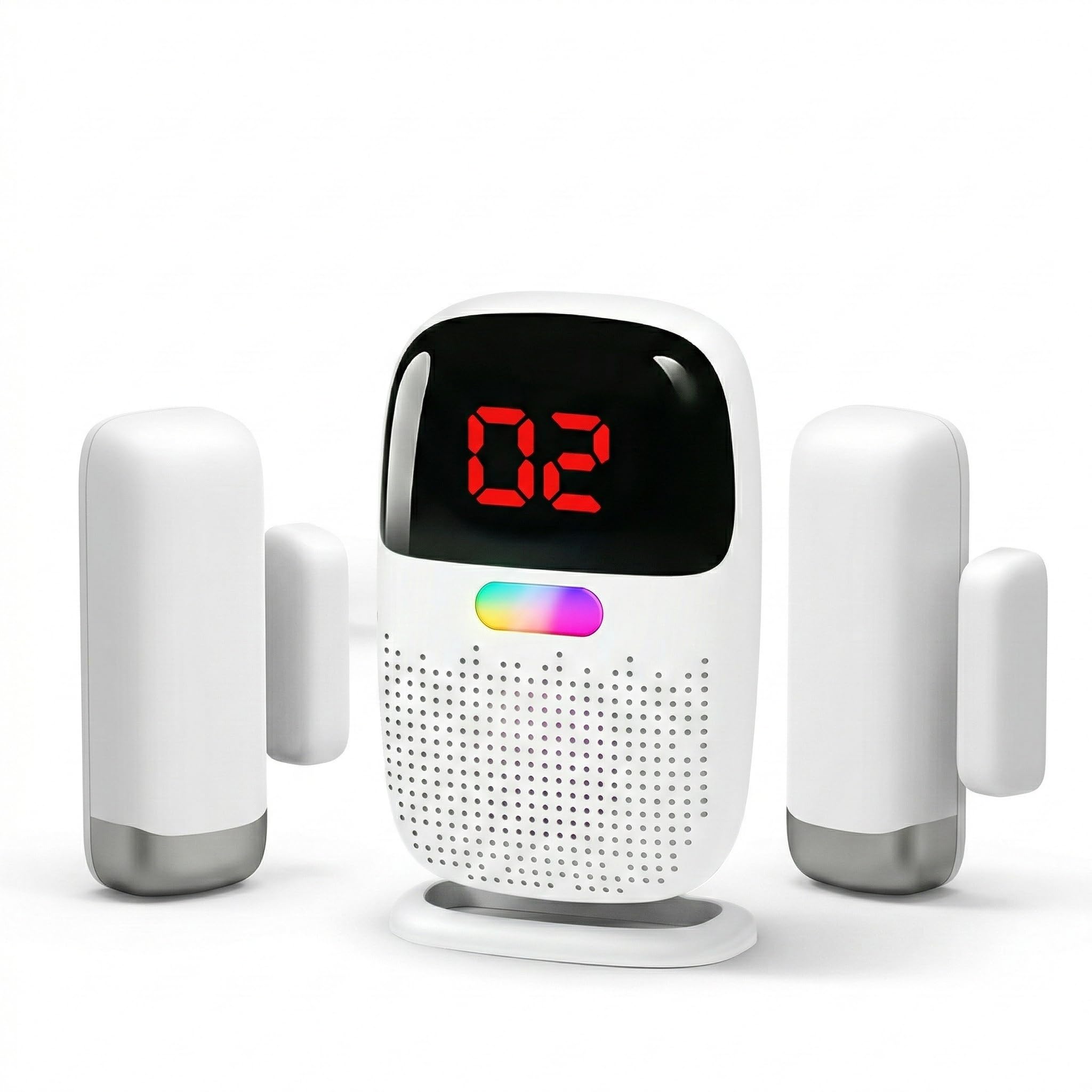
We recommend this system for caregivers who want a portable alert with sound and vibration options, but we would test the range and pairing before relying on it.
Pros
- Portable receiver with a belt clip
- Loud, quiet, and vibration alert choices
- Two rechargeable door sensors
Cons
- Some users report pairing problems
- Indoor range may drop through walls
- Installation may be difficult on unusual door frames
The receiver was easy to carry from room to room, and the recessed controls helped prevent accidental changes. The LED display showed which sensor triggered the alert, which made it easier for us to identify the open door quickly.
We also liked the choice of alert settings. Sound worked well during the day, while vibration offered a quieter option at night. The sensors responded quickly during testing, although some users had trouble pairing the pager with the sensors.
The advertised range reaches up to 1,000 feet in open space, but walls and building materials can reduce that distance. We would complete a walk-test after installation and check the alert from the areas where a caregiver spends time. The rechargeable design also reduces the need for regular battery changes.
YisTech Caregiver Door Alarm

We recommend this alarm for caregivers who need a simple way to monitor doors and windows without relying on a phone.
Pros
- Two sensors cover separate entry points
- Adjustable volume and 58 chime choices
- Flashing receiver light supports users with hearing loss
Cons
- The alarm sounds for only a short time
- The wall receiver must stay plugged in
- Adhesive may need extra support on some surfaces
We found the setup simple: plug in the receiver, align the sensor arrows, and attach the pieces to a door or window. The kit includes two sensors, so we could monitor two openings without buying extra parts.
The receiver offers five volume levels, including a very loud setting. We could also choose from many melodies, which helped us avoid using the same sound for every alert. Its flashing light adds a useful visual signal for adults who may not hear the chime clearly.
The stated wireless range reaches up to 260 feet, though walls and other obstacles can reduce that distance. We also liked that one receiver can support multiple sensors, making this system useful for several doors or windows.
The main drawback is the brief alert time. It works well for noticing an opening door, but it does not replace supervision or a monitored security system. The sensor batteries are included, while the receiver uses a standard outlet.
Buying Guide
We should choose a door alarm based on the user’s needs, mobility, hearing, vision, and living space. The best option should offer clear alerts without creating extra steps during daily use.
| Feature | What to look for |
|---|---|
| Alert type | Use sound, flashing lights, vibration, or connected alerts to match the user’s abilities. |
| Volume control | Choose adjustable volume and tones to reduce stress and suit the home. |
| Ease of use | Look for large buttons, simple controls, and clear labels. |
| Power source | Check battery life, low-battery warnings, and access to replacement batteries. |
| Installation | Select a system that fits the door and does not require complex tools or wiring. |
| Range | For larger homes, confirm that the alert reaches the bedroom, living area, or caregiver’s location. |
| Privacy and safety | Review data settings for connected devices and avoid features that could restrict safe exit during an emergency. |
We should also check whether the alarm works with mobility aids, pets, and the door’s frame. A caregiver may need remote alerts, while a person with limited hand strength may benefit from hands-free controls.
Before buying, we should measure the door and identify where the sensor and alert unit will sit. We should also confirm return policies, warranty coverage, accessibility support, and whether the device continues to alert during a power or internet outage.
Editor’s Choice
We choose the GE Personal Security Window and Door Alarm for many disabled adults. It has a simple peel-and-stick design, a loud alarm, and an on/off switch that supports daily use without complex setup.
The alarm can help alert caregivers when someone opens a door or window. We recommend placing it where the user or caregiver can reach the controls safely.
| Feature | Details |
|---|---|
| Installation | Adhesive mount |
| Alert | Loud local alarm |
| Controls | On/off switch |
| Best for | Basic entry alerts |
We also value alarms with adjustable volume, low-battery warnings, and a test button. These features can make routine checks easier and help caregivers notice problems before the alarm fails.
For adults with hearing loss, we suggest choosing a model that includes flashing lights, vibration, or a connected phone alert. A local sound alone may not provide enough warning, especially at night or in a larger home.
Before buying, we check the door type, mounting surface, battery access, and the user’s ability to operate the controls. We also avoid placing the alarm where it could block mobility equipment or create a fall hazard.
Conclusion
We should choose a door alarm based on the person’s abilities, daily routine, and living space. A simple door sensor may work well for some adults, while others may need a system with a loud alarm, flashing light, vibration, or phone alerts.
We should also check the alarm’s power source, range, controls, and setup. Large buttons, clear labels, and remote controls can make daily use easier. Caregivers should test the system often and replace batteries as needed.
Key points to check:
- Select alerts the user can notice.
- Keep controls easy to reach and understand.
- Choose a model that fits the door and home.
- Protect privacy when using connected devices.
- Review the alarm’s settings with the user and caregiver.
The best choice supports safety without making the user feel restricted. We should include the disabled adult in the decision and adjust the system as their needs change.
FAQS
What is the best type of door alarm for a disabled adult?
We should choose an alarm based on the person’s needs, such as hearing, vision, movement, and cognitive ability. Useful features may include loud and flashing alerts, a wearable pager, remote notifications, and simple controls.
Can door alarms help caregivers?
Yes. Many systems alert a caregiver when someone opens a door or leaves a defined area. We can choose models with a receiver, wireless pager, or smartphone alerts.
Which alarm works for someone with hearing loss?
We should look for alarms with bright lights, vibration, or a portable pager. Some devices combine sound, flashing lights, and vibration for added flexibility.
Are wireless door alarms easier to install?
Wireless models often use adhesive strips or screws and do not need professional wiring. We should check the alarm’s range, battery life, and compatibility with the door and frame.
What safety features should we check?
We should look for low-battery warnings, tamper alerts, adjustable volume, backup power, and easy reset controls. A model with a manual override can help prevent problems during emergencies.
Do door alarms replace supervision?
No. Door alarms provide alerts but do not prevent falls, wandering, or other risks. We should use them with an appropriate safety plan and regular battery checks.
Can renters use these alarms?
Many battery-powered alarms attach without permanent changes. We should review the lease and choose a removable model when needed.