
10 Best Door Alarms for Arthritis: Easy-to-Use Safety Options


Sock Aid for Seniors

Raised Toilet Seat

Adult Coloring Book
Door alarms can add a simple layer of safety at home. These devices use a sensor, magnet, or pressure pad to sound an alert when someone opens a door. Some models also send notifications to a phone, while others work as stand-alone alarms without an app or hub.
For people with arthritis, the best door alarm should reduce strain during setup and daily use. Look for large controls, easy battery access, a clear alarm, and a design that does not require tight gripping or small, stiff buttons. Adhesive mounting can also help, since it avoids drilling and makes repositioning easier.
We compared door alarms for sound, setup, controls, reliability, and accessibility to find the models that are easiest to use with arthritis.
Best Door Alarms for Arthritis
We selected the best door alarms for arthritis based on ease of use, clear alerts, and accessible controls. Our list includes reliable options for home safety, caregivers, and anyone who needs a simple way to monitor doors.
TECKNET Door Alarm 3-Pack

We recommend this set for people with arthritis because the simple controls and peel-and-stick setup reduce hand strain.
Pros
- Easy adhesive installation
- Adjustable volume with chime and alarm modes
- Compact design works on doors, windows, and cabinets
Cons
- Needs a flat mounting surface
- Requires battery checks and replacement
- The alarm may sound too sharp at higher volume
We found the TECKNET alarms easy to place without using tools. The adhesive backing avoids the need to grip a screwdriver, while the small sensor fits neatly on a white door or window frame.
The controls offer three volume levels and two sound choices. We could use a softer chime for regular alerts or switch to the louder alarm when we needed stronger notice from another room.
The magnetic sensor must sit close to the alarm unit, so careful placement matters. A door with raised molding may not provide enough flat space. Once installed correctly, the alarm responds quickly when the door or window opens.
The compact design also makes this set useful for apartments, hotel rooms, garages, and cabinets. We would choose it for basic alerts rather than full home security, since it does not replace a monitored alarm system.
SECRUI Wireless Door Chime

We recommend this door chime for people with arthritis who want simple setup, adjustable sound, and a visible alert when a door opens.
Pros
- Simple adhesive or screw installation
- Adjustable volume with a visual light
- Long wireless range and expandable design
Cons
- Some chimes may sound more musical than expected
- The sensor uses a replaceable AAA battery
- A few users reported early receiver failures
We found the setup easy because the sensor and receiver arrived paired. Applying the adhesive took little hand strength, which helps when arthritis makes small tasks harder. Screws are also included for a firmer mount.
The receiver offers several volume levels, including a mute setting. The light still flashes when muted, giving us a useful visual alert without adding noise. The controls are straightforward, although choosing among many chimes took some time.
This model worked well for doors in nearby rooms and offers a stated range of up to 500 feet in open space. We also liked that additional sensors can cover more entrances. The receiver plugs into an outlet, while the door sensor runs on one AAA battery.
The chime alerts us when a door opens, but it does not provide a spoken message or phone notification. We would choose it for home entry awareness, caregiver support, or a small business that needs a basic, hands-free alert.
Satisure Wireless Door Alarm
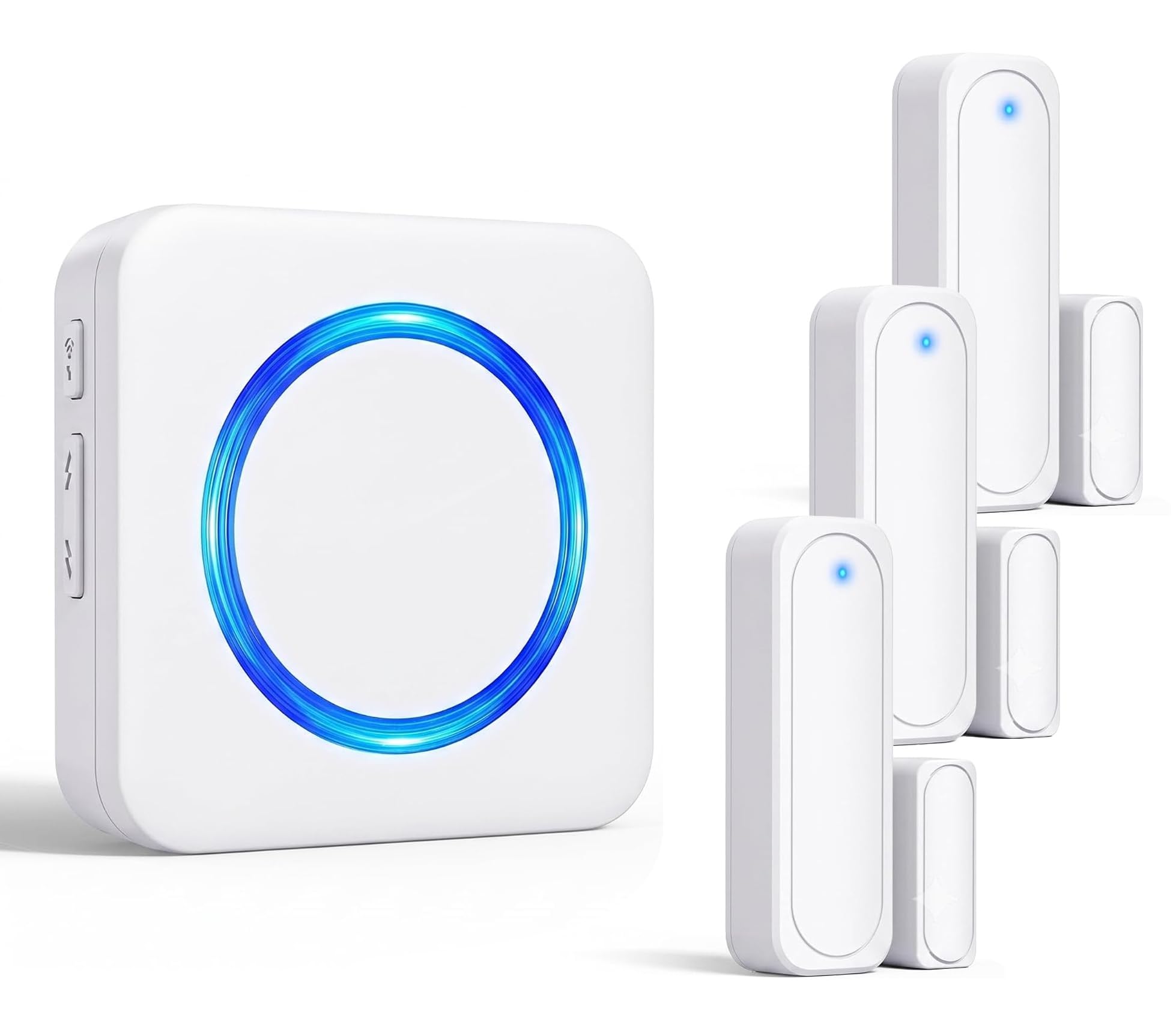
We recommend this door alarm for people with arthritis because it installs without wiring and offers clear alerts with simple controls.
Pros
- Quick, tool-free setup with pre-paired sensors
- Adjustable volume, mute mode, and flashing lights
- Long wireless range for larger homes
Cons
- Adhesive may need extra support on some surfaces
- Many chime choices can take time to sort through
- It does not connect to a phone or smart-home system
We found the setup easy on our hands. We plugged in the receiver, placed the contact sensors on the doors, and had the system working within minutes. The adhesive reduces the need to grip tools or handle small screws, though we would use screws for a more permanent mount.
The receiver offers five volume levels, including a quiet setting and a loud alert. The flashing light helps us notice an opening when sound is muted or when background noise makes a chime harder to hear. This combination may suit older adults who have hearing or mobility concerns.
With three sensors included, we could monitor several doors. The wireless signal reached across a large home in testing, but walls and building materials may reduce the stated range. We also liked that the system supports added receivers and different chimes for separate doors.
The controls are straightforward, but choosing among 58 melodies feels excessive for a basic safety alert. This model also lacks phone notifications, so it works best when someone remains within hearing or viewing distance of the receiver.
YisTech Wireless Door Alarm

We recommend this set for households that need a simple door alert with strong volume, visual signals, and several sensors.
Pros
- Large wireless range for use across rooms
- Bright LED alerts support people with hearing loss
- Multiple sensors and receivers offer flexible coverage
Cons
- Included adhesive may not hold well on every surface
- Changing tones and volume takes some practice
- Loud settings may feel harsh in small rooms
We found the plug-in receivers easy to set up. The sensors use adhesive strips, so we could place them on doors or windows without tools. The system includes three sensors and two receivers, which helped us cover more than one entry point.
The alert reached rooms across the home without obvious connection problems. We could choose from many tones and adjust the volume, including a very loud setting. The receiver also uses a flashing light, which adds a useful visual cue for people who may not hear every alert.
The main weakness involved the mounting tape. It may loosen on textured, dusty, or damp surfaces, so we would clean the area first or use stronger mounting tape. We also needed a little time to adjust the tone and volume controls.
This YisTech set suits caregivers, families, and small businesses that want door monitoring without complex wiring. It can help with awareness, but it should not replace direct supervision or a complete security system.
SanJie Wireless Door Chime

We recommend this door chime for people with arthritis who want simple setup, flexible alerts, and a clear signal when someone opens a door.
Pros
- Easy peel-and-stick installation
- Adjustable volume and 26 sound choices
- Supports two sensors and covers large homes
Cons
- Some users may find the loudest setting too quiet
- The receiver needs a wall outlet
- Small sensor parts may be harder to handle
We found the SanJie quick to install because the sensors arrive paired with the receiver. We only needed to plug in the receiver and attach the sensors with the included adhesive. This setup avoids small screws and complicated controls, which can help people with stiff or painful hands.
The chime offers five volume levels and 26 tones. We could choose a softer sound for daily use or a sharper alert when we needed more notice. The receiver also remembers the selected tone after being unplugged.
With two sensors included, we could monitor separate doors or windows. The wireless range gives us more freedom to place the receiver in a central room, though thick walls may affect performance. We also like that additional sensors can be paired for larger homes.
The main drawback involves sound level. While the alarm reaches a high volume setting, some users report that it remains difficult to hear from another room. We suggest testing the chime location before relying on it as the only alert.
Satisure Smart Door Sensor Chime

We recommend this system for people with arthritis who want simple installation, loud alerts, and phone notifications without a monthly fee.
Pros
- Plug-in receiver and adhesive sensors make setup simple
- Adjustable volume and separate tones help identify each door
- App alerts let family members monitor openings remotely
Cons
- Adhesive may not hold well on every surface
- Some alert tones sound harsh
- Battery-powered sensors need occasional replacement
We found the setup easy because the receiver plugs into an outlet and the sensors attach without wiring. That makes it useful for users who may struggle with tools, small screws, or tight fasteners.
The receiver offers several volume levels, including a very loud setting. We could choose different tones for each sensor, which helped us tell whether someone opened a door, window, or another monitored area.
The Tuya or Smart Life app adds remote alerts and family sharing. This gives caregivers another way to monitor activity, while the receiver still provides a quick local warning.
The included adhesive deserves care during installation. Some users report that the sensors fell from doors, so we would clean and dry the surface first and consider stronger mounting tape if needed. The system supports up to 20 sensors, making it suitable for larger homes.
VOXON Door and Window Alarm

We recommend this two-pack for people with arthritis who want a simple, peel-and-stick door alert with a loud warning sound.
Pros
- Simple switch and touch controls
- Easy adhesive installation
- Includes two alarms and a long warranty
Cons
- The 100-decibel alarm has no volume control
- Correct magnet alignment takes care
- Adhesive may loosen on some surfaces
We found the VOXON alarms easy to handle because installation only requires removing the adhesive backing and pressing each unit into place. The controls are also simple, with off, chime, and alarm settings that do not require a phone app or small setup steps.
The loud alarm makes open doors easy to notice, which can help us monitor an exit, garage, patio door, or room. However, the sound may feel too harsh for children, pets, or anyone sensitive to noise. The chime setting offers a quieter option, but it does not provide the same strong alert.
We needed to align the arrows on the alarm and magnet and keep the gap under about 2 cm. That step matters, especially on uneven trim or doors with limited mounting space. Some users also report that the adhesive does not hold well, so we should clean and dry the surface before installation.
The alarms use replaceable button batteries and come as a two-piece set. For people with arthritis, the lack of app controls keeps operation simple, but changing the batteries and adjusting the small switch may still require some hand strength.
PLOJOP 90dB Door Alarm 4-Pack

We recommend this affordable alarm for people with arthritis who want simple, stick-on door and window protection, but its short battery life and mixed durability may limit long-term value.
Pros
- Peel-and-stick setup requires little hand strength
- Loud alarm helps alert people quickly
- Compact design works on doors and windows
Cons
- Small power switch may be hard to use
- Each unit needs two AAA batteries
- Some users report early failures
We found the installation straightforward. After adding the batteries, we placed the alarm and magnet close together, keeping the gap under about 0.6 inches. The adhesive avoided drilling, which makes this a useful choice for people who have trouble gripping tools.
The alarm produces a strong sound when the door separates from the sensor. We liked the volume for child safety and entry alerts, though it may feel too loud in a small room. The basic switch also keeps operation simple, but its small size can make it difficult for stiff or painful fingers.
The four-pack lets us cover several doors or windows at once. However, customer feedback shows uneven reliability, with some units stopping after a few months or arriving faulty. We would choose this set for low-cost, short-term coverage rather than a primary security system.
SABRE Door Handle Alarm

We recommend this compact alarm for people with arthritis who want simple, tool-free door monitoring and a loud alert.
Pros
- Hangs on a door handle without wiring or drilling
- Loud alarm can wake household members
- Chime mode offers a quieter alert for daily use
Cons
- Requires three AAA batteries, which are not included
- The battery compartment may be difficult to open
- Sensitive doors or loose handles may cause false alarms
We found the SABRE easy to place because it hangs directly from the inside door handle. That makes setup less demanding for sore hands than installing a wired system or turning small screws. The off, chime, and alarm settings use a simple control.
The 110dB alarm sounds when vibration reaches the device after the short activation delay. We liked the strong volume for nighttime use, but it may feel excessive in a small room. Chime mode works better when we only need notice that someone opened the door.
Its small, light design also makes it practical for apartments, bedrooms, and travel. However, we had to handle the small battery compartment carefully, and users may need to adjust the sensitivity to reduce false alarms. Loose lever handles can be especially troublesome.
For arthritis, this model works best when we want easy placement and minimal daily handling. We should keep spare AAA batteries nearby and test the alarm after installation.
FOVKSUC Wireless Door Alarm
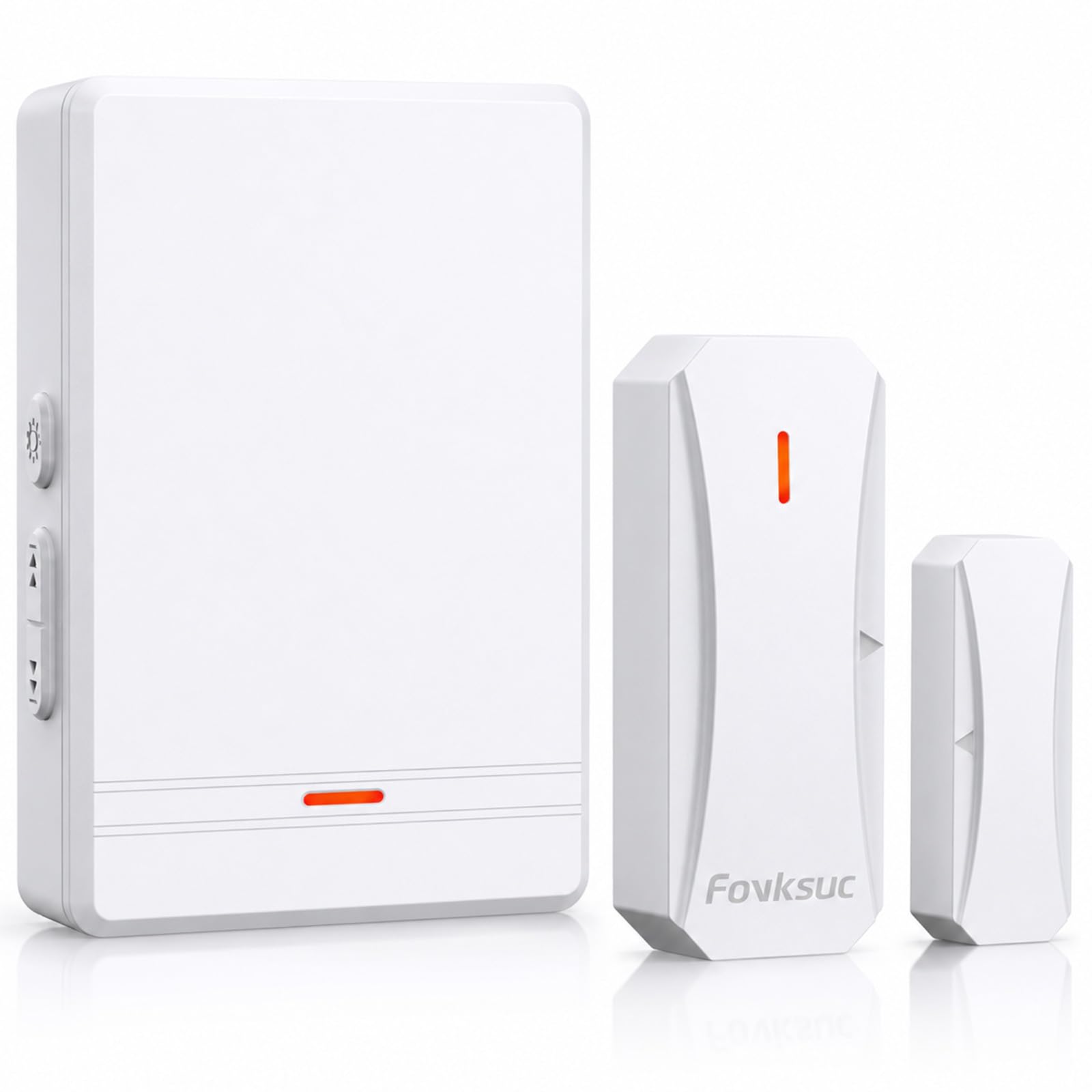
We recommend this alarm for people with arthritis who want simple setup, adjustable volume, and clear alerts without handling a complicated security system.
Pros
- Adhesive mounting reduces the need for tools.
- Adjustable volume includes a silent mode with a flashing light.
- One receiver can support up to 20 sensors.
Cons
- The package includes only one sensor.
- Battery replacement still requires handling a small CR123A battery.
- The many chime options may take time to set up.
We found the sensor easy to mount with the included adhesive strip. That helps when hand strength or finger movement makes drilling and tightening screws difficult. The receiver and sensor arrive paired, so we could begin testing the alarm soon after installation.
The volume controls worked well for different rooms. We could choose a louder alert for a distant door or use silent mode with the visual light in a bedroom. The receiver also remembers the selected sound and volume after being unplugged.
Its long wireless range gives us flexibility in larger homes. The system supports up to 20 sensors, but adding sensors increases the setup cost and requires more battery changes. The included package has one receiver and one sensor, which suits a single doorway but may not cover a full home.
We also liked the low-battery warning, though replacing the battery may still feel difficult for users with limited hand strength. Overall, this model fits buyers who need an accessible door alert for a bedroom, entryway, refrigerator, or other monitored area.
Buying Guide
When choosing a door alarm for arthritis, we should focus on controls that require little grip strength or finger movement. Look for large buttons, clear labels, and a remote control or keypad that works with light pressure.
We should also check how the alarm mounts and resets. Adhesive mounting may avoid drilling, while a simple press-to-arm design can reduce hand strain. Choose a unit with an easy-to-open battery compartment and clear low-battery alerts.
| Feature | What we should look for |
|---|---|
| Controls | Large, easy-press buttons |
| Arming method | Remote control, keypad, or simple switch |
| Volume | Adjustable sound level |
| Alerts | Light, chime, or vibration options |
| Installation | Adhesive or tool-free mounting |
| Power | Long battery life and low-battery warning |
| Door fit | Compatibility with the door and frame |
We should select an alert that we can hear or notice from the rooms we use most. Adjustable volume helps us avoid alarms that sound too weak or too loud.
Before buying, we should measure the gap between the door and frame and check the device’s installation requirements. We should also review cleaning instructions, warranty terms, and return policies.
Editor’s Choice
We recommend a wireless door alarm with a large control button, simple setup, and adjustable volume for people with arthritis. These features reduce the need for small movements, tight grips, or repeated button presses.
| Feature | Why it helps |
|---|---|
| Large buttons | Easier to press with stiff or painful fingers |
| Wireless design | Avoids difficult wiring and drilling |
| Adjustable volume | Lets us choose a clear, comfortable alert |
| Long battery life | Reduces the need to open the unit often |
| Remote controls | Allows operation without reaching the door |
We should choose a model with a strong adhesive mount or easy-release bracket. This makes installation simpler and helps us avoid tools that require firm gripping.
A door alarm with a separate receiver can also help. We can place the receiver in a room where we spend time, so we do not need to stand near the door to hear the alert.
Before buying, we should check the control size, battery access, and alarm settings. Product photos and user reviews can help us confirm whether the buttons and battery cover look easy to handle.
Conclusion
We should choose a door alarm that matches our hand strength, hearing needs, and daily routine. Models with large buttons, simple controls, and loud or adjustable alerts can make regular use easier for people with arthritis.
Wireless alarms often simplify installation because we do not need to handle screws or complex wiring. We should also check battery access, remote controls, and whether the alarm includes visual or phone alerts.
Before buying, we can compare these key features:
- Easy controls: Large buttons and clear labels
- Simple setup: Wireless installation or included mounting tools
- Flexible alerts: Adjustable volume, lights, or phone notifications
- Reliable power: Long battery life and easy battery changes
- Useful support: Clear instructions and responsive customer service
Testing the alarm before relying on it helps us confirm that we can arm, disarm, and reset it without pain or strain. A short trial also shows whether the alert works well throughout our home.
FAQs
What type of door alarm works best for arthritis?
We recommend alarms with large buttons, simple controls, and easy-to-open battery covers. Wireless models can reduce the need to reach or handle tools during setup.
Are smart door alarms easy to use?
They can be, especially when the system works with a phone app or voice assistant. We should choose models with clear instructions and avoid systems that require frequent small-button presses.
Can we use a door alarm without drilling?
Yes. Many alarms attach with adhesive pads or removable mounts. We should check the surface first and follow the maker’s mounting instructions.
How loud should a door alarm be?
We should select a volume that we can hear throughout the home without causing discomfort. Some alarms also offer flashing lights, vibration, or phone alerts.
Do door alarms need regular maintenance?
Most need occasional battery checks. We should test the alarm each month and replace batteries when the warning signal appears or the sound becomes weak.
Can caregivers receive door alerts?
Some connected alarms can send notifications to a caregiver’s phone. We should check whether the system requires Wi-Fi, a paid plan, or a compatible smartphone.
What features should we avoid?
We should avoid tiny controls, stiff battery compartments, and complicated setup steps. A model with clear labels and accessible controls will usually be easier to manage.