
10 Best Carbon Monoxide Detectors for Small Spaces: Top Compact Picks


Smart Health Watch for Seniors

Toilet Safety Rails

Lightweight Vacuum Cleaner
Carbon monoxide (CO) is an odorless, colorless gas that can cause serious harm without warning. Fuel-burning appliances, heaters, fireplaces, and generators can produce it, so a working detector is important in any home, apartment, RV, or small room.
Small spaces need detectors that provide reliable alerts without taking up much room. We recommend prioritizing a compact detector with a loud alarm, a clear display, reliable power, and easy installation. Battery life, battery replacement alerts, and certification from a recognized safety organization also matter, especially when space limits placement options.
We compared detectors designed for bedrooms, studios, apartments, RVs, and other tight spaces to find the models that offer the best balance of size, features, and dependable alerts.
Best Carbon Monoxide Detectors for Small Spaces
We selected the best carbon monoxide detectors for small spaces based on compact design, reliable alerts, easy installation, and useful safety features. Our list includes options for bedrooms, apartments, RVs, and other areas with limited room.
Kidde Portable CO Detector

We recommend this compact Kidde detector for small rooms, travel, cabins, and campers because it runs on batteries and installs without wiring.
Pros
- Compact, portable design
- Loud alarm with clear LED signals
- Simple wall or tabletop setup
Cons
- Requires regular AA battery checks
- No digital carbon monoxide display
- One unit may not cover a whole home
We found the detector easy to place in a tight space. Its small body fits well on a nightstand or shelf, while the wall mount keeps it out of the way. Since it uses two AA batteries, we could install it without finding a nearby outlet.
The green light shows that the unit has power. During testing, the test-reset button gave us a simple way to check the alarm and battery operation. The red light and loud 85-decibel alarm should provide clear warnings if the detector senses carbon monoxide.
Its portable design also works well for hotel rooms, campers, and cabins. We would pack it for travel because it takes up little space and continues working during a power outage.
We would still place detectors near sleeping areas and on each level of a home. This model works best as a focused detector for a small room or as an added layer of protection, rather than as the only alarm in a larger house.
HEIMAN Mini CO Detector
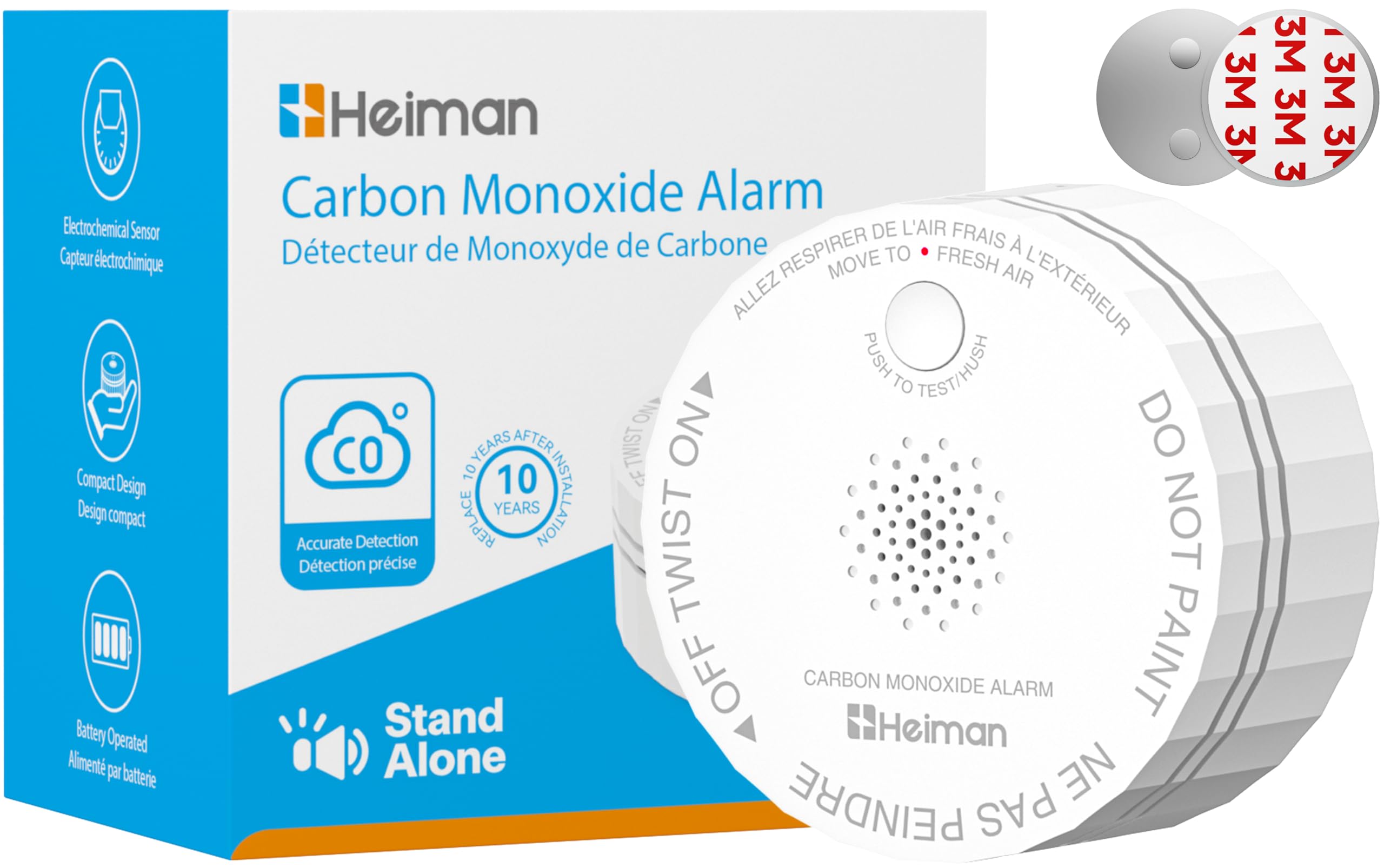
We recommend this compact detector for small rooms, apartments, campers, and other spaces that need simple, battery-powered CO monitoring.
Pros
- Small design fits well on a wall, ceiling, or shelf
- Long-life lithium battery reduces maintenance
- Loud alarm, visual alert, and test/silence button
Cons
- Standalone model cannot connect to other alarms
- One-pack purchase may not cover a whole home
- Product listings show different warranty terms
We found the HEIMAN C1-S easy to place in tight areas. Its small body works well near a bedroom, office, camper, or rental unit without taking up much wall space. The included mounting hardware also keeps setup simple.
The electrochemical sensor and UL 2034 certification add useful reassurance. We could test the alarm with one button, while the visual indicator gave us another way to check its status.
Its sealed, long-life battery removes regular battery changes, but it also means we cannot replace the battery ourselves. Since this is a standalone unit, we would use several detectors in a larger home rather than rely on one.
The listing mentions both a 10-year and a 7-year warranty, so we would confirm the current terms before buying. Overall, this compact HEIMAN detector suits buyers who want low-maintenance CO protection in a small space.
First Alert CO606

We recommend this plug-in alarm for small spaces because it installs quickly, stays compact, and keeps monitoring during a power outage.
Pros
- Simple plug-in setup
- Battery backup for power failures
- Clear test and silence button
Cons
- Requires a nearby outlet
- No digital carbon monoxide reading
- The alarm can sound loud in tight rooms
We found the CO606 easy to place in a small bedroom, hallway, or apartment. Its slim design sits close to the wall, so it does not take up much space or create a tripping hazard.
The electrochemical sensor adds confidence when monitoring carbon monoxide. We also liked the battery backup, which keeps the alarm active if the power goes out.
A single button handles testing and silencing. The lack of a display keeps operation simple, but we cannot check exact carbon monoxide levels. The loud alarm provides a clear warning, while the low-battery signal and end-of-life chirp help us know when the unit needs attention.
This model works best when an outlet sits in a useful location. For broader coverage, we would place alarms on each level and near sleeping areas rather than rely on one detector.
Kidde Battery CO Detector

We recommend this compact Kidde detector for small rooms, apartments, campers, and other spaces where simple battery power matters.
Pros
- Easy wall or tabletop placement
- Battery operation works during power outages
- Clear LEDs, test button, and low-battery warning
Cons
- Provides no digital CO readout
- Batteries require regular replacement
- Its alarm may feel loud in a very small room
We found the detector easy to place without wiring. Its compact design fits well on a wall near a sleeping area, while the tabletop option works for temporary use or travel.
The green light shows normal operation, and the red light flashes during an alarm. We also liked the test-hush button because it makes routine checks simple and can temporarily silence a low-battery chirp.
This model uses an electrochemical sensor and an 85-decibel alarm. Battery power keeps it active during an outage, but we still need to check the batteries and replace the detector according to the manufacturer’s instructions.
The peak memory feature records the last detected CO event or test, which adds useful information after an alarm. However, this version does not show live parts-per-million readings, so shoppers who want a digital display should choose a different Kidde model.
Kidde Plug-In CO Detector

We recommend this detector for small spaces because it plugs into the wall, includes battery backup, and provides a clear digital carbon monoxide reading.
Pros
- Simple plug-in setup with two AA backup batteries
- Digital display shows detected CO levels
- Test-Hush button and peak-level memory add useful control
Cons
- It needs a nearby wall outlet
- The display may be harder to read from across a room
- Its alarm can sound very loud in a small space
We found the Kidde easy to set up in a bedroom, hallway, or small apartment. Plugging it into a standard outlet keeps the installation quick, while the battery backup helps maintain protection during a power outage.
The digital display gives us more information than a basic indicator light. It shows the detected carbon monoxide level and records the last peak reading, which helps us check whether the detector sensed CO while we were away.
An 85-decibel alarm should provide a strong warning, even during sleep. The Test-Hush button makes routine checks simple and can silence an unwanted alert for about eight minutes. We would still place this detector near sleeping areas and follow the manufacturer’s placement guidance.
HEIMAN Mini CO Detector
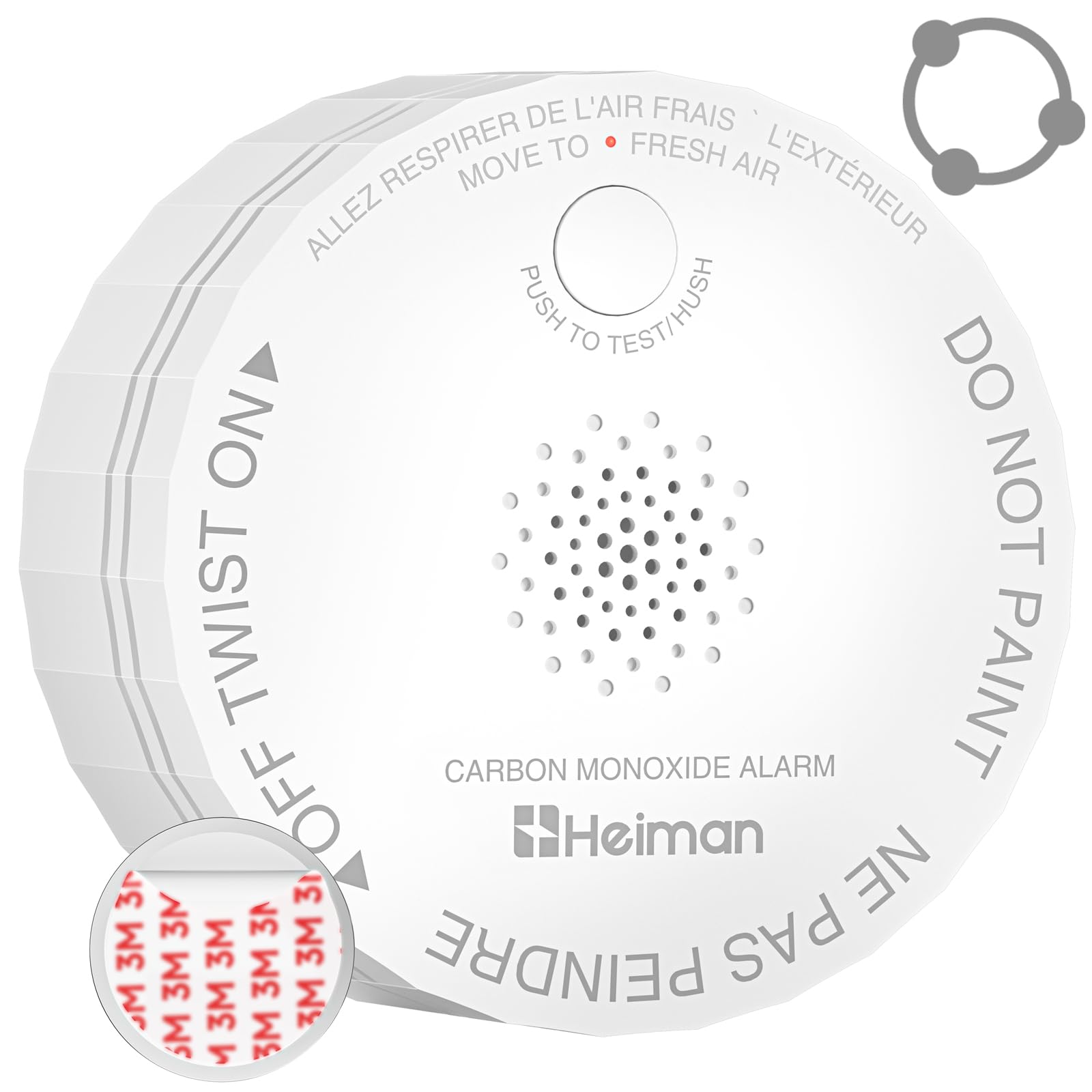
We recommend this compact detector for small rooms, apartments, dorms, and RVs because it installs easily and takes up little wall space.
Pros
- Compact design suits tight spaces
- Easy magnetic or screw mounting
- Electrochemical sensor and loud alarm
Cons
- Wireless linking may take extra setup
- Instructions could be clearer
- Interconnection may require compatible HEIMAN units
We found the small size useful in rooms where a full-size alarm would feel bulky. The included mounting options also made placement simple, especially when we did not want to drill into a rental wall.
The test and silence button was easy to reach, and the alarm produced a strong sound. Its low-profile design worked well in bedrooms, hallways, and other small areas without adding much visual clutter.
The wireless interconnection feature adds value for homes using several compatible HEIMAN alarms. However, setup instructions may require close attention, so we would test each unit after installation and confirm that linked alarms respond as expected.
SITERWELL Plug-In CO Detector
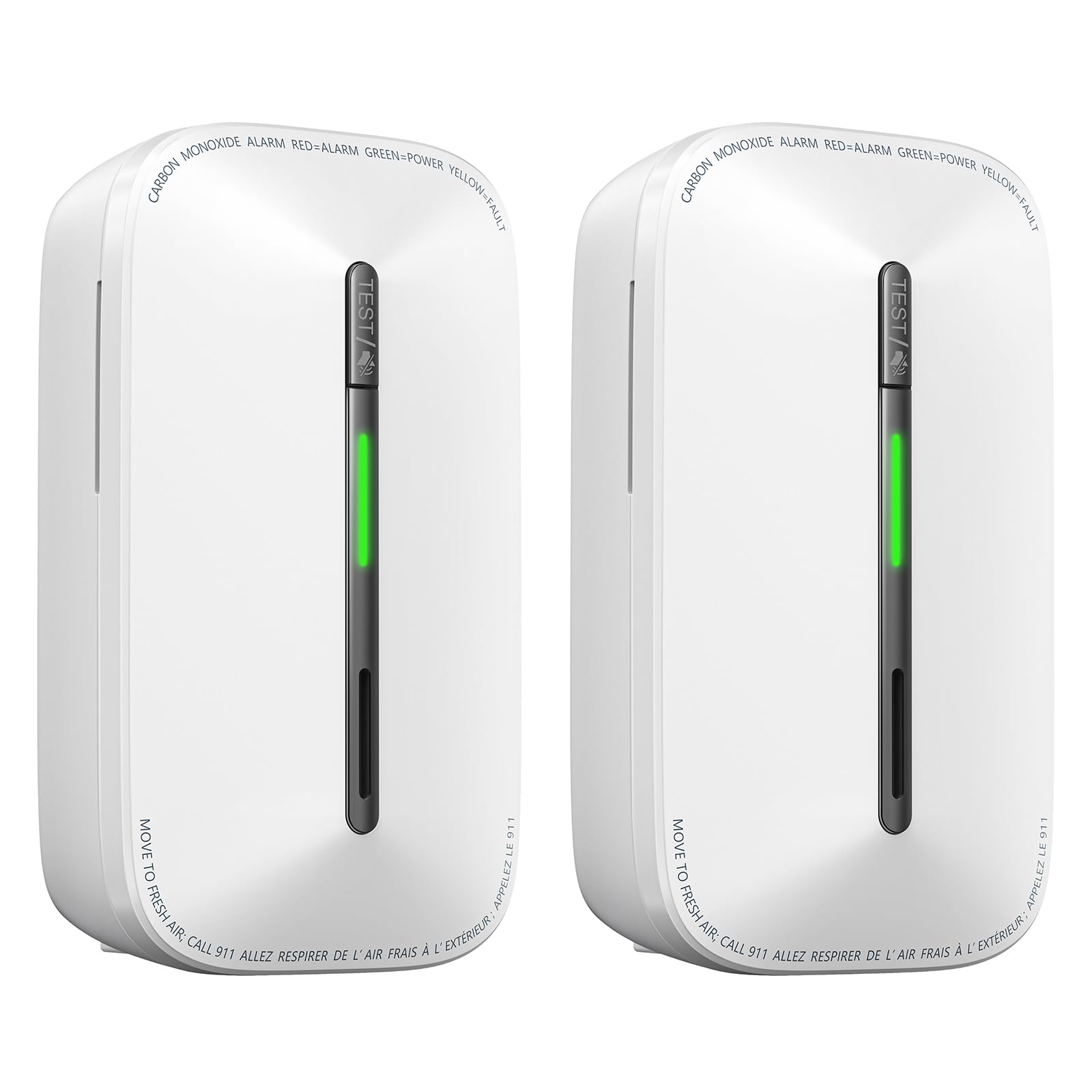
We recommend this compact detector for small rooms, offices, and travel because it offers simple setup, a loud alarm, and long-term battery backup.
Pros
- Compact design fits well in small spaces
- Loud warning is easy to notice
- Backup battery supports use during power outages
Cons
- Battery installation may take some effort
- Plug-in placement depends on outlet location
- Limited review history
We found the SITERWELL easy to place in a bedroom, office, or small utility area. Its slim white body blends into the wall, while the green status light gives a quick check that the unit is operating normally.
The alarm produces a clear, loud warning that should get our attention quickly. We also liked the one-touch silence feature, which helps reduce disturbance during minor alerts or testing.
Its compact size makes it useful for travel, guest rooms, and areas where larger alarms feel bulky. The built-in 10-year battery adds peace of mind during power failures, though inserting the battery can require a little care.
This model uses an electrochemical sensor and detects carbon monoxide from sources such as fuel-burning appliances, fireplaces, heaters, and vehicles. We would still follow local placement guidance and test the alarm regularly.
Kidde Plug-In CO Detector

We recommend this compact detector for small spaces because it plugs in easily, shows CO levels, and keeps working during a power outage.
Pros
- Simple plug-in setup with a battery backup
- Digital display shows detected CO levels
- Peak memory helps us check earlier readings
Cons
- Needs a nearby outlet or the included extension cord
- The display may be hard to read from across a room
- Its end-of-life alert means we must replace the unit on schedule
We found the Kidde easy to place in a small bedroom, hallway, or apartment. Its narrow body leaves room for nearby plugs, while the extension cord gives us more options for a shelf or table.
The digital display shows the current reading, which gives us more information than an alarm with only lights and sounds. Peak Level Memory also helps us review whether the detector recorded a higher reading while we were away.
An 85-decibel alarm provides a strong warning, and the included 9-volt battery adds protection during a power failure. The Smart-Hush button can silence an alarm for about eight minutes, but we would still treat every CO alarm as serious and check the source immediately.
Kidde Battery-Powered CO Detector
We recommend this compact Kidde alarm for small rooms, rentals, and travel because it installs easily and keeps working during power outages.
Pros
- Battery operation allows flexible placement
- Clear LED status signals and loud alarm
- Test button and event memory add useful checks
Cons
- Batteries need regular replacement
- Basic design lacks a digital display
- Portable use requires careful placement
We found the slim housing easy to fit on a wall or tabletop without taking up much space. Its battery power also helped us place it where wiring would have been inconvenient, such as near a bedroom or in a small hallway.
The green light shows that the unit has power, while the red light and loud alarm signal a CO warning. We also liked the test-reset button because it made routine checks simple and allowed us to silence a low-battery chirp temporarily.
This model uses an electrochemical sensor and includes mounting hardware. It does not show a live carbon monoxide reading, so we could not monitor changing levels. Still, its simple controls and clear warnings make it a practical choice for small spaces.
We would replace the batteries promptly when the warning sounds and follow the placement instructions. The alarm also signals when it reaches the end of its service life, which helps us remember when to replace it.
First Alert CO710

We recommend the First Alert CO710 for small spaces because its compact body, clear display, and 10-year battery make daily monitoring simple.
Pros
- Built-in battery needs no regular replacement
- Digital display shows temperature and CO readings
- Compact design works on a dresser or wall
Cons
- Display may show a slightly inaccurate room temperature
- Tabletop placement may not suit every room
- The unit must be replaced after its service life
We found the CO710 easy to place in a bedroom, hallway, or small living area. Its slim body takes up little space, and the option to mount it on a wall helps keep furniture clear.
The backlit screen shows the room temperature and current carbon monoxide level. We also found the peak reading useful because it records the highest detected level, though the temperature reading may need time to settle after setup.
Its built-in lithium battery removes the need for routine battery changes and keeps the alarm working during power outages. The loud alarm and test/silence button also make basic checks straightforward.
For small spaces, this model offers useful features without adding a large device to the room. We would choose it for bedrooms, apartments, and travel where a compact, battery-powered detector provides added peace of mind.
Buying Guide
When we choose a carbon monoxide detector for a small space, we should prioritize reliable detection, easy placement, and simple maintenance. A compact design helps the unit fit near sleeping areas without blocking outlets or walkways.
| Feature | What we should look for |
|---|---|
| Power source | Battery models work during power outages. Plug-in models need a nearby outlet. |
| Battery backup | Useful when the main power fails. |
| Display | A digital display can show current readings, if provided. |
| Alarm volume | The alarm should be loud enough to wake people in nearby rooms. |
| Test button | Lets us check the alarm and battery status regularly. |
| End-of-life alert | Warns us when we need to replace the unit. |
| Certification | Look for approval from a recognized safety testing organization. |
We should place the detector according to the manufacturer’s instructions, usually near sleeping areas and on each level of the home. In a small apartment or room, avoid placing it behind furniture, near windows, or beside vents that may affect airflow.
Check the battery type, replacement schedule, and warranty before buying. We should also avoid relying on a combination smoke and carbon monoxide alarm if its size or placement makes the device difficult to hear or maintain.
Editor’s Choice
We choose the Kidde Nighthawk Carbon Monoxide Alarm for most small spaces. Its compact design fits bedrooms, hallways, apartments, and other areas with limited wall space. The digital display shows carbon monoxide levels, while the plug-in design keeps installation simple.
We value its battery backup, which helps the alarm keep working during a power outage. The test and reset button also makes regular checks easier. We recommend placing it near sleeping areas and following the manufacturer’s placement instructions.
| Feature | Kidde Nighthawk |
|---|---|
| Power | Plug-in with battery backup |
| Display | Digital carbon monoxide reading |
| Best for | Bedrooms, apartments, and small rooms |
| Maintenance | Test regularly and replace batteries as needed |
We should remember that no detector replaces proper ventilation or appliance maintenance. Test the unit each month, keep its vents clear, and replace it according to the manufacturer’s schedule.
Conclusion
For small spaces, we should choose a carbon monoxide detector that fits the room without blocking outlets, doors, or walkways. A compact plug-in model works well in bedrooms, offices, and studio apartments, while a battery-powered unit offers more flexible placement.
We should look for a clear digital display, a loud alarm, a low-battery warning, and a test button. Models with battery backup can keep working during power outages. We should also check that the detector meets current safety standards.
Placement matters as much as the device. We should install detectors near sleeping areas and follow the manufacturer’s instructions for height and distance from fuel-burning appliances. Testing the alarm regularly and replacing it when recommended helps keep our space protected.
FAQs
Where should we place a carbon monoxide detector in a small space?
We should install one near sleeping areas and follow the manufacturer’s height and distance instructions. Keep it away from windows, doors, vents, cooking appliances, and bathrooms to reduce false alarms.
How many detectors do we need?
For a small apartment or studio, one detector may meet local requirements, but we should check building codes. Adding one near the sleeping area and another near a fuel-burning appliance can provide better coverage.
Which power source works best?
Battery-powered models install easily and keep working during power outages. Plug-in models are convenient, while models with battery backup provide another layer of protection.
How often should we test a detector?
We should press the test button at least once a month. We also need to replace batteries as directed and replace the entire unit when it reaches the manufacturer’s stated service life, often about 5–10 years.
What should we do if the alarm sounds?
We should leave the space immediately, move outdoors, and call emergency services or the local fire department. We should not reenter until qualified responders say it is safe.