
10 Best Carbon Monoxide Detectors for Arthritis: Easy-to-Use Safety Picks


Adult Coloring Book

Large Display Clock with Date

Shiatsu Neck Massager
Carbon monoxide detectors help protect people from this odorless, colorless gas, which can build up when fuel-burning appliances or heating systems malfunction. Most models use loud alarms, bright displays, or voice alerts to warn you when carbon monoxide reaches unsafe levels.
For people with arthritis, the best detector should be easy to install, test, reset, and read. Look for large buttons, a clear display, strong alarm sounds, and simple battery access so routine checks do not require painful gripping or twisting. We also considered plug-in and battery-powered models, backup power, sensor life, and placement guidance.
We evaluated carbon monoxide detectors for alert clarity, controls, maintenance, and accessibility to identify the models that make home safety easier for people with arthritis.
Best Carbon Monoxide Detectors for Arthritis
We selected the best carbon monoxide detectors for people with arthritis. Our picks focus on easy-to-press controls, clear alerts, simple displays, and convenient testing features.
Kidde Battery-Powered CO Detector

We recommend this detector for people with arthritis who want a portable alarm with simple setup and easy-to-see status lights.
Pros
- No wiring or outlet needed
- Large test-reset button
- Lightweight for travel or tabletop use
Cons
- The back battery compartment may take effort to open
- It offers basic alerts without a voice message
- The alarm may sound loud for sensitive users
We found the Kidde easy to place near a bedroom, in a camper, or on a travel table. Its battery power also keeps it working during an outage, and the included AA batteries make setup quick.
The test-reset button is useful for routine checks and can silence a low-battery chirp for a short time. We also liked the green power light and red alarm light because they provide clear status information without requiring a phone app.
People with arthritis may appreciate the simple design and light weight. However, opening the battery compartment or mounting the unit could still require help if hand strength or finger movement is limited.
The 85-decibel alarm sounds clearly, while the event memory records the last detected CO event or test. We would choose this model for home use and travel when we want a straightforward, battery-powered detector with a 10-year limited warranty.
First Alert CO606

We recommend this plug-in alarm for people with arthritis because it needs little setup and has a simple test and silence button.
Pros
- Plugs into a standard outlet without wall mounting
- Battery backup supports monitoring during power outages
- Large, simple button is easier to use than multi-button controls
Cons
- The outlet location may not suit every room
- It lacks a digital carbon monoxide display
- The manual may feel difficult to follow
We found the First Alert CO606 easy to install because we only needed to plug it into an outlet. That design avoids the twisting, drilling, and ladder work that can make wall-mounted alarms harder to manage with stiff or painful hands.
The single button handles testing and silencing. We could press it without sorting through several controls, though the button is not especially large. The alarm also gives a low-battery warning, which helps us maintain it without checking the unit often.
Its battery backup adds useful protection during power failures. The electrochemical sensor and loud alarm provide the main safety functions, while the plain design keeps the unit easy to understand.
We would place one near each bedroom and on every level of the home, following safety guidance. People who want a screen showing carbon monoxide levels may prefer another model, but this First Alert works well for straightforward, low-effort use.
Kidde Plug-In CO Detector

We recommend this detector for people with arthritis because it plugs in easily, shows readings clearly, and needs little daily handling.
Pros
- Plug-in setup reduces bending and battery use.
- Digital display shows current and peak CO levels.
- Backup battery supports operation during outages.
Cons
- Reaching the test and hush buttons may still require hand pressure.
- The display may be hard to read from across a room.
- Its end-of-life alert means we must replace the unit when it expires.
We found the plug-in design simple to install. We only needed to connect it to a standard outlet, and the included extension cord gave us more placement options on a shelf or table.
The digital screen made it easier to check the detector without pressing a button. Its peak memory also helped us see whether it had detected carbon monoxide since the last reset.
For arthritis, the large controls and low-maintenance setup are useful. The Smart-Hush button can silence an alarm for about eight minutes, but users with limited grip strength may still need help pressing it.
The 85-decibel alarm sounds loud enough for most homes. We would place this detector near sleeping areas and on each level, while keeping it at least 15 feet from cooking or heating appliances to reduce false alarms.
A 9-volt battery provides backup during power failures. We would still test the unit regularly and replace the detector according to the manufacturer’s stated service life.
Kidde Plug-In CO Detector
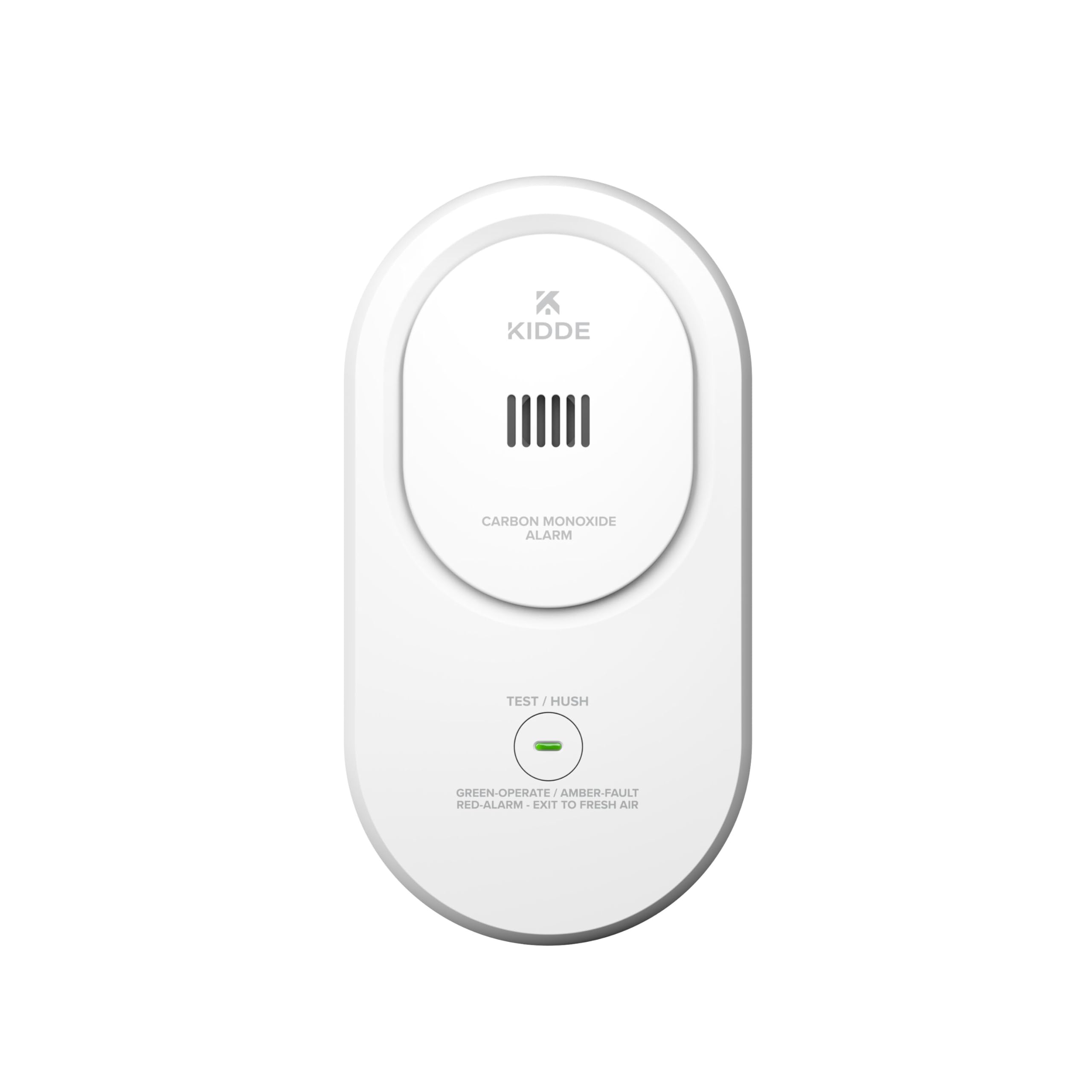
We recommend this detector for people with arthritis because its plug-in design, rotating outlet, and simple test button reduce the need for difficult installation.
Pros
- Rotating plug fits vertical or horizontal outlets
- Large test button and clear LED status lights
- Battery backup works during power outages
Cons
- Requires a 120V outlet
- The alarm may not feel loud enough for every user
- Not approved for RV or boat use
We plugged it in without needing to mount it or handle small screws. The rotating plug made it easier to place in an outlet without blocking the nearby socket, which helped when we had limited space.
The test button was easy to press, and the changing LED colors gave us a quick way to check the detector’s status. That visual signal may help users who have trouble hearing alarms or prefer a clear status check.
Two AA batteries provide backup power during an outage. We also liked the 10-year limited warranty and the compact shape for apartments or travel. However, this model only works with 120V outlets, and users should check the alarm volume before relying on it overnight.
TOPTES CT-580 Portable CO Detector

We recommend the TOPTES CT-580 for people with arthritis who want a handheld CO detector with clear alerts and simple controls.
Pros
- Large color display with adjustable brightness
- Vibration, light, and sound alerts
- Rechargeable battery and protective case
Cons
- Requires pressing and holding the power button
- Small controls may be harder for some users
- Best for checking areas, not replacing home alarms
We found the display easy to read while checking rooms, vehicles, and outdoor areas. The vibration alert helps when we cannot hear an alarm clearly, while the light and sound provide added warning.
The handheld shape felt secure, and the case made it easier to carry the unit without worrying about damage. USB-C charging also reduced the need to handle small batteries, which may help people with limited hand strength.
The menu offers useful tools, including alarm history and calibration options. However, some buttons require firm presses, so users with severe arthritis may need help at first.
The CT-580 works well as a portable inspection tool for homes, RVs, boats, travel, and work areas. We would still use certified home CO alarms as the main protection, since this device serves a different purpose.
First Alert CO710

We recommend the First Alert CO710 for people with arthritis because its long-life battery and simple test button reduce routine handling.
Pros
- No regular battery changes
- Clear backlit display
- Loud alarm and simple controls
Cons
- Display readings may need time to settle
- Tabletop placement may not suit every room
- End-of-life chirps can be difficult to silence
We found the CO710 easy to set up and use. Its built-in battery removes the need to twist open a battery compartment, which helps when hand strength or finger movement is limited. We could place it on a dresser or mount it on a wall.
The backlit screen shows room temperature and current or peak carbon monoxide levels. We liked having this information available without pressing several buttons, though the temperature reading may seem off at first. Letting the unit sit in the room helped it adjust.
When we tested the alarm, the button felt straightforward to operate. The loud horn should be easy to hear from nearby rooms, but people with hearing loss may still need a connected alert system.
The 10-year battery makes this a low-maintenance choice. We still recommend testing it regularly and replacing the alarm when its end-of-life signal appears.
Kidde Battery-Powered CO Alarm

We recommend this Kidde alarm for people with arthritis because the battery setup and test-reset button keep daily use simple.
Pros
- Battery power avoids wiring and works during outages
- Test-reset button is easier to use than small switches
- Portable design supports wall or tabletop placement
Cons
- The battery compartment sits on the back
- The alarm sound may feel loud in a small room
- LEDs may be harder to see from across a room
We found the installation straightforward because it needs no wiring. The unit can sit on a table or mount on a wall, which gives us flexibility when reaching overhead or handling tools feels difficult.
The test-reset button helps us check operation without working with tiny controls. It can also silence the low-battery chirp for a short time, although we still need to replace the batteries promptly.
A green light shows normal power, while a flashing red light accompanies the 85-decibel alarm. Peak-level memory records a previous reading or test, giving us useful information after an alert.
The electrochemical sensor provides continuous monitoring, including during power failures. We would place this alarm near sleeping areas and on each home level, then replace it according to the manufacturer’s stated service guidance.
Kidde Plug-In Gas and Carbon Monoxide Alarm

We recommend this alarm for people with arthritis who want simple plug-in setup, a clear display, and a battery backup.
Pros
- Plug-in design reduces setup effort
- Digital display is easy to read
- Detects carbon monoxide and several fuel gases
Cons
- Larger than some wall-mounted alarms
- Buttons may still require firm pressure
- It needs a nearby outlet for placement
We found the setup easy because the unit plugs into a standard outlet, and the included extension cord gives us more placement options. The backup battery adds protection during a power outage without requiring a separate power connection.
The digital display helps us check readings without guessing what an alarm means. It shows carbon monoxide levels and displays “GAS” when it detects an explosive gas. The large alarm sound also provides a clear warning from another room.
For users with arthritis, the simple setup is the main benefit. The Smart-Hush button can silence an alarm for about eight minutes, but pressing buttons may still feel difficult for some people. The unit also takes up more wall space than smaller detectors.
Peak Level Memory records the last detected level or test event, which helps us check the unit’s recent status. We should still test the alarm regularly and follow placement guidance, especially near bedrooms and on each home level.
Kidde COBD10 Carbon Monoxide Detector
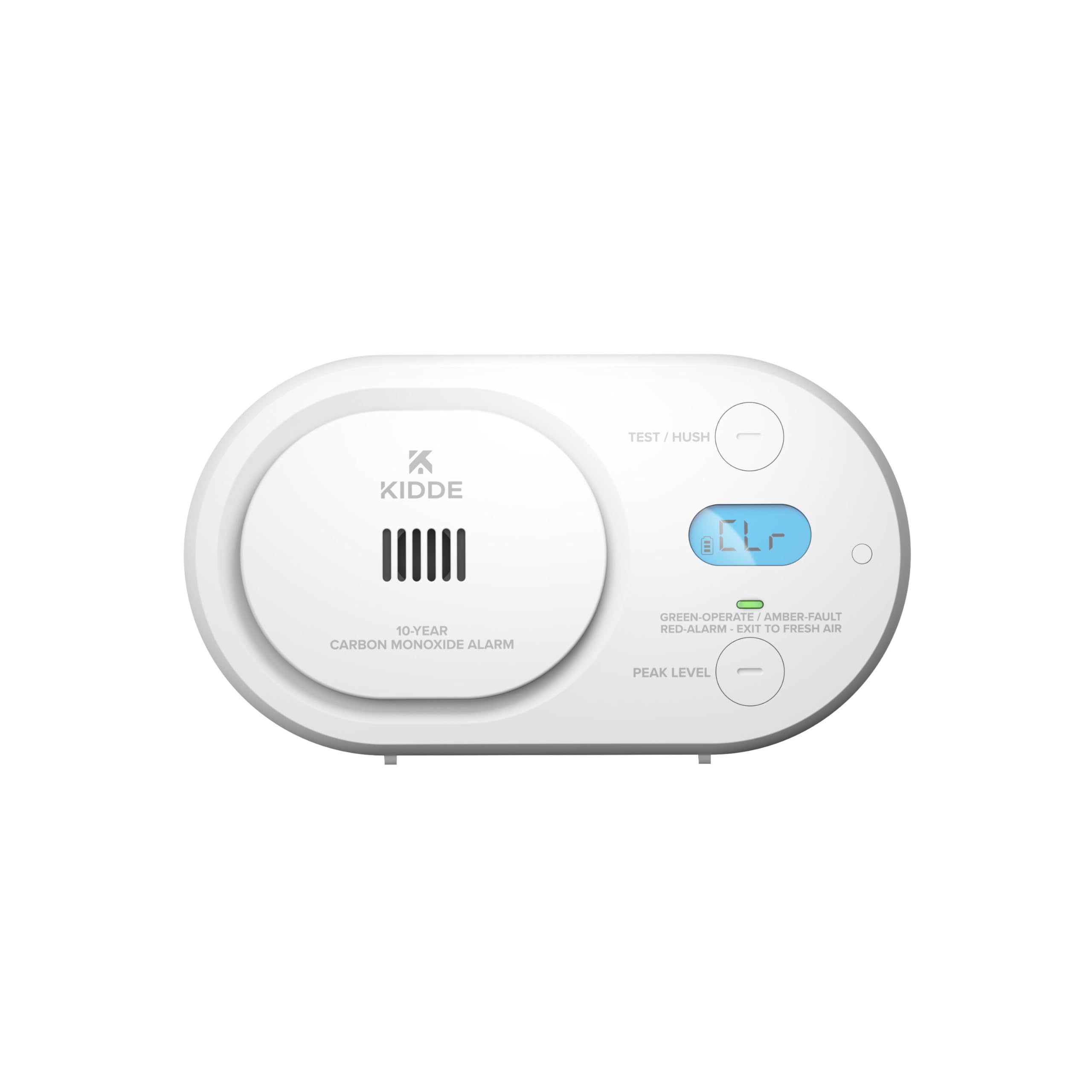
We recommend the Kidde COBD10 for people with arthritis because its large test button, clear display, and sealed battery reduce routine handling.
Pros
- Large test/hush button is easier to press
- Backlit display and LED lights support quick checks
- Sealed 10-year battery avoids regular battery changes
Cons
- The alarm may be difficult to silence during an emergency
- The display can require close viewing
- Wall mounting still involves handling screws
We found the COBD10 simple to set up on a wall or place on a counter. Its compact design gives us flexible placement, which helps when reaching high or awkward areas is difficult.
The test/hush button needs less fine finger control than a small battery compartment or tiny control. We also liked the backlit display, which makes the alarm status easier to read in dim rooms.
Its 85-decibel alarm provides a strong warning, while the LED indicators offer a quick visual check. The memory feature can show the highest recorded carbon monoxide level, which gives us useful information after an alert.
The built-in battery removes the need to open the unit or replace batteries each year. We still need to replace the detector after its service life ends, and the wall installation may require help if gripping tools is painful.
First Alert CO400
We recommend the First Alert CO400 for people with arthritis who want a simple, battery-powered carbon monoxide alarm with an easy-to-press test and silence button.
Pros
- Large, simple controls
- Battery operation works during power outages
- Loud alarm and clear warning signals
Cons
- The button may still require firm pressure
- Battery changes require removing the unit
- The sensor needs replacement after its service life
We found the CO400 easy to set up because it needs no electrical outlet. We could place it on a wall or set it in a suitable location, which helps when reaching a wall socket feels difficult.
The test and silence button offers a useful control for routine checks or temporary alarm silencing. Its straightforward design suits users who prefer fewer settings and small controls.
The 85-decibel alarm is loud enough to notice from nearby rooms. A low-battery signal and end-of-life chirp also reduce the need to guess when maintenance is due.
Because it uses a replaceable 9V battery, we would keep spare batteries available. People with limited hand strength may need help opening the battery compartment or mounting the unit. We also recommend placing alarms on every level and near sleeping areas.
Buying Guide
When we choose a carbon monoxide detector for arthritis, we should focus on controls that require little hand strength or dexterity. Look for large buttons, clear labels, and a test or silence control that works with light pressure.
We should also check how the detector provides alerts. A loud alarm helps with hearing loss, while bright lights, a large display, or phone notifications can provide added notice. Choose features that match our home and personal needs.
Key features to compare include:
| Feature | What we should look for |
|---|---|
| Controls | Large buttons with easy-to-press surfaces |
| Display | Large, high-contrast numbers and text |
| Alerts | Loud sound, bright warning light, and optional phone alerts |
| Power | Long-life battery or an accessible battery compartment |
| Testing | Simple test and silence functions |
| Placement | A design that mounts securely without frequent adjustment |
We should consider how often we must replace batteries or interact with the unit. A model with a long-life power source can reduce maintenance, but we still need to check its replacement schedule and alarm status.
We should also confirm that the detector meets current safety standards and includes clear instructions. Place detectors according to local guidance, and install enough units to cover sleeping areas and each level of the home.
Editor’s Choice
We choose the Google Nest Protect as our top carbon monoxide detector for people with arthritis. Its voice alerts, mobile notifications, and self-testing features reduce the need to press small buttons or check the unit often.
The detector announces the type and location of an alert in a clear voice. We can also silence some alerts from the Nest app, although users still need to respond to any possible carbon monoxide danger.
| Feature | Why it helps |
|---|---|
| Voice alerts | Reduces reliance on small visual indicators |
| App notifications | Provides alerts through a phone |
| Automatic testing | Limits manual checks |
| Nightlight | Improves visibility at night |
We recommend installing the detector where its alerts will remain easy to hear. Users should follow the manufacturer’s placement instructions and test the alarm regularly. People who do not use smartphones can still rely on the unit’s built-in voice and sound alerts.
Conclusion
We should choose a carbon monoxide detector that matches our physical needs and home layout. Large buttons, a clear display, voice alerts, and a test or reset feature that needs little force can make daily use easier for people with arthritis.
We should also consider alarm volume, battery access, and mounting options. A model with a sealed battery can reduce maintenance, while a plug-in model may be easier to check. If we need help pressing buttons, changing batteries, or testing the alarm, we can ask someone we trust to assist.
| Feature | Why it matters |
|---|---|
| Large controls | Easier to press |
| Clear display | Easier to read |
| Voice alerts | Adds spoken warning |
| Sealed battery | Reduces battery changes |
| Easy test button | Simplifies regular checks |
We should install detectors near sleeping areas and follow the manufacturer’s instructions. Testing the alarm regularly and replacing it when recommended helps us keep the system ready to warn us.
FAQs
What features help people with arthritis?
We look for large test and silence buttons, clear displays, bright status lights, and loud alarms. Voice alerts can also help when reading small text or pressing buttons feels difficult.
Should we choose a plug-in or battery-powered model?
Plug-in detectors reduce the need to handle batteries, but we still need backup power during an outage. Battery-powered models work in more locations and may offer long-life batteries that require less maintenance.
Are smart carbon monoxide detectors easier to use?
They can be. Smartphone alerts let us check warnings without reaching the device, but setup may require an app and a reliable internet connection. We should choose a model with simple controls and clear instructions.
How often should we test a detector?
We should press the test button at least once a month. If the button feels hard to press, we can ask someone to help or choose a model with a remote test feature.
When should we replace a carbon monoxide detector?
We should follow the manufacturer’s replacement date, often after five to ten years. We also need to replace a detector that gives a low-battery warning, shows an error, or fails its test.
Where should we install detectors?
We should place them near sleeping areas and on each level of the home, following local safety guidance. We should not install them beside fuel-burning appliances unless the instructions specifically allow it.