
Best Bras for Senior Women


Rollator Walker with Seat

Automatic Can Opener

Shiatsu Neck Massager
Finding the right bra becomes more important—and often more challenging—as we age. The best bras for senior women focus on soft, supportive fabrics, easy closures, and designs that accommodate changing bodies. This guide cuts through the confusion, highlighting essential features, top styles like wireless and front-closure bras, and expert tips for achieving a perfect, comfortable fit that supports your active life.
Let’s have a real talk about bras. For many senior women, the daily search for a comfortable, supportive bra can feel like a full-time job. Bodies change—shape, size, posture, and sensitivity all evolve. That once-perfect bra from a decade ago might now feel like a torturous device. The good news? The lingerie industry has caught up. Today’s “best bras for senior women” are thoughtfully designed with your comfort, health, and ease of use as the top priority. It’s not about sacrificing support for comfort; it’s about finding intelligent design that gives you both. Whether you’re gardening, traveling, or just relaxing at home, the right bra should be the last thing you think about, not a constant source of irritation.
This guide is your friendly, no-nonsense companion to navigating the world of senior-friendly intimate apparel. We’ll break down exactly what to look for, why certain features matter, and how to find your best fit. No confusing jargon, just clear advice to help you feel confident and comfortable in your own skin. Remember, the goal isn’t to look like you’re 30 again; it’s to feel supported and at ease at every stage of life.
Key Takeaways
- Comfort is King: Prioritize soft, seamless fabrics and tag-free designs to prevent irritation on sensitive, mature skin.
- Support Without Pain: Look for wide, non-slip straps and a strong, wide underband that distributes weight gently without digging in.
- Easy On, Easy Off: Front closures, hook-and-eye back closures with extended tabs, and stretchy pull-on styles are game-changers for limited mobility or arthritis.
- Wireless is Wonderful: Modern, well-constructed wireless bras offer excellent support and are ideal for those with pacemakers, post-surgery, or who simply prefer no poking.
- Fit Trumps Size: Regular professional fittings are crucial as body shape changes with age. Measure yourself at home as a starting point, but seek expert help.
- Material Matters: Breathable, moisture-wicking cotton blends and microfiber keep you cool and dry, while avoiding rough lace or stiff synthetics.
- Invest in Quality: A few high-quality, durable bras are better than many cheap ones that lose shape. Proper care extends their life significantly.
📑 Table of Contents
- Understanding the Changing Landscape: Why Your Bra Needs Are Different Now
- Essential Features to Look For: Your Comfort Checklist
- Top Bra Styles for Senior Women: Finding Your Perfect Match
- Sizing and Fit: The Golden Rules
- Top Brands and Where to Shop: Navigating Your Options
- Care and Maintenance: Making Your Investment Last
- Conclusion: Comfort is Your Right
Understanding the Changing Landscape: Why Your Bra Needs Are Different Now
Before we dive into styles and brands, it helps to understand the “why.” Your body has undergone decades of hormonal shifts, gravity, and lifestyle changes. This isn’t a negative; it’s simply a fact that informs smarter choices.
The Anatomy of Change
After menopause, shifting hormone levels can lead to a redistribution of weight, often settling around the midsection and back. This can change your bra’s fit dramatically. The band may ride up, cups may gap or spill, and straps that once sat perfectly can now dig into your shoulders. Furthermore, many women experience a loss of breast tissue elasticity and a slight settling of the bust, which changes the cup shape and depth.
Posture is another key factor. Age-related changes in the spine, such as mild kyphosis (a natural rounding of the upper back), can affect how a bra sits. A bra with a firm, wide underband can actually help remind you to sit up straighter by providing gentle lumbar support. If you’ve had surgeries like mastectomy or lumpectomy, your needs are even more specific, requiring seamless, soft, and often pocketed bras for prosthetics.
Mobility and Dexterity Considerations
Arthritis in the hands, shoulder, or back can make traditional bra closures a real struggle. Fine motor skills needed for tiny hooks can become frustrating or even painful. This is where design innovation shines. Styles with large, easy-grip hooks, front closures, or no closures at all become not just convenient, but necessary for independence and dignity.
Staying active is a cornerstone of healthy aging. Activities like walking, swimming, or gentle yoga are wonderful, but they require adequate support to prevent strain on the back and shoulders. A good supportive bra can make the difference between a joyful activity and a painful one. For those focusing on maintaining strength and mobility, incorporating the right support gear is part of the equation. You might find our guide on the best exercises for seniors over 70 a great complement to finding your active comfort zone.
Essential Features to Look For: Your Comfort Checklist
Now that we know the “why,” let’s build your shopping checklist. These are the non-negotiable features that define the best bras for senior women. Keep this list handy when you shop, either online or in-store.

Visual guide about Best Bras for Senior Women
Image source: greatsenioryears.com
Fabric and Feel: Softness is Non-Negotiable
Your skin becomes more delicate and prone to irritation with age. Seek out bras labeled “tag-free,” “seamless,” or “soft seam.” These eliminate common points of friction. The fabric itself should be buttery soft. Excellent choices include:
- Cotton Blends: Breathable, natural, and gentle. A cotton-spandex blend offers softness with a bit of stretch for recovery.
- Microfiber: Incredibly soft, smooth, and excellent at wicking moisture away from the skin. Great for all-day wear.
- Modal or Bamboo: These luxurious, sustainable fibers are famously soft, cool to the touch, and highly breathable.
Avoid: Rough lace trims directly against the skin, stiff synthetics, and fabrics that don’t breathe, as they can cause sweating and chafing.
The Underband: Your Foundation of Support
The band should do about 80% of the work. It must be firm enough to stay in place but not so tight it restricts breathing or causes a “muffin top.” Look for these attributes:
- Width: A wider band (usually 3+ hooks wide) distributes pressure more evenly across the back and is less likely to roll or dig.
- Stability: It should sit level all the way around your torso, parallel to the floor. If it rides up in the back, it’s too loose.
- Material: A firm, yet flexible, knit or mesh in the band provides support without sacrificing comfort.
Straps: Wide, Non-Slip, and Adjustable
Narrow straps are the enemy of comfort. They concentrate all the weight on a small area of the shoulder, leading to pain and grooves in the skin. Your ideal strap is:
- Wide: At least 1 inch wide, preferably more. This spreads the load.
- Non-Slip: Look for straps with a brushed or textured inner surface that grips to clothing and skin without sliding off.
- Fully Adjustable: The adjustment mechanism should be easy to reach and use, with multiple settings for a customized fit.
- Padded (Optional): Some bras add a soft, silicone or foam padding to the inner strap for extra cushioning—a blessing for those with very sensitive shoulders.
Closures: Ease of Use is Everything
This is a critical feature for many. Traditional back hooks can be tricky. Consider these alternatives:
- Front Closure: A single row of hooks or a sturdy clasp right in the front. Incredibly easy to manage with one hand. Often found in sports bras and wireless styles.
- Extended Hook-and-Eye: Some brands feature a longer row of hooks (sometimes 4-5 hooks wide) that are easier to grasp and align.
- Pull-On/Slip-On: No closures at all! These rely on super-stretchy fabrics and a strong band. Perfect for those with severe arthritis or limited reach.
- Magnetic Closures: A newer innovation. Strong magnets replace hooks, allowing for a secure closure with minimal dexterity. Ensure they are high-quality to avoid accidental opening.
Top Bra Styles for Senior Women: Finding Your Perfect Match
With the features in mind, let’s explore the specific styles that consistently win praise for comfort and support. You might find your new go-to in one of these categories.
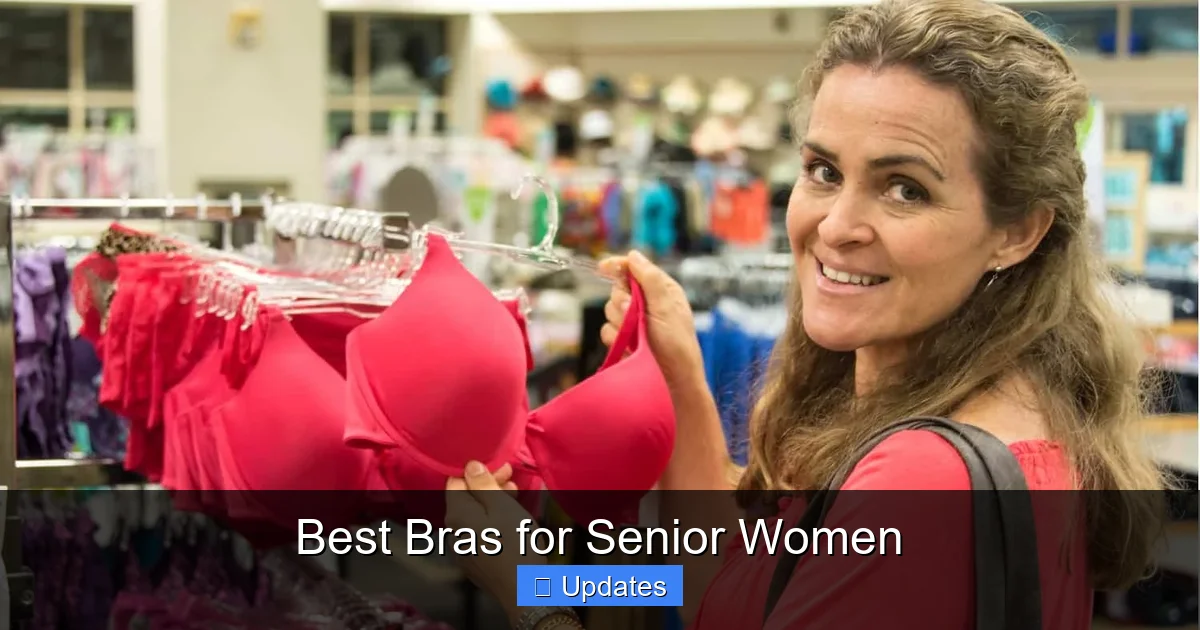
Visual guide about Best Bras for Senior Women
Image source: cdn.sixtyandme.com
1. The Wireless Wonder Bra
Forget the old notion that wireless bras are unsupportive. Modern engineering uses strategic seaming, dense fabrics, and power mesh to create incredible support without a single wire. They are ideal for:
- Anyone with a pacemaker or who has had breast surgery (wires can interfere with healing or devices).
- Those who simply cannot tolerate any poking or prodding.
- Everyday wear where a soft, rounded silhouette is preferred.
- Pro Tip: Look for wireless bras specifically marketed as “supportive” or “full-figure” with a wide band and seamed cups for shape.
2. The Front-Closure Hero
As mentioned, this style is a lifesaver for dexterity. They come in both wireless and underwire versions. The clasp is typically a sturdy plastic or metal hook right at the center front. The band and straps work together to provide support. Many front-closure bras also feature a “racerback” or “T-back” design, which prevents straps from slipping off the shoulders—another common frustration.
3. The Soft Cup & Minimizer
These are classic, full-coverage bras with no padding or push-up. The cups are cut to fully encase and support the breast tissue, minimizing bounce and providing a smooth, natural shape under clothing. They are often made with the softest fabrics and are a fantastic choice for larger busts or for those who want maximum coverage and comfort without enhancement.
4. The Post-Surgery & Recovery Specialist
If you’ve had a mastectomy, lumpectomy, or are recovering from any chest/breast surgery, you need a very specific bra. These feature:
- Ultra-soft, seamless construction with no seams over the incision site.
- Often include a pocket on the inside of the cup to hold a prosthetic or breast form.
- Front closures for easy on/off without raising arms overhead.
- Very gentle, wide bands and straps.
- These are sometimes covered by insurance with a doctor’s prescription, so it’s worth asking.
5. The Sleep & Lounge Bra
Don’t underestimate the need for support while resting! A soft, stretchy sleep bra provides gentle support to prevent discomfort from movement during sleep. They are typically wire-free, seamless, and made from ultra-soft cotton or modal. Wearing one can improve sleep quality and prevent morning stiffness.
Sizing and Fit: The Golden Rules
You could have the most feature-rich bra in the world, but if it doesn’t fit, it’s useless. Sizing is the most important step.

Visual guide about Best Bras for Senior Women
Image source: liberare.co
Get Professionally Fitted (Seriously!)
This is the single best piece of advice. Go to a reputable lingerie store (not just a large department store) and ask for a fitting. A good fitter will measure you and bring in a variety of brands and styles. They understand that sizing is not universal. Tell them you’re looking for comfort and support for a mature figure. This service is almost always free. Do this every 1-2 years, as your size can change.
How to Self-Measure at Home (A Good Starting Point)
If getting to a store is difficult, here’s a basic method:
- Band Size: Measure snugly around your torso, directly under your bust, keeping the tape measure level and parallel to the floor. The measurement in inches is your band size. If it’s an odd number, round up to the next even number (e.g., 33” becomes a 34).
- Bust Size: Measure around the fullest part of your bust, again keeping the tape level but not tight.
- Cup Size: Subtract your band measurement from your bust measurement. Each inch of difference equals one cup size (1” = A, 2” = B, 3” = C, etc.). So, if your band is 38 and your bust is 42, the difference is 4, making you a 38D.
Remember: This is a starting point. Sizing varies wildly between brands.
The Fit Test: What to Look For
When you put on a bra, check these points:
- The Band: Should be snug but not tight on the loosest hook. You should be able to slide two fingers under it comfortably. It should stay parallel to the floor when you raise your arms.
- The Cups: Your breasts should fill the cups without spilling over the top, bottom, or sides. The center gore (the part between the cups) should lie flat against your sternum.
- The Straps: Adjust them so they are supportive but not cutting into your shoulders. You should be able to lift a strapped item (like a shirt) slightly off your shoulder without the bra band moving up.
- Movement: Jump up and down gently. The bra should stay in place and provide support without excessive bounce or the band riding up.
Top Brands and Where to Shop: Navigating Your Options
Some brands have built a reputation for catering to mature women or for exceptional comfort and quality. Here are a few to explore:
- Playtex: A classic for a reason. Their “18 Hour” and “Full Support” lines are famous for their all-day comfort, wide bands, and easy-to-use closures. A very accessible and reliable drugstore brand.
- Bali: Another trusted name. They offer a huge range of sizes and styles, including excellent wireless, front-closure, and minimizer options. Their “One Smoothing” line is particularly popular for a seamless look.
- Vanity Fair: Known for pretty, feminine designs that still prioritize comfort. Their “Ravishing” and “Full-Figure” collections often have lace details but with soft, supportive construction.
- Wacoal: A higher-end brand with exceptional engineering. Their bras are known for precise fit, durability, and sophisticated styles. Look for their “Body by Wacoal” or “Full-Figure” lines.
- ThirdLove: A direct-to-consumer brand famous for its half-cup sizing and focus on fit. Their “24/7” wireless bra is a cult favorite for its incredible comfort and support. They have a great online fitting quiz and a generous return policy.
- Enell: The gold standard for high-impact support for full-figured women. While often used for sports, their unique encapsulation design is incredibly supportive and comfortable for daily wear. It’s a specialty item, but worth it for many.
Where to Shop: Department stores like Nordstrom, Macy’s, and Dillard’s have extensive lingerie departments with fitting services. Specialty lingerie stores (local or national chains like Intimacy) offer the best expertise. For convenience, many of the brands above have excellent websites with detailed size guides and easy returns. Don’t forget to check out brands specifically for post-surgery needs, likeAmoena or Jodee, which can be found online or through medical supply stores.
Care and Maintenance: Making Your Investment Last
Quality bras are an investment. Proper care ensures they last longer and retain their support.
Washing: Hand Wash is Best, But…
The absolute best way to preserve elastic and shape is to hand wash in cool water with a gentle detergent. However, we know that’s not always practical. If you use the machine:
- Use a Mesh Lingerie Bag: This is non-negotiable. It protects the bra from snagging and deformation.
- Cold Water: Always use a cold, gentle cycle.
- Mild Detergent: Use a detergent designed for delicates or activewear. Avoid bleach and fabric softener, which breaks down elastic.
- No Dryer: Never, ever put bras in the dryer. The heat destroys elastic in seconds. Reshape the cups and lay flat to dry on a towel or drying rack.
Rotation and Storage
Elastic needs time to recover. Don’t wear the same bra two days in a row. Have at least 3-4 bras in rotation. Store them flat in a drawer, not crumpled. You can lay them flat or “nest” them with the cups inside one another to help them keep their shape.
Conclusion: Comfort is Your Right
The journey to finding the best bras for senior women is a journey toward self-care and comfort. It’s about listening to your body and honoring its changes with smart, supportive choices. Don’t settle for discomfort. A well-fitting, soft, and supportive bra is a foundational piece of clothing that can positively impact your entire day—your posture, your mood, and your ability to move with confidence. Use this guide as your roadmap. Get professionally fitted, prioritize the key features we discussed, and don’t be afraid to try different brands and styles. Your comfort is not a luxury; it’s a necessity. Invest in yourself, and feel the difference a great bra makes.
Frequently Asked Questions
How often should senior women get fitted for a bra?
It’s recommended to get a professional fitting every 1-2 years, or anytime you experience a significant weight change (as little as 5-10 pounds can affect fit). Your body shape continues to evolve, so regular check-ups ensure your size stays accurate.
Are wireless bras supportive enough for larger busts?
Absolutely. Modern wireless bras use advanced engineering like strategic seaming, power mesh panels, and wide, firm bands to provide excellent support. Look specifically for “full-figure” or “plus-size” wireless designs from reputable brands like Playtex, Bali, or ThirdLove, as they are built with larger busts in mind.
What is the best fabric for sensitive skin?
Soft, natural, and breathable fabrics are best. Look for 100% cotton, cotton-modal blends, bamboo, or high-quality microfiber. Always choose “tag-free” and “seamless” styles to eliminate common sources of irritation. Avoid rough lace trims that sit directly against the skin.
Where is the best place to buy bras for senior women?
For the best fit, start with a specialty lingerie store or the lingerie department of a high-end department store (like Nordstrom) that offers free professional fittings. For convenience and often better prices, reputable online brands like ThirdLove, Bali, and Playtex have excellent return policies and detailed size guides.
Can I wear a sports bra as an everyday bra?
Yes, many high-impact sports bras are designed for maximum support and comfort and can be perfect for daily wear, especially if you are very active or have a larger bust. Look for “everyday” or “relaxed fit” sports bras that are less compressive and have a softer feel, like those from Enell or Panache.
What should I do if my bra band rides up in the back?
A riding-up band is a classic sign that the band is too big. Try going down one band size (e.g., from a 38 to a 36) and potentially up one cup size to maintain the same cup volume (e.g., from a 38C to a 36D). The band should sit firmly and horizontally around your torso, parallel to the floor.