
Best Bicycle for Senior Woman


LED Magnifying Glass

Orthopedic Sandals

Smart Health Watch for Seniors
Finding the best bicycle for a senior woman means prioritizing comfort, safety, and effortless riding over speed or sport. Look for a step-through frame for easy mounting, an upright posture to reduce strain, and features like wide tires, multiple gears, and reliable brakes. An electric assist can be a game-changer for conquering hills and extending rides. The right bike renews independence and joy, making it a perfect tool for staying active and connected in your community.
Key Takeaways
- Step-Through Frame is Essential: This design allows for easy, safe mounting and dismounting without needing to lift your leg high, crucial for those with limited flexibility or hip/knee concerns.
- Comfort is King: Prioritize an upright riding position, a wide and cushioned saddle, and front suspension or wider tires to absorb bumps and protect joints from road vibration.
- Gearing Matters More Than Speed: A bike with a wide range of easy-to-shift gears (especially low gears) makes starting, stopping, and climbing hills manageable and strain-free.
- Brakes Must Be Reliable & Easy to Use: Hydraulic disc brakes offer strong, consistent stopping power in all weather, while simple, intuitive brake levers are a must for safety and confidence.
- Consider Electric Assist (E-Bike): For many, a pedal-assist e-bike removes the fear of hills, reduces joint impact, and makes longer rides enjoyable, dramatically increasing riding frequency and distance.
- Test Ride is Non-Negotiable: Every body is different. Visit a local bike shop, test several models, and ensure the bike fits YOU properly before purchasing.
- Safety Gear is Part of the Bike: A properly fitted helmet, bright clothing, and good lights are essential investments for peace of mind and visibility on any road or path.
📑 Table of Contents
Why Cycling is a Perfect Activity for Senior Women
Let’s be honest: the idea of hopping on a bike might bring back memories of childhood freedom, but as we age, questions about balance, strength, and safety naturally come up. What if I told you that cycling is one of the most joint-friendly, empowering, and socially rewarding activities you can embrace in your later years? For senior women, a bicycle isn’t just a toy; it’s a key to sustained health, independence, and pure joy.
Riding a bike is what we call “low-impact cardiovascular exercise.” That’s a fancy way of saying it gets your heart pumping and blood flowing without pounding your knees, hips, or ankles like running or even brisk walking can. The seated position supports your body weight, while the circular pedaling motion builds muscular endurance in your legs and core without the jarring impact. This makes it ideal for managing arthritis, maintaining bone density, and improving overall mobility. Beyond the physical, the mental benefits are huge. The rhythmic motion of pedaling is meditative, reducing stress and anxiety. Then there’s the sheer exhilaration of moving under your own power, feeling the wind on your face, and exploring your neighborhood or local trails. It’s a tangible way to maintain a sense of adventure and capability.
Furthermore, cycling fosters social connection. Joining a local senior cycling group, riding with a friend, or even just waving to fellow riders on the path combats isolation. It’s a shared hobby that builds community. Before we even talk about specific bikes, it’s this “why” that matters most. The right bicycle becomes a trusted companion on a journey toward stronger health, greater freedom, and a more engaged life. It’s about reclaiming the simple pleasure of movement and saying, “I can still do this.”
Understanding the Different Types of Bikes for Senior Women
Walking into a bike shop can feel overwhelming with all the jargon and styles. But for a senior woman, the choices really narrow down to a few specific categories designed with comfort and accessibility in mind. Forget about lean, mean racing machines. We’re looking for stable, comfortable, and easy-to-ride platforms. The main contenders are step-through comfort bikes, hybrid bikes, and electric assist bikes. Each has its strengths, and your choice depends on your primary riding goals, physical capabilities, and terrain.

Visual guide about Best Bicycle for Senior Woman
Image source: thumbs.dreamstime.com
The Step-Through (or “Easy-Entry”) Frame: A Non-Negotiable Feature
Before we dive into types, let’s spotlight the single most important design feature: the step-through frame. Traditionally called a “women’s frame” (though many men prefer it too!), this style lacks the top tube that connects the seat tube to the head tube. Instead, you can simply step over the frame to mount the bike. This eliminates the need to swing a leg high over the saddle, which can be difficult, awkward, and even risky for those with limited hip mobility, balance issues, or who are wearing skirts or dresses. It allows for a graceful, stable start and stop, especially at intersections. For any senior woman, a step-through frame should be at the very top of your checklist. Many modern comfort and hybrid bikes offer this option.
1. Comfort Bikes (The “Cruiser” Style)
As the name suggests, these are all about a relaxed, pleasurable ride. Think of the classic beach cruiser, but often with more modern components. They feature:
- Extremely Upright Posture: You sit almost directly over the rear wheel, with your hands resting on handlebars that are high and close. This puts minimal strain on your back, neck, and shoulders.
- Wide, Cushioned Saddles: These seats are designed for comfort over short to moderate distances, distributing weight evenly.
- Wide Tires: Typically 26” or 27.5” with a balloon-like profile. These act as natural suspension, soaking up bumps on pavement and packed gravel paths effortlessly.
- Simple Gearing: Often have a simple internal hub gear system (3-7 speeds) that is sealed and virtually maintenance-free, or a very easy-to-use derailleur system.
Best for: Flat to gently rolling terrain, short to medium recreational rides (2-10 miles), boardwalks, bike paths, and casual neighborhood cruising. They are the simplest, most carefree option.
2. Hybrid Bikes (The Versatile All-Rounder)
Hybrids blend features from road bikes and mountain bikes to create a versatile machine. They are the most popular choice for seniors who want a bit more capability than a pure comfort bike.
- Slightly More Forward-Leaning Posture: Still upright and comfortable, but a bit more efficient for longer rides than a cruiser. The handlebars are often adjustable for fine-tuning your reach.
- Medium-Width Tires: Usually 700c wheels with tires around 32-40mm. These are faster than balloon tires on pavement but still offer cushioning and stability on packed dirt or gravel.
- Better Gearing Range: Typically equipped with a wide-range drivetrain (21-27 speeds) from reputable brands like Shimano, making hills much more manageable.
- mounts: Often have braze-ons for adding a rear rack, fenders, and water bottle cages, making them great for errands or light touring.
Best for: A mix of pavement and smooth trails, longer recreational rides (10-30 miles), and riders who want a single bike that can handle varied surfaces and even a light commute.
3. Electric Assist Bikes (E-Bikes): The Game-Changer
This category has exploded in popularity for a reason, and senior riders are a huge part of that success. An e-bike has a battery-powered motor that provides assistance when you pedal. You still get exercise, but the motor eliminates the brute force needed to accelerate and climb hills.
- Pedal Assist System (PAS): The motor engages as you pedal, with multiple levels of assistance (e.g., 1-5). Level 1 is a gentle boost; level 5 can feel like you have super legs. You control the effort.
- Throttle (on some models): Allows you to move without pedaling, like a scooter, useful for starting from a stop or short bursts.
- Range and Power: Modern batteries offer 20-60+ miles of range on a charge. Motors are typically 250-750 watts. For most senior riders, a 250-500W mid-drive or hub motor is perfect.
Best for: Anyone who wants to ride further, faster, and with less fatigue. It’s perfect for hilly areas, keeping up with a faster spouse or group, extending your riding years, or simply ensuring every ride is fun and effortless. The confidence boost is immense. If you’ve ever thought, “I’d love to bike, but the hills in my neighborhood are brutal,” an e-bike is your answer. For those interested in low-impact alternatives, you might also explore a best stationary bike for seniors guide for year-round indoor options.
Key Features to Look For: Your Comfort & Safety Checklist
Now that you know the general types, let’s get into the nitty-gritty details. When shopping, use this checklist to evaluate any bike. These features directly translate to a safe, comfortable, and enjoyable ride.

Visual guide about Best Bicycle for Senior Woman
Image source: image.freepik.com
Frame & Fit: The Foundation of Comfort
Frame Material: You’ll see steel, aluminum, and sometimes carbon fiber. For seniors, steel (chromoly) is often a fantastic choice. It’s naturally more forgiving and dampens road vibration better than aluminum, leading to a smoother, more comfortable ride. It’s also very durable. Aluminum is lighter and rust-proof but can feel harsher. Don’t get too hung up on weight; comfort is more important.
Size is Everything: A bike that’s too big or too small is unsafe and uncomfortable. A proper bike shop will measure your inseam and torso length to recommend a frame size. When you stand over the bike, there should be 1-2 inches of clearance between you and the top tube (on a step-through, this isn’t an issue). When seated, your feet should flatly touch the ground (or on tiptoes) for confidence at stops. Your arms should have a slight bend at the elbow, not be locked straight.
Saddle (Seat): Don’t Suffer in Silence
The saddle is the #1 complaint we hear. A wide, padded “comfort” saddle that comes on many cruisers is a good start, but you may need to swap it. Look for saddles with a cutaway or relief channel in the center. This reduces pressure on sensitive soft tissue, which is a common issue for many women. Brands like Brooks (leather, molds to you), Selle Royal, and Terry make excellent women’s-specific comfort saddles. Never settle for a saddle that causes pain. A good shop will let you test different ones.
Gearing: Make Hills and Headwinds Disappear
Pay attention to the gear range. The lowest gear (easiest to pedal) is the most important number. A bike with a “granny gear” (a very low gear) will let you climb steep hills with minimal strain on your knees and heart. For hybrids, look for a “triple” chainring in the front or a wide-range cassette (like 11-34T or 11-36T) in the back. For e-bikes, the motor’s assist will make any hill manageable, but a good gear range still gives you more control and efficiency.
Brakes: Stopping Power You Can Trust
Disc Brakes (Hydraulic or Mechanical) are superior to traditional rim brakes. They provide consistent, powerful stopping power in all conditions—wet, dry, dusty—and require less hand strength to operate. Hydraulic disc brakes are the best but require professional maintenance. Mechanical discs are a great, lower-maintenance alternative. Never choose a bike with coaster brakes (pedal backwards to stop) for a primary road bike; they are unsafe for traffic and offer poor control on long descents.
Tires & Wheels: Stability and Smoothness
Wider tires (28c-45c) offer more stability, comfort, and puncture resistance than narrow “road” tires (23c-25c). They also inspire confidence. Look for tires with some tread if you’ll be on gravel or dirt paths. Puncture-resistant layers are a great bonus to avoid flats.
Top Recommendations: Bikes to Consider
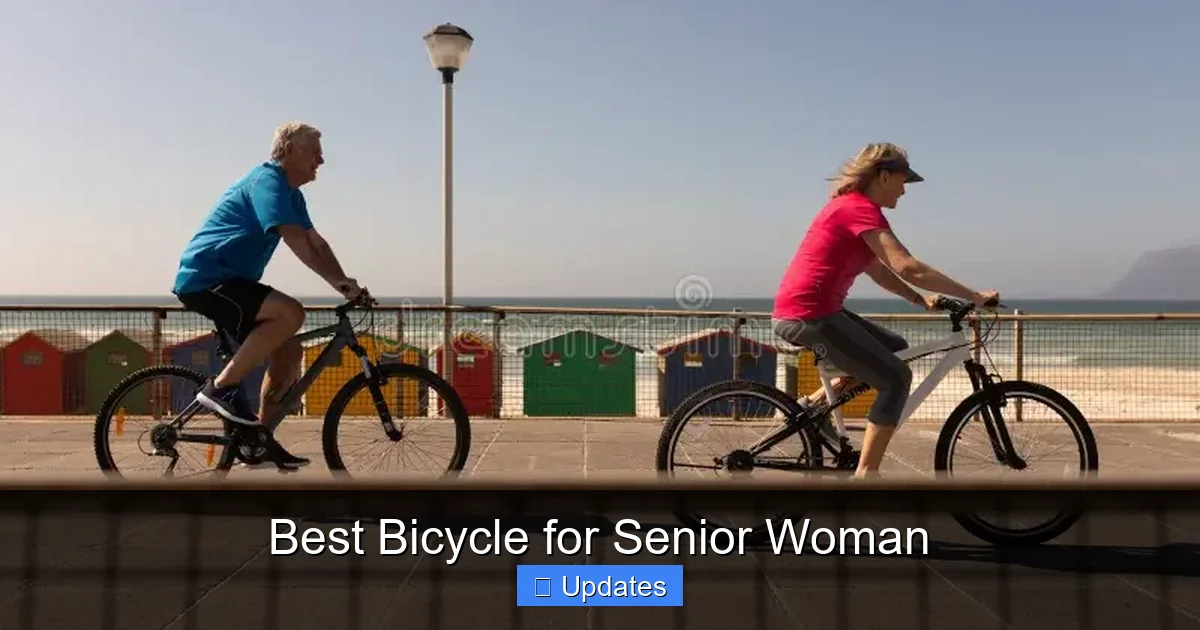
Based on the criteria above, here are some exemplary models and styles to start your search. These are not exhaustive brand endorsements but rather archetypes of what to look for. Always test ride for yourself.
Visual guide about Best Bicycle for Senior Woman
Image source: thumbs.dreamstime.com
Top Pick for Pure, Simple Comfort: Electra Townie系列
Electra’s Townie line is arguably the gold standard in comfort bikes. Their patented “Flat Foot Technology” positions the pedals slightly forward, allowing you to put both feet flat on the ground while seated—a huge confidence booster. The step-through frame options are plentiful, the saddles are excellent, and the riding position is supremely upright. They come in single-speed, 3-speed internal hub, and 7/8-speed models. For a no-fuss, joyful ride on flat paths and streets, it’s hard to beat. Pros: Ultimate ease of use, legendary comfort, low maintenance (hub gears). Cons: Not built for speed or serious hills (unless you get the 8-speed).
Top Versatile Hybrid Pick: Trek Verve系列 or Specialized Sirrus系列
These are from major manufacturers with huge dealer networks. The Trek Verve and Specialized Sirrus (in step-through versions) are the quintessential hybrids. They offer a balanced, efficient riding position that’s still comfortable. You get quality components (Shimano gears, disc brakes), mounts for accessories, and a wide range of sizes. They are built to last and can handle everything from a coffee run to a 30-mile rail-trail excursion. The Specialized Sirrus X takes this a step further with slightly wider tires for more off-pavement capability. Pros: Do-it-all versatility, quality construction, great for longer rides. Cons: Slightly more “sporty” posture than a pure cruiser; may require a saddle upgrade for some.
Top E-Bike Pick for Empowerment: Rad Power Bikes RadCity或Lectric XP系列
For the ultimate in freedom and range, a Class 2 or 3 e-bike is transformative. Rad Power Bikes and Lectric are direct-to-consumer leaders known for value, features, and senior-friendly designs. The RadCity is a step-through e-bike with a comfortable geometry, integrated lights, fenders, and a rear rack—it’s ready to go. The Lectric XP 3.0 is a foldable, highly portable option with a throttle and excellent range. Both offer multiple assist levels, making hills and headwinds trivial. The feeling of arriving at your destination fresh, not sweaty, is a revelation. Always check local e-bike regulations regarding speed, helmet laws, and where they are allowed to ride. Pros: Conquers any terrain, extends riding distance dramatically, pure fun. Cons: Higher cost, heavier to lift (though many have walk-assist modes), battery charging required. Remember, staying active also involves good nutrition; for convenient healthy options, check out best meal delivery for seniors services.
Essential Safety Gear & Accessories
Buying the bike is just step one. Equipping yourself properly is step two, and it’s just as important for a safe, confident experience.
The Non-Negotiable: A Proper Helmet
This is not a fashion debate; it’s a health necessity. Look for helmets certified by CPSC (US) or CE (EU). A proper fit is critical: it should sit level on your head (not tilted back), the straps should form a “V” under your ears, and the chin strap should be snug. Modern helmets are lightweight, well-ventilated, and come in many styles. Some even have MIPS technology for added rotational impact protection. Wear it every single ride, no exceptions.
See and Be Seen: Lights & Reflective Gear
If you ride at dawn, dusk, or in cloudy weather, lights are mandatory in many places and a smart idea always. A bright white front light (at least 200 lumens for unlit roads) and a red rear light are the minimum. Consider adding reflective tape to your pedals, wheels, and frame. A bright-colored or reflective vest or jacket makes you incredibly visible to drivers.
Practical Add-ons That Make a Difference
- Rear Rack & Panniers: A sturdy rear rack with waterproof panniers (saddlebags) turns your bike into a practical hauler for groceries, library books, or a picnic. It keeps weight off your back and lowers the bike’s center of gravity for better stability.
- Fenders: Full-coverage fenders (mudguards) are a godsend in wet weather, keeping spray from your tires off your back and clothes. They are cheap and easy to install.
- Kickstand: A sturdy center or double kickstand allows for easy, stable parking without leaning your bike against something.
- Bell or Horn: A polite way to alert pedestrians or other riders on shared paths.
- Lock: A good U-lock or folding lock is essential for securing your investment when you stop.
Getting Started: Your First Steps to Riding
You’ve chosen your bike and gear. Now, how to begin? Confidence comes from preparation.
Visit a Local Bike Shop (LBS)
This is the single best piece of advice. While online deals are tempting, a reputable local bike shop is worth its weight in gold. They will:
- Help you find the correct frame size.
- Allow you to test ride multiple models.
- Properly assemble and tune the bike.
- Offer a professional fitting adjustment (saddle height/angle, handlebar height).
- Provide ongoing maintenance and advice. Build a relationship with them.
Tell them you’re a senior rider focused on comfort and safety. Good shops love to help.
Practice in a Safe, Car-Free Area
Before hitting the road, find an empty parking lot, a quiet park path, or a cul-de-sac. Practice:
- Starting and stopping smoothly: Use your brakes before you stop. Start pedaling in a low gear.
- Mounting and dismounting: Get on and off smoothly, using your brakes to hold the bike steady.
- Shifting gears: Practice shifting while stopped, then while moving slowly. Shift to an easier gear before a hill, not while you’re already straining.
- Looking over your shoulder: Critical for checking traffic before turning or moving over.
- Signaling turns: Learn the standard hand signals.
Start Slow and Build Gradually
Your first few rides should be short (15-20 minutes) on familiar, low-traffic routes. Ride with a friend. Focus on enjoying the experience, not distance or speed. Gradually increase your riding time and distance as your confidence and fitness improve. Listen to your body. It’s perfectly fine to walk the bike up a steep hill if that feels better. The goal is sustainable, enjoyable activity, not a race.
Finally, consider your overall wellness. Great nutrition supports great riding. If you’re looking for convenient, healthy meal options to fuel your new active lifestyle, exploring a best meal delivery for seniors service could be a smart complement to your cycling routine.
Frequently Asked Questions
What if I have balance issues or haven’t ridden in decades?
This is very common and understandable. Start with a step-through comfort bike or an e-bike. The low, stable riding position and easy mounting build confidence. Practice in a large, empty parking lot. Consider a three-wheeled adult tricycle if balance is a significant concern—they offer ultimate stability. The key is to go at your own pace in a safe environment. Many community centers also offer senior-specific “learn to ride” clinics.
Is an e-bike “cheating” or not real exercise?
Absolutely not. Studies show e-bike riders get significant cardiovascular exercise, often more than people think because they ride farther, more often, and for longer durations. You still pedal and engage your muscles; the motor simply reduces the required effort, especially on inclines and when starting. It’s the difference between walking up a hill and walking on flat ground—both are excellent exercise, one is just more accessible and sustainable for longer periods. It removes barriers, not effort.
How much should I expect to spend on a good, safe bike?
For a reliable, comfortable, and safe new bike from a reputable brand (purchased at a local bike shop), budget $500 – $1,200. This gets you a quality frame, components, and professional assembly. Used bikes can be found for less, but unless you’re mechanically savvy, you risk buying a poorly maintained or ill-fitting bike. For a good e-bike, the entry point is typically $1,200 – $2,500+. Think of it as an investment in your long-term health and mobility. Financing is often available through shops.
What about a tricycle? Should I consider a three-wheeled bike?
Adult tricycles are an excellent option for riders with serious balance concerns, severe vertigo, or those who simply cannot feel secure on two wheels. They are incredibly stable at stops and slow speeds. However, they have drawbacks: they are wider (harder to navigate tight spaces), can be heavier, and require different handling when turning (you must lean less, if at all). Test ride one before deciding. They are perfect for flat, smooth paths and leisurely cruises.
How do I ensure my bike fits me perfectly?
A professional bike fit from a shop is worth every penny. At minimum, ensure: 1) When seated, your leg is almost fully extended at the bottom of the pedal stroke (a slight bend is correct). 2) You can easily reach the handlebars with a slight bend in your elbows; you shouldn’t feel stretched out or cramped. 3) You can comfortably put both feet on the ground when stopped. A good shop will adjust saddle height, fore/aft position, and handlebar height with spacers to achieve this. Don’t buy a bike that doesn’t fit and plan to “get used to it”—it will cause pain and injury.
What maintenance is required, and can I do it myself?
Basic maintenance is simple and keeps your bike safe and fun. You should: 1) Keep tires inflated to the pressure on the sidewall (use a floor pump with gauge). 2) Lubricate the chain every 1-2 months with a dry-chain lube (wipe off excess). 3) Check brakes and gears before each ride—squeeze levers to ensure they feel firm and stop the wheel. 4) Give it a regular wash with soapy water. For complex tasks (hub gear service, brake bleeding on hydraulics), take it to your local shop. A yearly tune-up ($50-$100) is a smart investment for safety and longevity.