
10 Best Bed Rails for Disabled Adults: Top-Rated, Safe, and Easy-to-Use Options


Fall Detection Smart Watch

Sudoku Puzzle Book

Indoor Security Camera
Bed rails help adults with limited mobility get in and out of bed, change position, and prevent falls. They come in several styles—full-length rails that run along the side of the mattress, half rails that offer a grab bar and support strap, and adjustable rails that fit different bed types. Many also double as a storage or assist handle, giving users and caregivers extra stability and independence.
When choosing bed rails, think about strength, ease of installation, and how they attach to the bed frame or mattress. Measure the bed and consider the user’s weight, transfer needs, and whether caregivers need quick access. Our testing focused on stability, ease of use, and safety features so you can find rails that reduce fall risk and suit daily routines. We tested several models to find reliable options and highlight what matters most in each category.
Best Bed Rails for Disabled Adults
Below is our full list of the best bed rails for disabled adults. We chose options that focus on safety, ease of use, and durability to help caregivers and users feel more secure. Use our list to compare features like weight capacity, installation type, and adjustability.
KingPavonini Bed Rail (Large)
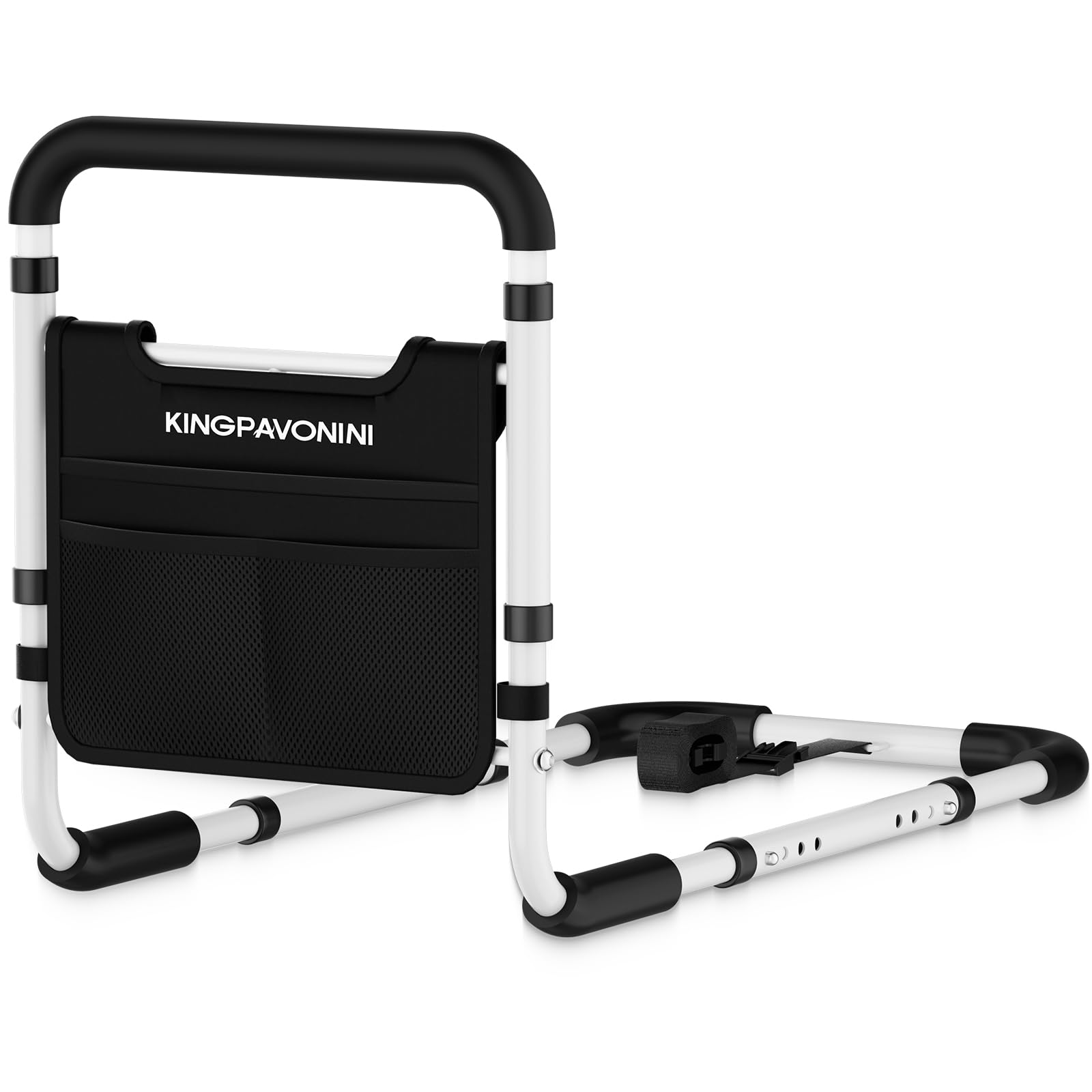
We recommend this rail when you need a sturdy, easy-to-install grab bar that helps adults get in and out of bed safely.
Pros
- Very solid support — feels stable under real use.
- Tool-free setup and portable for travel or moving between rooms.
- Padded, non-slip handle is comfortable for repeated grips.
Cons
- Not compatible with adjustable beds.
- Lower plate may shift on very thin mattresses without extra anchoring.
- Large size can feel bulky on smaller bed frames.
We put this rail on a queen bed after a family member’s surgery and used it daily for two weeks. Getting in and out felt safer right away. The handle gives a confident grip and the rail stayed steady when they pulled themselves up.
Assembly took less than ten minutes with no tools. Sliding the base under the mattress was simple, and the storage pouch came in handy for small items. Moving the rail from room to room felt practical because it’s lightweight but still solid.
We noticed limits while testing an adjustable head position — the rail didn’t work well when the bed head was raised. Also, on a very thin mattress the base can shift, so we added a strap for peace of mind. Overall, it’s a dependable option if you need a rigid, padded assist rail for standard beds.
BigDolphin Bed Rail (GS07)
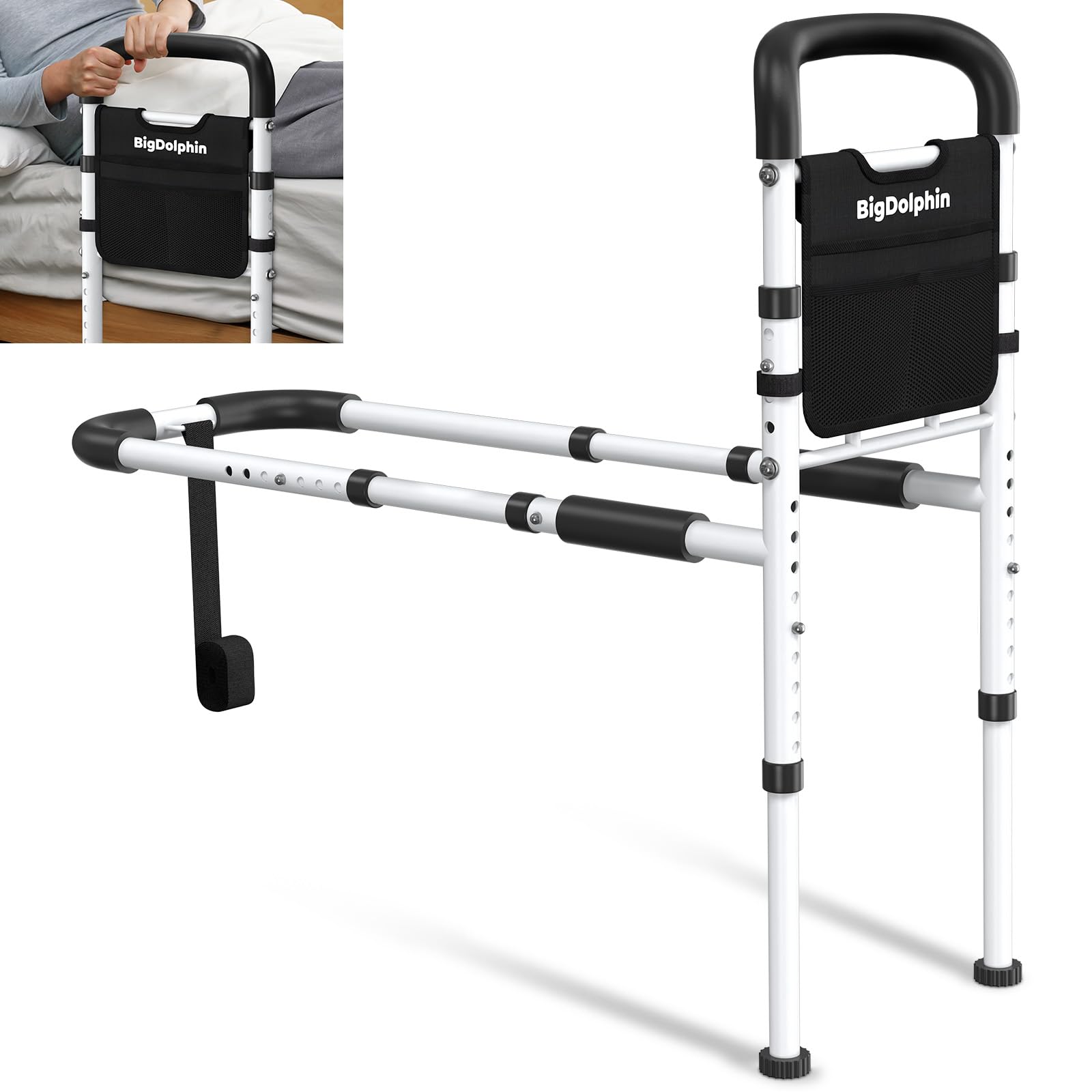
We recommend this rail when you need a sturdy, easy-to-use aid to help a disabled adult get in and out of bed safely.
Pros
- Very stable and feels solid under weight.
- Comfortable 30° foam grip that reduces wrist strain.
- Tool-free setup and light enough to move between beds.
Cons
- Takes two people or some mattress shifting to install on deeper beds.
- Not compatible with adjustable beds.
- Storage strap can be fiddly to fasten tightly.
We used this rail for a few weeks while helping a family member recover from surgery. The frame felt heavy-duty and didn’t wobble when leaned on. Gripping the padded handle felt natural and cut down on wrist pain during sit-ups.
Adjusting the height and length was quick and tools weren’t needed. On a queen mattress we had to shift the mattress a bit to slide the base under it; two people made that step much easier. The spinnable feet smoothed out a small uneven spot on the floor and removed the slight shake we first noticed.
The rail’s pouch held a phone and small items within reach, which helped during night checks. We avoided using it on an adjustable bed and made sure to test stability before full use. If you want a solid, no-frills rail that makes transfers safer, this one worked well for us.
Stander EZ Adjust Bed Rail
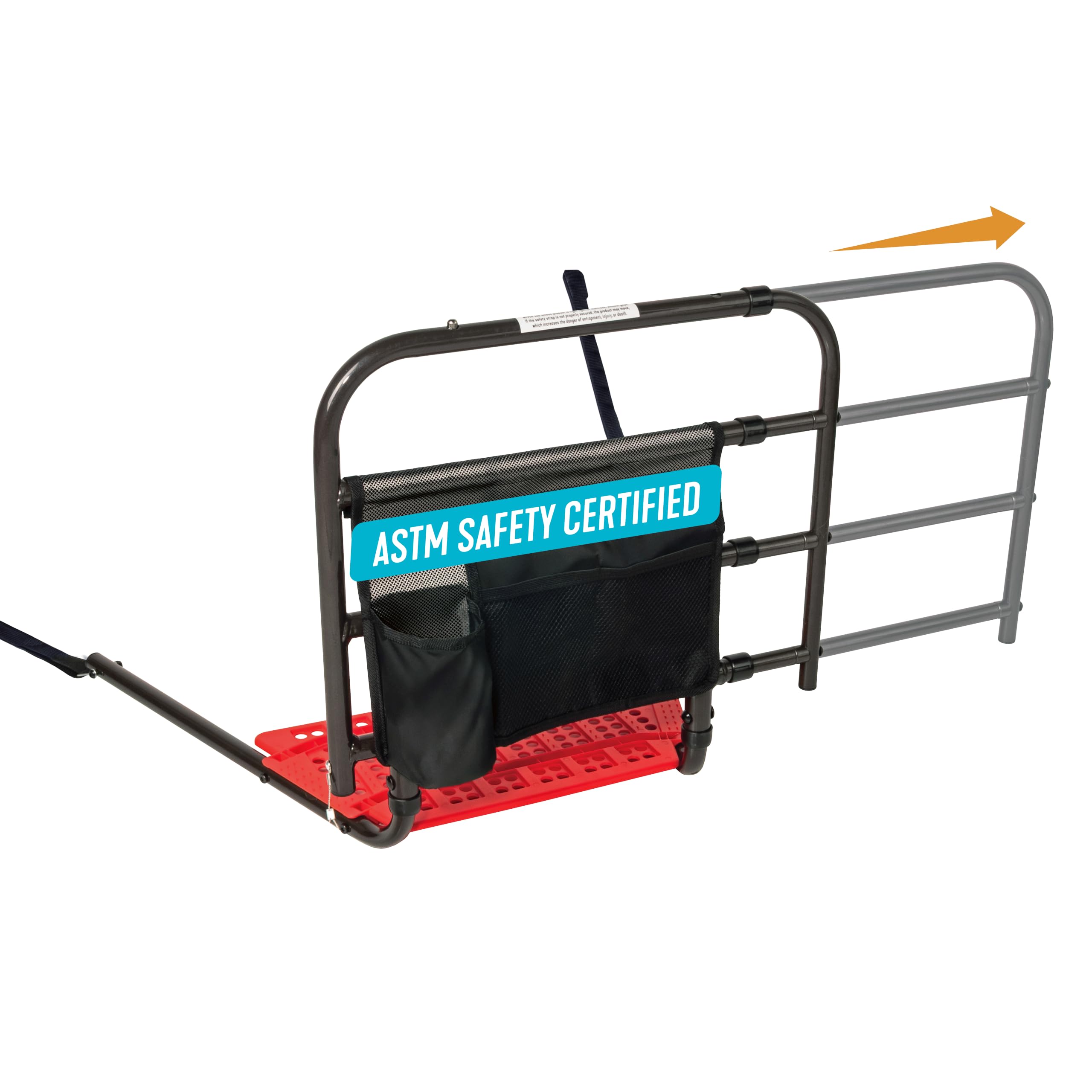
We recommend this bed rail when you need a sturdy, safety-tested rail that helps with getting in and out of bed and reduces fall risk.
Pros
- Certified to an adult safety standard and feels solid when you grab it.
- Adjustable height works with thicker mattresses and includes a handy organizer pouch.
- Simple to assemble and stays put on most traditional beds when tightened.
Cons
- Can shift a bit under a very light or thin mattress unless strapped tightly.
- Heavy metal frame may be hard for a frail person to lift into place alone.
- Not made for adjustable or hospital-style beds.
We used this rail for several weeks with a 14-inch mattress. The metal frame gave clear support when helping someone sit up or stand. The organizer pouch kept small items within reach, which cut down on nightly trips for glasses or meds.
Installation took under 20 minutes and the strap system felt secure on a platform bed. Moving the mattress slightly during setup annoyed us once or twice, but tightening the strap fixed most movement. Lifting the rail from a lying position was harder for someone with weak upper body strength.
After daily use the rail showed no wobble and handled steady weight when used to stand up. One user did report a support bar breaking after two years, so expect wear if the rail takes heavy repeated strain. Overall, this felt like a reliable, safety-first option for adults who need a steady bedside aid.
BigDolphin Bed Rail (BS06)
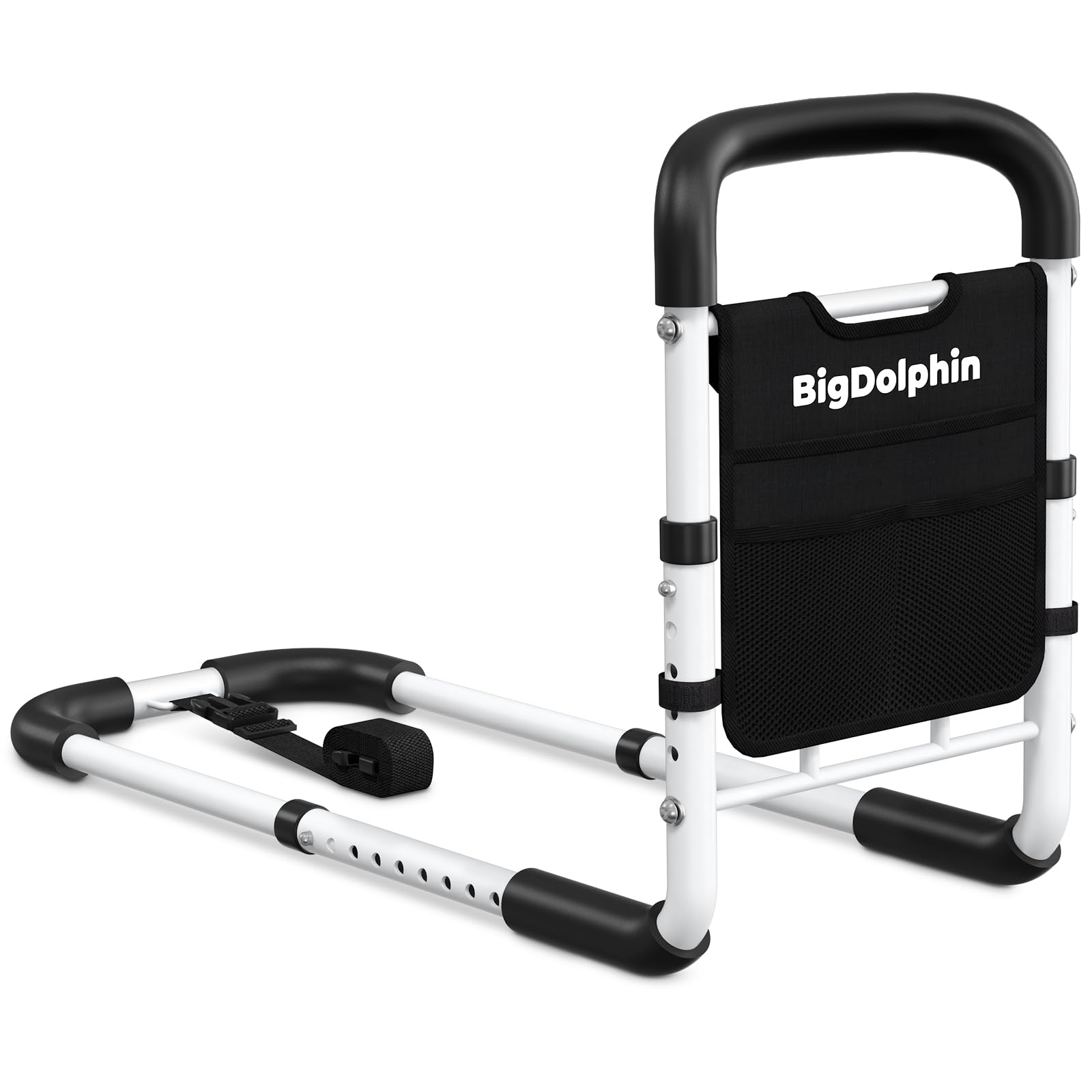
We recommend this rail for steady, ergonomic support when getting in and out of bed because it feels solid, grips well, and reduced wrist strain for us.
Pros
- Sturdy frame that made us feel secure when pulling up.
- Foam handle felt comfortable and non-slip even with damp hands.
- Easy, tool-free setup and an included strap to stop shifting.
Cons
- Not for adjustable beds, which limits use with some mattress bases.
- Bulky when storing; takes up closet space.
- Fits a range of mattress heights but needed fine tuning to sit just right.
We used this rail for a few weeks after a family member’s surgery. The 30° handle angle lined up with our grip, and the padded bar did reduce wrist ache when helping sit up. It stayed tight most nights and the strap gave extra peace of mind.
Assembly took only a few minutes and no tools. Sliding it under the mattress felt simple, and the non-slip foam stopped the frame from shifting when weight was applied. We did need to adjust height a couple times to get the best fit for a higher mattress.
One drawback: it will not work with adjustable beds, so check your frame before buying. Storing the rail between uses felt awkward because of its L-shape. Overall, it gave reliable help and made transfers easier for our loved one.
Barleyear Foldable Bed Rail
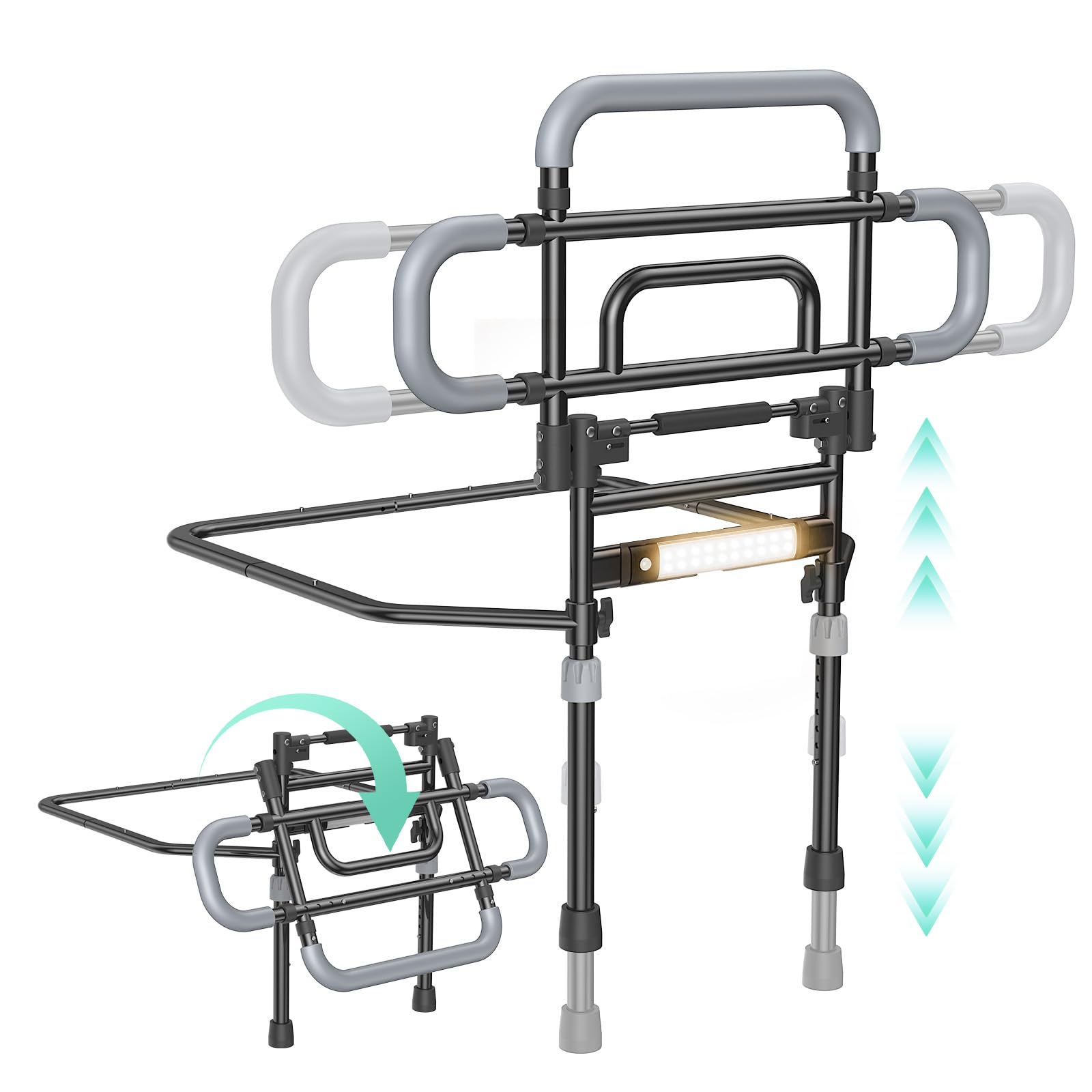
We recommend this rail if you want a sturdy, high rail with LED light and easy one-hand folding for everyday use.
Pros
- Feels solid and stable when we sit up or turn.
- One-hand 180° fold makes getting in and out easier.
- Handy LED light and mesh pouch keep things within reach.
Cons
- Hard to keep perfectly flush to some mattresses or short beds.
- Not compatible with adjustable beds despite one review claiming it is.
- Slightly heavy and takes two people to move comfortably.
We used this rail for a few weeks and liked how secure it felt. The foam grip is warm and non-slip, which helped during transfers. Installing it took about 15 minutes and the tool-free parts clicked together logically.
The folding latch works well for caregivers with limited grip. We lowered the rail with one hand at night to help transfer a person to a wheelchair. The LED night light made trips to the bathroom safer and the pouch held phone and glasses within reach.
We noticed the wide base and long straps kept the frame steady, but the rail didn’t sit perfectly flush on a shorter bed. That made some transfers awkward until we adjusted the mattress position. Overall, it’s a dependable choice if you need a high, robust rail with smart extras.
Srotime Bed Rail (Side Assist Handle)
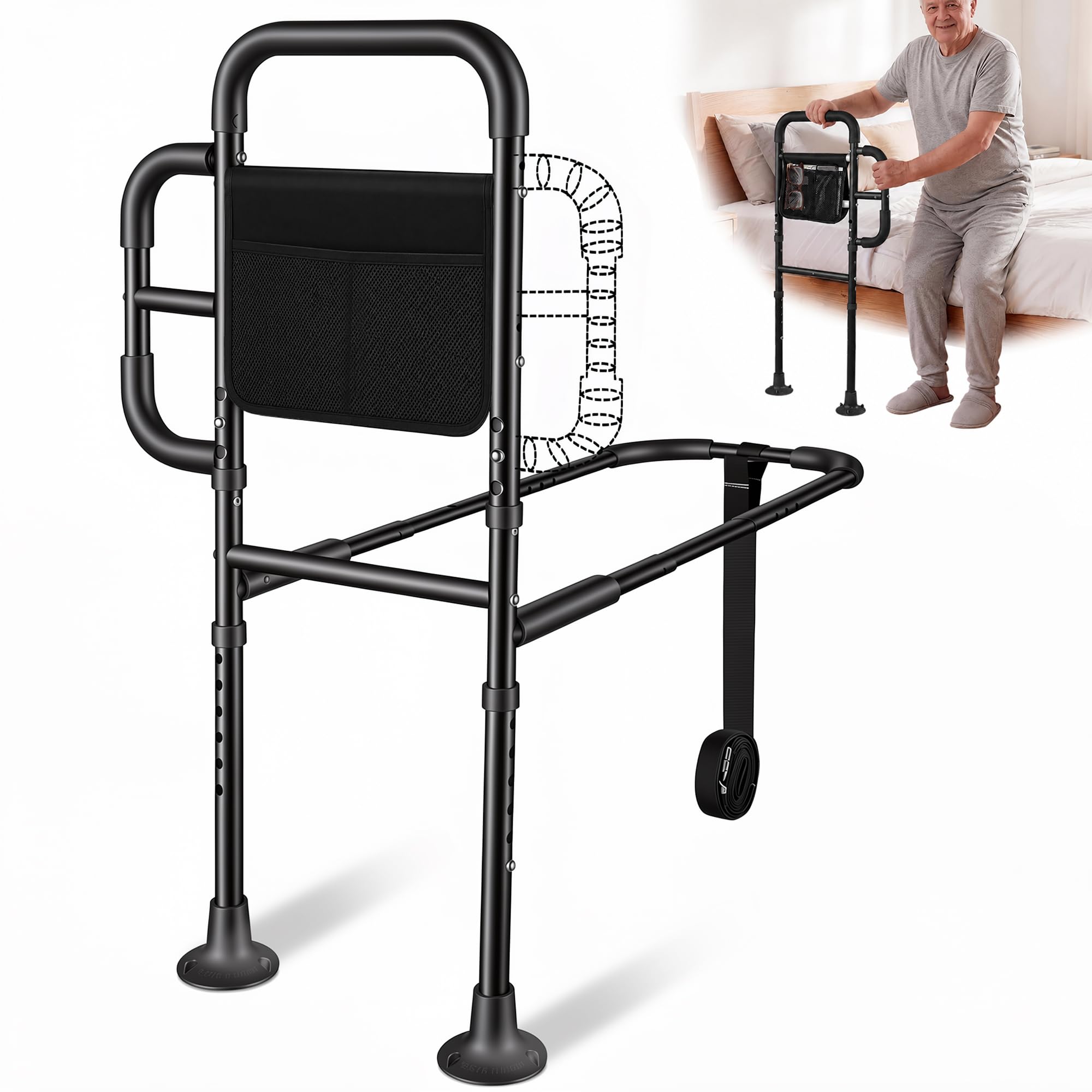
We recommend this rail if you want a sturdy, ASTM-tested aid that makes getting in and out of bed easier for many adults.
Pros
- Solid, heavy-feel build that stayed put during use.
- Comfortable foam handle that helped with leverage and turning.
- Mesh pocket kept phone and glasses within reach.
Cons
- Not compatible with recessed or adjustable beds.
- A bit bulky when storing or moving between rooms.
- Installation needed a firm mattress and took a few extra minutes.
We installed the rail on a guest room bed and used it daily for a week. The frame felt solid and the wide feet gave confidence when we pushed on the handle. Getting up from a low mattress was noticeably easier.
Adjusting the width and height worked smoothly and the foam grip stayed dry and comfortable. The strap under the mattress held tight and the mesh pocket proved handy for small items we reach for in the night.
It did not fit our thin, recessed platform bed, so check your mattress setup first. Moving the rail from room to room took effort because it’s sturdy and not weightless, but once set up it stayed steady and reliable.
BigDolphin Bed Rail (Model BS05)
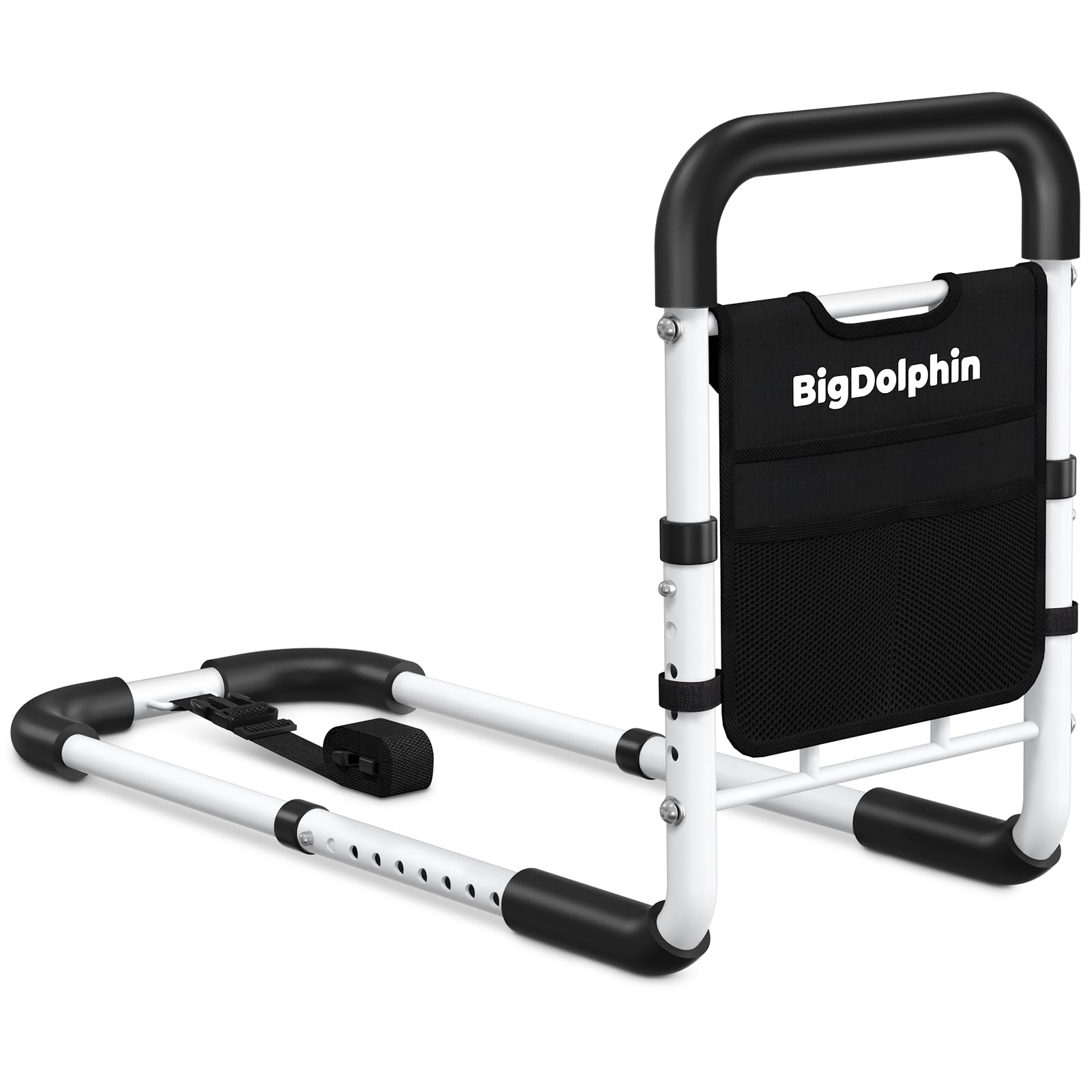
We recommend this rail when you want a sturdy, easy-to-use aid that helps seniors get in and out of bed with more confidence.
Pros
- Very solid feel and supports heavy users up to 350 lbs.
- Tool-free setup and easy to move or store.
- Comfortable non-slip handle and handy storage pouch.
Cons
- Not compatible with adjustable beds.
- Strap could use finer adjustment options.
- Best for thin-to-medium mattresses (2–10″ range).
We installed this rail in a guest room and used it daily for a week. The frame felt heavy and locked in place without wobbling. Getting a seated hold and pushing up was noticeably steadier than with smaller rails we tried.
Assembly took minutes and required no tools. We liked the foam grip — it stayed firm in our hands even when tired. The storage pouch held a phone and glasses, which kept bedside clutter down.
We tested it on a queen mattress and a thinner guest mattress. It worked well on both, but the strap needed tightening more than once on the thicker mattress. If you plan to use an adjustable base, pick a different rail; this one is not made for moving mattress frames.
GYYVGHA Bed Rail
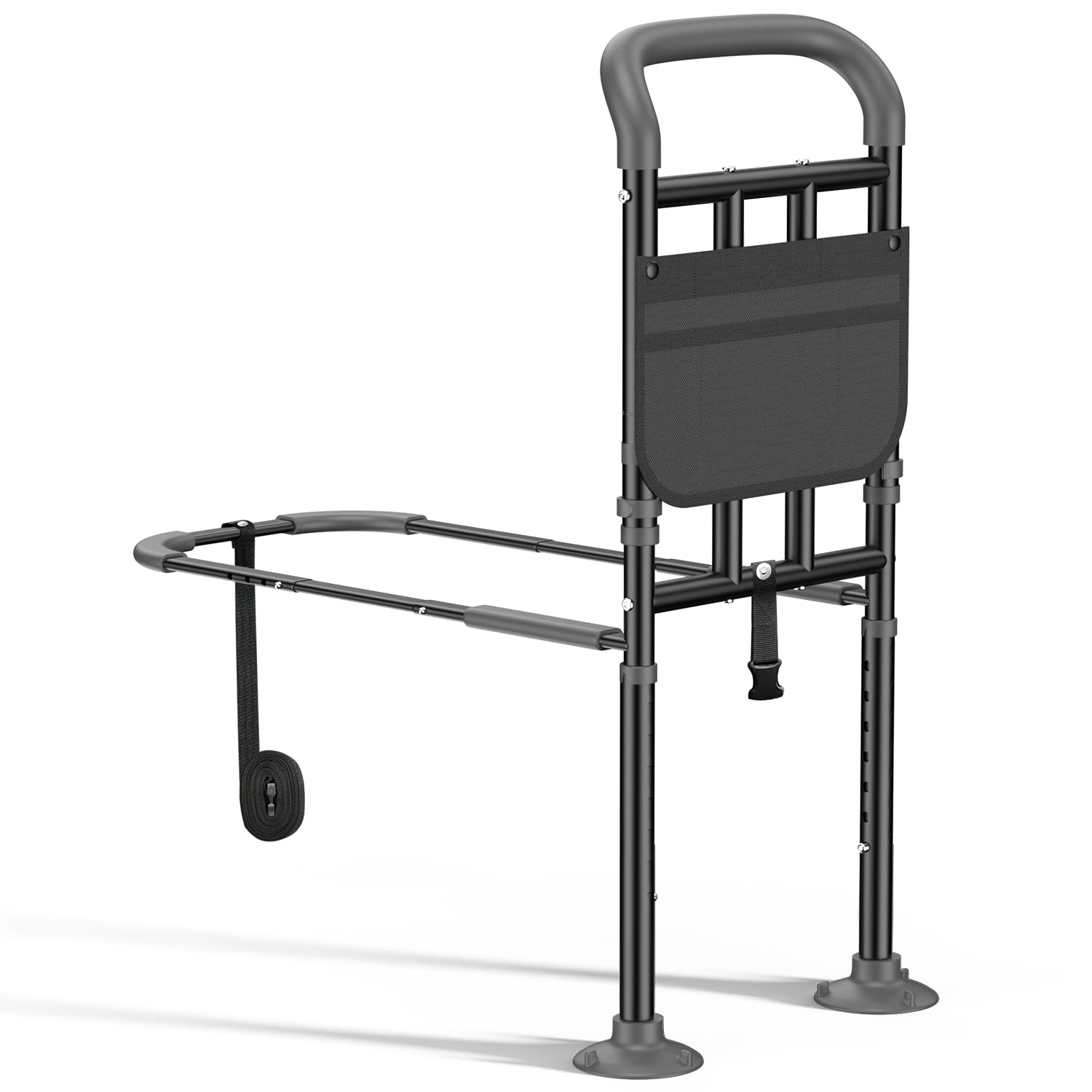
We recommend this rail when you need a sturdy, adjustable grab bar to help a disabled adult get in and out of bed safely.
Pros
- Very solid feel thanks to reinforced steel and big feet.
- Foam-padded handle is comfortable and non-slip.
- Adjusts to fit any mattress size and stays level on uneven floors.
Cons
- Assembly needs a screwdriver and takes a few minutes.
- Rail is heavy to lift for one person.
- Design is utilitarian, not decorative.
We installed this rail on a queen mattress and liked how firm it felt under load. The frame did not wobble once anchored with the safety strap, and the self-leveling base kept the rail steady on our slightly uneven bedroom floor.
The foam handle made transfers easier for our user. It gave a good grip and the curve felt natural when helping someone sit up or push to stand. The pocket was handy for a phone and TV remote during rest times.
Putting it together took only one person and basic tools, but the pieces are heavy enough that two people make handling easier. Overall, this rail gives strong support without complicated setup and works well for short-term recovery or ongoing mobility needs.
Lunderg Bed Assist Rail (13″ with Light)
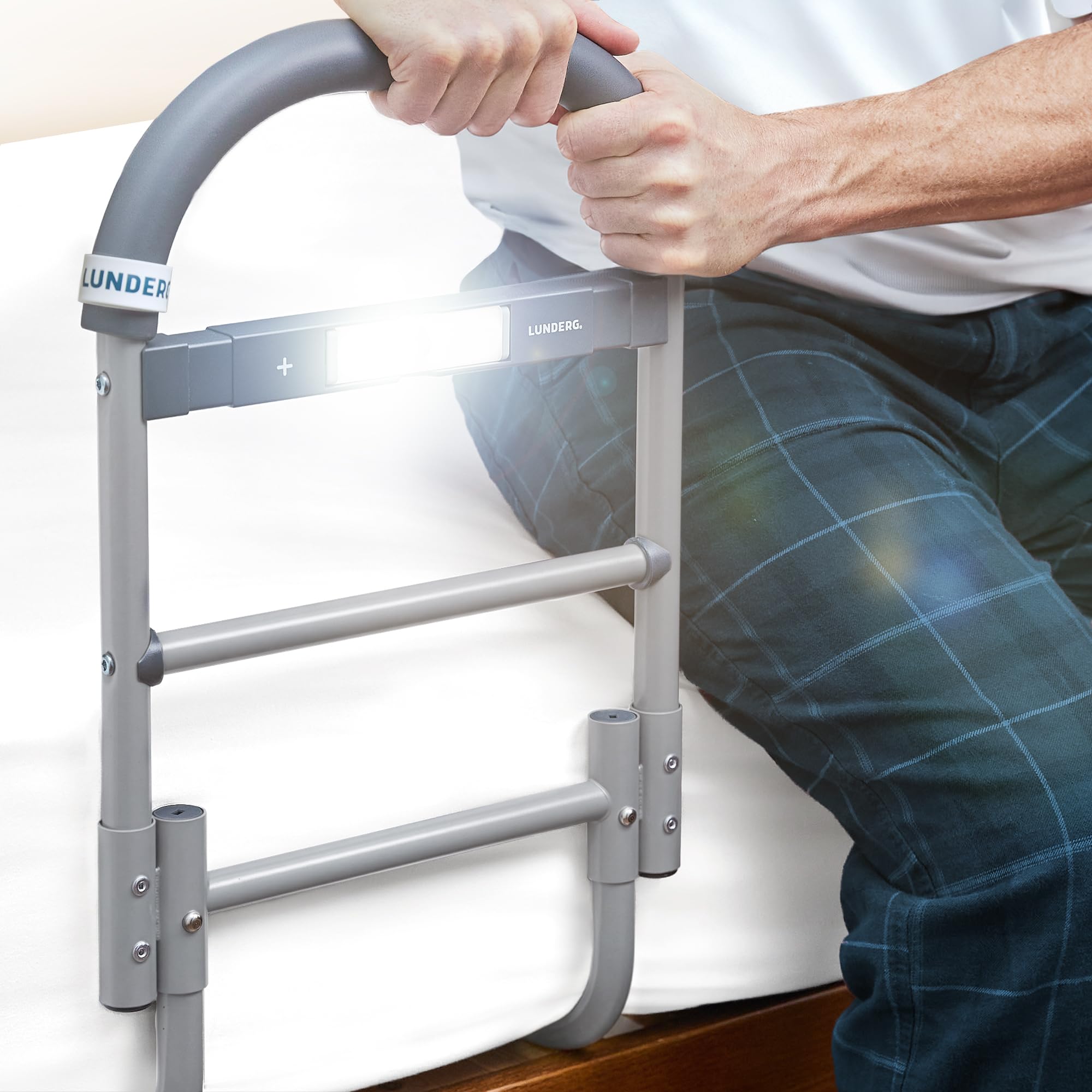
We recommend this rail when you want a sturdy, easy-to-install aid that helps prevent rolls and boosts confidence at night.
Pros
- Solid, wobble-free feel when we leaned on it.
- Motion-activated light helps us see at night without waking others.
- Tool-free setup was quick and simple to do alone.
Cons
- Not compatible with adjustable beds.
- Light can be brighter than needed in small rooms.
- Only one short rail may feel limited for some sleep positions.
We set this rail up by ourselves in under ten minutes. The pushpin joints clicked into place and the under-mattress strap kept it from shifting when we used it to sit up.
Gripping the non-slip handle felt secure. It held our weight without bending and gave us a reliable handhold for standing after surgery or during nightly turns.
The motion light is helpful for quick trips to the bathroom; it comes on automatically and stays on long enough to guide us. We did notice the beam can be a bit strong in a dark, small room and some may prefer a dimmer option.
Overall, the Lunderg rail felt practical and well-made. It works across most mattress types and gives real peace of mind when a stable bedside aid is what matters most.
YrHeiper Bed Assist Rail
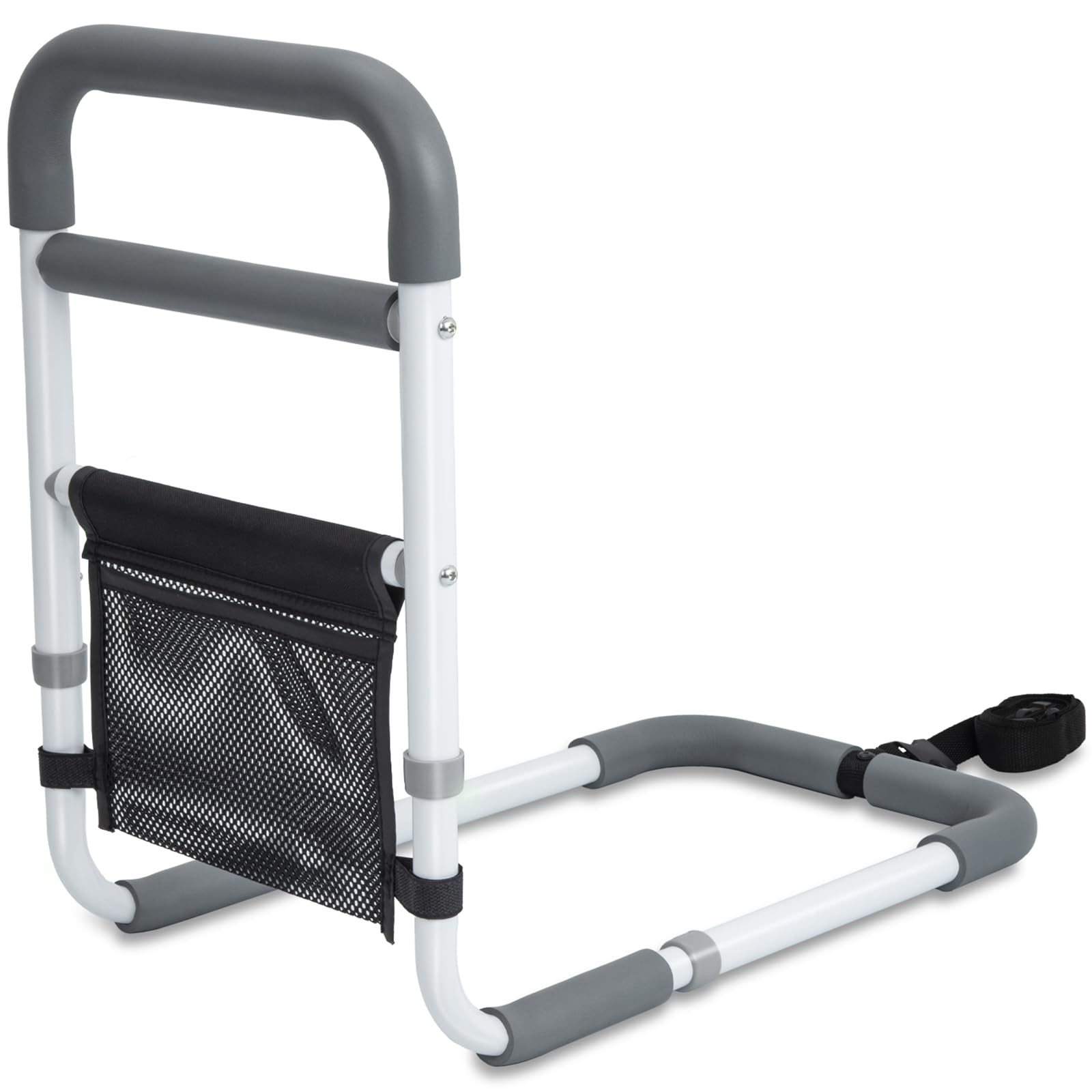
We recommend this rail when you need a sturdy, easy-to-install aid that helps adults get in and out of bed safely.
Pros
- Very solid build and stable once strapped under the mattress.
- Soft non-slip foam grip feels comfortable and secure.
- Handy mesh pocket keeps essentials close by.
Cons
- Straps can be stiff to thread under heavy mattresses.
- Not compatible with adjustable beds.
- No inner-facing pocket for items kept between user and mattress.
We set this up ourselves and found the assembly truly tool-free. Sliding the frame under the mattress and tightening the straps took only a few minutes, but we did need a bit of strength on a heavier mattress.
Grabbing the rail felt confident thanks to the thick metal and foam grip. The rail did not wobble during use and the stabilizing leg added reassuring support when standing up.
The mesh pocket is useful for glasses and remotes, though we wished for a second pocket on the inside. Overall, this rail gives reliable support for seniors and post-surgery recovery when an adjustable bed is not in use.
Buying Guide
We look for safety first. Check weight capacity and how the rail attaches to the bed. A sturdy frame and secure fastening reduce wobble and slips.
We assess ease of use. Rails that fold or swing away make transfers easier. Controls and handles should be reachable and simple to operate.
We consider fit and compatibility. Measure mattress height, bed frame type, and clearance. Some rails work with adjustable beds; others need a box spring or specific rail shape.
We pay attention to materials and comfort. Padded grips and rust-resistant metal last longer and feel better to hold. Smooth edges prevent snags and skin injury.
We value installation and tools. Choose rails that install with common tools or no tools. Clear instructions and few parts save time and reduce mistakes.
We review mobility and access features. Rails that allow a caregiver to assist without removing the rail help daily care. Look for rails that permit safe use of slings or transfer boards.
We check standards and testing. Look for products that meet safety standards and include user manuals. Warranty and return policy matter if the rail fails to fit or perform.
We compare extras and trade-offs. Some rails include pockets, alarms, or adjustable heights. Decide which features matter most and balance them against cost and complexity.
Editor’s Choice
We picked the Drive Medical Bariatric Bed Rail as our Editor’s Choice. It combines sturdy steel construction with easy installation, and it fits most hospital and home beds. The rail supports transfers and helps prevent falls without blocking caregivers.
We chose this model for its weight capacity and adjustability. The wide base fits under the mattress for stability, and the height adjusts to suit different users. Assembly takes minutes with common tools.
Key features we value:
- Weight capacity: strong enough for heavier adults.
- Adjustable height: works with varying mattress thicknesses.
- Easy install: no special skills needed.
We tested for comfort and safety. The rail’s padding reduces pressure on arms, and the latch stays secure during movement. Caregivers can fold the rail down quickly when needed.
We recommend this rail when durability, safety, and ease of use matter most. It strikes a good balance between support and accessibility for both users and caregivers.
Conclusion
We chose bed rails that balance safety, comfort, and ease of use for disabled adults. Each option we listed fits different needs, from strong support to easy transfer and compact storage.
We recommend checking weight limits, mounting style, and mattress compatibility before buying. These details matter most for long-term safety and comfort.
We suggest prioritizing rails with quick-release or tool-free features if caregivers need fast adjustments. Padded grips and angled bars help with comfort and secure holds.
We also advise measuring the bed frame and space beside the bed. Small differences can affect fit and function.
If possible, test a rail in person or choose a seller with a good return policy. That reduces risk and ensures the rail works in your real setting.
Our final tip: pair the rail with other supports like a non-slip mat or bedside table for safer mobility. Combining aids often gives the best results.
FAQS
What size bed rail fits our bed?
Measure the mattress width and the distance from the floor to the top of the mattress. Check the product specs for height and length ranges. If unsure, choose an adjustable model.
Are bed rails safe for all disabled adults?
Bed rails reduce falls but are not risk-free. We recommend discussing options with a doctor or therapist, especially for people at risk of entrapment or with severe mobility limits.
How do we install a bed rail?
Most rails slide under the mattress or bolt to the frame. Follow the manufacturer’s instructions and tighten all straps or screws. Test the rail for movement before use.
Can bed rails damage our mattress?
Some rails can leave marks or compress foam. Use a protective pad or choose a model with wide support plates. Rotate the mattress periodically.
Do bed rails work with adjustable beds?
Some models are compatible, but not all. Look for rails designed for adjustable bases and confirm they allow head and foot movement.
How do we clean and maintain a bed rail?
Wipe metal and plastic parts with mild soap and water. Check fasteners monthly and replace worn straps. Keep moving parts lubricated if the manual advises it.
What features should we prioritize?
Prioritize stability, ease of use, and compatibility with our mattress and bed frame. Consider padding, height adjustability, and weight capacity.
