
Best Balance Pads for Seniors (2026): 5 Picks for Safer Balance Training

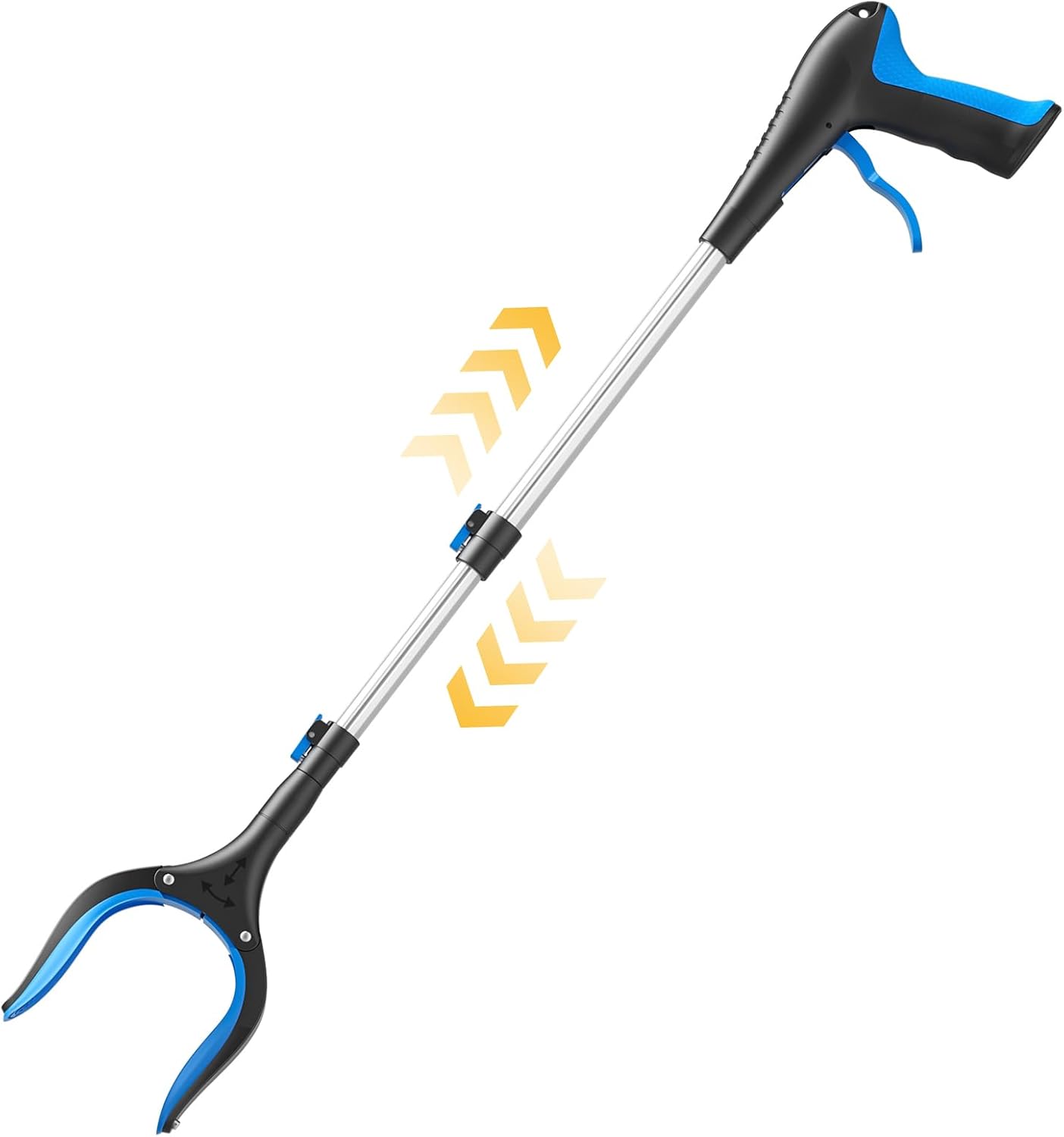
Telescopic Grabber Reacher Tool, 5-Level Adjustable Length

Fixodent Complete Denture Adhesive Cream, Original, 2.4 oz (3-Pack)

REHAND Walking Cane - Foldable, Adjustable, Collapsible
Quick answer: Among the best balance pads for seniors, the Airex Balance Pad Elite is our top pick: a wide, 6 cm foam pad textured on both sides. For a similar size at a lower cost, choose the OPTP Pro Balance Pad. To start on something firmer and smaller, the green TheraBand Stability Trainer is the beginner level.
A balance pad is a thick, soft foam cushion you stand on. The foam gives a little under your feet, so the small muscles in your ankles, knees and hips have to work to keep you steady. Physical therapists use these pads in fall-prevention and rehab programs because the challenge is easy to adjust. You can stand with feet apart, then together, then on one foot, all on the same pad.
Because a balance pad is meant to make you a bit unsteady, safety comes first. Always use it next to a kitchen counter, a heavy chair or a wall you can grab. If you have fallen in the past year, feel dizzy, have numb feet or have had a joint replaced, ask your doctor or a physical therapist before you use one.
Our top 3 picks
Our picks at a glance
| Product | Best for | Size (maker’s rating) | Thickness |
|---|---|---|---|
| Airex Balance Pad Elite | Best overall | 48 x 40 cm (about 19 x 16 in) | 6 cm (about 2.4 in) |
| OPTP Pro Balance Pad | Clinic-style pad for less | 19 x 15.25 in | 2.25 in |
| TheraBand Stability Trainer, Green | Firm beginner level | Small, portable | Not listed |
| Yes4All Foam Balance Pad | Budget pick | Large and X-Large sizes | 2.25 in |
| OPTP Pro Balance Pad XL | Walking and side-step drills | 38 x 15.75 in | 2.25 in |
How we chose these balance pads
We looked at foam balance pads sold on Amazon in the United States from brands that supply physical therapy clinics or well-known fitness stores. We did not include wobble boards, inflatable domes or balance beams, which are harder and riskier for most older adults. We weighed four things:
- Size. A wider pad lets you stand with feet apart, which is the safest way to start.
- Thickness and softness. Thicker, softer foam is harder to balance on. Seniors usually start on a firmer or thinner surface and progress.
- Grip. A textured or non-slip surface helps the pad stay put on the floor and keeps feet from sliding.
- Simple to clean. Closed-cell foam does not soak up sweat and can be wiped down.
Sizes and materials come from each maker’s page or from a large retailer listing where we say so.
The 5 best balance pads for seniors
1. Airex Balance Pad Elite: best overall
Airex Balance Pad Elite
48 x 40 x 6 cm, about 0.8 kg, textured waffle surface on both sides.
Wide enough for a feet-apart stance
Soft foam is a real challenge for beginners
Airex is a long-standing name in therapy foam pads. The Elite version measures 48 by 40 by 6 cm, according to BLK BOX Fitness, a retailer that lists the full specs. That is a little under 19 by 16 inches, which leaves room to stand with feet hip-width apart. It weighs about 0.8 kg, so it is easy to pick up and lean against a wall when not in use.
The Elite has a textured waffle pattern on both sides. That helps bare feet or socks grip the top and helps the pad grip the floor. The retailer lists it as Swiss made. Airex also sells a standard Balance-pad with a smooth surface and the same thickness.
Pros
- Wide enough for a feet-apart stance
- Textured surface on both sides
- Light at about 0.8 kg
- Long-standing therapy brand
Cons
- Soft foam is a real challenge for beginners
- Costs more than generic foam pads
- Material and latex details are not on the retailer page
2. OPTP Pro Balance Pad: best clinic-style pad for less
OPTP Pro Balance Pad
19 x 15.25 x 2.25 in, closed-cell foam, phthalate and chloride free.
Similar footprint to the Airex
OPTP does not state whether it is latex free
OPTP is a long-time supplier to physical therapists, and its Pro Balance Pad is close in size to the Airex. OPTP lists it at 19 by 15.25 inches and 2.25 inches thick. That is slightly thinner than the Airex, which can make it a touch easier for a first-time user.
OPTP says the pad is made from closed-cell foam that is free of phthalates and chlorides. Closed-cell foam does not absorb sweat, so it can be wiped clean between uses.
Pros
- Similar footprint to the Airex
- Slightly thinner, so a bit easier to start
- Closed-cell, phthalate-free foam
Cons
- OPTP does not state whether it is latex free
- Plain surface has less texture than the Airex Elite
3. TheraBand Stability Trainer (Green): best firm beginner level
TheraBand Stability Trainer (Green)
green = firm, beginner; blue = soft, intermediate; black = extra soft, advanced; EVA foam (green and blue).
Firm green level suits new users
Contains natural rubber latex, per the maker
TheraBand’s Stability Trainers come in three colors that step up in difficulty. Performance Health, which makes TheraBand, lists green as firm and the beginner level, blue as soft and intermediate, and black as extra soft and advanced. The rule is simple: the softer the pad, the harder the exercise.
The green and blue pads are EVA foam, which Performance Health describes as durable and quick to recover its shape. The pads are small and light enough to carry in a gym bag. One important note: Performance Health says the product contains natural rubber latex, so it is not a good choice for anyone with a latex allergy.
Pros
- Firm green level suits new users
- Clear path to blue and black as balance improves
- Small and easy to store
Cons
- Contains natural rubber latex, per the maker
- Smaller surface leaves less room for a wide stance
- Dimensions are not listed on the maker’s page
4. Yes4All Foam Balance Pad: best budget pick
Yes4All Foam Balance Pad
2.25 in thick, closed-cell TPE foam, anti-slip surface, Large and X-Large sizes.
Low cost
Exact length and width are not listed on the retailer page
Yes4All makes low-cost home fitness gear, and its foam balance pad is one of the most common on Amazon. Walmart’s listing describes it as closed-cell TPE foam, 2.25 inches thick, with an anti-slip, slip-resistant surface. It comes in Large and X-Large sizes.
For a senior who wants to try balance work at home before spending more, this is a reasonable start. Choose the larger size so you have room to stand with feet apart.
Pros
- Low cost
- Two sizes, including X-Large
- Closed-cell TPE foam with a slip-resistant surface
Cons
- Exact length and width are not listed on the retailer page
- Less information on foam density than clinic brands
5. OPTP Pro Balance Pad XL: best for walking and side-step drills
OPTP Pro Balance Pad XL
38 x 15.75 x 2.25 in, closed-cell foam, phthalate and chloride free.
Room for stepping drills
Takes more floor space
The XL is the same foam as the regular OPTP pad, stretched into a long mat. OPTP lists it at 38 by 15.75 inches and 2.25 inches thick. That length lets a therapist set up heel-to-toe steps, side steps or a split stance with one foot in front of the other.
Because it is long and narrow, it works best placed along a kitchen counter so there is something to hold the whole way.
Pros
- Room for stepping drills
- Same closed-cell, phthalate-free foam as the standard pad
- Doubles as a soft kneeling or floor-exercise pad
Cons
- Takes more floor space
- Stepping drills are harder; best done with a therapist’s plan
What to look for in a balance pad for seniors
Are balance pads safe for older adults?
They can be, if you use them with support. Stand next to a counter or sturdy chair, keep a hand on it at first, and wear non-slip socks or go barefoot. Do not use a pad on a rug that slides. If you feel dizzy, step off and sit down.
Thick or thin, soft or firm?
A firmer, thinner pad is easier. A softer, thicker pad is harder. Most seniors should start on the firmest option and move to a softer one only when they can stand still on the current pad for 30 seconds without holding on.
What size balance pad do I need?
Measure your stance with feet hip-width apart. The pad should be wider than that so your feet are not near the edge. Pads around 19 by 16 inches, like the Airex Elite and OPTP Pro, fit most adults.
What exercises can seniors do on a balance pad?
Common starting moves include standing with feet apart, standing with feet together, shifting weight side to side and slow mini-squats, all while holding a counter. A physical therapist can build a plan that fits your strength and fall risk.
Do balance pads help prevent falls?
Balance training is part of many fall-prevention programs. A pad is one tool in that kind of program, not a guarantee. Ask your doctor about a fall-risk check and a supervised program if you are worried about falling.
Where should I put a balance pad at home?
The kitchen is often the best spot. Lay the pad on a flat, dry floor right in front of the counter so you can rest both hands on it. Keep pets, rugs and cords out of the way, and have a sturdy chair behind you so you can sit down if you need to.
Frequently asked questions
How long should I stand on a balance pad?
Many routines start with 20 to 30 seconds per position, repeated a few times. Build up slowly and stop if you feel tired or unsteady.
Can I use a balance pad with shoes on?
You can, but many therapists suggest bare feet or grippy socks so the foot muscles work more. Follow your therapist’s advice if you wear braces or orthotics.
Is a balance pad better than a wobble board?
For most seniors, yes. A foam pad moves only a little under you, while a wobble board can tip suddenly. Wobble boards are usually for later stages of training.
How do I clean a foam balance pad?
Wipe it with a damp cloth and mild soap, then let it air dry. Keep it out of direct sun, which can harden some foams over time.
Can I kneel on a balance pad?
Yes. Many people also use these pads as a soft cushion for kneeling exercises or gardening. Just keep using it on a flat, dry surface.
How we made this list: We did not test these products in person. We compared manufacturer product pages and retailer listings, and weighed them against what matters for older adults working on balance safely at home. This guide is not medical advice. As an Amazon Associate, SeniorsProTalk earns from qualifying purchases. That never changes which products we include.
Sources
- BLK BOX Fitness, AIREX Balance Pad Elite
- OPTP, Pro Balance Pad and Pro Balance Pad XL
- Performance Health, THERABAND Stability Trainers
- Walmart, Yes4All Balance Foam Pad listing