
Apple Watch vs Pedometer: Which Is Better for Seniors?

Spill-Proof Adult Cup

Large Display Clock with Date

Quad Cane for Seniors
Apple Watch vs Pedometer is a useful comparison for seniors who want to count steps and stay active. Both can track walking, but they offer very different experiences.
An Apple Watch is a small wearable computer with activity and health features. A basic pedometer is much simpler. It mainly counts steps. The better choice depends on how much information and technology the user wants.

Quick Comparison
For a senior who only wants a simple step count, a pedometer may be easier. It usually has fewer controls and fewer features to learn.
An Apple Watch may suit seniors who want more than step counting. It can track steps, distance, workouts, activity, and other metrics. Apple also says Apple Watch can show total steps and distance in its Activity features.
Simple goal: choose a pedometer for simple step counting. Choose Apple Watch for a wider set of activity features.
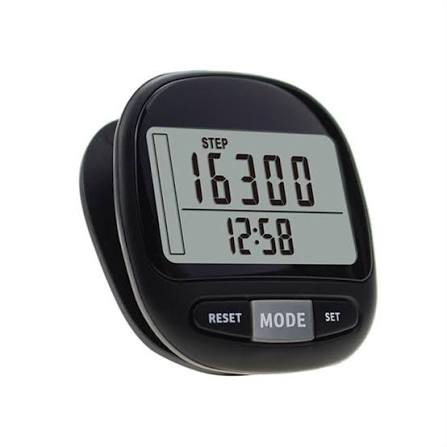
Apple Watch vs Pedometer At a Glance
The biggest difference is simple. One is a multifunction wearable, while the other is mainly a step-counting tool.
| Feature | Apple Watch | Pedometer |
|---|---|---|
| Step counting | Yes | Yes |
| Activity tracking | Extensive | Basic |
| Workout tracking | Yes | Usually limited |
| Screen | Large, interactive | Usually simple |
| Setup | More involved | Usually simple |
| Charging | Required | Depends on model |
| Phone connection | iPhone needed for setup | Usually not needed |
| Extra features | Many | Few |
| Learning curve | Higher | Lower |
| Daily simplicity | Moderate | High |
Apple Watch for Seniors Who Want More
Apple Watch can do much more than count steps. Its Activity features track movement, exercise, and standing. Users can also view steps and distance.
For seniors who enjoy seeing daily progress, this can be useful. The watch can show activity information without needing to carry a separate step counter.
Ease of Use
The watch has a touch screen, Digital Crown, and apps. This gives access to many features, but it also means more settings to learn.
A senior who already uses an iPhone may find the Apple Watch easier to understand. Someone who prefers very simple devices may find a basic pedometer less demanding.
Apple Watch also needs an iPhone for normal setup. Current Apple support lists iPhone compatibility requirements that vary by watch model.
Key Strengths
- Counts steps and distance.
- Tracks daily activity.
- Supports workout tracking.
- Shows information directly on the wrist.
- Offers many extra features.
- Can provide activity reminders and progress information.
Potential Drawbacks
- Costs more than a basic pedometer.
- Needs regular charging.
- Has more features to learn.
- Requires an iPhone for setup in normal use.
- Some users may not need its extra functions.
Pedometer for Seniors Who Want Simplicity
A basic pedometer has one clear job: count steps. That simplicity can be its biggest advantage.
There is no need to learn a large collection of apps or health screens. For someone who wants a simple number at the end of a walk, this may be enough.
Ease of Use
A basic pedometer is often easier to understand because there are fewer controls. Many models are designed around a simple display showing steps and sometimes distance.
This can be helpful for seniors who do not want another smart device to manage.
Key Strengths
- Simple to operate.
- Focused on step counting.
- Usually requires less setup.
- No smartphone ecosystem is needed for basic use.
- Often easier for users who dislike complicated technology.
Potential Drawbacks
- Fewer activity features.
- Limited workout information.
- Smaller screens are common.
- Some models may need to be clipped to clothing.
- Advanced health and activity information is generally unavailable.
Which Is Easier for Seniors to Use?
For basic step counting, a pedometer has the simpler design.
There are fewer menus, fewer settings, and fewer functions competing for attention. This can make a pedometer appealing to a senior who wants a straightforward walking counter.
Apple Watch is more flexible, but that flexibility adds complexity. Users need to understand the watch interface, charging, and settings.
The right choice depends on the person’s comfort with technology.
A senior who already uses an iPhone and enjoys smart devices may prefer Apple Watch. A senior who wants only a step number may prefer a pedometer.
Performance Comparison
Both devices can serve the basic purpose of counting steps, but Apple Watch can go much further.
Apple says its current Apple Watch features include step counting, distance measurement, workouts, and activity tracking. The newer Apple Watch Series 12 also highlights improved step-count accuracy and easier access to step counts.
A basic pedometer has a narrower purpose.
| Performance Area | Apple Watch | Pedometer |
|---|---|---|
| Step tracking | Advanced | Basic |
| Distance | Yes | Some models |
| Workout tracking | Yes | Usually limited |
| Activity trends | Yes | Usually limited |
| Extra activity data | Extensive | Limited |
| Simplicity | Moderate | High |
If the goal is simply counting daily steps, the extra Apple Watch features may not matter.
If the user wants a broader picture of daily activity, Apple Watch offers more information.
Comfort, Accessibility, and Senior-Friendly Design
Comfort depends heavily on the individual.
Apple Watch is worn on the wrist. This means the information is easy to check without reaching into a pocket. However, some users may not like wearing a watch all day.
A pedometer can be smaller and lighter. Depending on the design, it may be clipped to clothing or carried in another convenient location.
For someone with limited dexterity, fewer controls may be helpful. For someone who has trouble reading a small screen, screen size and visibility should be checked before buying.
The simplest device is often the better choice when its features match the user’s actual needs.
Features Comparison
The two products are not really equal in the number of functions they offer.
Apple Watch is designed as a broader wearable device. A pedometer is designed around walking and step counting.
| Feature | Apple Watch | Pedometer |
|---|---|---|
| Step count | Yes | Yes |
| Distance | Yes | Some models |
| Activity tracking | Yes | Limited |
| Workout tracking | Yes | Limited |
| Smart features | Yes | No or very few |
| Apps | Yes | Usually no |
| Notifications | Yes | Usually no |
Apple’s Activity system can track movement, exercise, standing, steps, distance, and other activity information.
Price, Maintenance, and Long-Term Value
A basic pedometer usually makes more sense when the only requirement is step counting.
Apple Watch costs more because it is not simply a pedometer. It combines step tracking with many other functions. The extra cost may be worthwhile for someone who will actually use those features.
Charging is another difference. Apple Watch needs regular charging. Current Apple Watch models have different battery specifications, so battery life depends on the model. Apple’s current Series 12, for example, is rated for up to 24 hours of everyday battery life.
A basic pedometer can be easier to maintain because there are fewer functions and settings to manage.
Who Should Choose Apple Watch?
Choose Apple Watch if:
- You already use an iPhone.
- You want more than step counting.
- You want workout tracking.
- You like seeing activity information on your wrist.
- You want distance and activity data.
- You are comfortable learning a smart device.
- You will actually use its extra features.
Who Should Choose a Pedometer?
Choose a pedometer if:
- You mainly want to count steps.
- You prefer simple devices.
- You do not want regular smartwatch charging.
- You do not need workout tracking.
- You want fewer controls and settings.
- You prefer a small, dedicated walking device.
Apple Watch vs Pedometer — Final Verdict
Best for simple step counting: Pedometer
Best for broader activity tracking: Apple Watch
Best for fewer features: Pedometer
Best for users already in the iPhone ecosystem: Apple Watch
Best for someone who wants one device for many tasks: Apple Watch
There is no need to choose a smartwatch simply because it has more features. If step counting is the only goal, many of those features may go unused.
Scoring Summary
The scores below are practical comparisons based on the intended use of each product type. They are not laboratory test results.
| Category | Apple Watch | Pedometer |
|---|---|---|
| Ease of Use | 8/10 | 10/10 |
| Senior-Friendly Simplicity | 7/10 | 10/10 |
| Activity Tracking | 10/10 | 6/10 |
| Performance | 10/10 | 7/10 |
| Maintenance | 7/10 | 9/10 |
| Value for Step Counting | 7/10 | 10/10 |
How We Evaluate Products
For this comparison, the main factors are ease of use, accessibility, comfort, activity tracking, maintenance, setup, and long-term practicality.
The goal is not to reward the product with the most features. The goal is to see which features are useful for the intended user.
This is a specification-based comparison, not a hands-on laboratory test.
Senior-Specific Buying Considerations
Physical Effort
Neither option normally requires much physical effort. The main issue is wearing, handling, and checking the device.
Controls
A pedometer normally has fewer controls. Apple Watch offers more controls and settings.
Setup
A pedometer is usually simpler to set up. Apple Watch requires more configuration and, for normal setup, an iPhone.
Charging
Apple Watch requires regular charging. Check the battery needs of the specific model before buying.
Visibility
Check whether the display is comfortable to read. A clear screen can matter more than having a long list of features.
Common Buying Mistakes
- Buying a smartwatch when only step counting is needed.
- Choosing a pedometer without checking display readability.
- Ignoring charging requirements.
- Forgetting that Apple Watch setup normally involves an iPhone.
- Paying for advanced features that will not be used.
- Choosing based only on the number of features.
Safety
Apple says Apple Watch is not a medical device. Activity and wellness information should not be treated as a replacement for professional medical advice.
For seniors using activity tracking because of a medical condition or a prescribed exercise plan, it is sensible to follow the guidance of a healthcare professional.
Conclusion
Apple Watch and a basic pedometer solve the same basic problem in very different ways. A pedometer keeps things simple and focuses on steps. Apple Watch adds step tracking to a much wider set of activity and smart features.
For a senior who wants a simple walking counter, a pedometer may be all that is needed. For someone who wants broader activity tracking and already uses an iPhone, Apple Watch offers a much larger feature set. The best choice is the one that matches the user’s actual needs and comfort with technology.
