
Fixed Height Walking Cane Explained: Fit & Safety


Weighted Blanket

GPS Tracker for Elderly

Smart Health Watch for Seniors
Quick Answer
A fixed height walking cane is a cane with a set shaft length that cannot be adjusted through a built-in height mechanism. It can provide a straightforward, stable-feeling option when correctly sized, but the handle must sit near your wrist crease when you stand naturally. If your ideal cane height is uncertain or may change, an adjustable model can be more practical.
What Is a Fixed Height Walking Cane?
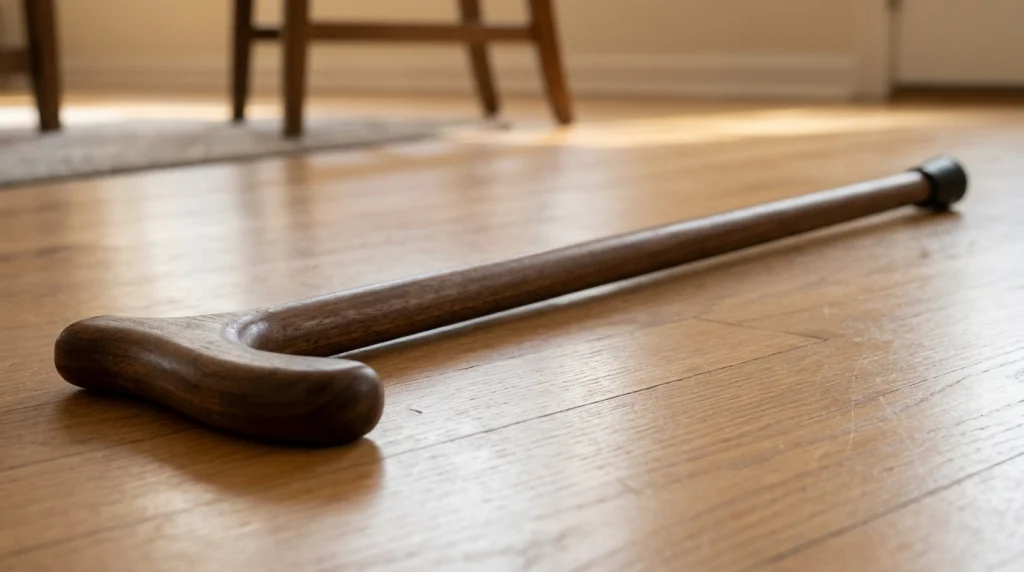
A fixed height walking cane is a mobility aid manufactured at one length rather than designed to telescope or shorten through adjustment buttons. It typically has a handle, a rigid shaft, and a rubber tip that contacts the ground.
The defining feature is its length, not necessarily its material or handle style. A fixed height cane can be made from wood or another suitable material, and its handle may have a traditional curved shape or a more ergonomic design.
Unlike an adjustable cane, its height cannot normally be changed using a built-in locking mechanism. Some models can be professionally shortened, depending on their construction, but that is different from routine height adjustment.
If you need a broader introduction to mobility aids, the guide to what a walking cane is and how it works explains the main types and their uses.
How Is a Fixed Height Cane Different From an Adjustable Cane?
The main difference is flexibility. A fixed height cane provides one intended length, while an adjustable cane allows the user or a qualified helper to change the height within the manufacturer’s specified range.
| Feature | Fixed Height Cane | Adjustable Cane |
|---|---|---|
| Length | One set length | Changes within a stated range |
| Initial sizing | Requires an appropriate size | Can be adjusted to fit |
| Height changes | Usually requires replacement or approved modification | Uses its built-in adjustment mechanism |
| Portability | Depends on its overall design | Some models shorten or fold |
| Main consideration | Getting the correct length | Correct adjustment and secure locking |
Neither type is automatically safer for everyone. A correctly sized fixed cane can be appropriate for someone whose fitting requirements are established. An adjustable cane offers more flexibility but must be locked securely at the correct height.
Also, fixed height does not mean folding or non-folding. Length adjustment and folding are separate design features, so check both if storage or travel matters to you.
What Are the Advantages of a Fixed Height Walking Cane?
A fixed height cane can be a practical choice when its length matches the user’s needs and there is little reason to change it.
- Straightforward construction: A design without a telescoping adjustment mechanism has fewer height-adjustment components to operate.
- Consistent length: The intended handle height remains unchanged during ordinary use, provided the cane is structurally sound.
- Simple everyday handling: A suitable model can be easy to pick up, position, and carry.
- Choice of appearance and material: Fixed-length designs include traditional wooden canes and other styles that may suit personal preferences.
- Less adjustment-related maintenance: A cane without height-locking parts does not require routine checks of those particular mechanisms.
These are design-related advantages, not guarantees of superior stability or durability. Material quality, shaft construction, handle comfort, the rubber tip, and correct fit still matter.
A fixed length also removes a useful option: you cannot simply raise or lower the handle if your fitting needs change. That limitation deserves attention before choosing one.
What Are the Limitations of a Fixed Height Cane?
The biggest limitation is that the cane must already be the right length. If it does not fit, there may be no simple way to correct the problem without replacing it or having an appropriate model modified.
- Incorrect sizing can affect posture: A cane that is too short may encourage leaning, while one that is too tall can make shoulder and arm movement awkward.
- Changing footwear can affect fit: Shoes with a different sole height may alter how the cane feels, particularly when the original fit is already marginal.
- Another user may need a different length: A fixed cane should not be assumed to fit another person simply because their height appears similar.
- Growth or changing mobility needs may require replacement: A change in posture, rehabilitation progress, or prescribed support may make the original length unsuitable.
- Modification is not always possible: Cutting or altering a cane without checking its design and the manufacturer’s instructions can damage its structure or affect its intended use.
For a person whose height and walking requirements are established, these drawbacks may be manageable. For someone recovering from surgery or still learning which cane height works, adjustability can be more useful.
How Do You Measure the Correct Fixed Cane Height?
The usual starting point is the distance from the floor to your wrist crease while standing upright with your arms relaxed. Wear the shoes you normally use for walking, because footwear affects the fitting position.
The Mayo Clinic’s guidance on choosing and using canes describes this wrist-level check and recommends a comfortable elbow bend of approximately 15 to 30 degrees when holding the handle.
Steps for checking your cane length
- Put on your usual walking shoes. Stand on a firm, level surface with enough space to stand naturally.
- Relax your posture. Keep your shoulders level and let your arms hang at your sides without deliberately stretching them downward.
- Locate your wrist crease. Identify the crease where your hand meets your wrist.
- Measure from the floor. Ask another person to measure vertically from the floor to the wrist crease. Avoid bending or leaning to take the measurement yourself.
- Compare the measurement with the cane. The top of the handle should generally align with wrist-crease height when the cane is upright.
- Check the position while holding it. With your hand on the grip, your elbow should bend comfortably rather than remain locked straight or become excessively bent.
Do not rely on body height alone as the final measurement. People of similar height can have different arm lengths and proportions, and posture or individual clinical needs can affect the ideal fit.
Tip
If you are buying a fixed cane online, confirm the actual cane length and return or fitting options before ordering. A person’s height alone cannot guarantee that a particular fixed-length model will fit.
How Can You Tell If a Fixed Height Cane Fits Incorrectly?
A cane may be the wrong length if you have to alter your natural posture to reach the handle or move it comfortably. These signs are reasons to recheck the fit, although they do not establish the cause of pain or balance difficulty on their own.
- The cane feels too tall: You may lift one shoulder, reach upward, or struggle to move the cane forward naturally.
- The cane feels too short: You may lean to one side, bend toward the handle, or feel that your posture is uneven.
- Your elbow feels strained: Your arm may be too straight or too sharply bent when you grip the handle.
- Your wrist or hand becomes uncomfortable: The grip shape, handle position, pressure, or overall technique may need attention.
- You feel less stable while walking: The fit, cane type, walking technique, or an underlying mobility issue may need reassessment.
Do not try to compensate for a poor fit by leaning harder on the cane or changing your walking pattern without guidance. Stop and arrange a fitting check if the cane feels unsafe. A physical therapist or another qualified healthcare professional can assess the height, grip, and type of support you need.
For more context about the shaft’s role in cane length and construction, see the guide to walking cane shaft design and materials.
Who Should Choose a Fixed Height Cane?
A fixed height cane may suit someone who has an established fitting measurement, can use a cane safely, and does not need frequent changes to its length.
It may be less suitable when the correct height is uncertain, several people intend to share the cane, or a person’s mobility needs are changing during recovery. In those situations, adjustability can offer a practical advantage.
Before choosing either design, consider these questions:
- Has the cane height been checked while standing in your usual shoes?
- Can you grip the handle comfortably and move the cane without changing your posture?
- Do you need a folding design for storage, or is a full-length cane more convenient?
- Has a healthcare professional confirmed that a cane provides enough support for your balance and walking needs?
The last question is especially important if you have significant weakness, repeated falls, or difficulty remaining upright. A cane provides limited support; it is not a substitute for a walker or another aid when greater stability is needed. The guide to senior mobility equipment and safer living provides additional context on matching equipment to support needs.
How Should You Maintain a Fixed Height Walking Cane?

A fixed cane still needs regular inspection even though it has no height-adjustment mechanism. Its shaft, handle, and ground-contact tip all contribute to safe use.
- Inspect the shaft: Look for cracks, bends, splitting, or other visible structural damage.
- Check the handle: Make sure it is firmly attached and free of movement that was not present before.
- Examine the rubber tip: Replace a worn, split, loose, or hardened tip with a compatible replacement.
- Keep the grip comfortable: Clean the handle according to the manufacturer’s instructions and check for slippery or damaged surfaces.
- Recheck the fit when circumstances change: New footwear, a change in posture, or a change in walking ability may justify another fitting assessment.
Do not continue relying on a cane with a cracked shaft or loose handle. Avoid cutting, drilling, heating, or otherwise modifying it unless the manufacturer confirms that the proposed alteration is appropriate. If its length is wrong, replacing it with a correctly sized model is safer than assuming a home modification will preserve its structural integrity.
Related Product
Fixed Height Walking Cane
Compare fixed-length cane options and check the listed dimensions against your measured wrist-to-floor height before choosing a model.
As an Amazon Associate, we earn from qualifying purchases.
Frequently Asked Questions
Can a fixed height walking cane be shortened?
Some fixed-length canes can be shortened, but whether modification is appropriate depends on the material and design. Follow the manufacturer’s instructions or ask a mobility professional rather than cutting the cane without confirming that it can be safely modified.
Is a fixed height cane better than an adjustable cane?
Neither is universally better. A fixed cane may suit someone with established sizing needs, while an adjustable cane is useful when the height must be fine-tuned or may change. Correct fit and adequate support matter more than the adjustment mechanism alone.
How do I know what length fixed cane to buy?
Measure from the floor to your wrist crease while standing naturally in your usual walking shoes. Compare that measurement with the handle height specified by the manufacturer, then confirm the fit with a comfortable elbow bend.
Can two people of the same height use the same fixed cane?
Not necessarily. Arm length, posture, footwear, and individual mobility requirements can differ between people of the same height. Each person should have the cane’s fit checked rather than assuming the same model will suit both.
Does a fixed height cane provide more stability than a folding cane?
Not automatically. Stability depends on the cane’s construction, tip, condition, fit, and the user’s needs. Fixed length and folding design describe different features, so neither label alone establishes which cane is safer.
When should I consider a walker instead of a cane?
A walker may be more appropriate if you need greater stability, have substantial weakness, or cannot walk safely with a cane. A healthcare professional or physical therapist can assess your mobility and recommend an appropriate level of support.
Conclusion
A fixed height walking cane offers a straightforward mobility option when its length matches the user’s body and walking needs. Its main advantage is simplicity, while its biggest limitation is the lack of built-in height adjustment.
Before choosing one, measure your wrist-to-floor distance in your usual walking shoes, check your elbow position, and make sure the cane feels comfortable during safe walking. If your height requirements are uncertain or changing, consider an adjustable model. If a cane does not provide enough stability, seek an assessment for a more suitable mobility aid.