
Single Point Walking Cane: Uses, Fit & Safety Guide


Digital Thermometer

Glucose Monitor Kit

Gardening Kneeler Bench
Quick Answer
A single point walking cane is a mobility aid with one rubber-tipped contact point at the bottom. It provides extra balance and modest support when walking, especially for someone with mild leg weakness, discomfort, or reduced stability. It is usually held in the hand opposite the weaker leg. A single-point cane is lightweight and easy to maneuver, but it may not provide enough support for severe balance problems or substantial weight-bearing needs.
What Is a Single Point Walking Cane?
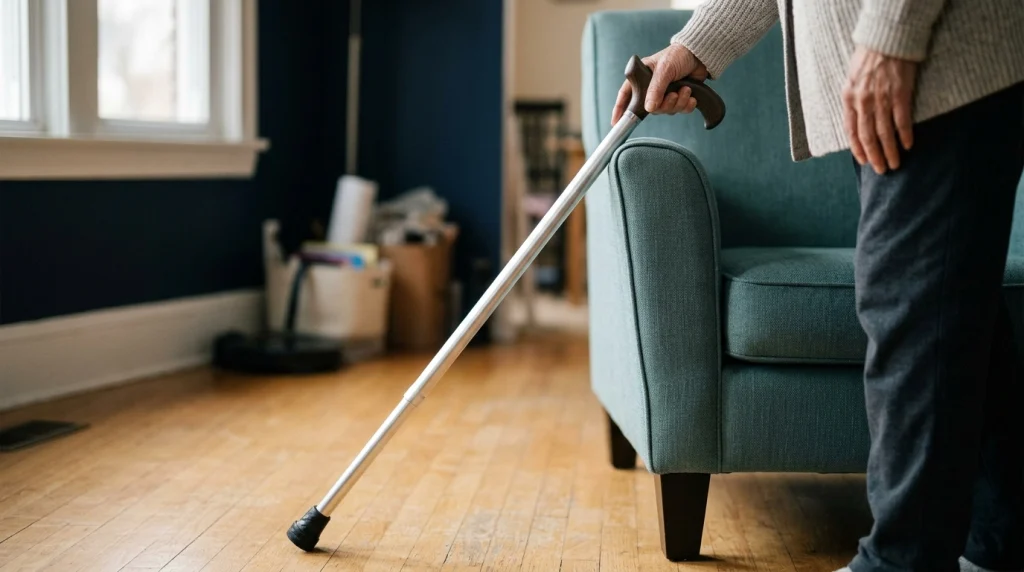
A single point walking cane is a handheld walking aid that touches the ground through one tip rather than a wider base. It is the familiar cane design used for everyday mobility support.
Most single-point canes have three main components:
- Handle: Provides a place to grip and transfer some pressure through the hand.
- Shaft: Connects the handle to the ground-contact tip and provides the cane’s structural support.
- Rubber tip: Contacts the walking surface and helps provide traction.
The design is simple, but its purpose is specific. The cane adds another point of contact with the ground to assist balance and help reduce some pressure on a painful or weaker leg.
It is not intended to replace normal leg function or support most of a person’s body weight.
For a broader explanation of mobility aids, see our guide to walking cane types.
How Does a Single Point Cane Work?
A single-point cane works by providing an additional contact point during walking. When the cane tip is firmly on the ground, the user can apply downward pressure through the handle to assist stability and reduce some load on the opposite leg.
The cane normally moves forward with the weaker leg. This coordinated movement provides assistance during the part of walking when that leg needs support.
Imagine someone with a mildly painful right knee. Holding the cane in the left hand allows the cane to help support the right leg as it steps forward.
The cane is not supposed to make the person lean heavily sideways. Correct height and placement help maintain a more natural upright walking posture.
Why does one ground-contact point matter?
A single tip makes the cane relatively easy to lift, reposition, and swing forward. It also keeps the base compact when walking through narrow spaces.
The limitation is a smaller support footprint. Unlike a four-point cane, a conventional single-point cane does not offer a broad base and generally cannot stand upright by itself.
That distinction becomes important when choosing a cane for someone whose primary difficulty is balance rather than minor leg discomfort.
Who Is a Single Point Cane Best Suited For?
A single-point cane generally makes sense when someone can still walk independently but would benefit from a modest amount of additional support.
Potential situations include:
- Mild leg weakness: One leg needs a little assistance during walking.
- Joint discomfort: A painful hip, knee, or ankle makes certain steps uncomfortable.
- Minor balance difficulties: An extra contact point improves confidence during ordinary walking.
- Recovery: A clinician recommends a cane during a particular stage of rehabilitation.
- Everyday mobility: A person can walk but needs supplemental stability on routine outings.
Age alone does not determine whether someone needs a cane. The relevant factors are walking ability, strength, balance, pain, and the level of physical support required.
A person who frequently loses balance, experiences repeated falls, or cannot walk without placing substantial weight on the cane may need a different mobility aid.
Key Insight
The key question is not whether someone can hold a cane. It is whether a single contact point provides enough support for their actual walking and balance needs.
Single Point Cane vs. Quad Cane: What Is the Difference?
The main difference is the base. A single-point cane contacts the floor through one tip, while a quad cane has four ground-contact points arranged across a wider base.
| Feature | Single Point Cane | Quad Cane |
|---|---|---|
| Ground contact | One tip | Four tips |
| Base footprint | Compact | Wider |
| Maneuverability | Generally easier | May feel slower or bulkier |
| Stability | Limited additional support | Broader support base |
| Typical suitability | Mild support needs | Some users needing additional stability |
A wider base does not automatically make a quad cane appropriate for everyone. Users must still be able to place and move the device safely.
If neither cane provides sufficient support, a walker may be more appropriate. The MedlinePlus cane-use guidance recommends professional assessment when weakness, pain, or balance difficulties are substantial.
How to Measure and Adjust a Single Point Cane
A properly fitted cane should allow an upright posture with a slight bend in the elbow. A cane that is too tall or short may make walking less comfortable and affect balance.
- Put on the shoes normally worn for walking.
- Stand upright on a flat surface with the arms relaxed.
- Position the cane beside the body.
- Adjust the handle approximately to the crease of the wrist.
- Hold the handle and check that the elbow bends comfortably, generally around 15–30 degrees.
- Walk a short distance in a safe area to check that the shoulder stays relaxed and the body remains upright.
An adjustable cane must have its height-locking mechanism fully engaged before use. If the shaft includes a locking collar, secure it according to the manufacturer’s instructions.
Mayo Clinic’s cane fitting recommendations explain why wrist height and elbow position are useful checks.
Fixed wooden canes require more care when sizing because shortening the shaft is usually a permanent change. Our guide to walking cane shafts explains how construction and adjustability differ.
How to Walk Correctly With a Single Point Cane
The usual technique is to hold the cane opposite the weaker or painful leg and advance the cane with that leg.
For example, if the left leg needs support, hold the cane in the right hand.
- Stand upright. Hold the cane securely and look forward.
- Move the cane and weaker leg together. Advance them a comfortable step distance.
- Plant the tip. Make sure the cane is in firm contact with the ground before relying on it.
- Step with the stronger leg. Move the stronger leg forward while maintaining balance.
- Repeat naturally. Keep the steps controlled rather than reaching far ahead with the cane.
A cane should assist the walking pattern rather than force an exaggerated stride or sideways lean.
For someone recovering from surgery, individual weight-bearing restrictions take priority over general walking instructions. A physical therapist can check whether the walking pattern is appropriate.
How to use a cane on stairs
When stair use is appropriate and a secure handrail is available, hold the rail with the free hand.
- Going upstairs: Lead with the stronger leg, then bring the weaker leg and cane up.
- Going downstairs: Place the cane on the lower step, then advance the weaker leg, followed by the stronger leg.
Take one step at a time. If stairs feel unstable, seek hands-on instruction rather than attempting them alone.
Common Single Point Cane Mistakes to Avoid
Even a well-made cane can be unsafe when fitted or used incorrectly.
- Using the wrong hand: For a weaker leg, the cane normally belongs in the opposite hand unless a clinician directs otherwise.
- Setting the wrong height: Excessive height can raise the shoulder; insufficient height can encourage sideways leaning.
- Reaching too far forward: Large cane movements can disrupt the walking rhythm.
- Using a worn tip: A smooth, hardened, cracked, or damaged rubber tip may provide less reliable traction.
- Ignoring a loose shaft: Adjustment buttons, collars, and connections must be secure.
- Relying on the cane to rise from a chair: Use stable chair armrests where available rather than treating a single-point cane as a secure lifting support.
Safety Warning
A single-point cane should not be used as a substitute for a walker or crutches when substantial weight support is required. Sudden weakness, new severe dizziness, or repeated falls warrant medical assessment rather than simply changing cane styles.
What Should You Check Before Using a Single Point Cane?
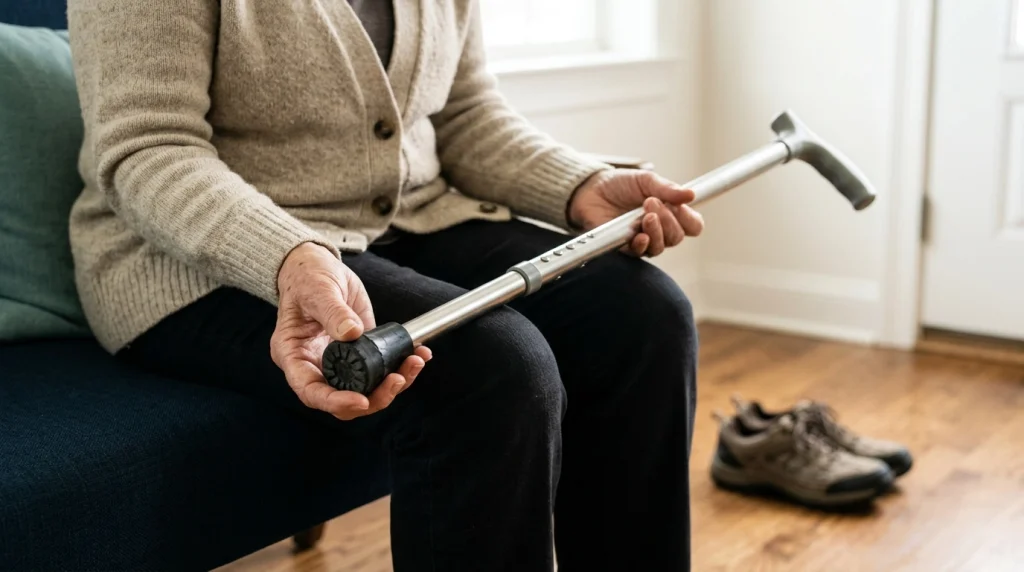
A short inspection can identify problems before walking.
- Check that the rubber tip is firmly attached and has usable tread.
- Inspect the shaft for cracks, bending, or other damage.
- Confirm all adjustable sections are locked.
- Make sure the handle feels secure and comfortable.
- Wear shoes with stable, slip-resistant soles.
- Keep walking areas free of loose rugs, cords, and clutter.
Extra attention is needed on wet floors, loose gravel, uneven pavement, and slippery outdoor surfaces. A standard rubber tip cannot guarantee traction in every condition.
When transporting the cane, avoid leaving it where someone could trip over it. Store it securely rather than assuming it will remain standing when leaned against furniture.
When Is a Single Point Cane Not Enough?
A single-point cane may be insufficient when the user needs substantial support, struggles to maintain balance even with the cane, or cannot coordinate its movement safely.
Signs that the current mobility aid needs reassessment include:
- Repeated stumbles or falls despite using the cane.
- Needing to lean heavily on the handle to remain upright.
- Difficulty moving the cane and stepping without losing balance.
- Persistent hand, wrist, or shoulder discomfort caused by cane use.
- Worsening weakness or walking difficulty.
A physical therapist or healthcare professional can evaluate walking ability, fit, and the level of support needed. A quad cane, walker, or another device may be more suitable depending on the cause of the difficulty.
The safest choice is the device that matches the person’s mobility needs, not simply the lightest or easiest-looking cane.
Relevant Product
Adjustable Single Point Walking Cane
An adjustable single-point cane with a comfortable handle, secure height lock, and replaceable rubber tip can be practical for someone who has been assessed as needing light walking support. Confirm the fit and manufacturer’s rated capacity before choosing a model.
As an Amazon Associate, we earn from qualifying purchases.
Frequently Asked Questions
Can a single point cane be used in either hand?
Yes, but when one leg is weaker or painful, the cane is normally held in the opposite hand. Individual rehabilitation instructions may differ.
Can you use a single point cane with both legs weak?
It depends on the degree of weakness and balance impairment. When both legs need significant support, a walker or another aid may be safer. A professional assessment is advisable.
Does a single point cane stand up by itself?
A conventional single-point cane generally does not stand independently. Some specialty tips or accessories may change how it rests, but they do not automatically provide the stability of a quad cane.
Is a wooden single point cane as safe as an aluminum cane?
Either material can be appropriate when the cane is sound, properly fitted, rated for the user, and equipped with a suitable tip. Adjustable aluminum canes are often easier to resize than fixed wooden designs.
Can a single point cane be used outdoors?
Yes, on suitable walking surfaces. Wet pavement, loose gravel, ice, and uneven ground create additional slipping or balance risks. Check the tip and surface conditions before walking.
How often should a single point cane tip be replaced?
There is no universal replacement schedule. Inspect the tip regularly and replace it when the tread wears down, the rubber hardens or cracks, or the tip becomes loose or damaged.
Final Thoughts
A single point walking cane provides a simple way to add modest balance and walking support without the bulk of a wider mobility aid. Its greatest advantages are easy maneuverability, compact construction, and a relatively natural walking motion.
Correct height, proper hand placement, a sound rubber tip, and realistic expectations matter more than appearance. If a single-point cane does not provide enough stability, choosing a more supportive mobility aid is the safer next step.
