
Weighted Utensils vs Adaptive Utensils for Seniors


Anti-Glare Reading Glasses

LED Clip Reading Light

Talking Clock
Choosing between weighted utensils vs adaptive utensils can completely change how you enjoy a meal. Both options offer great daily support, but they solve very different problems for older adults.
Many seniors face daily struggles with hand strength, stiff joints, or mild shakes. Finding the right fork or spoon brings back dining confidence and keeps mealtime stress-free.
Let us look at the main difference right away. Weighted tools add heavy metal mass to calm hand tremors and steady your grip. Standard adaptive tools focus on thick handles, bendable necks, or hand straps to help seniors with arthritis or weak muscles. If you have shakes, go weighted. If you have stiff hands, choose adaptive grips.
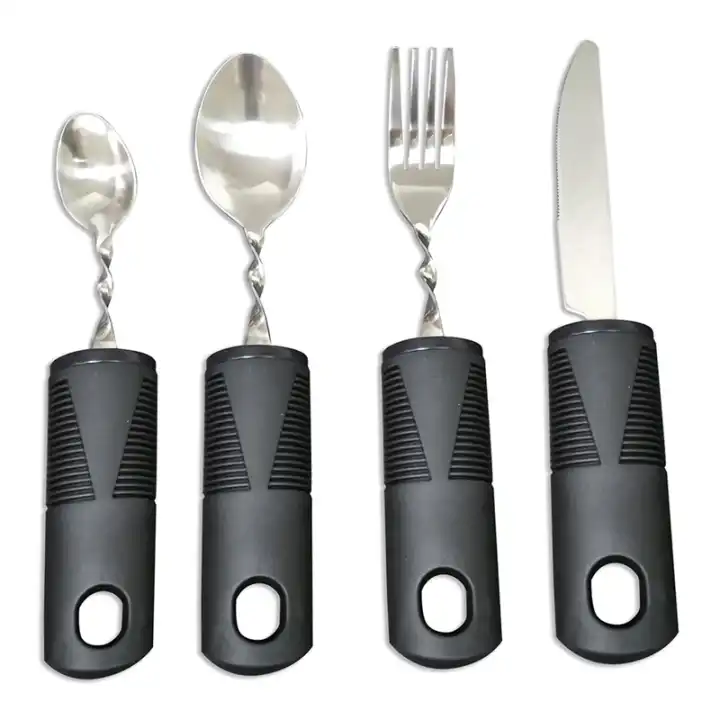
Weighted vs Adaptive Dining Tools At A Glance
Here is a quick look at how these two daily dining tools compare.
| Feature | Weighted Utensils | Adaptive Utensils |
| Best For | Tremors or shakes | Arthritis or weak grip |
| Handle Style | Heavy metal handle | Thick rubber or ribbed |
| Tool Weight | Very heavy | Very light |
Are Weighted Utensils Right for You?
Weighted dining tools look like normal silverware but feel much heavier in your hand. They pack extra metal into the handle to help steady a shaking arm.
Ease of Use
These heavy tools do one job very well. They force your hand to work against the solid weight. This extra mass calms mild hand tremors. You just hold them like normal forks or spoons. There are no hand straps or buttons to learn.
Key Strengths
- Reduces spilling from sudden hand shakes.
- Looks just like normal dining silverware.
- Easy to clean in most standard dishwashers.
- Helps keep soup on the spoon much longer.
Potential Drawbacks
- Too heavy for folks with weak arms.
- Can tire out your wrists during long meals.
- Costs more than normal kitchen forks.
What Are Adaptive Utensils Best For?
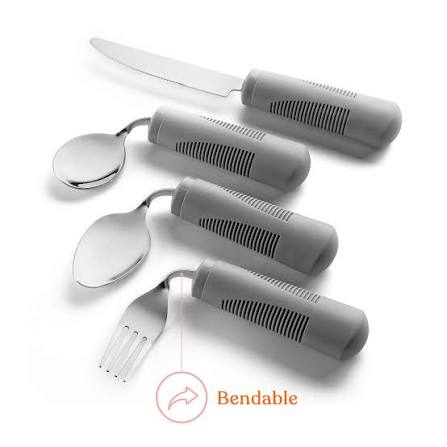
Adaptive tools cover a wide range of smart kitchen designs. Most feature fat rubber handles, bendable metal necks, or special cloth hand grips.
Ease of Use
These tools make eating simple if your fingers feel stiff. The thick handles mean you do not have to close your hand tightly. Many forks and spoons bend to the left or right. This sharp bend means you do not have to twist your wrist to take a bite.
Key Strengths
- Very easy to grip with stiff or sore fingers.
- Lightweight design prevents daily arm fatigue.
- Bendable necks reduce painful wrist twisting.
- Straps can hold the tool if you drop things.
Potential Drawbacks
- Does not stop shakes or tremors very well.
- Rubber handles may look like medical tools.
- Some bendable necks snap if bent too often.
Which Is Easier for Seniors to Use?
This answer depends entirely on your specific hand health. Weighted tools demand good arm strength. You must lift a heavy fork to your mouth many times. This works wonders for shakes, but it tires out weak muscles very quickly.
Standard adaptive models shine when hand strength is low. The thick, soft grips require almost no squeeze. If you cannot easily bend your wrist, an angled spoon makes feeding yourself much simpler.
“The right dining tool gives seniors their independence back at the dinner table.”
Daily Performance Comparison
Both options hold food well, but they perform very differently. Heavy tools stop soup from splashing if your hand shakes. They bring stability to the table. They make cutting soft foods much easier because the weight does the work for you.
Standard adaptive tools perform best with solid foods and weak hands. The large rubber grips stop the fork from spinning in your hand. The light weight lets you eat a full meal without needing to rest your tired arm.
Comfort, Accessibility, and Senior-Friendly Design
Comfort means different things for different hands. Heavy tools offer a smooth, cool touch. They look great on a dining table, which boosts your confidence. You do not feel like you are using a special medical aid.
Standard adaptive tools focus strictly on a soft touch. The thick rubber handles feel warm and secure. They do not slip when wet. However, the bulky plastic look might bother some folks who just want normal silverware.
Main Features Comparison
Check this table to see the specific design features side by side.
| Feature Type | Weighted Utensils | Adaptive Utensils |
| Handle Grip | Smooth, hard, and heavy | Soft, thick, and ribbed |
| Neck Design | Straight and fixed metal | Often bends to a sharp angle |
| Safety Straps | Rarely included | Frequently included |
Price, Maintenance, and Long-Term Value
Both styles cost more than standard kitchen sets. You can buy them strictly as single pieces or as full kits. Heavy tools cost a bit more because they use solid steel. They last for years and rarely break.
Standard adaptive tools cost slightly less upfront. However, the rubber grips can wear down over time. If you bend the metal neck daily, it might snap after a year. Both styles usually do fine in a standard dishwasher. Overall, heavy metal tools offer a better long-term value because they never wear out.
Who Should Choose Weighted Utensils?
Pick this heavy option if you meet these specific daily needs.
- You have mild hand tremors or constant shakes.
- Your arm muscles are still fairly strong.
- You want forks that look like normal silver.
- You often spill soup due to sudden hand jerks.
- You want a tool that lasts for many years.
Who Should Choose Adaptive Utensils?
Pick the thick, lightweight option if these points fit you.
- You have stiff joints or bad arthritis in your fingers.
- Your daily grip strength feels very weak.
- You find it hard or painful to twist your wrist.
- You drop things often and need a hand strap.
- You want a soft handle that does not slip.
The Final Verdict on Dining Aids
Best for most seniors with shakes: Weighted tools win easily.
Best for seniors with weak grips: Standard adaptive tools are the clear choice.
Best value: Heavy metal tools last much longer, making them a better buy.
Best for ease of use: Thick rubber handles win for pure comfort.
Simple Scoring Summary
Review this basic score chart based on daily senior dining needs.
| Category | Weighted Utensils | Adaptive Utensils |
| Tremor Control | 9/10 | 3/10 |
| Weak Grip Support | 4/10 | 9/10 |
| Ease of Cleaning | 9/10 | 8/10 |
| Dining Dignity | 9/10 | 6/10 |
How We Evaluate Products
We look at dining tools based on real senior needs. We check how easy they are to hold. We look at the weight, the handle size, and the balance. We also check if they survive a trip through a hot dishwasher. Practical daily use always matters more than fancy box claims.
Senior-Specific Buying Considerations
Keep these exact points in mind before you buy a new set.
- Physical Effort: Can you lift a heavy fork for twenty minutes?
- Grip Size: Will a fat handle fit well in your hand?
- Wrist Movement: Do you need a spoon that bends toward your mouth?
- Table Looks: Does the tool look too much like a hospital aid?
- Cleaning: Can you easily wash the tool without scrubbing?
Common Buying Mistakes
Do not make these simple shopping errors.
- Buying a heavy fork for someone with very weak arms.
- Forgetting to check if the rubber handle is dishwasher safe.
- Choosing purely based on a cheap price tag.
- Buying a full set when you only really need a good spoon.
- Bending an angled fork back and forth until the metal breaks.
Safety Tips for Senior Dining
Safety at the table matters a lot. Dropping a heavy metal fork on a bare foot can hurt. Always sit close to the table. Never put thick rubber handles in a hot oven or a microwave. If a bendable spoon feels loose, throw it away before the metal snaps inside your food.
Conclusion
The debate between weighted utensils vs adaptive utensils comes down to your hands. If you face daily shakes, heavy metal handles will steady your grip and save your soup. They look great and last a lifetime.
If stiff joints and weak fingers cause you trouble, thick rubber handles work best. They take the pain out of holding a tight fork. Pick the tool that matches your exact physical needs, and enjoy your meals again.
