
Cool Mist vs Warm Mist Humidifier: Which Is Better?


Automatic Pill Dispenser

Page Magnifier Sheet

Toilet Safety Rails
Dry air can make your nose, throat, and skin feel uncomfortable. A humidifier can add moisture to your room and make the air feel less dry.
When comparing a Cool Mist vs Warm Mist Humidifier, seniors should look beyond the type of mist. Safety, cleaning, noise, and ease of use also matter. The right choice depends on your home and how much effort you want to spend on daily care.
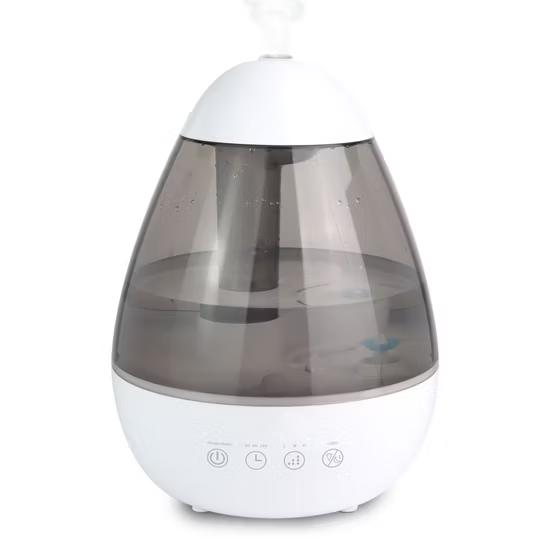
Quick Comparison
A cool-mist humidifier is often the better starting choice for seniors, especially if avoiding hot water and heated components is a priority. It can add moisture without heating water to produce mist.
A warm-mist humidifier may suit someone who prefers warm mist and can safely handle a unit that heats water. Both types can humidify a room effectively. Neither is automatically better for every older adult.
Cool Mist vs Warm Mist Humidifier At a Glance
These humidifiers serve the same basic purpose, but their operation and care differ.
| Feature | Cool-Mist Humidifier | Warm-Mist Humidifier |
|---|---|---|
| How it works | Uses ultrasonic vibrations or evaporation, depending on type | Heats water to produce steam |
| Heat | Does not heat water to create mist | Uses a heating element |
| Burn risk | No hot steam from the mist-producing process | Hot water and steam can cause burns |
| Room comfort | Does not add heat through heated mist | May feel warmer nearby |
| Mineral particles | Some types can release minerals into the air | Generally releases fewer minerals |
| Cleaning | Needs regular tank cleaning | Needs regular cleaning and descaling as directed |
| Electricity | Depends on the model | Heating water generally uses more power |
| Best fit | People who prioritize avoiding hot water | People who prefer warm mist and can manage the heat safely |
Exact features, noise levels, and maintenance needs vary by model. Evaporative cool-mist units and ultrasonic models also work differently.
Cool-Mist Humidifier Review for Seniors
A cool-mist humidifier is a practical option for people who want added moisture without a heating element producing the mist. It comes in several designs, so check how each model works before buying.
Ease of Use
Look for a unit with simple controls, a wide water tank opening, and a clear water-level indicator. A large opening may make filling and cleaning easier.
Some models have touch controls, timers, or automatic humidity settings. These can be useful, but basic buttons may be easier for someone who dislikes complex settings.
Consider the weight of the unit when its tank is full. A smaller humidifier may be easier to carry, while a larger tank may mean fewer refills.
Key Strengths
- No heated water is needed to produce the mist.
- Many models offer simple controls and adjustable output.
- Some models use evaporative technology rather than ultrasonic mist.
- It can be a practical choice for a bedroom or living area.
- It avoids the hot-water burn risk associated with warm-mist units.
Potential Drawbacks
- The tank still needs frequent cleaning and fresh water.
- Some ultrasonic models can leave white mineral dust.
- Certain models need replacement wicks or filters.
- Water tanks can be awkward to lift or refill.
- Fan noise may bother people who prefer a quiet bedroom.
The cleaning routine matters. Cool-mist models, particularly ultrasonic and impeller types, can disperse minerals and microorganisms if water and equipment are not properly maintained.
Warm-Mist Humidifier Review for Seniors
A warm-mist humidifier heats water to create steam, which is cooled before leaving the unit. Some people prefer the feel of warm mist in a cool room.
However, the heating process adds an important safety concern. The unit may contain hot water, and spills or contact with hot components can cause burns.
Ease of Use
Choose a model with easy-to-read controls, a stable base, and a tank that is simple to remove. Avoid a design that requires heavy lifting or awkward twisting.
A warm-mist unit may be less suitable if the user has trouble carrying water, bending to clean it, or keeping the device away from pets and children. Caregivers may need to help with filling and maintenance.
Key Strengths
- Produces warm mist that some users find pleasant.
- Generally disperses fewer minerals into the air than ultrasonic humidifiers.
- May suit people who prefer a warm-mist experience.
- Can provide effective room humidification when sized and used correctly.
Potential Drawbacks
- Hot water and steam create a burn hazard.
- Heating water generally consumes more electricity.
- Mineral deposits may build up around the heating area.
- Some models can be heavy or awkward to clean.
- The unit needs a safe location away from accidental contact.
Warm mist is not automatically more effective at adding moisture to a room, and it should not be treated as a cure for colds or other health conditions.
Which Is Easier for Seniors to Use?
The easier humidifier is the one that fits the user’s strength, vision, and daily routine.
For many seniors, a cool-mist model has an advantage because it does not heat water to produce mist. However, tank design and cleaning access may matter more than the mist type alone.
| Daily Task | Cool Mist | Warm Mist |
|---|---|---|
| Filling the tank | Easy if the tank is light and accessible | Similar, but hot water must be avoided |
| Operating controls | Depends on the model | Depends on the model |
| Moving the unit | Check its weight and handles | Check its weight and handles |
| Cleaning | Regular cleaning is essential | Regular cleaning and possible descaling |
| Safe placement | Keep cords and damp areas out of the way | Also avoid hot surfaces, steam, and spills |
If bending or lifting is difficult, choose a model that can sit on a stable table at a comfortable height. Never place a humidifier where someone could trip over its cord.
Performance Comparison
Both types can add moisture to indoor air. The method they use to produce mist is the main difference, not a guarantee of better humidification.
Humidity Output
Performance depends on the model’s output, room size, and the humidity already present. Check the manufacturer’s recommended room coverage instead of assuming that warm mist works better.
A built-in humidistat can help maintain a chosen humidity level. A separate humidity meter can also help you monitor the room.
Noise and Bedroom Comfort
Noise varies by design. Some ultrasonic cool-mist models operate quietly, while evaporative models use a fan that may be audible. Warm-mist models can also make operating sounds.
If you plan to use the humidifier while sleeping, look for a published noise rating and simple night-time controls.
Mineral Dust and Air Quality
Some ultrasonic cool-mist models can disperse minerals from tap water into the air, leaving fine white dust on nearby surfaces. Warm-mist units generally disperse fewer minerals this way.
Using distilled or other low-mineral water may help reduce mineral particles. Clean either type as directed, because standing water can support microbial growth.
Comfort, Accessibility, and Senior-Friendly Design
Comfort means more than the temperature of the mist. A good humidifier should fit easily into a person’s routine.
Look for these features:
- Large controls: Buttons and labels should be easy to see and understand.
- Easy filling: A wide opening or removable tank can reduce spills.
- Simple cleaning: Smooth surfaces and accessible parts can save effort.
- Automatic shutoff: This feature may stop operation when the water runs low, depending on the model.
- Stable construction: A sturdy base helps reduce accidental tipping.
- Useful placement: The unit should be easy to reach without stretching or bending.
A caregiver should also consider how often the tank needs attention. A model with a complicated cleaning routine may be a poor fit if daily help is not available.
Features Comparison
The following features are worth checking before choosing a model. Not every humidifier includes them.
| Feature | Cool Mist | Warm Mist |
|---|---|---|
| Adjustable output | Available on many models | Available on many models |
| Humidistat | Available on selected models | Available on selected models |
| Timer | Model dependent | Model dependent |
| Filter or wick | Required by some designs | Depends on design |
| Descaling | Depends on technology and water | May be needed around the heating area |
| Remote or app control | Available on some models | Available on some models |
Do not pay extra for features you will rarely use. Simple operation and easy maintenance may be more valuable than an advanced display or smartphone app.
Price, Maintenance, and Long-Term Value
The purchase price is only part of the cost. Water, replacement filters, cleaning supplies, and electricity can all affect long-term value.
Cool-mist models may need replacement wicks or filters, depending on their design. Ultrasonic models may need more attention to mineral deposits. Warm-mist models can also accumulate scale around their heating components.
| Cost Factor | Cool Mist | Warm Mist |
|---|---|---|
| Electricity | Often lower for ultrasonic models | Generally higher due to heating |
| Replacement parts | May need filters or wicks | Depends on the model |
| Cleaning | Frequent tank care | Frequent tank care and possible descaling |
| Water choice | Low-mineral water may help | Follow the manufacturer’s guidance |
| Long-term value | Depends on upkeep and parts | Depends on upkeep and energy use |
For either type, empty and dry portable units daily, and clean them according to the manufacturer’s directions. The US Environmental Protection Agency recommends cleaning portable humidifiers about every three days. Always follow any more specific instructions for your model.
Who Should Choose a Cool-Mist Humidifier?
A cool-mist humidifier may be the better choice if:
- You want to avoid the burn risk from heated water and steam.
- You prefer a unit that does not heat water to produce mist.
- You want a practical option for everyday room humidification.
- You can manage its cleaning and refilling routine.
- You find a model with controls and a tank that suit your needs.
It is also worth considering if a caregiver wants to reduce the risk of accidental contact with hot water.
Who Should Choose a Warm-Mist Humidifier?
A warm-mist humidifier may suit you if:
- You prefer the feel of warm mist in a cool room.
- You can place the unit securely away from accidental contact.
- You can manage its cleaning and descaling requirements.
- You understand the risks of hot water and steam.
- You have checked that its running costs and maintenance fit your budget.
Avoid choosing warm mist simply because you expect it to relieve a cold better. Both types can humidify a room, and warm mist has not been shown to offer a clear advantage for every cold symptom.
Cool Mist vs Warm Mist Humidifier — Final Verdict
There is no single winner for every senior, but cool mist has a practical safety advantage.
- Best for most seniors: Cool mist, particularly when avoiding heated water is a priority.
- Best for avoiding hot-water burns: Cool mist.
- Best for a warm-mist preference: Warm mist.
- Best for mineral control: Warm mist generally disperses fewer minerals than ultrasonic cool-mist models.
- Best value: Depends on the model’s price, energy use, replacement parts, and cleaning needs.
- Best for ease of use: Whichever model has the simplest controls, easiest-to-clean tank, and most manageable weight.
The most important point is that a cool-mist humidifier is not maintenance-free. Regular cleaning and sensible humidity control matter whichever type you choose.
Scoring Summary
These are general, qualitative assessments of the two types, not scores from product testing.
| Category | Cool Mist | Warm Mist |
|---|---|---|
| Avoiding heat hazards | 9/10 | 5/10 |
| Warm-mist comfort | 5/10 | 9/10 |
| Mineral control | 6/10 | 9/10 |
| Energy efficiency | 8/10 | 6/10 |
| Ease of maintenance | 7/10 | 7/10 |
| Overall senior suitability | 9/10 | 7/10 |
Scores are editorial estimates based on typical design differences. Actual performance, safety features, and maintenance vary by model.
How We Evaluate Products
For this comparison, the main criteria are:
- Ease of filling, operating, and cleaning.
- Safety during normal household use.
- Humidification performance and room suitability.
- Noise and everyday comfort.
- Electricity use and replacement costs.
- Accessibility for users with different physical needs.
This comparison evaluates general product types, not two specific models. It does not claim hands-on testing or laboratory results.
Senior-Specific Buying Considerations
Before buying, check a few practical details.
Physical Effort
Can you lift the full tank comfortably? If not, look for a smaller tank or a design that is easier to refill.
Controls
Choose clear labels and simple settings. Too many small buttons can make everyday use frustrating.
Maintenance
Check whether the tank opening is wide enough for easy cleaning. Find out whether filters or other parts need regular replacement.
Room Size
Choose a model rated for your room. A larger unit is not always better if it produces excess moisture.
Humidity Control
Aim for indoor relative humidity around 30–50%. Too much moisture can encourage mold and dust mites. If you notice condensation on windows or damp surfaces, reduce the output or stop using the humidifier until conditions improve.
Common Buying Mistakes
Avoid these common errors when shopping for a humidifier.
- Choosing by mist temperature alone. Tank design, controls, and cleaning access matter too.
- Ignoring maintenance. Every humidifier needs proper care.
- Buying a unit that is too large. Match its capacity to the room.
- Overlooking running costs. Check electricity use and replacement parts.
- Ignoring noise. A loud fan or other operating sound may disrupt sleep.
- Forgetting where it will sit. Allow enough space and keep the unit stable and accessible.
Safety Tips for Seniors
Humidifiers can improve comfort in dry rooms, but poor maintenance or excess moisture can create problems.
- Keep the unit on a stable, level surface.
- Keep electrical cords away from walking paths.
- Empty, dry, and refill the tank daily.
- Clean the unit as directed by the manufacturer.
- Use distilled or other low-mineral water when recommended, especially for ultrasonic models.
- Keep warm-mist units away from places where someone could touch hot components or spill hot water.
- Do not let the area around the humidifier become wet.
If you develop breathing symptoms that seem related to humidifier use, stop using the unit and contact a healthcare professional. People with lung conditions or respiratory allergies may need extra care with indoor air quality.
Frequently Asked Questions
Is cool mist or warm mist better for seniors?
Cool mist is often the practical starting point because it avoids the burn risk from heated water. However, the best option depends on personal needs, room conditions, and the ability to maintain the unit.
Does a warm-mist humidifier work better than a cool-mist humidifier?
No. Both types can humidify a room effectively. Warm mist does not automatically provide better humidity or better relief from cold symptoms.
Which humidifier is safer for older adults?
Cool mist avoids the hot-water and steam hazards associated with warm-mist units. Both types still require safe placement, electrical care, and regular cleaning.
Can a cool-mist humidifier leave white dust?
Yes. Some ultrasonic cool-mist models can disperse minerals from tap water. Distilled or other low-mineral water may help reduce this issue.
How often should a humidifier be cleaned?
Empty and dry a portable humidifier daily. The EPA recommends cleaning portable units about every three days, while the manufacturer’s instructions should guide the exact cleaning method.
Can I leave a humidifier running all night?
Some models are designed for overnight use. Follow the manufacturer’s instructions, monitor humidity, and avoid running the unit in a way that causes damp surfaces or condensation.
Conclusion
When comparing a Cool Mist vs Warm Mist Humidifier, the main difference is how each unit produces moisture and the safety considerations that come with it. Cool mist is often a sensible choice for seniors who want to avoid heated water, while warm mist may appeal to people who prefer its feel.
