
Commodes vs Bedside Toilets: Which?


Reacher Grabber Tool

Foot Massager Machine

Toilet Safety Rails
Commodes vs Bedside Toilets can be confusing because the two terms often describe the same basic product. Both are designed to provide toilet access near a bed or in another place where a regular bathroom is hard to reach.
For many seniors, the main choice is not really between two different products. It is about finding a bedside toilet with the right height, seat, frame, bucket, and support.
In many cases, a bedside toilet is simply a type of commode.

Quick Comparison
A commode is a portable toilet chair. A bedside toilet is usually a commode placed near a bed for easier toilet access.
So, there is no clear winner between the two terms. The better choice depends on the design of the actual commode.
A senior who needs a toilet close to the bed should focus on stability, height, comfort, cleaning, and ease of use.
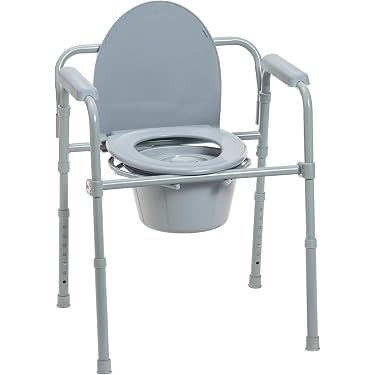
Commodes vs Bedside Toilets At a Glance
The table below shows how these terms are normally used.
| Feature | Commode | Bedside Toilet |
|---|---|---|
| Main use | Portable toilet | Toilet near the bed |
| Typical design | Chair with toilet opening | Usually the same |
| Location | Bedroom or other area | Usually beside a bed |
| Waste container | Often included | Often included |
| Height options | Varies by model | Varies by model |
| Best use | Flexible toilet access | Easy nighttime access |
Commode: A Simple Portable Toilet Option
A commode gives a user toilet access without needing to walk to a bathroom. It can be useful when the bathroom is far away or hard to reach.
The key point is that “commode” describes the product type, not one exact design.
Ease of Use
A good commode should be simple to sit on and stand from. Height is very important.
A seat that is too low may make standing harder. A seat that is too high may make it harder to place both feet firmly on the floor.
Look for:
- Easy-to-reach armrests
- A stable frame
- A comfortable seat
- A suitable seat height
- Simple bucket removal
- Easy-to-clean surfaces
Key Strengths
- Portable
- Useful near a bed
- Does not require a bathroom trip
- Many designs are simple to operate
- Can suit different room setups
Potential Drawbacks
- The bucket needs regular emptying
- Cleaning takes extra work
- Some models take up floor space
- Lightweight models may need careful handling
Bedside Toilet: A Convenient Use Case
A bedside toilet is usually not a completely different product. In many cases, it is simply a commode used beside a bed.
This makes the term more about where and how the product is used.
Ease of Use
The biggest benefit is short-distance access.
For a senior who finds nighttime bathroom trips difficult, having a toilet close to the bed may reduce the need to walk across a dark room.
Still, the setup matters. The commode should sit on a firm, level surface. There should also be enough room to approach it safely.
Key Strengths
- Convenient at night
- Reduces walking distance
- Easy to keep close to the bed
- Useful when the bathroom is not nearby
- Can provide more convenient toilet access
Potential Drawbacks
- Needs regular cleaning
- May be awkward in a small room
- Requires safe placement
- The user may still need help with transfers
Which Is Easier for Seniors to Use?
Because commode and bedside toilet often mean the same product, ease of use depends more on the specific model than the name.
A senior who has trouble standing may benefit from a higher seat. Someone with limited hand strength may prefer simple armrests and an easy-to-remove bucket.
The most useful features are usually:
- Stable legs
- Non-slip feet
- Comfortable height
- Strong armrests
- Easy bucket removal
- Simple cleaning
- Enough space around the frame
A simple design can be better than a complicated one when the product is used every day.
Performance Comparison
There is no major performance difference between a commode and a bedside toilet when both refer to the same type of portable toilet.
The important differences come from the model.
Consider:
- Weight capacity
- Frame stability
- Seat height
- Bucket size
- Armrest design
- Splash protection
- Ease of emptying
- Ease of cleaning
A stronger frame may be useful for some users. A lighter frame may be easier for a caregiver to move.
Comfort, Accessibility, and Senior-Friendly Design
Comfort matters because a commode may be used more than once each day.
A padded seat may feel more comfortable for some users. A wider seat may also provide more room. But padding can add cleaning work if the material absorbs moisture.
For easier transfers, armrests can give the user a place to hold while sitting down or standing up.
Other useful design points include:
- Suitable seat height
- Stable legs
- Comfortable armrests
- Easy-to-clean surfaces
- Clear space around the seat
- Simple bucket access
The right design should match the user’s actual needs rather than assumptions about age.
Features Comparison
The name alone tells you very little. Check the actual features before choosing a model.
| Feature | What to Look For | Why It Matters |
|---|---|---|
| Seat height | Suitable height | Easier sitting and standing |
| Armrests | Firm and easy to grip | Better support |
| Feet | Non-slip tips | Better stability |
| Bucket | Easy to remove | Faster cleaning |
| Seat | Smooth or padded | Better comfort |
| Frame | Strong construction | Supports safe use |
Price, Maintenance, and Long-Term Value
Commode prices can vary widely based on the frame, materials, padding, height adjustment, and added features.
A basic model may be enough for simple bedside use. A more adjustable model may offer better flexibility for different users.
Maintenance is also important.
The bucket should be emptied and cleaned regularly. The seat and frame should also be cleaned according to the product instructions.
Before buying, consider:
- Replacement bucket cost
- Replacement seat parts
- Cleaning needs
- Frame durability
- Adjustability
- Warranty
- Storage space
A low purchase price does not always mean better value if the product is difficult to clean or poorly suited to the user’s needs.
Who Should Choose a Commode?
A commode may make sense for someone who wants flexible portable toilet access.
Choose a commode if:
- The toilet needs to be moved between rooms.
- Bathroom access is difficult.
- A simple portable toilet is needed.
- The caregiver wants a flexible setup.
- The user needs a toilet close to a sleeping area.
Who Should Choose a Bedside Toilet?
A bedside toilet is useful when the main goal is convenient toilet access beside a bed.
Choose this setup if:
- Nighttime bathroom trips are difficult.
- The bathroom is far from the bedroom.
- A toilet needs to stay near the bed.
- The user needs a simple nighttime solution.
- A caregiver needs easier access to a portable toilet.
The important thing is to choose the right commode model, not just the label used in the product listing.
Commodes vs Bedside Toilets — Final Verdict
There is no meaningful product winner because commode and bedside toilet often describe the same basic product.
The better question is which commode design fits the user.
Best for flexible use: A portable commode that is easy to move.
Best for nighttime access: A stable commode placed beside the bed.
Best for ease of use: A model with the right seat height, firm armrests, and simple bucket removal.
Best value: A simple, sturdy model with features the user will actually use.
Scoring Summary
A numerical score would be misleading here because the two terms can describe the same product category.
| Category | Commode | Bedside Toilet |
|---|---|---|
| Ease of Use | Depends on model | Depends on model |
| Senior-Friendly Design | Depends on model | Depends on model |
| Comfort | Depends on model | Depends on model |
| Maintenance | Depends on model | Depends on model |
| Value | Depends on model | Depends on model |
The actual design should guide the decision rather than the product name.
How We Evaluate Products
For this type of comparison, the useful factors are practical ones.
We look at:
- Ease of use
- Stability
- Comfort
- Accessibility
- Cleaning
- Maintenance
- Setup
- Storage
- Long-term practicality
- Overall value
No hands-on testing should be assumed unless it has actually taken place.
Senior-Specific Buying Considerations
A few simple checks can make a commode much easier to use.
Physical Effort
Check whether the user can sit down and stand up without excessive bending or twisting.
Controls
A basic commode has few controls, but height adjustments or locking parts should still be simple.
Maintenance
Check how easily the bucket can be removed, emptied, and cleaned.
Storage
Measure the available space before buying. A large frame may not fit well beside a bed.
Setup
Look for a frame that is easy to assemble and adjust.
Safety
Place the commode on a firm, level surface. Make sure the frame is stable before use.
If the user has a significant mobility or balance concern, professional advice may help determine the safest setup.
Common Buying Mistakes
Avoid these common mistakes when choosing a bedside commode.
- Choosing based only on price
- Ignoring seat height
- Forgetting the available floor space
- Overlooking weight capacity
- Choosing a difficult-to-clean bucket
- Buying features that are not needed
- Failing to check frame stability
Safety
A bedside commode should be placed on a stable, level surface.
Check that the legs and feet are secure before use. If the model has adjustable legs, make sure they are locked correctly.
Keep the area around the commode clear. Loose rugs, cords, and clutter can make movement around the toilet harder.
For users with major balance or transfer concerns, ask a healthcare professional or qualified caregiver about the safest setup.
Conclusion
Commodes vs Bedside Toilets is often less of a product battle and more of a terminology issue. A bedside toilet is commonly a commode used beside the bed.
For most buyers, the useful comparison is between different commode designs. Focus on height, stability, comfort, bucket access, cleaning, and available space. The right model should make toilet access simpler without adding unnecessary complexity.
