
Toilet Safety Frame vs Toilet Rails: Which?


Lightweight Vacuum Cleaner

Non-Slip Slippers
Electric Mobility Scooter
For seniors, Toilet Safety Frame vs Toilet Rails is mainly a choice between broader support and simpler hand assistance. Both can make sitting down and standing up easier, but they work in different ways.
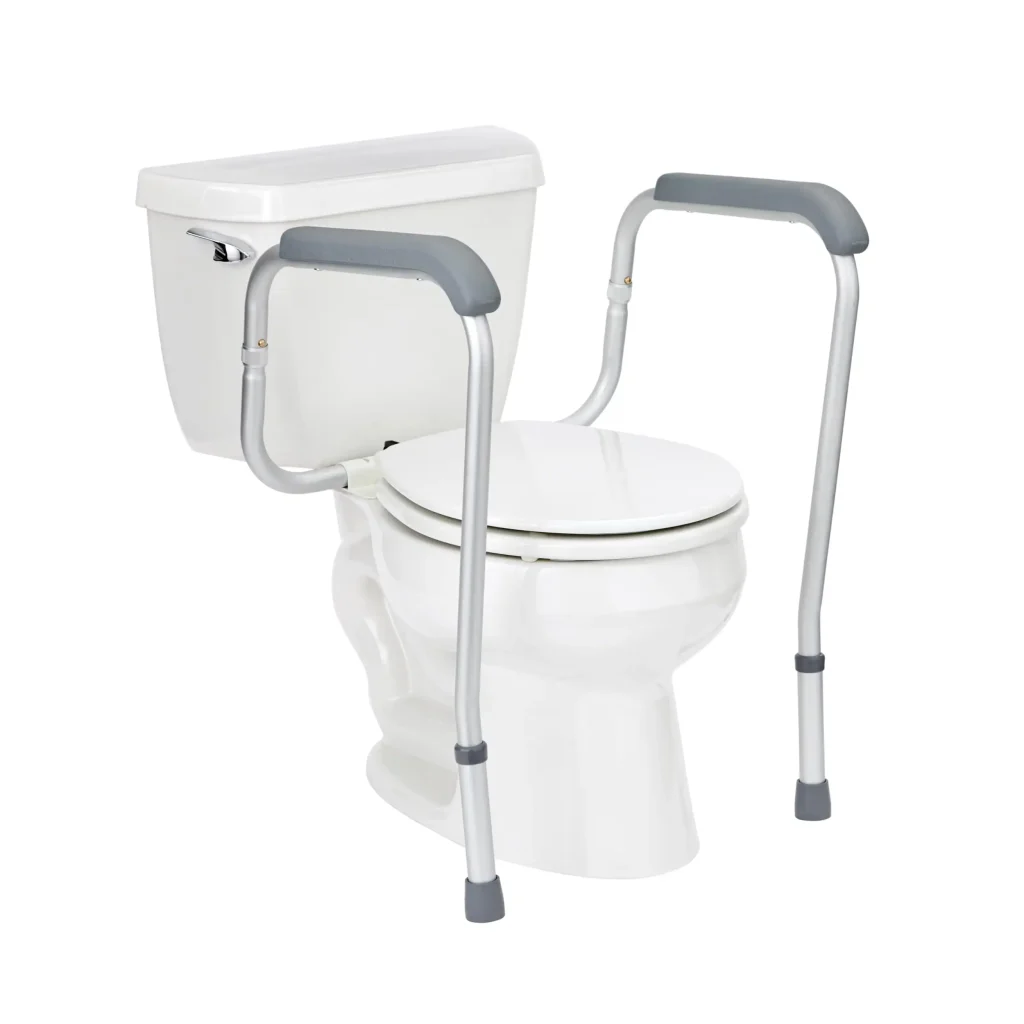
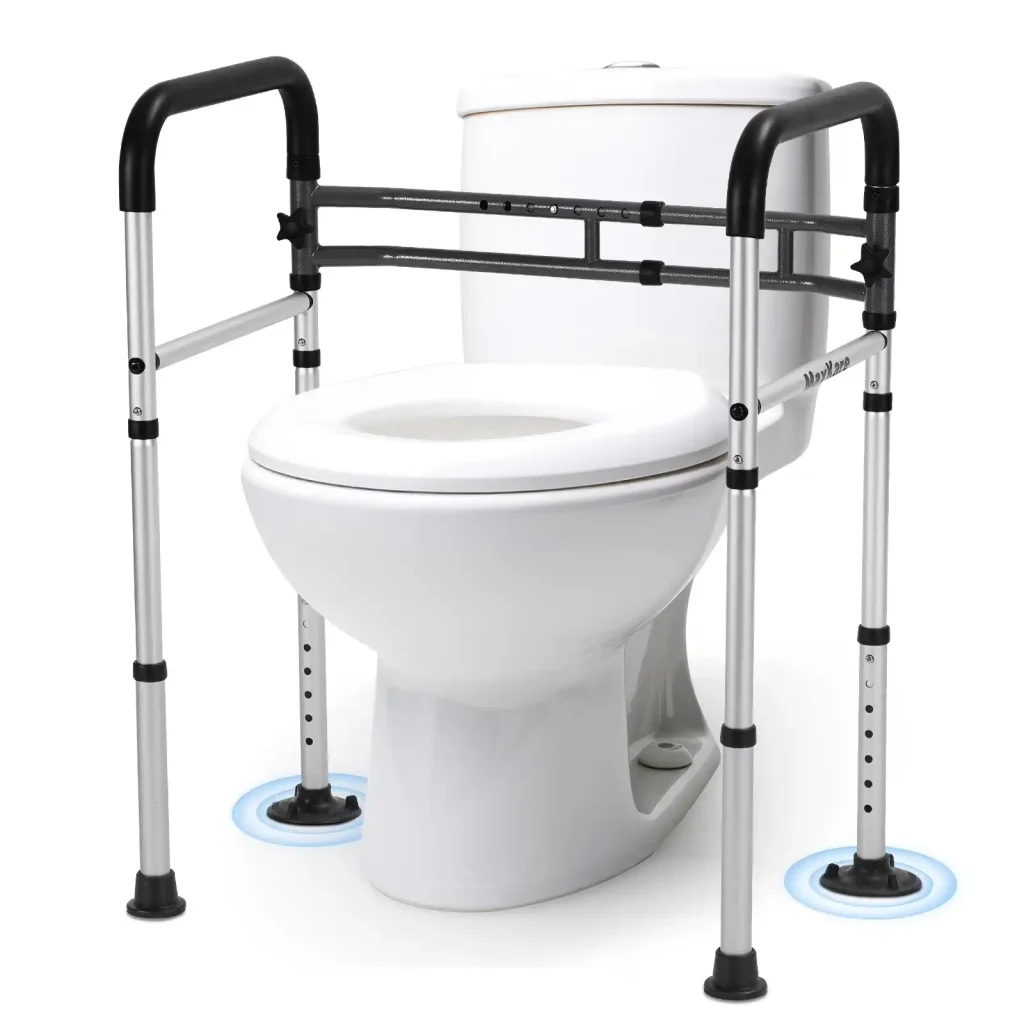
A toilet safety frame usually provides support on both sides of the toilet and often includes a wider frame around the user. Toilet rails are generally more compact and focus on giving the user one or two sturdy points to hold.
Quick Comparison
A toilet safety frame may be the better choice when a senior needs more stable support while sitting or standing. It can provide hand support on both sides and may feel more secure for everyday use.
Toilet rails may suit someone who wants a simpler setup with less equipment around the toilet. They can be useful when the main need is a firm handhold rather than a full support frame.
The right choice depends on bathroom space, balance, transfer ability, and how much support the user needs.
Toilet Safety Frame vs Toilet Rails At a Glance
The key difference is the amount of support surrounding the toilet. A frame usually offers a broader support structure, while rails tend to provide a more compact handhold.
| Feature | Toilet Safety Frame | Toilet Rails |
|---|---|---|
| Overall support | Broad support | Focused hand support |
| Hand assistance | Usually both sides | One or both sides |
| Space needed | More | Usually less |
| Stability | Good when properly fitted | Depends on mounting |
| Setup | Often around toilet | May attach to toilet or nearby surface |
| Portability | Some models are movable | Often more fixed |
| Best suited for | Users needing extra support | Users needing a simple handhold |
| Cleaning | More parts to clean | Usually simpler |
Toilet Safety Frame: What Makes It Useful?
A toilet safety frame creates a support structure around the toilet. This can give the user a place to hold while lowering onto the seat or pushing up to stand.
The larger design can be helpful when a user wants support on both sides.
Ease of Use
A frame is generally straightforward once it is correctly installed or positioned.
The user can place their hands on the armrests or side supports before sitting. The same supports can then help during the standing motion.
A useful advantage is that the support stays close to the toilet.
Key Strengths
- Provides support on both sides.
- Can make sitting and standing feel more controlled.
- May offer wider hand or arm support.
- Some designs can be adjusted for height.
- Can be useful for daily bathroom routines.
- May provide more support than a single rail.
Potential Drawbacks
- Takes up more space around the toilet.
- Can make a small bathroom feel crowded.
- Requires proper fitting and adjustment.
- Some frames may need more cleaning.
- A poorly positioned frame can become awkward to use.
A larger frame is not automatically better. The support should match the user’s actual needs and bathroom layout.
Toilet Rails: A Simpler Support Option
Toilet rails focus on providing a stable place to hold while using the toilet. Their smaller footprint can make them appealing in bathrooms where space is limited.
The exact design varies. Some rails attach around the toilet, while others may be installed beside it.
Ease of Use
Rails can be easy to understand because their main purpose is simple: provide a handhold.
A senior can use the rail to steady themselves while sitting or standing. This can be useful for someone who does not need the broader structure of a safety frame.
The key issue is placement. A rail should be positioned where the user can reach it comfortably without twisting or stretching.
Key Strengths
- Compact compared with many full frames.
- Provides a clear handhold.
- Can work well in smaller bathrooms.
- Usually has a simple purpose.
- May interfere less with movement around the toilet.
Potential Drawbacks
- May provide less overall support than a full frame.
- Stability depends on the installation method.
- Some designs may not suit every toilet.
- Poor positioning can make the rail difficult to reach.
- A single rail may not provide enough support for some users.
Which Is Easier for Seniors to Use?
Ease of use depends on the person’s strength, balance, reach, and bathroom setup.
A toilet safety frame may be easier for seniors who prefer support on both sides. Having two handholds can provide a more symmetrical way to sit and stand.
Toilet rails may be easier for someone who wants less equipment around the toilet. Their compact design can also help preserve walking space.
| Usability Factor | Toilet Safety Frame | Toilet Rails |
|---|---|---|
| Two-sided support | Usually yes | Depends on design |
| Space efficiency | Moderate | Usually better |
| Getting up | Broad hand support | Direct hand support |
| Reaching support | Usually easy | Depends on placement |
| Bathroom movement | Can reduce open space | Usually preserves more space |
Neither option should be chosen only because it looks simpler. The user should be able to reach the support without leaning too far or changing position awkwardly.
Performance Comparison
For these products, performance is less about mechanical power and more about stability, positioning, and practical support.
A safety frame generally performs well when the user benefits from support on both sides. It can provide a larger structure for controlled transfers.
Rails focus on a narrower task. Their main job is to give the user a firm place to hold.
The most important performance factor is therefore how securely and naturally the support can be used.
A frame may have an advantage for users who need more substantial assistance. Rails may work well when only a simple handhold is needed.
Comfort, Accessibility, and Senior-Friendly Design
Comfort comes from more than padded handles or armrests. The support should be easy to reach and should allow the user to maintain a natural position.
A safety frame may provide more room for both hands and can feel more supportive during transfers.
Rails can be less visually and physically intrusive. This can matter in a compact bathroom.
Consider:
- Handle height
- Handle position
- Distance from the toilet
- Available bathroom space
- Ease of gripping
- Clearance around the frame
- User’s normal sitting and standing motion
The best setup is one that supports the user without forcing an awkward movement.
Features Comparison
The most useful features are those that improve stability, fit, and everyday convenience.
| Feature | Toilet Safety Frame | Toilet Rails |
|---|---|---|
| Arm support | Often included | Depends on design |
| Adjustable height | Common on some models | Varies |
| Foldable design | Available on some frames | Less common |
| Compact footprint | Usually moderate | Often better |
| Two-sided support | Common | Varies |
| Installation flexibility | Depends on model | Depends on model |
Always check the individual product before buying because designs vary significantly within both categories.
Price, Maintenance, and Long-Term Value
Price can vary widely depending on materials, adjustability, mounting style, and included features.
A basic rail may cost less than a larger safety frame because it uses a simpler support structure. However, price alone does not determine value.
For long-term use, check:
- Frame or rail construction
- Mounting hardware
- Replacement parts
- Rust resistance
- Ease of cleaning
- Adjustment options
- Weight capacity
- Manufacturer support
A product that fits the toilet properly and remains stable may provide better practical value than a cheaper option that does not suit the bathroom.
Who Should Choose a Toilet Safety Frame?
A toilet safety frame may be a better fit for:
- Seniors who want support on both sides.
- Users who need help sitting down and standing up.
- People who prefer a wider support structure.
- Bathrooms with enough space around the toilet.
- Users who want armrests or larger hand supports.
- Caregivers looking for a more substantial toilet-support setup.
Who Should Choose Toilet Rails?
Toilet rails may be better suited to:
- Seniors who mainly need a firm handhold.
- Users with limited bathroom space.
- People who prefer a less bulky setup.
- Bathrooms where a larger frame would restrict movement.
- Users who can transfer with relatively little assistance.
- Anyone who wants support positioned close to the toilet.
Toilet Safety Frame vs Toilet Rails — Final Verdict
There is no universal winner because these products solve slightly different problems.
Best for broader support: Toilet Safety Frame
Best for compact support: Toilet Rails
Best for two-sided assistance: Toilet Safety Frame, when the model provides support on both sides
Best for smaller bathrooms: Toilet Rails, when properly installed and positioned
The main question is how much support the user actually needs. A safety frame offers a more substantial support structure, while toilet rails can provide a simpler and more space-efficient handhold.
Scoring Summary
Because toilet frames and rails come in many designs, fixed scores can be misleading. A product with excellent features may still be unsuitable if it does not fit the toilet or bathroom correctly.
Instead, compare the individual model using these factors:
| Category | What to Check | Why It Matters |
|---|---|---|
| Stability | Secure attachment | Reduces unwanted movement |
| Ease of use | Reach and grip | Makes transfers simpler |
| Fit | Toilet and bathroom compatibility | Prevents installation problems |
| Comfort | Handle and arm position | Supports natural movement |
| Maintenance | Cleaning and adjustment | Helps with regular use |
How We Evaluate Products
This comparison focuses on practical factors that matter during everyday bathroom use.
The main areas are:
- Ease of use
- Stability
- Accessibility
- Comfort
- Space requirements
- Setup
- Cleaning
- Long-term practicality
- Overall fit for the user’s needs
No hands-on testing is assumed. Individual products should be checked against their current specifications before purchase.
Senior-Specific Buying Considerations
Physical Effort
Think about how much effort is needed to sit and stand. The support should be easy to reach without excessive bending, twisting, or pulling.
Grip
Look for handles that are easy to hold. A comfortable grip can matter if the user relies on the support several times each day.
Setup
Check whether the frame or rail fits the toilet and bathroom correctly. Follow the manufacturer’s installation instructions.
Storage and Space
Measure the area around the toilet. A large frame may reduce walking space in a small bathroom.
Safety
Do not assume that any rail or frame is safe simply because it is marketed for seniors. Check the manufacturer’s weight capacity, attachment method, and installation requirements.
If the user has significant balance or mobility concerns, professional guidance may help determine what type of bathroom support is appropriate.
Common Buying Mistakes
Avoid these common mistakes when choosing between the two:
- Choosing based only on price.
- Ignoring the available bathroom space.
- Failing to check weight capacity.
- Buying without checking toilet compatibility.
- Choosing a support that is difficult to reach.
- Assuming every rail provides the same level of stability.
Safety
Installation matters as much as the product itself.
A loose frame or poorly secured rail can create an unexpected movement when someone puts their weight on it. Follow the manufacturer’s instructions and check the attachment points regularly.
Keep the floor around the toilet as dry and clear as possible. Avoid placing objects where they could interfere with the user’s movement.
Bathroom support equipment should provide stability, not become another obstacle.
Conclusion
The main difference between a toilet safety frame and toilet rails is the level and style of support they provide. A safety frame generally offers broader, two-sided assistance, while toilet rails can provide a simpler and more compact handhold.
For seniors who need more substantial support around the toilet, a properly fitted safety frame may be the better match. For someone who mainly wants a convenient handhold and has limited bathroom space, toilet rails may make more sense. The safest choice is the one that fits the bathroom, matches the user’s needs, and can be used comfortably and securely every day.
