
Transfer Bench vs Bath Chair: Which?


Gardening Kneeler Bench

Large Display Clock with Date

Bed Exit Alarm Sensor
A Transfer Bench vs Bath Chair comparison matters when a senior needs a safer way to sit while bathing. The key difference is how the person gets into the tub or shower.
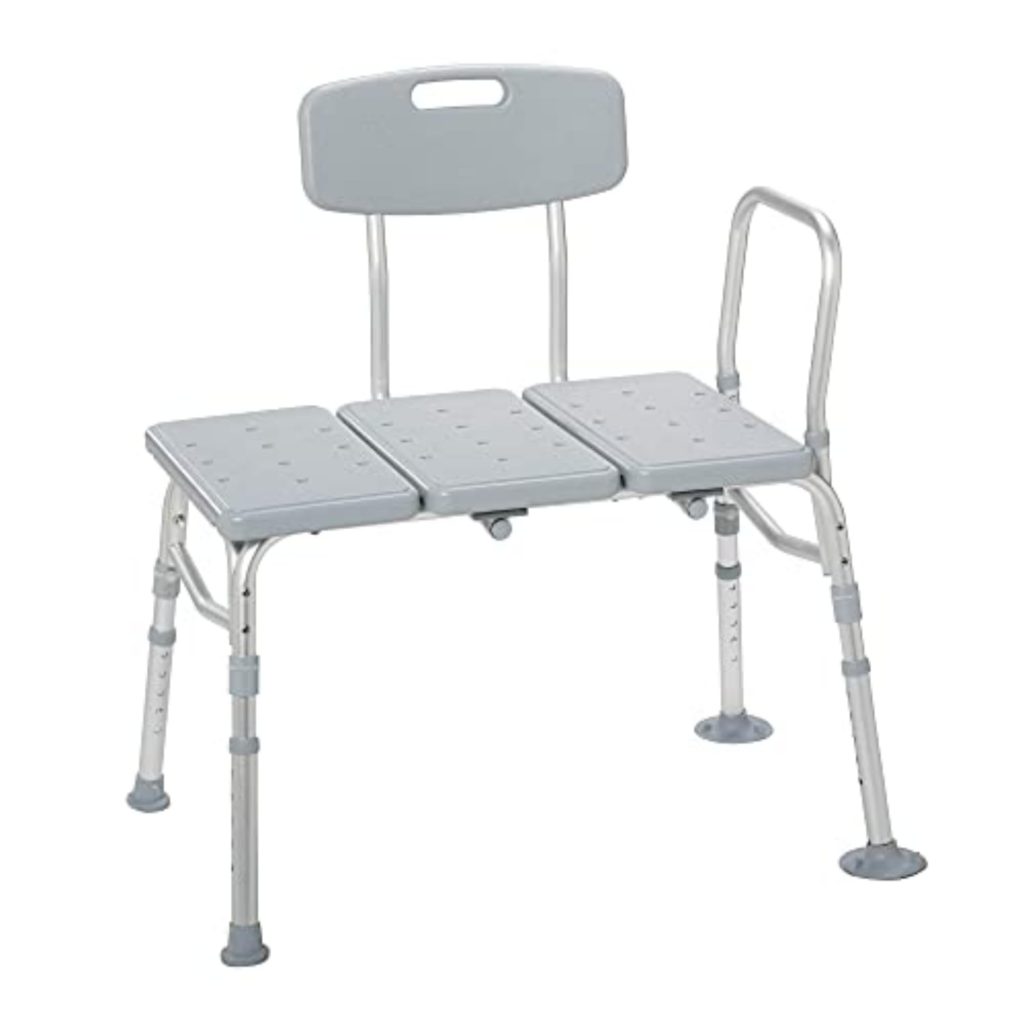
A transfer bench extends across the tub wall, allowing the user to sit outside the tub and slide across. A bath chair usually stays inside the tub or shower and is better suited to seated bathing when stepping into the bathing area is already manageable.
Quick Comparison
For seniors who have trouble stepping over a bathtub wall, a transfer bench is usually the more suitable option because it supports a seated transfer. A bath chair is simpler and often takes less space when the user can safely enter the tub or shower.
The main decision is not simply comfort. It is whether getting into the bathing area or sitting during the shower is the bigger challenge.
Transfer Bench vs Bath Chair At a Glance
Both products provide a seated place for bathing, but their designs solve different problems.
| Feature | Transfer Bench | Bath Chair |
|---|---|---|
| Main purpose | Helps with tub transfers | Provides seated bathing |
| Tub entry | Easier seated transfer | Requires entering the tub |
| Position | Bridges tub wall | Sits inside tub or shower |
| Space needed | More | Usually less |
| Setup | More involved | Usually simpler |
| Best for | Difficult tub entry | Users who can enter safely |
| Portability | Moderate | Usually easier |
| Caregiver assistance | Can reduce transfer effort | Depends on user’s mobility |
Transfer Bench for Senior Bathing
A transfer bench is designed to help a person move into a bathtub while seated. Many models extend from outside the tub to inside it, so the user can sit down first and then move across the seat.
Ease of Use
The main advantage is the transfer process. Instead of lifting a leg over the tub wall while standing, the user can sit and move across the bench.
Many models have adjustable legs, backrests, handles, and non-slip feet. Some models also fold or slide.
A transfer bench is mainly about making the transition into and out of the tub easier.
Key Strengths
- Supports seated tub entry
- Useful when the tub wall is difficult to step over
- Many models have adjustable height
- Backrests and handles can add support
- Available in different weight capacities
- Some models can also be used in showers
Potential Drawbacks
- Takes more bathroom space
- Usually needs more setup than a basic bath chair
- May interfere with a shower curtain or bathroom door
- Correct positioning and height adjustment are important
- Some models are relatively heavy or bulky
Bath Chair for Simple Seated Bathing
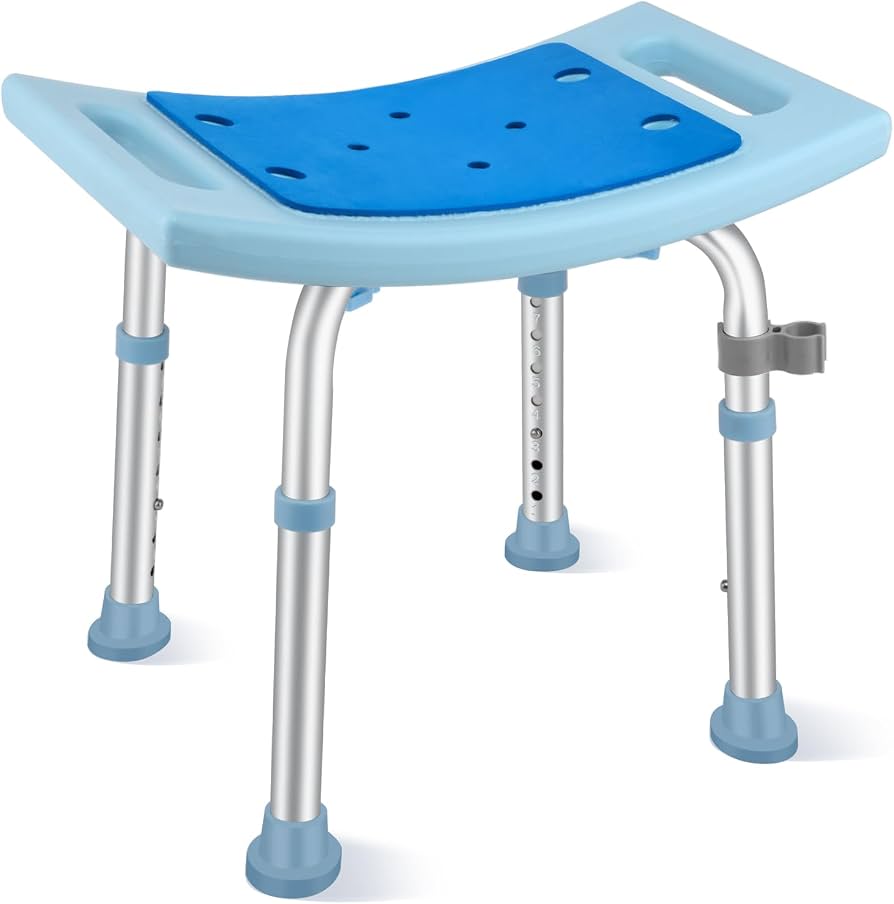
A bath chair is designed to provide a place to sit inside the tub or shower. It does not normally extend across the tub wall like a transfer bench.
For someone who can safely enter the bathing area but prefers not to stand for the entire shower, a bath chair can be a simpler solution. Medline describes bath and shower chairs as seating that fits inside the tub or shower, while transfer chairs bridge the tub wall.
Ease of Use
Bath chairs generally have a straightforward design. The user enters the tub or shower, sits down, and bathes while seated.
This can make them practical for everyday use when the main concern is standing endurance rather than tub entry.
Key Strengths
- Simple design
- Usually easier to position
- Often takes less space
- Provides seated bathing
- Can be suitable for walk-in showers
- Usually easier to remove and store
Potential Drawbacks
- Does not solve the problem of stepping over a high tub wall
- May provide less assistance during entry and exit
- Some tubs have limited space for a chair
- Seat height must still be suitable for the user
Which Is Easier for Seniors to Use?
The answer depends on where the difficulty occurs.
If stepping over the tub wall is the main challenge, a transfer bench may be easier because the user can sit before moving into the tub. Health New Zealand’s guidance describes sitting at the end of the bench and sliding across it before bringing the legs over the tub edge.
If entering the shower or tub is already easy but standing during bathing is tiring, a bath chair may be simpler.
| Need | More Suitable Option | Why |
|---|---|---|
| Trouble stepping over tub wall | Transfer bench | Allows seated transfer |
| Needs a place to sit | Bath chair | Simple seated bathing |
| Limited bathroom space | Bath chair | Usually more compact |
| Needs help moving across tub | Transfer bench | Extends across tub |
| Walk-in shower | Bath chair | Transfer may not be necessary |
| Standard bathtub | Transfer bench | Designed for tub-wall transfers |
Performance Comparison
For these products, performance is less about mechanical power and more about stability, transfer support, fit, and usability.
A transfer bench performs its main job by creating a seated path across the tub wall. Bath chairs focus more on providing stable seating once the user is already inside the bathing area.
A transfer bench therefore has an important advantage when tub entry is the main problem. A bath chair can be more practical when the bathroom layout allows easy entry and the main need is seated bathing.
Comfort, Accessibility, and Senior-Friendly Design
Comfort depends on seat size, back support, height, and how easily the user can sit down and stand up.
Transfer benches can include handles, padded seats, adjustable legs, and reversible backrests. Some models are designed for different tub configurations.
Bath chairs can offer similar seating features but normally do not provide the same transfer surface across the tub wall.
For either option, check:
- Seat height
- Seat width
- Back support
- Arm support
- Non-slip feet
- Drainage holes
- Weight capacity
- Available bathroom space
Features Comparison
The exact features vary by model, so specifications should be checked before purchase. Current transfer benches can include adjustable height, reversible backrests, non-slip surfaces, and different weight capacities.
| Feature | Transfer Bench | Bath Chair |
|---|---|---|
| Adjustable height | Common | Common |
| Back support | Common | Common |
| Arm support | Available on some models | Available on some models |
| Transfer surface | Yes | No |
| Non-slip feet | Common | Common |
| Drainage holes | Common | Common |
| Folding models | Available | Available |
| Tub-wall bridging | Yes | No |
Price, Maintenance, and Long-Term Value
Price varies widely by design and features. Basic bath chairs can be less complicated than transfer benches, while transfer benches may cost more because of their larger frame and transfer-focused design.
Maintenance is fairly simple for both. Look for smooth, easy-to-clean surfaces and drainage holes that prevent water from pooling.
Long-term value depends more on whether the product solves the actual bathing problem than on the initial purchase price.
A cheaper bath chair may not be useful if stepping over the tub wall is difficult. Likewise, a larger transfer bench may be unnecessary when a person already has easy access to a walk-in shower.
Who Should Choose a Transfer Bench?
Choose a transfer bench if:
- Stepping over the tub wall is difficult.
- The user needs to sit before entering the tub.
- A seated transfer is more manageable than standing entry.
- A caregiver needs more room to assist with the transfer.
- The bathroom has enough space for the longer bench.
- The tub is compatible with the bench design.
Who Should Choose a Bath Chair?
Choose a bath chair if:
- The user can safely enter the tub or shower.
- Standing for the whole shower is uncomfortable or tiring.
- A simple seated bathing solution is preferred.
- Bathroom space is limited.
- The main need is seating rather than transfer assistance.
- The chair fits securely in the available tub or shower.
Final Verdict
A transfer bench is generally more appropriate when getting over the bathtub wall is the main difficulty. Its longer seat lets the user sit outside the tub and move across instead of making the transfer while standing.
A bath chair makes more sense when tub or shower entry is already manageable and the main goal is to provide a stable place to sit while bathing.
The right choice depends on the bathroom layout, tub height, available space, user height and weight, and the person’s ability to transfer safely.
Scoring Summary
Because these are different types of bathing aids rather than identical products, a fixed numerical score can hide important differences. A better comparison is based on the user’s actual need.
| Category | Transfer Bench | Bath Chair |
|---|---|---|
| Tub transfer support | Strong | Limited |
| Simple seated bathing | Strong | Strong |
| Space efficiency | Moderate | Usually better |
| Setup simplicity | Moderate | Usually easier |
| Accessibility for difficult tub entry | Strong | Limited |
| Everyday shower seating | Strong | Strong |
How We Evaluate Products
This comparison focuses on practical factors that matter when selecting senior bathing equipment.
These include:
- Ease of use
- Transfer requirements
- Stability
- Comfort
- Bathroom fit
- Setup
- Cleaning
- Storage
- Weight capacity
- Long-term practicality
The comparison does not assume hands-on testing or personal product experience. Individual models can differ substantially in design and specifications.
Senior-Specific Buying Considerations
Before choosing either product, measure the bathroom and think about how the user actually enters the bathing area.
Physical Effort
Consider whether the user needs to lift a leg over the tub, bend, twist, or stand for long periods.
Setup
Check whether the legs can be adjusted to create a level and stable seat. Transfer benches should be positioned carefully and adjusted to the user’s needs.
Storage
Measure the available space before choosing a larger transfer bench. Some models fold for easier storage.
Weight Capacity
Always check the manufacturer’s stated weight capacity. Capacities vary substantially between models.
Bathroom Fit
Check the tub width, tub-wall height, shower space, door or curtain position, and clearance around the seat.
Common Buying Mistakes
- Choosing a bath chair when tub entry is the real problem
- Buying a transfer bench without measuring the tub
- Ignoring seat height
- Forgetting weight capacity
- Overlooking bathroom clearance
- Choosing a bulky model for a small bathroom
Safety
A bathing aid does not automatically make a bathroom safe.
Make sure the equipment is level and stable before use. Adjustable transfer benches should have their legs set correctly, with adjustment buttons fully engaged. Health New Zealand also advises checking that the bench is level and stable before use.
Wet bathroom surfaces can increase fall risk, so users should avoid rushing during transfers. If a person has significant mobility or balance concerns, professional guidance from an appropriate healthcare or occupational therapy professional may help determine the right equipment.
Frequently Asked Questions
Is a transfer bench better than a bath chair?
Neither is automatically better. A transfer bench is more useful when getting over the tub wall is difficult. A bath chair is often enough when the user can enter safely but needs seated bathing.
Can a transfer bench be used as a shower chair?
Many transfer benches can be used in a shower, depending on the model and bathroom layout. Some manufacturers specifically describe their transfer benches as usable in showers as well as tubs.
Does a transfer bench need to be inside the bathtub?
Not usually. A traditional transfer bench extends across the tub wall, with part of the bench outside and part inside the tub.
Is a bath chair easier to store?
Often, yes. A basic bath chair usually has a smaller footprint than a full transfer bench, although folding transfer benches are also available.
What should I measure before buying?
Measure the tub width and wall height, bathroom clearance, available seating space, and the height needed for comfortable sitting and standing.
Conclusion
The main difference in Transfer Bench vs Bath Chair is the problem each product solves. A transfer bench is designed to make tub entry easier through a seated transfer, while a bath chair mainly provides a stable place to sit during bathing.
For someone who can enter the shower or tub safely but wants to avoid prolonged standing, a bath chair may be enough. For someone who struggles with the tub wall itself, a transfer bench provides a different level of transfer support. The safest choice is the one that fits the bathroom and the user’s actual transfer needs.
