
Fitbit vs Pedometer: Which Is Better for Seniors?


Smart Health Watch for Seniors

Jar Opener for Weak Hands

Bathroom Grab Bar Set
Fitbit vs Pedometer is not quite a traditional brand-to-brand comparison. A Fitbit is a wearable activity tracker, while a basic pedometer is mainly designed to count steps. That difference matters for seniors who want either simple step counting or a broader picture of daily activity.
For someone who only wants to know how many steps they take, a basic pedometer can be easier and less distracting. A Fitbit can make more sense for seniors who want steps plus heart rate, sleep, exercise, distance, and other activity information. Fitbit devices use a 3-axis accelerometer to count steps and can also track other movement data.
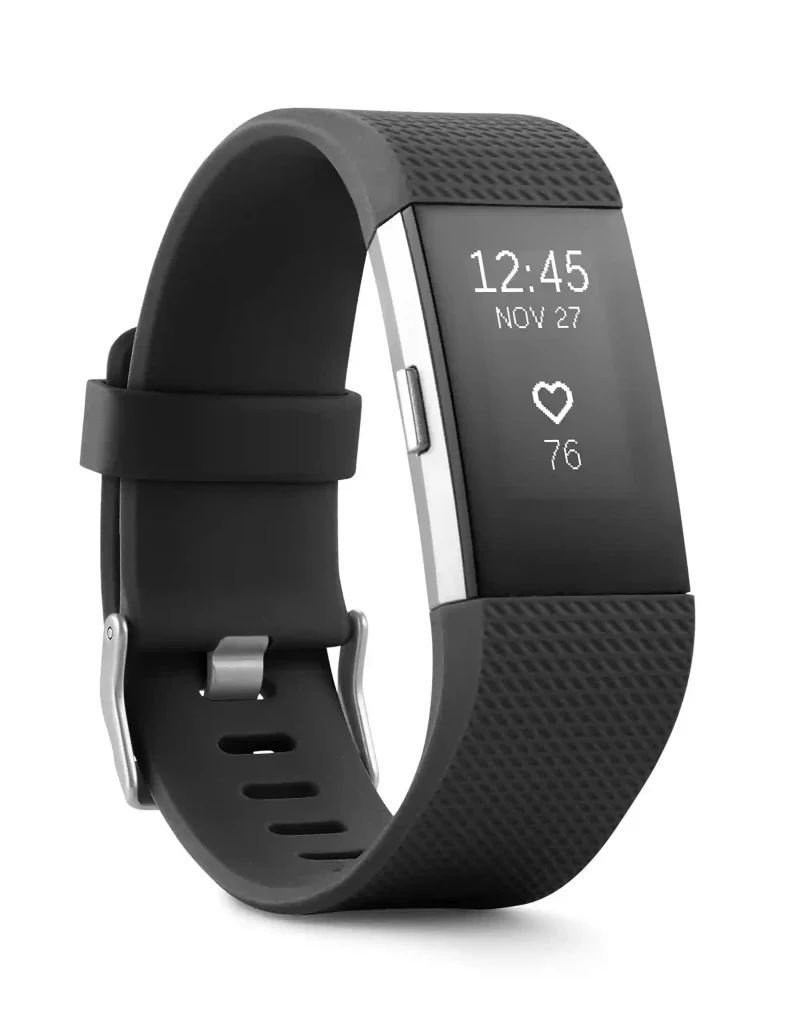
Quick Comparison
For most seniors who want simple step counting, a pedometer is the easier option. It usually has fewer settings and fewer things to learn.
For seniors who want more than step counting, a Fitbit can offer much more. For example, the current Fitbit Charge 6 tracks steps, distance, heart rate, sleep, exercise, and other fitness data. It also has built-in GPS and a battery rated for up to seven days.
The key question is simple: Do you want a step counter, or do you want a broader activity tracker?
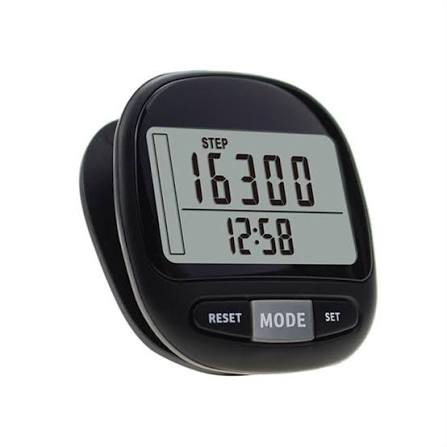
Fitbit vs Pedometer At a Glance
The biggest difference is the amount of information each option provides.
| Feature | Fitbit | Basic Pedometer |
|---|---|---|
| Step counting | Yes | Yes |
| Distance tracking | Yes | Some models |
| Heart rate | Many models | Usually no |
| Sleep tracking | Many models | Usually no |
| Exercise tracking | Yes | Limited |
| GPS | Some models | Usually no |
| Smartphone app | Yes | Usually no |
| Setup | More involved | Usually simple |
| Daily charging | Depends on model | Often not needed |
| Best for | Detailed tracking | Simple step counting |
Fitbit Features for Everyday Senior Use
A Fitbit can be appealing when a senior wants more information than a daily step total. The Charge 6, for example, tracks steps, distance, calories, heart rate, Active Zone Minutes, sleep, and exercise. It also supports built-in GPS and smartphone notifications.
Ease of Use
A Fitbit requires more setup than a simple pedometer. The device normally needs to be paired with a phone and used with the Fitbit or Google Health experience.
Once it is configured, much of the tracking happens automatically. Fitbit says its devices use a 3-axis accelerometer to count steps and analyze movement patterns.
For a senior who is comfortable using a smartphone, this can be convenient. For someone who wants only a step number, the extra features may feel unnecessary.
Key Strengths
- Tracks more than steps
- Can show activity trends
- Many models track heart rate
- Some models track sleep
- Some models include GPS
- Can provide exercise information
- Data can be viewed through a smartphone
Potential Drawbacks
- More setup than a basic pedometer
- Requires learning additional features
- Depends on a phone for some functions
- Needs periodic charging
- Some advanced features may require a paid Google Health Premium membership.
Basic Pedometer Features for Seniors
A basic pedometer takes a much simpler approach. Its main purpose is to count steps.
That simplicity can be a major advantage. A senior who does not want smartphone apps, notifications, health dashboards, or multiple settings may find a basic pedometer easier to understand.
Ease of Use
There is usually little to learn. Depending on the model, a pedometer can be clipped to clothing or carried in a pocket.
This makes it useful for someone who wants a straightforward answer to one question: How much did I walk today?
Pedometers have also been used in research involving older adults because they provide simple feedback about step activity. Research reviews describe them as inexpensive and easy to use, although accuracy can decrease at slower walking speeds and with variable gait patterns.
Key Strengths
- Simple operation
- Focused mainly on steps
- Usually lightweight
- No smartphone needed for many models
- Fewer settings to manage
- Good choice for basic walking goals
Potential Drawbacks
- Few features beyond step counting
- Usually no heart-rate tracking
- Usually no sleep tracking
- Limited activity information
- Basic models may provide less useful data for long-term tracking
Which Is Easier for Seniors to Use?
For basic step counting, a pedometer is generally simpler.
There are fewer controls and less information to manage. A senior who does not use smartphones often may also find a basic pedometer more comfortable.
A Fitbit may be easier for seniors who already use a smartphone and want automatic tracking. Once the initial setup is complete, the device can collect several types of activity information without requiring the user to manually record every walk.
Fitbit step counting is based on an accelerometer, and research in community-dwelling older adults found strong agreement between Fitbit step counts and comparison methods.
The choice therefore depends less on age and more on comfort with technology and the amount of information wanted.
Performance Comparison
Both options can count steps, but they approach activity tracking differently.
A pedometer focuses mainly on the number of steps. That can be useful when the goal is simply to monitor walking.
A Fitbit can put steps into a larger activity picture. Depending on the model, it can also record distance, heart rate, exercise, sleep, and other metrics.
| Performance Area | Fitbit | Pedometer |
|---|---|---|
| Step tracking | Strong | Strong for basic use |
| Activity detail | High | Low |
| Exercise tracking | Yes | Limited |
| Heart-rate data | Many models | No |
| Sleep information | Many models | No |
| Movement trends | Yes | Limited |
One important point is that neither device should be treated as perfectly precise in every situation. Research has found that step-count accuracy can vary with walking speed and gait pattern, especially among older adults with slower or less consistent walking.
Comfort, Accessibility, and Senior-Friendly Design
A simple pedometer has an obvious accessibility advantage: it has fewer functions.
There is less information to read and fewer settings to understand. This can be useful for seniors who prefer simple devices.
A Fitbit puts more information directly on the wrist. The Charge 6, for example, has a color touchscreen and a side navigation button. Its listed weight is 30 grams.
For someone who already wears a watch and enjoys seeing information at a glance, that design can be convenient.
| Senior Need | Fitbit | Pedometer |
|---|---|---|
| Simple operation | Moderate | High |
| Large amount of information | High | Low |
| Smartphone integration | High | Usually none |
| Minimal learning | Moderate | High |
| Wearable convenience | High | High |
| Technology-free use | Low | High |
Features Comparison
The feature gap is where Fitbit and a basic pedometer differ most.
| Feature | Fitbit | Pedometer |
|---|---|---|
| Steps | Yes | Yes |
| Distance | Yes | Some models |
| Heart rate | Many models | No |
| Sleep | Many models | No |
| GPS | Some models | No |
| Exercise modes | Yes | Usually no |
| Smartphone app | Yes | Usually no |
| Notifications | Some models | No |
For example, Fitbit Charge 6 includes built-in GPS, heart-rate tracking, more than 40 exercise modes, sleep tracking, smartphone notifications, and Google Maps and Wallet features.
Those features can be useful, but they are not automatically better for someone who only wants to count steps.
Price, Maintenance, and Long-Term Value
A basic pedometer is usually the simpler ownership choice because it does not need the same ecosystem as a Fitbit.
A Fitbit costs more because it does much more than count steps. It also needs periodic charging. Charge 6 is rated for up to seven days of battery life, although some features can increase charging frequency.
There can also be a difference in ongoing costs. Some advanced Fitbit features are connected to Google Health Premium, while a basic pedometer generally does not require a subscription.
| Cost Factor | Fitbit | Pedometer |
|---|---|---|
| Initial cost | Higher | Usually lower |
| Charging | Required | Usually not |
| Smartphone | Useful/required for many features | Usually not |
| Subscription | Some advanced features | Usually none |
| Maintenance | Charging and app/device care | Usually minimal |
The better value depends on what the user will actually use. Paying for features that are never used is not good value.
Who Should Choose Fitbit?
Choose a Fitbit if:
- You want more than step counting.
- You already use a smartphone.
- You want to monitor activity over time.
- Heart-rate tracking matters to you.
- You want sleep or exercise tracking.
- You like seeing several measurements in one place.
- You want GPS on supported models.
A Fitbit can be particularly useful for seniors who enjoy tracking daily activity and are comfortable with connected technology.
Who Should Choose a Pedometer?
Choose a basic pedometer if:
- You mainly care about daily steps.
- You prefer simple devices.
- You do not want smartphone integration.
- You want fewer settings.
- You do not want regular charging.
- You want a straightforward walking tracker.
- You prefer spending less on extra features.
A pedometer can also be a good starting point for someone who is new to tracking daily walking.
Fitbit vs Pedometer — Final Verdict
Best for simple step counting: Pedometer
Best for broader activity tracking: Fitbit
Best for smartphone users: Fitbit
Best for minimal setup: Pedometer
Best for heart-rate and sleep information: Fitbit
Best for a simple, focused device: Pedometer
There is no need to choose a Fitbit simply because it has more features. A basic pedometer may be the better fit for someone who wants a clear step count without managing an app or multiple health metrics.
Scoring Summary
Because Fitbit and pedometers are different types of products, scores can hide the most important trade-off. A simple comparison is more useful than pretending they are identical products.
| Category | Fitbit | Pedometer |
|---|---|---|
| Ease of Use | Very Good | Excellent |
| Senior-Friendly Simplicity | Good | Excellent |
| Activity Tracking | Excellent | Basic |
| Features | Excellent | Basic |
| Maintenance | Good | Excellent |
| Long-Term Practicality | Very Good | Very Good |
These ratings are based on the product categories rather than one specific pedometer model. Individual products can differ.
How We Evaluate Products
For this comparison, the main factors are simplicity, step tracking, accessibility, setup, comfort, maintenance, useful features, and long-term practicality.
The goal is not to reward the product with the most technology. It is to see which type of device fits the user’s needs.
Research also suggests that activity trackers and apps may increase physical activity in older adults in the short term, although evidence for lasting effects is less certain.
Senior-Specific Buying Considerations
Physical Effort
Neither option should require much physical effort. The main consideration is whether wearing, charging, or handling the device feels comfortable.
Controls
Check whether the display and controls are easy to understand. A simple pedometer may have an advantage when fewer controls are preferred.
Maintenance
Consider how often the device needs charging and whether smartphone setup is required.
Setup
A Fitbit needs more initial configuration. A basic pedometer can often be used with much less setup.
Tracking Needs
Think about the information that actually matters. If steps are enough, extra features may not add much value.
Safety
Do not treat step counts, heart-rate readings, or other wearable measurements as a diagnosis. If activity goals are being changed because of a medical condition or mobility concern, professional guidance may be appropriate.
Common Buying Mistakes
- Buying a Fitbit only because it has more features
- Choosing a pedometer without checking how it is worn
- Ignoring smartphone requirements
- Forgetting about charging
- Paying for advanced features that will not be used
- Assuming every step counter works equally well at very slow walking speeds
Step-count accuracy can be affected by walking speed and gait, so this is especially worth considering for seniors with slower or unusual walking patterns.
Frequently Asked Questions
Is a Fitbit better than a pedometer for seniors?
It depends on the goal. Fitbit is more useful for broader activity tracking, while a basic pedometer is simpler for counting steps.
Does a Fitbit count steps like a pedometer?
Yes. Fitbit devices use an accelerometer to count steps.
Is a pedometer easier to use than a Fitbit?
For simple step counting, usually yes. A pedometer generally has fewer controls and requires less setup.
Does Fitbit require a smartphone?
A smartphone is useful for the Fitbit app and many connected features. The exact requirements depend on the Fitbit model and feature being used. Current Charge 6 documentation lists Android and iOS compatibility.
Does a Fitbit need charging every day?
Not necessarily. Fitbit Charge 6 is rated for up to seven days of battery life, although certain features can require more frequent charging.
Can a pedometer be enough for daily walking?
Yes. If the main goal is to monitor daily steps, a basic pedometer can provide the information needed without the additional features of a fitness tracker.
Conclusion
The main difference between Fitbit vs Pedometer is simple: Fitbit is a broader activity-tracking system, while a basic pedometer focuses on steps. For seniors who want simplicity, fewer controls, and basic walking feedback, a pedometer can be a practical choice.
For seniors who want steps along with heart rate, exercise, sleep, distance, and other activity information, Fitbit offers a much broader set of tools. The best choice is the one that provides the information the user actually wants without adding unnecessary complexity.
