
Walking Cane Collar Explained: What It Is, What It Does, and When It Matters


Easy Grip Knife Set

Electric Food Chopper

Gardening Kneeler Bench
Quick Answer
A walking cane collar is the ring or sleeve positioned where the cane handle meets the shaft. Depending on the cane, it may strengthen that joint, create a smoother transition, or simply add decoration; it is separate from the rubber tip or ferrule at the bottom. If you rely on a cane for mobility, also review proper cane use and safety guidance.
What the collar can do
- Join the parts: It sits around the meeting point between the handle and shaft.
- Add reinforcement: Some collars help strengthen the upper section of wooden canes.
- Improve the finish: A collar can hide or soften the visible transition between two components.
- Add style: Brass, silver-colored, and decorative collars are common on dress canes and handcrafted sticks.
- Not always required: Many modern mobility canes work safely without a separate visible collar.
One important check
- If the handle moves, twists, cracks, or separates from the shaft, do not assume tightening or replacing the collar alone will make the cane safe.
The first time I heard someone ask about a “cane collar,” I understood the confusion. The collar is easy to see on many traditional canes, yet it rarely gets explained.
This guide explains where the collar sits, what it does, and how it differs from other walking cane parts. I’ll also cover inspection, replacement, materials, and the safety issues that matter if you depend on your cane every day.
In This Guide
- What Is a Walking Cane Collar?
- What Does a Cane Collar Actually Do?
- How Is a Collar Different From Other Cane Parts?
- Does Every Walking Cane Need a Collar?
- What Are Walking Cane Collars Made From?
- How Can You Tell if a Cane Collar Is Loose or Damaged?
- Can You Replace or Add a Walking Cane Collar?
- How Should You Inspect a Cane for Safe Use?
- Frequently Asked Questions
- Final Takeaway
What Is a Walking Cane Collar?
A walking cane collar is a ring, band, or short sleeve fitted around the cane near the joint between its handle and shaft. On traditional canes, it is usually easy to spot just below the handle.
Think of it as a finishing piece around an important connection. It may be functional, decorative, or designed to do both jobs.
Simple definition: A walking cane collar is the fitted band around the handle-to-shaft area of a cane.
Where is the collar located?
On a classic wooden cane, look directly beneath the handle. A brass, chrome-colored, silver-colored, or contrasting ring in that area is usually the collar.
Some collars are narrow and look like jewelry around the cane. Others are deeper sleeves that cover more of the joint.
Is a collar the same as a cane ferrule?
No. The collar sits near the top of the cane, while the ferrule is associated with the bottom end.
People sometimes call the rubber ground-contact piece a tip or ferrule. That lower component affects traction, while the collar deals with the upper handle-and-shaft area.
What Does a Cane Collar Actually Do?
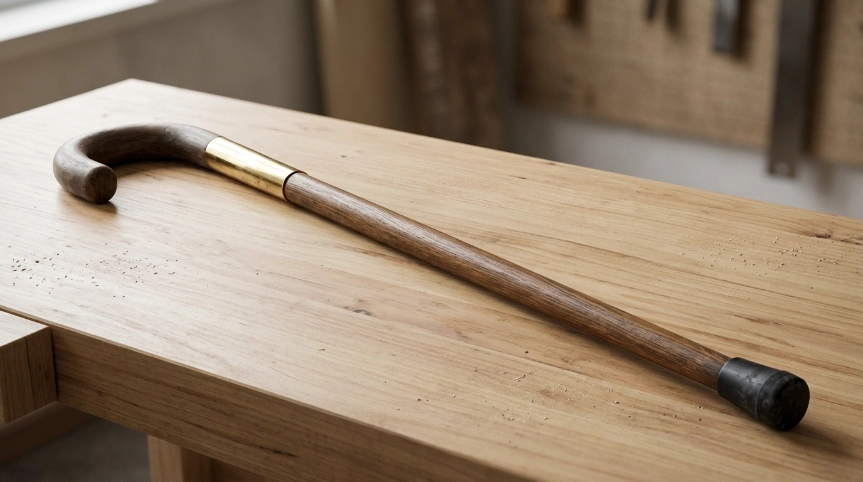
A cane collar can have several purposes, but its exact job depends on how the cane was built. You should never assume every collar is a load-bearing component.
- Reinforcement: On some wooden canes, the collar helps strengthen the upper shaft around the handle joint.
- Joint finishing: It can cover small gaps or create a neat transition between handle and shaft.
- Protection: A properly designed collar may protect the edge of the wood around the connection.
- Decoration: Polished metal provides contrast and gives traditional canes a more finished appearance.
- Design continuity: Decorative collars can visually connect a metal, resin, horn-style, or wooden handle to the shaft below.
Does the collar make a cane stronger?
It can on certain designs. Specialty cane makers use collars around wooden shafts partly to reinforce the area where the handle joins the wood.
That does not mean the collar can rescue a failing cane. A cracked shaft, loose handle, damaged fastener, or failed adhesive needs proper repair or replacement.
Practical tip: Treat the collar as one part of the cane’s construction. Never use its appearance alone to judge whether a cane is safe to bear weight.
How Is a Collar Different From Other Cane Parts?
The easiest way to understand a collar is to compare it with the other major cane components. Each part handles a different job.
| Cane Part | Typical Location | Main Purpose | Common Materials |
|---|---|---|---|
| Handle | Top | Provides the user’s gripping and load-transfer point | Wood, plastic, rubber, foam, metal |
| Collar | Below or around the handle joint | Finishes or reinforces the handle-to-shaft transition | Brass, steel, aluminum, other decorative materials |
| Shaft | Center | Transfers force between the handle and ground | Wood, aluminum, carbon fiber, composites |
| Ferrule/tip | Bottom | Provides ground contact and traction | Rubber, metal, or combined components |
The ferrule or rubber tip usually deserves more regular attention because it contacts the floor with every step. A worn tip can lose tread or harden over time.
The collar still matters, especially if damage around it suggests movement between the handle and shaft.
Does Every Walking Cane Need a Collar?
No. A separate visible collar is not a universal requirement for a walking cane.
Traditional wooden canes, dress canes, and handcrafted walking sticks are more likely to feature one. Modern adjustable aluminum canes often use molded, welded, inserted, or mechanically fastened connections instead.
Traditional wooden canes
A collar looks natural on a wooden Derby, Fritz, crook, or dress-style cane. Brass is especially common because it creates a clear decorative break between the handle and shaft.
Adjustable mobility canes
Many medical-style aluminum canes have no traditional collar at all. Their strength comes from the overall frame, handle connection, adjustment hardware, and shaft design.
Decorative and collector canes
On decorative canes, the collar may be chosen mainly for appearance. Engraving, polished brass, patterned metal, and contrasting finishes can become part of the cane’s character.
That distinction is important. A beautiful dress cane is not automatically designed to provide the same support as a mobility aid.
What Are Walking Cane Collars Made From?
Most visible collars are made from metal because metal creates a thin, durable ring with a clean finish. The exact material depends on the cane’s price, design, and intended use.
- Brass: Common on traditional and handcrafted canes because of its warm gold appearance.
- Nickel or silver-colored finishes: Often chosen for a cooler, formal appearance.
- Stainless steel: Durable and resistant to everyday corrosion when used in appropriate designs.
- Aluminum: Lightweight and suitable for many modern components.
- Decorative materials: Some custom canes use wood, resin, plated metals, or ornamental rings.
Does material affect maintenance?
Yes. Brass can develop a darker patina unless it has a protective finish, while plated surfaces can scratch if cleaned aggressively.
For routine cleaning, I prefer starting with a soft, slightly damp cloth. Avoid soaking the joint because moisture can be especially unhelpful around unfinished wood or adhesive connections.
How Can You Tell if a Cane Collar Is Loose or Damaged?
A loose decorative ring is not always a structural failure, but movement around the handle joint deserves attention. The surrounding condition tells you more than the collar alone.
Check the cane before relying on it if you notice any of these signs:
- Visible gap: A new space appears between the collar, handle, and shaft.
- Rotation: The handle twists independently from the shaft.
- Rattling: You hear or feel movement around the upper joint.
- Cracked wood: Splits appear above, below, or underneath the collar.
- Bent collar: The ring is distorted after an impact or fall.
- Corrosion: Significant rust or degradation appears around a structural metal connection.
- Loose handle: The grip rocks, lifts, or feels different when pressure is applied.
Safety note: If the handle or shaft itself is loose or cracked, stop treating the issue as cosmetic. Have the cane repaired appropriately or replace it before depending on it for support.
Health note: If you depend on a cane because of balance problems, weakness, pain, or recovery from surgery, ask your healthcare professional or physical therapist whether your current mobility aid still suits your needs.
Can You Replace or Add a Walking Cane Collar?
Yes, on some wooden and custom canes a collar can be replaced or added. The job becomes more complicated when the collar is part of the handle’s structural connection.
Fit matters. A replacement should match the shaft and handle dimensions rather than simply looking close enough.
Before replacing a collar
- Identify the cane construction. Determine whether the collar is decorative or part of the joint.
- Inspect the shaft. Look for cracks, splitting, dents, or softened wood.
- Check the handle. It should not rotate, rock, or pull upward.
- Measure carefully. Measure the relevant outside diameter and collar dimensions before ordering a replacement.
- Match the original design. Follow the cane maker’s assembly method whenever possible.
- Test before use. Do not rely on the cane until the joint is secure and the rest of the cane passes inspection.
When should you avoid a DIY repair?
I would avoid experimenting with a cane that someone depends on for daily weight-bearing support. A repair that looks solid can still fail if the hidden joint, fastener, or shaft is damaged.
Custom hobby canes are a different situation. Even then, choose hardware and assembly methods suited to the cane’s intended purpose.
How Should You Inspect a Cane for Safe Use?

The collar is only one inspection point. For someone who uses a cane for mobility, the entire device should work as one stable system.
1. Check the handle
Make sure the handle feels solid and comfortable. Pain, numbness, or poor grip can make a cane harder to use correctly.
The Mayo Clinic’s cane guidance recommends choosing a comfortable grip and checking that cane height fits the user properly.
2. Inspect the collar and upper joint
Look for movement, gaps, cracks, or a collar that has shifted noticeably. Compare it with how the cane normally looks and feels.
3. Examine the shaft
Wooden shafts should be checked for cracks or splitting. Adjustable metal canes should be checked for bent tubing and secure adjustment hardware.
4. Check the tip
The ground-contact tip needs usable tread and a secure fit. MedlinePlus specifically recommends checking cane tips regularly and replacing them when worn.
5. Confirm the height
A poorly fitted cane can change posture and handling. MedlinePlus advises positioning the handle around wrist level with a slight elbow bend.
The National Institute on Aging also advises making sure a cane or walker is correctly sized and used properly.
6. Look beyond the cane
A good mobility aid works best alongside a safer walking environment. Loose rugs, wet floors, clutter, poor lighting, and unsuitable footwear can still increase fall risk.
As of 2026, the CDC’s older adult fall-prevention resources continue to emphasize practical steps for reducing fall hazards and maintaining independence.
My rule of thumb: If a cane suddenly feels different, don’t ignore the change. Check the handle, collar, shaft, adjustment points, and tip before using it normally again.
Health note: Repeated falls, worsening balance, new weakness, dizziness, or increased difficulty walking should be discussed with a healthcare professional.
Frequently Asked Questions
What is the ring below a walking cane handle called?
It is usually called a cane collar or cane ring. It sits around the area where the handle and shaft meet and may provide decoration, reinforcement, or both.
Is a cane collar necessary?
Not on every cane. Many modern aluminum mobility canes do not have a traditional visible collar because their handles and shafts use different joining systems.
Does a brass collar strengthen a wooden cane?
A properly fitted collar can reinforce the upper shaft on certain wooden-cane designs. However, it cannot make cracked wood, a loose handle, or a failed internal joint safe by itself.
Can I put a new collar on an old walking cane?
Often yes, especially with handcrafted wooden canes. You need accurate measurements and must understand how the handle is attached before removing or altering the original collar.
Why is my cane collar moving?
The ring may have loosened, or movement may be coming from the handle joint itself. Inspect for gaps, cracks, rotation, and rattling before relying on the cane again.
Is the cane collar the same as the rubber tip?
No. The collar is near the handle, while the rubber tip or ferrule is at the bottom where the cane contacts the ground.
Should I stop using a cane if the collar is cracked?
Check the whole handle-to-shaft connection before continuing. If the handle moves, the shaft is cracked, or you cannot determine whether the collar is structural, replacing or professionally repairing the cane is the safer approach.
Final Takeaway
A walking cane collar is the band around the area where the handle meets the shaft. On one cane it may be mostly decorative, while on another it can also reinforce or finish an important structural joint.
The key is not to judge a cane by the collar alone. A dependable cane needs a secure handle, sound shaft, correct adjustment, and a good ground-contact tip.
If you’re restoring a traditional cane as a hobby, the collar can be a small detail that transforms its appearance. If the cane is a daily mobility aid, put secure construction and safe fit ahead of decoration every time.
