
10 Best Emergency Escape Ladders for Arthritis: Safe, Easy-to-Use Options


Portable Wheelchair

Sudoku Puzzle Book

Orthopedic Sandals
Emergency escape ladders can provide a second way out when stairs or elevators are blocked by fire, smoke, or other hazards. They attach to a window and give people a route to the ground, but they require enough strength, balance, and hand control to use safely.
For people with arthritis, the best ladder should reduce strain on the hands and joints. Look for wide, slip-resistant steps, secure window hooks, strong handholds, a manageable weight, and a design that deploys without complex movements. The ladder must also fit the window correctly and support the user’s weight with a clear safety margin.
We reviewed emergency escape ladders with these needs in mind to identify options that offer stable footing, simple setup, and easier handling.
Best Emergency Escape Ladders for Arthritis
We selected the best emergency escape ladders for people with arthritis based on ease of use, secure handholds, stable steps, and simple setup. Our list focuses on ladders that support limited grip strength and help users exit safely during an emergency.
Hausse 13-Foot Escape Ladder

We recommend this ladder for second-story rooms because its wide, slip-resistant rungs and fast setup can make climbing easier for people with arthritis.
Pros
- Retractable hooks fit many window frames and sills
- Slip-resistant rungs provide a steadier foothold
- Stores in a compact red canvas bag
Cons
- The ladder may feel bulky to some users
- Arthritis can make unfolding the hooks harder
- The manufacturer recommends replacement every three years
We found the Hausse ladder simple to deploy without tools. The hooks need to extend fully before use, so we would practice opening and securing them while the user’s hands feel comfortable.
The aluminum ladder reaches 13 feet and supports up to 1,000 pounds according to the manufacturer. Its rungs felt more secure than narrow rope-ladder steps, but users with limited grip strength should hold the side rails carefully and climb slowly.
The included bag makes storage easy near a window or under a bed. We would keep it in a clearly marked, reachable spot and inspect the hooks, rungs, and straps regularly. A practice setup can also help confirm that the window and sill can support the ladder safely.
Kidde 13-Foot Fire Escape Ladder

We recommend this ladder for people with arthritis because its wide, anti-slip metal rungs and nylon strap rails provide more stable footing and hand support during a fast escape.
Pros
- Wide, textured rungs help improve foot placement
- Nylon rails offer a flexible handhold
- Installs without tools or assembly
Cons
- Requires enough hand strength to place and secure the hooks
- Flexible rails may feel less stable than a rigid ladder
- Designed for one-time use
We found the ladder easy to store and quick to prepare at a suitable window. Its tangle-free design lets us attach the hooks before releasing the ladder, which can reduce setup steps during a stressful situation.
The one-foot-wide metal rungs gave us a more dependable place to set each foot than narrow rope steps. The nylon strap rails also offered a useful grip, though users with limited hand strength may need someone else to help position the ladder.
This model reaches 13 feet for second-story windows and fits windows up to 16 inches wide and 11 inches deep. We recommend checking the window fit and practicing the setup without deploying the ladder, since the manufacturer says to discard it after use.
Hausse 25-Foot Escape Ladder

We recommend this ladder for people with arthritis who need a long, sturdy escape option and can arrange help with setup and practice.
Pros
- Long reach for three-story windows
- Wide, slip-resistant rungs
- Stores in a compact canvas bag
Cons
- Heavy to lift and deploy
- Sharp edges may need inspection
- Requires firm grip and upper-body strength
We found the Hausse ladder easy to hang from a suitable window and quick to extend once the hooks were fully opened. Its 25-foot length gives it useful reach from higher rooms, while the aluminum frame feels solid under load.
The ladder’s weight can work against users with arthritis. Someone with weak hands, painful joints, or limited arm strength may struggle to carry it, extend the hooks, or hold the window while placing it. We suggest storing it beside the escape window and practicing with another adult.
The rungs provide a more secure foothold than smooth bars, but we noticed that aluminum edges deserve close inspection. Some users report sharp areas that can damage the storage bag or catch clothing. Check the ladder before use, keep the hooks fully extended, and replace the unit every three years as recommended.
First Alert Two-Story Escape Ladder

We recommend this sturdy, fully assembled ladder for people with arthritis who need a simple escape option from a second-story window.
Pros
- Anti-slip steel rungs provide a firm foothold.
- Steel stabilizers help keep the ladder away from the wall.
- It folds for storage and supports up to 375 pounds.
Cons
- Its weight may make quick handling difficult for some users.
- It only fits windowsills between 6 and 10 inches wide.
- The rungs may still feel demanding on painful hands or joints.
When we handled this ladder, the steel rungs felt more secure than flexible rope-style steps. The stabilizers also helped create space from the wall, which can make climbing easier for someone who needs steady footing.
The main concern for arthritis is deployment. This ladder weighs about 12.5 pounds, so some users may struggle to lift and position it quickly. We recommend practicing with help before an emergency and storing it close to the intended window.
The ladder fits standard windowsills from 6 to 10 inches wide and reaches a second-story escape point. We should confirm the window fit and height before buying, then check the ladder regularly so it remains ready to use.
FKNGS 16.7-Foot Emergency Escape Ladder
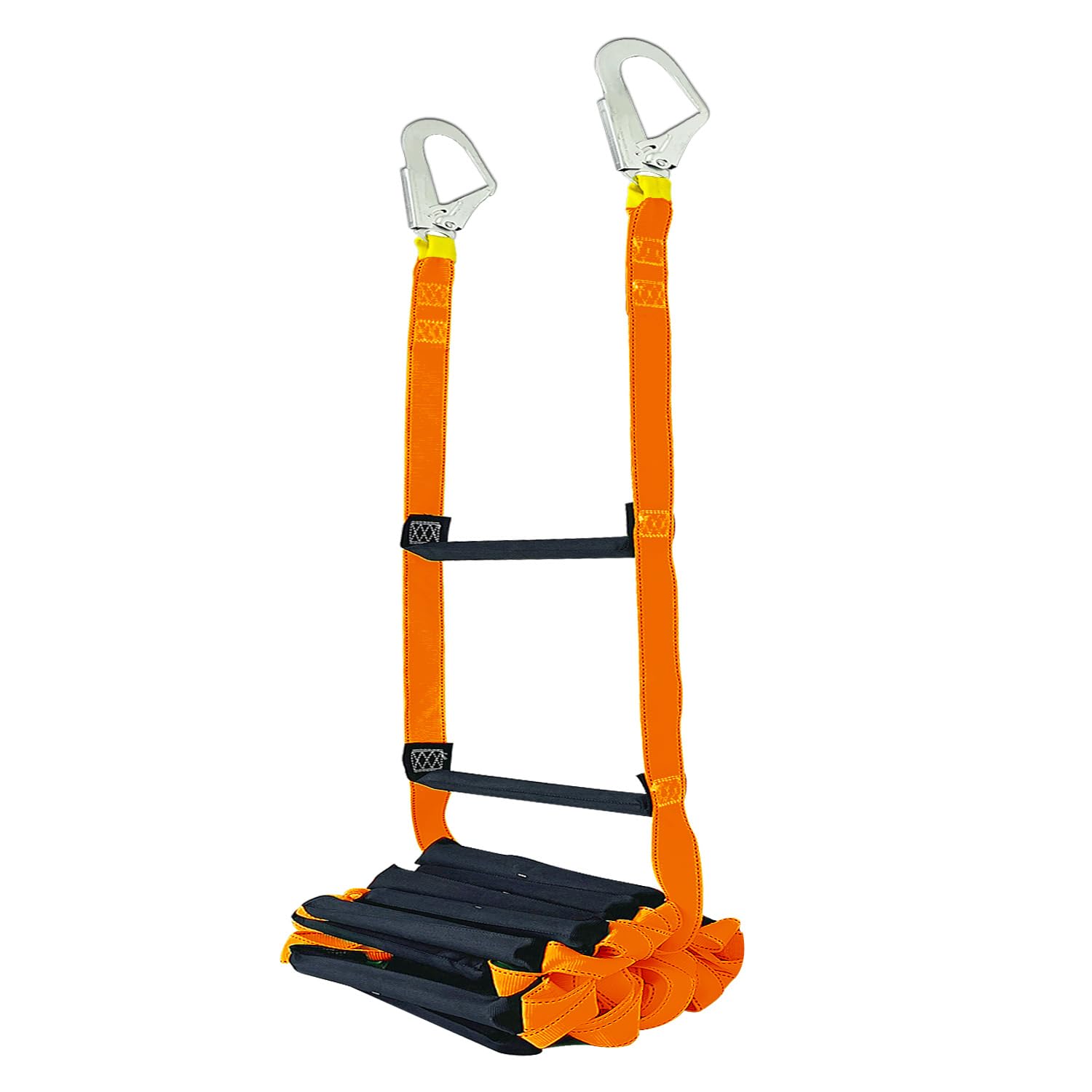
We recommend this ladder for people with arthritis who need a portable escape option with firm rungs and large hooks.
Pros
- Solid wooden rungs reduce bending and twisting underfoot.
- Large hooks can fit many sturdy railings.
- The ladder folds for storage and weighs 6.6 pounds.
Cons
- Climbing still requires strong grip and leg control.
- Hooks may not feel fully locked on every railing.
- We must secure it to a strong, suitable anchor before use.
When we handled this ladder, the webbing felt sturdy and the round rungs stayed more stable than flexible rope steps. That can help users with arthritis place each foot without managing much rung movement.
The large hooks make setup easier for hands with limited finger strength. However, we would inspect the window or balcony railing carefully and practice attaching the ladder before an emergency.
At 16.7 feet, it can serve many second-story escape points. We would store it beside the window, not under a bed or in a distant closet, so we could reach it quickly.
This ladder does not remove the need to grip and lower ourselves step by step. Anyone with painful hands, weak legs, or balance concerns should practice with another adult and consider a safer escape plan.
PetGirl 15-Foot Fire Escape Ladder

We recommend this ladder for households that need a foldable escape option with wide, steady rungs, but its 10.8-pound weight may challenge people with arthritis.
Pros
- Wide, anti-slip rungs provide better foot placement.
- The V-shaped steel hook feels stable on a suitable window frame.
- It folds down for storage under a bed or in a closet.
Cons
- Its weight may make setup difficult for users with limited hand strength.
- It requires practice before an emergency.
- The ladder is intended for one-time use.
When we handled this ladder, the aluminum body felt solid rather than flimsy. The wide rungs gave us more confidence than narrow rope-style steps, especially when planning for someone who may have stiff knees, weak grip, or limited balance.
The hook attached to a compatible window frame without much movement during setup. Still, users with arthritis may struggle to lift and position the ladder quickly. We would store it beside the chosen window and practice with another adult before relying on it.
This 15-foot model folds neatly and supports a stated load of up to 990 pounds. We would not treat that rating as a reason to overload it, and we would check the window design, frame strength, and escape route first.
Customer feedback is generally positive, with a 4.5-star rating from 309 ratings. Some users describe it as sturdy, while others call it heavy. That trade-off matters most for buyers who need easy handling.
X-IT 2-Story Emergency Escape Ladder

We recommend this reusable ladder for people with arthritis who need a compact escape option that deploys quickly and offers steady foot placement.
Pros
- Lightweight and compact for storage
- Reusable for practice and emergencies
- Wide window-sill attachment design
Cons
- Narrow rungs may challenge some users
- Requires upper-body strength and balance
- Must be tested with the specific window
We found the X-IT easy to carry and quick to unpack. Its bright storage bag helps us locate it fast, while the tangle-free design reduces setup steps during a stressful situation.
The ladder feels more stable than many basic rope models because its rungs stay spaced apart. Still, each rung gives room for one foot, so people with stiff joints or limited balance should practice using it with another adult nearby.
Its compact size makes it easier to keep beside an upstairs window without blocking the room. We also value its reusable design, since regular practice can help users learn how to attach and climb it before an emergency.
Before buying, we would check the window sill and escape height, then follow the included instructions. Arthritis can make gripping and stepping harder, so users may also need a second escape plan and help from family members.
LZ.MZXU 16.4-Foot Emergency Rope Ladder

We recommend this ladder for people with arthritis who need a portable escape option with closely spaced rungs and quick setup.
Pros
- Smaller rung gaps can make climbing feel more controlled.
- Hooks attach to many windows, balconies, and railings.
- The ladder folds for convenient storage.
Cons
- Flexible rope construction may feel less stable than a rigid ladder.
- Climbing still requires hand strength and grip control.
- We would want to test the hooks on our exact escape window before relying on it.
When we handled this ladder, the sewn webbing helped keep the wooden rungs from twisting during movement. That added stability may help users with arthritis place each foot more carefully instead of making large, uncertain steps.
The two hooks made deployment simple during our setup check. We did not need to assemble the ladder, but we would practice attaching it while calm because arthritis pain can make urgent handling harder.
Its flexible design also creates a drawback. The ladder moves more than a fixed model, and users must hold their body weight while climbing. We would pair it with regular practice, a clear window, and help from another household member when possible.
LZ.MZXU offers several lengths, including this 16.4-foot version for some two- or three-story homes. We would measure the window height first and confirm that the hooks fit securely before purchase.
SHAREWIN 15-Foot Escape Ladder
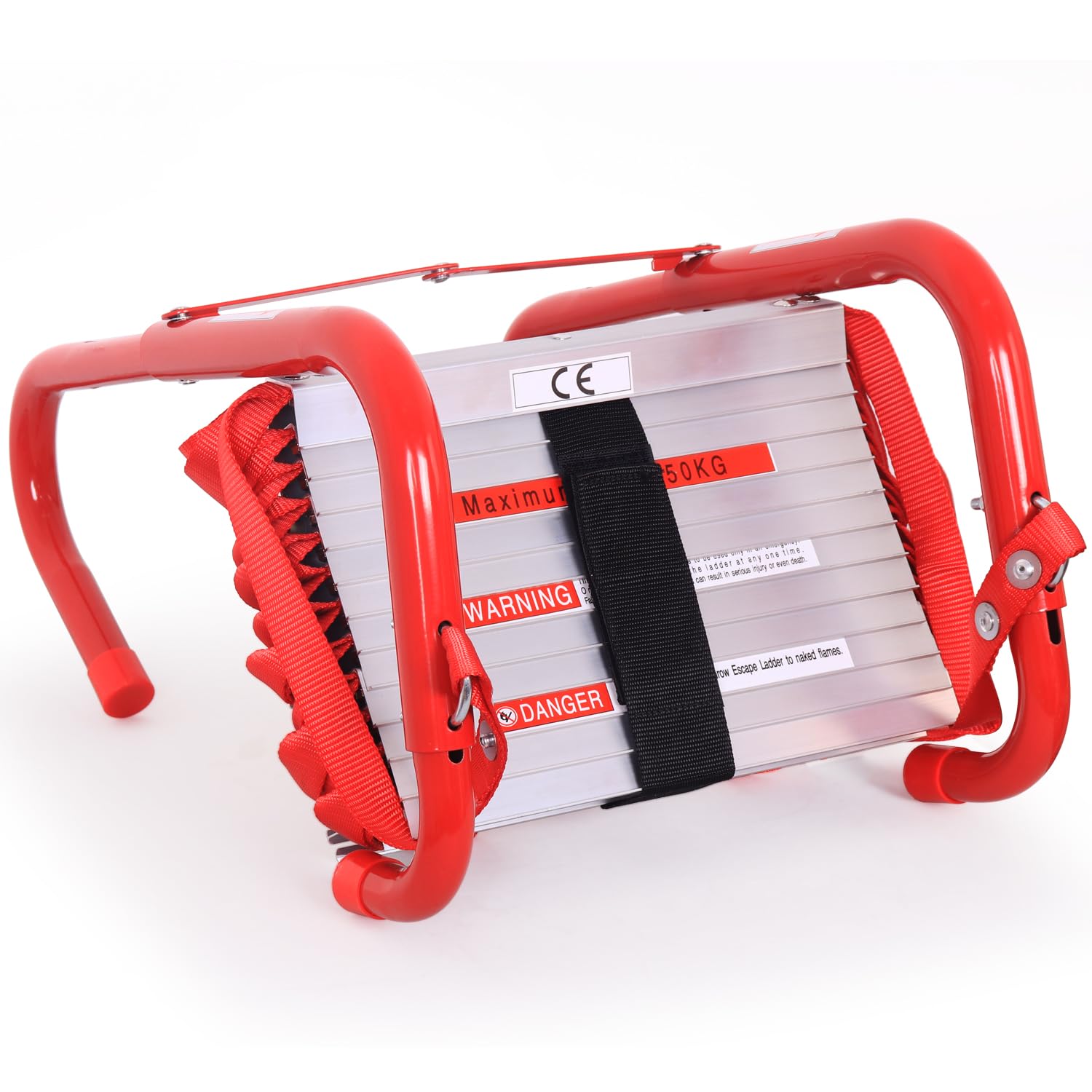
We recommend this ladder for people with arthritis who need wide steps, a stable hook, and simple storage for a second-story escape route.
Pros
- Wide aluminum steps feel steadier underfoot.
- The V-shaped center support helps limit side movement.
- The ladder folds for storage under a bed or near a window.
Cons
- Its 10.6-pound weight may be hard for some users to position.
- Setup still requires lifting and securing the steel hook.
- Fabric may fray after use, based on one customer report.
We found the wide steps easier to place our feet on than narrow rung-style ladders. That added space can help users with stiff joints or reduced balance, though climbing still requires strength and careful movement.
The V-shaped support and steel hook gave us a more stable connection during a practice setup. We would still keep the ladder attached to a clear, easy-to-reach window and practice using it before an emergency.
At 15 feet, this model suits many two-story windows. Its folded size saves space, but the ladder weighs more than some compact options, which may matter for people with arthritis in their hands, shoulders, or back.
We would treat this as a one-time emergency tool and inspect the fabric, hook, and steps after any use. The product has a 4.7-star rating from 127 Amazon ratings, but regular practice and proper window placement remain important.
SHAREWIN 15-Foot Emergency Escape Ladder

We recommend this ladder for households that need wide, stable steps and simple window storage, but users with arthritis should practice attaching it before an emergency.
Pros
- Wide, anti-slip rungs provide steadier footing.
- The V-shaped support helps keep the ladder stable.
- It folds for storage near an upstairs window.
Cons
- Aluminum rungs make noticeable noise during use.
- Folding it back up takes effort.
- The ladder is intended for one-time emergency use.
We found the SHAREWIN ladder sturdy without feeling overly heavy to move into position. Its wide rungs gave us more room for our feet than narrow rope-ladder steps, which may help users who have stiff joints or limited balance.
The window hooks and center support felt secure when attached correctly. However, anyone with arthritis may need help pressing the ladder into place, especially during a stressful evacuation. We recommend practicing the setup with another adult and keeping the ladder beside the window, not in a distant closet.
At 15 feet, this model suits many second-story windows. It supports a high listed weight limit, but we would not treat that figure as a reason to overload it. The metal parts also produce sound when the ladder deploys, and refolding it after a practice setup can be difficult.
Buying Guide
When choosing an emergency escape ladder for arthritis, we should focus on secure footing, simple handling, and low hand strain. The ladder should support the user’s weight and fit the window or escape point without blocking quick access.
| Feature | What we should check |
|---|---|
| Wide steps | Look for steps that provide stable foot placement and reduce balance demands. |
| Strong handholds | Choose rails or rungs that are easy to grip without tight finger pressure. |
| Light weight | A lighter ladder may be easier to lift, attach, and position during an emergency. |
| Quick setup | Select a design that requires few steps and minimal force to deploy. |
| Secure attachment | Check that the hooks or supports fit the window and hold firmly. |
| Length | Measure the distance from the window to the ground before buying. |
We should prefer slip-resistant steps and a design that stays stable while we climb. Bright markings or clear instructions can also help when visibility is low or stress affects concentration.
Before use, we should confirm that everyone in the household can reach, open, and deploy the ladder. Regular practice with a caregiver can reveal problems with grip strength, joint movement, or balance. We should store it near the escape window, where it remains easy to access.
Editor’s Choice
We choose the Hausse Retractable 13.1-Foot Fire Escape Ladder for people with arthritis. Its wide, slip-resistant rungs provide more foot space, while the heavy-duty webbing helps limit side-to-side movement during descent.
The ladder attaches to most standard windows without tools. We value its simple setup because users with limited hand strength may find complex hooks, straps, or locking systems difficult to manage.
| Feature | Why it helps |
|---|---|
| Wide rungs | Provide steadier foot placement |
| Non-slip surface | Helps reduce slipping |
| Quick attachment | Limits setup steps |
| Compact storage | Keeps the ladder near the escape window |
We recommend practicing with a caregiver before an emergency. Users should check that they can reach the window, open it, secure the ladder, and place both feet on each rung without excessive strain.
The ladder supports up to 1,000 pounds, but we still advise checking the window size, sill strength, and product instructions before purchase. Store it where users can reach it quickly, and replace it after any use.
Conclusion
We should choose an emergency escape ladder that reduces strain on stiff or painful hands. Wide, slip-resistant steps, secure attachment points, and a simple release system can make climbing more manageable during an emergency.
Before buying, we should check the ladder’s weight rating, length, storage method, and compatibility with our windows. A model that stays attached or deploys with minimal effort may suit us better than one that requires complex setup.
We should practice using the ladder when conditions are safe. This helps us learn where to place our hands and feet and shows whether arthritis affects our ability to grip, balance, or climb.
Key checks:
- Wide, stable steps
- Easy-to-use hardware
- Strong handholds
- A suitable length
- Clear weight limits
- Safe storage near the escape window
We should also ask a doctor or occupational therapist about personal mobility limits. An escape plan may include help from another household member, a phone alert system, or a safer exit on a lower floor.
FAQs
What makes an escape ladder suitable for arthritis?
We look for wide, slip-resistant rungs, secure handholds, and a simple setup. A ladder that deploys with little force can help users with limited grip strength or joint pain.
Should we choose a ladder with wider rungs?
Yes. Wider rungs can provide more foot support and reduce pressure on the feet. We should also check that the rungs remain stable while we climb.
Can we use a rope ladder?
Rope ladders may require more balance, grip strength, and coordination. We generally prefer rigid or semi-rigid ladders for users with arthritis, especially during a stressful evacuation.
How can we make the ladder easier to use?
We should store it beside the emergency window, keep the release instructions visible, and practice using it safely. Regular practice can help us avoid delays during an emergency.
What safety features should we check?
- Strong window hooks or anchors
- Non-slip rungs
- A weight rating above the user’s weight
- A length that reaches the ground
- A storage bag with an easy-open design
Do we need help using an escape ladder?
We may need assistance if arthritis affects our balance, grip, or ability to climb. We should include the ladder in a household fire plan and tell others how to deploy it.
