
10 Best Bed Rails for Arthritis: Top-Rated Stable, Easy-Grab Support for Safer Bed Mobility


Gardening Kneeler Bench

Non-Slip Bathroom Mat

GPS Tracker for Elderly
Bed rails help people with arthritis get in and out of bed more safely and with less pain. They come in several styles — full-length rails that run along the bed, half rails that give side support, and trapeze-style grips that let you pull yourself up. These rails reduce strain on hands, wrists, and shoulders by offering steady support and better leverage when sitting up, standing, or shifting position.
The key things to check are height and grip shape, weight capacity, installation type, and whether the rail pads or handles are padded to protect aching joints. A rail that fits your bed height, supports your weight, and has a comfortable, non-slip grip will make getting in and out of bed noticeably easier and safer. We tested and compared popular models so we could recommend rails that balance stability, comfort, and ease of use.
Best Bed Rails for Arthritis
We tested and reviewed bed rails that help people with arthritis get in and out of bed safely and with less pain. Our list focuses on sturdy grips, easy installation, and models that reduce strain on joints.
KingPavonini Bed Rail (BM03-1)
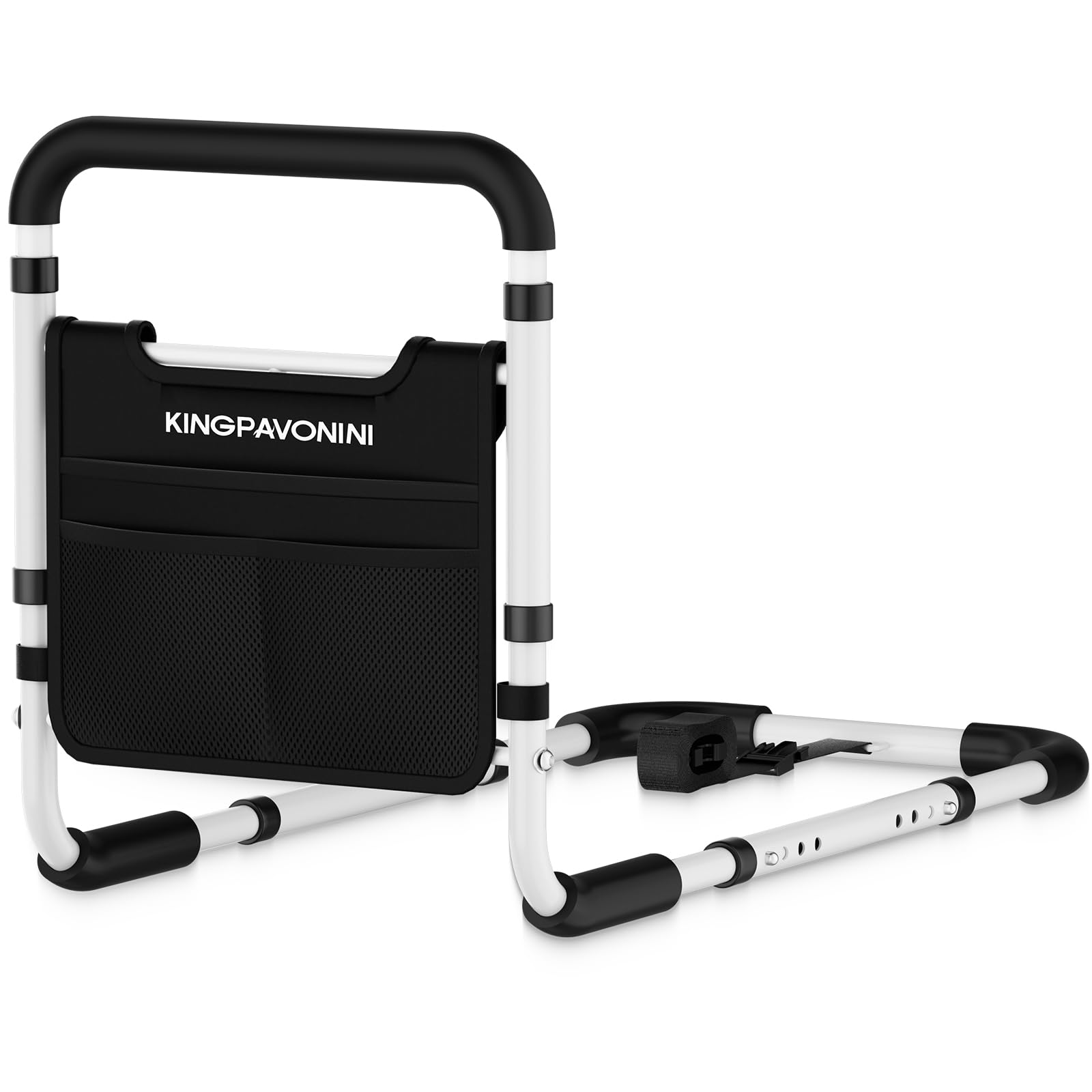
We recommend this rail when you need a sturdy, easy-to-use grab bar that helps people with arthritis get in and out of bed safely.
Pros
- Very solid feel and supports heavy users.
- Padded, non-slip handle is comfortable for weak or painful hands.
- Tool-free setup and a storage pouch make it handy and portable.
Cons
- Not compatible with adjustable beds.
- A bit bulky for narrow mattresses or limited bedside space.
- Lower strap or fit may need extra securing on some bed frames.
We installed the rail on a queen mattress to test how it helps someone with sore wrists and knees. Getting in and out became more controlled because the handle stays gripped without slipping. The padded wrap eased pressure on arthritic fingers when pulling up.
We found the metal frame felt very sturdy — it did not wobble when we leaned on it. Sliding the base under the mattress was simple, and the quick assembly meant we could use it the same day. The storage pouch proved useful for keeping a phone and glasses within reach.
We did notice limits when trying it on an adjustable bed; the mechanism didn’t work well with elevation. On thin or very thick mattresses you may need to tuck the base carefully or add a strap for extra hold. Overall, this rail gives reliable support for everyday transfers and small mobility tasks.
Stander EZ Adjust Bed Rail
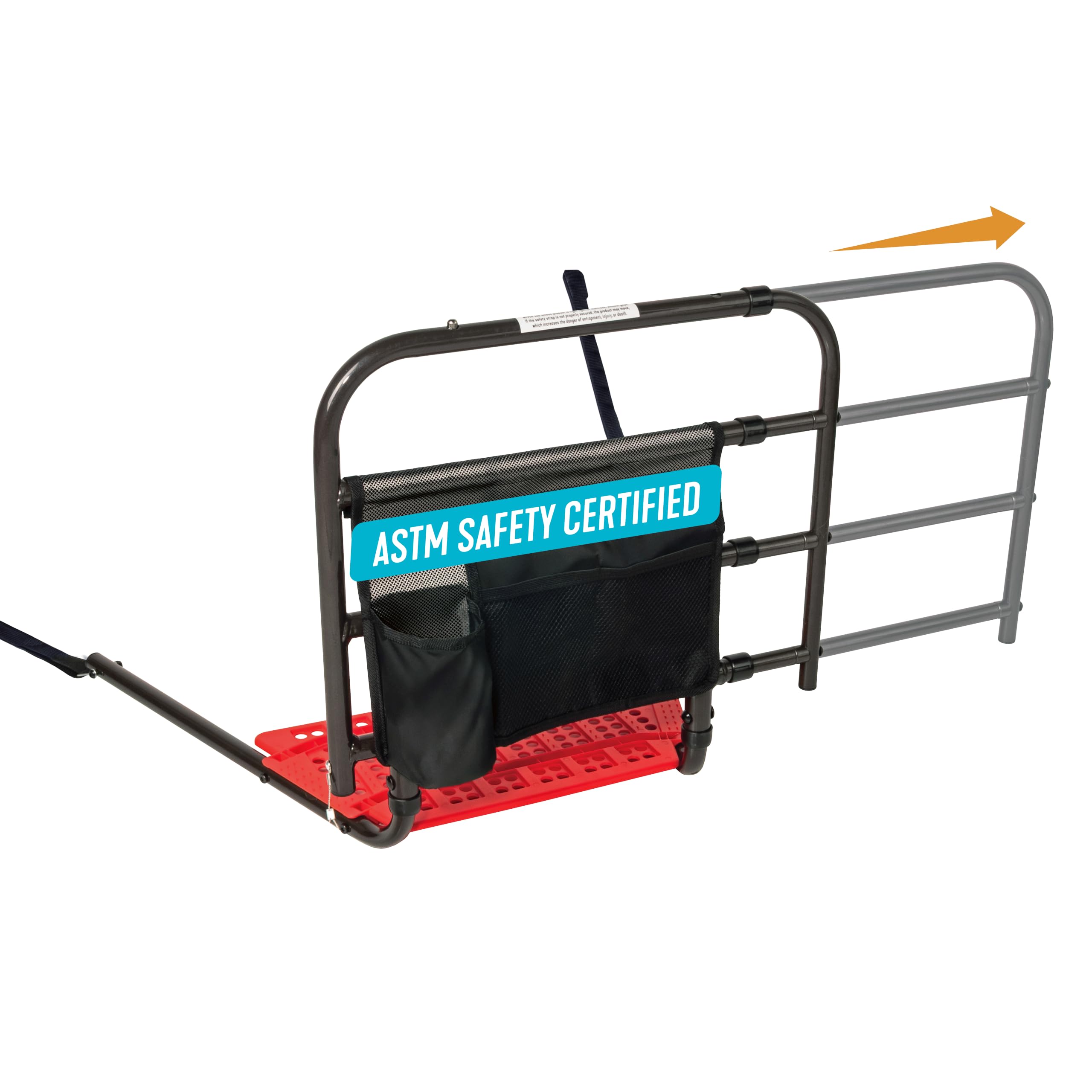
We recommend this rail when you want a sturdy, certified bed assist that helps with getting in and out of bed and reduces fall risk.
Pros
- Certified safe to lower entrapment and fall risk.
- Feels solid and supports standing or sitting up.
- Handy organizer pouch keeps essentials within reach.
Cons
- Heavy for one person to move or lift into place.
- Can shift mattresses if not tightened well.
- Not designed for adjustable or hospital-style beds.
We installed this rail in our spare bedroom and used it with a 12–14 inch mattress. The metal frame felt solid and gave real confidence when sitting up or pushing to stand. The organizer pouch was surprisingly useful for glasses and remotes.
Getting it set up took less than 20 minutes with two people. We noticed the strap needs tight fastening to stop mattress slipping. Once tightened, the rail stayed put during normal use but did move on very thick or soft mattresses.
After weeks of use, the rail held up well to daily pulls and steady use. Lifting the rail from lying to upright was harder than expected if you have weak shoulders. Overall, it helped reduce bedside falls and made getting in and out of bed easier for someone with arthritis.
BigDolphin Bed Rail (Medium)
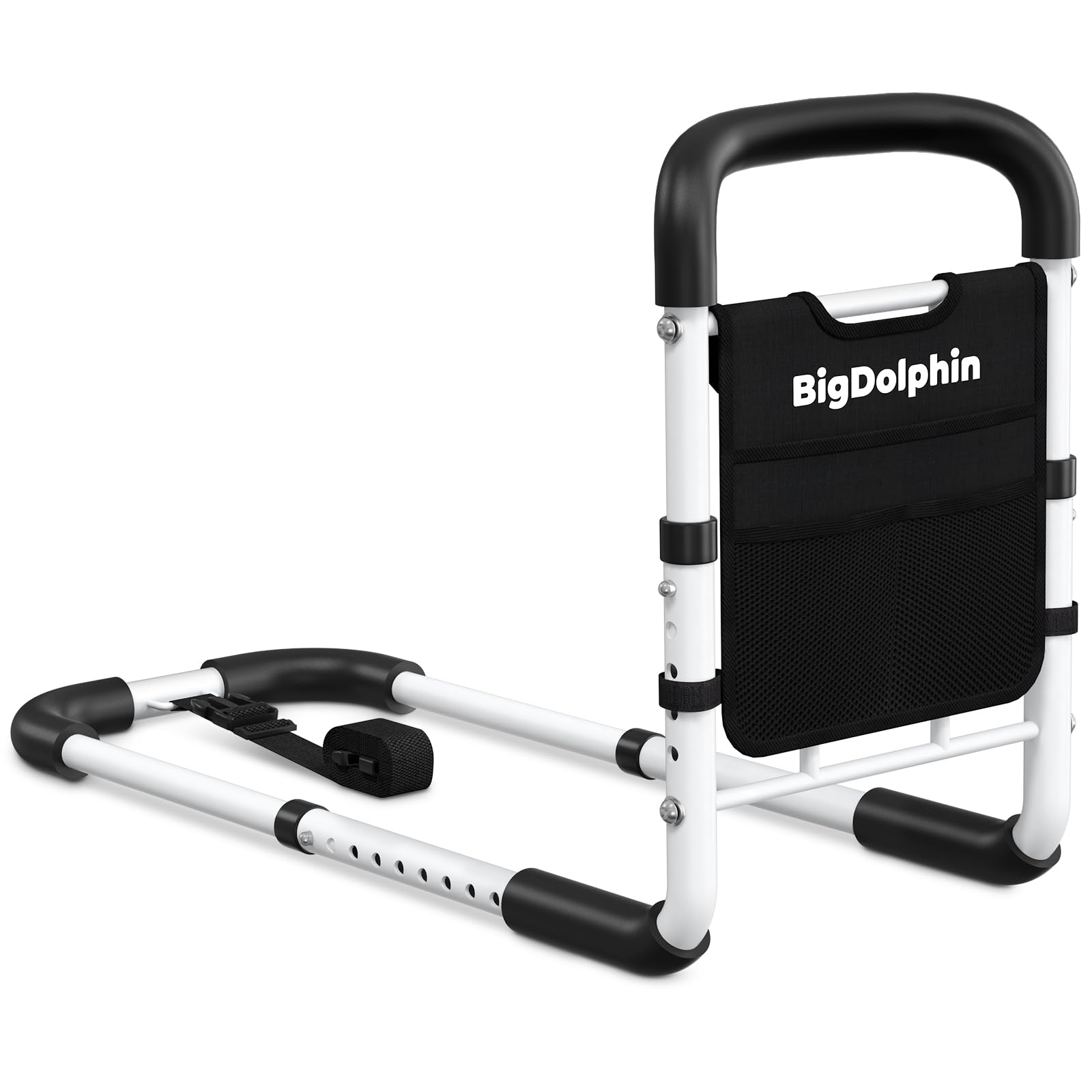
We recommend this rail if you need a sturdy, easy-to-use grab bar to help with getting in and out of bed.
Pros
- Very solid support — feels secure when you pull on it.
- Curved, padded handle cuts wrist strain during use.
- Tool-free setup and adjustable to most mattress sizes.
Cons
- Too heavy or bulky for very light frames.
- Not compatible with adjustable beds.
- Handle padding can trap dust if not wiped.
We set this rail up in minutes and felt how steady it is. The frame did not wobble when someone used it to sit up or push themselves to standing. The tie-down strap held tight under the mattress and gave us extra confidence.
The 30° curved handle matched our natural grip and eased wrist pain the first night we used it. Foam padding made the hold comfortable, though we wiped it after a few days to keep it clean.
Adjusting the height and horizontal length was easy and fit our queen mattress well. Keep in mind the rail is fairly heavy and won’t work with adjustable beds, but for a regular bed it gave us dependable help after surgery or on bad arthritis days.
Medical King Bed Rail
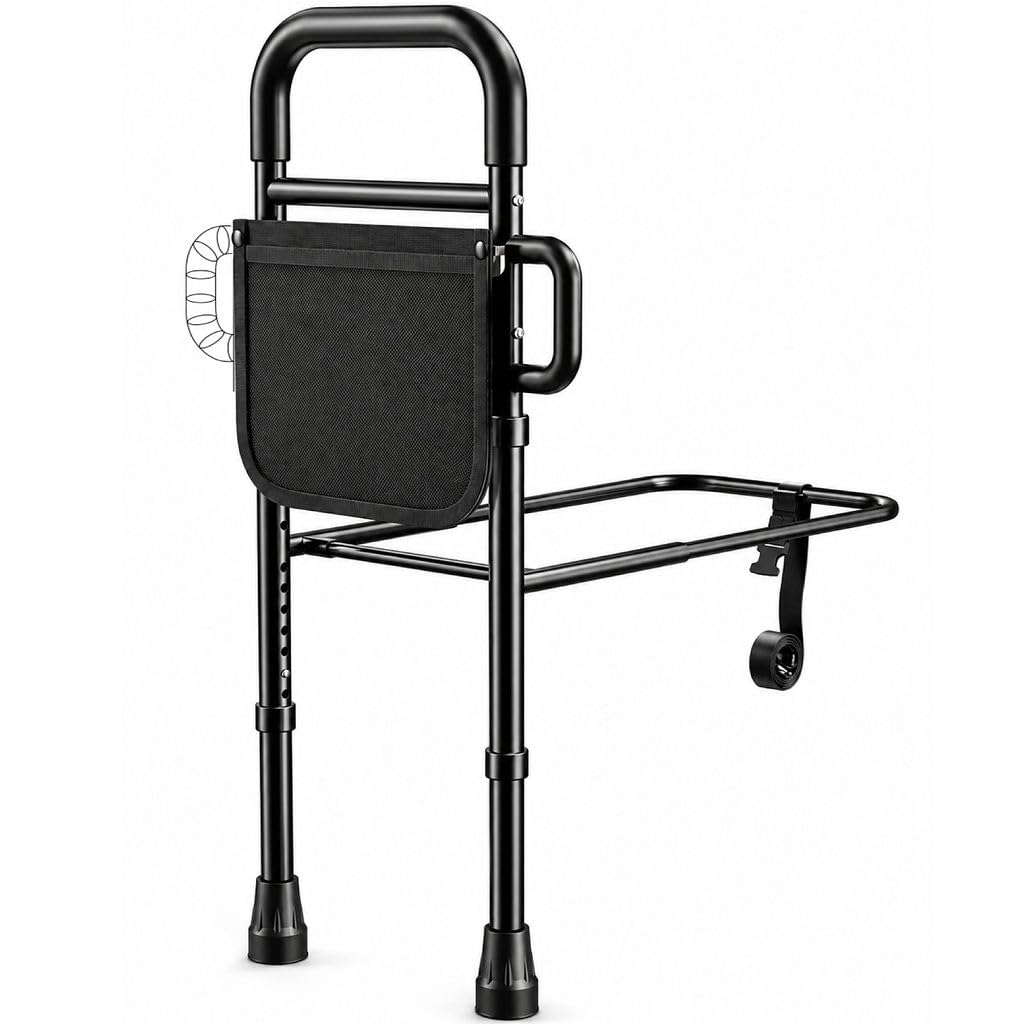
We recommend this rail for arthritis when you need a stable, easy-to-use handle to get in and out of bed safely.
Pros
- Solid, stable support that helped us push up without straining wrists.
- Tool-free setup and simple strap hold the rail in place under the mattress.
- Removable pocket keeps phone and glasses within reach.
Cons
- Metal bar can feel cold or hard on sore hands.
- Not padded enough for people who need a softer grip.
- Fits between mattress and base—may slip on very thin or slippery bases.
We used this rail for a few weeks after trying it on different beds. It gave us confidence when sitting up and planting feet on the floor. The hand bar feels sturdy and the whole frame did not wobble once tightened.
Installation took minutes. We slid the base under the mattress, tightened the strap, and the rail stayed put through sitting, standing, and light pulling. No tools made it easy to move between rooms.
The storage pouch proved handy. We kept a remote and reading glasses there and did not have to reach awkwardly from bed. For arthritis, the firm grip helps, though some may prefer a softer foam cover on the handle.
Barleyear Foldable Bed Rail
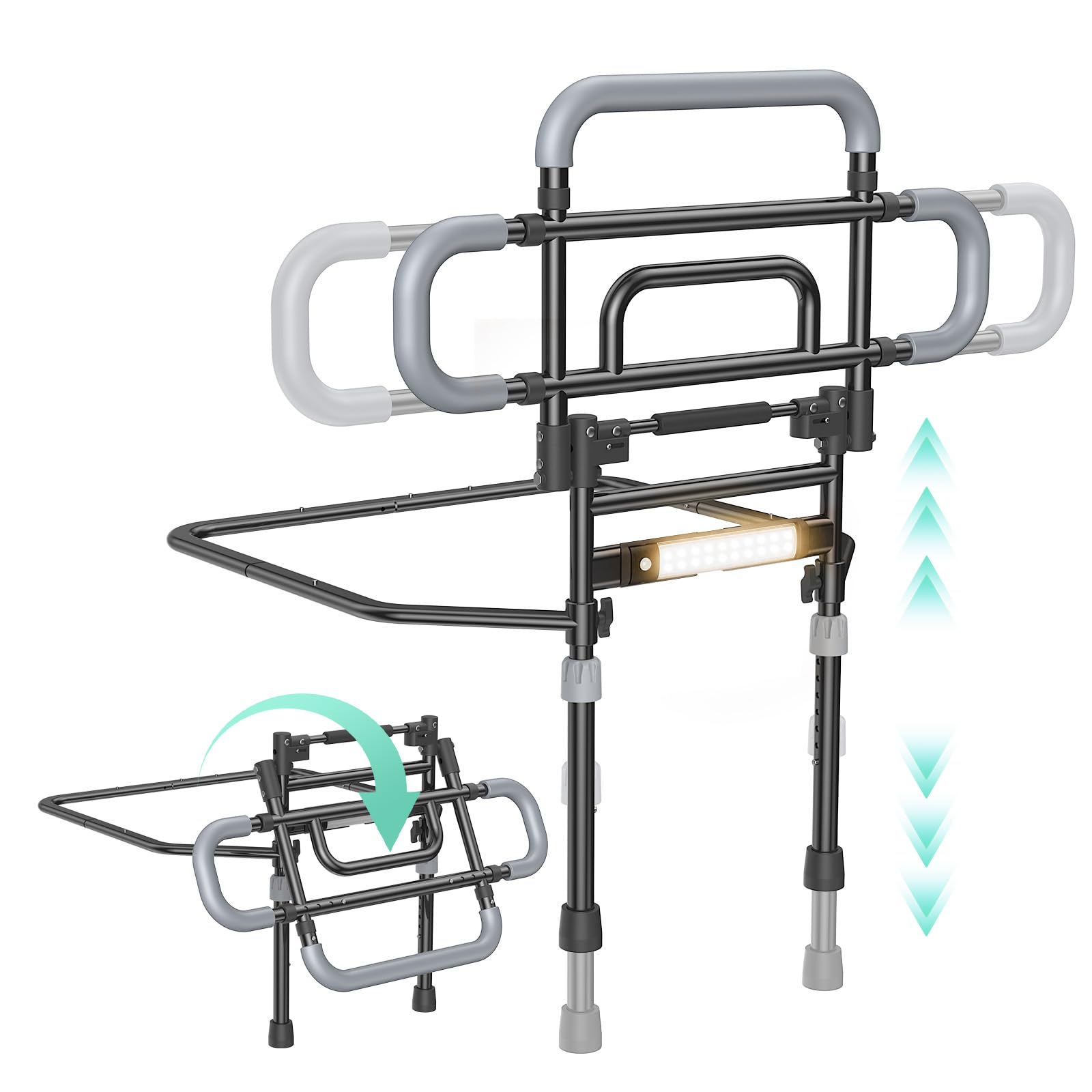
We recommend this rail if you want a sturdy, easy-to-fold support that helps with getting in and out of bed.
Pros
- Solid, heavy-duty feel that held up during daily use.
- One-hand 180° fold makes bed access simple.
- Built-in night light and pocket kept essentials close.
Cons
- Hard to sit flush to some mattress frames, which can block getting over the rail.
- Not compatible with adjustable beds despite some user claims.
- Wider base and legs can get in the way when space is tight.
We installed this rail in minutes without tools and found the frame felt rock-solid. The carbon-steel build and wide base kept the rail from wobbling when we leaned on it, and the foam grip was comfortable even after repeated use.
The one-hand fold is the feature we liked best. Lowering the rail to get into bed was easy for a caregiver to operate while still giving a firm hold when raised. The night-sensing LED actually lit our path without blinding us, and the mesh pocket held a phone and glasses within reach.
A couple of practical limits showed up. The rail didn’t sit perfectly flush on one of our beds, which made stepping over it awkward at times. The legs add stability but can reduce floor clearance for some bed frames. Overall, it felt safer and more usable than basic rails we’ve tried, especially for people who need a strong, simple aid to get up and down.
BigDolphin Bed Rail (BS05)
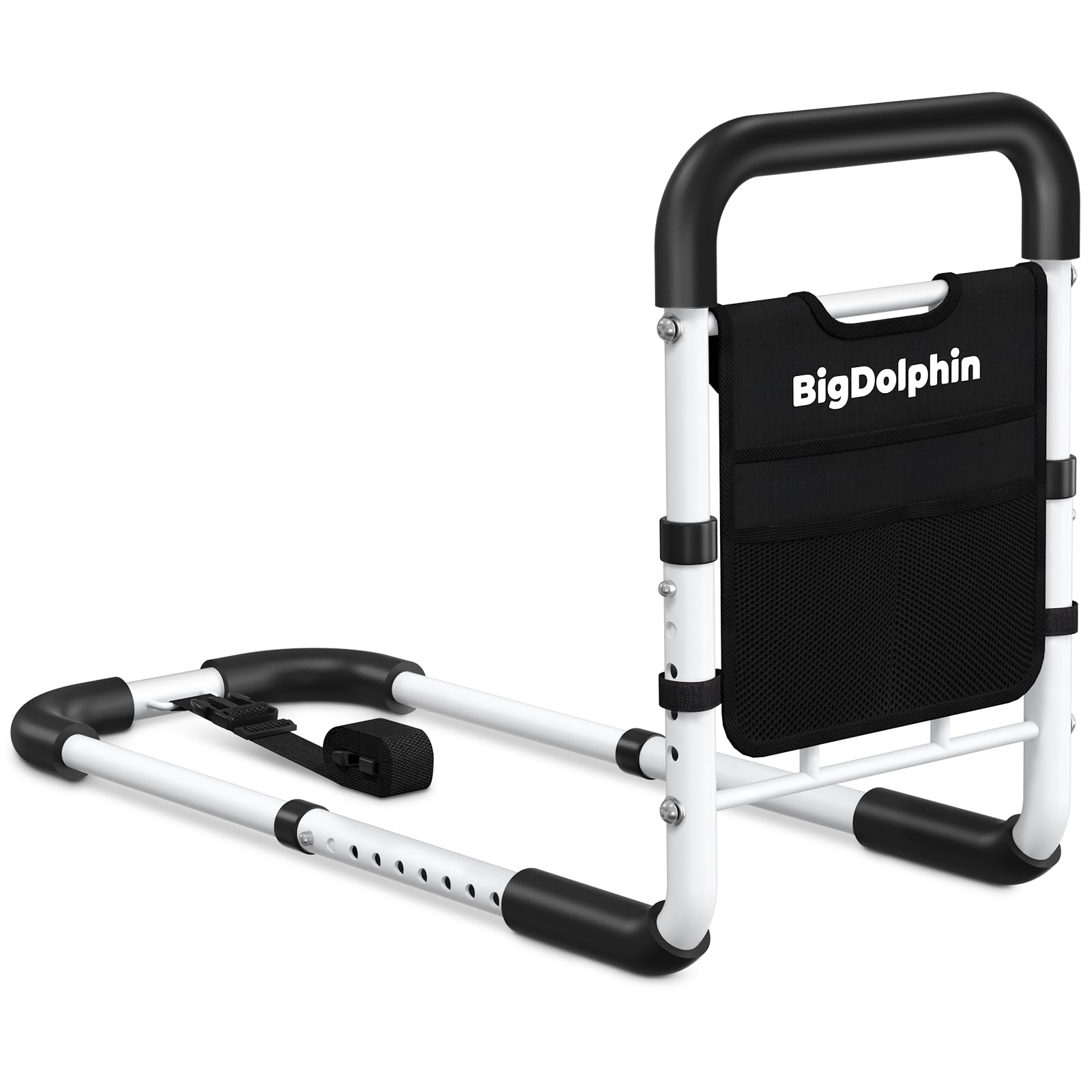
We recommend this rail when you need a sturdy, easy-to-install aid that helps seniors get in and out of bed with more confidence.
Pros
- Very sturdy — feels solid when you pull up.
- Tool-free setup and portable for travel.
- Useful storage pouch keeps small items handy.
Cons
- Strap could use finer adjustment options.
- Not for adjustable beds despite some mixed reports.
- Fits thinner mattresses best (2–10″ range).
We set this up in minutes and liked how the rail stayed put without tools. The handle foam gives a good grip, and the wide base made the rail feel stable when leaning on it.
Using it for a few weeks proved the 350 lb rating feels realistic. Getting in and out of bed felt safer, and the small pocket held a phone and glasses within reach at night.
The only real downside was the anchor strap — it worked, but we wished it adjusted more easily for odd bed frames. Overall, this is a reliable, simple solution if you need firm support that’s easy to move and store.
Srotime Bed Rail (Black)
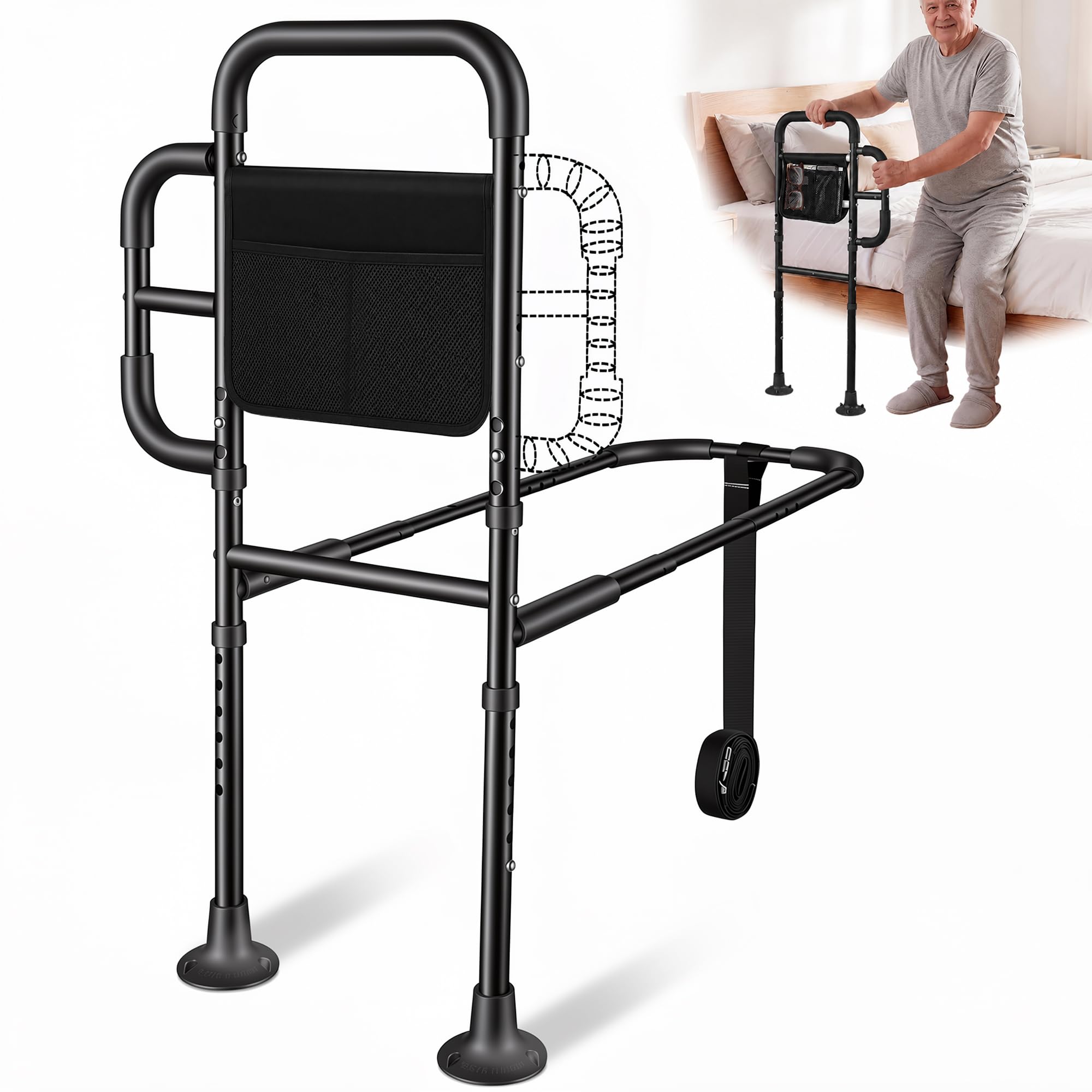
We recommend this rail if you want a sturdy, simple assist that fits many beds and gives reliable support for getting in and out of bed.
Pros
- Solid, heavy-duty feel that held up when we leaned on it.
- Foam grip and side handle make gripping and turning easier.
- Mesh pocket keeps small items within reach.
Cons
- Not compatible with recessed or adjustable bed frames.
- Takes some effort to slide under very thick or soft mattresses.
- No manufacturer warranty included.
We installed the rail in about 15 minutes and found the frame very solid. The steel tubing and wide feet gave a stable, confident hold when we used it to sit up and stand. The mattress strap kept it from shifting overnight.
The foam handle felt comfortable even with arthritis; it did not pinch or slip. The side assist handle added another grip angle that helped when turning or swinging legs over the edge. The mesh pocket was handy for our phone and reading glasses.
Adjusting width and height worked fine, but we struggled a bit fitting it under a plush 13″ mattress until we tightened the strap and shifted the mattress slightly. Keep in mind this rail won’t fit recessed or motorized beds.
YrHeiper Bed Rail
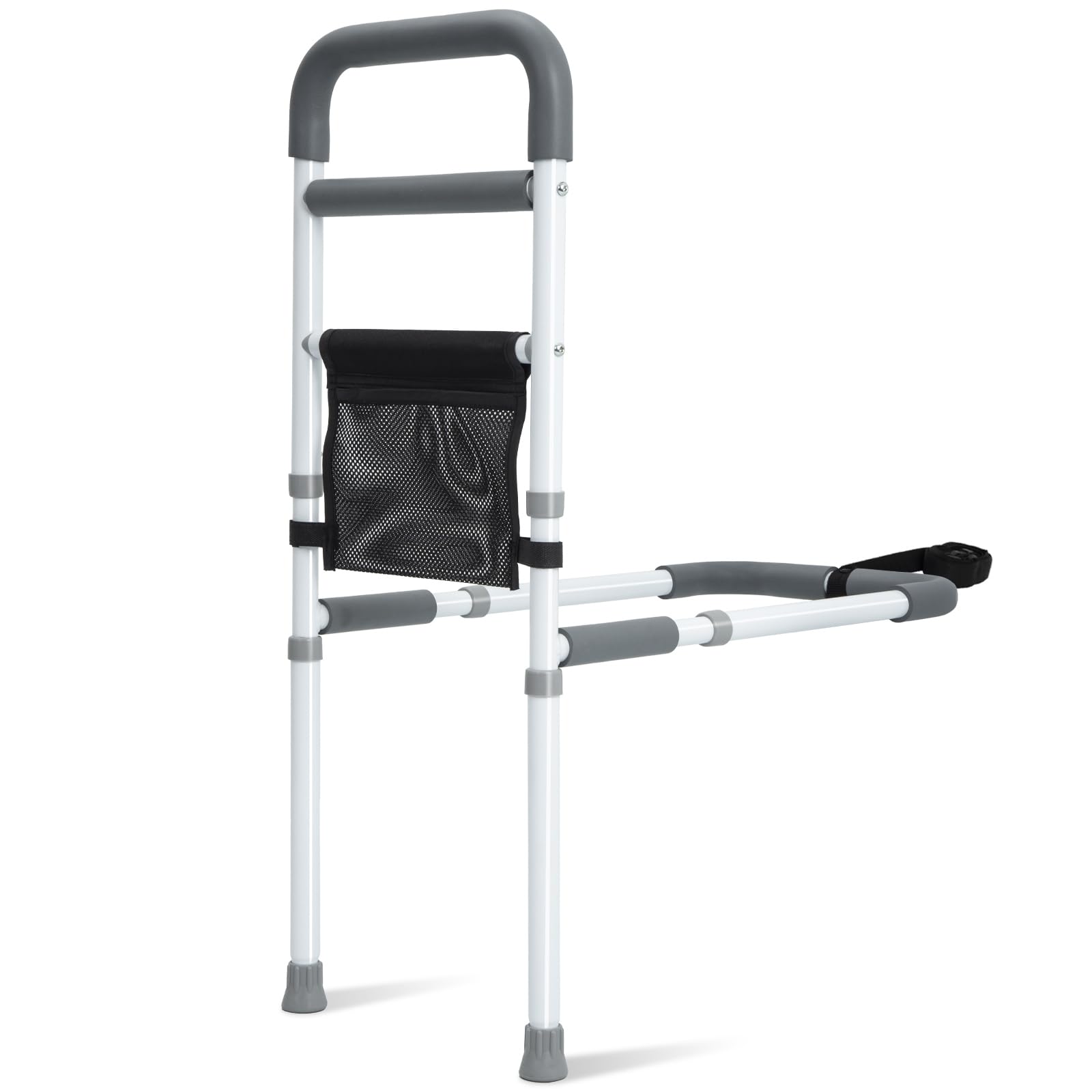
We recommend this rail if you need a sturdy, easy-to-install grab bar that helps reduce falls and feels solid when you use it.
Pros
- Very stable with support leg and heavy-duty frame
- Soft non-slip grip and handy mesh pocket for small items
- Quick, tool-free setup that fits most standard beds
Cons
- Not compatible with recessed or adjustable bed frames
- Can feel bulky on smaller beds
- Height is fixed, so it may not suit every user
We put this rail on a queen bed after a family member’s hip surgery. The metal frame felt solid under pressure and the support leg stopped any wobble when leaning. Getting in and out of bed felt more confident on the side with the rail.
Installation took only a few minutes and we didn’t need tools. The strap under the mattress held the frame tight. The foam grip was comfortable and didn’t slip, so gripping the bar felt secure even when we were tired.
The mesh pocket was small but useful for a phone or glasses. The rail won’t work with recessed or adjustable frames, so check your bed type first. Overall, it gave us reliable support without extra fuss.
YrHeiper Bed Assist Rail
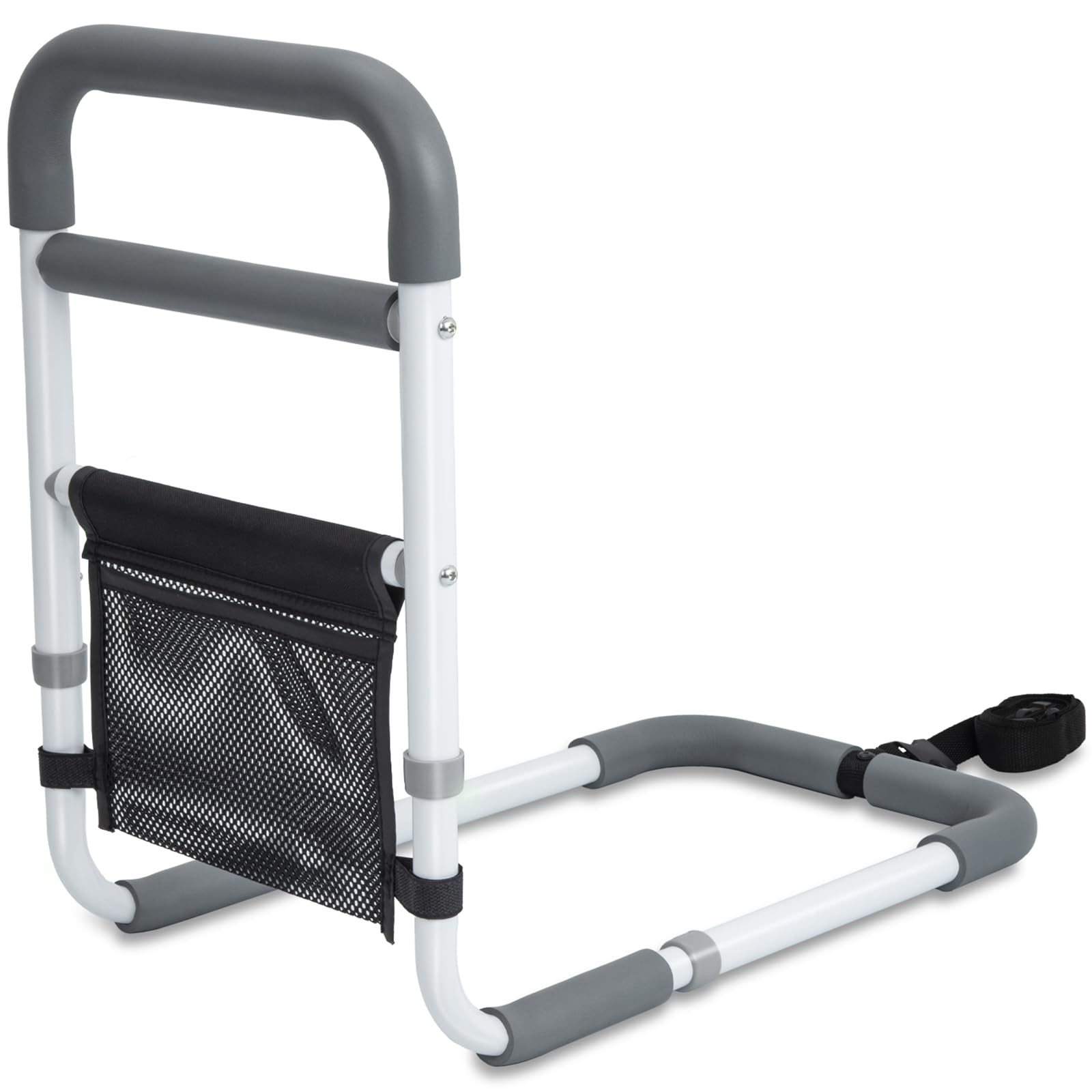
We recommend this rail when you want a simple, sturdy grab bar that helps with getting in and out of bed after injury or with arthritis.
Pros
- Very sturdy metal frame that feels secure under a heavy mattress
- Soft, non-slip foam handle is comfortable to grip
- Small pocket keeps phone or glasses within reach
Cons
- Not compatible with adjustable beds
- Takes two people or some effort to position under a heavy mattress
- Pocket only on the outside, not reachable from lying position
We set the rail up in minutes without tools and it stayed firmly in place once strapped. The foam grip felt good on arthritic hands and gave us confidence when swinging legs over the side of the bed.
Moving a heavy mattress to slide the base under takes some muscle, but once installed the stabilizing leg and tie-down straps kept the rail from shifting. It supported weight well when we tested pulling up from a seated position.
The pocket held glasses and remote so we did not have to reach far. Overall the design is simple, low-profile, and easy to clean — a practical choice for home use or a care setting.
Lunderg Bed Assist Rail (13″ with Light)
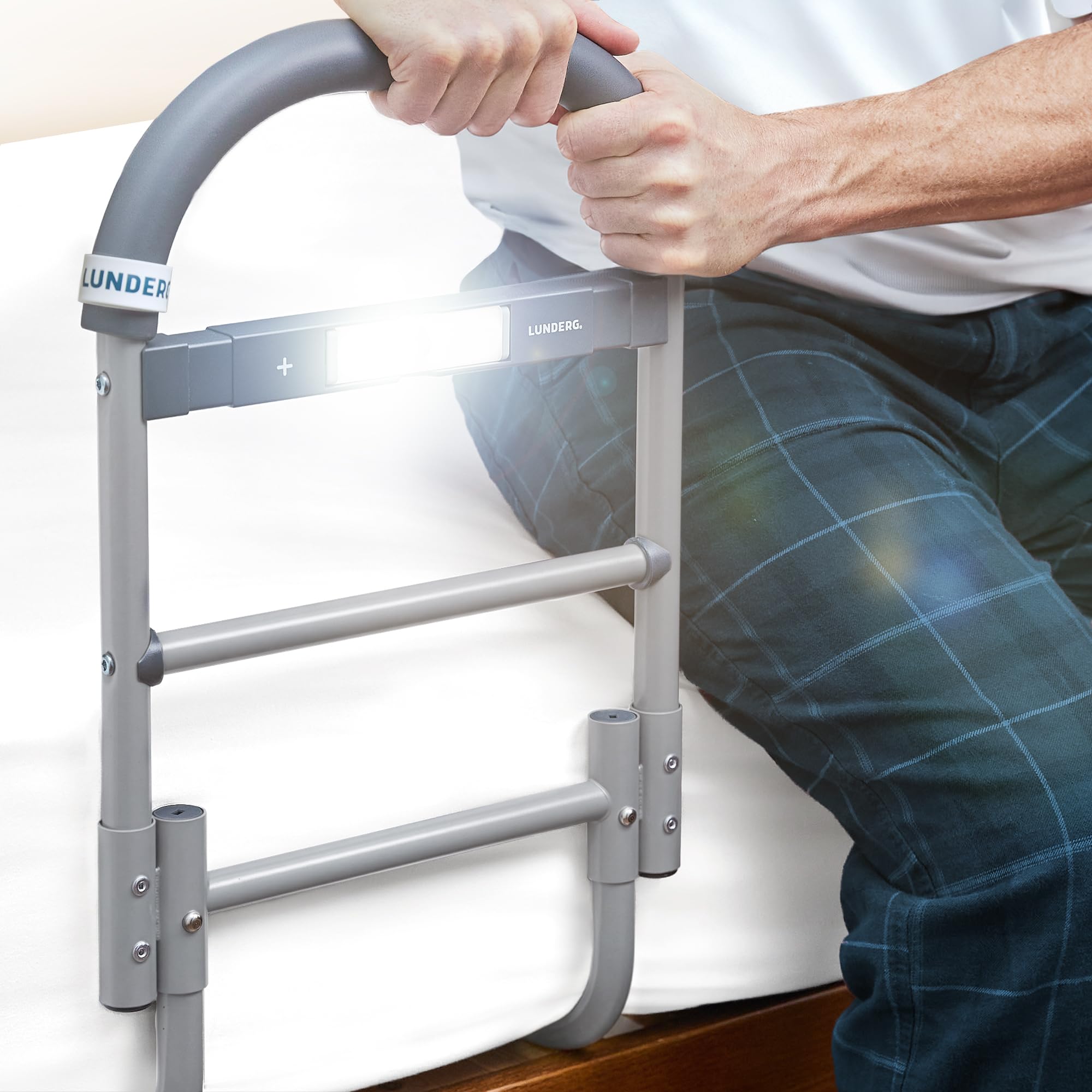
We recommend this if you want a sturdy, easy-to-install rail that helps with getting in and out of bed and adds a motion-activated night light.
Pros
- Solid, wobble-free support under weight.
- Quick, tool-free setup we could do alone.
- Motion light helps nighttime trips without glare.
Cons
- Not compatible with adjustable beds.
- Handle is low for very tall users.
- Light placement might not suit every room layout.
We put this rail on a guest bed after my mom’s knee surgery and used it every night for three weeks. The steel frame felt very stable when she pulled herself up, and the strap kept it from sliding.
Assembly took about five minutes. The pushpin connectors were simple and the rail slid under the mattress without fuss. We liked not needing tools or extra parts.
The motion-activated light turned on when she moved and gave just enough glow for the bathroom. Recharge held up for weeks with normal use, and the handle’s texture helped her grip without strain.
If you need a short, low-profile assist rail that looks tidy and stays firm, this worked well for us. Just check your bed type first—it won’t fit adjustable frames.
Buying Guide
We look for safety first. Check weight capacity and how the rail attaches to the bed. A secure, tested anchoring system reduces slip and movement.
We consider ease of use next. Rails with simple grips and clear hand positions make transfers easier. Look for rails that fold or swing away if you need quick access.
We check materials and build quality. Sturdy metal frames and comfortable padding last longer and feel better to hold. Corrosion-resistant finishes matter in humid rooms.
We weigh size and fit for our bed. Measure mattress width, thickness, and box-spring or platform style before choosing. Some rails suit low beds better; others work with adjustable frames.
We value adjustability and features. Height and length adjustments help different users. Extra features like pockets or night lights add convenience without adding risk.
We inspect installation and tools. Prefer rails that include clear instructions and require minimal tools. Professional installation options are useful for complex beds or if we lack mobility.
We think about maintenance and cleaning. Removable covers and wipeable surfaces keep the rail hygienic. Check for replacement parts and warranty terms.
We compare cost versus durability. A higher price can mean better materials and safety testing, but we balance that against our budget. Prioritize rails that meet safety standards and our daily needs.
Quick Checklist
| Feature | Why it matters |
|---|---|
| Weight capacity | Matches user weight for safety |
| Mounting type | Prevents movement and stay secure |
| Adjustability | Fits different bed heights and users |
| Ease of use | Reduces strain during transfers |
| Materials | Durability and comfort |
| Maintenance | Cleanability and spare parts |
Editor’s Choice
We picked the top bed rail for arthritis based on safety, ease of use, and comfort. Our choice balances sturdy support with simple setup so people with limited hand strength can use it without help.
The rail has a padded grip that reduces pressure on joints. It folds down and locks with one hand, which helps when getting in and out of bed quickly and safely.
Key features we liked:
- Adjustable height to fit most mattress types.
- Tool-free assembly so no heavy lifting or complex parts.
- Non-slip base and secure straps to keep the rail from shifting.
We tested stability on different mattresses and found minimal movement under normal use. We also checked the grip shape and found it easy to hold for people with arthritis or limited dexterity.
If you need a quick comparison, here’s a short spec list:
| Feature | Benefit |
|---|---|
| Padded handle | Reduces joint strain |
| One-handed fold | Easier daily use |
| Adjustable fit | Works with many beds |
| Lightweight frame | Simple to install |
We recommend this model for people who want reliable support without complicated setup.
Conclusion
We focused on safety, comfort, and ease of use when choosing bed rails for arthritis. Our picks balance grip support with gentle edges to reduce joint strain.
We recommend testing rails in place before regular use. Measure your bed, check rail height, and confirm the mounting type fits your frame or mattress.
For many users, padded rails and adjustable grips work best. Models with quick-release features help with transfers and hygiene.
We also suggest talking with a healthcare provider or occupational therapist. They can advise on the right rail type and placement for your specific needs.
Quick comparison at a glance:
| Feature | Why it matters |
|---|---|
| Adjustable height | Matches mattress and user reach |
| Padded grip | Reduces pressure on hands and wrists |
| Secure mounting | Prevents slipping and gaps |
| Easy release | Helps with transfers and care |
We aim to make choosing easier and safer for people with arthritis. Use the criteria above to match a rail to your daily routines and mobility level.
FAQS
What do bed rails do for people with arthritis?
We use bed rails to help with balance and leverage when getting in and out of bed. They reduce strain on hips, knees, and hands by giving a stable grip.
Are bed rails safe to use?
Yes, when installed correctly and matched to the bed type. We always follow the manufacturer’s weight limits and installation steps.
Which type of rail is best for arthritis?
A rail with a padded grip and adjustable height works well for many of us. Frame-mounted and clamp-mounted rails offer different benefits; we pick one based on bed style and mobility needs.
Can bed rails damage the bed or mattress?
Some rails can leave marks or compress the mattress if not fitted correctly. We check for compatibility and use protective pads when needed.
Do bed rails require tools to install?
Many models install without tools or with simple tools like an Allen wrench. We read the instructions first and set aside time for proper installation.
How do we clean and maintain bed rails?
Wipe rails with a mild cleaner and soft cloth regularly. We inspect connections and tighten bolts or straps to keep the rail stable.
Are bed rails covered by insurance?
Coverage varies. We contact our insurer or Medicare to confirm eligibility and required documentation before purchasing.
