
Responsibilities of a Senior Manager


Digital Thermometer

Easy Grip Kitchen Utensils

Anti-Glare Reading Glasses
Senior managers play a vital role in shaping company strategy and ensuring operational excellence. They lead teams, manage budgets, mentor junior staff, and act as liaisons between upper management and frontline employees. With strong decision-making skills and industry knowledge, senior managers drive growth, improve processes, and foster a positive workplace culture.
The role of a senior manager sits at the intersection of strategy and execution. Unlike entry-level or mid-level managers who often focus on day-to-day operations, senior managers are responsible for shaping the long-term direction of their departments or divisions. Their influence extends beyond managing people—they drive innovation, align teams with company objectives, and ensure that resources are used efficiently. In today’s fast-paced business environment, the responsibilities of a senior manager have become even more complex, requiring a blend of technical expertise, emotional intelligence, and leadership acumen.
If you’re considering advancing your career or already hold a senior managerial position, understanding what it truly means to be a senior manager can help you succeed. This article dives deep into the core responsibilities, daily tasks, and essential skills required to thrive in this pivotal role. Whether you’re leading a small team or overseeing multiple departments, the insights here will empower you to make a lasting impact.
Key Takeaways
- Strategic Planning & Execution: Senior managers translate high-level goals into actionable plans that align with the organization’s mission and vision.
- Team Leadership & Development: They guide, support, and develop their teams, ensuring productivity, morale, and professional growth.
- Performance Management: Regularly assess team and individual performance through feedback, evaluations, and goal tracking.
- Budget Oversight: Manage departmental budgets, control costs, and ensure financial accountability within their area of responsibility.
- Stakeholder Communication: Act as a bridge between executives, departments, and external partners by delivering clear updates and resolving conflicts.
- Process Improvement: Identify inefficiencies and implement changes that enhance productivity, quality, and customer satisfaction.
- Crisis Management: Respond effectively to unexpected challenges, making informed decisions under pressure to protect business continuity.
📑 Table of Contents
Strategic Planning and Goal Setting
One of the most critical responsibilities of a senior manager is developing and executing strategic plans. These professionals must understand the broader organizational goals and then break them down into achievable objectives for their teams. Strategic planning isn’t just about setting targets; it involves analyzing market trends, identifying risks, and allocating resources wisely.
For example, imagine a tech company aiming to expand its software offerings into new markets. The senior manager in charge of product development would work closely with executives to define the roadmap, prioritize features, and set timelines. They’d also monitor progress using key performance indicators (KPIs) like user adoption rates and revenue growth.
Aligning Departmental Goals with Company Vision
Senior managers must ensure their teams’ efforts directly contribute to the company’s overall mission. This alignment requires regular communication with upper management and cross-functional collaboration. For instance, if the company wants to improve customer retention, the senior manager might initiate a project to enhance support services or streamline internal workflows.
A great tip here is to conduct quarterly strategy reviews. During these sessions, revisit your goals, assess what’s working, and adjust tactics as needed. This keeps your team agile and responsive to change.
Scenario-Based Example
Let’s say a retail chain wants to increase online sales by 30% over the next year. The senior manager of e-commerce would:
– Analyze current digital performance metrics.
– Collaborate with marketing to boost visibility.
– Work with IT to upgrade the website’s user experience.
– Train staff on new tools and processes.
By taking ownership of each step, they turn vision into reality.
Leadership and Team Development
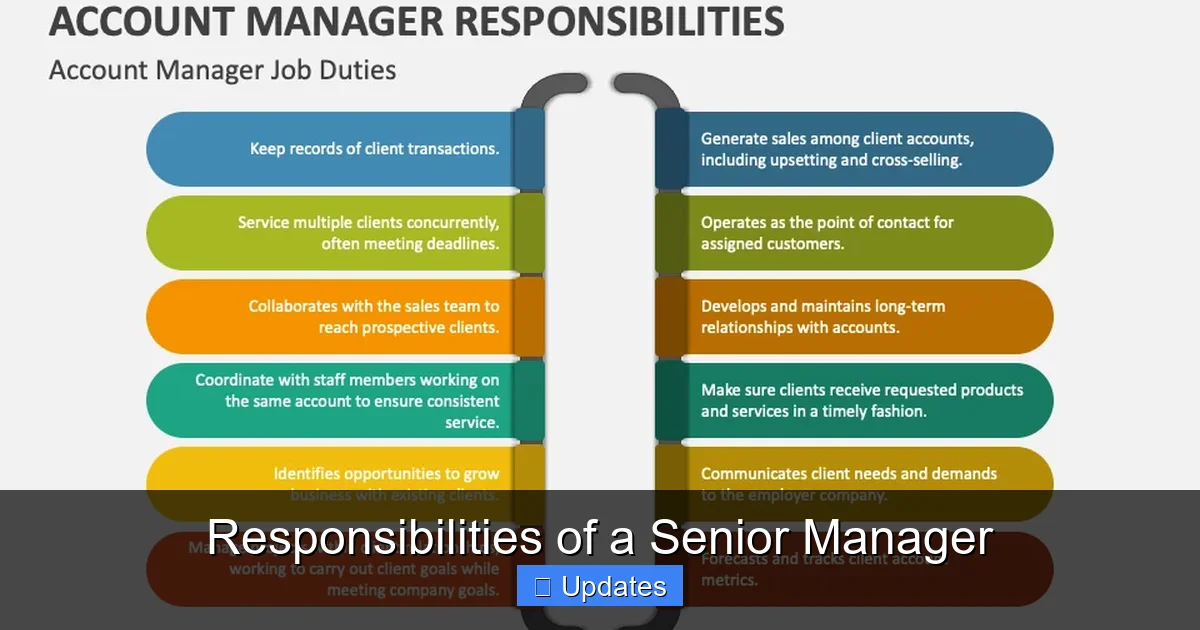
Visual guide about Responsibilities of a Senior Manager
Image source: collidu.com
At the heart of every successful senior manager is exceptional leadership. This goes beyond assigning tasks—it’s about inspiring trust, fostering collaboration, and creating an environment where team members feel valued and motivated.
Mentoring and Coaching
Senior managers often serve as mentors to junior staff. They provide guidance during challenging projects, offer constructive feedback, and help employees build confidence. For example, if a team member struggles with public speaking, the senior manager might arrange mock presentations or connect them with training resources.
Another important aspect is succession planning. By identifying high-potential employees and giving them stretch assignments, senior managers prepare future leaders within the organization.
Building High-Performing Teams
Creating a cohesive team doesn’t happen overnight. It starts with hiring the right people and continues with ongoing support. Use personality assessments or 360-degree feedback to understand team dynamics better. Then, address gaps—whether it’s improving communication or reducing conflict—through targeted interventions.
Pro tip: Schedule monthly one-on-one meetings. These conversations build rapport and allow you to spot issues early before they escalate.
Performance Management and Accountability
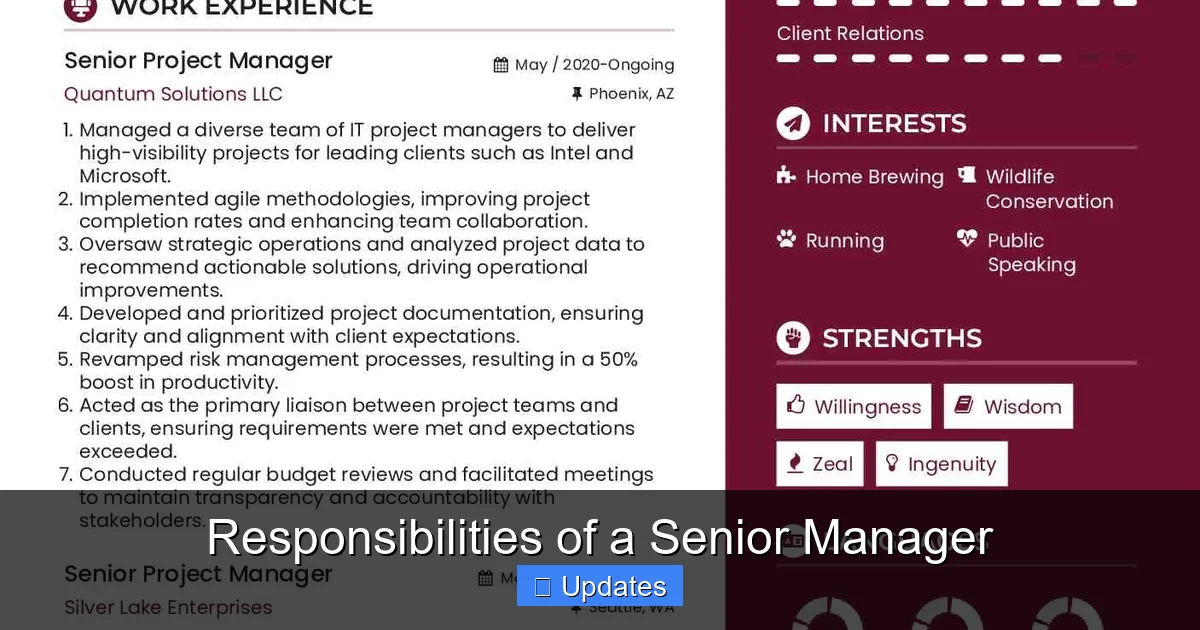
Visual guide about Responsibilities of a Senior Manager
Image source: assets.qwikresume.com
Accountability is a cornerstone of the senior manager role. You’re not only responsible for your own performance but also for guiding others toward success.
Setting Clear Expectations
Start by defining measurable goals using frameworks like SMART (Specific, Measurable, Achievable, Relevant, Time-bound). Share these expectations transparently so everyone knows what success looks like. For instance, instead of saying “Improve sales,” specify “Increase regional sales by 15% within six months.”
Conducting Regular Reviews
Formal performance reviews are important, but don’t rely solely on annual evaluations. Hold frequent check-ins to discuss progress, celebrate wins, and address obstacles. Tools like OKRs (Objectives and Key Results) can keep everyone aligned and focused.
Consider using platforms like Lattice or 15Five to track goals and collect real-time feedback. Digital tools simplify the process and make data-driven decisions easier.
Addressing Underperformance
When team members aren’t meeting expectations, handle it promptly and fairly. Begin with private conversations to understand root causes—sometimes personal challenges or lack of clarity are at play. Then co-create improvement plans with clear steps and deadlines.
Remember: tough conversations are necessary, but approach them with empathy. Most people respond well when they feel supported rather than punished.
Budgeting and Resource Allocation
Visual guide about Responsibilities of a Senior Manager
Image source: blog.mbeforyou.com
Financial stewardship is another key duty. Senior managers must create realistic budgets, monitor spending, and justify expenses to upper management.
Preparing Annual Budgets
This involves forecasting revenue, estimating costs, and proposing allocations for salaries, equipment, travel, and training. Be sure to include contingency funds for unexpected expenses—a common oversight that can derail projects.
Use historical data and input from team leads to build accurate projections. Involving stakeholders increases buy-in and reduces surprises later.
Tracking Spending in Real Time
Don’t wait until the end of the quarter to review finances. Set up dashboards that show actual vs. budgeted spending weekly or biweekly. This helps catch overspending early and allows quick course corrections.
For example, if marketing spend is running high due to unplanned campaigns, the senior manager can negotiate better vendor rates or reallocate funds from lower-priority initiatives.
Maximizing ROI
Every dollar spent should deliver value. When approving new tools or training programs, ask: “Will this generate measurable returns?” If yes, proceed—but always measure outcomes afterward. A/B testing different approaches can reveal what works best for your team.
Stakeholder Communication and Collaboration
As a senior manager, you’re constantly communicating—with executives, peers, subordinates, and sometimes clients or vendors. Clarity, consistency, and professionalism matter greatly.
Reporting to Executives
Prepare concise summaries for leadership updates. Focus on highlights: achievements, roadblocks, and next steps. Visual aids like charts or slides can make complex information easier to digest.
Avoid jargon unless you know your audience understands it. When presenting to C-suite leaders, emphasize business impact—how decisions affect profits, customers, or competitive advantage.
Cross-Department Coordination
Many projects require input from multiple teams. As the senior manager, you’ll need to facilitate meetings, resolve disagreements, and keep momentum going. Tools like Slack, Microsoft Teams, or Asana help coordinate efforts across time zones and locations.
Example: Launching a new product may involve R&D, marketing, sales, and customer service. Your job is to ensure all groups stay synchronized and deliver on commitments.
External Partnerships
Sometimes, your role includes managing relationships with outside organizations. Whether it’s negotiating contracts or attending industry events, represent your company with integrity and enthusiasm.
Building trust takes time. Follow through on promises, listen actively, and show appreciation for partners’ contributions.
Process Optimization and Innovation
Efficiency is a hallmark of effective management. Senior managers continuously look for ways to eliminate waste, reduce errors, and speed up delivery.
Identifying Bottlenecks
Observe workflows regularly. Are approvals taking too long? Is information getting lost between departments? Use tools like value stream mapping to visualize processes and pinpoint inefficiencies.
For instance, if product samples take weeks to move from design to testing, redesign the handoff procedure. Maybe introduce shared digital folders or assign single points of contact per stage.
Implementing Change Management
Change can trigger resistance. Prepare your team by explaining why improvements are necessary and how they benefit everyone. Provide training and support during transitions.
Consider using models like Kotter’s 8-Step Process: create urgency, form a coalition, develop a vision, communicate the change, empower action, generate short-term wins, consolidate gains, and anchor in culture.
Encouraging Innovation
Create safe spaces where team members can propose new ideas without fear of criticism. Host brainstorming sessions or innovation labs. Even small improvements—like automating a repetitive task—can save significant time over time.
Recognize and reward creative thinking. Public praise or small incentives go a long way in motivating participation.
Crisis Response and Decision-Making
In volatile situations—such as system outages, PR crises, or sudden market shifts—senior managers must act decisively.
Developing Contingency Plans
Anticipate potential disruptions and outline response protocols. Who makes what decisions? What communication channels will you use? Run drills periodically to test readiness.
For example, if cybersecurity threats rise, ensure your team knows how to isolate affected systems and notify relevant parties immediately.
Tough Decisions Under Pressure
When faced with limited options, weigh pros and cons quickly. Consult trusted advisors if needed, but avoid analysis paralysis. Remember: no decision is perfect, but timely action usually beats delay.
During layoffs due to restructuring, approach with compassion. Offer severance packages, outplacement services, and honest explanations to maintain dignity and preserve reputation.
Leveraging Data in Crises
Even in emergencies, data informs better choices. Monitor real-time metrics like server load, customer complaints, or social media sentiment. Dashboards updated live help you pivot strategies swiftly.
Conclusion
The responsibilities of a senior manager are vast and varied—spanning strategy, people, finance, and operations. Yet at its core, this role is about enabling others to succeed while driving meaningful results for the organization. From setting ambitious goals to navigating crises, senior managers shape the present and future of their companies.
By mastering strategic thinking, empowering your team, managing resources wisely, and communicating effectively, you’ll not only fulfill your duties but also leave a lasting legacy. And remember: great senior managers never stop learning. Stay curious, adapt quickly, and lead with both heart and head.
Now that you understand the full scope of this role, reflect on your current responsibilities. Where could you grow? How might you inspire your team more deeply? The answers lie within—and the impact you create will echo far beyond your department.
Frequently Asked Questions
What are the main responsibilities of a senior manager?
A senior manager oversees strategic planning, leads teams, manages budgets, ensures performance standards, communicates with stakeholders, and drives process improvements. They act as a bridge between executive leadership and operational staff.
How does a senior manager differ from a middle manager?
While middle managers focus on executing tactical plans, senior managers shape long-term strategy and influence company-wide decisions. They typically have broader authority, larger teams, and greater responsibility for financial outcomes.
Can you give an example of a senior manager’s daily routine?
Yes. A typical day might include reviewing KPIs, holding team meetings, preparing budget reports, responding to urgent emails, mentoring staff, and collaborating with other department heads on cross-functional projects.
What skills are essential for a senior manager?
Key skills include strategic thinking, emotional intelligence, financial literacy, communication, problem-solving, leadership, and adaptability. Strong analytical abilities and cultural awareness are also highly valuable.
How do senior managers measure success?
They measure success through team performance metrics, achievement of strategic goals, budget adherence, employee engagement scores, customer satisfaction ratings, and overall contribution to organizational growth.
Are there industries where senior managers face unique challenges?
Yes. Industries like healthcare, government, and tech often involve complex regulations, rapid innovation cycles, or high-stakes decision-making. Each requires specialized knowledge and heightened risk management skills.