
92nd Street Y Senior Program


Back Massager with Heat

Kitchen Timer with Large Display

Puzzle Book for Seniors
The 92nd Street Y senior program is a cornerstone of New York City’s active aging community, offering a dynamic mix of fitness, arts, education, and social connection specifically designed for adults 60 and older. In 2026, it continues to evolve with hybrid offerings, cutting-edge wellness technology, and a deep commitment to combating isolation. This comprehensive guide explores its history, current offerings, eligibility, and profound impact, showing why it remains a model for senior centers nationwide.
Imagine a place where you can perfect your tai chi form in a sun-drenched studio, debate a new documentary over coffee with old friends and new acquaintances, learn to edit videos on your tablet, and then head to a concert featuring a world-class quartet—all under one roof, and all designed for you. This is the everyday reality at the 92nd Street Y’s senior program. For decades, the “92Y,” as it’s affectionately known, has been more than just a community center for older New Yorkers; it has been a lifeline, a classroom, and a home away from home. As we look toward 2026, in a world still grappling with the lessons of recent global isolation, the Y’s mission to “connect people to their communities and to each other” has never been more critical or more resonant.
The 92nd Street Y, founded in 1888, has always been about bringing people together. Its senior services, which grew significantly in the late 20th century, were a natural extension of that founding principle. But the program truly came into its own in the 21st century, shifting from a model of passive recreation to one of active engagement, intellectual challenge, and artistic creation. The philosophy is simple yet profound: aging is not a retreat from life but a chapter of continued growth. The programming reflects this, refusing to stereotype or pigeonhole its members. You’ll find retired Wall Street executives in the same pottery class as first-time artists, and former teachers learning alongside digital natives in tech workshops. This intentional diversity of experience is the program’s secret sauce, creating a rich, cross-pollinated community where everyone has something to teach and something to learn.
Key Takeaways
- Holistic Wellness Focus: The program integrates physical fitness, mental stimulation, and social health, recognizing that true well-being for seniors encompasses all three.
- Arts & Culture at its Core: From museum trips to writing workshops, the Y treats arts not as a hobby but as essential to cognitive vitality and personal expression.
- Designed for Modern Seniors: offerings reflect the diverse interests of today’s 60+ population, including technology classes, civic engagement, and intergenerational programs.
- Strong Community Ethos: It actively builds a “community of belonging,” with structured social events and informal gathering spaces designed to reduce loneliness.
- Accessible & Evolving: With sliding scale fees, robust accessibility features, and a growing hybrid (in-person/online) schedule, it meets seniors where they are.
- Beyond a “Senior Center”: It functions as a cultural hub, a learning institution, and a vital social service, partnering with NYC health and arts organizations.
📑 Table of Contents
- A Legacy of Connection: The Y’s History with Older Adults
- The 2026 Program Ecosystem: A Week in the Life
- Who Can Join? Eligibility and Access in 2026
- The Pillars of Programming: Wellness, Arts, and Mind
- Impact and Testimonials: More Than Just Activities
- Looking Ahead: The 92Y Senior Program in 2026 and Beyond
A Legacy of Connection: The Y’s History with Older Adults
To understand the 92Y senior program’s current vibrancy, it helps to trace its roots. The institution’s original mission was to provide educational and cultural opportunities to the waves of immigrants arriving on the Lower East Side. As the neighborhood and the city changed, so did the Y’s focus. By the 1970s and 80s, as the population aged, the Y recognized a growing need: seniors, often living alone in once-bustling family apartments, faced profound isolation. The Y’s response was to create dedicated spaces and programming for this demographic, seeing it not as a charity case but as a reservoir of wisdom and experience that enriched the entire community.
From Service to Empowerment
The early programs were practical: hot lunch programs, basic exercise classes, and day trips. But leaders quickly realized that providing for basic needs was only the first step. The real transformation began when the program shifted toward empowerment. Classes in memoir writing, current events discussion groups, and advanced art studios were introduced. The message was clear: your life story is valuable, your opinions matter, and your creative potential is endless. This empowerment model became the hallmark of the 92Y approach, distinguishing it from traditional senior centers that might focus primarily on care or recreation. It’s a model that aligns perfectly with the “productive aging” movement, which posits that society benefits when older adults remain engaged in meaningful activities.
The 2026 Program Ecosystem: A Week in the Life
What does a typical week look like for a member in 2026? The beauty is there is no “typical.” The program is a vast ecosystem of concurrent offerings, allowing individuals to curate their own unique schedules. Let’s walk through a hypothetical but representative week to see the range.
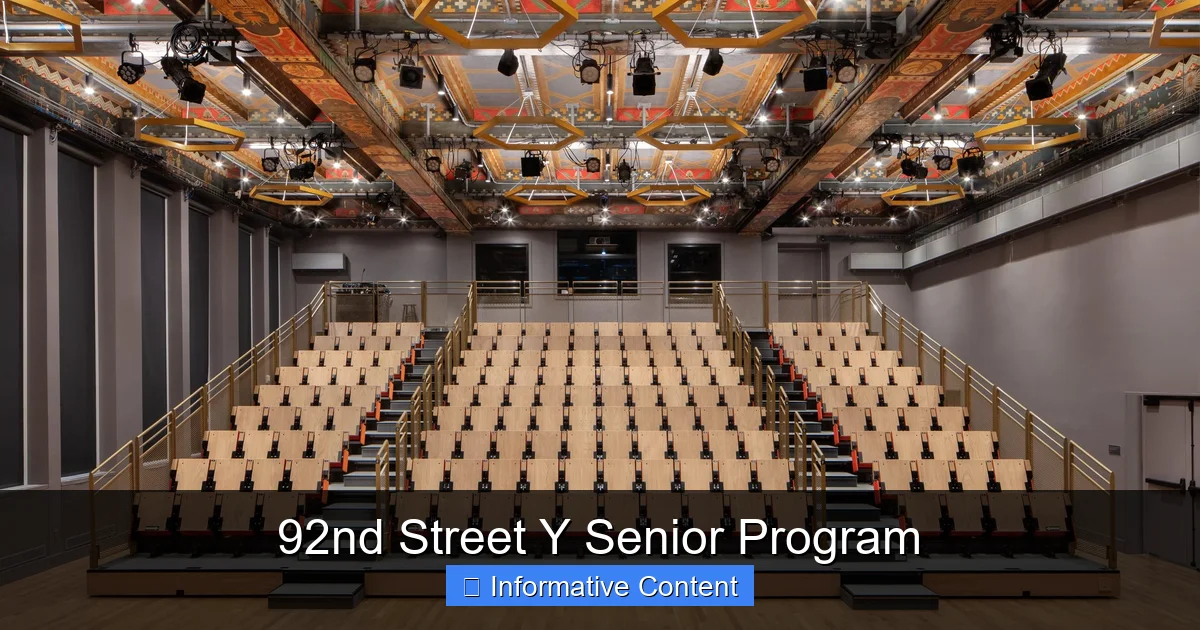
Visual guide about 92nd Street Y Senior Program
Image source: jrmcm.com
Monday: Mind & Body Synergy
The week often starts with a focus on grounding. At 9 AM, the “Mindful Movement” studio is full for a gentle yoga class tailored for arthritis and mobility, led by an instructor certified in adaptive techniques. Across the hall, a more energetic group is in the middle of a “Cardio Drumming” class, laughing as they follow rhythms on stability balls. Post-lunch, the lecture hall hosts a “Current Affairs Forum,” where a rotating panel of journalists and historians dissects the week’s top stories. The conversation is heated, respectful, and assumes a baseline of knowledge and curiosity. For those who can’t make it in person, the session is streamed live and archived on the member portal.
Tuesday: Creative Immersion
Tuesdays are for the hands and the heart. The ceramics studio hums with the pottery wheel and the smell of wet clay. In one corner, a beginner is carefully centering their first bowl; in another, a lifelong artist is glazing a complex sculpture. Next door, the “Digital Storytelling” lab is in session. Here, seniors learn to use tablets and simple software to create short films about their lives or their neighborhoods. The lab is a partnership with a local tech education nonprofit, and the equipment is always the latest that’s user-friendly. This fusion of traditional arts with modern technology is a signature of the 2026 program, bridging generations and mediums.
Wednesday: Social & Intergenerational
Midweek pivots to connection. The “Lunch & Learn” series pairs a catered meal with a talk from a visiting expert—this week it’s an architect discussing NYC’s evolving skyline. After lunch, the “Grandfriend Program” comes alive. This is the Y’s acclaimed intergenerational initiative. Seniors are paired with students from a nearby elementary school for weekly activities. One pair might be reading a picture book together; another, a senior is teaching a child how to knit. These relationships are profound, reducing ageism on both sides and providing mutual joy. For seniors without family nearby, this weekly contact with a young person can be a highlight of their social calendar.
Thursday: Lifelong Learning
Education is a constant thread. Thursdays feature the “92Y University” lecture series, with courses running for several weeks on topics like “The History of Jazz” or “Introduction to Philosophy.” The instructors are often retired professors or experts from partner institutions like The New School or Lincoln Center. In the afternoon, smaller “Seminar-style” discussions take place in the library’s cozy reading rooms, with titles like “The Ethics of Artificial Intelligence” or “Modern Poetry.” The emphasis is on discussion, not lecture, ensuring every voice is heard.
Friday: Celebration & Recreation
The week culminates in celebration. Friday afternoons are for the “Friday Social Club,” a casual gathering with music, games, and a festive atmosphere. It’s less structured, perfect for spontaneous conversations. Once a month, this morphs into a “Dinner Dance” with a live band, where members show off moves learned in the ballroom dance classes. The Y also runs frequent “Cultural Excursions”—guided trips to museums, off-Broadway shows, or even walking tours of neighborhoods like Harlem or the Lower East Side, often led by historians who are also Y members.
Who Can Join? Eligibility and Access in 2026
The 92Y senior program is intentionally inclusive. The primary eligibility criterion is age: members must be 60 years or older. This aligns with the standard age for senior programming in New York City and with many national definitions of senior citizenship. However, the Y’s philosophy is that vitality is not dictated by a calendar alone. The program is designed for “active older adults,” meaning individuals who are seeking engagement, regardless of their specific physical or cognitive abilities. There is a wide spectrum of mobility and health within the community, and the program’s diversity is one of its strengths.
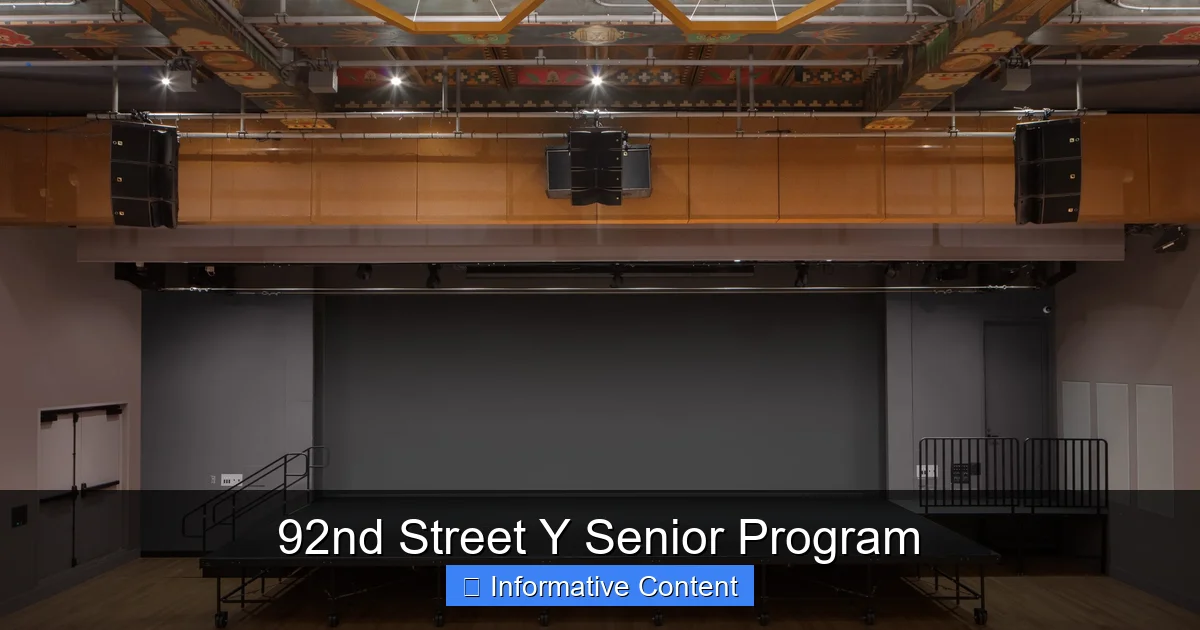
Visual guide about 92nd Street Y Senior Program
Image source: jrmcm.com
Access is a paramount concern. The Y operates on a sliding scale fee structure based on household income. This ensures that cost is not a barrier to participation. In 2026, annual membership fees for the senior program range from a nominal base fee for those with limited means to a full rate for those who can afford it. Many of the special workshops, trips, and premium lectures have separate, modest fees, but core classes like fitness, most arts, and discussion groups are included in the membership. The Y actively assists with the application process for subsidized rates, and staff are trained to handle these conversations with dignity and privacy.
Practical Logistics: Getting Started
Prospective members can start by visiting the 92nd Street Y website or calling the Senior Services desk. The process involves a brief intake form and a chat with a program coordinator, not to assess fitness but to understand interests and any specific needs (like accessibility requirements or dietary restrictions for luncheons). New member orientations are held weekly, both in-person and virtually, to tour the facilities, explain the online portal, and introduce people to the schedule. For those with mobility challenges, the Y is fully ADA-compliant with elevators, handrails, and adaptive equipment. Transportation can be a hurdle for some NYC seniors; the Y does not provide a dedicated bus service but offers detailed information on accessible subway routes, bus lines, and subsidized ride-share programs through city partnerships. They also encourage carpool coordination among members in the same borough.
It’s also worth noting that while the physical hub is on the Upper East Side, the program’s reach extends digitally. A robust virtual schedule allows seniors with mobility issues, caregiving responsibilities, or those who simply prefer the comfort of home to participate in many classes and lectures via Zoom. This hybrid model, solidified during the pandemic, has become a permanent and popular feature, expanding access borough-wide.
The Pillars of Programming: Wellness, Arts, and Mind
The program’s success lies in its balanced, three-pillar approach. It avoids over-emphasizing one area at the expense of others, understanding that holistic well-being is the goal.
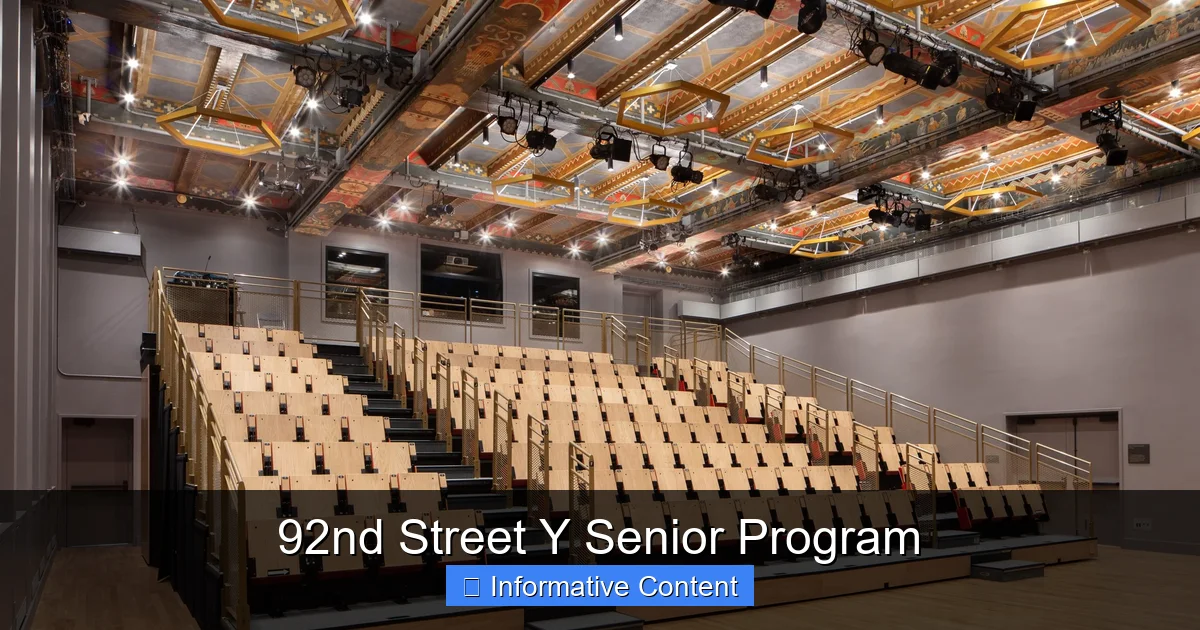
Visual guide about 92nd Street Y Senior Program
Image source: jrmcm.com
Pillar 1: Physical Wellness & Movement
This goes far beyond generic “senior aerobics.” The fitness department is staffed by trainers certified in senior-specific modalities. Classes include:
- Functional Fitness: Focused on movements for daily life—sitting/standing, carrying groceries, balance to prevent falls.
- Aquatic Exercise in the Y’s pool, which is warm, shallow, and has a hydraulic lift for easy access.
- Specialized classes like “Parkinson’s Movement” and “Arthritis Foundation Exercise Program,” developed in partnership with medical organizations.
- Mind-body practices like Tai Chi and Qigong, which have strong evidence for improving balance and reducing stress.
Free health screenings—blood pressure, glucose, bone density—are offered quarterly in partnership with local hospital systems like Mount Sinai. Members often speak of the fitness center not just as a gym, but as a place where they’ve formed their closest friends, spotting each other on the mats and celebrating small physical victories together.
Pillar 2: Arts, Creativity & Self-Expression
The arts are considered a core component of health here. The visual arts department offers painting (oil, acrylic, watercolor), drawing, printmaking, and ceramics at all levels. The performing arts include a chorus, a theater group that stages one full production a year, and dance classes from ballet to ballroom. A unique offering is the “Artists-in-Residence” program, where professional artists lead intensive workshops and collaborate with members on public projects. The creative writing program is legendary, with workshops in memoir, poetry, fiction, and even playwriting. Many members have gone on to publish books or have their plays performed at the Y’s own theater. The belief is that creating art is an act of defiance against invisibility and a powerful way to process a lifetime of experience.
Pillar 3: Lifelong Learning & Intellectual Engagement
The brain is a muscle, and the Y’s academic offerings are its gym. The “92Y University” catalog for 2026 reads like a liberal arts college brochure, with courses on history, science, literature, and philosophy. There are also practical “Skills for Modern Life” workshops: navigating online portals for city services, understanding cryptocurrency basics, smartphone photography, and digital security. The discussion groups are a particular draw. “Great Books,” “Film Forum,” and “Science & Society” meet weekly and are facilitated by trained volunteers. The tone is respectful but rigorous; assumptions are challenged, and evidence is valued. This intellectual rigor is a key reason many highly educated seniors choose the 92Y over other options—they crave a forum where ideas are taken seriously.
Impact and Testimonials: More Than Just Activities
How do you measure the success of a program like this? Attendance numbers and membership figures are one metric. But the true impact is in the qualitative transformations. It’s in the story of a recently widowed man who, after joining the chorus, said, “I came for the singing, but I stayed because I found a new family.” It’s in the member who, after a “Digital Storytelling” class, created a film about her immigration journey that was screened at a local festival, giving her a profound sense of legacy. It’s in the palpable energy in the lobby at 10 AM, as people who may have lived alone for years greet each other with hugs and the latest neighborhood gossip.
Studies on social engagement consistently show that seniors who participate in community activities have lower rates of depression, better cognitive health, and even reduced mortality. The 92Y program is a potent dose of that medicine. It provides structure, purpose, and a reason to get dressed in the morning. The intergenerational “Grandfriend” program has been documented to improve the mood and sense of purpose for seniors while fostering empathy and communication skills in the children. For many, the Y becomes their primary social universe. Staff are trained to notice subtle changes—a usually gregarious member becoming quiet, someone missing a few classes—and to check in with care, often connecting members to additional support services if needed. This level of attentive community is rare and invaluable.
Looking Ahead: The 92Y Senior Program in 2026 and Beyond
The program is not static. Leadership constantly evaluates and innovates based on member feedback, demographic shifts, and new research on aging. For 2026 and the near future, several exciting developments are underway or in planning:
Technology as an Enabler, Not a Barrier
Recognizing that technology can both connect and alienate, the Y is expanding its tech support. The “Tech Café” is a drop-in help session where patient, teen volunteers (from the Grandfriend program, in a nice synergy) help seniors with everything from setting up video calls with family to troubleshooting smart home devices. New classes in “Health Tech Literacy” will teach members how to use patient portals, medication reminder apps, and wearable fitness trackers effectively. The goal is tech fluency, not mastery, empowering seniors to use tools that enhance their independence and connection.
Deepening Health Partnerships
The Y is moving from offering occasional screenings to becoming an integrated part of some members’ health plans. Pilot programs with major insurers allow doctors to “prescribe” Y membership for patients at risk of social isolation. The Y’s wellness coordinators can then communicate (with permission) with the patient’s care team about participation in fitness classes, creating a closed loop of care. This model, treating social connection as a vital sign, is at the forefront of modern geriatric medicine.
Expanding Civic Engagement
Today’s seniors are often highly engaged citizens. The Y is launching a “Senior Civic Fellows” program, offering workshops on local government, community organizing, and advocacy. Fellows will work on projects addressing issues like park accessibility, public transit, or age-friendly business initiatives. This taps into a desire many members have to give back and use their lifetime of experience to shape the city’s future.
The future vision is clear: the 92nd Street Y senior program will continue to be a place where aging is not a problem to be solved but a stage of life to be celebrated with curiosity, joy, and deep connection. It stands as a powerful rebuttal to the stereotype of senior life as decline, offering instead a vibrant, ever-evolving testament to the idea that it is never too late to learn, create, connect, and contribute.
Frequently Asked Questions
What is the age requirement for the 92nd Street Y senior program?
The program is designed for adults aged 60 and older. This standard age threshold aligns with most NYC senior services and allows the Y to tailor programming to the common interests and life stage of its members.
How much does membership cost, and are financial subsidies available?
The Y operates on a sliding scale fee based on household income. Annual fees range from a very low base rate for those with limited means to a full rate. Many core classes are included, while some specialty workshops have separate fees. Significant financial aid is available, and the application process is handled with discretion and support.
Do I need to be a tech expert to participate in the digital classes?
Absolutely not. Classes like “Digital Storytelling” and “Smartphone Basics” are taught from the ground up with patient, step-by-step instruction. The “Tech Café” offers free, drop-in help from volunteers. The focus is on using technology as a tool for creativity and connection, not on technical jargon.
Is the program only for very active, fit seniors?
No. The program welcomes all activity levels. It offers a wide spectrum, from high-energy cardio classes to gentle chair yoga and adaptive movement. The community includes members with various mobility levels and health conditions. The social and intellectual offerings are accessible to everyone, regardless of physical ability.
Can I participate if I don’t live on the Upper East Side?
Yes. While the physical hub is on the Upper East Side, the robust hybrid schedule allows participation from anywhere via live stream. Many members commute from other boroughs for specific classes or events. The Y also provides detailed information on accessible public transportation options for those traveling in.
How do I get involved or learn more?
The best first step is to visit the 92nd Street Y website and navigate to the “Senior” section. You can view the full 2026 catalog, watch videos of classes, and download an interest form. You can also call the Senior Services desk directly to speak with a coordinator who can answer specific questions and guide you through the membership process.
