
10 Best Walkers for Disabled Adults in 2026


Large Display Clock with Date

LED Magnifying Glass

Folding Walking Stick with Seat
Choosing a walker is about matching a device to how someone actually moves through their day, not just picking the sturdiest-looking option on the shelf. Standard walkers, seated rollators, upright frames, and hybrid transport chairs each solve a different problem: some prioritize stability for users who need firm support with each step, others focus on distance and rest stops for people who tire easily but walk steadily. Getting this match right affects safety, posture, and whether the equipment actually gets used instead of sitting in a closet.
Mobility equipment has moved well past the folding aluminum frame most people picture. Rollators with locking brakes and padded seating let users rest mid-errand. Upright walkers shift weight support to the forearms instead of the wrists, which helps people with shoulder or back conditions stand straighter. Narrow-frame and width-adjustable models solve a problem many buyers don’t anticipate until they hit a bathroom doorway that’s too tight for a standard frame.
The right walker depends on how a person balances, how far they travel, and what their hands and shoulders can tolerate over a full day, not just their age or diagnosis. Weight capacity, wheel size, brake type, and frame width all affect whether a walker supports someone safely or becomes a hazard on uneven ground. We looked at rollators, standard walkers, upright designs, and wheelchair hybrids to compare how each handles stability, seating, terrain, and storage for different mobility needs.
Best for everyday stability and seated rest: Drive Medical Rollator Walker with Seat
Best for tight indoor spaces: Drive Medical 2-Button Standard Foldable Walker
Best value seated rollator: Medline Steel Rollator Walker with Seat
Best lightweight standard walker: Medline Two Button Folding Walker
Best for rough outdoor terrain: VOCIC Z21 Rollator Walker
Best for travel and long outings: VOCIC Z51 Walker-Wheelchair Combo
Best for posture and back support: Helavo Upright Walker
Best for wider seating comfort: soundfuse Foldable Rollator Walker
Best for narrow doorways and hallways: Agrish Narrow Walker
Best for bariatric users needing wheelchair conversion: AKOASM Extra Wide Walker
Drive Medical Rollator Walker with Seat

This is a solid daily-use rollator for anyone who needs a stable frame with the option to sit down mid-outing.
Pros
- Steel frame feels planted on uneven sidewalks
- Padded seat and fold-down backrest add real rest capability
- Under-seat pouch keeps essentials within reach
Cons
- Steel construction adds noticeable weight versus aluminum models
- Bulkier fold than lighter competitors
- Handle height range may not suit very tall or short users
The 7.5-inch casters roll smoothly over sidewalk cracks and door thresholds without catching. Hand brakes lock securely enough for confident transfers on and off the seat. At 20 pounds, it’s heavier to lift into a trunk than aluminum alternatives, so caregivers loading it repeatedly should factor that in. For home and neighborhood use where a steady, no-frills rollator matters more than ultralight portability, it holds up well.
Drive Medical 2-Button Standard Foldable Walker

This walker suits people who need maximum support standing up and don’t require wheels for constant forward motion.
Pros
- No-wheel design gives firmer support when rising from a chair
- Push-button fold works with limited hand strength
- Weighs just 6 pounds, easy to carry between rooms
Cons
- No wheels means lifting and placing with each step
- Not built for continuous outdoor walking
- U-shaped frame requires a shuffle-and-lift gait pattern
The cross-frame design lets users get close to the walker before standing, which improves leverage for people recovering from knee or hip surgery. Rubber-tipped legs grip tile and hardwood without sliding. It’s not a distance walker, since the lack of wheels means more effort over long stretches, but for bathroom transfers, bedside use, or short indoor trips it offers dependable, low-cost support.
Medline Steel Rollator Walker with Seat
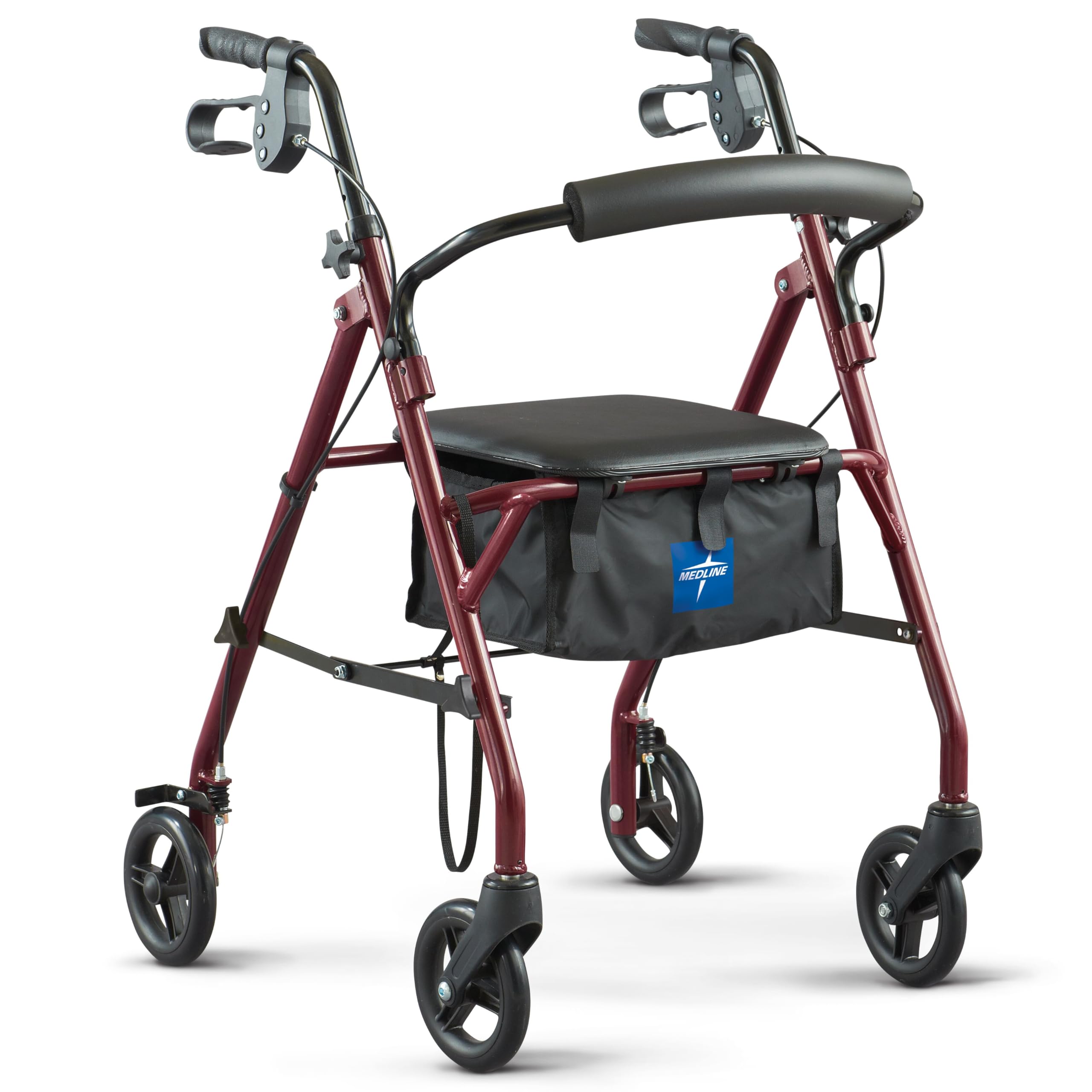
A dependable, hospital-grade rollator that balances a lighter steel frame with the seating and storage most users expect.
Pros
- Lighter than many steel rollators at 16.5 pounds
- Push-to-brake, push-to-lock handles are intuitive for weaker grips
- Under-seat storage bag holds daily items securely
Cons
- 6-inch wheels handle pavement better than grass or gravel
- Seat is smaller than some competitors at 12×12 inches
- Some units arrive with hand grips needing reassembly
Medline built this rollator with the same hardware used in clinical settings, and the brake logic (push up to brake, push down to lock) is simple enough for users with reduced dexterity. The 31 to 35-inch handle range fits most adult heights. Smaller wheels mean it’s better suited to sidewalks and indoor flooring than trails or uneven yards.
Medline Two Button Folding Walker

This is a strong pick for anyone who wants a wheeled walker without the bulk of a full rollator.
Pros
- At 8 pounds, one of the lightest walkers in this roundup
- 5-inch front wheels ease the push-forward motion
- Each side folds independently for tight spaces
Cons
- No seat, so it offers no rest option mid-walk
- 300-lb weight capacity is lower than several rollators here
- Smaller wheels than all-terrain rollator options
The independent-folding sides make this walker useful for navigating narrow hallways or maneuvering around furniture. Height adjusts from 32 to 39 inches, covering a wide range of user heights. It’s built for indoor recovery use, post-surgery mobility, or short errands rather than long outdoor walks, since there’s no seat and the wheels are modest in size.
VOCIC Z21 Rollator Walker

This rollator is built for users who spend real time outdoors on uneven or unpredictable surfaces.
Pros
- 8-inch puncture-proof tires handle cracks, gravel, and curbs confidently
- Dual seat and handle adjustment fits a wide height range
- Three-mode braking gives finer speed control than basic brakes
Cons
- Heavier frame than standard indoor walkers
- Assembly involves more steps than simpler rollators
- Reports of weld issues after extended heavy use
The wide, cushioned seat and breathable backrest make this one of the more comfortable options for users who rest frequently during outings. Reflective strips add visibility for evening walks. It’s a strong choice for theme parks, uneven neighborhoods, or anyone who logs real distance outdoors, though the added bulk makes it less ideal for cramped apartments.
VOCIC Z51 Walker-Wheelchair Combo
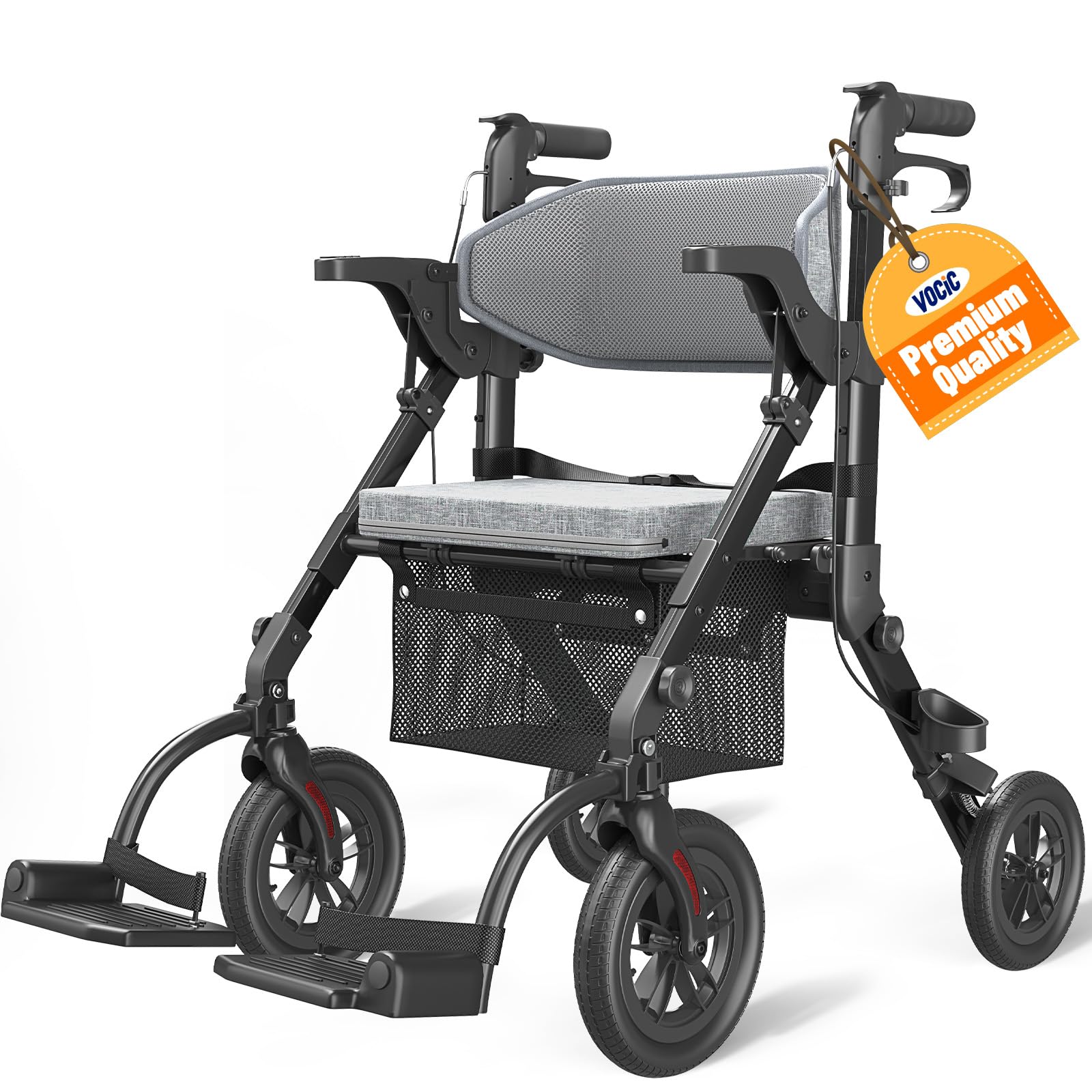
This hybrid works best for travel days or outings that mix walking with stretches where a caregiver needs to push.
Pros
- Converts between rollator and transport chair with detachable footrests
- Compact folded size fits airline and car trunk storage
- Extended backrest improves seated stability
Cons
- Steering with a passenger seated takes practice
- Heavier than single-purpose walkers at nearly 27 pounds
- Brake adjustment needed out of the box for some buyers
The 10-inch front wheels roll over uneven terrain better than most transport chairs manage. A security strap and adjustable backrest add confidence when the user is seated and being pushed. Reserve this one for trips or days requiring both walking support and wheelchair-style assistance, since its dual purpose adds weight and complexity most users don’t need daily.
Helavo Upright Walker

This upright design suits users whose shoulders, wrists, or lower back can’t tolerate a hunched-forward walking posture.
Pros
- Forearm support lets users stand fully upright
- 10-inch puncture-proof wheels handle outdoor terrain well
- Cup holder and cane holder add practical convenience
Cons
- Taller frame is harder to store in small closets
- Not ideal for users who need to lean weight through their hands
- Learning curve for users used to a standard forward-lean walker
Padded armrests and adjustable handles reduce strain on the upper body, which reviewers with chronic back pain and shoulder injuries consistently highlight. The seat, at 18.9 inches wide, offers a comfortable rest spot. This walker is not a fit for someone who needs to push down through their palms for stability; it’s built for people who need to stand straight rather than lean forward.
soundfuse Foldable Rollator Walker
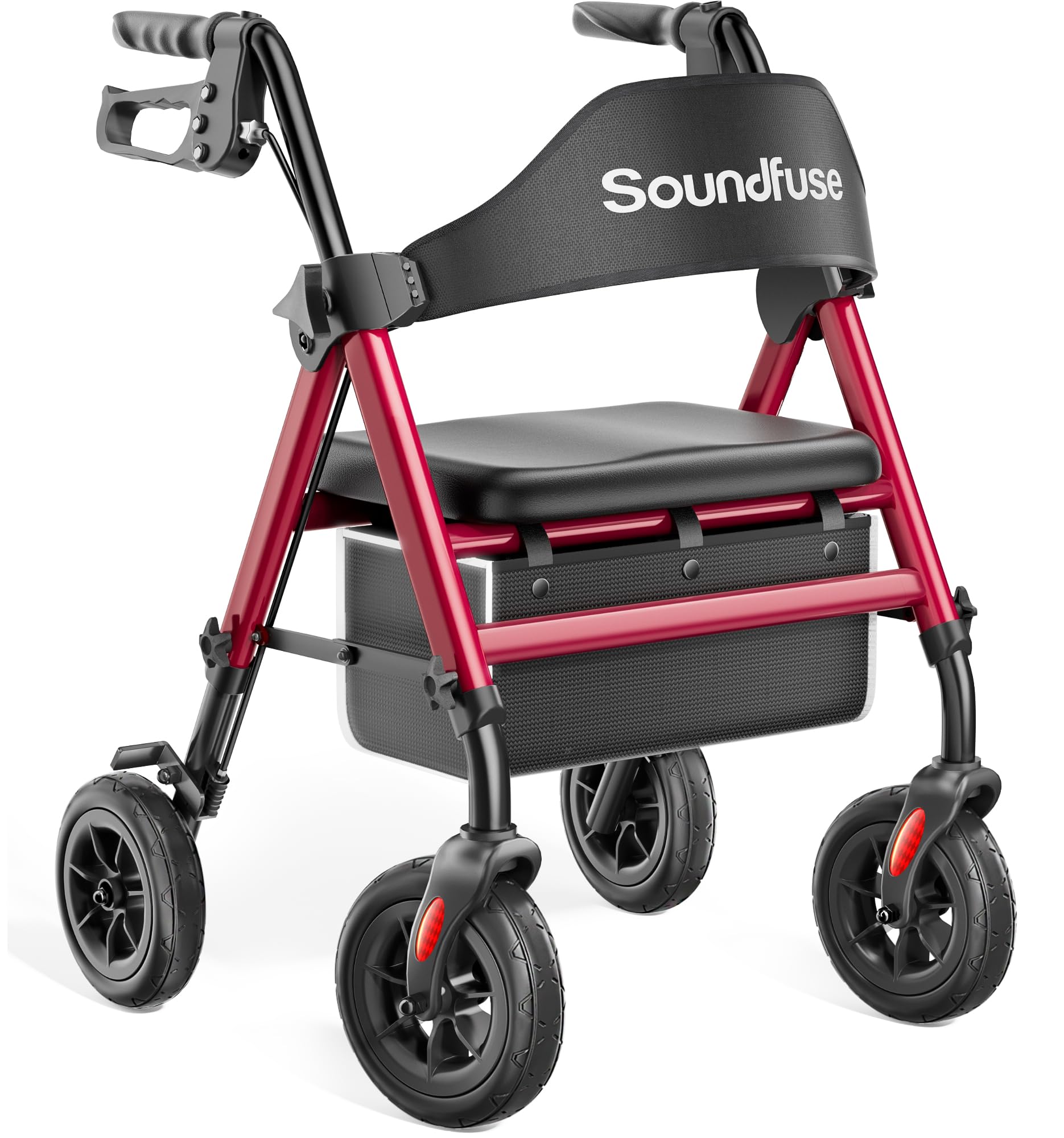
This rollator stands out for users who need a wider, more cushioned seat than typical rollator models provide.
Pros
- Extra-wide memory foam seat suits larger hip widths
- 8-inch PU wheels reduce vibration on rough pavement
- Dual height adjustment fits a broad user range (4’7″ to 6’6″)
Cons
- Newer product with a shorter track record than established brands
- Storage bag height limited for larger bags
- Slightly heavier fold than basic aluminum walkers
The widened backrest offers more back coverage than the thin tubular backs found on cheaper rollators. Pinch-proof folding points reduce the risk of finger injury during storage, a detail smaller manufacturers often skip. For users who found standard rollator seats too narrow or shallow, this model solves a real comfort gap.
Agrish Narrow Walker
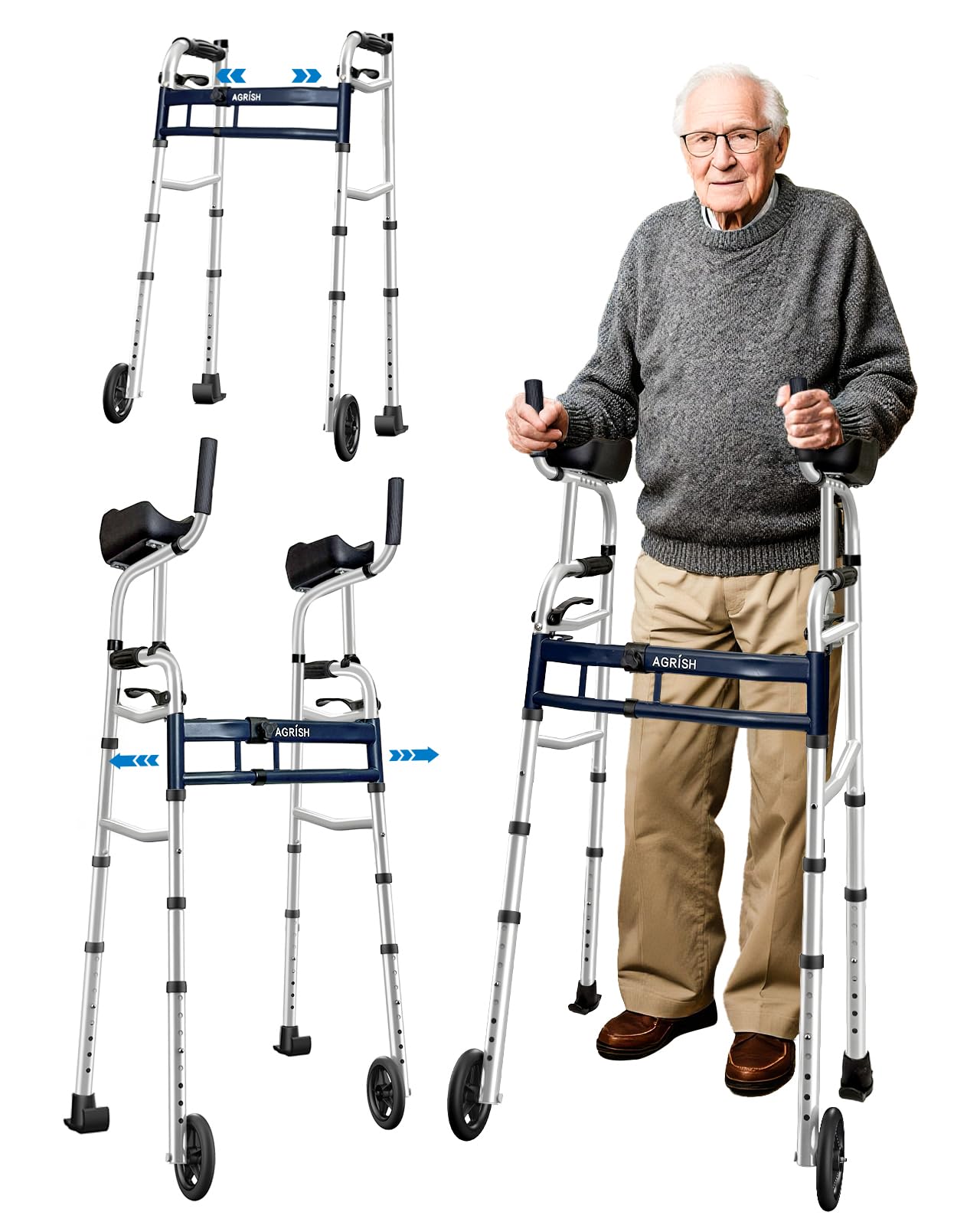
This walker solves a specific problem: fitting through doorways and bathrooms too narrow for a standard-width frame.
Pros
- Adjusts down to 18 inches wide for tight doorways
- 450-lb weight capacity supports bariatric users
- Converts between upright and standard walker modes in seconds
Cons
- Hard tires can feel bouncy on tile or hardwood
- Bulkier appearance than a typical folding walker
- Missing-parts issues reported by a few buyers
Older homes and pre-ADA construction often have bathroom doors too narrow for standard walkers, and this frame’s five width settings address that directly. The H-frame construction feels stable despite the narrow footprint. For anyone who has struggled to get a walker through a tight hallway or bathroom, this is a targeted, practical fix rather than a general-purpose rollator.
AKOASM Extra Wide Walker
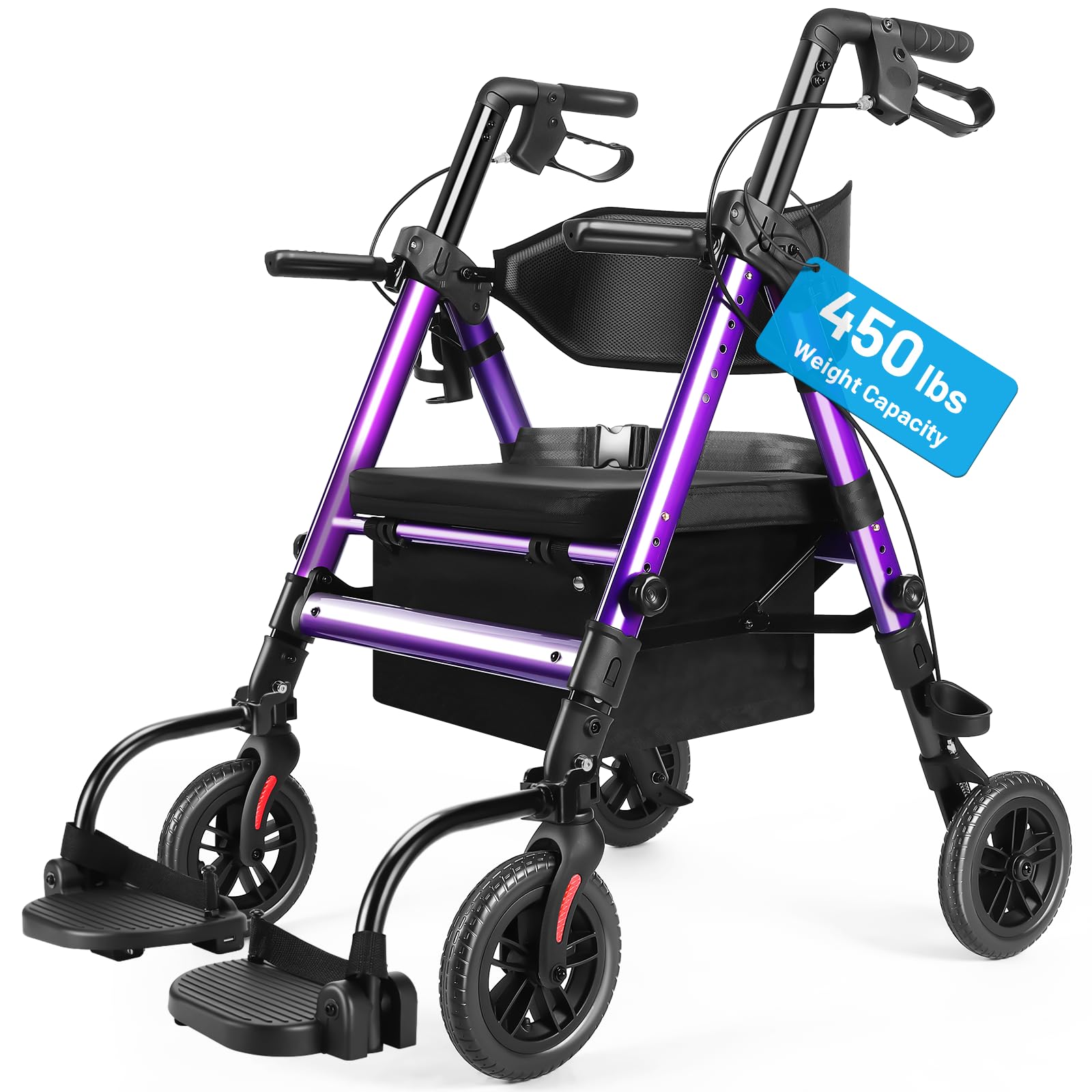
This bariatric-rated rollator-wheelchair combo is built for larger users who need both walking support and transport chair capability.
Pros
- 450-lb weight capacity, among the highest in this category
- 18.5-inch wide seat with high-density foam cushioning
- Three-mode braking system for varied control needs
Cons
- At nearly 30 pounds, difficult to lift for many caregivers
- Wide frame won’t clear standard interior doorways
- Wheelchair mode less stable for larger users than walker mode
The wooden-reinforced seat frame and thickened backrest are built with bariatric comfort in mind, not just higher weight ratings. Waist and footrest straps add security during transport chair use. Buyers should measure doorways before purchasing, since the width that supports larger users also blocks passage through standard interior doors.
Buying Guide
Match The Frame Type To The User’s Balance And Gait
Standard walkers (no wheels or two front wheels) suit users who need to bear significant weight through their arms while standing or taking each step. Rollators, with four wheels and hand brakes, suit users with steadier balance who need support and endurance rather than constant hands-on stability. Upright walkers shift weight support to the forearms, which helps people who can’t tolerate leaning forward.
Check Weight Capacity Against Actual User Weight, Not Just A Buffer
Most standard rollators list capacities between 300 and 350 lbs. Bariatric models go up to 450 lbs. Choose a walker rated comfortably above the user’s weight, since capacity ratings assume even weight distribution, not leaning heavily to one side.
Measure Doorways And Hallways Before Choosing Width
| Frame Width | Best For |
|---|---|
| 18-22 inches (narrow/adjustable) | Older homes, small bathrooms, tight hallways |
| 23-26 inches (standard rollator) | Typical homes, sidewalks, stores |
| 27+ inches (bariatric/wide-seat) | Larger users needing wider seating, wider doorways only |
Match Wheel Size To Where The Walker Will Be Used
Small wheels (5-6 inches) roll well on smooth indoor flooring and paved sidewalks. Larger wheels (8-10 inches) handle grass, gravel, cracked pavement, and curbs with less jolting. Users who spend most of their time indoors rarely need the largest wheel size available.
Confirm Brake Style Matches Hand Strength And Dexterity
Loop brakes (squeeze to stop) demand less grip strength than lever brakes. Push-down locking brakes, which hold the walker stationary for seated transfers, should be easy to engage without straining the wrist.
Weigh Portability Against Stability
Lighter aluminum frames (6-17 lbs) are easier for caregivers to lift into a car but flex slightly more under heavier loads. Steel frames add stability and weight capacity at the cost of extra pounds during folding and transport.
A physical or occupational therapist can confirm which frame type, width, and brake style match a specific diagnosis, gait pattern, or home layout before purchase.
Editor’s Choice
The Drive Medical Rollator Walker with Seat stands out as the strongest all-around pick for adults who need dependable daily support with the option to rest. Its steel frame, locking brakes, and padded seat cover the needs of most home and community users without requiring a specialized fit.
For users who need to clear narrow doorways, the Agrish Narrow Walker solves a problem most rollators can’t. For posture-related pain, the Helavo Upright Walker offers a genuinely different support style worth considering with a clinician’s input. Bariatric users comparing higher-capacity options should look closely at the AKOASM Extra Wide Walker for its combined seating comfort and 450-lb rating.
Conclusion
The right walker depends on how someone balances, how far they travel, and what their body can tolerate over a full day of use. A steady rollator with a seat covers most daily needs, while narrow frames, upright designs, and bariatric hybrids solve specific problems standard models can’t. Confirm weight capacity, frame width, and brake style against the user’s actual measurements and strength before buying, and loop in a physical therapist when the fit isn’t obvious from specs alone.
FAQS
What’s the difference between a walker and a rollator?
A standard walker has no wheels or two front wheels and requires lifting or sliding with each step, offering firmer support for weight-bearing needs. A rollator has four wheels, hand brakes, and typically a seat, suited to users with steadier balance who need endurance support rather than constant hands-on stability.
Can a walker be used in a small bathroom?
Standard rollators often measure 23 to 26 inches wide, which is too wide for many older bathroom doorways. Width-adjustable narrow walkers that fold down to 18 inches solve this without sacrificing weight capacity.
Is a heavier steel frame safer than a lightweight aluminum one?
Steel frames offer strong stability and higher weight capacities but add several pounds that make lifting and transporting harder for caregivers. Aluminum frames are easier to carry and still support 300 to 350 lbs in most models, making the trade-off one of portability versus raw capacity.
Do walker-wheelchair combos work well as a primary mobility device?
They work best for trips or outings that mix walking with stretches of being pushed, such as travel days or long events. For daily home use, a dedicated walker or rollator typically maneuvers more easily than a hybrid.
Should a doctor or therapist be involved in choosing a walker?
A physical or occupational therapist can assess gait, balance, and upper body strength to recommend the right frame type, height, and brake style. This matters most for users recovering from surgery, managing progressive conditions, or carrying higher body weight where fit affects safety directly.
