
10 Best Walkers for Caregivers in 2026


Folding Walking Cane

Automatic Jar Opener

Voice Assistant Smart Speaker
Choosing a walker for someone else is different from choosing one for yourself. A caregiver has to think about how easy the frame is to fold with one hand, whether the brakes work for weaker grip strength, and whether the whole thing fits in a trunk without a fight. The right walker reduces strain for both the user and the person helping them, which is why steering weight and seat comfort deserve as much attention as wheel size.
Rollators, upright walkers, standard frames, and rollator-wheelchair combos each solve a different mobility problem. A senior recovering from knee surgery needs something different than a parent with balance issues who wants to sit and rest mid-walk, or a spouse who needs a caregiver-push option for longer outings. The best choice depends on where the person walks most (tight hallways versus outdoor sidewalks), how much they can lift on their own, and whether a caregiver needs to assist with braking or transport.
Weight capacity, frame material, wheel diameter, and folding mechanism all affect daily usability in ways that spec sheets do not always make obvious. A 300-lb capacity aluminum frame that folds one-handed suits a different household than a heavier-duty steel model built for stability over agility. The products below cover that full range, from compact indoor walkers to bariatric transport combos, so the right fit depends on matching the walker’s design to the user’s actual daily routine.
Best for everyday stability: Drive Medical Rollator Walker with Seat
Best for hospital-grade reliability: Medline Steel Rollator Walker
Best for narrow indoor spaces: Medline Two Button Folding Walker
Best for larger seated users: HOMLAND Foldable Rollator Walker, 16″ Seat
Best for lightweight all-terrain walking: HOMLAND Foldable Rollator, 17 lb
Best for back pain and posture support: Helavo Upright Walker
Best for active outdoor users: Drive Medical Nitro Sprint Rollator
Best for arthritis-friendly braking: soundfuse Foldable Rollator
Best for tight doorways: HOMLAND Foldable Walker, 16 lb
Best for caregiver-assisted transport: Akoasm Rollator Wheelchair Combo
Best for bariatric support: Ambliss 2-in-1 Transport Wheelchair Combo
Best for quick trips without a seat: HOMLAND Foldable 3 Wheel Walker
Drive Medical Rollator Walker with Seat

This is a solid, no-surprises rollator that works well as a daily walker for someone who needs consistent support both at home and around the neighborhood.
Pros
- Steel frame feels stable on uneven sidewalks
- Padded seat with fold-down backrest for rest stops
- Hand brakes lock securely for safe transfers
Cons
- Heavier than aluminum rollators, harder to lift into a car
- Limited height adjustment range
- Bulkier fold than newer lightweight models
Caregivers helping someone transfer in and out of a seated position will appreciate the locking brakes, which hold the frame steady rather than letting it creep. The under-seat pouch is a practical touch for phones, medication, or a wallet. At 20 pounds, it is not the easiest walker to hoist into a trunk repeatedly, so it suits households where the rollator mostly stays in one home rather than traveling often.
Medline Steel Rollator Walker
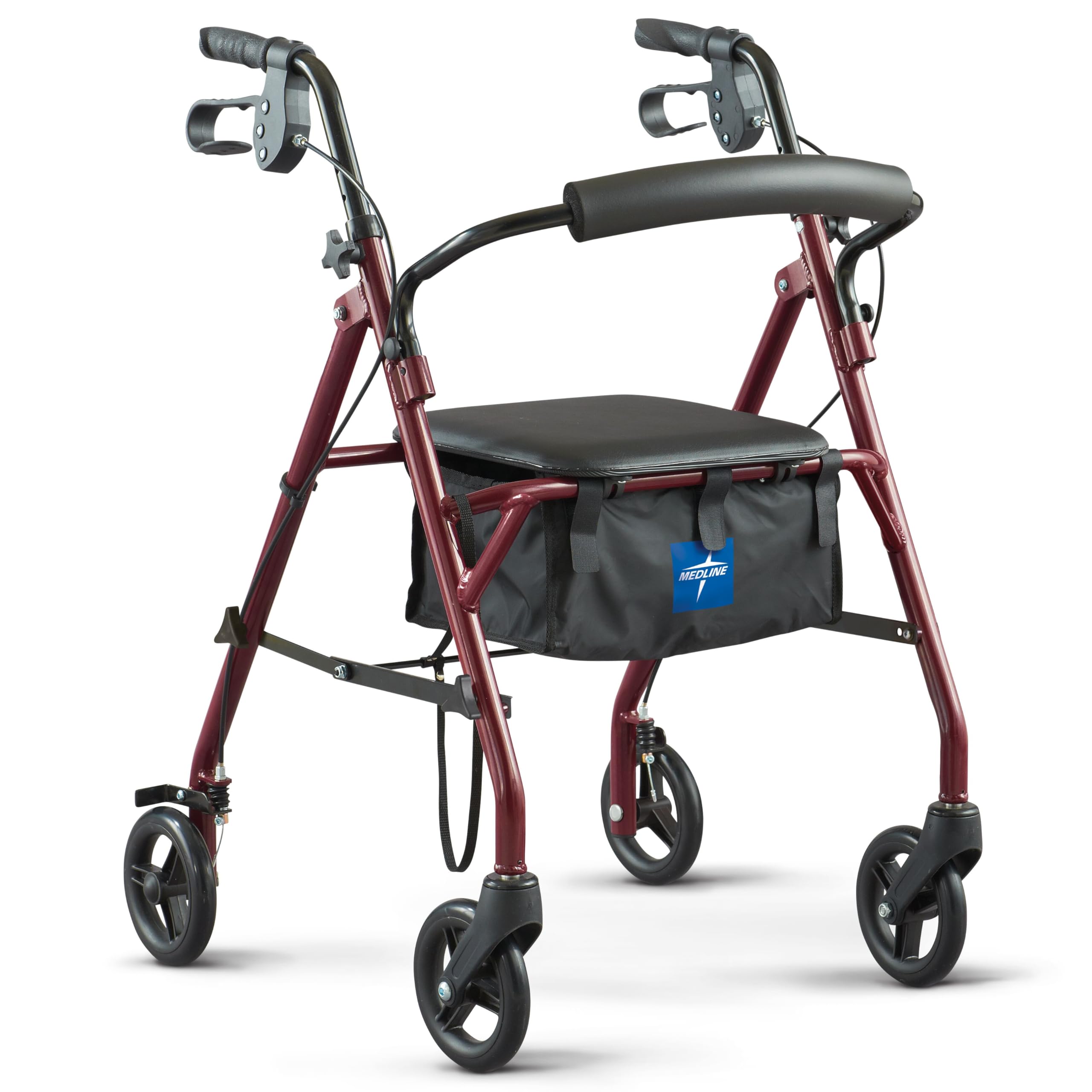
Trusted in clinical settings, this rollator makes sense for caregivers who want a proven, hospital-style design at home.
Pros
- Lighter frame than many steel rollators at 16.5 lbs
- Push-up/push-down brake handles are easy to learn
- Padded seat and backrest combo for rest breaks
Cons
- Shorter maximum height (35″) may not suit taller users
- 6″ wheels handle rougher terrain less smoothly than larger wheels
- Seat is smaller than some competitors at 12×12″
The brake mechanism here is genuinely easy to teach a first-time user. Push up to brake, push down to lock, no memorizing which lever does what. That simplicity matters when a caregiver is coaching someone through using it correctly the first few times. Smaller wheels make it a better fit for smooth indoor floors and paved paths than gravel or grass.
Medline Two Button Folding Walker

This standard walker suits recovery situations where a rollator’s seat and bulk are not necessary.
Pros
- Weighs just 8 lbs, easiest walker here to carry
- Push-button height adjustment is fast for caregivers
- Folds flat for car trunks or closets
Cons
- No seat for resting during outings
- Front wheels only, less stable than a 4-wheel rollator
- Not intended for outdoor or uneven terrain
For a caregiver managing a parent through post-surgical recovery, this walker’s low weight makes it easy to move between rooms, into vehicles, or up a flight of stairs when needed. The two-wheel design means it does not roll away on its own, but it also requires more lifting motion than a full rollator, which can tire out a caregiver who is assisting with every step.
HOMLAND Foldable Rollator Walker, 16″ Seat
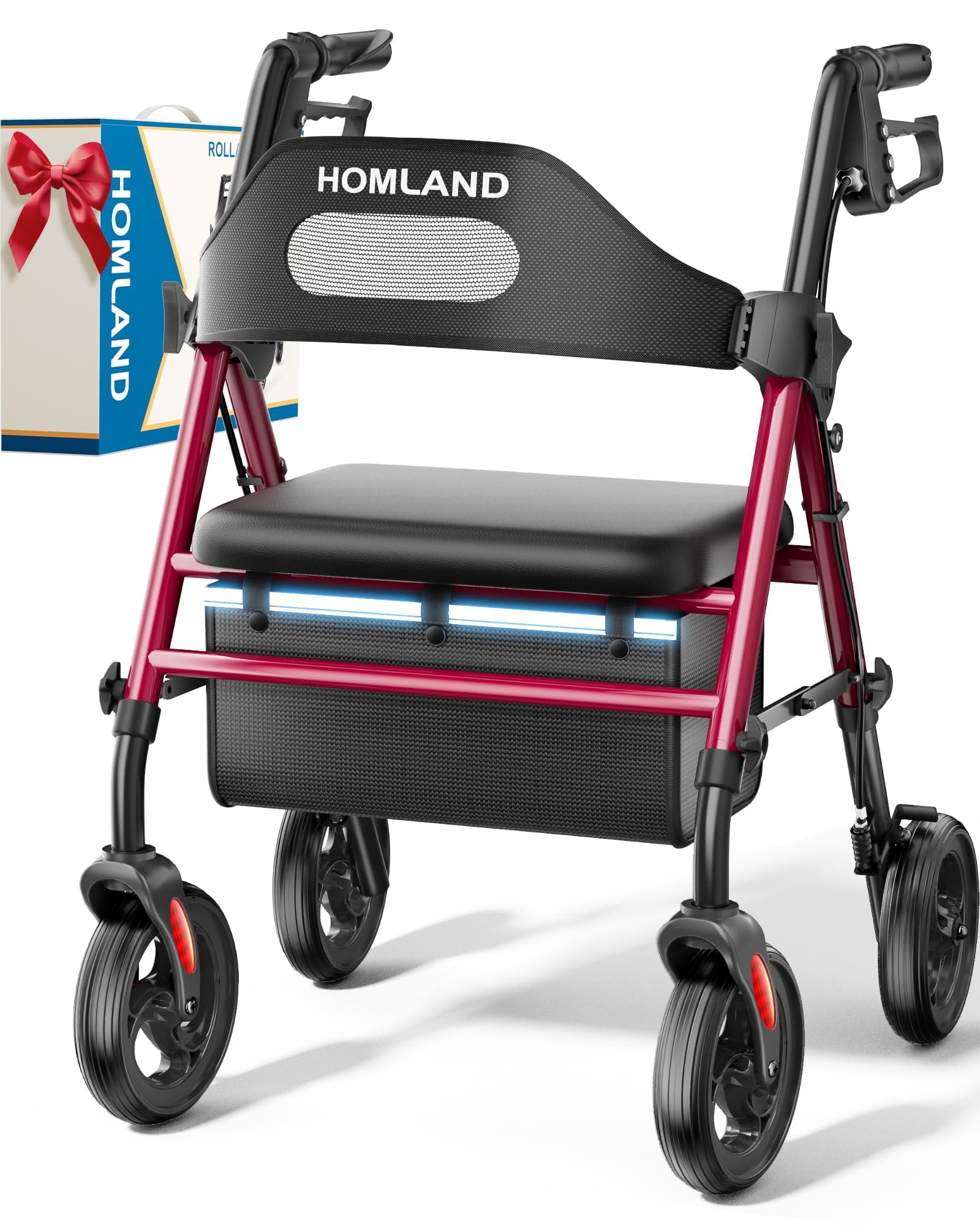
This rollator’s oversized seat and adjustable frame make it a strong pick for larger users or anyone who needs extended rest breaks.
Pros
- Wider 16″x12″ seat with thicker cushion than standard models
- Handle height adjusts from 33″ to 40″, fitting tall users
- Three-mode braking gives finer control on slopes
Cons
- At 20.4 lbs, heavier to lift than some HOMLAND models
- Wide 25″ frame may catch on narrow doorframes
- Assembly requires more steps than pre-built options
Caregivers assisting someone with arthritis will notice the loop-style brakes take less hand strength to engage than standard levers. The reflective strips add a layer of visibility for evening walks, a small but useful detail for caregivers managing outdoor routines. The seat width benefits larger users, though it does add bulk when folding for storage.
HOMLAND Foldable Rollator, 17 lb
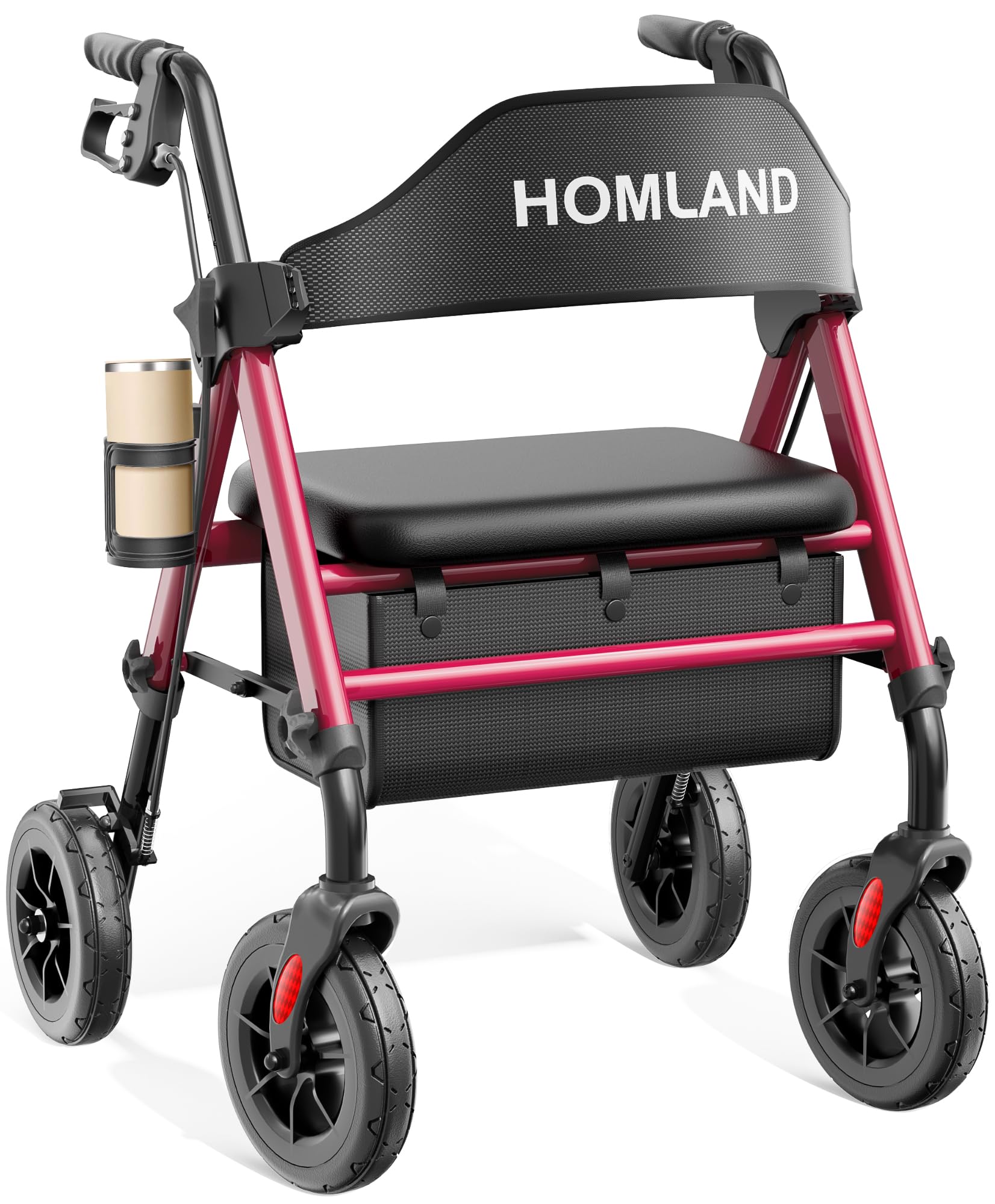
This lighter HOMLAND model balances all-terrain wheels with a frame a caregiver can lift solo.
Pros
- 17.6 lbs total weight, easier one-person lifting
- Memory foam seat adds comfort for longer outings
- Cup holder and storage pouch built in
Cons
- 300-lb practical capacity despite 350-lb marketing claim on frame
- Backrest firmness varies by unit according to buyer feedback
- Folding strap mechanism takes practice to use quickly
The 8-inch rubber wheels roll over cracked sidewalks and gravel paths with less jostling than smaller wheels, which matters for caregivers walking alongside someone on uneven neighborhood terrain. This model’s lighter overall weight makes it a better fit for caregivers who load and unload the walker from a car multiple times a day, such as for doctor visits or errands.
Helavo Upright Walker

This upright design suits users whose back or shoulder pain makes a standard rollator’s forward-leaning posture uncomfortable.
Pros
- Padded armrests let users stand fully upright
- Large 10″ front wheels handle outdoor terrain well
- Cane holder and cup holder included
Cons
- Taller and heavier than standard rollators at 22.7 lbs
- Folded size is bulkier for storage
- Higher learning curve for first-time upright walker users
Caregivers helping someone with spinal stenosis or chronic back pain often find this style reduces complaints of soreness after a walk, since the arm support keeps the torso upright instead of hunched forward. It takes up more space when folded than a standard rollator, so it fits best in a household with a dedicated storage spot rather than one relying on tight trunk space.
Drive Medical Nitro Sprint Rollator
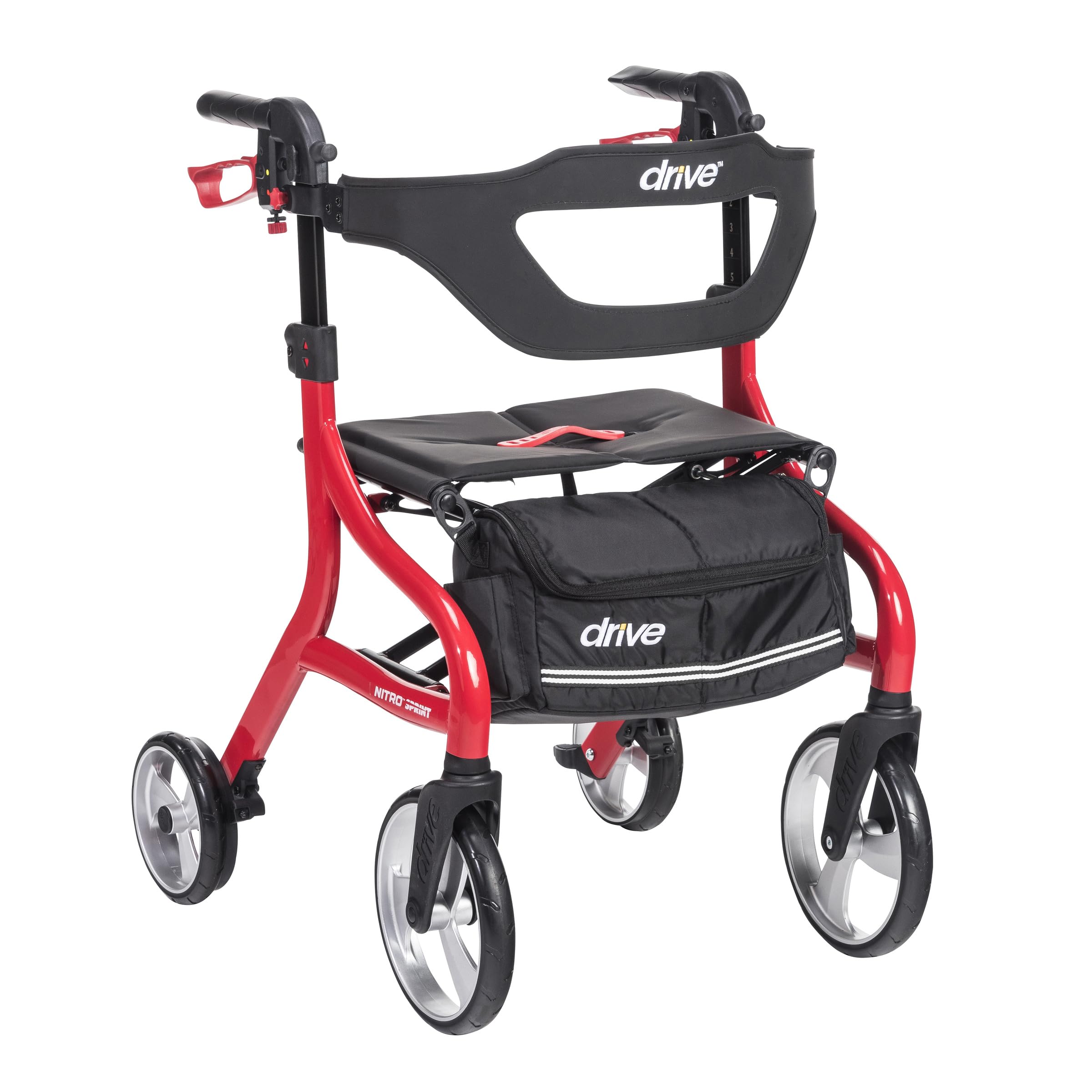
This rollator’s large front wheels and multi-mode brakes make it a strong fit for caregivers managing outdoor walks on hills or uneven pavement.
Pros
- One-handed folding is fast for caregivers on the go
- 10″ front wheels absorb bumps better than smaller wheels
- Slowdown brake mode helps on inclines
Cons
- No standard backrest strap by default per some buyer feedback
- Height adjustment options are less granular than competitors
- Aluminum frame feels less rigid than steel models under heavy loads
The park/slowdown/free brake modes give caregivers more control when walking someone downhill, a genuine safety advantage over simple on-off brakes. Multiple bag mounting positions also mean a caregiver can attach a phone holder or an extra pouch without crowding the main storage bag.
soundfuse Foldable Rollator
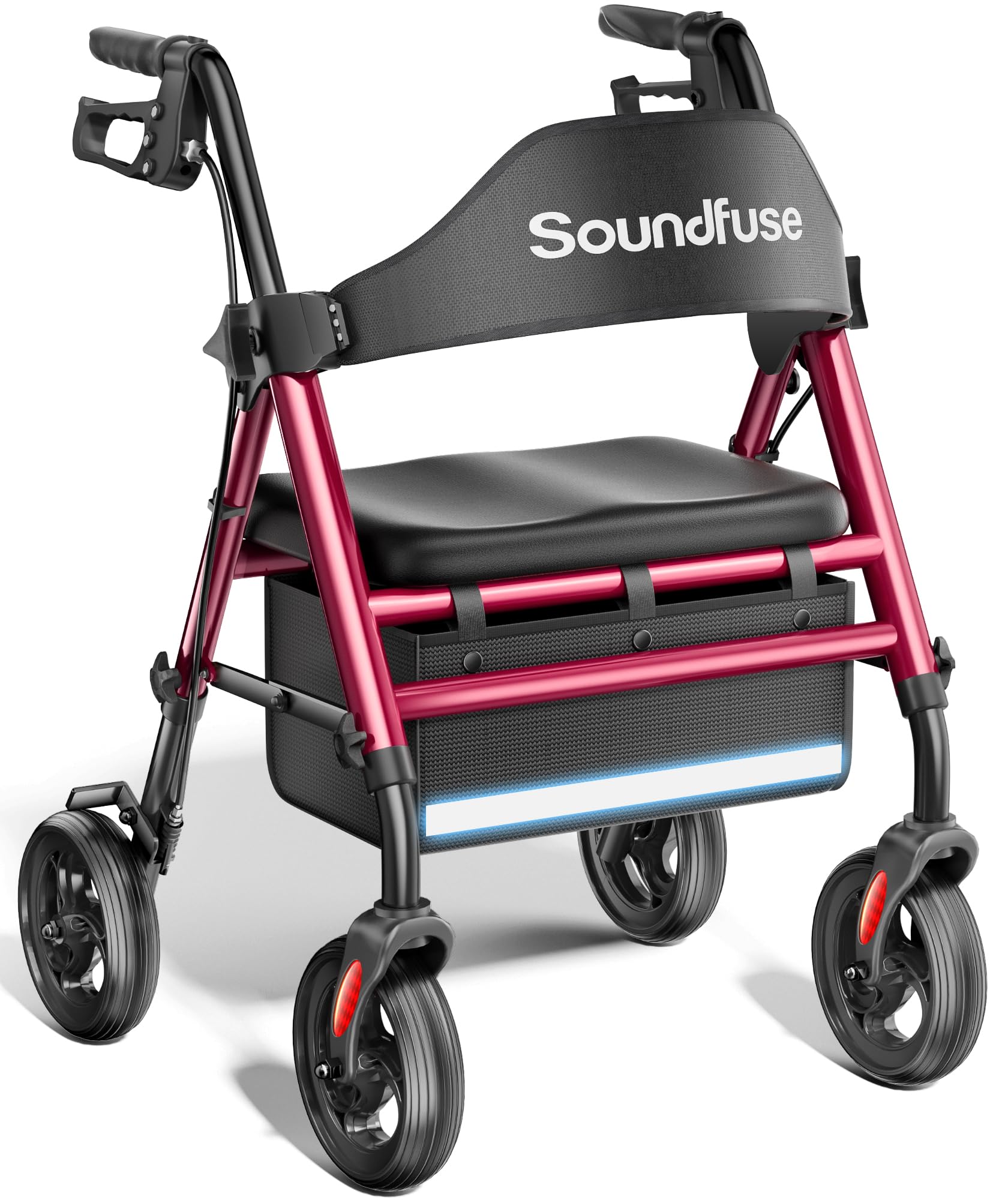
This rollator’s memory foam seat and easy-squeeze brakes serve users with limited hand strength particularly well.
Pros
- Arc-shaped memory foam seat distributes hip pressure evenly
- Loop brakes need less grip force to engage
- Compact folded dimensions fit most car trunks
Cons
- Newer brand with a shorter track record than Medline or Drive Medical
- Bag quality reported as basic by some buyers
- No optional footrest accessory available
Caregivers assisting someone with arthritis or reduced grip strength will notice the brake design takes less effort to squeeze than standard levers, which reduces fatigue on longer walks. The dual height adjustment (seat and handles separately) helps fit a wider range of user heights within one household.
HOMLAND Foldable Walker, 16 lb
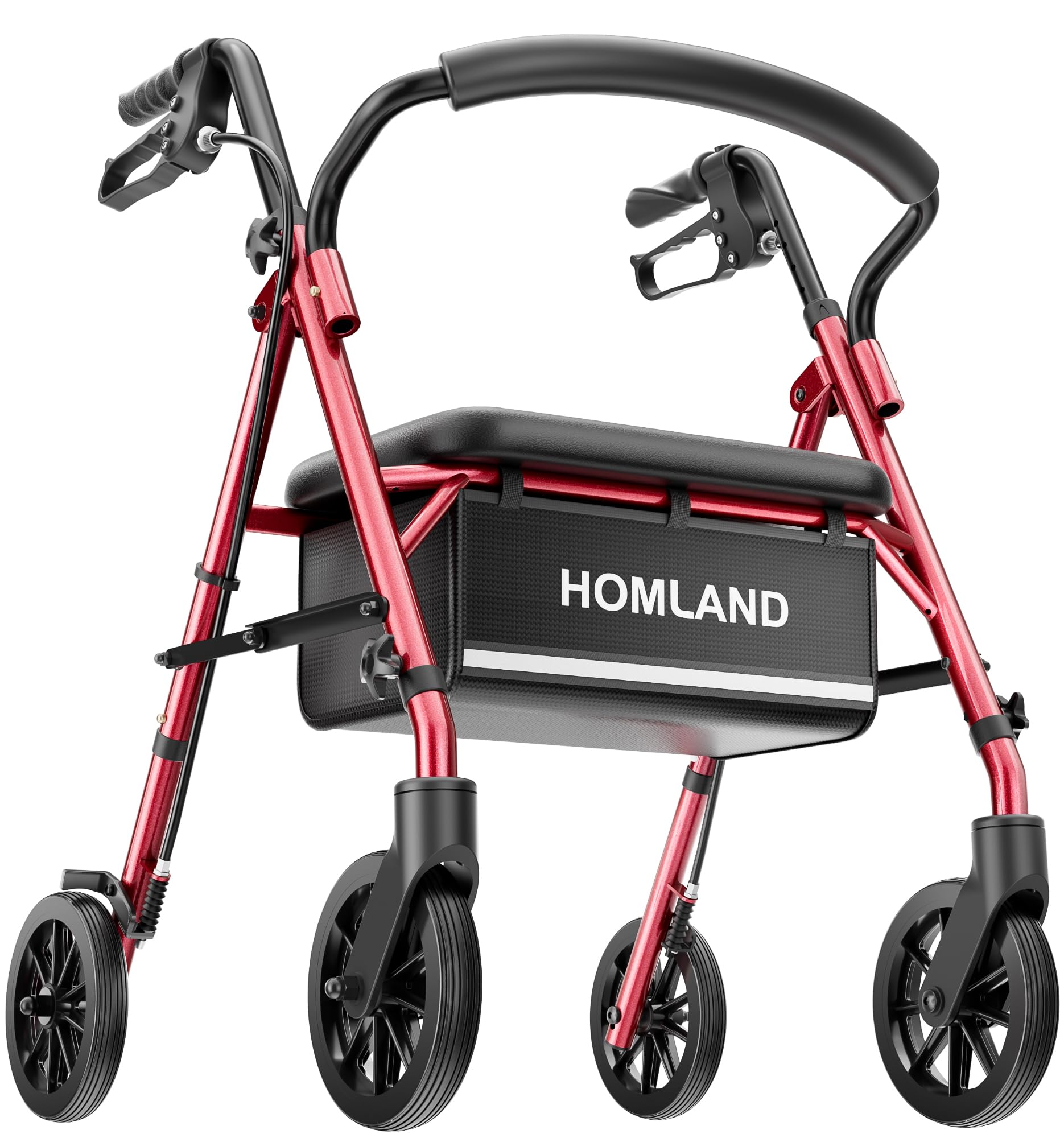
This narrow-frame rollator is built for homes with tight hallways or doorways where wider models struggle to pass through.
Pros
- Just 21.9″ wide between front wheels, fits narrow doorways
- Lightest 4-wheel rollator on this list at 16 lbs
- Removable backrest saves space when folded
Cons
- Wheels lack independent locking apart from brake handles
- Seat is elastic-style rather than padded foam
- 300-lb capacity is lower than some steel competitors
Caregivers managing an older home with narrow interior doorways will find this model glides through spaces that stop a standard-width rollator cold. The trade-off is a seat that some buyers find less cushioned than foam alternatives, so it works better for shorter rest breaks than extended sitting.
Akoasm Rollator Wheelchair Combo
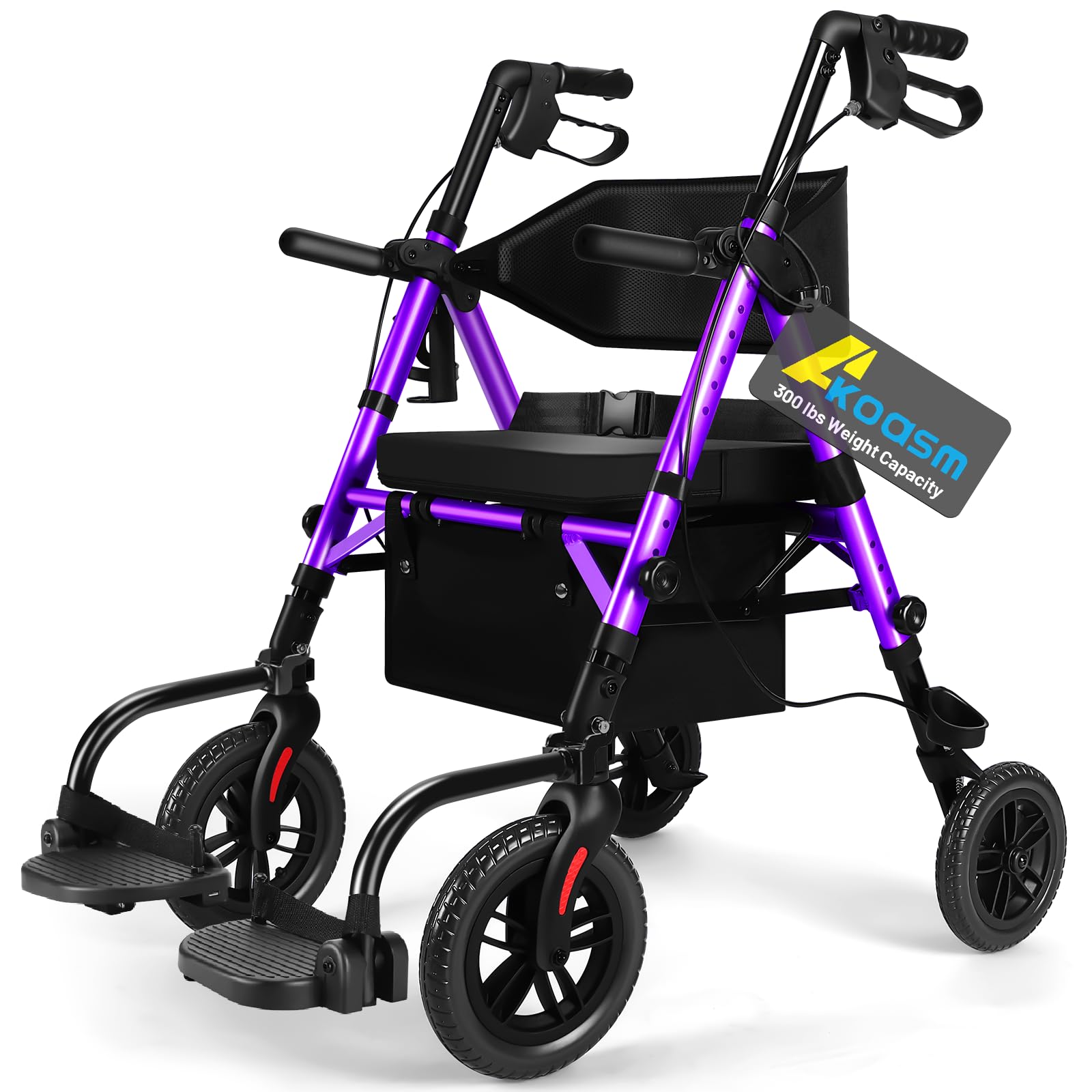
This 2-in-1 design gives caregivers the option to push the user when walking becomes too tiring, without needing a separate wheelchair.
Pros
- Converts between walker and push-chair mode
- Safety straps for waist and footrest add security during transport
- Wooden-frame seat with waterproof cushion holds up well
Cons
- Heavier at 25 lbs, harder to lift solo
- Less stable on grass or soft ground in wheelchair mode
- 300-lb capacity lower than the Ambliss combo below
For caregivers who alternate between letting someone walk independently and pushing them when fatigue sets in, this combo removes the need for two separate devices. It performs best on pavement and indoor flooring; a few buyers note it tips more easily on grass when used in wheelchair mode, so caregivers should stick to paved surfaces for that function.
Ambliss 2-in-1 Transport Wheelchair Combo
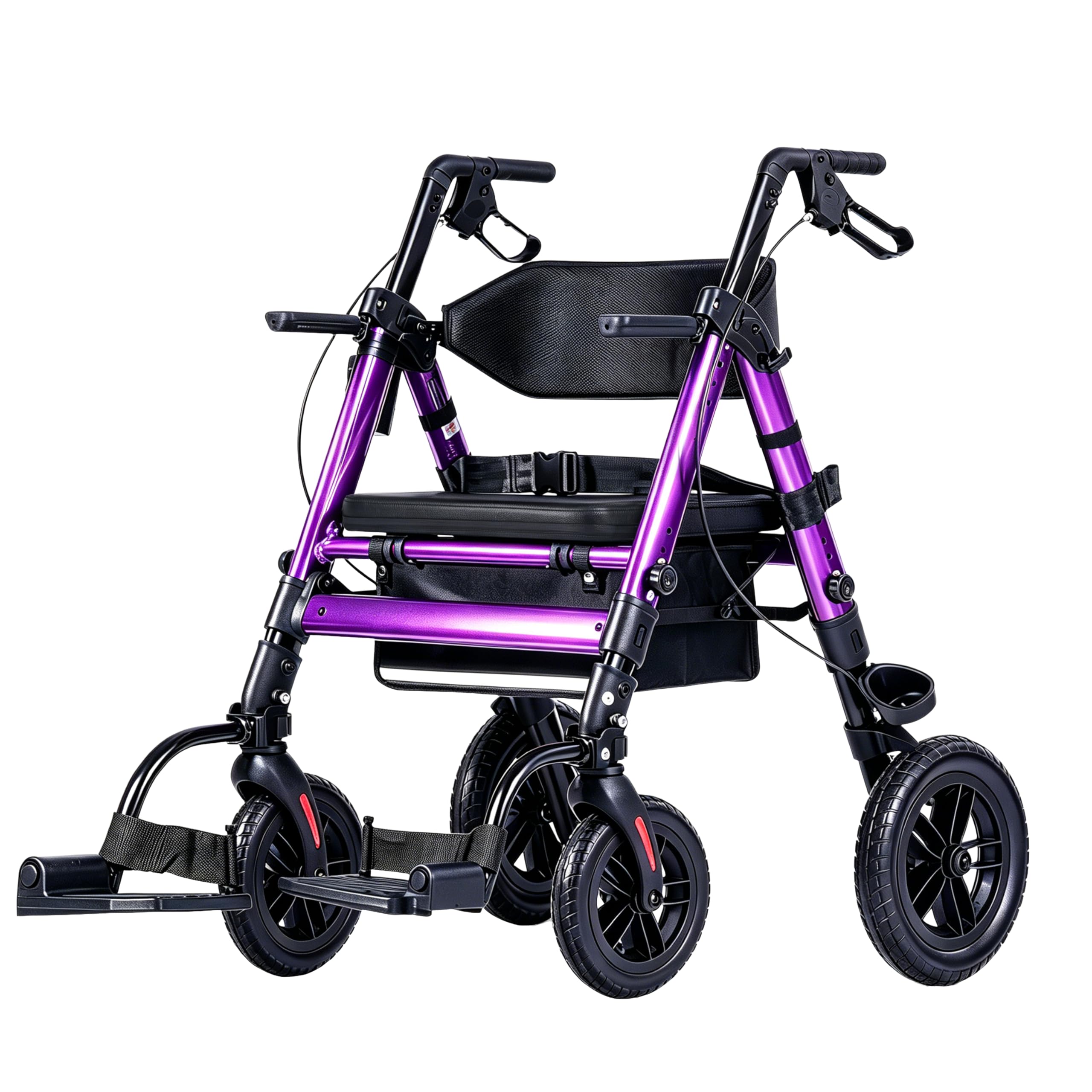
This higher-capacity combo suits caregivers supporting bariatric users or anyone needing sturdier support than standard 300-lb rollators offer.
Pros
- 450-lb weight capacity, highest on this list
- Extra-wide 18.7″ seat improves comfort for larger users
- Larger 10″ rear wheels ease pushing over grass and gravel
Cons
- 27.6″ overall width may not clear standard doorways (23″-25″)
- Heaviest walker reviewed at nearly 30 lbs
- Newer product with a limited review history
Caregivers should measure doorways before buying this one, since the manufacturer itself flags the 27.6″ width as wider than many home doorframes. Where space allows, the payoff is a genuinely sturdy transport chair option with a seatbelt and 3-mode brakes that give caregivers real stopping control on hills.
HOMLAND Foldable 3 Wheel Walker
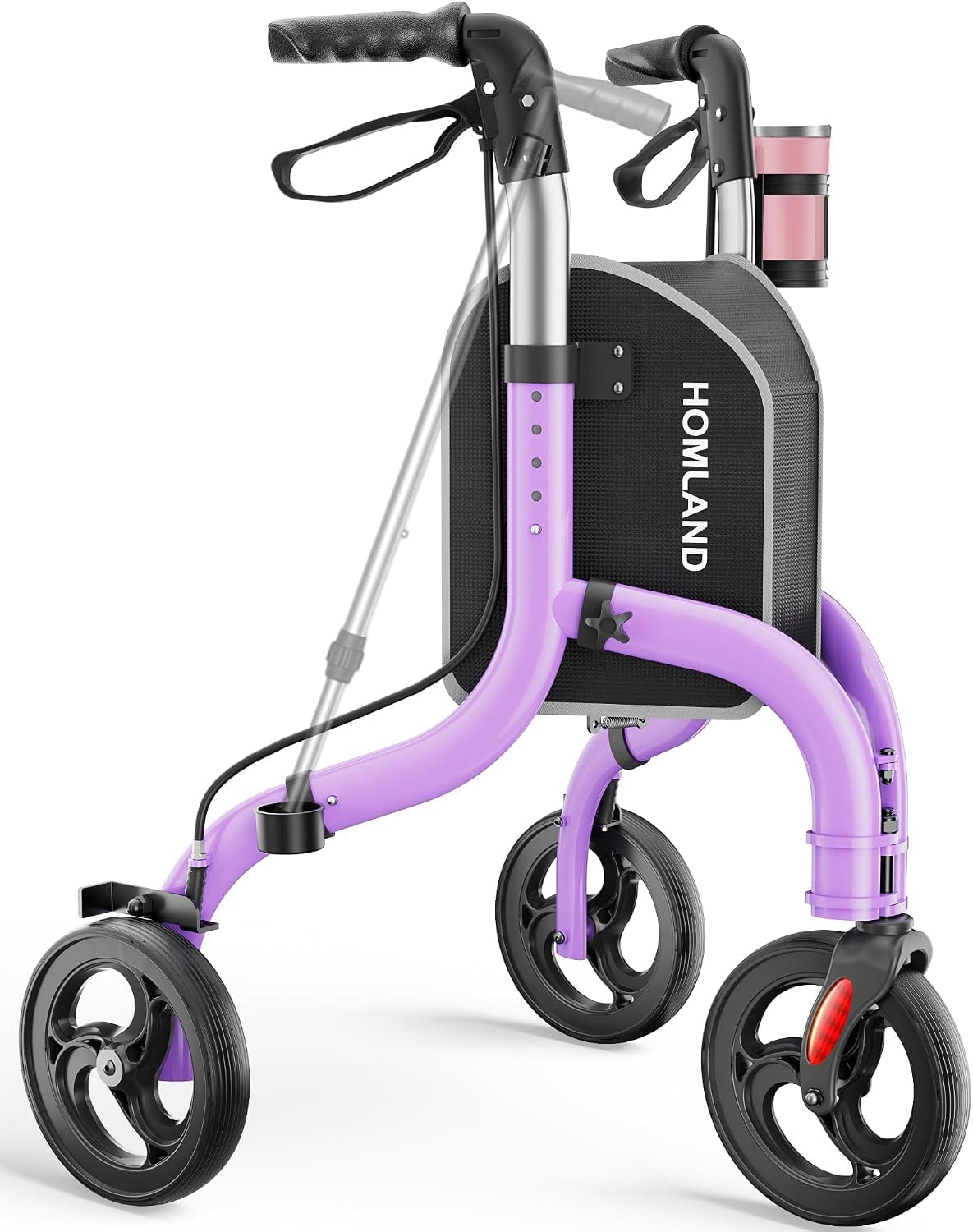
This 3-wheel walker is the lightest, most nimble option here, built for short trips rather than extended rest stops.
Pros
- Only 10.4 lbs, easiest to lift into a car of any model tested
- Tighter turning radius fits narrow store aisles
- Cane holder and cup holder included
Cons
- No seat, unsuitable for users who need rest breaks
- Lower 260-lb weight capacity
- Less stable than 4-wheel rollators on rougher terrain
Caregivers who keep a backup walker in the car for quick errands will appreciate how easily this one lifts in and out of a trunk. Without a seat, it does not serve users who tire quickly and need to sit mid-walk, so it works best as a secondary walker rather than a household’s only mobility aid.
Buying Guide
Frame Type and Use Case
The frame style determines how a walker performs day to day more than any single spec. Standard two-wheel or four-legged walkers suit short-term recovery and tight indoor spaces. Four-wheel rollators with seats work for daily outdoor mobility and rest stops. Upright walkers help users with back or shoulder pain stand straighter. Rollator-wheelchair combos give caregivers a pushing option when walking becomes exhausting.
| Frame Type | Best For | Trade-Off |
|---|---|---|
| Standard walker (no wheels/2 wheels) | Post-surgery recovery, tight spaces | No seat, more lifting required |
| 4-wheel rollator | Daily walks, rest breaks | Bulkier to store than standard walkers |
| Upright walker | Back/shoulder pain | Taller folded size |
| 3-wheel walker | Narrow aisles, quick errands | No seat, lower capacity |
| Rollator-wheelchair combo | Caregiver-assisted transport | Heaviest option, needs doorway clearance |
Weight Capacity and Frame Material
Aluminum frames weigh less and suit caregivers who lift the walker into a car regularly. Steel frames hold up under higher weight capacities but add several pounds. Check the stated capacity against the user’s actual weight with a margin, since manufacturers list maximum ratings, not comfortable everyday loads.
Wheel Size and Terrain
Larger wheels (8 inches and up) roll over cracks, thresholds, and uneven pavement more smoothly. Smaller wheels (5-6 inches) work fine on flat indoor floors but transmit more jostling outdoors. Caregivers walking someone on mixed terrain should prioritize wheel size over seat features.
Brake Design and Grip Strength
Loop-style or squeeze brakes require less hand strength than standard lever brakes, which matters for users with arthritis. Push-up/push-down brakes are simpler to teach a first-time user. Multi-mode brakes (free, slow, stop) give caregivers more control on slopes.
Fold Mechanism and Storage
One-handed folding designs save time for caregivers loading a walker solo. Check folded dimensions against the trunk space or closet where the walker will live, not just the unfolded footprint.
Doorway and Hallway Width
Measure the narrowest doorway or hallway the walker needs to pass through before buying. Standard doorways run 23 to 25 inches wide; some rollators exceed that width when unfolded.
Editor’s Choice
The Drive Medical Rollator Walker with Seat earns the top recommendation for most caregivers. Its steel frame provides stability without excessive learning curve, the padded seat handles daily rest stops, and the locking brakes make transfers safer for both user and helper.
For caregivers managing narrow homes, the HOMLAND Foldable Walker, 16 lb solves a specific problem well: fitting through doorways that stop wider rollators. For anyone needing caregiver-assisted transport on top of independent walking, the Ambliss 2-in-1 Transport Wheelchair Combo offers the highest weight capacity and the most complete feature set for that dual role, provided the doorway width works in the home.
Conclusion
Matching a walker to the user’s daily routine, not just the highest weight rating or the lowest price, produces the best outcome for both the person walking and the caregiver assisting them. A lightweight aluminum rollator suits someone managing errands independently, while a bariatric transport combo suits a caregiver who alternates between walking support and pushing assistance. Measuring doorways, checking brake style against grip strength, and confirming the folded size fits the available storage space prevent the most common buying mistakes. Testing the brakes and seat in person, when possible, before committing to daily use gives the clearest sense of whether a specific model fits the household.
FAQS
What is the difference between a walker and a rollator?
A standard walker has two or four legs, sometimes with front wheels, and requires the user to lift or push it forward with each step. A rollator has four wheels and a seat, allowing continuous rolling motion and rest breaks without lifting the frame.
How do I know what size walker to buy?
Check the handle height range against the user’s height with elbows slightly bent when gripping the handles. Also measure the walker’s folded and unfolded width against the home’s narrowest doorway.
Can one caregiver safely fold and lift a rollator alone?
Models under 20 pounds with one-handed folding mechanisms are easiest for a single caregiver to manage. Heavier rollator-wheelchair combos over 25 pounds often require two people for repeated car loading.
Are three-wheel walkers less stable than four-wheel rollators?
Three-wheel walkers turn tighter and fit narrower spaces but offer less side-to-side stability than four-wheel models, and most do not include a seat.
What weight capacity should I look for?
Choose a capacity that exceeds the user’s weight by a reasonable margin rather than matching it exactly, since maximum ratings reflect upper limits, not comfortable daily use.