
Why Should Senior Citizens Perform Balance Exercises


Easy Grip Knife Set

Arthritis Gloves

Anti-Slip Shower Stickers
Balance exercises are a critical component of healthy aging, directly preventing falls—the leading cause of injury for seniors. They strengthen the core and leg muscles, improve proprioception (your body’s spatial awareness), and enhance neurological pathways. This simple, daily practice translates directly to greater independence, confidence in movement, and a significantly higher quality of life, allowing seniors to stay active and engaged in their communities longer.
Key Takeaways
- Fall Prevention is Primary: Balance training is the single most effective strategy to reduce fall risk, a major cause of hospitalization and loss of independence for seniors.
- It’s More Than Muscles: These exercises retrain the brain and nervous system (proprioception) to communicate better with muscles, improving reaction time and stability.
- Fights Age-Related Decline: Balance naturally deteriorates after age 50. Regular practice can slow, halt, or even reverse this decline, maintaining functional ability.
- Independence is the Goal: Improved balance means safely performing daily tasks—from getting up from a chair to navigating curbs—without assistance.
- Mental Health Boost: Mastering balance builds self-efficacy and reduces the fear of falling, which often leads to social isolation and depression.
- Accessible & Low-Cost: Most balance exercises require no equipment and can be done anywhere, making them an incredibly accessible form of preventative healthcare.
- Synergy with Overall Fitness: Balance work complements strength, flexibility, and endurance training for a comprehensive senior fitness regimen.
📑 Table of Contents
- The Unseen Crisis: Why Your Balance Fades with Age
- The High Cost of a Fall: Consequences That Ripple Through Life
- The Multifaceted Power of Balance Training: More Than Just Staying Upright
- Your Balance Exercise Toolkit: From Beginner to Advanced
- Safety First: Non-Negotiable Guidelines Before You Start
- Making It a Lifelong Habit: Strategies for Success
- Your Journey to Steady Ground Starts Today
The Unseen Crisis: Why Your Balance Fades with Age
Let’s have a real talk. Remember as a kid, you could stand on one foot while brushing your teeth, no problem? Maybe you even hopped on one foot down the sidewalk for fun. That effortless stability? For most of us, it quietly slips away as we get older. It’s not just a feeling; it’s a physiological reality. By the time we reach our 50s and 60s, a perfect storm of changes begins to challenge our balance.
First, our inner ear (the vestibular system), which acts like our internal gyroscope, starts to lose some of its delicate hair cells. Second, the sensors in our muscles and joints (proprioceptors) become less sensitive, sending fuzzier signals to our brain about where our body is in space. Third, we naturally lose muscle mass—sarcopenia—especially in our legs and core, which are the pillars of stability. Fourth, our vision often declines, and we process sensory information a bit slower. Finally, many common medications seniors take can have dizziness or lightheadedness as a side effect. All these factors combine to make maintaining balance feel like a conscious effort rather than an automatic reflex.
Ignoring this decline is the hidden danger. Poor balance isn’t just about occasional wobbles. It’s the direct pathway to falls. According to the latest 2025 data from the CDC, adults over 65 have a 1 in 4 chance of falling each year. That’s a staggering statistic. But here’s the empowering news: balance is a skill, not a fixed trait. Like learning a language or playing an instrument, your body can re-learn and improve its balance capabilities with targeted practice. That’s where dedicated balance exercises come in—they are the essential training program your nervous system and muscles have been waiting for.
The High Cost of a Fall: Consequences That Ripple Through Life
It’s easy to think, “I’m careful, I won’t fall.” But a fall is often a matter of circumstance, not just caution. A patch of ice, a missed step, getting up too quickly from the couch—these are everyday moments that can trigger a cascade of devastating consequences. Understanding the true cost of a fall is the strongest motivator for prevention.
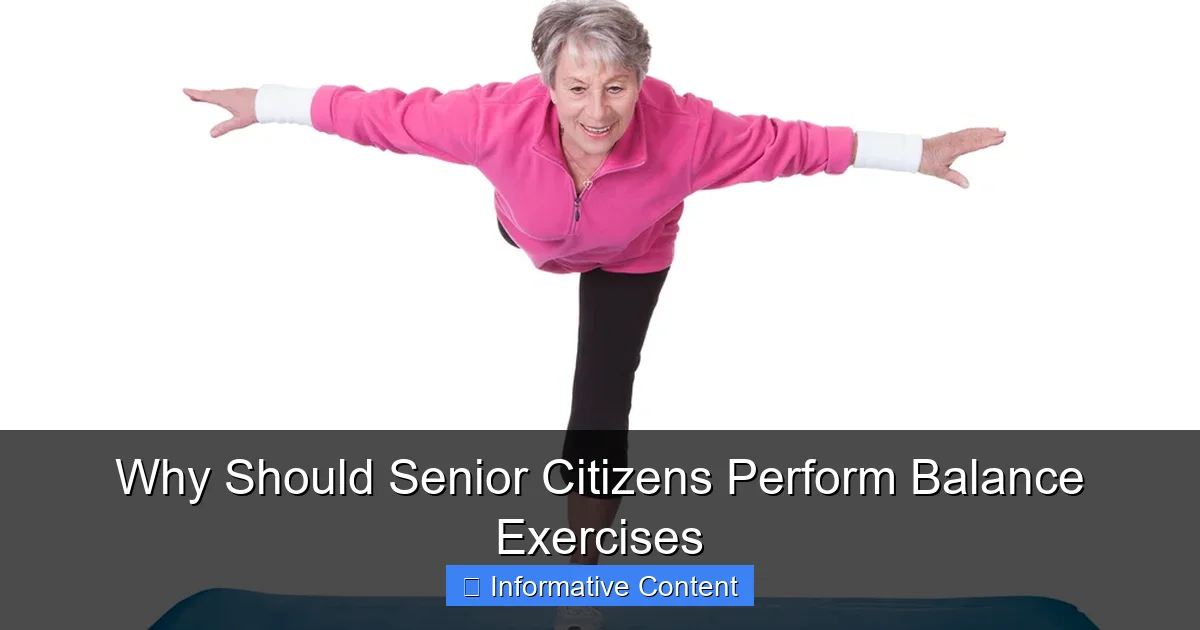
Visual guide about Why Should Senior Citizens Perform Balance Exercises
Image source: seniorsmobility.org
Physical and Medical Ramifications
The most immediate risk is injury. While many falls result in bruises, a significant number lead to hip fractures, wrist breaks, or head trauma. A hip fracture, in particular, is often called a “sentinel event” for seniors. The recovery is long, painful, and requires extensive rehabilitation. Many never regain their previous level of mobility. Even without a major fracture, the trauma can lead to a fear of moving, which causes muscle atrophy and makes the next fall even more likely. The medical costs are astronomical, often requiring skilled nursing care or substantial home health services. For families navigating these crises, understanding options like medical insurance for senior citizens becomes a sudden, urgent necessity to manage these unexpected expenses.
The Loss of Independence and Confidence
Perhaps the most insidious consequence is the loss of independence. After a fall, many seniors restrict their activities. They stop gardening, avoid going to the mailbox, or refuse to climb stairs. This self-imposed isolation shrinks their world. The psychological impact is profound. The fear of falling again (post-fall anxiety syndrome) can be paralyzing. This fear leads to reduced physical activity, which in turn weakens muscles and worsens balance—creating a vicious cycle. The joy of spontaneous walks, playing with grandchildren, or simply moving freely around one’s own home diminishes. Maintaining balance through exercise is fundamentally about protecting this autonomy and the confidence that comes with it.
The Multifaceted Power of Balance Training: More Than Just Staying Upright
So, you’re convinced falls are bad. But what exactly do balance exercises *do*? Their benefits are deep and interconnected, affecting your physical body, your brain, and your daily life in tangible ways.

Visual guide about Why Should Senior Citizens Perform Balance Exercises
Image source: seniorsmobility.org
1. Re-Wiring Your Nervous System (Neuroplasticity in Action)
This is the most exciting part. Your brain and spinal cord are constantly adapting. Balance exercises force your brain to practice processing information from your eyes, inner ear, and proprioceptors simultaneously. Over time, this strengthens the neural pathways responsible for postural control. You’re not just building muscle memory; you’re enhancing your brain’s map of your body in space. This improved neural efficiency means your body can react faster to a trip or a shove, making tiny, life-saving corrections before a full fall occurs.
2. Building a Foundational “Core” of Strength
When we say “core,” we’re not just talking about six-pack abs. For balance, your core includes your deep abdominal muscles, your back extensors, your glutes, and your leg muscles (quadriceps, hamstrings, calves). These are the muscles that make micro-adjustments every millisecond you’re standing or moving. Balance exercises like a simple single-leg stand or a heel-to-toe walk intensely activate these stabilizer muscles in a way that traditional gym machines often do not. They build functional, real-world strength that directly translates to stability when you’re reaching for a high shelf or turning to look behind you.
3. Boosting Bone Density and Joint Health
Weight-bearing activity is crucial for maintaining bone mineral density and combating osteoporosis. While walking is good, the controlled, slightly destabilizing nature of balance exercises places a unique, healthy stress on bones, particularly in the hips, spine, and ankles, encouraging them to stay strong. Furthermore, these exercises improve the strength and stability of the muscles surrounding key joints like the knees and ankles, providing better support and reducing wear and tear.
4. Cultivating Body Awareness and Reducing Fear
There’s a psychological component, too. As you successfully complete balance challenges—even small ones—you build a tangible sense of mastery. You learn what your body can do. This directly combats the fear of falling. You stop thinking, “I might fall if I do this,” and start thinking, “I know how to stabilize myself here.” This shift in mindset is powerful. It keeps you active, which is the ultimate key to staying healthy. For seniors looking to understand the full spectrum of age-related changes, resources that explain what age is considered a senior citizen can provide helpful context on the typical timeline for these physical shifts, reinforcing that proactive measures like balance training are relevant for anyone over 50.
Your Balance Exercise Toolkit: From Beginner to Advanced
The beauty of balance training is its scalability. You start exactly where you are, using support as needed, and progress at your own pace. The key is consistency, not intensity. Aim for a few minutes every day, not a long, exhausting session once a week. Here’s a progressive toolkit you can build from.

Visual guide about Why Should Senior Citizens Perform Balance Exercises
Image source: seniorsmobility.org
Level 1: The Foundation (With Support)
These exercises are done while holding onto a sturdy chair, countertop, or wall. The goal is to learn the movement pattern safely.
- Heel Raises: Stand facing the counter, hands on it. Slowly push up onto the balls of your feet, hold for 3 seconds, and lower slowly. Works calf muscles and ankle stability.
- Leg Lifts: Holding on, shift weight to left foot. Slowly lift right leg a few inches off the ground, hold for 5-10 seconds, lower. Repeat 10 times, then switch sides. Builds hip and core strength.
- Mini Squats: Holding on, feet hip-width apart. Slowly bend knees as if sitting in a chair, keeping chest up. Go only as low as comfortable. Strengthens thighs and glutes.
Level 2: Building Confidence (Minimal Support)
Move to a sturdy chair you can lightly touch with one fingertip for safety, or stand near a wall.
- Single-Leg Stand: Hold lightly on the chair. Lift one foot slightly off the ground. Aim for 10-15 seconds. For an extra challenge, try it with your eyes closed (only if safe!) or while gently lifting the knee of the standing leg.
- Heel-to-Toe Walk: Walk a straight line, placing the heel of one foot directly in front of the toe of the other foot, like a tightrope walker. Do this along a hallway wall for support.
- Standing Marches: Lift one knee a few inches, lower it, and lift the other. Do this while holding lightly on a counter, focusing on keeping your hips level and not swaying side to side.
Level 3: Dynamic & Functional Challenges
These mimic real-life movements and are performed without hand support (in a safe space, near a wall or chair you can grab if needed).
- Clock Reach: Imagine you are standing in the center of a clock. Holding onto nothing, lift one leg slightly. Reach your free foot forward to “12 o’clock,” then to the side to “3 o’clock,” then behind you to “6 o’clock.” Switch legs. This improves dynamic stability in all directions.
- Sit-to-Stand Without Hands: From a sturdy chair, cross your arms over your chest. Lean forward slightly and stand up using only your leg strength. Sit back down with control. This is a critical functional movement for getting up from toilets and low sofas.
- Backward Walking: Walk backward slowly in a clear space, taking small, careful steps. This challenges your balance system in a novel way and is excellent for ankle strength.
For a full library of demonstrations and safe progression plans, be sure to explore our comprehensive guide to exercises to improve balance for seniors, which includes pictures and video tutorials.
Safety First: Non-Negotiable Guidelines Before You Start
Your enthusiasm is great! But safety is the bedrock of any successful exercise program, especially when working on balance. Rushing or being careless can lead to the very falls you’re trying to prevent.
- Always Have a Stable Support: Begin every session within a few steps of a sturdy chair, counter, or wall. Never try new exercises in the middle of a room with nothing to hold.
- Wear Proper Footwear: Exercise in flat, supportive shoes with good traction. Avoid slippers, socks on smooth floors, or shoes with thick, unstable soles.
- Clear Your Space: Remove tripping hazards like throw rugs, electrical cords, and clutter from your exercise area. Ensure the floor is not slippery.
- Listen to Your Body: Mild muscle fatigue is okay. Sharp pain, dizziness, or sudden shortness of breath are signs to stop immediately. Some exercises, like those with eyes closed, are advanced and should only be attempted once you are completely stable with eyes open.
- Consider Your Health: If you have severe osteoporosis, a recent surgery, or uncontrolled vertigo, consult your doctor or a physical therapist before starting. They can recommend tailored modifications.
- Breathe! Don’t hold your breath during exercises. Exhale during the exertion phase (e.g., when standing up from a squat) to avoid spikes in blood pressure.
Making It a Lifelong Habit: Strategies for Success
Knowing *why* and *how* is only half the battle. The other half is doing it consistently. Here’s how to weave balance training into the fabric of your daily life so it sticks.
Start Micro, Not Macro
Commit to 2-3 minutes, twice a day. That’s it. Do your heel raises while waiting for the kettle to boil. Practice single-leg stands while brushing your teeth (hold the sink!). This “habit stacking” approach—linking a new habit to an existing routine—is incredibly effective. The barrier to entry is so low that you’ll do it even on busy or low-energy days.
Make It Social
Exercise with a friend or spouse. You can hold a conversation while doing your heel-to-toe walks down the driveway, making it a social outing. Many community centers and senior hubs offer “Balance & Stability” classes specifically for older adults. The social accountability and shared experience boost adherence. It’s also a great way to find peers who understand the journey. You might even discover other engaging activities suitable for seniors, like sit-down games for senior citizens, that keep the mind active without risking physical strain.
Track Progress and Celebrate Wins
Use a simple calendar. Put a star on every day you complete your balance routine. Seeing a chain of stars is powerfully motivating. More importantly, note functional improvements: “I could stand on one leg for 15 seconds today!” or “I got up from the couch without using my arms!” These are the real victories that matter.
Integrate It Into Daily Tasks
Turn mundane tasks into practice. While waiting in line at the grocery store (feet planted firmly!), engage your core and practice subtle weight shifts. When you rise from your bed or a chair, do it slowly and deliberately, focusing on using your leg muscles. Every opportunity to challenge your stability is a chance to train.
Your Journey to Steady Ground Starts Today
Balance is not about being perfectly still; it’s about the constant, graceful dance of adjustments that keeps us upright and moving. For senior citizens, prioritizing this dance through dedicated exercises is one of the most profound acts of self-care and future-proofing you can undertake. It’s a direct investment in your independence, your safety, and your joy. The science is clear, the benefits are multi-dimensional, and the tools are simple and accessible. There is no magic pill, no expensive equipment, and no need for a gym membership. Just you, a chair, and a commitment to a few minutes a day. Start where you are, use what you have, and build from there. Your future, more stable self will thank you every single day.
Frequently Asked Questions
Are balance exercises safe for seniors with osteoporosis?
Yes, many are, but high-impact or risky movements (like sudden twists or jumping) should be avoided. Focus on stable, controlled exercises like heel raises and mini-squats while holding a chair. Always consult your doctor or a physical therapist for a program tailored to your bone density and specific condition.
How often should a senior perform balance exercises?
For optimal results, aim for short sessions (5-10 minutes) most days of the week, ideally daily. Consistency is far more important than long, infrequent sessions. Incorporating small balance practices into your daily routine is highly effective.
Can balance exercises really prevent falls?
Absolutely. Multiple large-scale studies, including those by the CDC and the World Health Organization, confirm that structured balance training (like Tai Chi or specific physical therapy programs) can reduce fall rates by up to 30-40% in the senior population. It directly targets the physical and neurological deficits that cause falls.
What’s the difference between balance exercises and general strength training?
While strength training builds muscle power, balance training specifically targets the neural pathways and stabilizer muscles that control your body’s position in space. They are complementary and both are essential. You can be strong but have poor balance, but you cannot have good balance without a foundational level of strength in your core and legs.
I’m afraid to try balance exercises because I might fall. What should I do?
This is a common and valid concern. Always start with a sturdy support (a counter or chair) within easy reach. Perform all initial exercises while holding on. As your confidence grows, progress to using only one fingertip for support, then no hands in a safe space near a wall. The goal is to build competence safely, which directly reduces the fear itself.
Do I need special equipment for balance exercises?
No. The most effective exercises use your own body weight and a stable piece of furniture for support. As you advance, you might incorporate simple tools like a balance pad, resistance band, or light ankle weights, but they are not necessary to begin or see significant benefits. Your home environment provides all you need to start.
