
What Is a Senior Vice President


Weekly Pill Organizer

Adult Coloring Book

Fall Detection Smart Watch
A Senior Vice President (SVP) is a top-tier executive who leads major business units, drives strategic initiatives, and reports directly to C-suite leaders like the CEO or COO. They play a critical role in shaping company direction, managing large teams, and ensuring long-term growth and profitability.
Key Takeaways
- Senior Vice Presidents are high-level executives: SVPs sit just below the C-suite and oversee entire departments or business functions such as marketing, finance, or operations.
- They drive strategic decision-making: SVPs are responsible for setting long-term goals, aligning teams with company vision, and making high-impact business decisions.
- Leadership and people management are core skills: SVPs manage VPs, directors, and large teams, requiring strong communication, emotional intelligence, and mentoring abilities.
- Compensation is highly competitive: SVP roles come with significant salaries, bonuses, stock options, and other executive perks, reflecting their level of responsibility.
- The path to SVP requires experience and results: Most SVPs have 15+ years of industry experience, a proven track record of leadership, and advanced education or certifications.
- SVPs vary by industry and company size: Their exact duties depend on the organization—startups may have fewer SVPs, while large corporations may have multiple SVPs per function.
- They act as a bridge between strategy and execution: SVPs translate high-level vision into actionable plans and ensure teams deliver results on time and on budget.
📑 Table of Contents
- What Is a Senior Vice President?
- The Role and Responsibilities of a Senior Vice President
- How to Become a Senior Vice President
- Senior Vice President vs. Other Executive Titles
- Industries and Companies That Employ SVPs
- Compensation and Benefits of Being a Senior Vice President
- The Impact of a Senior Vice President on Company Success
- Conclusion
What Is a Senior Vice President?
So, what is a senior vice president, exactly? If you’ve ever looked at a company’s leadership page and seen titles like “Senior Vice President of Marketing” or “SVP of Operations,” you might have wondered what that role actually entails. In simple terms, a Senior Vice President (SVP) is one of the highest-ranking executives in an organization—just a step below the C-suite (like the CEO, CFO, or COO). They’re not just managing a team; they’re shaping the future of the company.
Think of the SVP as the conductor of a large orchestra. While the CEO sets the overall vision—like the composer—the SVP ensures every section plays in harmony. They oversee entire departments, make critical strategic decisions, and are accountable for major business outcomes. Whether it’s launching a new product line, expanding into international markets, or improving operational efficiency, the SVP is often the driving force behind these initiatives.
But don’t confuse an SVP with a regular Vice President (VP). While both are senior leaders, the SVP typically has broader responsibilities, larger teams, and a more strategic focus. VPs often report to SVPs, who in turn report to C-level executives. This hierarchy allows SVPs to focus on big-picture goals while VPs handle more tactical execution. In larger organizations, you might even see multiple SVPs—each leading a different function like sales, technology, or human resources.
The Role and Responsibilities of a Senior Vice President

Visual guide about What Is a Senior Vice President
Image source: interviewguy.com
So, what does a Senior Vice President actually do on a day-to-day basis? The role is multifaceted, blending strategy, leadership, and operational oversight. While specific duties vary by industry and company size, most SVPs share a common set of core responsibilities.
Strategic Planning and Vision Setting
One of the primary roles of an SVP is to develop and execute long-term strategies. This means analyzing market trends, identifying growth opportunities, and aligning departmental goals with the company’s overall mission. For example, an SVP of Sales might create a five-year plan to double revenue by expanding into new regions or launching digital sales channels. They don’t just set the target—they build the roadmap to get there.
SVPs also work closely with the CEO and other C-suite leaders to shape company-wide initiatives. During quarterly strategy meetings, they present data-driven insights, propose new directions, and help prioritize investments. Their ability to think critically and anticipate challenges is what sets them apart from mid-level managers.
Leadership and Team Development
Leadership is at the heart of the SVP role. These executives manage large teams—often hundreds of employees—across multiple levels. This includes Vice Presidents, Directors, and Managers. Their job isn’t just to assign tasks; it’s to inspire, mentor, and develop future leaders.
A great SVP knows how to build a strong culture. They foster collaboration, encourage innovation, and create an environment where people feel valued and motivated. For instance, an SVP of Human Resources might launch leadership training programs, revamp performance reviews, or introduce flexible work policies to boost employee engagement.
They also play a key role in succession planning. By identifying high-potential employees and providing them with growth opportunities, SVPs ensure the organization has a pipeline of talent ready to step into senior roles.
Cross-Functional Collaboration
No department operates in a vacuum, and SVPs are often the glue that holds different functions together. They work closely with other SVPs and C-suite executives to ensure alignment across the organization. For example, when launching a new product, the SVP of Product Development might collaborate with the SVP of Marketing to craft the go-to-market strategy, while also coordinating with the SVP of Operations to ensure supply chain readiness.
This cross-functional work requires excellent communication and negotiation skills. SVPs must balance competing priorities, resolve conflicts, and build consensus among stakeholders. They’re often the ones who step in when silos form or when departments aren’t working well together.
Financial Oversight and Performance Management
SVPs are accountable for the financial health of their departments. This includes managing budgets, forecasting revenue, and monitoring key performance indicators (KPIs). They regularly review P&L statements, analyze cost structures, and make decisions that impact profitability.
For example, an SVP of Finance might identify areas where the company can reduce overhead without sacrificing quality. Or an SVP of Operations might implement process improvements that cut production costs by 15%. These decisions aren’t made in isolation—they’re based on data, market conditions, and strategic goals.
They also report performance metrics to the CEO and board of directors. This transparency ensures accountability and helps the leadership team make informed decisions about resource allocation.
External Representation and Stakeholder Engagement
SVPs often serve as the public face of their departments. They represent the company at industry conferences, speak with investors, and build relationships with key clients or partners. This external visibility helps strengthen the company’s brand and opens doors to new opportunities.
For instance, an SVP of Business Development might negotiate a major partnership with another corporation, while an SVP of Customer Success might lead a high-profile client onboarding process. These interactions require strong interpersonal skills and a deep understanding of the company’s value proposition.
How to Become a Senior Vice President
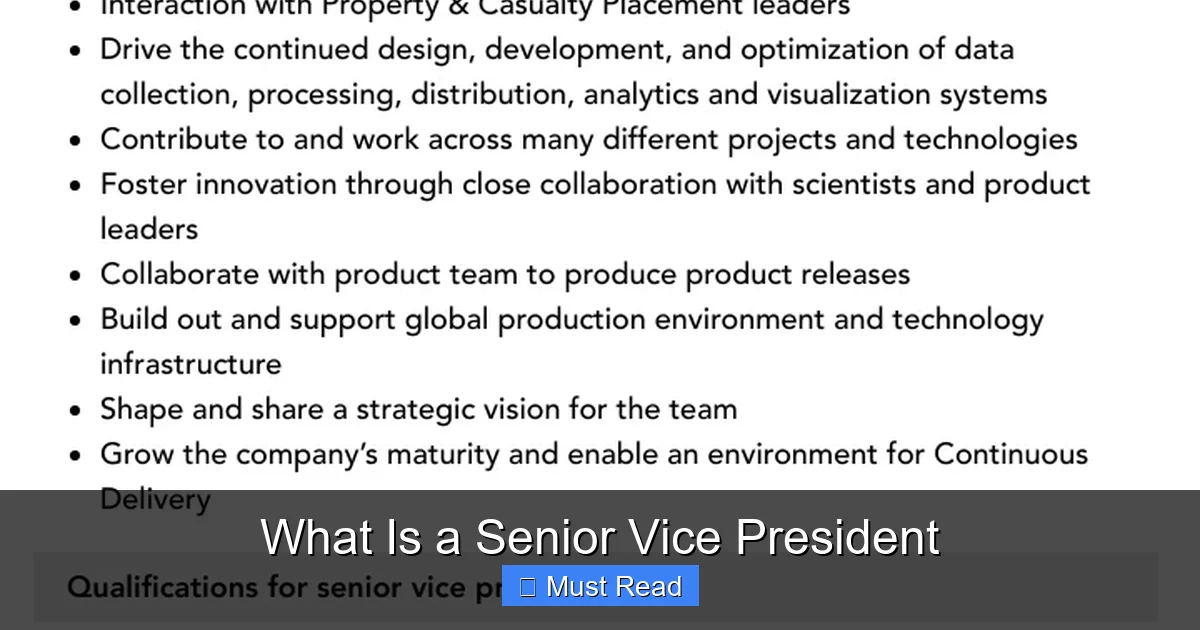
Visual guide about What Is a Senior Vice President
Image source: asset.velvetjobs.com
Becoming a Senior Vice President isn’t something that happens overnight. It’s the result of years of hard work, strategic career moves, and consistent performance. So, what does it take to climb the ladder to this elite level?
Education and Early Career Foundations
Most SVPs start with a strong educational background. A bachelor’s degree in business, finance, marketing, engineering, or a related field is typically the minimum requirement. Many also pursue advanced degrees such as an MBA, which provides valuable leadership training and expands professional networks.
Early career choices matter too. Aspiring SVPs often begin in roles that offer exposure to strategy, operations, or client management. For example, someone aiming to become an SVP of Marketing might start as a marketing coordinator, then move into roles like brand manager, marketing director, and eventually VP of Marketing.
Building a Track Record of Success
What really sets future SVPs apart is their ability to deliver results. Employers don’t promote people based on tenure alone—they look for measurable impact. This could mean increasing sales by 30%, reducing customer churn, launching a successful product, or leading a major transformation initiative.
For example, a finance professional who restructures a company’s debt portfolio to save millions in interest payments is demonstrating the kind of value that gets noticed at the executive level. Similarly, a technology leader who oversees a cloud migration that improves system reliability and cuts costs is building a strong case for promotion.
Developing Leadership and Soft Skills
Technical expertise gets you far, but leadership skills are what propel you to the top. SVPs need emotional intelligence, communication skills, and the ability to inspire others. They must be able to give feedback, manage conflict, and lead through change.
Many future SVPs invest in leadership development programs, coaching, or mentorship. They also seek out stretch assignments—projects that push them outside their comfort zone and expose them to new challenges. For instance, volunteering to lead a cross-departmental initiative can showcase collaboration and strategic thinking.
Networking and Visibility
Who you know can be just as important as what you know. Building relationships with senior leaders, industry peers, and mentors can open doors to new opportunities. Attending conferences, joining professional associations, and participating in company-wide initiatives all help increase visibility.
SVPs are often promoted not just because they’re good at their jobs, but because they’re known and trusted by top executives. A strong internal network can lead to recommendations, sponsorship, and access to high-impact projects.
Timing and Opportunity
Finally, becoming an SVP often depends on timing and organizational needs. In a growing company, there may be more opportunities for promotion. In a restructuring, an SVP role might be created to fill a gap in leadership.
Sometimes, the path to SVP involves lateral moves—switching departments or companies to gain broader experience. For example, a marketing leader might move into a general management role to develop P&L responsibility, which is often a prerequisite for SVP positions.
Senior Vice President vs. Other Executive Titles

Visual guide about What Is a Senior Vice President
Image source: betterteam.com
With so many executive titles floating around—VP, SVP, EVP, CFO, COO—it’s easy to get confused. Let’s break down how the SVP role compares to others in the corporate hierarchy.
SVP vs. Vice President (VP)
The main difference between a VP and an SVP is scope and seniority. A VP typically manages a specific function or region, while an SVP oversees multiple VPs or an entire business unit. For example, a VP of Sales might lead the North American team, while the SVP of Sales manages North America, Europe, and Asia.
SVPs also have more strategic influence. While VPs focus on execution, SVPs are involved in high-level planning and decision-making. They often have a seat at the table during board meetings and contribute to company-wide strategy.
SVP vs. Executive Vice President (EVP)
In many organizations, the EVP is a step above the SVP. EVPs usually report directly to the CEO and have even broader responsibilities—sometimes overseeing multiple SVPs. For example, an EVP of Global Operations might manage SVPs for manufacturing, logistics, and supply chain.
However, the distinction isn’t always clear-cut. In some companies, SVP and EVP are used interchangeably, or the titles may vary by industry. It’s important to look at the actual responsibilities rather than just the title.
SVP vs. C-Suite Executives (CEO, CFO, COO)
C-suite executives are the top leaders of the company. The CEO sets the overall vision, the CFO manages financial strategy, and the COO oversees daily operations. SVPs, while highly influential, typically report to these roles.
That said, SVPs often act as “deputy” leaders. For example, an SVP of Finance might serve as the right hand to the CFO, handling complex financial modeling or leading major audits. In smaller companies, an SVP might even take on C-suite responsibilities if those roles aren’t filled.
Industries and Companies That Employ SVPs
SVPs are common in large corporations, but you’ll also find them in mid-sized companies, nonprofits, and even government agencies. The role is especially prevalent in industries that require complex operations and strategic leadership.
Technology
In tech companies, SVPs often lead product development, engineering, or customer success. For example, at a software company, the SVP of Product might oversee the roadmap for multiple product lines, while the SVP of Engineering manages hundreds of developers and ensures timely delivery.
Tech SVPs are known for their innovation mindset. They’re constantly exploring new technologies, experimenting with AI or machine learning, and staying ahead of industry trends.
Finance and Banking
Banks and financial institutions rely heavily on SVPs to manage risk, compliance, and client relationships. An SVP of Commercial Banking might lead a team that serves mid-market businesses, while an SVP of Risk Management develops policies to prevent fraud and financial loss.
These roles require deep industry knowledge and regulatory expertise. SVPs in finance often hold certifications like CFA (Chartered Financial Analyst) or CPA (Certified Public Accountant).
Healthcare
In healthcare, SVPs oversee clinical operations, patient services, or hospital administration. For example, an SVP of Clinical Affairs might lead efforts to improve patient outcomes, while an SVP of Revenue Cycle manages billing and insurance processes.
Healthcare SVPs must balance clinical excellence with financial sustainability—a challenging but critical role in an industry under constant pressure to reduce costs and improve care.
Retail and Consumer Goods
Retail giants like Walmart or Nike employ SVPs to lead merchandising, supply chain, or e-commerce. These executives are responsible for everything from product assortment to inventory management to customer experience.
In this fast-paced industry, SVPs must be agile, data-driven, and customer-focused. They often use analytics to predict trends and optimize pricing or promotions.
Compensation and Benefits of Being a Senior Vice President
Let’s talk money. Senior Vice Presidents are among the highest-paid professionals in any organization. Their compensation reflects the level of responsibility, expertise, and impact they bring.
Base Salary
According to industry data, the average base salary for an SVP in the U.S. ranges from $250,000 to $500,000 per year, depending on the industry, company size, and location. In major financial hubs like New York or San Francisco, salaries can exceed $600,000.
Bonuses and Incentives
Most SVPs receive performance-based bonuses, which can equal or even exceed their base salary. These bonuses are tied to individual, team, and company-wide goals. For example, an SVP of Sales might earn a 100% bonus if they exceed revenue targets by 20%.
Equity and Stock Options
Equity compensation is a major component of SVP pay, especially in public companies or high-growth startups. Stock options, restricted stock units (RSUs), or performance shares give SVPs a stake in the company’s success. This aligns their interests with shareholders and encourages long-term thinking.
Executive Perks
Beyond salary, SVPs often enjoy a range of perks. These may include:
- Company car or car allowance
- Private health and dental insurance
- Executive coaching and leadership development
- Flexible work arrangements or remote work options
- Access to corporate jets or travel upgrades
- Retirement plans with enhanced contributions
These benefits not only reward performance but also support work-life balance and personal well-being.
The Impact of a Senior Vice President on Company Success
At the end of the day, the value of an SVP isn’t just in their title—it’s in their impact. Great SVPs don’t just manage; they transform.
Consider a company struggling with declining sales. An SVP of Sales might redesign the go-to-market strategy, retrain the sales team, and implement a new CRM system. Within a year, revenue rebounds, and the company gains market share.
Or take a tech startup scaling rapidly. An SVP of Engineering might establish development processes, hire top talent, and ensure product stability—enabling the company to launch on time and win customer trust.
These examples show how SVPs drive real change. They’re problem-solvers, innovators, and leaders who turn vision into reality.
Conclusion
So, what is a senior vice president? More than just a title, it’s a role of immense responsibility, influence, and opportunity. SVPs are the strategic leaders who shape company direction, inspire teams, and deliver results. They sit at the intersection of vision and execution, bridging the gap between the C-suite and the front lines.
Whether you’re aspiring to become an SVP or simply curious about corporate leadership, understanding this role offers valuable insights into how successful organizations operate. It takes years of experience, a proven track record, and strong leadership skills to reach this level—but for those who do, the impact can be transformative.
If you’re on the path to senior leadership, remember: it’s not just about climbing the ladder. It’s about making a difference. And that’s what being a Senior Vice President is all about.
Frequently Asked Questions
What is the difference between a VP and an SVP?
A Vice President (VP) typically manages a specific function or region, while a Senior Vice President (SVP) oversees multiple VPs or an entire business unit. SVPs have broader strategic responsibilities and often report directly to C-suite executives.
Do all companies have Senior Vice Presidents?
Not all companies have SVPs. Smaller organizations may only have VPs or C-suite leaders, while larger corporations often have multiple SVPs to manage complex operations and departments.
How long does it take to become a Senior Vice President?
Most SVPs have 15 to 20 years of professional experience, including leadership roles at the director and VP levels. The timeline varies based on industry, performance, and opportunities.
Can an SVP become a CEO?
Yes, many CEOs have previously served as SVPs. The role provides the strategic experience, leadership skills, and business acumen needed to lead an entire organization.
What industries commonly have SVP roles?
SVPs are common in technology, finance, healthcare, retail, and manufacturing—industries that require complex operations and strategic leadership at scale.
Is an MBA required to become a Senior Vice President?
While not always required, an MBA or other advanced degree is common among SVPs. It provides valuable leadership training and helps build professional networks that support career advancement.