
What Are Senior Golf Clubs

Robot Vacuum Cleaner

Shiatsu Neck Massager

Mattress Topper Memory Foam
Senior golf clubs are specially designed golf equipment tailored for older adults, typically those aged 50 and above. These clubs feature lighter weight, larger sweet spots, and senior flex shafts to help compensate for reduced strength, flexibility, and swing speed. Whether you’re a weekend warrior or serious player, using the right senior-specific gear can make a big difference in your game—and your enjoyment of the sport.
Golf isn’t just a sport—it’s a lifestyle. For millions of Americans over 50, it’s one of the most rewarding ways to stay active, socialize, and enjoy the outdoors. But as we age, our bodies change. Swing speed slows. Flexibility decreases. Joints ache after long rounds. That’s where senior golf clubs come in.
These aren’t just regular golf clubs with a sticker that says “senior.” They’re thoughtfully engineered tools designed with older golfers in mind. From lighter shafts to oversized irons, every element works together to help you play better—and feel better—on the course.
Whether you’re picking up a set for the first time or upgrading your current gear, understanding what makes senior golf clubs special will help you choose equipment that matches your needs, abilities, and goals.
Let’s dive into everything you need to know about senior golf clubs—what they are, why they matter, and how to pick the right ones for you.
Key Takeaways
- Senior golf clubs are built for players over 50+: While there’s no official PGA age cutoff, most manufacturers design senior-specific lines for those with slower swing speeds and less physical strength.
- They use senior flex (R-flex) shafts: Senior flex shafts are more flexible than regular stiff shafts, helping generate better ball flight and launch angles for improved distance.
- Lighter materials improve swing mechanics: Graphite shafts and lighter clubheads reduce strain on wrists, arms, and shoulders—ideal for players managing joint health or recovering from injury.
- Longer clubheads increase forgiveness: Oversized irons and drivers offer larger sweet spots, reducing the impact of mishits and boosting confidence on off-center shots.
- Senior golf clubs come in complete sets: Many brands offer full packages including driver, fairway woods, irons, wedges, and putters specifically engineered for senior golfers.
- Women’s and men’s versions differ slightly: Senior ladies often need shorter shafts, lighter weights, and higher lofts compared to standard senior men’s models.
- Proper fitting is essential: Even the best senior golf clubs won’t perform well if not properly fitted to your height, posture, and swing style—consider a professional club fitting.
📑 Table of Contents
- Why Do Seniors Need Special Golf Clubs?
- What Makes a Golf Club “Senior”?
- The Role of Shaft Flex in Senior Golf Clubs
- Best Features to Look for in Senior Golf Clubs
- How to Choose the Right Senior Golf Clubs for Your Game
- Top Brands and Models of Senior Golf Clubs
- Maintenance and Care Tips for Senior Golf Clubs
Why Do Seniors Need Special Golf Clubs?
As we get older, our physical capabilities naturally decline. This includes muscle mass, core strength, hand-eye coordination, and—most importantly for golfers—swing speed. Research shows that average swing speed drops by about 1 mph per year after age 30. By the time you hit your 60s, that can mean losing 30+ mph off your driver!
That’s not just frustrating—it affects your game significantly. A slower swing means less energy transfer into the ball, resulting in shorter drives, lower ball flights, and inconsistent iron play. Add in common age-related issues like arthritis, reduced shoulder mobility, or back stiffness, and playing traditional stiff-shafted clubs can become painful—or even risky.
Senior golf clubs address these challenges head-on. They’re designed to maximize what you *can* do, rather than focusing on what you’ve lost. Think of them as performance-enhancing gear tailored for your body’s current state.
For example, instead of fighting against a rigid shaft that resists your natural motion, senior clubs use softer flex profiles that bend more easily during your swing. Instead of wrestling with heavy clubheads, they’re made lighter so you can generate more clubhead speed without extra effort.
And because many seniors still want to compete—even in casual leagues or charity tournaments—these clubs also help maintain consistency and confidence. When you know your equipment supports your game, you’re more likely to enjoy yourself and keep coming back week after week.
What Makes a Golf Club “Senior”?

Visual guide about What Are Senior Golf Clubs
Image source: foreputtgolf.com
So what exactly defines a senior golf club? It’s not just about adding a little graphite here or lowering the loft there. True senior-specific clubs incorporate several key design features that differentiate them from regular or amateur sets.
The most obvious difference is the **shaft flex**. Most adult golfers start out with regular or stiff shafts depending on strength and swing tempo. But seniors typically fall into the **R-flex (regular)** category—sometimes even L-flex (ladies), especially women. Senior flex shafts are noticeably more flexible, allowing the clubhead to whip through the impact zone faster, which helps create higher launch angles and longer carry distances.
Beyond the shaft, senior clubs often have:
– **Lighter overall weight** – Reduces fatigue during long rounds.
– **Larger clubheads** – Especially in irons and drivers; bigger sweet spots mean fewer duffed shots.
– **Higher MOI (moment of inertia)** – Increases forgiveness on off-center hits.
– **Lower center of gravity (CG)** – Helps get the ball airborne easier, particularly with long irons.
– **Comfort-focused grips** – Softer textures and ergonomic shapes reduce hand strain.
It’s worth noting that some manufacturers label their entire product line as “senior,” while others reserve the term strictly for certain models. Always check the specifications—don’t assume any old club labeled “for seniors” actually fits your needs.
Also, remember: being “senior” doesn’t mean you can’t also benefit from custom fittings or advanced technology found in high-end amateur or pro-level clubs. Some premium senior sets actually rival top-tier recreational equipment in build quality and innovation.
The Role of Shaft Flex in Senior Golf Clubs

Visual guide about What Are Senior Golf Clubs
Image source: seniorgolfsource.com
One of the most important decisions when choosing senior golf clubs is selecting the right shaft flex. The shaft is arguably the single most critical component affecting how the club performs throughout your swing.
Most golf stores categorize shafts by flex: Ladies (L), Senior (R), Regular (R), Stiff (S), Extra Stiff (X). Here’s a quick breakdown:
– **Ladies (L):** Very soft, ideal for very slow swing speeds (under 70 mph).
– **Senior (R):** Moderately soft, best for swing speeds between 70–85 mph.
– **Regular (R):** Standard flex, suited for intermediate players.
– **Stiff (S):** Firmer feel, for strong, fast swingers.
For most seniors, **R-flex (senior flex)** is the sweet spot. It gives you enough responsiveness to control the club without requiring Herculean strength to load properly at impact. If you’re a woman or have a particularly smooth, pendulum-like swing, you might even benefit from an L-flex shaft.
But here’s the catch: **not all “senior flex” shafts are created equal.** Some budget-friendly clubs use generic, poorly balanced shafts that may feel too whippy or lack consistency. That’s why investing in reputable brands known for their shaft engineering—like True Temper, Aldila, or Mitsubishi—makes a real difference.
You can usually tell if a shaft is truly optimized for seniors by checking its torque rating (lower = more flex) and weight (lighter = easier to swing). Many modern senior flex shafts also incorporate variable taper designs that promote faster clubhead delivery without sacrificing stability.
If you’re unsure which flex you need, consider getting a **launch monitor test** at a local pro shop. It’ll measure your swing speed, attack angle, and spin rate—giving you data-driven guidance on whether R-flex, regular, or even stiff might work best for you.
Best Features to Look for in Senior Golf Clubs
Visual guide about What Are Senior Golf Clubs
Image source: snrgolfsrc.b-cdn.net
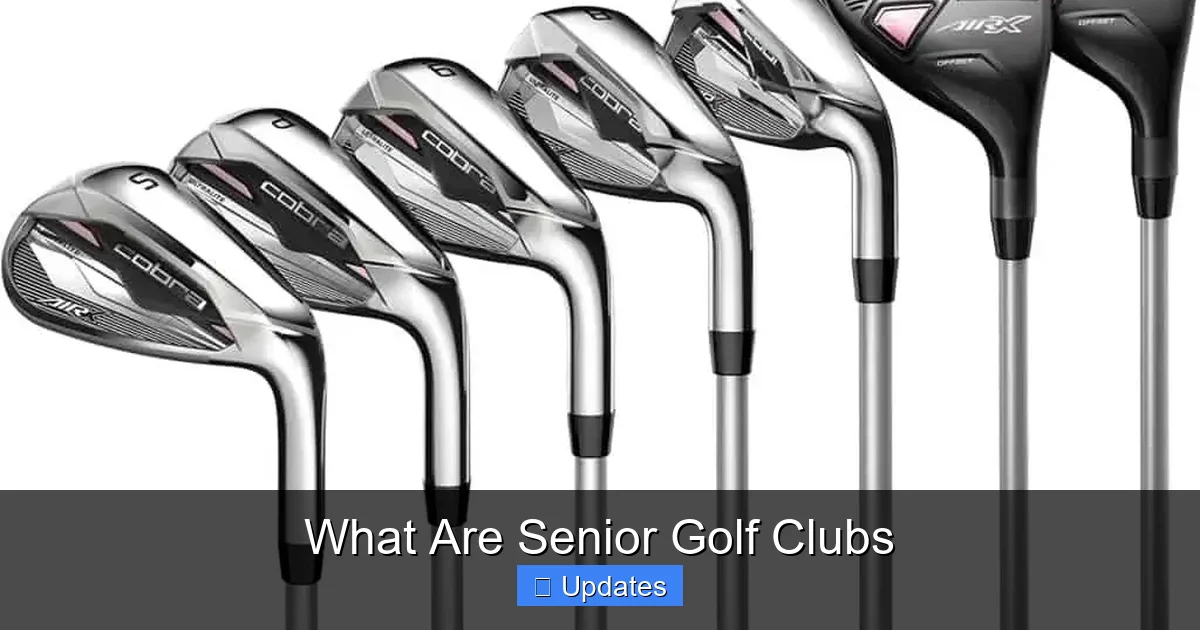
When shopping for senior golf clubs, focus on features that directly support comfort, ease of use, and improved performance. Here are the top elements to prioritize:
1. Lightweight Construction
Graphite shafts are standard in senior clubs because they’re significantly lighter than steel. This reduces overall club weight by 20–40 grams compared to steel-shafted sets. Less weight means less arm fatigue, especially during back-to-back rounds or extended practice sessions.
Look for clubs with **low-torque graphite shafts**, which resist twisting during the swing and promote straighter ball flight.
2. Oversized Irons and Drivers
Traditional blade-style irons require precision and timing—something many seniors find harder to maintain as reflexes slow down. In contrast, **oversized cavity-back irons** distribute weight toward the perimeter, increasing forgiveness on mis-hits.
Similarly, senior drivers often feature **larger head sizes (460cc+)** and **high draw bias** to counteract slicing tendencies common among slower swingers.
3. Adjustable Loft Technology
Many senior-specific drivers and fairway woods now include **adjustable hosels**, letting you fine-tune launch angle and spin rate without buying new clubs. This is especially helpful if you’re transitioning from older equipment and haven’t yet dialed in your optimal setup.
4. Comfortable Grips
Small hands or arthritic fingers? Then standard corded or hard rubber grips may be uncomfortable or difficult to hold securely. Seek out **softer, tapered grips** with larger diameters (e.g., 0.580” or 0.600”). Brands like Winn or Lamkin offer senior-friendly options with enhanced cushioning and non-slip surfaces.
5. Complete Set Options
Rather than piecing together individual clubs, many beginners and returning seniors prefer **full senior golf club sets**. These typically include:
– Driver
– Fairway wood(s)
– Hybrid(s)
– Iron set (often 5-PW)
– Putter
– Stand bag
Complete sets save time, ensure compatibility, and often come with warranties and storage solutions.
Popular senior-focused brands include Callaway, TaylorMade, Cobra, Wilson, and Cleveland. Each offers distinct design philosophies—some emphasize distance, others forgiveness or playability.
How to Choose the Right Senior Golf Clubs for Your Game
Picking the perfect senior golf clubs isn’t just about age—it’s about matching the equipment to your skill level, physical condition, and personal preferences. Follow this step-by-step approach to make an informed choice:
Step 1: Assess Your Physical Condition
Ask yourself:
– Do my wrists or elbows bother me after a round?
– Is grip strength an issue?
– Am I recovering from surgery or managing chronic pain?
If yes, prioritize **lightweight, low-vibration shafts** and **ergonomic grips**. Avoid stiff shafts or overly aggressive clubhead designs that could exacerbate discomfort.
Step 2: Determine Your Swing Speed
Use a radar gun or smartphone app (like SwingCatalyst or Garmin Connect) to estimate your average driver swing speed. As mentioned earlier, most seniors clock in between 70–85 mph—perfect for R-flex (senior) shafts.
If your speed is below 70 mph, consider L-flex or even junior/ultralight options. Above 85 mph? You might actually benefit from regular or stiff flex despite your age.
Step 3: Consider Your Skill Level
– **Beginner:** Focus on maximum forgiveness. Cavity-back irons, high-loft drivers, and hybrids are excellent choices.
– **Intermediate:** You can handle slightly more refined designs but still value ease of use.
– **Advanced/Senior Tour Players:** May opt for custom-fitted senior clubs with tour-level performance tweaks.
Don’t worry if you’re rusty—many senior sets are designed to help you relearn proper technique while minimizing frustration.
Step 4: Try Before You Buy
Nothing replaces real-world testing. Visit a PGA-certified teaching professional or authorized retailer offering **free club fittings**. Bring your own bag if possible, wear similar shoes, and play a few practice swings on the range.
Pay attention to:
– How the club feels during the backswing and follow-through
– Whether you lose balance or strain any joints
– If the ball flies straighter and farther
Remember, a $300 set that feels terrible is worse than a $100 set that plays smoothly and comfortably.
Step 5: Factor in Budget and Longevity
Senior golf clubs range from under $200 for basic complete sets to over $1,000 for premium, custom-fitted options. Ask yourself:
– Will I stick with golf for years to come?
– Do I plan to upgrade again soon?
– Can I afford ongoing maintenance (new balls, tees, gloves)?
Entry-level sets are great for casual players, while mid-range models offer better feel and durability for frequent golfers.
Top Brands and Models of Senior Golf Clubs
With so many options available, narrowing down the best senior golf clubs can feel overwhelming. To help, here are some standout brands and specific models favored by senior golfers nationwide:
Callaway Strata Ultimate Men’s Golf Set
This complete set includes everything needed to start playing confidently. Features include:
– Lightweight graphite shafts throughout
– Oversized titanium driver with draw bias
– High-lofted cavity-back irons
– Comfortable oversized putter
Priced around $600–$700, it’s one of the most popular senior sets due to its balance of performance and affordability.
TaylorMade RBZ SpeedLite Women’s Package Set
Designed specifically for female seniors, this set emphasizes lightweight construction and higher launch. Includes:
– 12-piece package with hybrid irons
– Soft-touch grips
– Stand bag with double straps
Perfect for women with slower swing speeds seeking maximum distance.
Cobra Golf King F9 Speedback Men’s Complete Set
Known for innovative aerodynamics, the F9 features a low CG and wide sole for easy turf interaction. Ideal for seniors struggling with long irons or deep divots.
Wilson Ultra Complete Golf Set (Men & Women)
Budget-friendly option ($300–$400) with surprisingly good feel and forgiveness. Great entry point for retirees new to the game.
TaylorMade Stealth 2 Senior Driver
While not a full set, this standalone driver is a favorite among seniors wanting just the best possible tee shot. Features 60g carbon twist-weight shaft and adjustable loft sleeve.
Always check recent reviews and compare specs side-by-side before purchasing. Also consider buying pre-owned certified clubs from trusted sellers—you can save 30–50% without sacrificing quality.
Maintenance and Care Tips for Senior Golf Clubs
Once you’ve invested in great senior golf clubs, protecting them ensures longevity and consistent performance:
– **Clean regularly:** Use warm water, mild soap, and a soft brush to remove dirt from grooves after each round.
– **Store properly:** Keep clubs in a dry place away from extreme temperatures. Use a stand bag with dividers to prevent damage.
– **Inspect frequently:** Check for loose screws, cracked shafts, or worn grips. Replace damaged parts promptly.
– **Re-grip when needed:** Most golfers replace grips every 40–60 rounds or when they feel slippery.
– **Avoid leaving bags in cars:** Heat buildup can warp shafts and degrade materials.
Simple care goes a long way toward preserving your investment and keeping your game sharp.
Frequently Asked Questions
What age group typically uses senior golf clubs?
Most manufacturers design senior golf clubs for players aged 50 and above, though many golfers in their 40s also benefit from the lighter weight and softer flex. There’s no strict PGA cutoff—it depends on individual strength and swing speed.
Can younger golfers benefit from senior golf clubs?
Yes! Anyone with slower swing speeds (below 85 mph average) or limited flexibility may find senior flex shafts and lightweight designs helpful, regardless of age. Many juniors and beginner adults use senior clubs successfully.
Are senior golf clubs only for beginners?
No. While they’re popular among new or returning players, experienced seniors also choose senior-specific clubs to maintain consistency, reduce injury risk, and preserve their enjoyment of the game as physical abilities change.
Do I need different senior clubs for men vs women?
Absolutely. Women’s senior clubs are generally lighter, with shorter shafts, higher lofts, and softer flex than men’s versions. Always select gender-specific sets unless cross-fitting with professional advice.
How do I know if my current clubs are “too stiff”?
If you struggle to generate power, feel like the club is “twisting” in your hands, or experience wrist strain, your shafts may be too stiff. A simple test: when you hold the grip and let the club hang vertically, a stiff shaft will point straight down; a senior flex shaft will lean slightly forward.
Should I buy used senior golf clubs?
Yes—but only from reputable sources. Certified pre-owned clubs inspected by professionals offer significant savings. Just ensure the set matches your needs and hasn’t been excessively worn or damaged.