
What Age Are You a Senior


Easy Grip Kitchen Utensils

Portable Radio with Large Buttons

Bathtub Grab Bar
The age at which you’re considered a senior varies by context—typically starting at 60 or 65—but it’s more than just a number. From healthcare and travel discounts to retirement planning and social programs, understanding when you qualify as a senior can help you access valuable benefits and prepare for this important life stage.
Key Takeaways
- Senior age starts between 60 and 65: Most organizations and governments define senior status at age 65, though some begin at 60.
- Medicare eligibility begins at 65: Turning 65 unlocks Medicare enrollment, a major healthcare milestone for U.S. seniors.
- Senior discounts often start earlier: Many retailers, restaurants, and travel companies offer discounts starting at age 55 or 60.
- Retirement planning should begin decades in advance: Experts recommend saving 10–15% of income annually starting in your 20s or 30s.
- Social Security benefits depend on when you claim: Full retirement age ranges from 66 to 67, but claiming early reduces benefits.
- Senior status affects legal and financial rights: Powers of attorney, estate planning, and long-term care become more important as you age.
- Age is just a number—health matters more: Staying active, eating well, and engaging socially can help you thrive at any age.
📑 Table of Contents
- What Age Are You a Senior? Understanding the Milestones and Benefits
- Official Definitions: When Does “Senior” Status Begin?
- Senior Discounts: When Can You Start Saving?
- Healthcare and Insurance: The Big Benefits of Turning 65
- Retirement Planning: Timing Is Everything
- Legal and Financial Considerations for Seniors
- Staying Active and Engaged: Age Is Just a Number
- Conclusion: Embracing Senior Status with Confidence
What Age Are You a Senior? Understanding the Milestones and Benefits
So, what age are you a senior? It’s a question more people are asking—not just because they’re curious, but because it affects everything from healthcare and travel to retirement planning and social benefits. The short answer? It depends. While many people assume “senior” kicks in at 65, the truth is that different organizations, industries, and government programs define senior status at various ages—some as early as 55.
For example, you might qualify for a senior discount at your favorite coffee shop at 60, but you won’t be eligible for Medicare until 65. Meanwhile, your retirement plan might let you start withdrawing funds without penalties at 59½, but Social Security won’t pay full benefits until you’re 67 (if you were born after 1960). Confusing? Absolutely. But understanding these milestones can help you make smarter decisions about your health, finances, and lifestyle.
This guide will walk you through the official definitions, real-world benefits, and practical tips for navigating life as a senior. Whether you’re approaching 60 or already enjoying your golden years, knowing when and how you’re considered a senior can help you take full advantage of the opportunities that come with this stage of life.
Official Definitions: When Does “Senior” Status Begin?

Visual guide about What Age Are You a Senior
Image source: static.vecteezy.com
The term “senior” doesn’t have one universal definition. Instead, it’s shaped by legal, medical, financial, and cultural standards. In the United States, the most widely accepted benchmark is age 65—thanks largely to Medicare and Social Security. But even that’s not set in stone.
Government and Healthcare Standards
In the U.S., age 65 is the magic number for Medicare eligibility. Once you turn 65, you can enroll in Medicare Parts A and B, which cover hospital stays, doctor visits, and preventive care. This is a huge deal—healthcare costs are one of the biggest expenses in retirement, and Medicare helps reduce that burden significantly.
Social Security also uses 65 as a reference point, though the full retirement age (FRA) has shifted over time. For people born in 1937 or earlier, FRA is 65. For those born between 1943 and 1954, it’s 66. And if you were born in 1960 or later, you’ll need to wait until 67 to receive full benefits. You can claim Social Security as early as 62, but your monthly payments will be permanently reduced—by up to 30%.
International Perspectives
Other countries define senior status differently. In Canada, for instance, seniors are typically considered to be 65 and older, aligning with Old Age Security (OAS) pension eligibility. In the United Kingdom, the state pension age is gradually rising and currently sits around 66–67, depending on birth year.
Japan, with one of the world’s oldest populations, defines seniors as 65 and over—but many companies and communities offer benefits starting at 60. In Australia, the Age Pension kicks in at 67, though some senior discounts begin at 60.
Why the Variation?
The age at which someone is considered a senior reflects a mix of life expectancy, economic factors, and social policies. As people live longer and healthier lives, governments and organizations are adjusting their definitions. Some experts even argue that “senior” should be based on health and function rather than age alone.
But for now, age 65 remains the most common threshold—especially in the U.S.—for accessing major benefits and services.
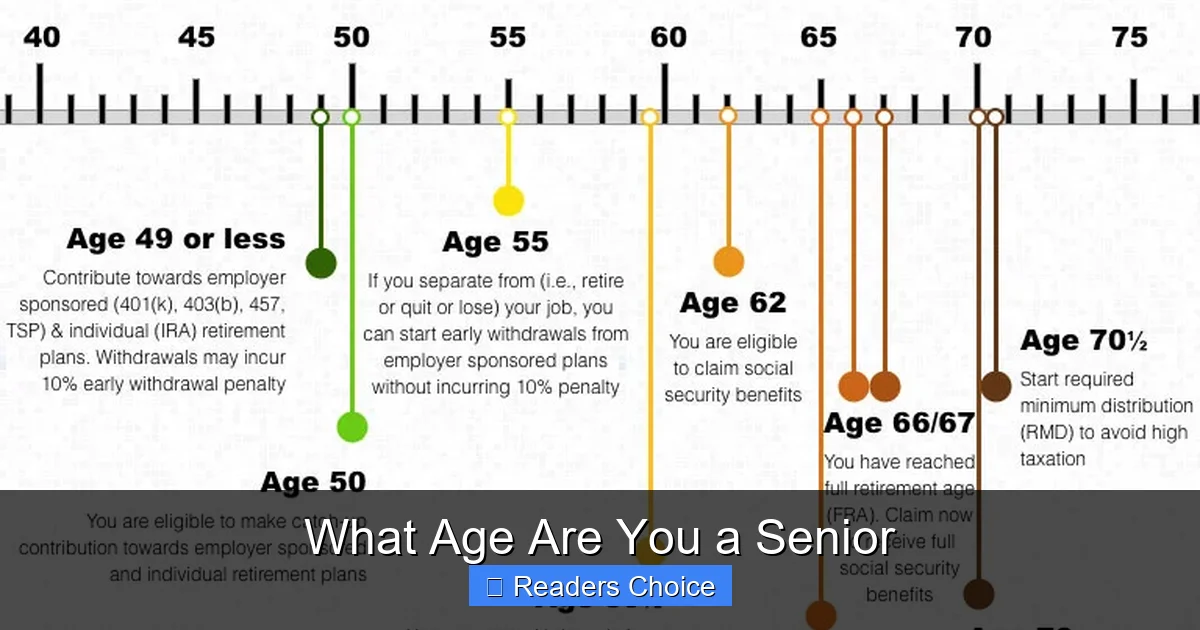
Senior Discounts: When Can You Start Saving?
Visual guide about What Age Are You a Senior
Image source: 401kcalculator.net
One of the most tangible perks of becoming a senior is access to discounts. And the good news? You might qualify earlier than you think.
Early Bird Specials: Discounts Starting at 55 or 60
Many businesses offer senior discounts well before age 65. For example:
– **AARP membership** is available to anyone 50 or older. While not all AARP benefits kick in at 50, members get access to discounts on travel, dining, insurance, and entertainment.
– **Restaurants** like Denny’s, Applebee’s, and IHOP often offer senior menus or discounts starting at 55 or 60.
– **Retailers** such as Kohl’s, Ross, and Michaels provide senior discounts on specific days of the week—usually 10–15% off—for customers 55 or 60 and up.
– **Grocery stores** like Kroger and Publix offer senior discounts on certain days, often 5–10% off your total bill.
Travel and Transportation Savings
Travel is another area where senior status pays off—literally. Airlines like Southwest and Amtrak offer senior fares, though availability varies. Many national parks and museums provide free or discounted admission to seniors 62 and older. Even public transportation systems in cities like New York and Chicago offer reduced fares for riders 65 and up.
How to Claim Your Discounts
The key to unlocking these savings? Don’t be shy. Always ask if a senior discount is available—even if you don’t see a sign. Bring ID to prove your age, and consider joining AARP for access to hundreds of exclusive deals. Many discounts are automatic at checkout, but some require you to request them.
Pro tip: Sign up for store loyalty programs. They often include senior discounts and personalized offers based on your shopping habits.
Healthcare and Insurance: The Big Benefits of Turning 65

Visual guide about What Age Are You a Senior
Image source: i.ytimg.com
Healthcare is one of the most important reasons to understand when you’re considered a senior. Once you hit 65, you gain access to Medicare—a federal health insurance program that covers hospital stays, doctor visits, prescription drugs, and more.
Medicare: What You Need to Know
Medicare has four main parts:
– **Part A** covers inpatient hospital care, skilled nursing facilities, hospice, and some home health services. Most people don’t pay a premium for Part A if they’ve worked and paid Medicare taxes for at least 10 years.
– **Part B** covers outpatient care, preventive services, and medical supplies. There’s a monthly premium, which increases with income.
– **Part C** (Medicare Advantage) is offered by private insurers and bundles Parts A and B, often including Part D (prescription drug coverage) and extra benefits like dental and vision.
– **Part D** covers prescription drugs and requires a separate premium.
You can enroll in Medicare during your Initial Enrollment Period—the seven-month window that starts three months before your 65th birthday. Missing this window could result in late enrollment penalties.
Medigap and Supplemental Insurance
Original Medicare (Parts A and B) doesn’t cover everything. That’s where Medigap (Medicare Supplement Insurance) comes in. These plans help pay for out-of-pocket costs like deductibles, copayments, and coinsurance.
You can buy a Medigap policy during your six-month Medigap Open Enrollment Period, which starts the month you turn 65 and are enrolled in Part B. During this time, insurers can’t deny you coverage or charge more due to pre-existing conditions.
Long-Term Care and Planning Ahead
Medicare doesn’t cover long-term care—like nursing home stays or in-home assistance with daily activities. That’s why it’s smart to consider long-term care insurance or other planning strategies before you need them.
The average cost of a private room in a nursing home is over $100,000 per year. Without planning, these expenses can quickly drain retirement savings. Options include:
– Long-term care insurance
– Hybrid life insurance policies with long-term care benefits
– Setting aside dedicated savings
Talk to a financial advisor to explore your options and create a plan that fits your needs and budget.
Retirement Planning: Timing Is Everything
Retirement planning isn’t just about money—it’s about timing. Knowing when you’re considered a senior helps you make informed decisions about when to stop working, when to claim benefits, and how to manage your savings.
Full Retirement Age and Social Security
As mentioned earlier, your full retirement age (FRA) for Social Security depends on your birth year. Claiming benefits before FRA reduces your monthly payment, while delaying past FRA increases it—up to age 70.
For example, if your FRA is 67 and you claim at 62, your benefit could be reduced by up to 30%. But if you wait until 70, you could receive up to 124% of your full benefit.
401(k) and IRA Withdrawal Rules
You can start withdrawing from your 401(k) or traditional IRA without penalties at age 59½. Before that, early withdrawals typically incur a 10% penalty plus income taxes.
Required Minimum Distributions (RMDs) begin at age 73 (as of 2023, thanks to the SECURE 2.0 Act). This means you must start taking money out of your retirement accounts each year, whether you need it or not.
Working Past 65: Pros and Cons
Many people choose to work past 65—whether for financial reasons, health benefits, or personal fulfillment. If you’re still employed and have health insurance through your job, you might delay Medicare enrollment without penalty.
But be aware: if you don’t have “creditable coverage” (coverage as good as Medicare), you could face late enrollment penalties when you finally sign up.
Working longer can also boost your Social Security benefits, since your earnings are factored into your benefit calculation. And staying active and engaged can improve your mental and physical health.
Legal and Financial Considerations for Seniors
As you age, certain legal and financial documents become increasingly important. These aren’t just for “old people”—they’re essential tools for protecting yourself and your loved ones, no matter your age.
Powers of Attorney and Advance Directives
A durable power of attorney lets someone you trust make financial decisions on your behalf if you’re unable to do so. A healthcare power of attorney (or healthcare proxy) does the same for medical decisions.
An advance directive (or living will) outlines your wishes for end-of-life care. Together, these documents ensure your preferences are respected and reduce stress for your family.
Estate Planning and Wills
A will is the foundation of any estate plan. It tells the court how you want your assets distributed after you die. Without a will, your estate may go through probate—a lengthy and expensive legal process.
Consider creating a revocable living trust to avoid probate and maintain privacy. Trusts can also help manage assets if you become incapacitated.
Guardianship and Conservatorship
If someone becomes unable to make decisions due to dementia, illness, or disability, a court may appoint a guardian (for personal decisions) or conservator (for financial decisions). This process can be invasive and costly, which is why planning ahead is so important.
Staying Active and Engaged: Age Is Just a Number
Finally, let’s talk about what really matters: how you feel. Being a senior isn’t just about age—it’s about attitude, health, and engagement.
Physical Health and Mobility
Regular exercise can help you maintain strength, balance, and independence. Aim for at least 150 minutes of moderate aerobic activity per week, plus strength training twice a week.
Activities like walking, swimming, yoga, and tai chi are great for older adults. Even gardening or dancing counts!
Mental and Emotional Well-Being
Staying socially connected is crucial for mental health. Join clubs, volunteer, take classes, or stay in touch with friends and family. Loneliness and isolation are linked to higher risks of depression, heart disease, and cognitive decline.
Lifelong Learning and Purpose
Never stop learning. Whether it’s picking up a new language, learning to play an instrument, or exploring a hobby, staying curious keeps your mind sharp.
Many community colleges and senior centers offer low-cost or free classes for older adults. And finding purpose—through work, volunteering, or mentoring—can add meaning to your later years.
Conclusion: Embracing Senior Status with Confidence
So, what age are you a senior? The answer isn’t one-size-fits-all. While 65 is the most common threshold—especially for healthcare and government benefits—many perks and responsibilities begin earlier. From senior discounts at 55 to Medicare at 65, each milestone brings new opportunities and considerations.
The key is to stay informed, plan ahead, and make the most of this stage of life. Whether you’re just starting to think about retirement or already enjoying your golden years, understanding when and how you’re considered a senior can help you access valuable benefits, protect your future, and live your best life.
Remember: age is just a number. What matters most is how you choose to live each day—with purpose, health, and joy.
Frequently Asked Questions
What age are you considered a senior in the U.S.?
In the U.S., most people are considered seniors at age 65, when they become eligible for Medicare and full Social Security benefits. However, some discounts and programs start as early as 55 or 60.
Can I get senior discounts before age 65?
Yes! Many restaurants, retailers, and travel companies offer senior discounts starting at age 55 or 60. Always ask and bring ID to prove your age.
When can I enroll in Medicare?
You can enroll in Medicare during your Initial Enrollment Period, which begins three months before your 65th birthday and ends three months after.
What is full retirement age for Social Security?
Full retirement age ranges from 66 to 67, depending on your birth year. You can claim benefits as early as 62, but they’ll be reduced.
Do I need long-term care insurance?
It depends on your health, family history, and financial situation. Long-term care insurance can help cover costs not included in Medicare, but it’s best to evaluate your options early.
How can I stay healthy as a senior?
Stay active with regular exercise, eat a balanced diet, maintain social connections, and keep your mind engaged through learning and hobbies.