
Walking Cane Wrist Strap Explained: Uses, Fit, Safety & Tips


Portable Radio with Large Buttons

LED Clip Reading Light

Rollator Walker with Seat
Quick Answer
A walking cane wrist strap is a small loop attached near the cane handle that helps keep the cane within reach if you briefly release your grip. It is mainly a convenience and retention accessory, not a replacement for holding the cane correctly or following safe cane-use techniques.
What a cane wrist strap can do
- Keeps it close: The cane can remain near your hand when you briefly let go.
- Reduces dropping: A strap may stop the cane from immediately falling to the floor.
- Improves convenience: You can momentarily free your fingers for simple tasks.
- Helps with storage: Some straps can hang the cane from a hook when it is not being used.
- Doesn’t provide support: Your hand, cane shaft, and cane tip still provide the working support.
One important safety rule
- Wear the loop comfortably rather than tightening it around your wrist like a restraint.
If you’ve wondered what the little loop hanging beside a cane handle is for, this walking cane wrist strap explained guide covers the answer in practical detail. A cane wrist loop looks simple, but its placement, fit, and use can affect everyday convenience.
I also see people expecting the strap to work like a safety harness. It doesn’t, so understanding its limits matters just as much as knowing its benefits.
In This Guide
- What Is a Walking Cane Wrist Strap?
- Why Do Walking Canes Have Wrist Straps?
- How Do You Use a Walking Cane Wrist Strap?
- What Types of Cane Wrist Straps Are Available?
- How Tight Should a Cane Wrist Strap Be?
- Are Walking Cane Wrist Straps Safe?
- When Should You Replace a Cane Wrist Strap?
- Frequently Asked Questions
What Is a Walking Cane Wrist Strap?
A walking cane wrist strap is a flexible loop attached near the handle of a cane. You place your hand through the loop so the cane stays close when you briefly loosen or release your grip.
The strap is sometimes called a cane wrist loop, cane lanyard, walking-stick strap, or wrist cord. These terms usually describe the same basic accessory.
Simple definition: A walking cane wrist strap is a retention accessory designed to keep the cane near your hand when your fingers temporarily release the handle.
What the strap does not do
The wrist strap isn’t the part of the cane that supports your weight. Support travels through your hand, handle, shaft, tip, and the surface beneath the cane.
- It isn’t a second handle. Don’t pull upward on the strap to replace your grip.
- It isn’t fall protection. A wrist loop cannot stop your body from falling.
- It isn’t a substitute for proper cane height. The cane still needs to fit the user correctly.
- It isn’t a reason to ignore the cane tip. A worn ferrule can reduce traction even when the strap is perfect.
The strap works best as a small convenience feature. Think of it as a way to keep the cane nearby, not as the part that makes the cane stable.
Why Do Walking Canes Have Wrist Straps?
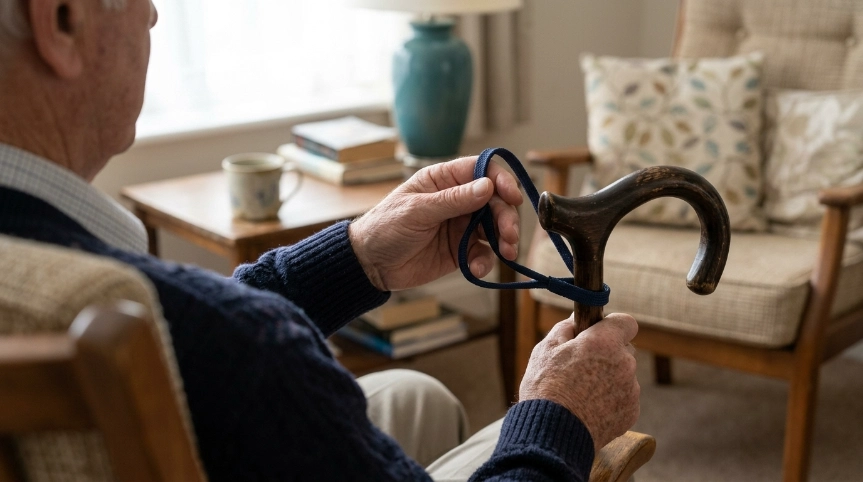
The main reason is simple: people regularly need to loosen their grip. A strap can make those brief moments less awkward by keeping the cane close to the hand.
This can be useful during normal everyday activities. Small interruptions happen more often than many new cane users expect.
- Opening a door: You may need your fingers for the handle or lock.
- Using a phone: The cane can stay close while you handle the device.
- Paying at a counter: A strap can help prevent the cane from sliding away while you reach for a wallet.
- Adjusting clothing: You may briefly need your hand for a zipper, coat, or pocket.
- Sitting down: The cane remains easier to locate once you’re seated.
It can reduce repeated bending and reaching
A dropped cane may roll or land beyond comfortable reach. Retrieving it can be frustrating, especially for someone with limited flexibility or balance.
The strap may keep the cane close enough to recover without reaching toward the floor. That is one reason such a small accessory can feel surprisingly useful.
It can help prevent the cane from being left behind
People sometimes rest a cane against a counter, table, or chair and then forget it. Keeping the strap around the wrist during a brief stop makes that less likely.
That doesn’t mean the cane should dangle from your wrist for extended periods. The strap is most helpful during short transitions.
It can make daily routines smoother
When I look at cane accessories, I pay more attention to simple features that solve repeated annoyances. A wrist loop fits that description because its benefit becomes noticeable during ordinary tasks.
The advantage isn’t dramatic. It’s the convenience of having the cane where you expect it when you’re ready to grip it again.
Section Takeaway: A cane wrist strap mainly keeps the cane close during brief moments when you need to release the handle. It should make cane use more convenient without changing how you bear weight through the cane.
How Do You Use a Walking Cane Wrist Strap?
Put your hand through the wrist loop before wrapping your fingers around the cane handle. The strap should sit around your wrist while your hand maintains the normal working grip.
The exact setup can vary slightly by strap design. These steps work for most standard loops.
- Inspect the attachment. Confirm that the strap is securely connected near the handle.
- Open the loop. Make sure it isn’t twisted or knotted.
- Slide your hand through. Move your hand through the loop before gripping the cane.
- Hold the handle normally. Your palm and fingers should control the cane, not the strap.
- Check the slack. The loop should remain comfortable as you move your wrist.
- Practice releasing and regripping. Try it while seated before relying on the strap while standing.
Keep your normal cane technique
A wrist strap shouldn’t change the way you walk with the cane. The cane still needs to be positioned, planted, and moved correctly.
Cleveland Clinic’s cane-use guidance emphasizes correct fit and technique because poor setup can increase strain and instability.
- Maintain a secure grip while stepping.
- Plant the cane tip firmly before loading it.
- Keep the cane close enough to control.
- Move slowly when turning or changing surfaces.
Practice the release while sitting first
Before using a new strap while walking, sit in a sturdy chair and put the loop around your wrist. Release the handle gently and see where the cane hangs.
The cane should remain reachable without creating a hard pull on your wrist. If the strap twists, pinches, or catches, adjust it before walking.
Practical tip: Test a new strap indoors first. A few minutes of seated practice can reveal whether the loop is too tight, too long, or awkwardly positioned.
Don’t use the strap to swing the cane
It can be tempting to let a lightweight cane swing from the wrist. That can make the cane strike furniture, another person, or your leg.
Bring the handle back into your hand before you start moving again. Controlled placement matters more than convenience.
Section Takeaway: Put your hand through the loop, grip the cane normally, and treat the strap only as backup retention. Practice releasing and recovering the handle while seated before using a new strap during normal walking.
What Types of Cane Wrist Straps Are Available?
Walking cane straps come in several designs. The best option depends on your hand comfort, cane attachment point, and how often you remove the strap.
| Strap Type | How It Works | Main Advantage | Watch For |
|---|---|---|---|
| Fixed cord loop | Uses a simple non-adjustable loop | Lightweight and simple | Loop may be too large or small for some wrists |
| Adjustable loop | Slider changes the opening size | Easier to personalize | Avoid tightening it like a restraint |
| Padded strap | Adds soft material around the wrist | Improved comfort | Bulkier when storing the cane |
| Breakaway-style strap | Connection can release under sufficient pull | May reduce hard tethering | Release design varies by product |
Fixed versus adjustable straps
A fixed loop is simple and has fewer parts to manage. It works well when the opening already feels comfortable around the wrist.
An adjustable strap gives more control over loop size. This can help when gloves, hand size, or clothing change the amount of space you need.
Soft material matters
Straps may use nylon, woven fabric, cord, leather, or padded synthetic material. Any material can work if the edges stay smooth and comfortable.
Pay attention to seams and hardware. A rough edge can become irritating after repeated contact with the wrist.
How Tight Should a Cane Wrist Strap Be?
A cane wrist strap should be secure enough to stay around the wrist but loose enough to move comfortably. It shouldn’t squeeze, leave deep pressure marks, or prevent you from removing your hand quickly.
You don’t need to cinch the strap tightly for it to work. Its job is to catch or retain the cane after a brief release.
Signs the strap may be too tight
- It presses deeply into your skin.
- Your wrist movement feels restricted.
- The loop is difficult to remove quickly.
- You notice rubbing, numbness, tingling, or discomfort.
- The strap pulls your hand into an awkward position.
Signs it may be too loose
- The loop slips over your hand too easily.
- The cane falls far enough to hit the floor every time you release it.
- The strap frequently twists around the handle.
- The hanging cane swings excessively.
A good setup sits somewhere in the middle. You want useful retention without turning the strap into a tight tether.
Check your cane height too
Strap fit doesn’t correct an improperly sized cane. Your overall cane setup deserves attention if you feel hunched, stretched, or uncomfortable while walking.
MedlinePlus advises that the cane handle should generally sit around wrist level when correctly adjusted. Your elbow should remain slightly bent when holding the handle.
Are Walking Cane Wrist Straps Safe?
A properly fitted wrist strap can be a useful accessory, but it shouldn’t be treated as fall-prevention equipment. Safe cane use still depends on balance, grip, cane fit, tip condition, footwear, and the walking surface.
The National Institute on Aging recommends correct use of assistive devices as part of reducing fall risk. That broader safety picture matters more than any single cane accessory.
A strap can become awkward if the cane catches
Imagine the cane tip getting caught behind a chair leg or on an uneven edge. If you continue moving, a tight strap may tug your wrist instead of simply keeping the cane nearby.
That is another reason to avoid an overly tight loop. You should be able to release or remove the strap without a struggle.
Watch for entanglement
Long loops can catch on objects near the hand. Furniture knobs, bag handles, railings, and clothing can all create awkward snags.
- Keep excess strap length controlled.
- Don’t wrap the loop several times around your wrist.
- Check that the strap hangs clear of the cane tip.
- Replace stretched loops that have become excessively long.
The cane tip matters more than the strap
A wrist loop won’t compensate for a worn rubber tip. The cane must make reliable contact with the floor to provide useful support.
Check the tip regularly for smooth spots, cracks, looseness, or uneven wear. Replace it when traction or fit deteriorates.
Keep the walking area clear
Cords, loose rugs, wet floors, clutter, and poor lighting can create hazards for both feet and cane tips. The CDC’s fall-prevention resources offer broader guidance for reducing common fall hazards.
- Keep frequently used pathways uncluttered.
- Use stable, nonslip footwear.
- Improve lighting near stairs and transitions.
- Slow down on wet or uneven surfaces.
- Use railings when appropriate.
Health note: If you have new dizziness, repeated falls, increasing weakness, numbness, or difficulty controlling your cane, talk with a doctor, physical therapist, or occupational therapist about your mobility needs.
Section Takeaway: A wrist strap can improve convenience, but it doesn’t make an unsafe cane setup safe. Keep the loop comfortable, maintain the cane tip, remove trip hazards, and get professional guidance if your balance or walking ability changes.
Why Do Walking Canes Have Wrist Straps?
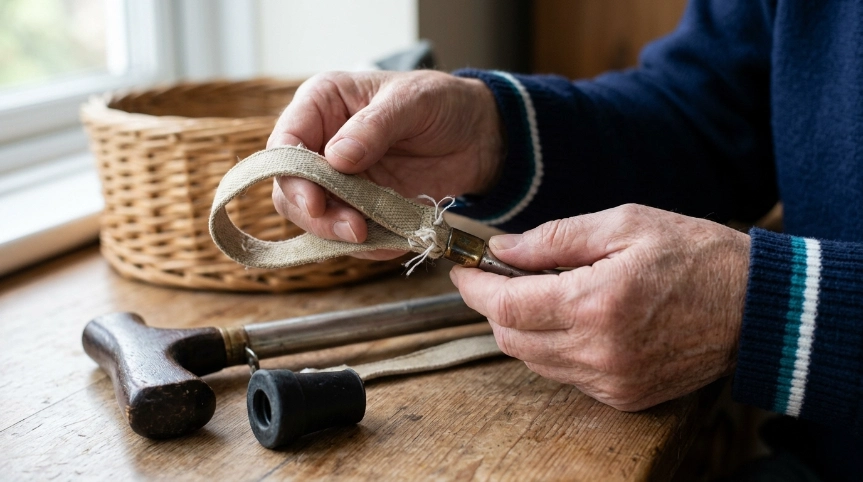
Replace the strap when wear starts affecting comfort or security. Small accessories are easy to ignore, so checking the loop during normal cane maintenance is a useful habit.
Look for these warning signs
- Fraying: Fibers are separating along the strap or cord.
- Cracking: Leather or synthetic material has become brittle.
- Loose stitching: Seams near the attachment point are opening.
- Stretching: The loop has become noticeably longer.
- Damaged hardware: Clips, sliders, or connectors no longer hold securely.
- Skin irritation: The material has become rough or uncomfortable.
Clean the strap according to its material
Fabric and nylon straps may tolerate gentle cleaning, while leather usually needs different care. Follow the manufacturer’s instructions if they are available.
Let washable straps dry fully before using them again. Damp material can feel uncomfortable and may develop odor over time.
Check the whole cane at the same time
The strap is only one part of the setup. A quick inspection should also include the handle, shaft adjustment, locking mechanism, and rubber tip.
- Confirm adjustable sections are locked.
- Check the handle for cracks or looseness.
- Inspect the shaft for visible damage.
- Make sure the rubber tip fits firmly.
- Replace worn parts before they fail.
A few seconds of inspection can catch problems early. It’s especially worthwhile before travel or a longer day away from home.
Frequently Asked Questions
What is the wrist strap on a walking cane for?
The wrist strap helps keep the cane close when you briefly release your grip. It may prevent the cane from immediately falling or rolling away, but it doesn’t provide the main structural support used when walking.
Should I always use the wrist strap on my cane?
No. A wrist strap is optional unless your cane manufacturer or healthcare professional recommends otherwise. Some people find it useful, while others prefer using the cane without one because the loop feels distracting or uncomfortable.
Should a cane wrist strap be tight?
No. The loop should remain comfortably around your wrist without squeezing it or restricting movement. You should also be able to remove your hand without struggling, especially if the cane becomes caught on an object.
Can a cane wrist strap stop me from falling?
No. A cane strap isn’t a fall-arrest device and cannot support your body during a fall. Proper cane sizing, grip, walking technique, footwear, home safety, and professional mobility advice are much more important for reducing fall risk.
Can I add a wrist strap to a cane that didn’t come with one?
Sometimes. Replacement straps are available for many cane styles, but the attachment needs to be secure and compatible with the handle. Avoid drilling or modifying a structural part of the cane unless the manufacturer specifically permits it.
What should I do if the cane strap hurts my wrist?
Stop using the strap until you identify the cause. Check for excessive tightness, rough seams, damaged material, or an awkward attachment position, and seek medical advice if wrist pain, numbness, swelling, or tingling continues.
Final Takeaway
A walking cane wrist strap has one straightforward purpose: keeping the cane conveniently within reach when you briefly release the handle. It can reduce dropped canes, awkward reaching, and small interruptions during everyday activities.
Its limitations are just as important. The strap doesn’t replace a proper grip, correct cane height, a good rubber tip, or safe walking technique.
Choose a comfortable loop, keep it slightly loose, and inspect it for wear along with the rest of your cane. If your balance or mobility needs change, have your cane setup reviewed by a qualified healthcare professional.