
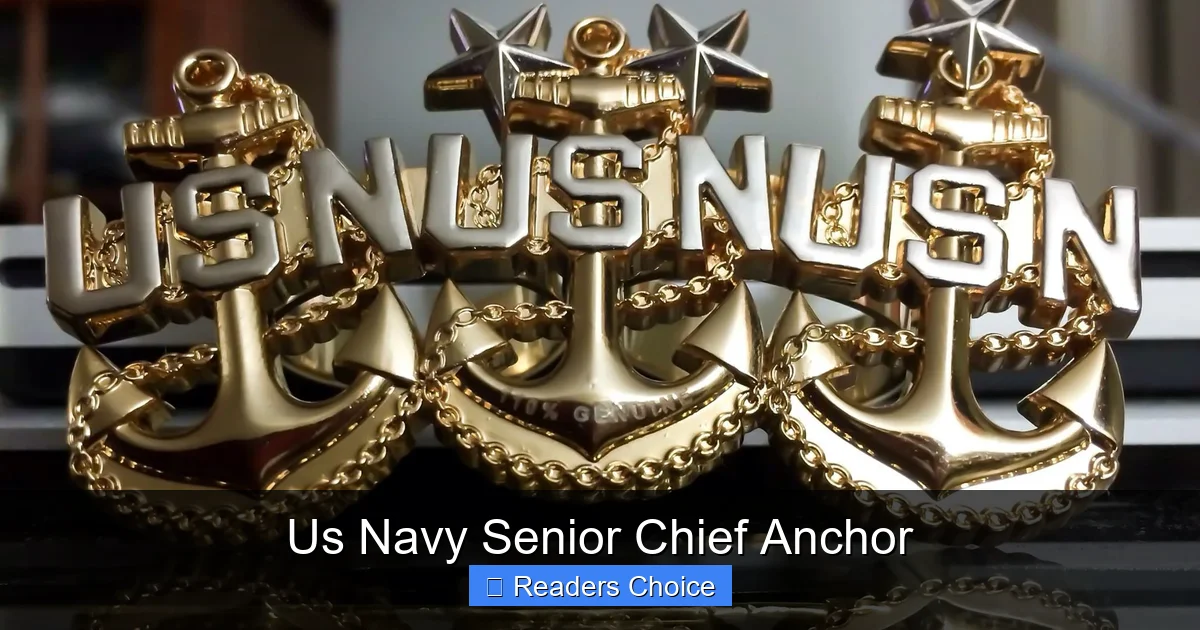
Us Navy Senior Chief Anchor


Rollator Walker with Seat

Long Handle Shoe Horn

Smart Health Watch for Seniors
The US Navy Senior Chief Anchor is more than just a symbol—it represents years of dedication, leadership, and technical expertise within the Navy’s enlisted ranks. Worn proudly by Senior Chief Petty Officers (E-8), this insignia signifies a critical bridge between junior sailors and top command, embodying responsibility, mentorship, and operational excellence.
When you see a US Navy sailor wearing the distinctive gold anchor with a silver star above it, you’re looking at a Senior Chief Petty Officer—a rank that carries immense respect, responsibility, and pride. The US Navy Senior Chief Anchor isn’t just a piece of metal stitched onto a uniform; it’s a badge of honor that represents years of service, technical expertise, and leadership. These individuals are the backbone of the Navy’s enlisted force, serving as the vital link between junior sailors and commissioned officers.
The anchor itself is steeped in naval tradition. Anchors have long symbolized stability, strength, and the ability to hold fast in turbulent waters—qualities that perfectly reflect the role of a Senior Chief. But the addition of the star above the anchor elevates the meaning, signifying not just experience, but excellence. It’s a visual reminder that this sailor has risen above the crowd through dedication, performance, and leadership.
Becoming a Senior Chief isn’t easy. It requires a minimum of 12 years of service, outstanding evaluations, and a proven ability to lead and mentor others. The journey to earning that anchor is filled with challenges—long deployments, rigorous training, and the constant pressure to perform at the highest level. But for those who make it, the anchor becomes a source of lifelong pride and a symbol of their commitment to the Navy and their country.
Key Takeaways
- Symbol of Leadership: The US Navy Senior Chief Anchor represents advanced leadership, technical mastery, and mentorship within the Navy’s enlisted force.
- Rank and Responsibility: Senior Chief Petty Officers (E-8) serve as key advisors to officers and supervisors to junior sailors, ensuring mission success and unit cohesion.
- Historical Significance: The anchor design dates back to the 19th century and has evolved to reflect the growing prestige and responsibility of senior enlisted ranks.
- Wear and Appearance: The anchor is worn on uniforms in specific configurations, with variations for dress, service, and working uniforms.
- Promotion Requirements: Advancing to Senior Chief requires years of service, superior performance evaluations, and successful completion of professional development courses.
- Mentorship Role: Senior Chiefs are expected to guide and develop junior personnel, fostering a culture of professionalism and readiness.
- Career Impact: Holding the Senior Chief rank opens doors to advanced roles, increased pay, and greater influence in naval operations and policy.
📑 Table of Contents
The Meaning Behind the US Navy Senior Chief Anchor
The US Navy Senior Chief Anchor is rich in symbolism, and understanding its meaning gives deeper appreciation for the rank it represents. At its core, the anchor is a universal naval emblem, dating back centuries to the earliest days of seafaring. It stands for stability, reliability, and the ability to “hold fast” in the face of adversity—qualities that are essential for any sailor, but especially for those in senior leadership roles.
The anchor worn by Senior Chiefs is gold in color, which distinguishes it from the silver anchors worn by Chief Petty Officers (E-7). This color difference is intentional and meaningful. Gold represents higher achievement, prestige, and the added responsibilities that come with the E-8 rank. The anchor is typically worn on the left collar of the service uniform and on the upper sleeve of dress uniforms, always positioned with the stock (the top part) pointing toward the shoulder.
Above the anchor sits a silver star—a key element that sets the Senior Chief insignia apart. The star symbolizes excellence, leadership, and the elevated status of the rank. It’s not just a decorative addition; it’s a mark of distinction that tells everyone who sees it that this sailor has achieved a high level of professional mastery.
Together, the gold anchor and silver star create a powerful visual statement. They communicate that the wearer is not only technically proficient but also a leader who can guide others through complex missions and challenging situations. In the Navy’s hierarchy, Senior Chiefs are often the ones who translate high-level strategy into actionable tasks for the crew. They ensure that orders are carried out, standards are maintained, and morale stays high—even in the toughest conditions.
Historical Evolution of the Anchor Insignia
The use of the anchor as a naval symbol dates back to the 19th century. In the early U.S. Navy, anchors were used informally to denote sailors with sea experience, but it wasn’t until the late 1800s that formal rank insignia began to emerge. The Chief Petty Officer rank was established in 1893, and with it came the first official use of the anchor as a symbol of leadership among enlisted personnel.
Over time, as the Navy grew and its structure became more complex, the need for additional senior enlisted ranks became clear. The Senior Chief Petty Officer rank was officially created in 1958, during a period of significant modernization in the U.S. military. This new rank was designed to recognize and reward experienced chiefs who had demonstrated exceptional leadership and technical skills.
With the creation of the E-8 rank came the need for a new insignia. The gold anchor with a silver star was chosen to reflect the increased responsibility and prestige of the position. The design was carefully crafted to maintain continuity with the Chief Petty Officer anchor while clearly distinguishing the higher rank.
Since its introduction, the US Navy Senior Chief Anchor has remained largely unchanged, a testament to its enduring symbolism. It continues to be one of the most recognizable and respected insignia in the military, representing not just rank, but a legacy of service and leadership.
Symbolism in Design and Placement
Every detail of the US Navy Senior Chief Anchor has been thoughtfully designed to convey meaning. The anchor itself is traditionally rendered in a classic naval style, with a curved shank, flukes at the bottom, and a stock at the top. This design is both functional and symbolic—anchors are tools used to secure ships, just as Senior Chiefs are meant to “secure” the effectiveness and morale of their units.
The gold color of the anchor is significant. In military heraldry, gold often represents excellence, achievement, and high status. By using gold instead of silver, the Navy visually communicates that Senior Chiefs have surpassed the standard set by Chief Petty Officers. It’s a subtle but powerful distinction that reinforces the hierarchy and the value placed on experience and leadership.
The silver star above the anchor adds another layer of meaning. Stars in military insignia often denote rank, achievement, or command. In this case, the star signifies that the Senior Chief has reached a level of expertise and authority that goes beyond technical proficiency. It’s a mark of leadership, wisdom, and the ability to influence others.
Placement of the insignia is also important. On the service uniform, the anchor is worn on the left collar, centered and upright. On dress uniforms, it’s typically displayed on the upper sleeve, again with the stock pointing toward the shoulder. This consistent placement ensures visibility and respect, allowing the insignia to be easily recognized by peers, subordinates, and superiors alike.
The Role of a Senior Chief Petty Officer

Visual guide about Us Navy Senior Chief Anchor
Image source: cdn.shopify.com
The US Navy Senior Chief Anchor is more than a symbol—it represents a role that is critical to the success of naval operations. Senior Chief Petty Officers (SCPOs) are the senior-most enlisted advisors in their commands, serving as the primary link between officers and junior sailors. They are responsible for maintaining discipline, enforcing standards, and ensuring that missions are executed efficiently and safely.
One of the most important aspects of a Senior Chief’s role is mentorship. These individuals are expected to guide and develop junior personnel, helping them grow into competent, confident sailors. Whether it’s teaching a new recruit how to tie a proper knot or coaching a Petty Officer First Class on leadership techniques, Senior Chiefs are constantly investing in the next generation of Navy leaders.
In addition to mentorship, Senior Chiefs are often tasked with administrative duties. They may oversee training programs, manage personnel records, and serve on boards that evaluate promotions and assignments. Their input is highly valued because they have firsthand knowledge of how policies and procedures affect the daily lives of sailors.
Senior Chiefs also play a key role in maintaining morale. Deployments can be long and isolating, and the stress of military life can take a toll on even the most resilient individuals. Senior Chiefs are often the ones who step in to listen, offer advice, and provide support. They organize morale events, mediate conflicts, and ensure that sailors feel valued and respected.
Leadership in Action
Leadership is not just a title for Senior Chiefs—it’s a daily practice. Consider the example of Senior Chief Martinez, a 15-year veteran serving aboard a guided-missile destroyer. During a recent deployment, the ship faced a critical equipment failure in the middle of a training exercise. While the officers focused on strategic decisions, Senior Chief Martinez took charge of the technical team, diagnosing the problem and coordinating repairs under pressure.
Her ability to remain calm, communicate clearly, and lead by example ensured that the issue was resolved quickly and safely. But her leadership didn’t stop there. After the incident, she conducted a debrief with her team, highlighting what went well and identifying areas for improvement. She also made a point to recognize the efforts of junior sailors, boosting morale and reinforcing a culture of accountability.
This kind of leadership is typical of Senior Chiefs. They don’t wait to be told what to do—they anticipate needs, take initiative, and inspire others to do the same. Whether they’re leading a maintenance team, supervising a watch section, or advising a commanding officer, Senior Chiefs are always looking for ways to improve performance and strengthen their units.
Bridging the Gap Between Officers and Enlisted
One of the most unique aspects of the Senior Chief role is their position as a bridge between officers and enlisted personnel. Officers bring strategic vision and command authority, but they often lack the day-to-day experience of life aboard a ship or in a squadron. Senior Chiefs, on the other hand, have lived that experience for years.
This makes them invaluable advisors. When a commanding officer is considering a new policy or procedure, they often turn to their Senior Chiefs for feedback. These enlisted leaders can provide insight into how changes will affect morale, workload, and operational effectiveness. Their input helps ensure that decisions are practical, fair, and well-received by the crew.
At the same time, Senior Chiefs help officers understand the challenges faced by junior sailors. They can explain cultural nuances, identify sources of stress, and suggest ways to improve communication and trust. This two-way flow of information strengthens the entire command structure and fosters a more cohesive, effective team.
Path to Becoming a Senior Chief Petty Officer
Visual guide about Us Navy Senior Chief Anchor
Image source: i.pinimg.com
Earning the US Navy Senior Chief Anchor is no small feat. It requires a combination of time in service, superior performance, and a commitment to professional development. The journey typically begins with enlistment and progresses through several ranks, each with its own challenges and opportunities.
To be eligible for promotion to Senior Chief Petty Officer (E-8), a sailor must have at least 12 years of active service and hold the rank of Chief Petty Officer (E-7). They must also have a strong record of performance evaluations, known as “fitreps,” which assess leadership, technical skills, and overall contribution to the Navy.
Promotion boards review these records carefully, looking for candidates who have demonstrated consistent excellence and the potential for greater responsibility. The process is highly competitive—only a small percentage of Chiefs are selected for advancement each year.
Professional Development and Training
In addition to time and performance, aspiring Senior Chiefs must complete a range of professional development courses. These include the Senior Enlisted Academy (SEA), a rigorous program that focuses on leadership, communication, and strategic thinking. The SEA is designed to prepare senior enlisted personnel for the complex challenges of modern naval operations.
Sailors may also attend specialized training in their technical field, such as engineering, aviation, or information systems. This ensures that they remain current with the latest technologies and procedures, which is essential for maintaining technical credibility and effectiveness.
The Promotion Board Process
The promotion board is a critical step in the journey to Senior Chief. During this process, a panel of senior officers and enlisted leaders reviews each candidate’s record, including fitreps, awards, training, and command recommendations. The board looks for evidence of leadership, initiative, and the ability to influence others positively.
Candidates may also be required to submit a personal statement, outlining their career goals and reasons for seeking promotion. This gives the board insight into their motivation and long-term commitment to the Navy.
Selection is not guaranteed, and many qualified Chiefs are not promoted on their first attempt. However, the experience of going through the process—and receiving feedback from the board—can be invaluable for personal and professional growth.
Uniform Standards and Wear of the Anchor

Visual guide about Us Navy Senior Chief Anchor
Image source: clipartkey.com
The US Navy Senior Chief Anchor is worn with pride, but it must also be displayed correctly according to Navy regulations. Uniform standards are strict, and proper wear of the insignia is a sign of professionalism and attention to detail.
On the service uniform (also known as the “working uniform” or NWU), the gold anchor with silver star is worn on the left collar. It should be centered, upright, and securely attached. The stock of the anchor must point toward the shoulder, and the insignia should be clean and free of damage.
On dress uniforms, such as the Service Dress Blue or White, the anchor is typically worn on the upper sleeve. Again, it must be positioned correctly, with the stock pointing toward the shoulder. For formal occasions, such as ceremonies or inspections, the anchor may be rendered in gold bullion or embroidered thread, adding a touch of elegance and distinction.
Common Mistakes to Avoid
Even experienced sailors can make mistakes when wearing their insignia. One common error is wearing the anchor upside down or pointing in the wrong direction. This may seem like a small detail, but it can be seen as a sign of carelessness or lack of knowledge.
Another issue is wearing the wrong color anchor. Junior Chiefs (E-7) wear silver anchors, while Senior Chiefs (E-8) wear gold. Confusing the two can lead to embarrassment and may even result in disciplinary action.
To avoid these mistakes, sailors should regularly check their uniforms and consult Navy Uniform Regulations (NAVPERS 15665I) for guidance. When in doubt, it’s always best to ask a superior or refer to official documentation.
Maintenance and Care
Proper care of the US Navy Senior Chief Anchor is essential to maintain its appearance and longevity. Metal insignia should be cleaned regularly with a soft cloth and mild cleaner to remove dirt, oil, and tarnish. Avoid using harsh chemicals or abrasive materials, as these can damage the finish.
For embroidered or bullion anchors, care should be taken to prevent fraying or loosening of threads. These items may need to be professionally cleaned or repaired if they become damaged.
Storing uniforms properly is also important. Hanging uniforms in a cool, dry place helps prevent wrinkles and protects the insignia from wear and tear. Using uniform bags or garment covers can provide additional protection during travel or storage.
Impact and Legacy of the Senior Chief Rank
The US Navy Senior Chief Anchor represents more than individual achievement—it symbolizes a legacy of service, leadership, and excellence that spans generations. Senior Chiefs have played pivotal roles in some of the Navy’s most important missions, from World War II to modern-day operations in the Indo-Pacific.
Their impact extends beyond the battlefield. Senior Chiefs are often involved in community outreach, mentoring programs, and initiatives to improve diversity and inclusion within the Navy. They serve as role models for young people considering military service and help shape the culture of the organization.
Many Senior Chiefs go on to mentor future leaders, sharing their knowledge and experience to ensure that the Navy continues to thrive. Some transition into civilian careers in defense contracting, government, or education, bringing their leadership skills to new fields.
The rank also carries significant financial benefits. Senior Chiefs receive higher pay, better benefits, and greater opportunities for advancement. This recognition of their contributions helps retain experienced personnel and ensures that the Navy has a strong, capable leadership corps.
Stories of Excellence
Throughout Navy history, there have been countless examples of Senior Chiefs who have gone above and beyond the call of duty. One such individual is Senior Chief Petty Officer Michael Monsoor, a Navy SEAL who posthumously received the Medal of Honor for sacrificing his life to save his teammates during an enemy attack in Iraq.
While not all Senior Chiefs will face such extreme circumstances, their daily actions—mentoring sailors, maintaining equipment, and leading by example—have a profound impact on the success of the Navy. Their legacy is built not on headlines, but on the quiet, consistent effort to do the right thing, every day.
Conclusion
The US Navy Senior Chief Anchor is a powerful symbol of leadership, experience, and dedication. It represents the culmination of years of service, hard work, and personal growth. For those who wear it, the anchor is a source of pride and a reminder of the responsibilities they carry.
From its historical roots to its modern-day significance, the Senior Chief rank plays a vital role in the Navy’s success. These individuals are the backbone of the enlisted force, guiding junior sailors, advising officers, and ensuring that missions are completed with excellence.
Whether you’re a sailor aspiring to earn the anchor or simply someone interested in military tradition, understanding the meaning and importance of the US Navy Senior Chief Anchor offers valuable insight into the values and culture of one of the world’s most respected naval forces.
Frequently Asked Questions
What does the US Navy Senior Chief Anchor represent?
The US Navy Senior Chief Anchor symbolizes advanced leadership, technical expertise, and mentorship within the Navy’s enlisted ranks. It is worn by Senior Chief Petty Officers (E-8) and represents their role as key advisors and leaders.
How is the Senior Chief Anchor different from the Chief Petty Officer anchor?
The Senior Chief Anchor is gold with a silver star above it, while the Chief Petty Officer anchor is silver with no star. The gold color and star signify higher rank, greater responsibility, and increased prestige.
How long does it take to become a Senior Chief Petty Officer?
It typically takes at least 12 years of active service, along with superior performance evaluations and successful completion of professional development courses, to be eligible for promotion to Senior Chief Petty Officer.
Where is the Senior Chief Anchor worn on the uniform?
The anchor is worn on the left collar of the service uniform and on the upper sleeve of dress uniforms. It must be centered, upright, and positioned with the stock pointing toward the shoulder.
What is the role of a Senior Chief Petty Officer?
Senior Chiefs serve as senior enlisted advisors, mentors to junior sailors, and liaisons between officers and enlisted personnel. They ensure mission success, maintain standards, and support morale.
Can a Senior Chief be promoted further?
Yes, after serving as a Senior Chief, sailors may be promoted to Master Chief Petty Officer (E-9), the highest enlisted rank in the Navy, which carries even greater leadership and advisory responsibilities.