
Senior World Team Trials Wrestling


Electric Heating Pad

GPS Tracker for Elderly

Electric Recliner Lift Chair
The Senior World Team Trials wrestling event is the ultimate gateway for elite wrestlers aiming to represent their country on the global stage. It’s a high-stakes competition where the best athletes battle for a spot on the national team, competing in freestyle and Greco-Roman styles across multiple weight classes.
Wrestling has long been a sport of grit, discipline, and raw athleticism. From ancient Olympic arenas to modern-day arenas, the art of grappling has evolved—but the essence remains the same: two athletes, one mat, and a battle of wills. Among the most prestigious events in the American wrestling calendar, the Senior World Team Trials stands as the pinnacle of domestic competition. It’s not just another tournament; it’s the proving ground where dreams of representing the United States on the world stage are made or broken.
Every year, the nation’s top senior wrestlers—those who have aged out of collegiate eligibility and are now competing at the highest amateur level—gather to battle for a coveted spot on the U.S. National Team. These aren’t just weekend warriors or local champions. We’re talking about Olympians, Pan American Games medalists, NCAA All-Americans, and rising stars with international experience. The stakes are sky-high, and the competition is fierce. Whether it’s freestyle or Greco-Roman, the Senior World Team Trials wrestling event demands peak physical conditioning, mental toughness, and technical mastery.
What makes this event so unique is its role as the final gatekeeper before the World Championships. Unlike collegiate tournaments or regional opens, the Trials are structured specifically to select the best of the best. The format is intense, often featuring a challenge system where the reigning national champion must defend their title against the winner of a tournament bracket. This ensures that only the most dominant wrestler earns the right to wear the red, white, and blue on the global stage. For many athletes, this is the culmination of years—sometimes decades—of training, sacrifice, and relentless pursuit of excellence.
Key Takeaways
- Elite Competition: Only the top senior-level wrestlers in the U.S. compete, making it one of the most intense domestic wrestling events.
- Path to the World Championships: Winners earn a spot on the U.S. National Team and represent the country at the World Wrestling Championships.
- Two Styles, One Goal: Both freestyle and Greco-Roman wrestling are contested, testing different skill sets and techniques.
- Weight Class Structure: Athletes compete in standardized weight divisions, ensuring fair and balanced matchups.
- Double-Stage Format: Many trials use a best-of-three or challenge match system to determine the true champion.
- High-Intensity Atmosphere: The event draws passionate fans, media coverage, and a professional environment akin to international tournaments.
- Development Opportunity: Even non-winners gain exposure, experience, and ranking points that boost their careers.
📑 Table of Contents
What Are the Senior World Team Trials?
The Senior World Team Trials wrestling event is the official selection process used by USA Wrestling to determine which athletes will represent the United States at the World Wrestling Championships. Held annually, typically in the spring or early summer, the Trials bring together the country’s elite senior-level wrestlers in both freestyle and Greco-Roman disciplines. It’s a high-pressure, high-reward environment where only the strongest, most skilled, and most resilient athletes emerge victorious.
Unlike collegiate wrestling, which follows the folkstyle rules used in NCAA competition, the Senior World Team Trials focus exclusively on international styles: freestyle and Greco-Roman. Freestyle allows athletes to use their legs for both offense and defense, including leg attacks, trips, and throws. Greco-Roman, on the other hand, prohibits any holds below the waist, emphasizing upper-body throws, clinches, and par terre (ground) work. This distinction means wrestlers must train in two very different skill sets, making versatility a key asset.
The Trials are organized by USA Wrestling, the national governing body for the sport in the United States. The event is typically held over two to three days, with preliminary rounds, semifinals, and finals in each weight class. The competition is structured to mirror international standards, including mat size, scoring systems, and match duration. This ensures that athletes are fully prepared for the conditions they’ll face at the World Championships.
One of the defining features of the Senior World Team Trials is its dual-path format. In many weight classes, the reigning U.S. National Champion (often determined at the U.S. Open or another qualifying event) is granted a “challenge” spot in the finals. The winner of the tournament bracket then faces this champion in a best-of-three series. This system ensures that the national title isn’t won by a single upset but by sustained dominance over multiple matches. It’s a brutal test of endurance, strategy, and mental fortitude.
How the Trials Work: Format and Structure
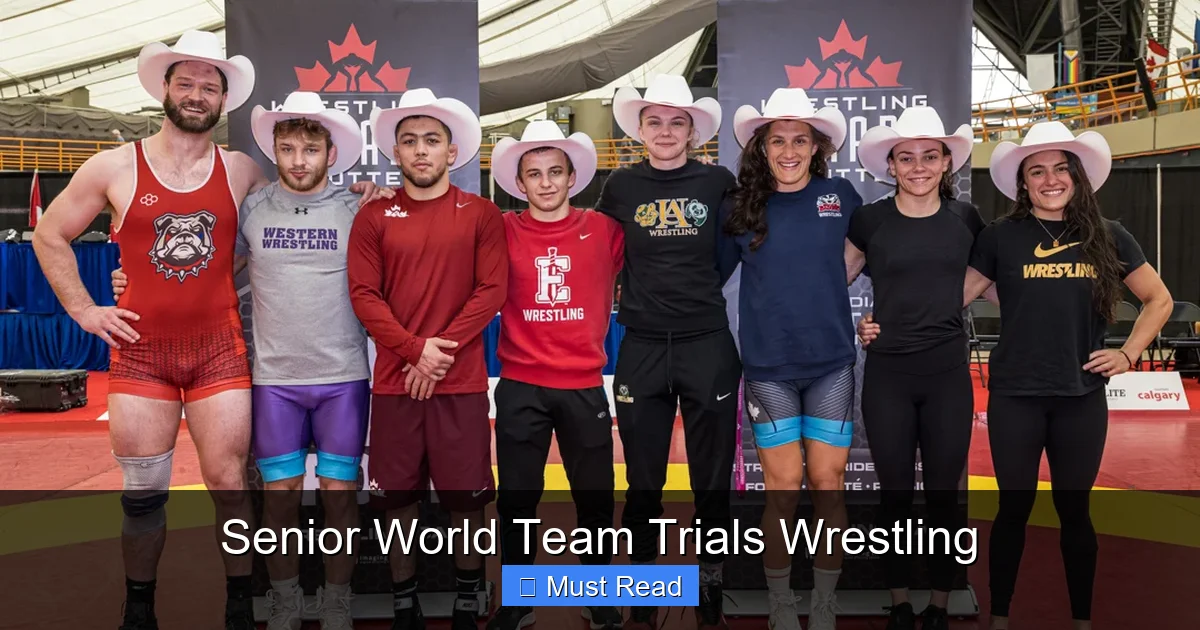
Visual guide about Senior World Team Trials Wrestling
Image source: wrestling.ca
The structure of the Senior World Team Trials wrestling event is designed to identify the most consistent and dominant wrestler in each weight class. While the exact format can vary slightly from year to year, the core principles remain consistent: fairness, rigor, and alignment with international standards.
Most weight classes follow a challenge tournament format. Here’s how it typically works: First, a single-elimination bracket is held, featuring athletes who have qualified through regional tournaments, national rankings, or previous achievements. The winner of this bracket earns the right to challenge the reigning U.S. National Champion in that weight class. If the champion is not the defending world team member, they may still hold the national title and thus earn the challenge spot.
Once the bracket winner is determined, they face the national champion in a best-of-three match series. Each match is scored under UWW (United World Wrestling) rules, with three two-minute periods. The first wrestler to win two matches claims the world team spot. This format prevents fluke victories and ensures that the final selection is based on sustained performance under pressure.
For example, in the 2023 Trials, Olympic silver medalist Kyle Snyder faced off against rising star Mason Parris in the 125-pound freestyle division. Snyder, as the defending national champion, entered the challenge round. Parris won the tournament bracket and defeated Snyder in two straight matches, earning his spot on the world team. This kind of upset is rare but possible—and it’s what makes the Trials so compelling.
In some cases, especially when the national champion is also the reigning world champion or has recently medaled at the World Championships, they may be granted an automatic spot on the world team. This is known as a “bye” or “protected status,” and it allows them to skip the Trials. However, this is the exception, not the rule, and most athletes must earn their spot through competition.
The Trials also include a consolation bracket for athletes who lose in the early rounds. While these matches don’t determine the world team representative, they offer valuable experience and can contribute to national rankings. Additionally, performance at the Trials can impact an athlete’s seeding in future international competitions and their eligibility for funding and training support from USA Wrestling.
Weight Classes and Eligibility

Visual guide about Senior World Team Trials Wrestling
Image source: wrestling.ca
The Senior World Team Trials wrestling event features a standardized set of weight classes that align with international competition. These divisions ensure fair matchups and allow athletes to compete against others of similar size and strength. Both freestyle and Greco-Roman styles use the same weight classes, though the techniques and strategies differ significantly.
As of the most recent UWW standards, the senior men’s weight classes are:
– 57 kg (125.7 lbs)
– 61 kg (134.5 lbs)
– 65 kg (143.3 lbs)
– 70 kg (154.3 lbs)
– 74 kg (163.1 lbs)
– 79 kg (174.2 lbs)
– 86 kg (189.6 lbs)
– 92 kg (202.8 lbs)
– 97 kg (213.8 lbs)
– 125 kg (275.6 lbs)
For women’s freestyle (the only style available to female athletes at the senior level), the weight classes are:
– 50 kg (110.2 lbs)
– 53 kg (116.8 lbs)
– 55 kg (121.3 lbs)
– 57 kg (125.7 lbs)
– 59 kg (130.1 lbs)
– 62 kg (136.7 lbs)
– 65 kg (143.3 lbs)
– 68 kg (149.9 lbs)
– 72 kg (158.7 lbs)
– 76 kg (167.6 lbs)
Eligibility for the Senior World Team Trials is based on several factors. Athletes must be U.S. citizens and meet age requirements—typically 18 years or older, though exceptions can be made for younger athletes with elite status. They must also be in good standing with USA Wrestling and have competed in sanctioned events.
Qualification paths vary. Some athletes earn their spot through high finishes at the U.S. Open, while others qualify via regional trials or national rankings. In some cases, former Olympians or world medalists may receive automatic entry based on their past performance. However, even top athletes must often compete in the Trials unless they’ve been granted a protected status.
It’s important to note that the Trials are not just for veterans. Young athletes fresh out of college—or even high school—can and do compete. For example, Gable Steveson, a two-time NCAA champion and Olympic gold medalist, made his senior debut at the Trials just months after graduating from high school. His performance showcased the depth of talent in American wrestling and the accessibility of the senior level to emerging stars.
The Athletes: Who Competes and Why It Matters

Visual guide about Senior World Team Trials Wrestling
Image source: d2779tscntxxsw.cloudfront.net
The athletes who compete in the Senior World Team Trials wrestling event represent the absolute elite of American wrestling. These are individuals who have dedicated their lives to the sport, often training six or seven days a week, year-round. Many have Olympic aspirations, while others are chasing world medals, national recognition, or simply the pride of representing their country.
Among the competitors are household names in the wrestling world. Kyle Snyder, Jordan Burroughs, Adeline Gray, and David Taylor are just a few of the stars who have used the Trials as a springboard to international success. Snyder, for instance, won his first world team spot at the 2015 Trials and went on to become a three-time world champion and Olympic gold medalist. His journey began with a grueling best-of-three series against Nick Gwiazdowski—a match that tested his endurance and mental toughness.
But the Trials aren’t just for established stars. They’re also a launching pad for the next generation. Athletes like Spencer Lee, a three-time NCAA champion, used the Trials to transition from college dominance to senior-level success. In 2022, Lee won the 61 kg freestyle world team spot, defeating veteran wrestler Zain Retherford in a thrilling challenge series. His victory signaled a changing of the guard and proved that young talent can compete—and win—at the highest level.
The diversity of competitors is also noteworthy. Wrestlers come from all backgrounds: military academies, major universities, private clubs, and even self-coached training groups. Some are full-time athletes supported by USA Wrestling’s national team program, while others balance training with jobs, families, or education. This blend of experience and dedication creates a uniquely American wrestling culture—one that values hard work, resilience, and community.
For many athletes, the Trials are more than just a competition; they’re a rite of passage. The pressure is immense. A single loss can end a world championship dream. The emotional toll is real, but so is the reward. Making the world team means access to elite training camps, international competition, and the chance to compete for a world title. It’s a life-changing opportunity.
Training and Preparation for the Trials
Preparing for the Senior World Team Trials wrestling event is no small feat. Athletes typically begin their training cycle months in advance, focusing on strength, conditioning, technique, and mental preparation. The goal is to peak at the right time—during the Trials—while avoiding injury or burnout.
A typical training regimen includes daily mat sessions, weightlifting, cardio, and recovery work. Wrestlers often train twice a day, with morning sessions dedicated to technique and live wrestling, and afternoon sessions focused on strength and conditioning. Many work with personal coaches, nutritionists, and sports psychologists to optimize their performance.
One key aspect of preparation is style-specific drilling. Freestyle wrestlers spend hours practicing leg attacks, sprawls, and takedowns, while Greco-Roman athletes focus on throws, lifts, and par terre techniques. Video analysis is also common, allowing athletes to study opponents and refine their strategies.
Mental preparation is just as important. The Trials are as much a psychological battle as a physical one. Athletes use visualization, meditation, and goal-setting to stay focused under pressure. Many work with sports psychologists to develop coping strategies for high-stress situations, such as losing the first match in a best-of-three series.
Nutrition and recovery are also critical. Wrestlers must maintain their weight while fueling intense training. This often involves careful meal planning, hydration, and supplementation. Recovery methods like ice baths, massage, and sleep optimization help prevent overtraining and injuries.
For example, Olympic champion Helen Maroulis, who won the 2023 world team spot in the 57 kg freestyle division, credits her success to a holistic approach. “It’s not just about being strong or fast,” she says. “It’s about being smart, staying healthy, and believing in yourself when no one else does.”
The Impact of the Trials on American Wrestling
The Senior World Team Trials wrestling event plays a vital role in the development and visibility of the sport in the United States. By showcasing elite competition in a high-stakes environment, the Trials inspire young wrestlers, attract media attention, and strengthen the national wrestling community.
One of the most significant impacts is the exposure it provides. While wrestling may not have the mainstream popularity of football or basketball, the Trials are broadcast on platforms like FloWrestling and USA Wrestling’s YouTube channel, reaching thousands of fans. This visibility helps grow the sport, especially among younger audiences.
The Trials also serve as a talent pipeline for international success. Many of the athletes who emerge from the Trials go on to win medals at the World Championships, Pan American Games, and even the Olympics. Their achievements bring pride to the nation and validate the hard work of coaches, clubs, and families.
Moreover, the Trials foster a sense of unity and competition within the wrestling community. Athletes from rival colleges or clubs come together to compete for a common goal: representing the U.S. This shared purpose strengthens bonds and promotes sportsmanship.
Finally, the Trials drive innovation in training and technique. As athletes push the boundaries of what’s possible, they inspire new strategies, styles, and training methods. This constant evolution keeps American wrestling competitive on the world stage.
Conclusion
The Senior World Team Trials wrestling event is more than just a tournament—it’s a cornerstone of American wrestling excellence. It’s where legends are made, dreams are realized, and the future of the sport is shaped. From the grueling challenge matches to the emotional victories, the Trials embody the spirit of wrestling: tough, honest, and unrelenting.
For athletes, it’s the ultimate test. For fans, it’s must-watch action. And for the sport, it’s a vital link to the global stage. Whether you’re a seasoned fan or new to wrestling, the Senior World Team Trials offer a front-row seat to one of the most intense and inspiring competitions in amateur sports.
Frequently Asked Questions
What is the purpose of the Senior World Team Trials?
The Senior World Team Trials determine which wrestlers will represent the United States at the World Wrestling Championships. It’s the final selection event for the U.S. National Team in both freestyle and Greco-Roman styles.
How do wrestlers qualify for the Trials?
Wrestlers can qualify through high finishes at the U.S. Open, regional trials, national rankings, or by being reigning national champions. Some elite athletes may receive automatic entry based on past achievements.
What’s the difference between freestyle and Greco-Roman wrestling at the Trials?
Freestyle allows leg attacks and defense, while Greco-Roman prohibits any holds below the waist. Both styles are contested at the Trials, testing different technical skills and strategies.
Is the Trials format the same every year?
The core format—challenge matches and best-of-three series—remains consistent, but details like location, scheduling, and protected athlete status can vary slightly from year to year.
Can young athletes compete in the Senior World Team Trials?
Yes, athletes as young as 18 can compete, provided they meet eligibility requirements. Some high school graduates have successfully made the world team shortly after finishing school.
What happens if a wrestler loses at the Trials?
Losing wrestlers may still earn national ranking points, gain valuable experience, and remain eligible for future competitions. Some go on to compete in other international events or prepare for the next Trials cycle.