
Senior Dog Quality of Life Calculator


Big Button Mobile Phone

Electric Kettle with Auto Shutoff

Jar Opener for Weak Hands
Deciding how best to care for an aging dog can be heartbreaking and confusing. A senior dog quality of life calculator helps pet owners evaluate key factors like pain, appetite, and mobility to make compassionate, informed choices about their dog’s well-being.
Watching your beloved dog grow older is one of the most bittersweet experiences of pet ownership. One day they’re bounding up the stairs with endless energy; the next, they hesitate at the bottom, tail wagging but legs trembling. You notice they sleep more, eat less, or seem disoriented at times. Your heart aches—not just from love, but from uncertainty. How do you know if they’re still happy? Are they in pain? Is it time to consider harder choices?
This is where a senior dog quality of life calculator can offer profound peace of mind. It’s not a magic wand, nor a substitute for your vet’s expertise—but it’s a thoughtful, structured way to evaluate your dog’s day-to-day experience. Think of it as a compassionate checklist that turns vague worries into concrete observations. By scoring areas like mobility, appetite, and mental engagement, you gain a clearer picture of whether your dog is truly thriving… or quietly suffering.
And here’s the good news: you’re not alone in this journey. Veterinarians, animal welfare organizations, and pet care advocates have developed these tools specifically to support loving owners like you. Whether your dog is 8 or 16, using a quality of life calculator doesn’t mean you’re giving up—it means you’re stepping up. You’re choosing to honor their life by ensuring their final chapters are filled with dignity, comfort, and as much joy as possible.
Key Takeaways
- What It Is: A senior dog quality of life calculator is a tool—often a scoring system or checklist—that helps assess your dog’s overall well-being in their golden years.
- Why It Matters: As dogs age, they face health challenges that can affect comfort and happiness; this tool brings clarity during difficult decisions.
- Common Factors Evaluated: Pain levels, appetite, mobility, hygiene, mental alertness, and ability to enjoy daily activities are typically measured.
- Not a Replacement for Vet Care: While helpful, these calculators should always be used alongside professional veterinary advice.
- Empowers Pet Owners: Provides structure and objectivity, reducing emotional bias when evaluating end-of-life care options.
- Free & Accessible Tools Exist: Many reputable organizations offer downloadable or online versions at no cost.
- Regular Use Is Key: Tracking changes over time offers better insight than a one-time assessment.
📑 Table of Contents
- What Is a Senior Dog Quality of Life Calculator?
- Why Every Senior Dog Owner Should Consider Using One
- Key Factors the Calculator Evaluates
- How to Use a Senior Dog Quality of Life Calculator Effectively
- Common Misconceptions About Quality of Life Calculators
- Real-Life Examples: How Owners Used the Calculator
- Where to Find Reliable Senior Dog Quality of Life Calculators
- Final Thoughts: Making Peace with Difficult Decisions
What Is a Senior Dog Quality of Life Calculator?
At its core, a senior dog quality of life calculator is a systematic framework designed to help pet owners assess how well their aging dog is coping with life. It typically involves rating specific aspects of your dog’s daily existence—such as pain, appetite, mobility, and mental state—on a numerical scale (often 1 to 10). These scores are then tallied to provide an overall snapshot of your dog’s well-being.
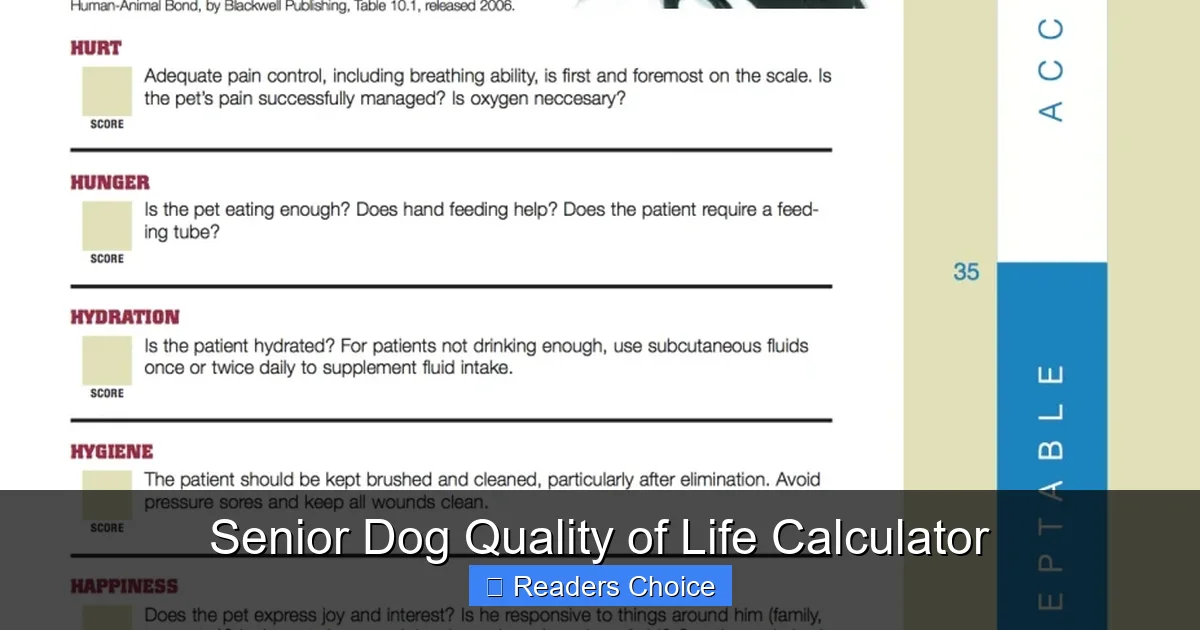
The most widely recognized version is the **HHHHHMM Scale**, created by Dr. Alice Villalobos. It stands for:
– Hurt (pain control)
– Hunger (ability to eat)
– Hydration (access to water and kidney function)
– Hygiene (ability to stay clean)
– Happiness (emotional state)
– Mobility (ability to move comfortably)
– More Good Days Than Bad
Each category is scored individually, and the total helps guide decisions about treatment, palliative care, or humane euthanasia. Other versions may include additional factors like sleep quality, social interaction, or response to medication.
Importantly, these calculators aren’t meant to diagnose disease—that’s your vet’s job. Instead, they focus on *quality*, not quantity, of life. A dog might live longer with medical intervention, but if every day is filled with discomfort, confusion, or isolation, is that truly a life worth extending? The calculator helps you answer that question with empathy and evidence, not just emotion.
Why Every Senior Dog Owner Should Consider Using One

Visual guide about Senior Dog Quality of Life Calculator
Image source: og-imgs.omnicalculator.com
Let’s be honest: talking about your dog’s declining health is hard. Emotions run high, guilt creeps in, and it’s easy to second-guess yourself. Did I miss a sign? Should I have acted sooner? Am I being selfish by keeping them alive—or by letting them go?
A senior dog quality of life calculator cuts through the noise. It gives you a neutral, repeatable method to track changes over time. Instead of relying on gut feelings or fleeting moments of happiness (like when they wag their tail at dinner), you’re documenting consistent patterns. This objectivity is especially valuable when discussing options with your veterinarian or family members who may have different perspectives.
Consider this real-life example: Sarah’s 14-year-old Labrador, Max, had been diagnosed with arthritis and mild cognitive decline. Some days he seemed fine—he’d greet her at the door and eat his food. But other days, he couldn’t stand without help, panted constantly, and soiled himself indoors. Sarah didn’t know whether to pursue more aggressive pain management or consider euthanasia. After using a quality of life calculator weekly for three weeks, she noticed Max’s “Hurt” and “Mobility” scores were consistently below 3, while his “Happiness” score hovered around 4. The data confirmed her fears: Max was suffering more than he was enjoying life. With her vet’s support, she made the compassionate choice to let him go—surrounded by love, and with clarity that it was the right decision.
Beyond end-of-life decisions, these tools also help optimize care. If your dog’s “Hunger” score drops, you might try warming their food or switching to a softer diet. A low “Hydration” score could prompt a check for kidney issues. In short, the calculator isn’t just for saying goodbye—it’s for saying “I see you, and I’m doing everything I can to make you comfortable.”
Key Factors the Calculator Evaluates
Visual guide about Senior Dog Quality of Life Calculator
Image source: toegrips.com
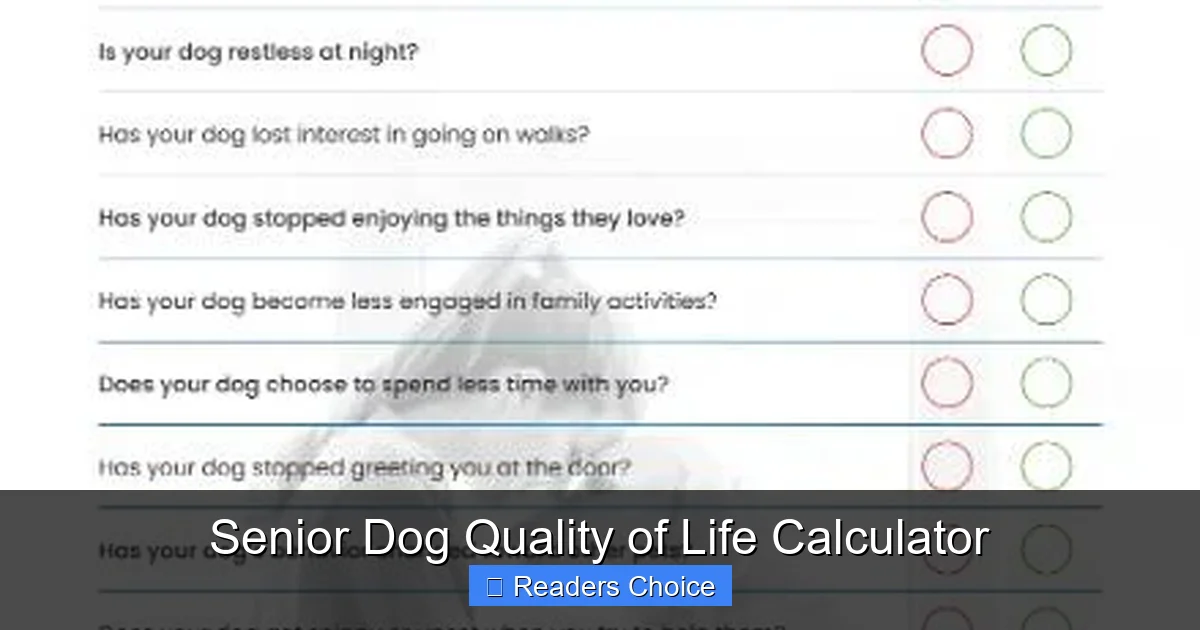
Understanding what goes into a senior dog quality of life calculator helps you use it effectively. While models vary slightly, most focus on these core domains:
Pain and Discomfort (Hurt)
This is often the most critical factor. Chronic pain—from arthritis, cancer, or organ disease—can silently erode a dog’s spirit. The calculator asks: Is your dog showing signs of pain? Do they flinch when touched? Pant excessively? Avoid movement? Are pain medications helping? A score below 5 usually indicates significant discomfort that needs immediate attention.
Appetite and Nutrition (Hunger)
Dogs who stop eating are sending a clear signal. The tool evaluates whether your dog eats willingly, needs encouragement, or refuses food altogether. It also considers if they’re maintaining weight or losing muscle mass. Remember: a dog who only eats when hand-fed or tempted with high-value treats may still be experiencing nausea or pain.
Hydration and Kidney Function
Dehydration is common in senior dogs, especially those with kidney disease. The calculator looks at water intake, skin elasticity, and whether your dog is able to drink without assistance. Frequent urination or accidents can also signal underlying issues affecting comfort.
Mobility and Physical Function
Can your dog stand up easily? Walk without limping? Climb stairs or get into the car? Do they struggle to rise after lying down? Mobility isn’t just about exercise—it’s about basic dignity. A dog who can’t move freely often becomes anxious, depressed, or isolated.
Hygiene and Self-Care
As dogs age, they may lose the ability to groom themselves or control bladder/bowel function. The calculator assesses whether your dog stays clean, or if they require frequent cleaning due to accidents. While some assistance is normal, constant soiling can lead to skin infections and distress.
Mental Alertness and Emotional Well-Being (Happiness)
This is perhaps the hardest to quantify—but vital. Does your dog recognize familiar people? Respond to sounds or commands? Seek out interaction, or hide away? Signs of cognitive dysfunction (like pacing at night or getting stuck in corners) lower the happiness score. Conversely, a dog who still enjoys short walks, gentle pets, or watching birds from the window is likely experiencing moments of joy.
Overall Daily Experience
Many calculators include a final question: Are there more good days than bad? If your dog has 4 good days and 3 bad ones in a week, that’s manageable. But if bad days outnumber good ones—especially if the bad days involve severe pain or distress—it’s a red flag.
How to Use a Senior Dog Quality of Life Calculator Effectively
Visual guide about Senior Dog Quality of Life Calculator
Image source: veterinarypracticenews.com
Using the tool correctly makes all the difference. Here’s a step-by-step guide to get the most accurate, helpful results:
Choose a Reputable Calculator
Start with trusted sources like the HHHHHMM Scale (available through veterinary oncology networks), the Lap of Love Quality of Life Scale, or tools from organizations like the American Animal Hospital Association (AAHA). Avoid random online quizzes—stick to vet-approved versions.
Score Weekly (or More Often if Needed)
Don’t just use it once. Track your dog’s scores over time. A single bad day doesn’t tell the whole story—but a downward trend does. Keep a simple journal or use a notes app on your phone to record dates and scores.
Involve Your Veterinarian
Share your results with your vet during check-ups. They can help interpret scores in the context of your dog’s medical history and suggest adjustments to care. For example, a low “Hurt” score might prompt a change in pain medication dosage.
Be Honest and Observant
It’s tempting to give your dog the benefit of the doubt—to assume they’re “just tired” or “having an off day.” But the calculator works best when you’re brutally honest. Note subtle changes: less interest in toys, slower responses, increased sleeping. These are data points, not criticisms.
Use It as a Conversation Starter
If you’re struggling with a decision, the calculator can help you articulate your concerns to family members or your vet. Instead of saying, “I think it’s time,” you can say, “Over the past two weeks, his mobility score dropped from 6 to 2, and his happiness score is consistently below 4. What do you think?”
Adjust Care Based on Scores
Low scores don’t always mean end-of-life decisions. They might mean it’s time for:
– Better pain management
– Physical therapy or hydrotherapy
– A raised food/water bowl to reduce strain
– More frequent potty breaks
– Cognitive enrichment (puzzle toys, gentle training)
Common Misconceptions About Quality of Life Calculators
Despite their usefulness, these tools are often misunderstood. Let’s clear up some myths:
“It’s Only for Dogs Near Death”
False! You can—and should—use a quality of life calculator as soon as your dog enters their senior years (typically around 7–9, depending on breed). Early use helps establish a baseline and catch declines before they become severe.
“It Forces You to Euthanize”
Not true. The calculator doesn’t dictate outcomes—it informs them. Many owners use it to justify pursuing aggressive treatment because their dog’s scores show strong quality of life. Others use it to feel confident in choosing comfort care over curative measures.
“It’s Too Clinical or Cold”
On the contrary, it’s an act of deep love. By systematically evaluating your dog’s experience, you’re honoring their needs above your own emotions. It’s compassionate, not clinical.
“Only Vets Should Use It”
While vets can guide interpretation, pet owners are the best judges of daily behavior. You see your dog nap, eat, greet you—every single day. Your observations are invaluable.
“One Bad Score Means It’s Over”
No. Look at trends, not single data points. A dog with a temporary illness (like a urinary tract infection) might score low for a few days but rebound quickly. Context matters.
Real-Life Examples: How Owners Used the Calculator
Case 1: Bella the Beagle
Bella, age 13, had severe hip dysplasia and was on daily pain meds. Her owner, Maria, used the HHHHHMM Scale every Sunday. For months, Bella’s scores stayed around 6–7. Then, after a fall, her “Mobility” score dropped to 2, and “Hurt” fell to 3. Maria consulted her vet, who adjusted Bella’s medication and recommended acupuncture. Within two weeks, scores improved to 5–6. The calculator helped Maria advocate for better care—not give up.
Case 2: Rocky the Mixed Breed
Rocky, 15, had heart failure and kidney disease. His “Hunger” and “Hydration” scores were low, and he often seemed confused. His owner, James, tracked scores for a month. The trend showed steady decline, with “More Good Days Than Bad” shifting to “More Bad Days.” With his vet’s support, James chose euthanasia. He later said, “The calculator didn’t make the decision for me—but it helped me stop delaying the inevitable out of guilt.”
Case 3: Luna the Poodle
Luna, 11, had mild arthritis but remained playful. Her owner used the calculator monthly and noticed her “Happiness” score stayed high (8–9) even as mobility dipped slightly. This encouraged continued walks, grooming, and social time—proving that age doesn’t have to mean decline.
Where to Find Reliable Senior Dog Quality of Life Calculators
You don’t need to create one from scratch. Here are trusted, free resources:
– **Lap of Love Quality of Life Scale**: Available on their website (lapoflove.com), this downloadable PDF includes clear instructions and scoring guidelines.
– **HHHHHMM Scale by Dr. Alice Villalobos**: Widely used in veterinary oncology; search “HHHHHMM scale PDF” for printable versions.
– **AAHA Senior Care Guidelines**: While not a calculator per se, the American Animal Hospital Association’s guidelines include assessment checklists for senior pets.
– **Vet Clinics and Hospice Services**: Many veterinary hospitals and pet hospice organizations provide customized tools during consultations.
Always download from official sites to ensure accuracy. Avoid apps or websites that charge money for basic calculators—these should be freely available as a service to pet owners.
Final Thoughts: Making Peace with Difficult Decisions
Caring for a senior dog is an act of profound love—and sometimes, profound sorrow. The senior dog quality of life calculator won’t eliminate that sorrow, but it can bring clarity, reduce guilt, and help you focus on what truly matters: your dog’s comfort and dignity.
Remember, there’s no “perfect” score or magic number that dictates action. Every dog is unique. What matters most is that you’re paying attention, staying informed, and making choices rooted in compassion—not fear, not hope, not societal pressure.
If you’re unsure where to start, begin today. Print a calculator, sit with your dog, and observe. Note their breathing, their eyes, the way they respond to your voice. Score them honestly. Talk to your vet. And above all, give yourself grace. You’re doing your best for a loyal friend who gave you their whole heart.
In the end, the greatest gift you can give your senior dog isn’t more time—it’s better time. And a quality of life calculator helps you ensure that every moment counts.
Frequently Asked Questions
What is a senior dog quality of life calculator?
A senior dog quality of life calculator is a tool that helps pet owners assess their aging dog’s well-being by scoring factors like pain, appetite, mobility, and happiness. It provides an objective way to evaluate daily comfort and guide care decisions.
At what age should I start using a quality of life calculator?
You can start using one as soon as your dog enters their senior years—typically around 7 to 9 years old, depending on breed size. Early use helps establish a baseline and track changes over time.
Can a quality of life calculator replace my vet’s advice?
No, it should never replace professional veterinary care. Instead, use it as a supplement to discussions with your vet, helping you communicate observations and concerns more clearly.
What if my dog has one low score but others are high?
Look at the overall trend, not isolated scores. A single low score might indicate a temporary issue or a specific problem that can be addressed—like adjusting pain medication or diet—without major lifestyle changes.
How often should I use the calculator?
Most experts recommend scoring weekly. If your dog’s condition is stable, monthly checks may suffice. Increase frequency during health declines or after treatment changes.
Is it too late to use a calculator if my dog is very ill?
It’s never too late. Even in advanced illness, the calculator can help you evaluate whether palliative care is improving comfort or if it’s time to consider humane euthanasia with peace of mind.