
Senior Business Analyst Job Responsibilities


Raised Toilet Seat

Upright Walker

Weighted Blanket
A Senior Business Analyst plays a critical role in bridging business needs with technical solutions. They analyze complex processes, identify improvement opportunities, and support decision-making across departments. With experience in tools like SQL, Excel, and project management software, they guide teams toward efficiency and growth. This position demands strong communication skills and a strategic mindset to align data insights with organizational goals.
Key Takeaways
- Strategic Analysis: Senior Business Analysts evaluate business processes and recommend improvements using data-driven insights to enhance performance.
- Stakeholder Collaboration: They work closely with executives, IT teams, and department heads to gather requirements and ensure alignment on project goals.
- Data Interpretation & Reporting: These professionals translate raw data into actionable reports, dashboards, and visualizations for leadership and team use.
- Process Optimization: By identifying inefficiencies, they help streamline workflows, reduce costs, and improve customer or client satisfaction.
- Project Leadership: Senior roles often include leading cross-functional initiatives, managing timelines, and ensuring successful delivery of business solutions.
- Technology Proficiency: Expertise in tools like SQL, Power BI, Jira, and Agile methodologies is essential for effective execution.
- Decision Support: Their primary value lies in providing timely, accurate information that supports high-level strategic and operational decisions.
Key Takeaways
- Understanding senior business analyst job responsibilities: Provides essential knowledge
📑 Table of Contents
- Introduction: What Does a Senior Business Analyst Do?
- 1. Strategic Business Analysis and Problem Solving
- 2. Stakeholder Management and Communication
- 3. Data Collection, Analysis, and Reporting
- 4. Process Improvement and Optimization
- 5. Project Leadership and Coordination
- 6. Technology Integration and Tool Proficiency
- Conclusion: Why Senior Business Analysts Drive Organizational Success
- FAQS
Introduction: What Does a Senior Business Analyst Do?
In today’s fast-paced business environment, companies rely heavily on data to make smart decisions. At the heart of this transformation sits the Senior Business Analyst—a professional who doesn’t just collect numbers but turns them into meaningful strategies. Whether it’s improving customer experiences, cutting operational waste, or launching new products, the Senior Business Analyst ensures that every initiative is grounded in clear, logical analysis.
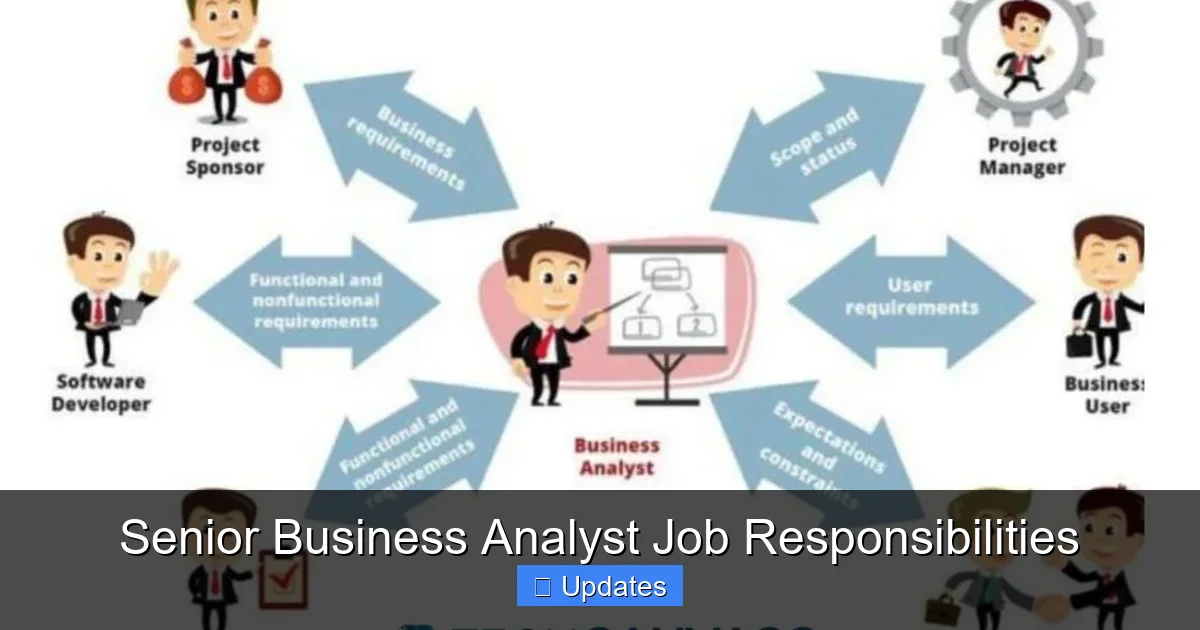
Unlike entry-level analysts who focus more on gathering data and running routine reports, a Senior Business Analyst takes on greater responsibility. They lead projects from conception to completion, influence organizational strategy, and communicate findings to both technical teams and top executives. Think of them as the bridge between what the business wants and how it can be achieved using technology and process improvements.
This article dives deep into the core senior business analyst job responsibilities, exploring everything from day-to-day tasks to long-term impact. You’ll also find practical tips, real-world examples, and insights into how this role evolves in different industries. Whether you’re considering becoming one or hiring one, understanding these duties is crucial.
1. Strategic Business Analysis and Problem Solving
One of the most important aspects of a Senior Business Analyst’s job is their ability to think strategically. They don’t just react to problems—they anticipate them and design solutions before issues become crises.
Identifying Business Needs
Every major project begins with understanding what the business truly needs. A Senior Business Analyst starts by engaging with stakeholders across departments—marketing, finance, operations—to uncover pain points and opportunities. For example, if sales are declining in a specific region, the analyst might dig into market trends, competitor actions, and internal performance metrics to pinpoint root causes.
They use techniques like SWOT analysis (Strengths, Weaknesses, Opportunities, Threats) and gap analysis to compare current performance against desired outcomes. This helps leadership prioritize initiatives that offer the highest return on investment.
Developing Solutions
Once a problem is identified, the Senior Business Analyst designs potential solutions. This could involve proposing a new software system, redesigning a workflow, or introducing automation tools. They create detailed documentation outlining benefits, risks, and implementation steps. For instance, if inventory management is inefficient, they might recommend integrating an ERP system that syncs real-time data across warehouses and retail locations.
Importantly, they validate their ideas through prototypes or pilot programs before full rollout. This reduces risk and gives teams confidence in the proposed change.
Example Scenario
Imagine a healthcare provider struggling with patient wait times. The Senior Business Analyst conducts time-motion studies, interviews staff, and reviews appointment logs. They discover that scheduling overlaps and underutilized resources are major bottlenecks. Based on this, they propose a centralized scheduling platform with automated reminders and dynamic resource allocation. After testing the solution in one clinic, wait times drop by 30%, validating the approach before company-wide deployment.
2. Stakeholder Management and Communication
No amount of brilliant analysis matters if no one understands or trusts it. That’s why communication is central to the Senior Business Analyst role.
Gathering Requirements
A big part of the job involves collecting accurate requirements from various stakeholders. This means asking the right questions, listening actively, and documenting everything clearly. Tools like user story mapping or requirement workshops help organize input and avoid misunderstandings.
For example, when working on a digital transformation project, the analyst might meet with customer service reps to understand their daily challenges, then translate those into functional specs for developers.
Presenting Findings
Senior Business Analysts must present complex information in simple terms. Whether delivering a PowerPoint deck to executives or a technical specification sheet to engineers, clarity is key. They use visuals like flowcharts, Gantt charts, and heat maps to make data accessible.
They also prepare for tough questions—like explaining trade-offs between cost, speed, and quality—and back up recommendations with solid evidence.
Building Trust
Because they interact with so many people, trust is earned daily. Being transparent about limitations, following through on commitments, and showing empathy go a long way. When stakeholders feel heard and respected, they’re more likely to support proposed changes.
3. Data Collection, Analysis, and Reporting
Data is the lifeblood of modern business analysis. But raw data alone isn’t useful—it has to be cleaned, interpreted, and presented effectively.
Data Sources
Senior Business Analysts pull data from multiple sources: CRM systems (like Salesforce), financial databases, web analytics, surveys, and even external market reports. They know which sources are reliable and how to clean inconsistent or missing data.
For instance, when analyzing customer churn, they might combine subscription records with support ticket logs to see if poor service leads to cancellations.
Analytical Techniques
Beyond basic reporting, they apply advanced methods such as regression analysis, forecasting, and predictive modeling. These help answer questions like “Will this marketing campaign increase revenue?” or “Which customers are at risk of leaving?”
They also leverage visualization tools like Tableau, Power BI, or even Excel pivot tables to turn numbers into stories that anyone can grasp.
Creating Dashboards
Dashboards are critical for ongoing monitoring. A well-designed dashboard lets managers check KPIs at a glance—such as monthly profit margins, employee productivity, or website traffic. The Senior Business Analyst ensures these dashboards update automatically and alert users to anomalies.
For example, a retail chain might track same-store sales in real time. If a store falls below target, the system flags it immediately so regional managers can investigate.
4. Process Improvement and Optimization
Efficiency saves money and boosts morale. One of the Senior Business Analyst’s main missions is finding ways to do more with less.
Mapping Current Processes
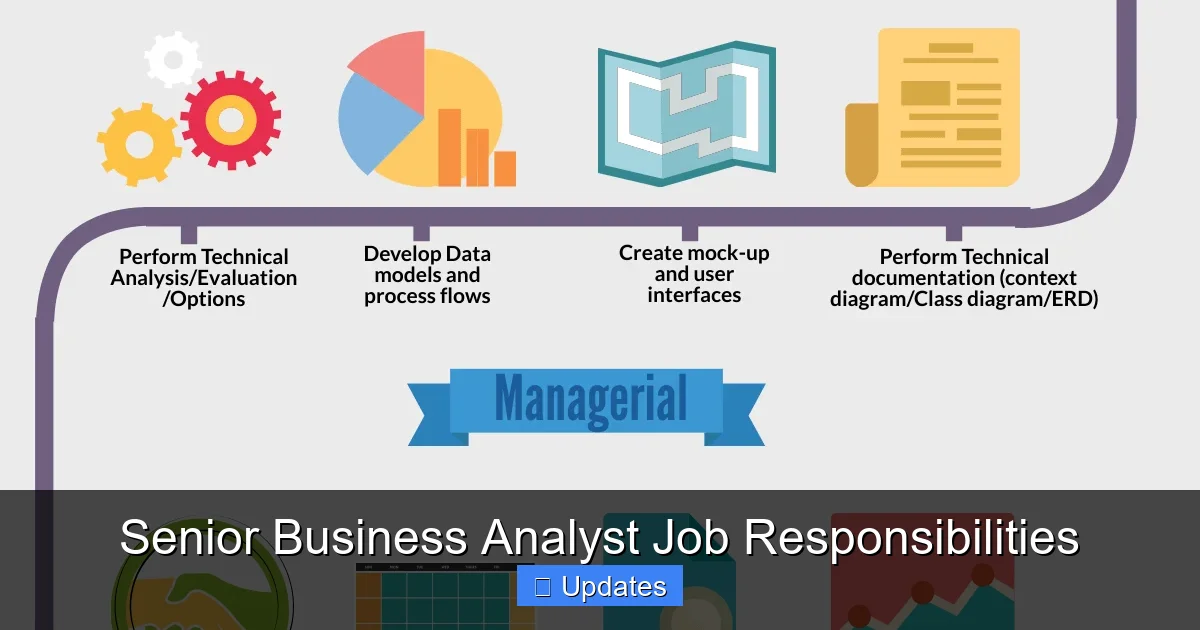
Before suggesting changes, they map out existing workflows. Using tools like BPMN (Business Process Model and Notation), they document each step, who’s involved, and where delays occur. Visual maps make it easy to spot redundancies or unnecessary handoffs.
For example, a loan approval process might involve five departments submitting forms manually. Mapping reveals that two steps could be eliminated or automated.
Designing Better Workflows
With a clear picture of current operations, the analyst redesigns processes for efficiency. This might mean introducing digital approvals, consolidating meetings, or reassigning responsibilities.
They also consider human factors—like training needs or resistance to change—when rolling out new procedures.
Measuring Impact
After implementing changes, they track results using metrics aligned with business goals. Did processing time decrease? Were errors reduced? Did employee satisfaction improve?
Continuous measurement allows for iterative refinement. If something isn’t working, they adjust quickly instead of sticking to a flawed plan.
5. Project Leadership and Coordination
As a senior-level role, much of the work involves overseeing projects rather than doing individual tasks.
Defining Scope and Timelines
When a new initiative launches—like launching an e-commerce platform—the Senior Business Analyst defines what success looks like, sets milestones, and assigns ownership. They break large projects into manageable phases with check-in points.
They also anticipate roadblocks and build contingency plans. For example, if a key vendor delays delivery, they identify alternatives early.
Facilitating Team Collaboration
They coordinate between developers, designers, marketers, and executives. Regular stand-ups, status reports, and shared documents keep everyone aligned.
Using Agile or Scrum frameworks, they manage sprints and adapt priorities based on feedback or changing business conditions.
Ensuring Quality Deliverables
From start to finish, they verify that outputs meet standards. This includes reviewing test cases, conducting user acceptance testing (UAT), and validating data accuracy.
Their oversight prevents costly mistakes—like launching a feature with bugs that frustrate customers.
6. Technology Integration and Tool Proficiency
Modern business analysts can’t rely only on spreadsheets. They need fluency in a range of technologies that support analysis and automation.
Core Tools
Common tools include:
– **SQL** for querying databases
– **Excel/Google Sheets** for modeling and quick calculations
– **Power BI/Tableau** for interactive dashboards
– **Jira/Trello** for task tracking
– **Visio/Lucidchart** for process mapping
– **Agile/Scrum platforms** for project management
Proficiency varies by industry. In tech-heavy sectors like fintech or SaaS, knowledge of APIs, cloud platforms (AWS/Azure), and scripting languages (Python/R) becomes valuable.
Leveraging Automation
Senior Business Analysts look for repetitive tasks that can be automated—like generating weekly reports or sending email alerts. Tools like Zapier or Microsoft Power Automate let them set up workflows without coding.
Automation frees up time for higher-value activities like strategic planning or innovation.
Staying Current
Technology evolves fast. Top performers continuously learn new tools and best practices. Attending webinars, earning certifications (e.g., CBAP from IIBA), or joining professional groups keeps them ahead of the curve.
Conclusion: Why Senior Business Analysts Drive Organizational Success
The role of a Senior Business Analyst is far more than crunching numbers—it’s about enabling smarter decisions, faster execution, and sustainable growth. From dissecting complex problems to guiding cross-functional teams, their influence spans every layer of an organization.
What makes this job especially rewarding is the blend of analytical rigor and interpersonal skill. It requires patience to explain technical details to non-experts, creativity to design elegant solutions, and leadership to drive change.
As businesses continue to digitize and compete globally, the demand for seasoned analysts who can connect strategy with execution will only grow. If you’re aiming for this career path, focus not just on mastering tools, but also on developing emotional intelligence, storytelling ability, and a results-oriented mindset.
Whether you’re already in the field or thinking about transitioning into it, embracing the full scope of senior business analyst job responsibilities sets you apart. And remember: great analysts don’t just report the facts—they shape the future.
FAQS
What qualifications are needed to become a Senior Business Analyst?
Most employers require a bachelor’s degree in business, computer science, or a related field, plus 5+ years of experience. Certifications like CBAP or PMI-PBA are highly valued. Strong analytical and communication skills are essential.
Visual guide about Senior Business Analyst Job Responsibilities
Image source: businessanalyst.techcanvass.com
Visual guide about Senior Business Analyst Job Responsibilities
Image source: thebusinessanalystjobdescription.com

Visual guide about Senior Business Analyst Job Responsibilities
Image source: asset.velvetjobs.com
How does a Senior Business Analyst differ from a junior role?
Seniors take on leadership responsibilities—managing projects, influencing strategy, and mentoring others. While juniors focus on data collection and basic reporting, seniors drive end-to-end solutions and present findings to executive teams.
Can someone transition into this role from another profession?
Yes! Many come from project management, finance, or IT. Relevant experience, strong analytical abilities, and certifications can ease the transition. Highlighting transferable skills like problem-solving and stakeholder engagement helps.
What industries hire Senior Business Analysts?
Almost all—especially healthcare, finance, retail, tech, and government. Demand is particularly strong in sectors undergoing digital transformation or regulatory changes requiring compliance expertise.
What soft skills are most important for success?
Communication, active listening, adaptability, and emotional intelligence top the list. You must collaborate across cultures, manage conflict, and present complex ideas simply under pressure.
How do Senior Business Analysts measure success?
They track KPIs tied to project goals—such as cost savings, improved efficiency, increased revenue, or higher customer satisfaction. Long-term impact includes sustained ROI and positive feedback from stakeholders.
Frequently Asked Questions
What is senior business analyst job responsibilities?
senior business analyst job responsibilities is an important topic with many practical applications.
