
Seat Cane Explained: Uses, Benefits & Safety Tips


Large Display Clock with Date

Book Holder Stand

Orthopedic Sandals
Quick Answer
A seat cane is a walking cane that incorporates a small fold-out seat, allowing the user to take short rest breaks while out and about. It can be useful for someone who needs light walking support and occasional sitting, but it is not automatically suitable for people who need substantial balance assistance or a full-sized, stable chair.
What Is a Seat Cane?
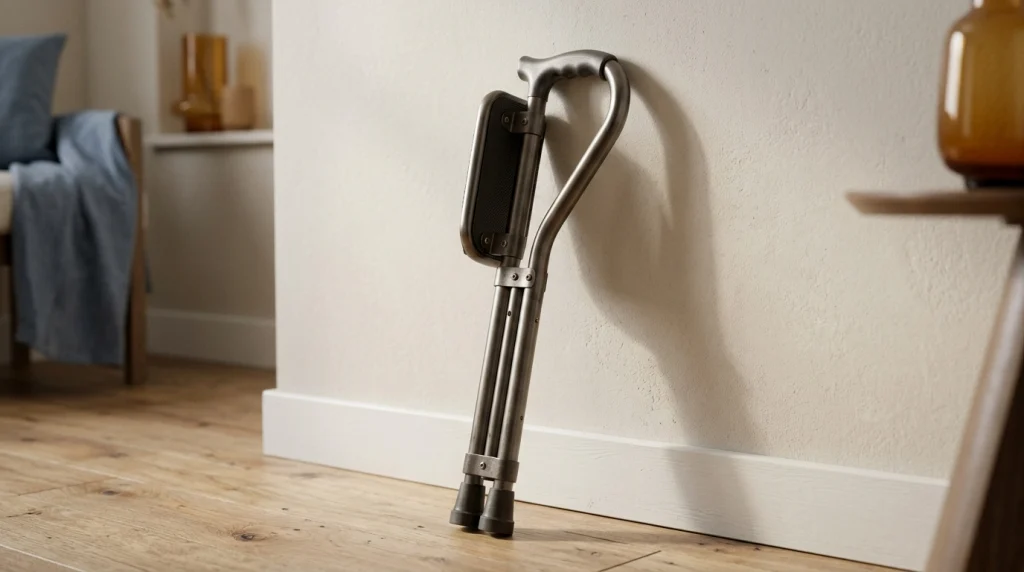
A seat cane is a mobility aid that combines a walking stick with a compact seat. Depending on the design, its seat folds out from the cane or forms part of a small tripod-style frame. When the seat is folded away, the device can be carried or used as a walking aid according to the manufacturer’s instructions.
The main purpose is convenience: a person can walk a short distance, stop when tired, and have somewhere to sit without carrying a separate chair. This can be helpful during outdoor activities, waiting in queues, visiting public places, or attending events where seating may not be readily available.
Seat canes are sometimes called cane seats, folding seat canes, or walking sticks with seats. Names and designs vary, so the important distinction is whether a particular model is intended to provide walking support, sitting support, or both.
A seat cane is not the same as a standard walking cane. An ordinary cane offers a handhold and an additional point of support while walking. A seat cane adds a resting option, but its compact structure may create limitations in comfort, stability, and weight capacity.
How Does a Seat Cane Work?
A seat cane generally has a handle, a shaft or frame, ground-contact tips, and a seat that folds into position. Some models use three legs to form a small seat; others have different folding mechanisms. The exact arrangement depends on the manufacturer.
In walking mode, the seat is folded and secured as directed by the instructions. The device then functions as a walking aid only if its design permits that use. Before sitting, the user must stop walking and deploy the seat completely on suitable ground.
How the folding mechanism affects safety
The locking mechanism matters because a seat that looks open may not be fully secured. Adjustable legs, push buttons, hinges, or other locking components must be correctly positioned before the user sits down.
For example, if a model has adjustable legs, all legs must be set to the required height and all locking buttons must engage. An uneven setup can cause the seat to tilt or shift under load.
Once seated, the user should follow the model’s instructions for hand placement and posture. Some designs specify that the handle must remain in front of the user. Do not assume that every seat cane can support the same amount of weight or be used in the same way.
Who Can Benefit From a Seat Cane?
A seat cane may suit someone who can already walk reasonably safely with a cane or similar aid but occasionally needs to rest. It is particularly useful when carrying a separate portable chair would be inconvenient.
Potential users include:
- Older adults who tire during outings: A portable seat may provide an occasional place to rest between short walks.
- People attending outdoor events: A seat cane may help when benches are spaced far apart or seating is limited.
- Visitors to large public spaces: It can be convenient during short trips involving queues or periods of standing.
- People who prefer a compact mobility aid: A folding design may be easier to transport than a separate chair and walking stick.
However, age alone does not determine whether a seat cane is appropriate. The user must be able to handle the device, position it correctly, sit down safely, and stand up again without relying on an unstable structure.
Someone with frequent falls, significant leg weakness, severe balance problems, or difficulty controlling their movements may need a more supportive mobility aid. A physical therapist or other qualified healthcare professional can help assess the safest option.
What Are the Main Benefits and Limitations?
The main advantage of a seat cane is that it combines two functions in one portable device. Its limitations come from the same compact design: the seat is usually small, and the walking and sitting functions require different setups.
| Feature | Potential benefit | Limitation |
|---|---|---|
| Portable seat | Provides a place for short breaks. | The seat may be small or uncomfortable for extended sitting. |
| Walking-cane design | Can offer light support when used correctly. | May not provide enough stability for substantial balance problems. |
| Folding construction | Makes storage and transport more convenient. | Requires correct setup and secure locking. |
| Combined functions | Reduces the need to carry separate items. | Switching modes takes time and attention. |
These trade-offs are important when choosing a mobility aid. A device that is convenient to carry is not necessarily the most stable option for walking or the most comfortable option for sitting.
If someone mainly needs a place to rest during longer outings, a rollator with a seat may be worth discussing with a healthcare professional. If the main problem is poor balance, the priority should be adequate walking support rather than portability alone.
How Do You Use a Seat Cane Safely?
Safe use depends on the specific model, the surface, and the user’s mobility. Read the manufacturer’s instructions before using a new device, and practise the folding and unfolding mechanism in a controlled setting if it is safe to do so.
- Check the device. Inspect the frame, handle, seat, hinges, locking buttons, and rubber tips. Do not use a damaged or loose device.
- Confirm the fit. In walking mode, follow the manufacturer’s height-adjustment instructions. A cane that is too high or too low can make walking less comfortable and less stable.
- Choose appropriate ground. Use a firm, level, nonslippery surface. Avoid ice, unstable ground, steep slopes, and other surfaces that may cause the device to slip or tip.
- Stop before changing modes. Do not try to unfold the seat while continuing to walk. Stand securely and deploy the seat according to the instructions.
- Verify every lock. Make sure the seat is fully open and every required locking mechanism is engaged. Confirm that the legs are correctly positioned and stable.
- Sit down carefully. Follow the manufacturer’s directions for hand placement and posture. Do not exceed the stated user-weight limit or assume the device can bear your full weight in every configuration.
- Stand up without pulling on the cane. Use a stable support, such as an appropriate chair armrest, when available. Do not use the seat cane as a substitute for a secure handhold when rising.
- Return it to walking mode correctly. Stand safely before folding the seat, then secure it as instructed before walking again.
These steps are general guidance, not a substitute for the instructions supplied with the particular model. If you cannot deploy the seat, check the locks, or sit and stand without losing balance, ask a healthcare professional to assess whether another device would be safer.
Warning
Never sit on a partially opened seat cane or use one with loose joints, damaged parts, or unlocked supports. Do not assume it can support your full body weight simply because it is described as a seat. Follow the model’s stated weight limit and intended-use instructions.
How Is a Seat Cane Different From a Walker or Rollator?
A seat cane, a standard cane, a walker, and a rollator serve different mobility needs. The best choice depends on how much balance support a person requires, whether they can manage the device, and how often they need to rest.
- Standard cane: Usually suitable for people who need a relatively small amount of additional support while walking. It does not provide a seat.
- Seat cane: Combines a walking-aid function with a compact resting seat. It may be convenient for occasional breaks, but it does not automatically offer more walking stability than a standard cane.
- Walker: Generally provides a broader support base and may be more appropriate for someone who needs more stability. The correct type depends on the user’s abilities.
- Rollator: Commonly has wheels, hand brakes, and a built-in seat. It may suit someone who needs frequent rest breaks, provided they can control the brakes and manage the device safely.
The NHS guide to walking aids explains that different mobility aids meet different needs, including options with seats. A larger device is not automatically better for everyone, but the level of support must match the person’s balance and strength.
For a broader overview of how walking supports fit into home and daily living needs, see the SeniorsProTalk guide to choosing senior mobility equipment.
What Should You Check Before Choosing a Seat Cane?
Before selecting a seat cane, consider how it will be used in real situations rather than focusing on folding convenience alone.
- Weight capacity: Confirm the maximum user weight stated in the product’s instructions. Do not assume different models share the same limit.
- Seat height: Check whether the seat allows you to sit and rise without excessive bending or straining.
- Walking height: Make sure the cane can be adjusted to suit your posture, where adjustment is available.
- Base and stability: Examine how many contact points support the device and whether the seat remains steady on suitable ground.
- Grip and handling: Consider whether the handle, locks, and folding mechanism are manageable with your hand strength and dexterity.
- Portability: Check the folded size and weight against your ability to carry or store it.
- Intended use: Read whether the manufacturer permits both walking and sitting use and whether any restrictions apply.
Try to consider both directions of movement: sitting down and standing up. Someone may be able to lower themselves onto a seat but struggle to rise without pulling on the frame. That difficulty matters just as much as whether the device can hold the person’s weight.
For older adults who have fallen recently or whose walking has become less steady, the National Institute on Aging’s fall-prevention guidance recommends using mobility aids correctly and ensuring they are properly fitted. A physical or occupational therapist can help assess the appropriate level of support.
How Do You Maintain a Seat Cane?
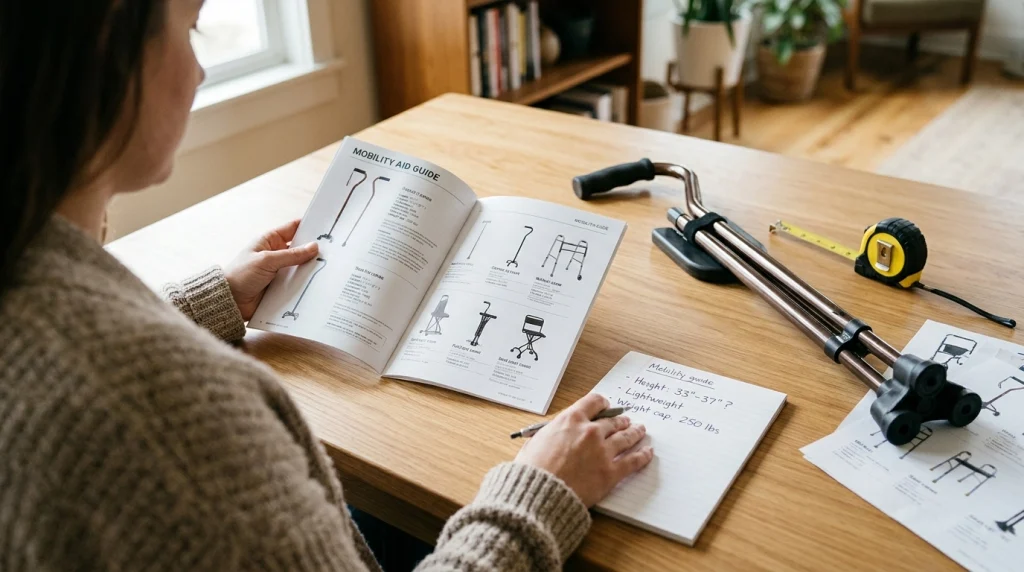
Regular inspection helps identify problems before the device is used. Check it before each use, especially if it has been folded, transported, or stored for a long period.
- Look for cracks, bends, loose fasteners, or damaged joints.
- Check that the seat opens fully and the locks engage securely.
- Inspect the rubber tips for wear, splitting, or loss of grip.
- Make sure adjustable legs remain at the same required height.
- Clean the device according to the manufacturer’s instructions and dry it before storage when necessary.
- Stop using it if the seat, handle, or frame becomes loose or unstable.
Do not attempt a repair that could weaken a load-bearing component unless the manufacturer specifically provides an approved procedure. If a locking mechanism fails or the frame becomes bent, contact the supplier or manufacturer about inspection, replacement, or repair.
Related Product
A folding seat cane may be worth considering if you need light walking support and an occasional place to sit. Check its intended use, fit, weight capacity, and locking mechanism before deciding whether it suits your mobility needs.
Related Product
Folding Walking Cane With Seat
Compare seat designs, adjustment options, stated weight limits, and folding mechanisms to find a model that matches your needs.
As an Amazon Associate, we earn from qualifying purchases.
Frequently Asked Questions
Can you use a seat cane as a regular walking cane?
Some seat canes are designed for both walking and sitting, but this depends on the specific model. Follow the manufacturer’s instructions for walking mode, handle height, locking mechanisms, and weight limits.
Is a seat cane suitable for someone with poor balance?
Not necessarily. A seat cane may be appropriate for someone who needs light support, but a person with substantial balance problems may need a walker or another more supportive aid. A healthcare professional can help determine the safest option.
Can you sit on a seat cane for a long time?
That depends on the seat’s dimensions, comfort, and intended use. Many compact seats are better suited to brief rest breaks than extended sitting. Use a properly supportive chair when you need to sit for longer periods.
Are seat canes safe to use outdoors?
They can be suitable outdoors when the ground is firm, level, and nonslippery and the device is used according to its instructions. Avoid ice, unstable surfaces, and locations where the seat cannot rest securely.
How do you know if a seat cane is the correct height?
Follow the manufacturer’s fitting guidance for the walking mode. For many conventional canes, the handle is approximately level with the wrist crease when standing upright with the arms relaxed, but the exact adjustment should be confirmed for the device and user.
When should you choose a rollator instead of a seat cane?
A rollator may be more appropriate if you need frequent rest breaks and can safely control its brakes and movement. If you require greater balance support, ask a healthcare professional to assess whether a rollator, walker, or another mobility aid is suitable.
Conclusion
A seat cane combines a walking-aid function with a compact seat for occasional rest breaks. It can make short outings more convenient for someone who needs light walking support, but its usefulness depends on the person’s balance, strength, and ability to sit and stand safely.
Before choosing one, verify the weight limit, seat height, fit, locking mechanism, and intended use. Always deploy the seat fully on stable ground and stop using the device if it becomes damaged or loose. If walking is becoming less steady or falls are a concern, seek an assessment to determine whether a standard cane, seat cane, walker, or rollator offers the most appropriate support.