
Rollator vs Crutches: Which Is Better for Seniors?


Toilet Seat Bidet Attachment

Air Fryer for Easy Cooking

Shiatsu Neck Massager
Rollator vs Crutches is an important comparison when a senior needs extra support while walking. The two mobility aids work in very different ways. A rollator offers a wheeled frame, hand brakes, and often a seat, while crutches are designed to shift some or all weight away from a leg.
For everyday mobility, a rollator may be easier for a senior who needs steady support while walking. Crutches can be more useful when an injured leg must have limited or no weight placed on it. The right choice depends on the person’s mobility needs, strength, balance, and instructions from a healthcare professional.
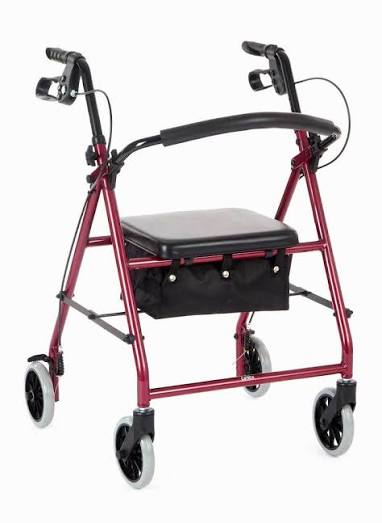
Quick Comparison
A rollator generally fits seniors who need support and stability during regular walking. Crutches are more suited to situations where reducing weight on an injured leg is a key part of recovery.
The biggest difference is how the two devices support movement. A rollator supports walking through a wheeled frame, while crutches require more active use of the arms and upper body.
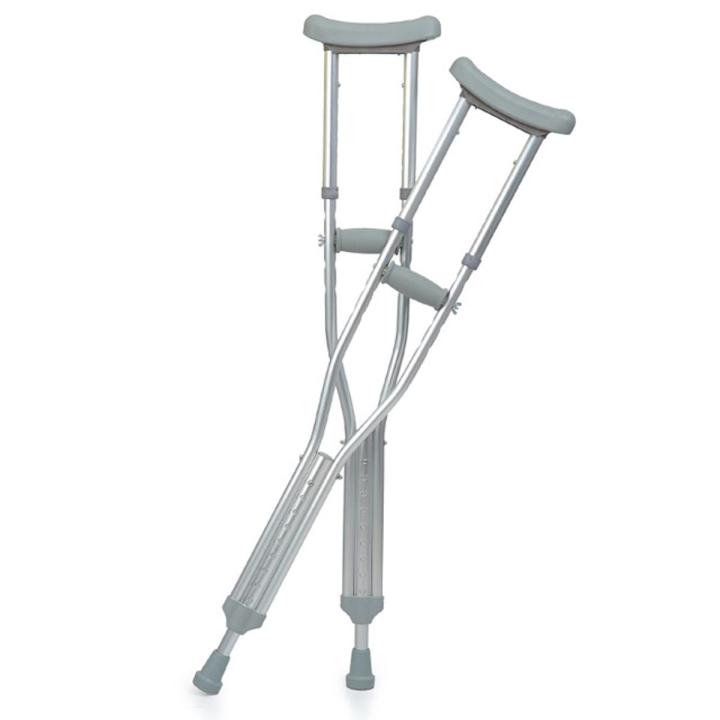
Rollator vs Crutches At a Glance
The table below shows the main practical differences for senior users.
| Feature | Rollator | Crutches |
|---|---|---|
| Main purpose | Walking support and stability | Reduce weight on a leg |
| Wheels | Usually four | No |
| Hand brakes | Usually included | No |
| Seat | Often included | No |
| Upper-body effort | Usually lower | Usually higher |
| Balance support | Strong for steady walking | Requires more coordination |
| Short-term injury use | Possible | Often useful |
| Everyday mobility | Often convenient | More demanding |
| Carrying items | Basket or bag may be available | Limited |
| Stairs | Usually difficult without training | Can be used with proper instruction |
Rollator Review for Senior Use
A rollator is a wheeled walking aid designed to provide support while allowing the user to move at a normal walking pace. Many models have hand brakes, a seat, and storage.
For a senior who needs support during daily activities, these features can make a rollator practical. MedlinePlus notes that walkers can have four wheels, brakes, baskets, and seats, although the exact design varies by model.
Ease of Use
A rollator can be relatively simple to operate once it has been correctly adjusted. The user normally holds the handles and pushes the device forward while walking.
The brakes also give the user control when stopping. Models with seats can provide a convenient place to rest during longer outings.
However, the wheels mean the rollator must be controlled carefully. A user should not assume that simply having four wheels makes a device automatically safe.
Key Strengths
- Provides continuous walking support
- Four wheels allow easier forward movement
- Many models include hand brakes
- Some models have a built-in seat
- Storage baskets can carry small items
- Useful for everyday indoor and outdoor mobility
- May require less upper-body effort than crutches
Potential Drawbacks
- Can be difficult to use in narrow spaces
- Wheels require proper brake control
- May be heavier than basic walking aids
- Storage and transportation can be inconvenient
- Not automatically suitable when a leg must remain non-weight-bearing
A rollator should also be correctly adjusted to the user. MedlinePlus recommends proper height adjustment and keeping all wheels or tips on the ground before putting weight on a walker.
Crutches Review for Senior Use
Crutches provide a different type of support. They can help a person keep weight off an injured leg or reduce the amount of weight placed on it.
This makes crutches especially relevant after certain lower-limb injuries or procedures. NHS guidance describes different levels of weight-bearing, including non-weight-bearing, partial weight-bearing, and full weight-bearing situations.
Ease of Use
Crutches generally require more coordination and active upper-body use than a rollator.
For example, non-weight-bearing crutch use can involve supporting body weight through the arms and moving the crutches forward before advancing the unaffected leg.
That can be demanding for someone with limited arm strength, poor balance, or difficulty coordinating several movements at once.
Key Strengths
- Can help keep weight off an injured leg
- Useful during certain injury recoveries
- Easier to carry than many wheeled walking aids
- Can work in places where a large rollator may not fit
- Useful when specifically prescribed for a weight-bearing restriction
Potential Drawbacks
- Requires more coordination
- Can place substantial demand on the arms and hands
- May be tiring during longer walks
- Can be challenging for people with poor balance
- Incorrect technique can make use unsafe
- Stair use requires proper instruction
Crutches should also be fitted correctly. MedlinePlus notes that some mobility aids, including crutches and walkers, should be fitted to the user because poor fit can make them uncomfortable or unsafe.
Which Is Easier for Seniors to Use?
For many seniors who simply need extra support during everyday walking, a rollator may feel easier because the wheels reduce the need to lift and reposition the device with every step.
Crutches are different. They require more active movement and upper-body support. They can still be the more appropriate option when a healthcare professional has instructed the person to keep weight off an injured leg.
So the answer depends on the need:
- For steady everyday walking support: A rollator may be easier.
- For keeping weight off an injured leg: Crutches may be more appropriate.
- For limited arm strength: Crutches may be harder to manage.
- For frequent rest during outings: A rollator with a seat may be useful.
- For narrow spaces: Crutches may be easier to maneuver.
There is no single mobility aid that fits every senior. MedlinePlus recommends getting professional help when choosing a mobility aid, especially because some devices require adequate strength or balance.
Performance Comparison
The two products perform different jobs, so performance should be judged by the task rather than by the number of features.
A rollator is designed around continuous walking support. Its wheels allow the user to move the frame forward without lifting it completely from the floor.
Crutches are designed around controlled weight distribution. They can allow a person to reduce or eliminate weight through an affected leg when that is part of the care plan.
| Performance Area | Rollator | Crutches |
|---|---|---|
| Daily walking | Strong fit | More demanding |
| Weight off injured leg | Limited by design | Strong advantage |
| Rest during walks | Often available | Not available |
| Maneuverability | Good on suitable surfaces | Good in tight areas |
| Upper-body demand | Usually lower | Usually higher |
| Longer outings | Often convenient | Can be tiring |
Comfort, Accessibility, and Senior-Friendly Design
Comfort is not just about padding or handles. It also depends on how much physical effort is required to operate the device.
A rollator may be more comfortable for someone who wants continuous support while walking and the option to sit and rest. A crutch can be more practical when the main goal is reducing pressure on one leg.
Grip strength also matters. Both devices require the user to hold them securely, but crutches generally require more active arm and hand involvement.
The easiest mobility aid is not always the one with the most features. It is the one that matches the user’s actual mobility needs.
Features Comparison
The useful features are quite different because rollators and crutches serve different purposes.
| Feature | Rollator | Crutches |
|---|---|---|
| Brakes | Common | Not applicable |
| Seat | Common on many models | No |
| Storage | Often available | Minimal |
| Wheels | Usually four | None |
| Weight-bearing support | Walking stability | Can reduce leg loading |
| Folding | Common on many models | Often simple to store |
| Learning curve | Usually moderate | Can be higher |
A rollator’s brakes are particularly important. Users should understand how to engage them before sitting or stopping. Safety guidance for walkers also emphasizes proper positioning, balance, and checking wheels or tips regularly.
Price, Maintenance, and Long-Term Value
Prices vary widely by model, material, brand, and features, so a fixed price comparison would quickly become outdated.
Rollators may cost more than basic crutches because they commonly include wheels, brakes, frames, seats, and storage features. They can also have more parts that need inspection.
Crutches are usually simpler in construction. However, value depends on why the mobility aid is needed.
| Cost Factor | Rollator | Crutches |
|---|---|---|
| Initial design complexity | Higher | Lower |
| Moving parts | More | Fewer |
| Brake maintenance | May be needed | Not applicable |
| Replacement tips | May be needed | Common |
| Storage | Requires more space | Usually easier |
| Long-term usefulness | Good for ongoing walking support | Often useful for specific mobility needs |
The cheaper option is not automatically the better value. A device that does not match the user’s mobility needs can create frustration and may not provide the intended support.
Who Should Choose a Rollator?
A rollator may be worth considering if:
- The main need is everyday walking support.
- The user wants a wheeled frame.
- A seat would be useful during longer outings.
- Carrying small personal items is helpful.
- The user can safely control hand brakes.
- The user does not have a requirement to keep an injured leg completely off the ground.
Who Should Choose Crutches?
Crutches may be more appropriate if:
- A healthcare professional has recommended them.
- The user needs to reduce or avoid weight on an injured leg.
- The user has enough upper-body strength and coordination.
- The user can learn and follow the required technique.
- A compact mobility aid is important.
- The user’s recovery plan specifically calls for crutches.
Weight-bearing instructions can differ significantly between injuries. NHS guidance specifically distinguishes non-weight-bearing, partial-weight-bearing, and full-weight-bearing use.
Rollator vs Crutches — Final Verdict
A rollator and crutches are not really substitutes in every situation. A rollator is generally better suited to everyday walking support, especially when stability, easier movement, storage, and the option to rest are important.
Crutches are better suited to situations where reducing weight on an injured leg is a key requirement. They can be highly useful during recovery but may demand more strength, coordination, and balance.
The most important question is not simply which device has more features. It is what kind of support the user actually needs.
Scoring Summary
A fixed 10-point score would be misleading here because rollators and crutches are designed for different mobility needs.
| Category | Rollator | Crutches |
|---|---|---|
| Everyday walking support | Strong fit | Moderate fit |
| Reducing leg weight | Limited | Strong fit |
| Resting during walks | Strong fit | Limited |
| Upper-body demand | Lower | Higher |
| Portability | Moderate | Strong |
| Individual suitability | Depends on user | Depends on user |
These are functional comparisons, not clinical ratings. Individual fitting and professional advice can change which option is appropriate.
How We Evaluate Products
For this comparison, the focus is on practical factors that matter to older adults and caregivers:
- Ease of use
- Balance and stability
- Physical effort
- Comfort
- Portability
- Everyday practicality
- Maintenance
- Safety
- Long-term usefulness
The comparison does not claim hands-on testing or laboratory testing. It is based on the functional differences between rollators and crutches and current guidance on mobility-aid use.
Senior-Specific Buying Considerations
Physical Effort
Think about how much arm, hand, leg, and core effort the device requires. Crutches can demand significant upper-body involvement.
Fit
Correct height and fit matter. A poorly adjusted mobility aid may be uncomfortable or unsafe.
Balance
Consider whether the user can control the device while turning, stopping, and starting.
Storage
A rollator needs more storage space than a pair of crutches. Check whether it will fit easily at home or in a vehicle.
Weight-Bearing Needs
This is especially important after an injury or procedure. Follow the weight-bearing instructions provided by the appropriate healthcare professional.
Safety
Do not use stairs with a mobility aid unless the user has been properly taught how to do so. NHS guidance specifically advises users to receive instruction for crutch use on stairs.
Common Buying Mistakes
- Choosing based only on price
- Ignoring proper fitting
- Selecting crutches without considering upper-body strength
- Choosing a rollator without checking brake operation
- Ignoring storage space
- Assuming every mobility aid works for every type of injury
- Forgetting to follow professional weight-bearing instructions
Safety
Mobility aids should provide support, not create a new handling problem.
For rollators, check the wheels, brakes, frame, and handles regularly. MedlinePlus recommends checking walker tips and wheels and replacing worn parts when necessary.
For crutches, proper technique matters. NHS guidance shows that different weight-bearing instructions require different walking methods.
If the user has recently had surgery, suffered an injury, has significant balance problems, or has been given specific weight-bearing restrictions, the appropriate healthcare professional should help determine which mobility aid and technique are suitable.
Frequently Asked Questions
Is a rollator easier to use than crutches?
For many people who need general walking support, a rollator may be easier because its wheels allow the frame to move without being lifted. Crutches can require more coordination and upper-body effort.
Are crutches better than a rollator after a leg injury?
It depends on the injury and weight-bearing instructions. Crutches can be useful when the affected leg needs reduced or no weight. A healthcare professional should determine the appropriate aid.
Can a senior use a rollator for everyday walking?
Yes, a rollator can be useful for everyday walking when the user can safely control it. Proper height adjustment and brake use are important.
Can you use crutches for long-term mobility?
Some people may use crutches for longer periods, but they can require substantial upper-body effort. The appropriate mobility aid depends on the person’s individual needs.
Does a rollator help with balance?
A rollator can provide a stable support structure while walking, but it still needs to be used correctly. Users should keep proper positioning and make sure the device is appropriately adjusted.
Should I ask a physical therapist before choosing one?
That can be especially useful when the user has an injury, surgery recovery, significant balance difficulty, or specific weight-bearing restrictions. Proper fitting can also improve safety and comfort.
Conclusion
The main difference between a rollator and crutches is their purpose. A rollator is built mainly for supported everyday walking, while crutches can help reduce weight placed on an injured leg.
For seniors who need regular walking support, a rollator may offer a more convenient combination of stability, wheels, brakes, storage, and optional seating. Crutches can make more sense when a specific recovery plan requires limited or no weight through one leg. The safest choice is the one that matches the user’s mobility needs, physical ability, and professional guidance.