
Pressure Mattress vs Air Mattress for Seniors


Motion Sensor Night Lights

Gardening Kneeler Bench

Electric Recliner Lift Chair
Pressure Mattress vs Air Mattress is an important comparison when a senior spends a lot of time in bed or needs better pressure relief. The two terms can sound similar, but they can describe different types of support surfaces.
A pressure mattress may use foam or other materials to spread body weight. An air mattress can use air cells, often with a pump, to change or redistribute pressure. Some systems even combine foam and air.
Quick Comparison
For many seniors who simply want stable comfort and easier daily use, a good pressure-redistributing foam mattress may be the simpler choice. It does not need a pump and can be easier to manage.
An alternating-pressure air mattress can be the better choice when pressure relief is the main concern, especially for someone with limited movement or a higher risk of pressure injury. However, the right support surface should be based on the person’s needs, not age alone.
The key question is not simply “foam or air?” It is “what level of pressure redistribution does this person need?”
Pressure Mattress vs Air Mattress At a Glance
Both can help reduce pressure, but they work in different ways.
| Feature | Pressure Mattress | Air Mattress |
|---|---|---|
| Main support | Often foam or reactive material | Air cells or air-filled sections |
| Pressure relief | Redistributes body weight | Can actively change pressure |
| Pump needed | Usually no | Often yes |
| Setup | Usually simple | May require pump setup |
| Maintenance | Generally simple | More parts to manage |
| Best fit | Stable, simple daily support | Active pressure relief needs |
Pressure Mattress: What Seniors Should Know
A pressure mattress is designed to spread body weight across a larger area. High-specification foam mattresses are used in healthcare because they can redistribute pressure while providing a stable sleeping surface.
For a senior who can move normally and mainly wants better support, this type of mattress may offer a straightforward solution.
Ease of Use
The biggest advantage is simplicity.
There is normally no pump to connect and no pressure cycle to adjust. That can make daily use easier for someone who wants a mattress that works without much attention.
A foam-based pressure mattress may also feel more familiar than an active air system.
Key Strengths
- Simple everyday operation
- No pump in many designs
- Stable sleeping surface
- Little setup
- Generally easy to maintain
- Can provide pressure redistribution without active cycling
Potential Drawbacks
- Not every pressure mattress provides the same level of pressure relief
- A basic foam mattress may not meet the needs of someone at very high risk
- It may provide less active pressure movement than an alternating air system
The exact performance depends on the mattress design, so the term “pressure mattress” alone is not enough to judge a product.
Air Mattress: What Seniors Should Know
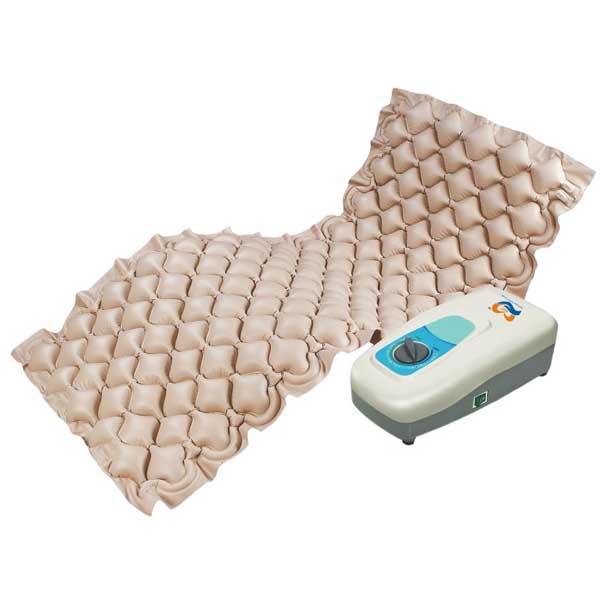
An air mattress used for pressure care is different from a normal inflatable guest mattress. Medical pressure-relieving air systems can use multiple air cells and a pump to change pressure over time.
Some systems use alternating pressure. Different air cells inflate and deflate in cycles, changing the points where the body receives pressure.
Ease of Use
Air systems can be more complicated.
The pump needs power, the mattress must be installed correctly, and settings may need to match the user’s needs. For a caregiver, this may be manageable. For a senior living alone, the extra equipment may be less convenient.
Some modern systems are designed to switch between reactive and active pressure modes, but this adds another layer of technology.
Key Strengths
- Can provide active pressure redistribution
- Useful when pressure relief is a major concern
- Some systems automatically change air pressure
- Certain models combine air and foam
- Can reduce the need for some manual pressure-management tasks
Potential Drawbacks
- Requires more setup
- Usually depends on a pump
- Needs access to electricity
- Has more components than a basic foam mattress
- Air systems can require more attention and maintenance
Which Is Easier for Seniors to Use?
For simple daily use, a pressure-redistributing foam mattress usually has the advantage.
There is less to operate. There are no pump controls to learn, and there is usually less equipment around the bed.
An air mattress may be easier in another sense. If a senior has limited ability to reposition and needs active pressure redistribution, the mattress can perform pressure changes automatically. That can be useful, but it does not mean the system is suitable for everyone.
The best choice depends on the person’s mobility, skin condition, risk level, and care plan.
Performance Comparison
The biggest performance difference is how the mattress manages pressure.
A pressure-redistributing mattress spreads the load across a wider surface. An alternating air system can actively change pressure by inflating and deflating different air cells.
| Performance Area | Pressure Mattress | Air Mattress |
|---|---|---|
| Pressure redistribution | Good, depending on design | Strong active options |
| Stable support | Usually very good | Depends on settings |
| Active pressure changes | Usually no | Yes, on alternating models |
| Power required | Usually no | Usually yes |
| Complexity | Lower | Higher |
This does not make air automatically better. A mattress should match the user’s needs. Clinical guidance recognizes several types of support surfaces, including high-specification foam, reactive air, and alternating-pressure systems.
Comfort, Accessibility, and Senior-Friendly Design
Comfort is highly personal, but stability and simplicity can matter a lot for everyday use.
A foam pressure mattress may feel more stable when getting into or out of bed. That can be helpful for someone who wants a predictable surface.
An air mattress may feel different because the support comes from air cells. Some systems are designed to provide both pressure redistribution and comfort, while hybrid models combine air and foam.
For seniors with limited movement, the ability of an air system to provide active pressure changes may be more important than having the simplest setup.
Features Comparison
The useful features are not the same on every model.
| Feature | Pressure Mattress | Air Mattress |
|---|---|---|
| Foam support | Common | May be included |
| Pump | Usually not needed | Common |
| Alternating pressure | No | Available on suitable models |
| Air-cell adjustment | No | Available on some models |
| Low-air-loss function | Not typical | Available on specialist systems |
| Hybrid design | Less common | Available on some models |
Some specialist systems combine alternating pressure, continuous low pressure, foam, and other functions.
Price, Maintenance, and Long-Term Value
A basic pressure-redistributing mattress can offer good value when the goal is simple, stable support.
An air system may cost more because it can include a pump, air cells, controls, and additional functions. It can still provide better value when those features are actually needed.
Maintenance is another difference. Foam systems are generally simpler. Air systems have more components, so there is more to check.
The cheapest option is not automatically the best value.
A mattress that matches the user’s pressure-relief needs can be a better investment than a cheaper mattress that does not.
Who Should Choose a Pressure Mattress?
Choose a pressure-redistributing mattress if:
- Simple daily use is your main priority.
- You want a stable sleeping surface.
- You prefer less equipment around the bed.
- You do not need active alternating pressure.
- Low maintenance matters.
- A healthcare professional has determined that this level of support is suitable.
Who Should Choose an Air Mattress?
Choose a medical pressure-relieving air mattress if:
- Active pressure redistribution is important.
- The person spends long periods in bed.
- Movement is limited.
- A healthcare professional recommends an alternating-pressure system.
- You are comfortable managing a pump and related equipment.
- The mattress needs to provide more specialized pressure management.
An air mattress should not be viewed as a replacement for repositioning, skin checks, and other pressure-care measures.
Pressure Mattress vs Air Mattress — Final Verdict
Best for simple everyday use: Pressure mattress
Best for active pressure relief: Air mattress
Best for lower maintenance: Pressure mattress
Best for specialized pressure-care needs: Appropriate medical air mattress
There is no universal winner. A pressure mattress may be the better everyday option for a senior who needs stable pressure redistribution without complicated equipment. An air mattress may be more suitable when active pressure management is needed.
If the person already has a pressure injury, has very limited mobility, or is considered high risk, the choice should be made with appropriate healthcare guidance rather than by price or comfort alone.
Scoring Summary
The scores below are practical editorial ratings for general usability, not clinical test results.
| Category | Pressure Mattress | Air Mattress |
|---|---|---|
| Ease of Use | 9/10 | 7/10 |
| Senior-Friendly Design | 9/10 | 7/10 |
| Pressure Management | 8/10 | 9/10 |
| Maintenance | 9/10 | 7/10 |
| Value | 8/10 | 8/10 |
The air mattress scores higher for active pressure management, while the pressure mattress scores higher for simplicity.
How We Evaluate Products
This comparison focuses on the factors that matter most for senior use: ease of operation, pressure redistribution, comfort, accessibility, maintenance, safety, and long-term practicality.
It does not assume that every senior has the same mobility, strength, or care needs.
The comparison also does not claim hands-on testing or laboratory testing. Medical support surfaces should be selected according to the individual’s needs and, when appropriate, professional assessment.
Senior-Specific Buying Considerations
Before choosing either type, check these points.
Physical Effort
Think about getting into bed, getting out of bed, and changing position. A stable surface may be easier for some people.
Controls
If the mattress uses a pump, make sure the controls are easy for the user or caregiver to understand.
Maintenance
Consider cleaning, checking the equipment, and dealing with possible air-system problems.
Setup
A powered air system usually requires more setup than a basic pressure-redistributing mattress.
Safety
Follow the manufacturer’s instructions. Powered air mattresses also need sensible electrical and fire-safety practices. Some NHS guidance specifically warns against smoking, candles, heaters, and heated blankets around air mattresses.
Professional Assessment
If there is a current pressure injury or significant risk of skin damage, ask a healthcare professional which support surface is appropriate. Different levels of pressure-relief equipment may be used as a person’s condition changes.
Common Buying Mistakes
- Choosing based only on price
- Assuming every air mattress provides the same pressure relief
- Treating a regular inflatable mattress as a medical pressure-care mattress
- Ignoring pump and power requirements
- Forgetting about maintenance
- Choosing a mattress without considering the person’s mobility and pressure-injury risk
Conclusion
The main difference between a pressure mattress and an air mattress is how they manage pressure. A pressure-redistributing mattress is often simpler and easier for everyday use, while an appropriate medical air mattress can provide more active pressure management.
For seniors, the best choice is the one that fits the person’s mobility, comfort, pressure-care needs, and ability to manage the equipment. If there is significant pressure-injury risk, professional guidance is more important than choosing based on the mattress type alone.
